SOL testing still vexes Virginia

Richmond Times-Dispatch Thursday, May 21, 2026
OPINIONS
LETTERS TO THE EDITOR
SOL testing still vexes Virginia


Twenty years ago, I retired from public education, and yet Virginia’s Standards of Learning Tests (SOLs) have not retired from making front page headlines. The May 10 edition of the Times-Dispatch confirms this with Anna Bryson’s article, “Students will face tougher tests in 2027.”


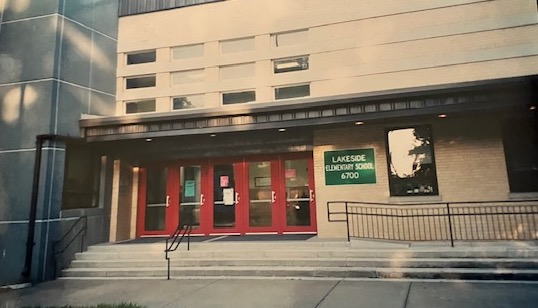
In 1998, when the testing was initiated, we thought the tests were tough. I was serving as principal at Lakeside Elementary School in Henrico County. Our first-year results were dismal.


From that point on, a relentless pressure was always present to improve and earn accreditation.


Now, I read that the tests will be tougher. I have no problem with toughness. And yes, I think it is wise to push back the testing dates to allow for more instructional time. However, in all this jabbering about the SOLs, how often do our school and community leaders consider the factors that can limit student success?


In the 28 years since the Standards of Learning Tests were implemented, how has the Commonwealth of Virginia scored in combatting critical factors that impact student performance?


Have our governors and legislators made any progress countering malignant generational cycles related to poverty, homelessness, substandard housing, unemployment, family instability and access to mental and physical health care?


Every day in classrooms across Virginia, teachers struggle to meet the needs of these students who are trapped in these brutal cycles. If we want better results on tougher tests, then we must address those challenges.


Margot Lee Shetterly, author of “Hidden Figures,” makes this point: “You don’t get the good without the bad, but you really do have to see it all in order to make progress.”


Until we address the “all” of the generational cycles that derail student learning, we will continue to struggle with SOL testing.


Bill Pike
Tuckahoe

From the author: Honored to have a Letter To The Editor published in the May 21, 2026 edition of the Richmond Times-Dispatch.

Old photo of the entrance to Lakeside Elementary School (Bill Pike)

Learning about Claude Russell Bridges aka Leon Russell at the Osher Institute of Lifelong Learning at the University of Richmond

Some day, our luck at the Osher Institute Of Lifelong Learning at the University of Richmond is going to run out.

We’ll submit a proposal, a topic for teaching a class, and we’ll be rejected.

And that will be ok, as it will be part of life’s learning curve for two rapidly aging geezers.

But so far, we’ve been lucky. We just completed our ninth collaborative class.

The we is my lifelong friend, Joe Vanderford, and me.

We grew up in Burlington, North Carolina.

Our original bonding came from church, church softball teams, and in our teenage years—a love for music.

On some Sunday mornings, we’d sneak out of the balcony of the sanctuary at Davis Street United Methodist Church and go to Central News. Central News sold magazines and newspapers. We’d be searching for the latest issue of Rolling Stone, Crawdaddy, or Creem. These periodicals covered rock and roll in America.

If we knew, a favorite artist had released a new album, we’d drive down North Carolina Highway 54 to Chapel Hill. In Chapel Hill, we had two stops, the Record and Tape Center or the Record Bar. In either of those record shops, we’d find the new album we were looking to purchase.

But that love of reading about music and listening to music never left us. It is still part of our lives. Thankfully for Joe and me, our wives support our annual collaboration for developing a class.

I don’t remember the precise moment when we decided to develop our ninth class on Leon Russell, but I can tell you this—neither Joe nor I will ever, ever forget our class on Mr. Russell.

When we started working on this class, Joe and I knew the basic information about Mr. Russell. However, we had no idea, I mean no idea how wide, long, and deep his career spanned in American music.

His career was like staring forever into the the Grand Canyon. No matter where you look into the vastness of the Canyon, Leon’s career could fill it. Not only fill it, but the colors, tones, shades, shapes, and moods of his music could match those found in the Canyon too.

It seems almost inconceivable that a kid from Lawton, Oklahoma would have such an impact as a band leader, session musician, arranger, producer, multi-instrumentalist, songwriter, singer, and performer, but he did.

His family called him Russell. His mother noted that young Russell was slow to speak, but according to family stories, his first words were, “What’s the matter, little birdie, you cry?”

By the age of four, Russell had started playing piano by ear. His mother recognizing the potential talent connected him with the best piano teacher in the area.

A birth injury impacted his left hand, but Russell figured out how to compensate with his piano playing.

Later in life, he described his piano playing: “My chops have always been sort of weak, because the right side of my body was paralyzed a little bit. I have damaged nerve endings on the right side, so my piano style comes from designing stuff I can play with my right hand.” (Bill Janovitz page 7)

In our prep for a class, we have two essentials—a worthwhile book about the artist and a documentary that captures the artist at work.

For this class, we had an unbelievable book, Leon Russell The Master of Space and Time’s Journey Through Rock and Roll History. This book written by Bill Janovitz is as good as any book I’ve ever read about a musician. In a Herculean effort, Mr. Janovitz captures all of Mr. Russell’s life.

To showcase Leon at work, we had three documentaries to consider—Mad Dogs and Englishmen, The Concert For Bangla Desh, and an obscure film made in 1970s A Poem Is A Naked Person.

We opted for Mad Dogs and Englishmen.

Our two part class on April 13 and 14, 2026 opened with a late Monday afternoon screening of Mad Dogs and Englishmen.

On Tuesday, we put our hearts and souls into covering as much of the essentials of Mr. Russell’s work as we could. From his early bands in Tulsa, Oklahoma, the road to Los Angeles, session work, arranging and production work for a who’s who’s list of artist, the quiet development of his own songwriting skills, how Mad Dogs and Englishmen came together, his first solo album, and how he in a short period of time became a top concert draw.

To tell this story we used recordings, assorted videos of performances, and a wide range of interviews with other artists and Mr. Russell to capture a sampling of his work and the admiration that other musicians had for him.

Leon’s sound and piano style were unique. Plus, he didn’t limit himself to rock and roll. His recording and live performances reflect an ability to play any style of music.

And despite all of his talent and success, his lows were at times as devastating as a tornado ravaging across Oklahoma. Some substance abuse, struggles with his personal health, multiple marriages, unwise investments, and poor management choices severely countered his triumphs.

Those troublesome decisions forced him to tour out of necessity for much of his later life.

In 2010, his friend, Elton John, a long time admirer of Mr. Russell’s piano playing reconnected with him. The result was a collaborative album, The Union, and a tour to support the album.

During the 2011 induction of Mr. Russell into the Rock and Roll Hall Of Fame, he spoke these heartfelt words about Elton’s rescue: “About a year ago, Elton found me in a ditch at the side of the highway of life and took me up to the high stages with big audiences, and treated me like a king.”

That resurgence was good for Leon and Elton.

One of the best things about the Osher program is that they survey the students who attended both sessions of our class.

Joe and I learn from that feedback.

This year, our documentary choice was criticized.

Before the screening, Joe always writes an introduction about the film for the students. Joe’s instincts as a writer are to provide a broad brush stroke of opinions related to the film. This included referencing the negative review from the Washington Post critic, Tom Zito.

Mr. Zito said:
“Forget the film and try the record,” explaining, “What emerges from all this is roughly two hours of footage that looks terrible on the screen and sounds almost as bad. The film is projected in an annoying square format, except for the moments when the screen area is broken up into some poorly coordinated split-screen effects. The camerawork is often sloppy … the whole thing winds up looking and sounding like a cheap, imitation (indoor) ‘Woodstock.’”

Much of the feedback we received about the film from our students agreed with Mr. Zito’s assessment.

For the presentation that Joe and I wove together about Mr. Russell, the students were kinder. They offered good suggestions for how we could have shortened the videos we used as a way for including more content about Mr. Russell.

I’m not sure why, but for some reason, in working on this project, I was drawn to the first stanza of the Beatles’ song “Come Together”:

“Here come old flat-top, he come grooving up slowly.
He got ju-ju eyeball, he one holy roller. He got hair down to his knee, got to be a joker, he just do what he please.”

Here comes Leon Russell off of the Oklahoma “flat-top”, a slow moving, groovy musician. Whose eyes according to the women in his life could see right through them. His church music upbringing made him in some respects a “holy roller.” By 1970 his hair was heading toward his knees, a quiet joker who had just been biding his time to do what he pleased with his first solo album.

Mr. Russell’s first solo album confirmed what fellow musicians, including arrangers and producers knew about him—he was exceptionally gifted.

Perhaps, the opening song from the album “A Song For You” supports this testimony from his peers. “A Song For You” has been recorded by 200 artists.

My teaching pal, Joe, who knows much more about the intricacies and structure of music than I do believes this album is an underrated piece of Americana. A recording that should always be recognized as a classic piece of our musical heritage.

I agree.

I have no idea if we will come up with a proposal for a class in the Spring of 2027.

Leon’s life and his body of work pushed us to our limits.

But, I don’t think either of us would trade anything for how we wove the class together. Joe was at his best in developing the flow of the script.

On November 13, 2016, we lost Leon Russell. He died in his sleep.

Two memorial services were held—one in Mt. Juliet, Tennessee where he resided, and the other in Tulsa, Oklahoma where his career in music was launched.

At those memorial services, I wonder if anyone thought of those early words from young Claude Russell Bridges—“What’s the matter, little birdie, you cry?”

Clearly at both services, there were lots of “little birdies” from performers to speakers, and the audience who were in tears.

One of those speakers, Steve Ripley, fought through his tears to share this text from Leon: “The reason for connection is food, music, friendship, and tape machines. The strong stuff is just the facts of life and death; you either laugh or cry.”

I’m thankful for the friendship and connection that music has given to Joe and me. With every class we have laughed and cried.

And Joe and I are deeply thankful to the Osher members, and the Osher staff—Peggy, Nell, Romney, and Amy. Without them, there is no Osher program, and no class from us.

For days after the class, songs that we had featured from Gary Lewis and the Playboys, Delaney and Bonnie, Joe Cocker, and Bob Dylan rolled through my old brain. Mr. Russell’s unmistakable touch as a session musician, arranger, and producer were on those songs.

During his life and even today, Mr. Russell’s gift of music touched lots of “little birdies.” I for one am thankful that he shared this gift with us.

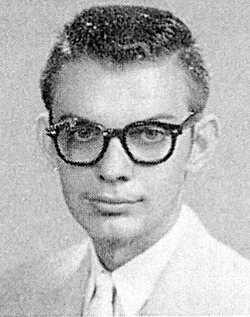
Yearbook photo of Claude Russell Bridges aka Leon Russell (multiple internet sources)

Worrisome bickering

During March and April of 2026, I read articles reported in the Henrico Citizen Newspaper about bickering between the Henrico County Board of Supervisors and the Henrico County School Board.

The focus was about the budget and human resource requests from the school board.

Henrico County’s Board of Supervisors eventually approved a nearly two billion dollar budget.

For lots of reasons, I worry about public bickering between the two boards.

My calendar never allowed me to sign up to speak at a Board of Supervisor’s meeting. So, on the evening of Thursday, April 30, I was on the agenda to speak in person during the Public Forum.

In the Public Forum, speakers are allowed three minutes. Here are my comments:

Mr. Chairman, members of the Board, Dr. Cashwell, all school board employees, and the Henrico school community, my name is Bill Pike, a retired educator.

In the opening scene of the movie, Mr. Holland’s Opus, Principal Helen Jacobs, is talking with her new band director, Glenn Holland. It is Mr. Holland’s first day on the job.

Mr. Holland tells his principal that he never expected to be teaching in a high school. He confesses that he only earned his teaching certificate to have something to fall back on.

Mrs. Jacobs states to Mr. Holland, “I don’t think of teaching as a fall back position. I grow nervous around people who do.”

Knowing myself as a confirmed worrier, and whiner, I grow nervous when I read in the Henrico Citizen about the budget bickering between our Henrico County School Board and Board of Supervisors.

Experience tells me public posturing like that rarely has a positive impact for either board. Those moments of frustration can actually sow negative seeds which might just hinder future dialogue between both boards at a critical time.

Yes, advocating for fully funded budgets and meeting personnel requests is important to that process.

But, do you realize, how many school boards in Virginia would sell their souls to the devil for a $971 million dollar budget?

Our world has changed. It is more complicated.

I saw that first hand on April 16 when I attended the Faith-Based Leaders luncheon on the campus of Virginia Randolph.

I learned more about the needs of our schools and how relationships in our diverse communities are being established to meet those needs.

At the end of the day, bickering and whining between the school board and board of supervisors isn’t going to address the needs of our students and teachers.

However, building relationships will.

Think about this quote from Abraham Lincoln:

“Am I not destroying my enemies when I make friends of them?”

Thanks for your time, your leadership, and for listening to a rapidly aging, grumpy geezer. Good luck the last month of this school year.

(Photo Bill Pike)

Thank you Mrs. Cotterill’s Second Grade Class

The invitation came to read a book to Mrs. Cotterill’s second grade class on February 23, 2026.

We agreed on Friday, March 20 at 1 p.m. as the date to read.

The invitation excited me, but there was some selfishness too. Our grandson is a student in Mrs. Cotterill’s class at Summerfield Elementary School in the Guilford County school system.

Friday, March 20, my wife and I drove from Richmond, Virginia to Summerfield Elementary School. Our drive was uneventful. We arrived with time to spare.

We were warmly greeted by the office staff. Additionally, we met the principal and assistant principal.

My wife and I know a bit about schools. We spent our careers working with students, parents, and teachers in Virginia’s public schools.

I grew up in Burlington, North Carolina. Little did I know that I would become part of the 4 R’s saying: ‘reedin’, ‘riting’, ‘rithmetic’, and the ‘road to Richmond’.

My success in Virginia as a teacher and administrator was always connected to my teachers in the Alamance-Burlington School System and the professors who instructed me at Greensboro College.

I had read books to elementary students in Virginia, but this reading made me nervous. I didn’t want to embarrass our grandson.

With our grandson after reading the book (Photo Lauren Reinking)

The walk to the classroom took a couple of minutes, but I could feel the pulse of the school.
Some classes were outside for recess or physical education. The school has nice outside learning stations. Every classroom we passed, students and their teachers were hard at work.

In prepping to read, Mrs. Cotterill and I planned to use technology to project the book on to a monitor. This allowed all students to follow along while getting a full view of the book’s illustrations.

We tested the technology, and luckily, the technology gods were playing nice this afternoon.

Mrs. Cotterill gave me a kind introduction. I spent a few quick minutes telling the students a bit more about me and the book we would be reading—“The Principal’s Pink Tutu Run.” Full disclosure, I’m the author of the book.

I wrote it about a real experience I had working as an elementary school principal.
As we started, my pace was anxious and rushed, but I settled down. I was impressed with the students. They were attentive and quiet. As I read, I appreciated their chuckles. Before I knew it, we were on the final page.

We had a few minutes for questions. The students asked some good ones. I took great pleasure in letting the students know that everyone has the ability to write a book. Writing a book is really about will power and continuously pushing yourself.

I will never forget my time with this class. That is because of the work of their teacher, Mrs. Cotterill, her students, and their parents. Students have a better chance to find success in school when teachers, students, and parents work together.

Working in schools, I felt from the time a child comes into this world until his/her first day in kindergarten are the critical formative years. Family stability, parameters in place for the child, and taking the time to read to this child are vital to their finding success.

Tacked on to those essentials are helping parents understand how important they are in working to support and build relationships with their sons and daughters teachers.

I was lucky— my family was stable, my parents were supportive of my teachers and me, and my grandmother always read to me when she visited.

It’s a tough world out there.

However, I left Summerfield Elementary School feeling hopeful about those clear-eyed, good listening, and inquisitive second grade students.

That’s why it is so important for all of us to work together to make sure these students and thousands like them across North Carolina have every opportunity to find success in their schools and communities.

Author’s note: I submitted this as an op-ed piece to the Greensboro News and Record on March 23, 2026. The word count was 772. On March 24, I received an email from the editor stating that he would like to use the piece. He asked that I shrink the word count to 650. I did that. I sent the piece back at 647 words. He confirmed receiving it. I reached back out to the editor on April 4, asking if he had been able to run the piece. Here we are on April 17, and to the best of my knowledge the piece never ran in the Greensboro News and Record. Disappointing, but that’s ok. That Friday afternoon with our grandson’s class is one I will never forget. Bill Pike

Baseball: How are your eyes?

Today, the Major League Baseball (MLB) season opens.

Seems too early to me.

Growing up, I never tried out for a baseball team in the community or at school.

Yet, baseball consumed me.

I purchased baseball cards.

Waited for the afternoon paper to arrive to check the box scores.

And at night, my AM only transistor radio could pickup the broadcast of the New York Yankee games.

I was a Yankees fan.

I listened to those games.

I could reel off with no hesitation the starting line-up for the Yankees.

Of course, Mickey Mantle was my favorite player.

At home in the backyard was my father’s large garden plot. Behind the garden was a barren field.

The kids in the neighborhood turned it into our “field of dreams.”

We played non-stop— girls and boys.

Bats were cracked, baseballs lost, and sometimes egos were bruised.

But, we always came back the next day to play.

My love of the Yankees faded.

My wife’s relatives converted me to a Red Sox fan.

When our oldest daughter lived and worked in Chicago, my allegiance shifted to the Cubs.

To tell you the truth, now that the Red Sox and the Cubs have each won a World Series, I barely pay attention to baseball.

At my age, I’m a natural born whiner.

So, I whine about the ridiculous salaries.

According to Sportico, “ the 15 highest-paid MLB players will earn an estimated $718 million overall in 2026.”

I was an English major in college, and even I know that’s a lot of money—just shy of $50 million dollars per each of those 15 players.

And with baseball still being our so-called “national pastime” I chuckle that Venezuela defeated the United States in the first ever World Baseball Classic.

Let’s get the disclaimer out here, I’m no expert about baseball. However, I sense that all players must have good eyes.

It is essential for hitting, and so many other taken for granted pieces of the game.

In David Halberstam’s book “The Summer of ’49,” I love the story about Ted Williams being called out on strikes.

Ted Williams was known for his remarkable 20/10 eyesight.

Being called out on strikes really agitated him.

For this game, the agitation continued in the dugout where teammates teased him about being called out on strikes.

In his bellowing about being called out on strikes, Williams asserted that—“home plate was out of line,” and that was the reason he was called out.

The next day, the Red Sox manager, Joe Cronin went out to measure home plate. Ted Williams was correct. Home plate was out of line.

In my aging, I have become more aware and sensitive about my vision. Cataract removals and two corneal transplants have made me more protective of my vision.

For sure these medical improvements have helped my eyesight, but I wonder have they helped me to truly see the world in front of me.

In the movie about baseball titled “Moneyball,” I appreciate the conversation between Peter Brand, the Assistant General Manager for the Oakland Athletics, and General Manager for the team, Billy Beane.

Using player data and computer analytics, Peter Brand is charged with finding value in players “that no one else can see.”

Mr. Brand states that “people are overlooked for a variety of biased reasons and perceived flaws—age, appearance, personality.”

How many times in my life have I failed to find value in people because of my “biased reasons” and their “perceived flaws?”

How about this place called church? How many times has the church failed people for the same reasons?

How many times have I been exactly like the person in the scripture from Luke 6:42: “How can you say to your brother, ‘Brother, let me take the speck out of your eye,’ when you yourself fail to see the plank in your own eye? You hypocrite, first take the plank out of your eye, and then you will see clearly to remove the speck from your brother’s eye.”

If good vision is essential for a baseball player, it is also essential in the real world too.

As a confessed whiner, I’m also skilled at worrying.

I worry about my country.

I love my country, but at this very moment— I don’t understand my country.

Yes, I am worried.

I think about this quote from Helen Keller: “Better to be blind and see with your heart, than to have two good eyes and see nothing.”

In the time I have left in this weary old world, I can no longer afford to see nothing.

I need to become better in finding the value in people that
“no one else can see.”

I need to become better at seeing with my heart.

(Photo Bill Pike)

March Madness: “I hate basketball”

March is mad.

I can prove it.

On the afternoon of Wednesday, March 11, a record high temperature of 89 degrees was set in Richmond, Virginia.

In Richmond, the next day, the afternoon temperature dropped to 39 degrees, and cold rain switched over to snow.

For two hours, heavy wet snow flakes fell turning trees and the grass white.

That mad March snow (Photo Bill Pike)

March is mad.

Beyond its weather madness, March is mad for another reason—college basketball.

March is the time of the year when the regular season comes to an end. Conference tournaments are held.

Then on Selection Sunday, this year, March 15, college teams across America wait to see if their season’s accomplishments merit being selected to participate in the sixty six team tournament.

For teams selected, there is a feeling of exhilaration.

For the teams who were not selected, heart crushing disappointment hits them and their fans.

When the tournament opens on Thursday, March 19, America is captured. A disruption occurs. Lives are consumed. Everything pivots off the games.

My introduction to basketball came in the fourth grade.

On a spring afternoon, two of my classmates, Johnny Huffman and Tommy Hinson, from Hillcrest Elementary School in Burlington, North Carolina walked to my house. They invited me to play basketball at the Huffman’s house.

We walked back to the Huffman’s house. For the remainder of the afternoon, I attempted to play basketball for the first time.

I could not have lived in a better location for basketball.

I lived in the heart of the Atlantic Coast Conference. Four of the conference’s founding teams—Duke, North Carolina, N.C. State, and Wake Forest were in close proximity.

I followed these teams by reading the boxscores in the Burlington Daily Times News. Listened to radio broadcast of games on an AM radio, and watched a weekly televised game on Saturdays broadcast in black and white.

I didn’t possess the skills needed to make teams at school, but I enjoyed playing in the neighborhood and on our church team at the YMCA.

Those days are long gone.

While I still love basketball, I no longer let the game consume me.

I follow the game from a distance.

That way I don’t torture my rapidly aging body with mental and physical stress. It isn’t good for an old man to shout foul, fiery language at an unresponsive television screen.

In 2009, our church started a program centered around Upward basketball and cheerleading. From January through February our fellowship hall is converted into two basketball courts. During the week teams have late afternoon practices. Saturday is game day.

I think the original intent was maybe, just maybe, this basketball and cheerleading offering might help our church to pick up new members. I sense that hasn’t been a win for the church.

On the afternoon of Saturday, February 21, 2026, I found myself sitting in the lobby outside our church office. I was waiting for the last Upward basketball game to end.

Earlier in the day, our lead building caretaker had been admitted to the hospital. I was there to get the building ready for Sunday.

While waiting, I noted a piece of paper on a table top. I went over to checkout the paper.

In the script of a young child, I read these penciled words: “I hate basketball.” Under that statement was a drawing of an unhappy face.

The heartfelt note (Photo Bill Pike)

I showed the note and drawing to our Director of Kids and Family Ministries. She had noticed a young girl sitting in the lobby working on that piece of paper.

Immediately, I was curious about the young lady’s reasoning.

Was she unhappy because her parents were requiring her to play basketball, or was she disgruntled because she was required to watch a sibling participate?

By the time I finished getting Trinity Hall its restrooms, hallways, and classrooms back in shape after being used by 400 people—I too could feel a bit of disdain toward basketball.

When I think about the game of college basketball that I grew up admiring compared to today’s game, quite honestly, I’m disgusted and disappointed.

That disgust and disappointment is all grounded in money.

That money has birthed:

Geographically Illogical expansions of college athletic conferences

NIL (name, image, likeness generates money for players)

The transfer portal has destroyed loyalty to a team

Players who play for one year and then bolt to play professionally

In my humble and non-expert opinion, each of these have hurt college basketball.

That hurting of college basketball is linked to the following questions:

At this very moment, how many college athletic departments are running in a financial deficit?

How many college presidents and board of visitors lack the spine and courage to say to alumni with deep pockets—we don’t want your millions to buy college athletes and potential national championships?

How many collegiate athletes who fail to earn their academic degrees, but secure large professional contracts end up filing for bankruptcy?

How many more investigations are lurking out there about coaches who can’t play by the NCAA rules related to recruiting and running their basketball programs?

The same question can be asked about student athletes and gambling. How many more investigations will uncover gambling with professional gamblers to fix a game?

In doing a bit of reading about this college basketball season, I sadly learned about how Anthony Grant, coach for the mens’ team at the University of Dayton has been treated this year.

Coach Grant and his players were the target of unhappy fans and gamblers after losing a game. These hateful messages were addressed by Coach Grant and the school’s Athletic Director.

Later in the season, some Dayton fans wore t-shirts suggesting that Coach Grant be fired.

Without question, college coaches and their players are always under pressure to win. I’m not sure all fans, including alumni, understand how challenging it is to secure a winning season and the potential championships that go with it every year.

This year, March Madness is a bit more mad for another reason—since February 28, the United States has been involved in a war with Iran.

For sixteen days, American service members have been attacking Iranian installations. I wonder what the families of the thirteen service members who have been killed in this war think about this madness?

That madness of losing a loved one will never leave those families—never.

Part of me would like to meet the young lady who left us the “I hate basketball” message.

I appreciate how she shared what was on her heart.

Maybe, she wanted to get the adults who run the program and her family to think deeper about her needs.

Maybe, she wanted our church, the church who sponsors the program, to think deeper about what we were offering.

In Pat Conroy’s book, My Losing Season, he thinks deeply about his senior year of playing college basketball at The Citadel.

Chapter 16 is titled Christmas Break. In this chapter, Mr. Conroy writes about eight days of practice that started on the afternoon of Christmas Day and ended on New Year’s Day.

He regarded those practices as “the worse time of my life as a ballplayer.”

I worry that our young note writer might feel the same way about her Upward basketball experience.

I hope that will not be the case for her.

Despite March and its madness, the month does have some good traits— St. Patrick’s Day, Spring officially arrives, and baseball season is around the corner.

With the March basketball madness, I wish you, your bracket, and your favorite team the best of luck.

Just remember, someone you encounter during this basketball madness might not be as steadfast as you are about keeping tabs on an orange ball.

This person might be having “the worst time” of his/her life.

And chances are that difficulty can’t be attributed to the madness of how a basketball bounces.

Missing Pat Conroy, It Has Been Ten Years

Some of my favorite Pat Conroy wisdom comes from his commencement speech for the Class of 2001 at The Citadel.

Near the closing of his speech, Mr. Conroy tells the cadets: “because I want you to know how swift time is, and there is nothing as swift—and you know this from the day you walked into Lesesne Gateway until this day—a heartbeat, an eye blink. This is the way life is. It is the only great surprise in life.”

Mr. Conroy was correct about time and its swiftness.

It is hard for me to believe that we lost him ten years ago on March 4, 2016. Those “heartbeats and eye blinks” are relentless in their swiftness—“this is the way life is.”

In 2025, I made sure that I read Pat Conroy’s first book, “The Boo.” That was the only book in his collection that I had not read.

The book is about Lt. Colonel Thomas Nugent Courvoisie (The Boo) who in 1961 was hired as the assistant commandant of cadets at The Citadel.

In the preface for the book, Mr. Conroy wrote that when he approached the Lt. Colonel about writing the book, he told Mr. Conroy: “It has to be a fun book, Bubba, and it can’t hurt The Citadel in any way.”

From my reading, I believe Mr. Conroy accomplished that goal.

Lt. Colonel Courvoisie had a tough job.

He was basically like an assistant principal in an all male high school who was charged with keeping the cadets in line.

In the book, the cadets certainly put the Lt. Colonel and themselves in many difficult situations, but one thing was clear—The Boo always attempted to do what was in the best interest of the cadet in those challenging circumstances.

Yes, I laughed at the stunts of college boys away from home.

But, my heart was also touched at how The Boo worked through endless situations with cadets who made regrettable mistakes.

I think the words from writers like Mr. Conroy are supposed to tug at our hearts.

In his books, through his fiction and nonfiction, Mr. Conroy uses his gift to make the reader ponder life.
He knew living was a challenge, and he knew the power of a story could impact a person’s thinking.

I’m not sure if he ever fully anticipated how “The Lord’s Of Discipline” would impact his life and the school he loved—The Citadel. After the publication of this book, for twenty years, Mr. Conroy wasn’t welcomed at The Citadel.

Some of that disfavor of Mr. Conroy started with his first book “The Boo.”

And later he added to his disapproval, when he supported Shannon Faulkner in her pursuit to be the first woman admitted to The Citadel.

Even though, time moves swiftly, time can also bring reconciliation, a settling, and understanding. After those twenty years, there was a healing, and Mr. Conroy and the school found the way to move forward.

I’m glad this reconciliation took place. It represents another chapter, another story in Mr. Conroy’s life.

Because I was a teacher, my heart will always be drawn to “The Water Is Wide.” I could feel his passion in the work he did with his students.

In “ A Lowcountry Heart,” I love his respect for the teachers he met around America.

From page 102, Mr. Conroy wrote: “Teaching remains a heroic act for me, and teachers live a necessary and all-important life. We are killing their spirit with unnecessary pressure and expectations that seemed forced and destructive to me. Long ago, I was one of them. I still regret I was forced to leave them. My entire body of work is because of men and women like them.”

My stability in life is grounded in many factors, but I’m right there with Mr. Conroy—teachers impacted my life too.

Maybe it is because I grew up in the heart of the Atlantic Coast Conference, but as I was growing up, I had an early affection for basketball. I’m sure I could provide you with a long list affirming my present disillusionment with college basketball, but I’ll spare you my whining.

Clearly, I have said or written this before, but what I really want you to know is that Mr. Conroy’s book “My Losing Season” about his senior year of playing collegiate basketball at The Citadel is a must read for lovers of basketball.

For me, I believe that “My Losing Season” really captures the heart and soul of Mr. Conroy. At least once a week, I grab the book for a random re-reading of a section. Those re-readings can make me chuckle, moisten my eyes, or make me think deeply about life.

Mr. Conroy, I can’t believe that its been ten years since your passing.

I miss your writing and your ability to tell a story.

From “The Lords of Discipline” in Chapter 41, the words you wove into play related to the honor court reinforce your skills as a storyteller. Again, I could feel the passion you created in the characters on that brutal and tragic night.

Of course, I can’t write about Mr. Conroy without referencing his ability to expand my vocabulary.

In Chapter 29 from “My Losing Season,” Mr. Conroy recalls a conversation with his English professor, Colonel Doyle. Colonel Doyle asserts that Mr. Conroy “pilloried” him in a short story published in The Shako, the literary magazine of The Citadel.

Pillory means “to attack or ridicule publicly.” If he were living, I suspect that Mr. Conroy might have “pilloried” America’s current chaos.

On this day of your passing, maybe up in heaven you are holding court with writers you admired.

Maybe, you are interacting with members of your family.

Maybe, you and The Boo are chuckling over a forgotten story.

Or maybe, you are having a quiet conversation with a humble teacher hearing this person’s inspiring stories from the classroom of life.

Even though its been ten years since your passing, I want you to know like many others who loved your writing—I still miss you.

However, what I really want you to know is that the work of your life and your words continue to touch my rapidly aging heart.

Have a quiet day in that wild blue yonder.

If you bump into God up there, tell him our hearts need help.

The classic book cover, The Boo and Mr. Conroy (Photo of book cover Bill Pike)

A rejected scripturient

Word Daily shows up in my email everyday.

I guess someone believes I need to improve my vocabulary.

I agree.

I don’t believe the words sent are sticking to me like pine tree sap, but I do hang on to a few of the words.

Recently, the word—scripturient was sent.

Scripturient is defined as “having a strong urge to write.”

Rightly or wrongly that is me.

As a scripturient, I have learned that rejection is part of the territory.
I hope with every piece I submit to a publication that it might make the cut.

At least I know if the piece is rejected, I can share the failed writing with you on Might Be Baloney.

So today, I share with you two rejected letters to the editor.

I know they aren’t perfect, and that’s ok.

I tried.

In William Faulkner’s acceptance speech for the Nobel Prize in literature, he wrote: “I believe that man will not merely endure: he will prevail. He is immortal, not because he alone among creatures has an inexhaustible voice, but because he has a soul, a spirit capable of compassion and sacrifice and endurance.”

For America, I hope Mr. Faulkner is right.

This letter to the editor was written solely by Bill Pike. It is exclusive to the New York Times. Submitted 2/3/26

Everyday, reporters from the New York Times write stories about America’s leaders and the decisions they are making in Washington, D. C.

Doesn’t matter if it is the closing of the Kennedy Center, the chaos and tragedy created by ICE personnel in Minneapolis, or the removal of a slavery exhibit at Philadelphia’s Independence Mall, America is eroding.

From “sea to shining” sea, this erosion is grounded in a President who is more attuned to greed, disrespect, incivility, selfishness, abusive power, vindictiveness, and a complete disregard for the truth.

Clearly, Mr. Trump has a heart beating inside his chest, but the President’s heart has no understanding of the compassion needed to lead our country. His heartless leadership is hurting America.

In 1962, James Baldwin wrote in an essay for the New York Times: “Not everything that is faced can be changed; but nothing can be changed until it is faced.”

America, our shortcomings, including the President’s cold-hearted, ruthless leadership are overdue to be faced.

This letter to the editor was written solely by Bill Pike. It is exclusive to the Washington Post. Submitted 2/5/26

As reported in the Washington Post, I’m disappointed, but not surprised that the owner, Jeff Bezos, gutted the newspaper of 300 employees.

When Mr. Bezos made the purchase of the Washington Post in 2013, he didn’t do his homework.

With 76 Pulitzer Prizes, Mr. Bezos purchased one of the most prestigious newspapers in the world. However, did Mr. Bezos know of the downward spiraling of newspapers that began in the 1990s?

Was he aware of Northwestern University’s Medill School of Journalism’s report that found between 2005 and 2025, we lost 3,400 newspapers in America.

More importantly, people like Mr. Bezos, with gobs of money, but who know nothing about the day to day operation of a newspaper shouldn’t be allowed to buy one.

From this latest announcement, I suspect the U. S. Geological Survey detected numerous seismic shifts sparked by previous Washington Post editors and reporters rolling in their graves.

Unfortunately, I don’t think we’re done with newspapers dying in America.

And yet, we live in a time where we desperately need the courage of editors and reporters to be accountable in reporting to readers the truth—“nothing, but the truth, so help them God.”

President Trump’s disdain for the truth and the newspaper journalists who diligently pursue the truth in their work is adding to the erosion of America.

I’m no expert on newspapers, but in hindsight, I believe newspaper editors will look back with regret that they didn’t do a better job of reporting to their subscribers the operating challenges they were experiencing.

In his book, “The Paper:  The Life and Death of The New York Herald Tribune” Richard Kluger wrote:  “Every time a newspaper dies, even a bad one, the country moves a little closer to authoritarianism.”

This is urgent, we can’t let the Washington Post die.

The desk of scripturient (Photo Bill Pike)

Tightening A Loose Screw

In the Eaton Hall mechanical room, there are two boilers. A hot water heater. A couple of air handlers. All kinds of electrical panels—some dead, some living.

There are pumps, pipes, conduits where phone and communication lines merge and disperse.

We even have a tunnel.

A crawl space that connects the Eaton Hall mechanical room to a small mechanical room in the basement of the Preschool.

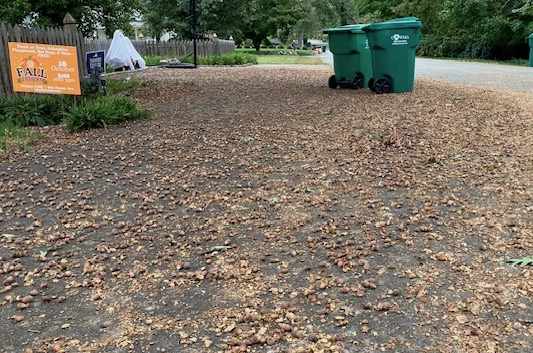
Maybe, the youth should forget about selling pumpkins in the Fall. Consideration should be given to transitioning to a haunted bowels of the basement tour at Trinity during Halloween.

Who knows Chip and Flip could make cameo appearances as the sump pump mudmumblers or the boiler buzzards with a guaranteed admission discount slashed from $39.95 to $19.95.

Mechanical rooms in this old church building make me weary.

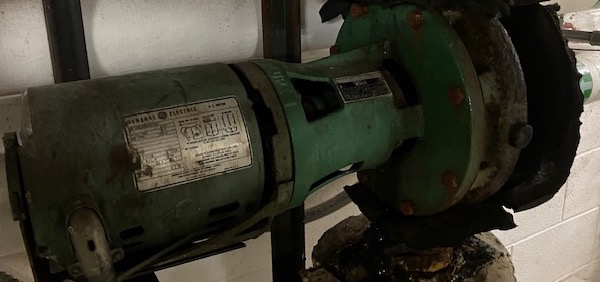
Financial disaster, in the form of a piece of equipment failing is always lurking in a mechanical room. Its the law of the darkness— where deep inside a pump a worn coupler shreds, fails. The pump squawks and shrieks in its mechanized death until the power is cut.

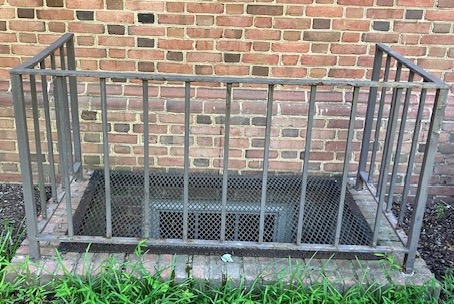
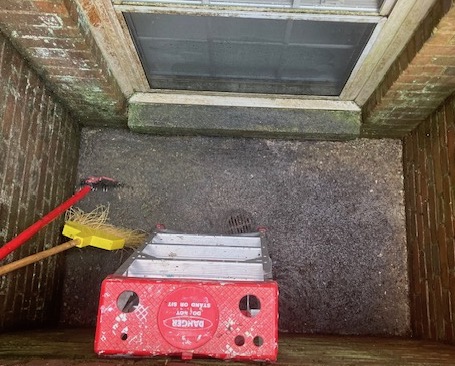
For months, we’ve been carefully monitoring two sump pumps in a well deep in the concrete floor. These pumps perform a critical function—they remove intruding ground water.

On Tuesday, a skilled technician who is familiar with cantankerous sump pumps came back to install a new switch for a supposedly faulty one.

In preparing for this installation, the technician discovered a loose screw. This screw was impacting the proper operation of that pump.

The technician simply tightened down the screw. Following this reconnection, he adjusted a float mechanism, and turned back on the electricity. In a matter of seconds, the pump was engaged and working properly.

When the technician reported his findings, I was relieved to hear this good news, and yet, I wondered why can’t the complications of daily living be so simple?

How different this world might be if it simply came down to finding and tightening a loose screw.

James Taylor is a gifted songwriter, singer, and musician.

He is also a survivor.

At some point in his career, Mr. Taylor had to tighten the screws of his lifestyle in order to make it to another day.

In the third stanza of his song “Fire and Rain,” Mr. Taylor wrote:
“Won’t you look down upon me, Jesus?
You’ve got to help me make a stand.
You’ve just got to see me through another day.
My body’s aching and my time is at hand,
And I won’t make it any other way.”

In this chaotic world, at this very moment, there is a human being who is hoping that Jesus is looking down upon them. That person no matter his/her circumstances needs help in making a stand.

What does it take to be seen through another day when no other options seem possible?

What are the chances that the right person with the right screwdriver will arrive and tighten down the loose screw for the person in need?

Might that screw tightener be you, me, we, us?

The other day, I stumbled upon this line of scripture: “Let me alone, for my days are a breath.”

Those words came from Job chapter 7 verse 16.

“For my days are a breath” reminds me of how quick time moves.

For that person who needs a screw tightened his/her time “is at hand.”

How will I respond if it is up to me to help that person to “make a stand?”

Making a stand is a “breath.”

So is tightening a screw.

My sump pump pals (Photo Bill Pike)

Virginia Tech you’re not alone

During the course of a year at our home, we receive alumni magazines from five colleges and universities.

I skim through these magazines. Quite often, I will find one or more articles that interests me, and I read those articles.

In the Fall 2025, Virginia Tech Magazine, an advertisement, a story about feeding Virginia Tech athletes, and a news release about a $229 million investment in student athletics caught my attention.

The advertisement and two articles made me think about a December 18, 2025 report from NPR. The reporter for NPR cited research from a national nonprofit, Swipe Out Hunger, who estimates that 2 in 5 college students face food insecurity.

Considering this information, I wrote a letter to the editor of the Virginia Tech Magazine.

At this point, I haven’t heard back from the editor of the magazine. But, I did hear receive an email from an administrator at Virginia Tech.

You can draw your own conclusions about my letter.

However, I think this is a solvable problem as Virginia Tech has an endowment of $1.95 billion dollars (June 30, 2024)

Letter

Tuesday, January 6, 2026

vtmag@vt.edu

I am not a graduate of Virginia Tech.

My connection to your outstanding university comes from our oldest daughter, a graduate of the Class of 2005.

I always enjoy skimming and reading the Virginia Tech Magazine.

In the Fall 2025 edition, Virginia Tech President, Tim Sands, starts his message with an interesting question—“Do you remember your first day on campus?”

Based upon a full page advertisement on page eight for The Market, I wonder how many current Virginia Tech students remember their first day on campus when they realized they were not going to be able to eat because of their financial situation.

The advertisement for The Market reveals “impact points” for the 2024-25 academic year. Ponder these points: over 69,000 pounds of food distributed, experienced a 375% increase in visits from students, 829 students received free meals, and $130,520 in funds were raised for keeping the pantry stocked. Additionally, there is a plea to make a gift to keep the shelves stocked.

In contrast to this plea to support The Market, on page seventeen is an article titled Fuel For Victory. This article is about feeding Virginia Tech’s “600 plus student-athletes across 22 sports.” Author Carter Brown states—“behind every athlete stands a dietitian equipped with a fueling strategy to help them feel and perform their best.”

I wonder if there is a dietitian behind the 829 students who received free meals from The Market?

And to carry this disparity further, on page forty-nine is the announcement that Virginia Tech has approved a $229 million investment in athletics. This funding is allocated “to position the university to compete with top Atlantic Coast Conference programs.” I wonder how many of those millions will be spent luring and paying upper tier athletes to play for Virginia Tech in hope that an elusive national championship be won?

Look, I know how important athletics are to college campuses. But along the way money has become the brain trust, not practical thinking.

In the January 2026 edition of the Kiplinger Personal Finance Magazine, I read with interest an interview with Julie Garcia. Miss Garcia is the Founder of Jewels Helping Hands in Spokane, Washington. This nonprofit offers a variety of services to the homeless in their community.

When asked about the hopes for the future of Jewels Helping Hands, Miss Garcia stated: “We hope that we’re out of a job at some point because we no longer have to fill these gaps in the community.”

As a leading public research university, might President Sands direct Virginia Tech toward solving the food challenges of its students so that The Market is no longer needed? How much of that $229 million could be redirected toward leveling the food playing field for all Virginia Tech students, not just student athletes?

Virginia Tech might not ever be able to invest enough in athletics to win a national championship.

But, how amazing would it be, if a cure for a type of cancer came from a Virginia Tech student who no longer had to worry about food insecurity.

President Sands, Virginia Tech has the ingenuity and the financial resources to solve this challenge.

This is a risk worth taking.

Do it.

Bill Pike
Richmond, Virginia