Wedding Day Saturday, May 30, 2026: A Toast

(Photo Bill Pike)

Before, I start, how about this weather. Since Thursday, we’ve had spectacular weather.

I was told to keep this short, no goofy humor, no preachiness, and above all don’t embarrass us.

Nice try.

I’d like to start by thanking everyone for being here this evening.

Over the last few days, we had family and friends arrive from London, England, Hawaii, California, Texas, Tennessee, Illinois, Georgia, Massachusetts, New York, Maryland, North Carolina, and Virginia.

We are honored to have you with us.

But in truth, my most heartfelt thanks goes to those who opted not to attend—bless your hearts.

We are deeply appreciative of our friends, Bill and Cabell Longan for helping Elizabeth and Jackson reserve the Commonwealth Club.

Thanks for every staff member at the Commonwealth Club and our wedding coordinators.

Appreciate the staff and volunteers at Trinity United Methodist Church for their help too.

Thanks to those “dangerous” steel magnolias who hosted bridal showers in North Carolina and Virginia, and the bridal luncheon yesterday.

We also want to thank the Cates and Phipps families for their gracious hospitality at the rehearsal dinner.

The whole evening was delightful—delicious food, connecting conversations, and heartfelt toasts to honor Jackson and Elizabeth.

We look forward to being with you at more family gatherings in the future.

That thanks goes also to some special heavenly guests Ken and Liz, Bill and Louise, Susan and Larry, and two of my uncles Harry and Ralph who adored Elizabeth.

I’ve been thinking about this day for a long time.

I have determined that weddings are not about fathers.

Weddings are all about the mother of the bride or groom.

Our family has been exceptionally lucky to have my wife to be our leader for these events.

Her command center was the kitchen table. All of the lists, notes, and orders were developed there.

Betsy, I love and thank you for all of this.

The words—“Just Chill William” are engrained in what remains of my gnat size brain.

Perhaps that might make a good two-sided t-shirt. On the front “Just Chill William” and on the back a rendering of William in a block of ice with the words “William Is Frozen.”

For a wedding, fathers lose their “Miranda” rights.

George Banks played by Steve Martin in the remake of the movie Father of the Bride showed us that.

I will spare you my George Banks inspired “flipping out” grievances.

Relatives and friends offered me advice related to the wedding.

My sister-in-law, Abby, told me to stock up my basement office with survival supplies and stay down there until a couple days before the wedding.

At one point, I told my college pal, Dan Callow, I’d like to pull a Forrest Gump, and start running away. But in true Dan wisdom, he told me that would be too easy.

So, Jackson, every father prays that his daughter will not end up with Mr. Wrong.

I guess the good Lord was listening, because I think for Elizabeth you are Mr. Right.

I say that for lots of reasons. But over these last couple of years, I’ve seen and admired your quiet endurance and resilience.

And in the ups and downs of that endurance and resilience, I’ve witnessed your love and respect for Elizabeth.

Jackson, we love you and welcome you to our family.

Elizabeth, where do I start?

Quite honestly, I thought at one point during your senior year of high school that I would be faced with two options.

At that time, you and your mother “loved” each other so much that I thought I’d be visiting one of you in prison and the other at the cemetery.

I’m thankful that eventually “love” intervened and persevered.

Jackson, I’m sorry, but the shopping gene that Elizabeth possesses is from the Cloud side of the family.

That is countered by her stubbornness which has long been linked to an unmuted gene from the Pike family.

Elizabeth, I want you to know that I love your endurance and resilience too. I’ve seen that at work in your personal and professional life, and I’ve seen this with your love and respect for Jackson.

The March 2026 issue of Southern Living Magazine has an article titled “She’s Got Game.” The article focuses on six Southern women who have impacted women’s basketball “both on and off the court.”

One of those women is Kara Lawson. She is the coach of Duke University women’s team.

A 2022 video of Coach Lawson talking to her Duke players gained much attention through social media.

Here is part of what Coach Lawson said to her players:

“We all wait in life for things to get easier. Most people think that it’s going to get easier. Life is gonna get easier, basketball’s gonna get easier, school is gonna get easier—it never gets easier. What happens is you become someone that handles hard stuff better.”

Elizabeth and Jackson, I know you know that marriage isn’t easy, but through your experiences with each other you will learn to handle the hard stuff better.

Handling that hard stuff better is grounded in what might be a dying word—loyalty.

Your love and loyalty to each other won’t make life easier.

But your love and loyalty for each other can carry a marriage for a long, long, long time.

Years ago, at Lakeside Elementary School, one of the young teachers on our faculty was engaged.

From her wedding invitation, I cut out and saved these words from the Song of Solomon Chapter 3 verse 4: “I found the one who loves my soul.”

To Elizabeth and Jackson, it is clear to me and everyone here that you “found and love each others souls.”

We pray that love will sustain you and your souls for forever.

All the best!

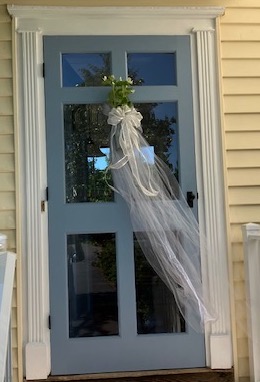
Note from the author: A few minutes after 4:30 p.m. on Saturday, May 30, 2026, I had the honor and privilege of walking our youngest daughter down the church aisle and to the altar for the wedding ceremony. On behalf of her mother and me, I handed her over to Jackson. Long may they endure.

“Now go and do likewise”

I’m honored to be with you this afternoon.

Perhaps, we’ll learn a little bit more about each other over the next hour.

That’s right.

I was told to fill up an hour.

Just kidding. I don’t want you to be late for dinner.

Let’s see if I can do better with the humor.

From Bob Hope:

ON TURNING 70 
’I still chase women, but only downhill.’ 

ON TURNING 80 
’That’s the time of your life when even your birthday suit needs pressing.’ 

ON TURNING 90 
’You know you’re getting old when the candles cost more than the cake.’ 

ON TURNING 100 
’I don’t feel old. In fact, I don’t feel anything until noon. Then it’s time for my nap.’

ON GOING TO HEAVEN 
‘I’ve done benefits for ALL religions.
I’d hate to blow the hereafter on a technicality.’ 

Ok, enough humor, let’s get serious for a few minutes.

My guess is that you are familiar with Luke Chapter 10 verses 25-37, this is the parable of the Good Samaritan.

Let’s revisit those verses:

The Parable of the Good Samaritan
25 On one occasion an expert in the law stood up to test Jesus. “Teacher,” he asked, “what must I do to inherit eternal life?”
26 “What is written in the Law?” he replied. “How do you read it?”
27 He answered, “‘Love the Lord your God with all your heart and with all your soul and with all your strength and with all your mind’[c]; and, ‘Love your neighbor as yourself.’[d]”
28 “You have answered correctly,” Jesus replied. “Do this and you will live.”
29 But he wanted to justify himself, so he asked Jesus, “And who is my neighbor?”
30 In reply Jesus said: “A man was going down from Jerusalem to Jericho, when he was attacked by robbers. They stripped him of his clothes, beat him and went away, leaving him half dead.
31 A priest happened to be going down the same road, and when he saw the man, he passed by on the other side.

32 So too, a Levite, when he came to the place and saw him, passed by on the other side.
33 But a Samaritan, as he traveled, came where the man was; and when he saw him, he took pity on him.
34 He went to him and bandaged his wounds, pouring on oil and wine. Then he put the man on his own donkey, brought him to an inn and took care of him.
35 The next day he took out two denarii[e] and gave them to the innkeeper. ‘Look after him,’ he said, ‘and when I return, I will reimburse you for any extra expense you may have.’
36 “Which of these three do you think was a neighbor to the man who fell into the hands of robbers?”
37 The expert in the law replied, “The one who had mercy on him.”
Jesus told him, “Go and do likewise.”

Somewhere in America today, maybe here in Richmond, a person will be accosted, robbed, and beat to a pulp.

Why does this continue to happen in our world?
What is wrong with us?

Why is that same mentality present today just as it was on the road from Jerusalem to Jericho?

A couple of blocks from Trinity, I know two neighbors who experienced a dangerous encounter with robbers. My neighbors were lucky.

Again, why is this repulsive behavior still a part of our society?

Why can’t we do better?

Maybe the answer can be found at the beginning of this parable.

The expert on the law addresses Jesus as “teacher.”

I wonder if the robbers on the road from Jerusalem to Jericho, the individuals who accosted my neighbors, did anyone attempt to teach them something as simple as the difference between right and wrong?

Were both parents in the home? Was home life stable with an abundance of nurturing and love? Were there rules? Did they attend church? Were they compliant in a school environment?

Did they have a moral compass? Did their hearts understand good versus evil? Prior to making their poor decisions, did anyone ever take the time to listen to them?

In the summer of 2025, my wife and I had the privilege of traveling with two couples from college to Vancouver for three days, and then we boarded a cruise ship that took us into Alaska.

Yes, it was a remarkable trip. One I will never forget. This was despite Mr. Moose not being on every Alaskan street corner as the tourist marketing had suggested.

Within walking distance to the hotel where we stayed in Vancouver is the magnificent Stanley Park.

On our last morning in Vancouver, three of us took a walk into Stanley Park.

During that walk we came across a statue of Governor General Lord Stanley from October 1889.

Inscribed at the base of the statue are these cherished words: “To the use and enjoyment of people of all colours, creeds, and customs for all time. I name thee Stanley Park.”

I love the honesty of that wisdom from Lord Stanley.

And, I also love that the Good Samaritan was not influenced in his decision making by “colours, creeds, and customs.”

Yet, here we are 137 years later from Lord Stanley’s statue, and we continue to struggle with the “colours, creeds, and customs” of those who don’t look like us.

Jesus taught us to love despite our differences in appearance. Why is this so difficult for us to do?

Our last day in Alaska was in the city of Fairbanks.

The pretty Chena River flows through Fairbanks. There is a river walk that showcases the river with lots of local history woven into the displays along the river.

During our exploring, another statue caught our attention.

We came across a display about the 1913 Pioneer Ascent of Denali. The display clearly captured this historic event, but the focus is on one of the climbers—Walter Harper.

Next to the display is a marvelous statue of Mr. Harper capturing the essence of Harper on the climb and his outstretched “hand up.”

Harper possessed the all-around skills for the climb, but he also possessed the essential human skills for his willingness to always extend his hand to help.

Like Walter Harper, the Good Samaritan, extended his hand to help the beaten traveler.

What had the Good Samaritan, Lord Stanley, and Walter Harper been taught in their lives that allowed them to see the world differently by extending a helping hand to a neighbor in need?

What made them different from the Priest, the Levite and the robbers?

Last Monday afternoon, my wife had her first cataract surgery.

At the surgery center, it is tough to wait patiently when you are anxious to have the surgery performed.

But eventually, her name was called by a nurse.

After confirming that my wife was really my wife, the nurse said to me, “I’m going to take good care of her. “

I responded by saying, “Thank you, I know you will.”

Isn’t that part of this parable?

Doesn’t Jesus want us to confirm that we are going to take “good care” of our neighbors?

The March 2026 issue of Southern Living Magazine has an article titled “She’s Got Game.” The article focuses on six Southern women who have impacted women’s basketball “both on and off the court.”

One of those women is Kara Lawson. She is the coach of Duke University women’s team. Coach Lawson played for Pat Summit, the legendary coach at the University of Tennessee. Additionally, Coach Lawson is the Head Coach of the USA Women’s National Team.

In 2022, a video of Coach Lawson talking to her Duke players caught a lot of attention through social media.

Here is part of what Coach Lawson said to her players: “We all wait in life for things to get easier. Most people think that it’s going to get easier. Life is gonna get easier, basketball’s gonna get easier, school is gonna get easier—it never gets easier. What happens is you become someone that handles hard stuff better.”

Perhaps, that’s the difference between the Good Samaritan, and the robbers, the priest, and the Levite.

Perhaps, the Good Samaritan had already learned how to handle the “hard stuff” in life better.

He knew how to respond to Jesus’ command: “Now go and do likewise.”

In today’s world, why is that so hard for you, me, we, us to “go and do likewise?”

In 1898, Lord Stanley wasn’t hindered in his thinking about “colours, creeds, and customs.” He went and did likewise.

Fifteen years later, Walter Harper knew how important it was to extend his hand of help no matter the environment or location. The same for Walter Harper, he went and did likewise.

With regard to our neighbors, doesn’t Jesus need to hear from us the same words that the nurse spoke to my wife and me just prior to her surgery—“I will take good care of her.”

Doesn’t Jesus want us to take “good care” of our neighbors just like the nurse and the Samaritan did?

Is that easy?

No.

Remember what Coach Lawson pointed out to her players, “it never gets easier.”

Life might not get easier.

But, life can get better.

That requires our hearts to drop our fears, to love our neighbors, and to “go and do likewise.”

Let us pray: Father of us all, touch our hearts to drop our fears, to love our neighbors, and to “go and do likewise.” Amen

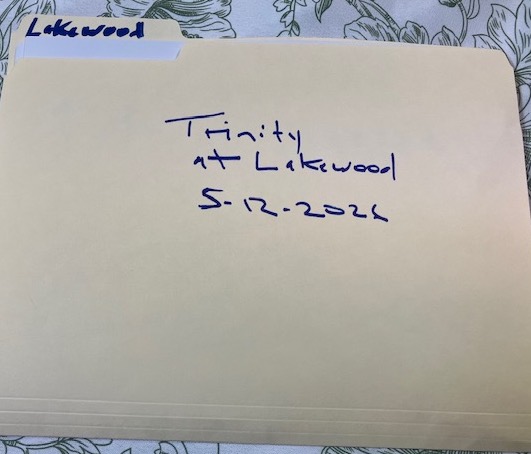
Author’s note: On the afternoon of Tuesday, May 12, I had the privilege of presenting this devotional at Lakewood, a retirement community in Richmond. This program is part of Trinity UMC reaching out to its members beyond the walls of the church.

(Photo Bill Pike)

Valentine’s Day: “their song is love”

According to a report from CNBC, the National Retail Federation and Prosper lnsights and Analytics, Americans will spend an estimated 14.6 billion dollars for Valentine’s Day.

Clearly, I wasn’t included in the survey.

I’ll hope that Trader Joe’s hasn’t sold out of their high quality $1.00 cards, and somewhere today, I’ll find appropriate chocolate for my Commander Supreme.

If Trader Joe’s is sold out of cards, I’ll use the stash of crayons, colored pencils, and markers that our grandchildren keep here to create a card for the love of my life, my Commander Supreme.

I always loved the title of the Beatles’ album Sgt. Pepper’s Lonely Hearts Club Band.

I think quite a bit about those words “lonely hearts.”


At 72, I’m much more aware of “lonely hearts” in the world today.

You might be aware that lots of data is out there related to loneliness.

Some report that 1 out of every 6 of us experience loneliness. Others report that figure as 1 out of every 5.

In 2023, the U. S. Surgeon General declared “loneliness” an epidemic.

I wonder how much of our loneliness is based upon the pace of the world?

Is it because our days move so fast that we become less aware of the lonely people around us?

Perhaps, combatting loneliness depends upon our hearts.

Can we slow our pace, can we open our hearts more, can our hearts be more attentive, can our hearts give more time?

Recently, Henry Chambers, an attorney and law professor at the University of Richmond, was our community guest at Pub Theology at the WayGone Brewery.

Early in his career, Dr. Chambers talked about a mentorship that he participated in at a local school. Some how, Dr. Chambers was able to build a relationship to bring a quiet, shy student out of his shell. It was Dr. Chamber’s patient heart and time that helped this student to move forward.

Yesterday at our church, we celebrated the life of Mr. Bob’s wife, Vickie.

Attending the funeral were numerous Hispanic students and families from Oak Grove Bellemeade Elementary School. Mr. Bob is surely sad and lonely from the loss of the love of his life, but on the tough days ahead of him, the love of those students and their families will get him through.

I wonder if any of the pollsters in America have conducted a survey about our hearts. What might we learn about our hearts?

If they framed a question about the hearts of political leaders, I wonder what Americans would say about their hearts?

Soft hearted soul that I am, I can tell you there might be a heart beating in the chest of some of our leaders, but those hearts have no love, no compassion.

I once had the privilege of speaking at our church during December. No pastor has ever set a perimeter for me as in don’t say this or that. Pastors are time conscious. My only guideline— stay within a fifteen to twenty minute time frame.

In speaking about the birth of Jesus, and the love that was brought into the world with his arrival, I cited a song from the Beach Boys titled “Surf’s Up.” The song isn’t about surfing or Jesus.

“Surf’s Up” might be one of Brian Wilson’s best compositions. The song features lyrics from Van Dyke Parks that will leave you scratching your head.

But for that Sunday morning in the pulpit, I was focused on the tag of the song. This is the end where all the harmony of the Beach Boys’ voices are woven together.

In that tag, these words are sung: “I heard the word, wonderful thing, a children’s song, have you listened as they played? Their song is love, and the children know the way.”

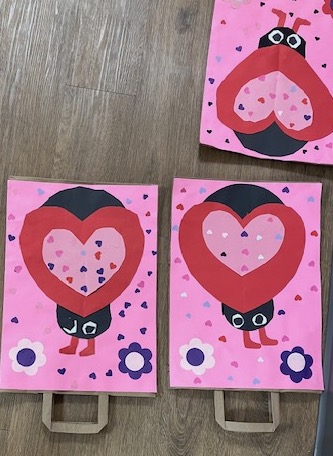
It is no secret that I love the artwork created by the students at the Trinity UMC Preschool.

Working with their teachers, these students have created some heart touching masterpieces.

On this Valentine’s Day, I wonder what our hearts might learn from our children?

They provide us a gentle reminder: “ a children’s song, have you listened as they played? Their song is love, and the children know the way.”

If we are going to make it in this chaotic world, we need to find the way of the children and their song of love.


It’s our only hope.

Happy Valentine’s Day

Student artwork Trinity UMC Preschool (Photo Bill Pike)

Thanksgiving: “I don’t get no respect.”

Rodney Dangerfield was a gifted comedian.

His self-deprecating humor made me laugh.

In his rapid fire delivery of jokes, he always found a way to work in what became his identifying line—“I don’t get no respect.”

For lots of reasons, that’s how I’ve come to feel about Thanksgiving.

Over the last several years, it appears to me that our respect for Thanksgiving is eroding.

Retailers know this.

For example, the National Retail Federation expects Christmas sales in 2025 to “exceed a trillion dollars.”

Forecasters predicted that Halloween sales for 2025 would be in the range of twelve billion.

Thanksgiving is projected to be in the four to five billion range.

Growing up in North Carolina, Thanksgiving was always a drive on U.S. 70 to my grandmother’s home in Greensboro.

Sometimes, there was a stop on this twenty minute drive at Mt. Pleasant United Methodist Church for a morning Thanksgiving service.

The spread of home cooked food for our lunch time gathering was amazing. As an overweight kid, I was in heaven.

And yes, I like pumpkin pie. However, my favorite Thanksgiving dessert was persimmon pudding. I think my Aunt Evelyn always made sure we had persimmon pudding.

The other thing that I remember about those gatherings was being huddled in a small den with a television that projected a black and white picture of the Detroit Lions and Green Bay Packers playing their traditional Thanksgiving Day game. At the time, that was the only game broadcast or played.

Money has changed that. From Thursday through Sunday, football games at the collegiate and professional level are non-stop.

In November 1975, I spent my first Thanksgiving away from home. I was in Milton, Massachusetts, a pretty New England town just south of Boston.

I was with my future wife’s family. Two days later, that beautiful lady and I were married in West Hartford, Connecticut.

Lots has transpired in those fifty years.

And even though, Thanksgiving is squashed between the billions and trillions of Halloween and Christmas, it continues to survive.

We must never take the survival of Thanksgiving for granted.

The survival of Thanksgiving depends upon you, me, we, us.

We can’t let Thanksgiving die.

If Thanksgiving dies, so will we.

Maya Angelo said it better: “If we lose love and self-respect for each other, this is how we finally die.”

For Thanksgiving to continue to have a life, we must ensure that our children and grandchildren understand why it is so important to be thankful.

Being thankful can’t be taken for granted.

In the fall of my sophomore year at Greensboro College, biology professor, Dr. Kemper Callahan, put that into perspective for me.

This is what I have come to Dr. Callahan’s Thanksgiving Lecture. He simply told our class that we should never take Thanksgiving for granted. That included appreciating all of the people who make Thanksgiving happen. Dr. Callahan put a strong emphasis on farmers—no farmers, no Thanksgiving.

Successful Farming reported in July of 2025: “More farms nationwide filed for bankruptcy in the first three months of the year this year than across the entirety of 2024.”

What will the continuing struggles of our farmers mean for future Thanksgivings?

While I love the Thanksgiving food, Thanksgiving is also about family.

How lucky I have been to have been nurtured by a family every day of my life. That is a luxury not available to everyone.

As crazy as families can be, even an ounce of stability can make all the difference in a person’s life.

I see that generational stability in our Thanksgiving gatherings. Internally I ask—how different would my life have been without that stability?


I also ponder how much better America could be if that stability was present for all of our families. We might be surprised at how lives could improve by solving those generational cycles of instability.

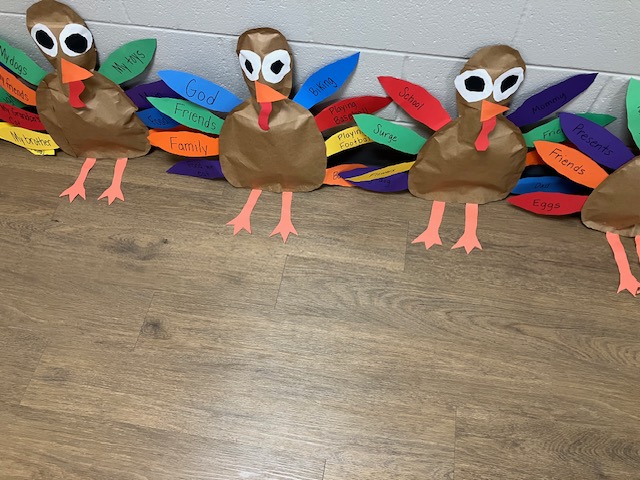
In my work at Trinity United Methodist Church, I see hope for Thanksgiving. That hope comes through the art work of the children in the preschool.

(Photo by Bill Pike)

I love walking through the hallways in the days before Thanksgiving. I get to see the Thanksgiving artwork gracefully resting on the floor or gently hanging from a wall mounted hook. These masterpieces are in their curing stage with glue and paint drying before they are transported home.

(Photo by Bill Pike)

Who knows maybe these heartfelt creations will be cherished and preserved for future Thanksgiving celebrations.

Isn’t that part of what makes up respect—preserving what we value?

Rodney Dangerfield figured that out.

Mr. Dangerfield learned that his audiences anticipated and valued his famous line—“I don’t get no respect.”

I can hear him now.

Thanksgiving is coming. I gotta tell you, when I was a kid Thanksgiving got a lot of respect. Not now. Thanksgiving is like a panini sandwich flatten on a press by Halloween pumpkins and retailers overstuffing our Christmas stockings.

I hope you and your families have a good Thanksgiving.

And remember to endure, Thanksgiving needs our respect, our hope, and our thankful hearts.

A Mrs. Schmidt production (Photo Bill Pike)