On March 19, the Virginia Commonwealth University Rams (VCU) upset the North Carolina Tarheels (UNC) in the NCAA men’s basketball tournament.
This was in the first round of the tournament. VCU was seeded eleventh and UNC was a six seed.
VCU overcame a 19 point second half lead, and then beat the Tarheels in overtime 82 to 78.
Ten days later on March 29, the Duke University Blue Devils joined their arch rivals, the Tarheels, as Duke also blew a 19 point lead. Duke lost to the University of Connecticut Huskies (UCONN).
Following a Duke turnover, UCONN beat Duke on a last second shot 73 to 72. Duke and UCONN were playing in the Elite Eight for a berth in the Final Four. Duke was a number one seed, and UCONN was a number two seed.
Before going any further, let me tell you that I have always cheered for Duke in the Atlantic Coast Conference. Perhaps some of that grounding came from my parents who thought I might end up going to Duke Divinity School to become a Methodist pastor. The good Lord is thankful that didn’t happen.
I am no expert on college basketball.
I loved the Atlantic Coast Conference (ACC) that I grew up with as a kid. In my opinion, because of money and illogical geographical expansions the ACC has been destroyed.
Also, because of money, including Name Image and Likeness (NIL), the Transfer Portal, one and done players, I worry that the NCAA could fall further into disarray.
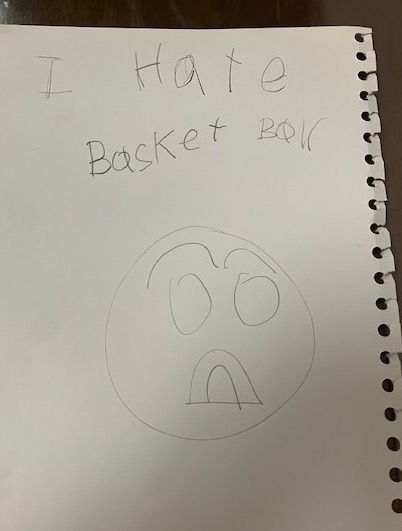
I do not watch Duke basketball games. I follow the season from a safe distance. I’m too chicken to put my life in the hands of 18 and 19 year olds with a round ball that has a mind of its own.
Watching missed foul shots and mindless turnovers at critical times during a game would cause me to lose what little real time sanity I have left.
When Duke plays, I check in on line, read the post game analysis, and look carefully at the boxscores.
I’ve watched enough basketball games to know that big leads in the second half are always a concern. Big leads can be tough to sustain. Look no further than the games that UNC and Duke loss.
If UNC took VCU lightly, they shouldn’t have. In 2007, VCU upset Duke 79 to 77 in the men’s NCAA tournament. True that was nineteen years ago, but Duke didn’t expect to lose to VCU either. I guarantee you the Duke players on that team still remember that loss.
If a team has a big lead in the second half with lots of time left, at some point, the basketball gods switch the momentum. Suddenly, everything starts to work for the team playing catch up, and everything starts going wrong for the team with the big lead.
Living here in Richmond where VCU is located, I’ve heard that the UNC players talked trash to the VCU players. Whether that is true or not, I can’t confirm.
But, I know this— trash talking with a big lead isn’t a good idea. If your going to trash talk a team, your talk best be in a really obscure foreign language that no one, not even a student manager on the opposing team can translate. Trash talking your opponent ensures trouble.
And speaking of talking, a reliable friend of mine, a lifelong UNC fan and graduate, noticed that neither Hubert Davis nor Jon Scheyer congratulated the winning coaches and their players in the post-game press conferences.
Perhaps, Coaches Davis and Scheyer were too shellshocked from losing. I understand these were excruciatingly painful losses. However, these coaches have been around basketball all of their lives. They know better—you congratulate the winning coach and his team.
Another source of frustration for me is the coaching carousel. Again, money is the ruler.
Quite often, I think to myself I went into the wrong profession. I should have been a men’s college basketball coach.
I could coach somewhere, turn a losing program around, lead my team into the NCAA tournament, sign an extension contract for millions of dollars, and then fail to continue to win and make it into the NCAA tournament.
Even with this lousy downturn, and the end of my coaching career at this school, it is likely that I a mediocre coach will walk away a millionaire. I can thank my wise agent and attorney for negotiating this sweet deal.
These ridiculous coaching contracts are all about the desire not just to have a winning season every year, but to win conference championships and potentially the national championship.
Alumni with deep pockets are willing to support these coaching contracts while also providing funds to bring in the best players.
Gone are the days when a player is loyal to his school and he plays there for all four years.
Loyalty is a dying word.
The same lack of loyalty can apply to coaches too.
N.C. State’s Athletic Director, Boo Corrigan learned about the lack of loyalty when he hired former LSU coach Will Wade.
Will Wade coached at N.C. State this year. Coach Wade bolted at the end of this season. He agreed to return to LSU where he had been a mediocre coach. Down in Tigerland, Coach Wade will continue to play second fiddle as football is still king of the campus there.
I imagine Boo Corrigan wishes he had never hired or ever heard of Will Wade.
And in truth, I feel bad for Hubert Davis. He might not be a great coach, but he was loyal to UNC.
Seems that the UNC decision makers forgot that Coach Davis’ teams beat the despised Dookies at two critical times in 2022.
First, at Mike Krzyzewski’s final home game at Cameron Indoor Stadium, and then again in the Final Four that year which turned out to be Coach Krzyzewski’s last game.
And with all of the foolishness involved in the speculation of who gets fired and hired as college basketball coaches, it is too bad that the athletic directors at N.C. State and UNC didn’t put out a perfect April Fool’s press release.
They could have announced that N.C. State had hired Hubert Davis and that UNC had offered a contract to former Duke star, Bobby Hurley. On March 11, Coach Hurley and Arizona State parted ways.
College basketball coaches, preachers, and public school superintendents have something in common—pressure.
These individuals are supposed to succeed. Doesn’t matter that it is impossible for them to make everyone happy in their environments.
They must win every game, hit a grand slam every Sunday with their sermon, and survive every school year without controversy. Impossible.
Go take a good look at Hubert Davis’ face in the post VCU press conference. On May 17, 2026, Coach Davis will turn 56. Weariness, the wear and tear of coaching is all over Coach Davis’ face. He looks much older than 56.
The pain of joining Club 19 will linger for some like losing a member of their family in the worse possible way.
If Club 19 is like that for you, I suggest you ponder life a bit deeper, deeper than UNC and Duke’s basketball seasons. Clearly, there are many things in daily living that have a greater urgency.
The real question for Dookies is what do you, me, we, us, the players and coaches learn from blowing a nineteen point lead?
I have a handful of books about college basketball. I’ve enjoyed reading each book. But, it is no secret that my favorite book about college basketball is Pat Conroy’s My Losing Season. If you are a college basketball lover, you must read this book.
In the Epilogue of the book, Mr. Conroy writes: “There is no downside to winning. It feels forever fabulous.But there is no teacher more discriminating or transforming than loss. The great secret of athletics is that you can learn more from losing than winning.” (Conroy pages 394-395, My Losing Season)
I think Mr. Conroy is correct about learning from losing.
Monday, November 2, 2026 will be here in a blink. That is the date set by the NCAA when men’s college basketball games can officially start.
With that date, all of this madness starts again.
My old feeble mind hopes that some common sense might return to the college game.
I’ll hold out for hope, but I think we’re too deep into the allure of money to turn things around.
Of course that enticement could be slowed if multiple college athletic departments continue to run at a deficit. The optics for running in the red will not be favorable.
Long after I’m gone, someone might stumble upon The Andy Griffith Show. The “Mayberry Goes Hollywood” episode illustrates how the charm of the town of Mayberry is turned upside down by its citizens.
A Hollywood movie producer comes to Mayberry to scout the town for the shooting of a movie. The producer likes what he finds with the town and its people.
When Mayberry is chosen as the site for the filming, its citizens turn Mayberry into an unattractive Hollywood themed town.
It takes a gentle chastising from the producer to get the citizens and Mayberry back to normal.
As Mayberry finds itself again, Mayor Pike looks at Sheriff Taylor and says to him: “We tried to tell them didn’t we Andy?” Andy who never fell into the Hollywood trap replies to the Mayor, “We sure did, Mayor.”
Maybe, someday, someone will look back at the current state of men’s college basketball and say, “we tried to tell them.”