Every Memorial Day, I think about the uncle I never met—Charlie Boyd Pike, Jr.
Boyd was the oldest of the eleven children in the Pike family.
According to family records, Boyd enlisted in the United States Navy on October 9,1941. Seven months later, on May 7, 1942, Boyd was declared missing in action. Boyd was a Fireman Third Class on the Navy destroyer the USS Simms. The Simms was attacked by Japanese war planes and sunk in the Coral Sea.
Despite this notification, the family held out hope that Boyd might have survived. Sadly, his body was never recovered.
Out on the Burlington Road in Greensboro at the cemetery for Mt. Pleasant United Methodist Church, there is a gravestone for Boyd.
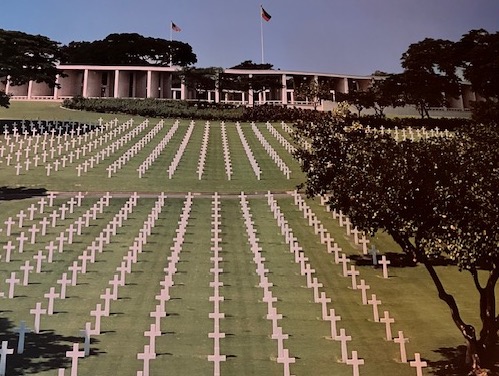
Additionally, Boyd’s name is inscribed on the Tablets of the Missing at the Manila American Cemetery and Memorial in the Philippines.
Manila American Cemetery and Memorial Fort Bonifacio, Philippines (Photo taken from an original print provided by WA Pike, Sr. )
According to United States military records, there are 36,280 missing in action names commemorated at the Philippines cemetery. That’s about the equivalent of the population of Salisbury, North Carolina (35,825) suddenly disappearing.
I can’t begin to imagine what Boyd’s loss was like for my grandparents and his brothers and sisters.
Subsequently, four of Boyd’s brothers served our country. Perhaps, it was luck or the grace of God, but they served without permanent injury or death.
Since our founding, America knows how horrible war is.
Our historical accounts and the trauma for families who experienced these too many losses confirm these horrors.
And despite this awfulness, at the end of every war, we hold on to a false hope that this one might just really be the last war of our lifetimes.
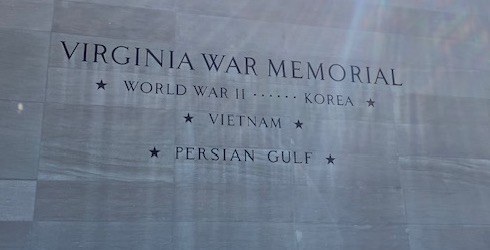
On a recent outing to the Virginia War Memorial, I came across these words: “Tell all who enjoy freedom of the deeds and sacrifices required for freedom to flourish.”
Every Memorial Day, I worry a little bit more that America is slipping away from understanding those “deeds and sacrifices required for freedom to flourish.”
I don’t think my Uncle Boyd, nor the thousands like him want that to happen.
From the author: I wrote this post on Sunday, May 17, 2026. On Monday, May 18, I sent the piece to the editor of the Greensboro News and Record. I gambled that the editor might take the piece and run it for Memorial Day because of the Greensboro connection. That didn’t happen, and I’m fine with the editor’s decision not to use it.
My friend, Mike Cross, is a United States Marine Corps veteran.
Sgt. Cross served America during the Vietnam War.
Sgt. Cross rarely speaks about his tour of duty in Vietnam. As you might well know, all wars are tough, disquieting duty.
Sgt. Cross is also a docent at the Virginia War Memorial—an excellent docent.
In the Spring of 2025, I learned from Sgt. Cross about a new program that the Virginia War Memorial was initiating for Memorial Day. The program is called “Say Their Names.”
“Say Their Names” is simply a reading of the names of “Virginia’s fallen heroes” from America’s wars. The reading of the names “ensures that their names and memories will not be forgotten.”
I was able to sign up on-line for two slots.
On Memorial Day afternoon in 2025, I drove to the Virginia War Memorial. Readers were asked to arrive thirty minutes prior to their designated start time.
Arriving early gave me the chance to read through my list of names. In that silent practice, War Memorial staff were available to answer any questions about pronunciation. Additionally, the staff made sure that your pacing for the reading of the names would not be too quick or too slow.
My first slot was at 4:09 p.m. My next one was at 4:12 p.m.
As the reading time approaches, War Memorial staff lead the readers outside into the Shrine Of Memory.
Readers also receive simple instructions about the cue for approaching the podium. There is no sprint to the podium, but no second is lost in keeping to the scripted timing.
Luckily for both of my assigned time slots, my pace was good, and most importantly, I did not mispronounce the names.
While waiting, I sat and listened to the reader at the podium saying the names from their list.
In the background, the whirring of car tires could be heard from out on Belvidere Street and an occasional gentle toot of a train horn from a freight train ambling along the tracks by the James River would roll up from the bluffs below.
But nothing disrupted the quiet, respectful dignity of the cadence of the names being read as that singular voice at the podium filled the Shrine of Memory.
Of course, these “fallen heroes” deserved every second of that solemnity.
I can only begin to imagine the harshness of the environments in which many of them perished.
During my first four years of teaching, I was hired as a Title VII Remedial Reading teacher at the Martinsville Junior High School in Martinsville, Virginia. Martinsville is located in Henry County, Virginia.
Some of the names I read were from Henry County. As I read, I recalled a few familiar last names that came from the last names of former students. I wondered if the hero might be a relative.
One thing is clear, we have lost too many Americans in our wars. In the Shrine of Memory, there are close to 12,000 names inscribed on the glass and stone walls.
These sacrifices in combat start with World War II and include every war and conflict where America has deployed our troops since then.
If this inaugural “Say Their Names” event is offered next year, I will attempt to sign up again as a reader.
Today, part of me feels that America is more interested in Memorial Day as a holiday weekend and the retail sales events that are linked to this unofficial start of summer.
Taking Memorial Day for granted isn’t good thinking.
In the last chapter of Tom Brokaw’s book, The Greatest Generation, he describes a Memorial Day in South Dakota. Mr. Brokaw was visiting his father’s brother, John, a World War II veteran.
On this Memorial Day, his uncle asked Mr. Brokaw to go with him to the Bristol cemetery. For years, John Brokaw had been the person who placed a small American flag on the graves of veterans.
John Brokaw had handed off this responsibility to a veteran from the Korean War, but John worried that his friend might not know the exact location of the graves of the veterans. So, on this day, he was still helping out and guiding his friend.
Watching these two veterans placing the flags on the appropriate graves, Tom Brokaw wrote: “It was a ceremony of honor, remembrance, and renewal played out in countless other cemeteries across the land by members of a generation that gave so much and asked so little in return.”
When it comes to Memorial Day, America and its citizens can’t afford to be distracted by a three day weekend and massive retail sales.
We need to be remembering those women and men “who gave so much and asked so little in return.”
After all, their sacrifices are the reason America continues to exist.
As we move into the future, we can never fail to honor and remember those “who gave so much.”
It is the least we can do for their now silent, humble hearts as they “asked so little in return” from us.
Richmond Times-Dispatch Thursday, May 21, 2026 OPINIONS LETTERS TO THE EDITOR SOL testing still vexes Virginia
Twenty years ago, I retired from public education, and yet Virginia’s Standards of Learning Tests (SOLs) have not retired from making front page headlines. The May 10 edition of the Times-Dispatch confirms this with Anna Bryson’s article, “Students will face tougher tests in 2027.”
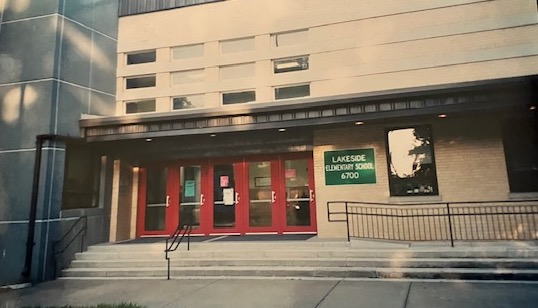
In 1998, when the testing was initiated, we thought the tests were tough. I was serving as principal at Lakeside Elementary School in Henrico County. Our first-year results were dismal.
From that point on, a relentless pressure was always present to improve and earn accreditation.
Now, I read that the tests will be tougher. I have no problem with toughness. And yes, I think it is wise to push back the testing dates to allow for more instructional time. However, in all this jabbering about the SOLs, how often do our school and community leaders consider the factors that can limit student success?
In the 28 years since the Standards of Learning Tests were implemented, how has the Commonwealth of Virginia scored in combatting critical factors that impact student performance?
Have our governors and legislators made any progress countering malignant generational cycles related to poverty, homelessness, substandard housing, unemployment, family instability and access to mental and physical health care?
Every day in classrooms across Virginia, teachers struggle to meet the needs of these students who are trapped in these brutal cycles. If we want better results on tougher tests, then we must address those challenges.
Margot Lee Shetterly, author of “Hidden Figures,” makes this point: “You don’t get the good without the bad, but you really do have to see it all in order to make progress.”
Until we address the “all” of the generational cycles that derail student learning, we will continue to struggle with SOL testing.
Bill Pike Tuckahoe
From the author: Honored to have a Letter To The Editor published in the May 21, 2026 edition of the Richmond Times-Dispatch.
Old photo of the entrance to Lakeside Elementary School (Bill Pike)
Perhaps, we’ll learn a little bit more about each other over the next hour.
That’s right.
I was told to fill up an hour.
Just kidding. I don’t want you to be late for dinner.
Let’s see if I can do better with the humor.
From Bob Hope:
ON TURNING 70 ’I still chase women, but only downhill.’
ON TURNING 80 ’That’s the time of your life when even your birthday suit needs pressing.’
ON TURNING 90 ’You know you’re getting old when the candles cost more than the cake.’
ON TURNING 100 ’I don’t feel old. In fact, I don’t feel anything until noon. Then it’s time for my nap.’
ON GOING TO HEAVEN ‘I’ve done benefits for ALL religions. I’d hate to blow the hereafter on a technicality.’
Ok, enough humor, let’s get serious for a few minutes.
My guess is that you are familiar with Luke Chapter 10 verses 25-37, this is the parable of the Good Samaritan.
Let’s revisit those verses:
The Parable of the Good Samaritan 25 On one occasion an expert in the law stood up to test Jesus. “Teacher,” he asked, “what must I do to inherit eternal life?” 26 “What is written in the Law?” he replied. “How do you read it?” 27 He answered, “‘Love the Lord your God with all your heart and with all your soul and with all your strength and with all your mind’[c]; and, ‘Love your neighbor as yourself.’[d]” 28 “You have answered correctly,” Jesus replied. “Do this and you will live.” 29 But he wanted to justify himself, so he asked Jesus, “And who is my neighbor?” 30 In reply Jesus said: “A man was going down from Jerusalem to Jericho, when he was attacked by robbers. They stripped him of his clothes, beat him and went away, leaving him half dead. 31 A priest happened to be going down the same road, and when he saw the man, he passed by on the other side.
32 So too, a Levite, when he came to the place and saw him, passed by on the other side. 33 But a Samaritan, as he traveled, came where the man was; and when he saw him, he took pity on him. 34 He went to him and bandaged his wounds, pouring on oil and wine. Then he put the man on his own donkey, brought him to an inn and took care of him. 35 The next day he took out two denarii[e] and gave them to the innkeeper. ‘Look after him,’ he said, ‘and when I return, I will reimburse you for any extra expense you may have.’ 36 “Which of these three do you think was a neighbor to the man who fell into the hands of robbers?” 37 The expert in the law replied, “The one who had mercy on him.” Jesus told him, “Go and do likewise.”
Somewhere in America today, maybe here in Richmond, a person will be accosted, robbed, and beat to a pulp.
Why does this continue to happen in our world? What is wrong with us?
Why is that same mentality present today just as it was on the road from Jerusalem to Jericho?
A couple of blocks from Trinity, I know two neighbors who experienced a dangerous encounter with robbers. My neighbors were lucky.
Again, why is this repulsive behavior still a part of our society?
Why can’t we do better?
Maybe the answer can be found at the beginning of this parable.
The expert on the law addresses Jesus as “teacher.”
I wonder if the robbers on the road from Jerusalem to Jericho, the individuals who accosted my neighbors, did anyone attempt to teach them something as simple as the difference between right and wrong?
Were both parents in the home? Was home life stable with an abundance of nurturing and love? Were there rules? Did they attend church? Were they compliant in a school environment?
Did they have a moral compass? Did their hearts understand good versus evil? Prior to making their poor decisions, did anyone ever take the time to listen to them?
In the summer of 2025, my wife and I had the privilege of traveling with two couples from college to Vancouver for three days, and then we boarded a cruise ship that took us into Alaska.
Yes, it was a remarkable trip. One I will never forget. This was despite Mr. Moose not being on every Alaskan street corner as the tourist marketing had suggested.
Within walking distance to the hotel where we stayed in Vancouver is the magnificent Stanley Park.
On our last morning in Vancouver, three of us took a walk into Stanley Park.
During that walk we came across a statue of Governor General Lord Stanley from October 1889.
Inscribed at the base of the statue are these cherished words: “To the use and enjoyment of people of all colours, creeds, and customs for all time. I name thee Stanley Park.”
I love the honesty of that wisdom from Lord Stanley.
And, I also love that the Good Samaritan was not influenced in his decision making by “colours, creeds, and customs.”
Yet, here we are 137 years later from Lord Stanley’s statue, and we continue to struggle with the “colours, creeds, and customs” of those who don’t look like us.
Jesus taught us to love despite our differences in appearance. Why is this so difficult for us to do?
Our last day in Alaska was in the city of Fairbanks.
The pretty Chena River flows through Fairbanks. There is a river walk that showcases the river with lots of local history woven into the displays along the river.
During our exploring, another statue caught our attention.
We came across a display about the 1913 Pioneer Ascent of Denali. The display clearly captured this historic event, but the focus is on one of the climbers—Walter Harper.
Next to the display is a marvelous statue of Mr. Harper capturing the essence of Harper on the climb and his outstretched “hand up.”
Harper possessed the all-around skills for the climb, but he also possessed the essential human skills for his willingness to always extend his hand to help.
Like Walter Harper, the Good Samaritan, extended his hand to help the beaten traveler.
What had the Good Samaritan, Lord Stanley, and Walter Harper been taught in their lives that allowed them to see the world differently by extending a helping hand to a neighbor in need?
What made them different from the Priest, the Levite and the robbers?
Last Monday afternoon, my wife had her first cataract surgery.
At the surgery center, it is tough to wait patiently when you are anxious to have the surgery performed.
But eventually, her name was called by a nurse.
After confirming that my wife was really my wife, the nurse said to me, “I’m going to take good care of her. “
I responded by saying, “Thank you, I know you will.”
Isn’t that part of this parable?
Doesn’t Jesus want us to confirm that we are going to take “good care” of our neighbors?
The March 2026 issue of Southern Living Magazine has an article titled “She’s Got Game.” The article focuses on six Southern women who have impacted women’s basketball “both on and off the court.”
One of those women is Kara Lawson. She is the coach of Duke University women’s team. Coach Lawson played for Pat Summit, the legendary coach at the University of Tennessee. Additionally, Coach Lawson is the Head Coach of the USA Women’s National Team.
In 2022, a video of Coach Lawson talking to her Duke players caught a lot of attention through social media.
Here is part of what Coach Lawson said to her players: “We all wait in life for things to get easier. Most people think that it’s going to get easier. Life is gonna get easier, basketball’s gonna get easier, school is gonna get easier—it never gets easier. What happens is you become someone that handles hard stuff better.”
Perhaps, that’s the difference between the Good Samaritan, and the robbers, the priest, and the Levite.
Perhaps, the Good Samaritan had already learned how to handle the “hard stuff” in life better.
He knew how to respond to Jesus’ command: “Now go and do likewise.”
In today’s world, why is that so hard for you, me, we, us to “go and do likewise?”
In 1898, Lord Stanley wasn’t hindered in his thinking about “colours, creeds, and customs.” He went and did likewise.
Fifteen years later, Walter Harper knew how important it was to extend his hand of help no matter the environment or location. The same for Walter Harper, he went and did likewise.
With regard to our neighbors, doesn’t Jesus need to hear from us the same words that the nurse spoke to my wife and me just prior to her surgery—“I will take good care of her.”
Doesn’t Jesus want us to take “good care” of our neighbors just like the nurse and the Samaritan did?
Is that easy?
No.
Remember what Coach Lawson pointed out to her players, “it never gets easier.”
Life might not get easier.
But, life can get better.
That requires our hearts to drop our fears, to love our neighbors, and to “go and do likewise.”
Let us pray: Father of us all, touch our hearts to drop our fears, to love our neighbors, and to “go and do likewise.” Amen
Author’s note: On the afternoon of Tuesday, May 12, I had the privilege of presenting this devotional at Lakewood, a retirement community in Richmond. This program is part of Trinity UMC reaching out to its members beyond the walls of the church.
Some day, our luck at the Osher Institute Of Lifelong Learning at the University of Richmond is going to run out.
We’ll submit a proposal, a topic for teaching a class, and we’ll be rejected.
And that will be ok, as it will be part of life’s learning curve for two rapidly aging geezers.
But so far, we’ve been lucky. We just completed our ninth collaborative class.
The we is my lifelong friend, Joe Vanderford, and me.
We grew up in Burlington, North Carolina.
Our original bonding came from church, church softball teams, and in our teenage years—a love for music.
On some Sunday mornings, we’d sneak out of the balcony of the sanctuary at Davis Street United Methodist Church and go to Central News. Central News sold magazines and newspapers. We’d be searching for the latest issue of Rolling Stone, Crawdaddy, or Creem. These periodicals covered rock and roll in America.
If we knew, a favorite artist had released a new album, we’d drive down North Carolina Highway 54 to Chapel Hill. In Chapel Hill, we had two stops, the Record and Tape Center or the Record Bar. In either of those record shops, we’d find the new album we were looking to purchase.
But that love of reading about music and listening to music never left us. It is still part of our lives. Thankfully for Joe and me, our wives support our annual collaboration for developing a class.
I don’t remember the precise moment when we decided to develop our ninth class on Leon Russell, but I can tell you this—neither Joe nor I will ever, ever forget our class on Mr. Russell.
When we started working on this class, Joe and I knew the basic information about Mr. Russell. However, we had no idea, I mean no idea how wide, long, and deep his career spanned in American music.
His career was like staring forever into the the Grand Canyon. No matter where you look into the vastness of the Canyon, Leon’s career could fill it. Not only fill it, but the colors, tones, shades, shapes, and moods of his music could match those found in the Canyon too.
It seems almost inconceivable that a kid from Lawton, Oklahoma would have such an impact as a band leader, session musician, arranger, producer, multi-instrumentalist, songwriter, singer, and performer, but he did.
His family called him Russell. His mother noted that young Russell was slow to speak, but according to family stories, his first words were, “What’s the matter, little birdie, you cry?”
By the age of four, Russell had started playing piano by ear. His mother recognizing the potential talent connected him with the best piano teacher in the area.
A birth injury impacted his left hand, but Russell figured out how to compensate with his piano playing.
Later in life, he described his piano playing: “My chops have always been sort of weak, because the right side of my body was paralyzed a little bit. I have damaged nerve endings on the right side, so my piano style comes from designing stuff I can play with my right hand.” (Bill Janovitz page 7)
In our prep for a class, we have two essentials—a worthwhile book about the artist and a documentary that captures the artist at work.
For this class, we had an unbelievable book, Leon Russell The Master of Space and Time’s Journey Through Rock and Roll History. This book written by Bill Janovitz is as good as any book I’ve ever read about a musician. In a Herculean effort, Mr. Janovitz captures all of Mr. Russell’s life.
To showcase Leon at work, we had three documentaries to consider—Mad Dogs and Englishmen, The Concert For Bangla Desh, and an obscure film made in 1970s A Poem Is A Naked Person.
We opted for Mad Dogs and Englishmen.
Our two part class on April 13 and 14, 2026 opened with a late Monday afternoon screening of Mad Dogs and Englishmen.
On Tuesday, we put our hearts and souls into covering as much of the essentials of Mr. Russell’s work as we could. From his early bands in Tulsa, Oklahoma, the road to Los Angeles, session work, arranging and production work for a who’s who’s list of artist, the quiet development of his own songwriting skills, how Mad Dogs and Englishmen came together, his first solo album, and how he in a short period of time became a top concert draw.
To tell this story we used recordings, assorted videos of performances, and a wide range of interviews with other artists and Mr. Russell to capture a sampling of his work and the admiration that other musicians had for him.
Leon’s sound and piano style were unique. Plus, he didn’t limit himself to rock and roll. His recording and live performances reflect an ability to play any style of music.
And despite all of his talent and success, his lows were at times as devastating as a tornado ravaging across Oklahoma. Some substance abuse, struggles with his personal health, multiple marriages, unwise investments, and poor management choices severely countered his triumphs.
Those troublesome decisions forced him to tour out of necessity for much of his later life.
In 2010, his friend, Elton John, a long time admirer of Mr. Russell’s piano playing reconnected with him. The result was a collaborative album, The Union, and a tour to support the album.
During the 2011 induction of Mr. Russell into the Rock and Roll Hall Of Fame, he spoke these heartfelt words about Elton’s rescue: “About a year ago, Elton found me in a ditch at the side of the highway of life and took me up to the high stages with big audiences, and treated me like a king.”
That resurgence was good for Leon and Elton.
One of the best things about the Osher program is that they survey the students who attended both sessions of our class.
Joe and I learn from that feedback.
This year, our documentary choice was criticized.
Before the screening, Joe always writes an introduction about the film for the students. Joe’s instincts as a writer are to provide a broad brush stroke of opinions related to the film. This included referencing the negative review from the Washington Post critic, Tom Zito.
Mr. Zito said: “Forget the film and try the record,” explaining, “What emerges from all this is roughly two hours of footage that looks terrible on the screen and sounds almost as bad. The film is projected in an annoying square format, except for the moments when the screen area is broken up into some poorly coordinated split-screen effects. The camerawork is often sloppy … the whole thing winds up looking and sounding like a cheap, imitation (indoor) ‘Woodstock.’”
Much of the feedback we received about the film from our students agreed with Mr. Zito’s assessment.
For the presentation that Joe and I wove together about Mr. Russell, the students were kinder. They offered good suggestions for how we could have shortened the videos we used as a way for including more content about Mr. Russell.
I’m not sure why, but for some reason, in working on this project, I was drawn to the first stanza of the Beatles’ song “Come Together”:
“Here come old flat-top, he come grooving up slowly. He got ju-ju eyeball, he one holy roller. He got hair down to his knee, got to be a joker, he just do what he please.”
Here comes Leon Russell off of the Oklahoma “flat-top”, a slow moving, groovy musician. Whose eyes according to the women in his life could see right through them. His church music upbringing made him in some respects a “holy roller.” By 1970 his hair was heading toward his knees, a quiet joker who had just been biding his time to do what he pleased with his first solo album.
Mr. Russell’s first solo album confirmed what fellow musicians, including arrangers and producers knew about him—he was exceptionally gifted.
Perhaps, the opening song from the album “A Song For You” supports this testimony from his peers. “A Song For You” has been recorded by 200 artists.
My teaching pal, Joe, who knows much more about the intricacies and structure of music than I do believes this album is an underrated piece of Americana. A recording that should always be recognized as a classic piece of our musical heritage.
I agree.
I have no idea if we will come up with a proposal for a class in the Spring of 2027.
Leon’s life and his body of work pushed us to our limits.
But, I don’t think either of us would trade anything for how we wove the class together. Joe was at his best in developing the flow of the script.
On November 13, 2016, we lost Leon Russell. He died in his sleep.
Two memorial services were held—one in Mt. Juliet, Tennessee where he resided, and the other in Tulsa, Oklahoma where his career in music was launched.
At those memorial services, I wonder if anyone thought of those early words from young Claude Russell Bridges—“What’s the matter, little birdie, you cry?”
Clearly at both services, there were lots of “little birdies” from performers to speakers, and the audience who were in tears.
One of those speakers, Steve Ripley, fought through his tears to share this text from Leon: “The reason for connection is food, music, friendship, and tape machines. The strong stuff is just the facts of life and death; you either laugh or cry.”
I’m thankful for the friendship and connection that music has given to Joe and me. With every class we have laughed and cried.
And Joe and I are deeply thankful to the Osher members, and the Osher staff—Peggy, Nell, Romney, and Amy. Without them, there is no Osher program, and no class from us.
For days after the class, songs that we had featured from Gary Lewis and the Playboys, Delaney and Bonnie, Joe Cocker, and Bob Dylan rolled through my old brain. Mr. Russell’s unmistakable touch as a session musician, arranger, and producer were on those songs.
During his life and even today, Mr. Russell’s gift of music touched lots of “little birdies.” I for one am thankful that he shared this gift with us.
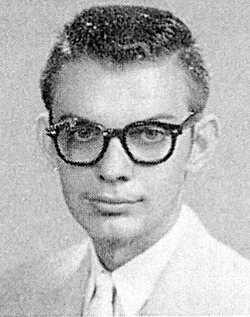
Yearbook photo of Claude Russell Bridges aka Leon Russell (multiple internet sources)
In his poem, “Wasteland” T. S. Elliot wrote the opening line: “April is the cruelest month.”
Truth be told all months are cruel when it comes to death by suicide.
On April 16, 2026, former Virginia Lieutenant Governor, Justin Fairfax, after murdering his wife died by suicide.
I can only begin to imagine the trauma for his son and daughter. Both were in the home at the time.
Reports indicate that Mr. Fairfax’s life was in a tailspin. His professional and personal life were a mess. Any attempts to recover from this downward spiral would have required an unyielding commitment and effort from Mr. Fairfax.
Death by suicide is no stranger to my family, neighbors, friends, and co-workers.
In my thirty one years of work in Virginia’s public schools, I saw the impact when students, teachers, and parents died by suicide.
Hearts are forever crushed.
Remaining loved ones always ask— could I have done anything differently to have prevented one of life’s cruelest intrusions?
The United States Center For Disease Control and Prevention reported in 2023, 49,000 people died by suicide. That is one death every eleven minutes.
In Virginia there are fourteen cities with a population range from 41,705 to 49,627. The 2023 deaths by suicide is the equivalent of wiping out one of those cities.
Despite efforts to improve access to mental health care and the creation of the 988 Suicide and Crisis Lifeline, we still lose too many people to death by suicide.
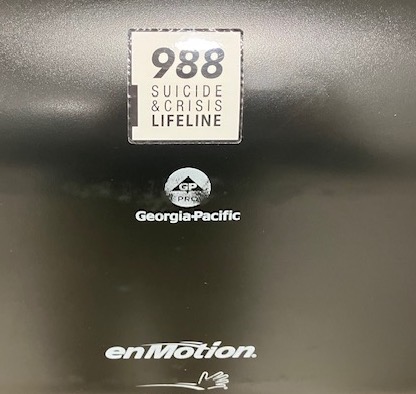
The 988 number on a paper towel dispenser in a public restroom (Photo Bill Pike)
Writer Rick Bragg’s book, Somebody Told Me, is comprised of newspaper stories he wrote. The last chapter is titled “Living and Dying.”
In that chapter, the article: On Florida Bridge, Troopers Are Also Suicide Counselors, I read about troopers who encounter people on the Sunshine Skyway Bridge. These individuals are poised to jump off the bridge. Quite simply, they have lost all hope.
With non-threatening compassion and patience, the officers quickly work to establish a rapport with the troubled jumper.
Sometimes, officers find that a simple touch or gentle words of reason change the jumper’s thinking. In those altered seconds, officers are able to help the person to move away from that precarious point on the bridge.
Doesn’t matter if the person is a public figure or a troubled soul on the edge of a bridge, we must work to provide more opportunities to help and assist the hopeless individuals who are pondering death by suicide.
In a country that can build skyscrapers that push skylines upward, propel rockets into the blue yonder, and perform life changing medical operations, we can’t rest until we figure out even more successful interventions to prevent death by suicide.
At this very moment someone’s hopeless heart is ticking toward that eleven minutes mark.
Doesn’t America want to break the cruelty of this heartbreaking cycle?
During March and April of 2026, I read articles reported in the Henrico Citizen Newspaper about bickering between the Henrico County Board of Supervisors and the Henrico County School Board.
The focus was about the budget and human resource requests from the school board.
Henrico County’s Board of Supervisors eventually approved a nearly two billion dollar budget.
For lots of reasons, I worry about public bickering between the two boards.
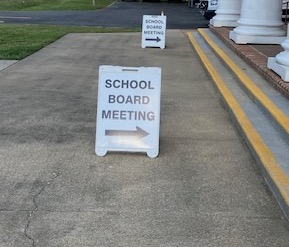
My calendar never allowed me to sign up to speak at a Board of Supervisor’s meeting. So, on the evening of Thursday, April 30, I was on the agenda to speak in person during the Public Forum.
In the Public Forum, speakers are allowed three minutes. Here are my comments:
Mr. Chairman, members of the Board, Dr. Cashwell, all school board employees, and the Henrico school community, my name is Bill Pike, a retired educator.
In the opening scene of the movie, Mr. Holland’s Opus, Principal Helen Jacobs, is talking with her new band director, Glenn Holland. It is Mr. Holland’s first day on the job.
Mr. Holland tells his principal that he never expected to be teaching in a high school. He confesses that he only earned his teaching certificate to have something to fall back on.
Mrs. Jacobs states to Mr. Holland, “I don’t think of teaching as a fall back position. I grow nervous around people who do.”
Knowing myself as a confirmed worrier, and whiner, I grow nervous when I read in the Henrico Citizen about the budget bickering between our Henrico County School Board and Board of Supervisors.
Experience tells me public posturing like that rarely has a positive impact for either board. Those moments of frustration can actually sow negative seeds which might just hinder future dialogue between both boards at a critical time.
Yes, advocating for fully funded budgets and meeting personnel requests is important to that process.
But, do you realize, how many school boards in Virginia would sell their souls to the devil for a $971 million dollar budget?
Our world has changed. It is more complicated.
I saw that first hand on April 16 when I attended the Faith-Based Leaders luncheon on the campus of Virginia Randolph.
I learned more about the needs of our schools and how relationships in our diverse communities are being established to meet those needs.
At the end of the day, bickering and whining between the school board and board of supervisors isn’t going to address the needs of our students and teachers.
However, building relationships will.
Think about this quote from Abraham Lincoln:
“Am I not destroying my enemies when I make friends of them?”
Thanks for your time, your leadership, and for listening to a rapidly aging, grumpy geezer. Good luck the last month of this school year.