Missing Carl Wilson December 21, 1946-February 6, 1998

Today, Sunday, December 21 is the anniversary of Carl Wilson’s birth date. Born in 1946, had he beaten back the cancer that took his life, Carl would have turned 79 today.

Ultimately, Carl’s passing broke up the group, the Beach Boys, that he helped found.

The Beach Boys continued to perform and record after the passing of drummer, Dennis Wilson in 1983.

But with Carl’s death, the remaining members— cousins Brian Wilson and Mike Love, Al Jardine, and Bruce Johnston fractured and split like a California vault line. This seismic shift resulted in multiple business disagreements and countless lawsuits.

Of course in 2012, those remaining members put aside their differences for a new album and a world tour in honor of their 50th anniversary.

Still, I will always wonder what the Beach Boys would have been like if Carl had lived, and that applies to his brother, Dennis, a bit too.

Author Kent Crowley’s book, Long Promised Road, takes us into the ups and downs of the Beach Boys. There is a lot of coastline to cover in Carl’s life with and without the Beach Boys. Crowley attempts to capture this journey.

I can only begin to think what it must have been like for Carl as the youngest brother to Brian and Dennis. Their mother, Audree, must have had her hands full raising these distinct personalities.

Her husband, Murry, by all accounts could be challenging too. Yet, the love of music in the Wilson household was linked to Murry, a businessman, and a frustrated songwriter.

Early on, the oldest son, Brian showed promise in music. Most documented writings about the Beach Boys reference a story when Brian requests that his mother make Carl sing with him rather than allowing Carl to join in a neighborhood baseball game.

Mothers tend to have an intuitive sense about their children. According to longtime Beach Boys’ historian, David Leaf, Audree Wilson noted this about her youngest son: “Carl was born 30.”

In 1961, when the Beach Boys first started finding traction around Los Angeles, Carl was their 15 year old lead guitarist.

Three years later in December 1964, Carl’s maturity would steady the band on the concert road when Brian experienced his first nervous breakdown.

With the exception of a period time in the spring and summer of 1981, Carl led the Beach Boys when they toured. Carl departed in 1981 to tour as a solo artist in support of his first solo album.

He opted to return to continue his work with the Beach Boys, but with this mandate to his bandmates—1981 must mean as much as 1961 once did. With that ultimatum Carl set out to reinvigorate the groups’ live performances.

One of my favorite periods for the Beach Boys was from 1970 through 1973. Carl was at the heart of this productive period for the group in the studio and on the road.

Four strong studio albums released by Warner Brothers/Reprise/Brother Records: Sunflower(1970), Surf’s Up(1971), Carl and the Passions “So Tough”(1972), Holland(1973), and The Beach Boys In Concert(1973), found favor with their fan base and music critics too.

Always strong live performers, through the mid-70s, the Beach Boys became a top concert draw again. Their trademark harmonies and musicianship led the way.

Recording engineer, Stephen Desper, a visionary manager, Jack Rieley, and Carl’s steadiness in working with each member of the band in the studio and on the road helped to facilitate this turnaround.

That surge pushed into 1975, when Capitol Records released the Beach Boys’ album Endless Summer. This double album introduced a new generation of fans to the groups’ deep catalog of hit records.

Endless Summer was a huge commercial success. That success translated to even more people attending their concerts at larger venues across America.

Ironically, the triumph of Endless Summer actually brought an end to that early 1970s stretch of songwriting creativity from the Beach Boys.

For the remainder of their careers when the Beach Boys performed live, they became an oldies act. Sure, they did the obligatory promotional performances of new singles from their latest studio albums, and on occasion, a setlist included a rarely performed nugget, but by and large, they became a jukebox with the old hit songs dominating the show.

Through all of these changes, Carl Wilson endured. He led the group on stage ensuring that the singing and playing met his high expectations.


I have no idea how many times I saw the Beach Boys in concert, but Carl’s singing and playing were always a treat for me. His voice rang true whether singing lead or blending into the harmonies.

No matter if Carl’s lead was a tender love song like “Only With You”(from the Holland album), or a rocker like “Darlin’”(from the Wild Honey album), or a fan favorite like “God Only Knows” from the Pet Sounds album, his voice was unmistakeable.

From the Sunflower album, early in the song “Cool Water,” there is a marvelous section of interplay with the background vocals from Carl and his brother, Brian. I’m sure glad that Audree made Carl sing with Brian when they were growing up. Examples like this capture the chemistry of their vocal cords that only brothers could have.

With his guitar playing, Carl had all of the required chops and more.

Whether playing a solo or supporting the structure of a song, he knew the sound he needed to capture for live performances. Carl was competent on six string acoustic or electric, and twelve string as well.

During his career, Carl played guitars made by Fender, Gibson, Epiphone, and Rickenbacker. In 2000, Rickenbacker guitars released a new signature model guitar named after Carl.

In October of 1989, I was able to meet Carl Wilson. This is a longer story that I will document some day. But, he could not have been kinder to me.

Cancer continues to be one of the most rotten things on earth. I absolutely despise it. I don’t know why cancer had to destroy such a gifted musician. But again, I do know why cancer robbed us of Carl—cancer doesn’t care who it invades.

Although I play no musical instrument, nor can I carry a tune, I have a deep admiration for musicians.

There is something special about music and its capacity to touch our souls.

I think Carl Wilson’s gift of music touched many souls.

For some reason, Psalm 32:7 makes me think about Carl: “You are my hiding place, you will protect me from trouble and surround me with songs of deliverance.”

I think music can be a hiding place. A place where the troubles of the world can be soothed by songs that can transport us ever so briefly from the tough realities of the moment.

Sometimes, that is all we need—the strength of a song to buffer us through the challenge before us.

Like me, Carl Wilson was an imperfect human being.

Yet, I admired his endurance with the musical contributions he made to the Beach Boys.

I also appreciated the spirit of his battle to beat back the cancer that took him.

Yes, I miss Carl Wilson.

I’m certain his family misses him too.

But at the very least, I can still listen to the music he made with and without the Beach Boys.

And on those days when I need a distraction, one of those songs for a few minutes will humbly touch my sagging, old heart.

In that joyful sound, I will appreciate God’s gift to Carl.

After his death in 2000, the album Like A Brother was released. This album was a collaborative effort featuring Gerry Beckley from America, Robert Lamm from Chicago, and Carl Wilson from the Beach Boys.

The album features the songwriting, singing, and musicianship from each of these gifted musicians who had been friends for many years.

From this recording, one of Carl’s songs “I Wish For You” has been a favorite. Carl collaborated with Robert White Johnson and Phil Galdston on this effort.

The song features a pretty lead vocal from Carl and heartfelt lyrics.

With Christmas a few days away sharing these two lines from the song seem appropriate:

“I wish you hope through your share of tears,
I wish you peace all your living years.”

At this very moment, no matter where you are in your life, I wish and your families hope and peace this Christmas and in 2026.

Good Lord knows we need it.

Love you all, be safe.

Original photo courtesy of my friend, Jeff Aaron, via the Appalachian State University yearbook staff November 1972.

Pondering Joy

Cover of this year’s devotional book (Photo Bill Pike)

Luke Chapter 2 verse 19: 19 But Mary treasured up all these things and pondered them in her heart.

I’ll be honest, when Christmas is over, I’m relieved. That is because I fail to resist the commercial trappings of Christmas. Those trappings are a sharp contrast to the almost unthinkable birth of Jesus in quiet and humble Bethlehem.

And yet, despite my annual failure, Christmas draws me back. My return is grounded in Luke Chapter 2 verse 19: “But Mary treasured up all these things and pondered them in her heart.”

I can’t imagine Mary’s reflection about her son’s birth. Clearly, she had lots to ponder. Watching him grow, I sense Mary had days of joy, wonder, and despair.

That’s not much different from pondering our lives today. Joy, wonder, and despair aren’t absent.

With despair, we ponder in our hearts will this weary world ever solve its challenges and find a enduring peace?

Our hearts wonder how Mary’s unyielding belief can counter our despair by nudging our hearts to become contributors to that lasting peace.

For treasuring the joys of life, I find it in sighting the brilliant red of the cardinal on a bleak December morning, the harmony of children’s voices on Christmas Eve, and unexpected acts of kindness that lighten burdened hearts throughout the year.

Who knows, maybe this is the Christmas, where Mary’s joyful heart leads me past my seasonal shortcomings.

Prayer: Father of us all, help our hearts to always treasure Mary’s joyful light. Amen

Bill Pike
Richmond, Virginia

Note from author: Friends, I’m honored to have this devotional published in the Society of St. Andrew’s annual Advent devotional book for today, Friday, December 12, 2025.

We Need A New Commandment

Steeple at St. James’s Episcopal Church Richmond, VA (Photo Bill Pike)
                                Read Luke 8: 43-48

For surely I know the plans I have for you, says the Lord, plans for your welfare and not for harm, to give you a future with hope.

                              Jeremiah 29:11

On a pretty September afternoon, my wife and I attended the funeral for a neighbor. The sanctuary was at capacity. This celebration of her precious life was perfect. There was only one problem—I don’t think this daughter, sister, wife, mother, friend, and nurse should have died.

Our neighbor beat cancer once. I’m sorry God, but I think if a person beats cancer once, this person should have immunity from a second battle with this disrespectful disease. We need a new commandment: Thou shalt not have cancer a second time.

From Luke 8, I struggle with the instant healing of the woman who barely touched Jesus’ clothing. God, don’t you think a person battling cancer for the second time should have such a redemption? Surely, our neighbor believed just like the woman in Luke believed.

I always found comfort in Jeremiah 29:11. Yet, in real life moments like the passing of our neighbor, it is difficult to find that reassurance. She needed those hopeful plans for good welfare and no harm.

I apologize for whining God. However, I don’t think I’m a solo whiner when it comes to a recurrence of cancer. Despite my imperfections, I know you love me, but we need that new commandment.

Prayer: Father of us all give us the strength to endure when cancer pushes against us. Amen

Prayer Focus: Anyone battling cancer.

Thought For The Day: Bless those who are working to defeat cancer.

Note from author: On October 7, 2025 this devotional was submitted to the Upper Room for publication consideration. December 4, 2025, the standard email of rejection arrived. While disappointed, I understand, and I attempt to learn from every rejection. Be safe, Bill Pike

Monday morning key fob blues

I’ve got the Monday morning key fob blues, that old key fob has made me weary right down to the soles of my shoes. Like a vengeful woman on Sunday night, that key fob battery has made my revengeful Monday morning a sorrowful plight.

On the morning of Monday, December 1, I had a plan.

Step one—drop off a letter that had been incorrectly delivered to our home to a US Postal service mailbox at a neighborhood shopping center.

Step two— open up Trinity United Methodist Church.

Step three—return home and work out on my old exercise bike.

Just before 6:30, I started my plan.

I drove to the shopping center.

I did not park in a parking space. I looped my car around parallel to the building with the car pointing in the direction I needed to go to exit the parking lot.

Turned off the car, walked a few steps to the postal box, and dropped in the letter.

Walked the few steps back to my car and attempted to start the car.

The car would not start.

A message flashed on the panel in front of me: Key ID incorrect.

No matter what I tried. The car would not start. The message remained the same—Key ID incorrect.

How in the world could the Key ID be incorrect? I wondered if the key fob had been overtaken by some outer space alien who wanted to disrupt my Monday.

A young man from a local construction company pulled in a parking space in front of the 7-11. I politely interrupted his entry and asked if he had any ideas?

He didn’t, but we had a good conversation about his company who had replaced the steeple at our church a few years ago.

With that I started a walk home. I was worried that my improper parking might get the car towed before I could get home and return with the backup key fob.

The Mobil service station was open. I stopped in and asked Jeff, the attendant, if he had any ideas. He suspected the key fob’s battery, but was perplexed by the message.
I thanked him and returned to my walk back home.

At the corner of Rock Creek Road and Forest Avenue, the young man from the construction company pulled over and offered me a ride to my house. I gladly accepted. Turns out two of his four children attend Trinity’s preschool.

I thanked him profusely, and rushed in the house to get the second key fob.

With that key, I started my walk back to the shopping center.

I decided to stop at Trinity on the way back to open up the building.

Once that was done, I started a slow, sprint back to my car.

It was cold and my fingers were frozen. When I arrived at the car, those frigid fingers had a hard time working the second fob.

Unfortunately, the key fob gods were not in my favor on this Monday. The second fob greeted me with the same message— key ID incorrect.

Good thing I didn’t have a hammer.

I noted that my friend, James, was working in the 7-11. James also works part-time at the Mobil station. I walked in and explained to James my Monday morning key fob blues.

James walked outside and tested the fobs for opening the car’s doors. Neither fob responded—both fob batteries were dead.

As James walked back into the 7-11, Jeff from the Mobil station pulled up in his truck. Jeff had done an internet check. He discovered that by holding the fob directly against the ignition button that the car should start.

I got back in the car. My still icy fingers struggled to make the proper connection.

I tried a couple of times with no luck.

With Jeff’s insistence, he suggested that I align the fob again, and for whatever quirky reason—the car started.

Again, I thanked Jeff for his diligence.

Back home, I explained to my Commander Supreme what had transpired. She couldn’t believe it. I felt drained.

But, my Monday morning key fob blues were not as draining as this headline: 4 dead and 10 wounded in shooting at banquet hall in Stockton, California.

Among the dead were three children ages 8, 9, and 14. This event was a birthday celebration for a child.

Regrettably, this event only reconfirms what we already know about America—the trigger puller had no respect for his/her life, nor the respect for the lives of the people attending the birthday party.

San Joaquin County, Sheriff Patrick Withrow, made this statement: “I am confident in our team and with the work that we have done so far that we will find these animals that did this and bring them justice, but we still need the public’s help.”

“Animals”

Is this what America has sadly become?

I’ve got the Monday morning Stockton, California birthday party blues, with broken hearts that never heal as senseless shootings continue no matter the venue in a disrespectful America with a dying red, white, and blue.

My troublesome friends (Photo Bill Pike)

Thankful For Fifty

Original photo Deford Dechert (West Hartford, CT)

On behalf of the Pike and Reinking families, we are honored to have you with us for Thanksgiving.

Back in October, our world was flipped over when Betsy’s left shoulder took one last clunk on the sidewalk at the corner of Rock Creek and Forest.

In a blink, plans for her seventieth birthday and our fiftieth wedding anniversary changed.

That’s when family and friends took over and planned this Thanksgiving Day gathering.

Without this support and your willingness to pitch in, we’d be eating Jimmy John’s turkey subs this afternoon.

A special thanks to Lauren and Doug, Andrew and Kathryn, Elizabeth and Jackson, Ken and Adrienne, Norman and Jo, and Jay and David for their assistance.

Tucked in there too are the nieces and nephews—George, Lydia, and Sarah, Nana’s heroes, her grands—Caroline, Josie, Ellie, and Hudson, and we can’t forget Jay’s daughter, our Olympic swim coach, Katie, who is with us this afternoon. Katie, we could have used some of your deep breathing techniques when the turkey caused some kitchen tension earlier this afternoon.

Fifty years ago today (11-27-75), we were in Milton, Massachusetts for Thanksgiving at the home of Bertha Avery Crosby.

That was Betsy’s grandmother. Everyone called her Nammer.

We had quite a feast with the Crosby and Cloud families.

Two days later (11-29-75), Betsy and I were married in West Hartford, Connecticut.

There are many reasons why marriages fail and work.

For Betsy and me, I think we had good role models in our parents— Ken and Liz and Bill and Louise.

They weren’t perfect, but their loyalty, support, sacrifice, and teamwork were hard to beat. I think these qualities rubbed off on us.

On the night that I finally mustered the courage to ask Betsy’s father for her hand, I used two words that Betsy’s oldest sister, Susan, told Betsy that I must use—love and respect.

I can still hear my quivering voice—“Mr. Cloud, I love and respect your daughter.”

Despite all of the things I do that drive her absolutely bonkers, Betsy, I still love and respect you as much as I did on that night fifty years ago.

In 2020, a German advertising company created a holiday commercial for the European pharmaceutical company, Doc Morris.

This heartfelt commercial ends with these words—“So you can take care of what matters in life.”

Betsy, for these fifty years, thanks for taking care of what matters in our lives. Here’s to Betsy.

Original photo Deford Dechert(West Hartford, CT)

Thanksgiving: “I don’t get no respect.”

Rodney Dangerfield was a gifted comedian.

His self-deprecating humor made me laugh.

In his rapid fire delivery of jokes, he always found a way to work in what became his identifying line—“I don’t get no respect.”

For lots of reasons, that’s how I’ve come to feel about Thanksgiving.

Over the last several years, it appears to me that our respect for Thanksgiving is eroding.

Retailers know this.

For example, the National Retail Federation expects Christmas sales in 2025 to “exceed a trillion dollars.”

Forecasters predicted that Halloween sales for 2025 would be in the range of twelve billion.

Thanksgiving is projected to be in the four to five billion range.

Growing up in North Carolina, Thanksgiving was always a drive on U.S. 70 to my grandmother’s home in Greensboro.

Sometimes, there was a stop on this twenty minute drive at Mt. Pleasant United Methodist Church for a morning Thanksgiving service.

The spread of home cooked food for our lunch time gathering was amazing. As an overweight kid, I was in heaven.

And yes, I like pumpkin pie. However, my favorite Thanksgiving dessert was persimmon pudding. I think my Aunt Evelyn always made sure we had persimmon pudding.

The other thing that I remember about those gatherings was being huddled in a small den with a television that projected a black and white picture of the Detroit Lions and Green Bay Packers playing their traditional Thanksgiving Day game. At the time, that was the only game broadcast or played.

Money has changed that. From Thursday through Sunday, football games at the collegiate and professional level are non-stop.

In November 1975, I spent my first Thanksgiving away from home. I was in Milton, Massachusetts, a pretty New England town just south of Boston.

I was with my future wife’s family. Two days later, that beautiful lady and I were married in West Hartford, Connecticut.

Lots has transpired in those fifty years.

And even though, Thanksgiving is squashed between the billions and trillions of Halloween and Christmas, it continues to survive.

We must never take the survival of Thanksgiving for granted.

The survival of Thanksgiving depends upon you, me, we, us.

We can’t let Thanksgiving die.

If Thanksgiving dies, so will we.

Maya Angelo said it better: “If we lose love and self-respect for each other, this is how we finally die.”

For Thanksgiving to continue to have a life, we must ensure that our children and grandchildren understand why it is so important to be thankful.

Being thankful can’t be taken for granted.

In the fall of my sophomore year at Greensboro College, biology professor, Dr. Kemper Callahan, put that into perspective for me.

This is what I have come to Dr. Callahan’s Thanksgiving Lecture. He simply told our class that we should never take Thanksgiving for granted. That included appreciating all of the people who make Thanksgiving happen. Dr. Callahan put a strong emphasis on farmers—no farmers, no Thanksgiving.

Successful Farming reported in July of 2025: “More farms nationwide filed for bankruptcy in the first three months of the year this year than across the entirety of 2024.”

What will the continuing struggles of our farmers mean for future Thanksgivings?

While I love the Thanksgiving food, Thanksgiving is also about family.

How lucky I have been to have been nurtured by a family every day of my life. That is a luxury not available to everyone.

As crazy as families can be, even an ounce of stability can make all the difference in a person’s life.

I see that generational stability in our Thanksgiving gatherings. Internally I ask—how different would my life have been without that stability?


I also ponder how much better America could be if that stability was present for all of our families. We might be surprised at how lives could improve by solving those generational cycles of instability.

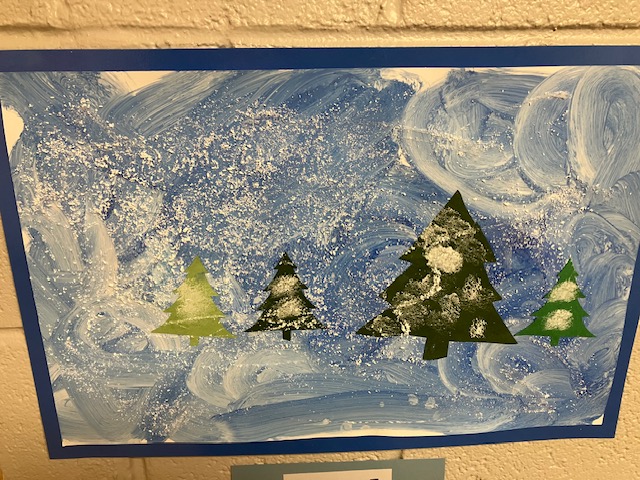
In my work at Trinity United Methodist Church, I see hope for Thanksgiving. That hope comes through the art work of the children in the preschool.

(Photo by Bill Pike)

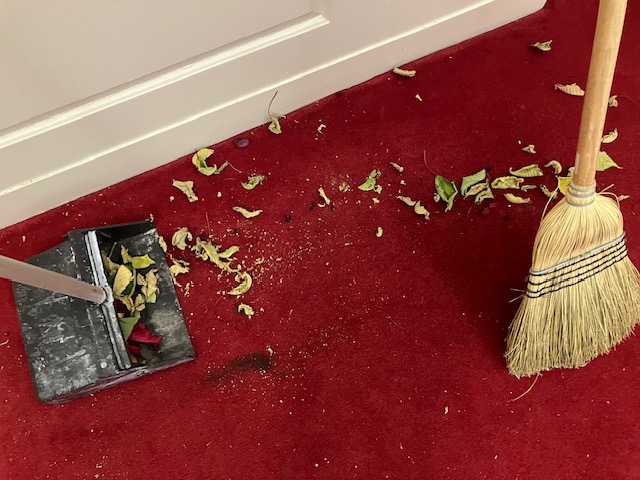
I love walking through the hallways in the days before Thanksgiving. I get to see the Thanksgiving artwork gracefully resting on the floor or gently hanging from a wall mounted hook. These masterpieces are in their curing stage with glue and paint drying before they are transported home.

(Photo by Bill Pike)

Who knows maybe these heartfelt creations will be cherished and preserved for future Thanksgiving celebrations.

Isn’t that part of what makes up respect—preserving what we value?

Rodney Dangerfield figured that out.

Mr. Dangerfield learned that his audiences anticipated and valued his famous line—“I don’t get no respect.”

I can hear him now.

Thanksgiving is coming. I gotta tell you, when I was a kid Thanksgiving got a lot of respect. Not now. Thanksgiving is like a panini sandwich flatten on a press by Halloween pumpkins and retailers overstuffing our Christmas stockings.

I hope you and your families have a good Thanksgiving.

And remember to endure, Thanksgiving needs our respect, our hope, and our thankful hearts.

A Mrs. Schmidt production (Photo Bill Pike)

Yes, I know it’s November: “be still”

My old body knows when I fail to exercise.

My body talks to me, “Bill, its been ten days since you have been for a run. What’s wrong with you?

I respond, “I’ve been busy. Life gets in the way.”

My body counters, “No doubt. That’s an easy excuse. I don’t like excuses. Go for a run. Now. Not tomorrow. Now. Go!”

On the morning of Friday, November 14, I went for that run.

I have a route that runs a neighborhood 5K course in reverse. The distance might be a bit more than a 5K, but I’m usually back at the house in 35 or 36 minutes.

This morning, I was inspired by our next door neighbor, Al Lockerman. As I was heading out to open up Trinity, Al was leaving for his morning run.

Al is a big guy. Yet, he runs like fast moving freight train. He goes all out on his runs. I admire his stamina.

When I return from opening up Trinity, I ready myself for my run. At the end of the driveway, I encounter Al again. With a cup of coffee in hand, Al is returning from walking their dog, Bambi.

I tell Al he inspired me to go for a run. He commented about the temperature. It is hovering at 33 degrees. That is about his limit with enduring cold weather runs.

Old man that I am, I have dressed in light layers for this run. That includes some worn knitted gloves and a stocking cap.

Al hopes I have a good run, and with that I’m off.

I note frost on the windshields of cars. This is the first real frost of the season.

Light frost on windshield (Photo Bill Pike)

Heading down Stuart Hall Road hill, at the intersection of Baldwin Road, the county is in the process of repaving.

The company doing the work has a massive asphalt eating machine. This contraption is called a cold milling machine or cold planer. The steel carbide tipped teeth of the milling machine peels back the top layer of the asphalt.

A good thing about the milling process is that the old asphalt surface is recycled. That planing of the top layer in some places reveals the foundation of the road— our pale orange Piedmont clay.

Milling machine’s work (Photo Bill Pike)

As I head up the hill, I turn left on to the front driveway at Trinity. On the front lawn, the pumpkins are gone. We conduct this annual sale to raise money for our youth group.

I admire the people who purchase our pumpkins. They are what I call heart buyers. These consumers could easily buy their pumpkins at a big box store at a much lower price.

At the bridge over the creek on Rock Creek Road, I wish I had a camera with me. Floating on the still creek surface is a pretty pattern of colorful fallen leaves. Also perfectly captured on that mirrored tranquil surface is blue sky with scattered clouds.

With the milling work on Baldwin, the road surface is uneven. The footing can be tricky, but I’m watching where my feet are taking me.

Occasionally, I see leftover signs from the November 4 election. I’m sure the mute button on the remote control for our television is thankful that campaign ads have stopped running.

The nonstop pace of those ads have now been replaced by incessant ads for Christmas. Of course, the big box retailers started telling me it was Christmas in September.

As I chug along, some front lawns still have Halloween decor. Others have rapidly transitioned to their Christmas theme.

Skeletons dominated many Halloween displays this year. I wonder if there will be a new big selling hero for Christmas on lawns this season?

Thankfully, I can block out those commercialized distractions with the brilliance of leaf colors along the way. The last few days, the trees seemed to have hit their peak.

Golden leaves from a Gingko tree (Photo Bill Pike)

At the corner of Horsepen and Devon, I come upon four young fathers who have finished up monitoring their sons and daughters at the bus stop.

I interrupt their discussion by gently shouting out, “Let me know when you guys figure it out.”

They laugh, and one of them replies, “We’ll be here a long time.”

I chuckle and keep trudging toward Westham Parkway.

My mind keeps reminding me this is November.

I know you know this is November.

However, just in case you haven’t noticed— when we hit November, the pace of the year accelerates.

That acceleration is like a pilot of a jet fighter plane hitting the afterburners. We are thrust, blasted, and hurled into a supersonic march.

From now until December 31, we are in blinding blitz. The G forces of the season pull, contort, and rush every fiber of our bodies.

Seasonal to do lists rush us. Retailers rush us to early Black Friday sales. Our overbooked calendars rush us to holiday events. And perhaps the most demanding, the pursuit of seasonal perfection rushes us.

We are overly consumed by this pursuit of seasonal perfection. And while we can deny the seasonal pursuit of perfection, truthfully, that relentless pursuit is our downfall.

In all of the hustle and bustle, I wonder if that pace results in an increase of pacemaker surgeries related to how this seasonal rush impacts our hearts?

At the stop sign on the east end of Rock Creek Road, I’m about to turn left on to Sweetbriar Road. That final straight stretch on Sweetbriar will bring me back to where I started.

In the whirlwind pace of November into December, I wonder how this season might be different if my human layers were stripped back and revealed by a human cold milling machine?

What would that human cold milling machine find in me?

Part of me thinks it would reveal that I need the first two words from Psalm 46:10: “Be still.”

With the reminding roar of November that zooms us into December’s blitzing sprint, at some point your body’s internal voice will remind you to “be still.”

Don’t ignore that voice.

Listen.

Take the time and “be still.”

Led By God

Cover from the Upper Room (Photo taken by Bill Pike)

Read Mark 10:46-52

Trust in the Lord with all your heart, and do not rely on your own insight. In all your ways acknowledge him, and he will make straight your paths. Proverbs 3:5-6 (NRSVUE)

I enjoy taking early morning runs, and before I leave the house, I check the weather conditions from the nearby airport.

One morning, the visibility at the airport was down to one mile. A thick layer of gray clouds hung above the treetops.

As I ran, I heard a plane overhead, but because of the cloud cover I couldn’t see it; I knew that the pilots couldn’t see the ground either.

Pilots must always rely on their training and sophisticated instruments to safely fly and land the plane, but this is especially true when visibility is reduced.

Sometimes I struggle to see where I need to go in life. l lose focus, and finding my way is difficult.

In those moments, I work to regain my bearings with these words from Proverbs 3:5-6— “Trust in the Lord with all your heart, and do not rely on your own insight. In all your ways acknowledge him, and he will make straight your paths.”

Trusting in God is not always easy.

Yet, that is exactly what Bartimaeus did when he asked Jesus to restore his sight; he trusted God in his heart.

On those days when the way is unclear, my heart needs to be more trusting, just like Bartimaeus.

Prayer: Faithful God, help our hearts to trust you when our vision is clouded. Guide us through your word. Amen

Thought For The Day: When the way seems unclear, I will trust God to lead me.

Bill Pike (Virginia, USA)

Note from the author: Friends I’m honored to have this piece published in the November-December edition of the Upper Room today, Tuesday, November 18, 2025. In case you are interested, I’ve also included the original piece that was submitted to the Upper Room. Thanks for your reading time, be safe, Bill Pike

Flying With God

Read Mark 10:46-52

Trust in the Lord with all your heart, and do not rely on your own insight. In all your ways acknowledge him, and he will make straight your paths. Proverbs 3:5-6 (NRSV)

I still enjoy taking an early morning run through our neighborhood.

I keep a running journal. Before I leave the house, I jot down the current weather conditions from the local airport.

Most mornings, the visibility is listed at ten miles. At the dawning of this day, the visibility at the airport was down to one mile.

In our neighborhood, a layer of thick, gray clouds hung above the treetops. As I started my run, I could hear the whine of jet engines in the cloud cover, but I couldn’t see the plane.

When visibility is reduced, pilots must rely upon their training and the use of sophisticated instruments to safely bring the plane through the clouds for a landing.

Sometimes in life, I struggle to see where I need to be landing. My vision becomes blurry. I lose focus. Finding my way is difficult.

In those moments, I work to restore my sight with these words from Proverbs 3:5-6: Trust in the Lord with all your heart, and do not rely on your own insight. In all your ways acknowledge him, and he will make straight your paths.

Trusting in God or Jesus when my vision is cloudy is not easy to do.

Yet, that is exactly what Bartimaeus did when he asked Jesus to restore his sight—his heart trusted.

On those days when my vision is reduced, my heart needs to be more trusting like Bartimaeus.

Prayer: Father of us all, help our hearts to trust you when our vision is reduced. Amen

Thought For The Day: When the clouds of life reduce our vision, trusting in the Lord can lead us to his light.

Submitted to the Upper Room 4/6/24

Veterans Day 2025: valor

My friend, Mike Cross, a Veteran, who served his country as a Marine during the Vietnam War, invited me to the Virginia War Memorial.

On the evening of Wednesday, October 29, we would be attending Leadership In America. This is a lecture series presented by the Virginia War Memorial Foundation.

The presenter was Dr. Michael Bell, a United States Army combat veteran, who is currently the Executive Director of the World War II Museum’s Institute for the Study of War and Democracy.

Dr. Bell’s topic for the lecture was—America Returns: The 81st Anniversary of the Battles of Leyte and Leyte Gulf. These battles were in the Philippines during World War II.

According to Dr. Bell and other historians, in October of 1944, the Battle of Leyte Gulf became the largest Naval battle ever fought. (World War II Museum)

These battles were also punctuated by the leadership of General Douglas MacArthur.

In March of 1942, General MacArthur had been ordered to leave the Philippines to escape the Japanese invasion. This is when MacArthur made his famous promise: “I shall return.”

MacArthur fulfilled that promise on October 20, 1944.

On that date, he waded ashore on the Philippine Island of Leyte, and in a radio communication stated: “People of the Philippines I have returned! By the grace of Almighty God, our forces stand again on Philippine soil—soil consecrated in the blood of our two peoples.”

MacArthur’s reference to blood in the battles of Leyte and Leyte Gulf would be significant for America and Japan. Thousands and thousands of sailors and soldiers were killed in these battles.

Yet, historians are in agreement that the battles for Leyte and the Gulf of Leyte were pivotal for the war in the Pacific. America’s victory in these battles crippled for the remainder of the war the Japanese Navy. Japan lost 26 ships of war in this battle. More importantly, Japan’s supply lines had been disrupted.

Additionally, the battle of the Gulf of Leyte marked the first kamikaze attack of the war. A Japanese pilot with desperation and purpose dove his plane into the deck of the USS St Lo, an escort carrier. Sadly, this suicide attack wasn’t the last in the Pacific for American sailors to endure.

The world remains pocked with the physical and emotional scars of war. There is no escaping this toll.

With war, there has been and always will be a toll. Perhaps, the most difficult part of that suffering is our failure to learn from these conflicts. Peace remains elusive.

I wonder in Dr. Bell’s role at the World War II Museum if they have ever conducted an in depth study as to why peace remains elusive in the world?

Clearly from Dr. Bell’s comments in that packed lecture hall, we have learned a great deal from the study of the Battles of Leyte and Leyte Gulf. Yet, in all of that research do those accomplished historians ever ask why didn’t the peace at the end of World War II last?

As we were driving back to our homes, Mike and I talked for awhile about the Medal of Honor.

The Medal of Honor is the United States Armed Forces’ highest military decoration and is awarded to recognize American soldiers, sailors, marines, airmen, guardians, and coast guardsmen who have distinguished themselves by acts of valor. (Department of Defense 2017)

I learned from Mike that the Medal of Honor design for the Army and Air Force has the word valor displayed. The Navy’s design features an anchor.

I am not a Veteran.

I can only begin to imagine the acts of valor that came from the recipients of the Medal of Honor.

In James Bradley and Ron Powers’ book Flags Of Our Fathers, I read about two Medal of Honor recipients from World War II.

Jacklyn Lucas threw his body onto two Japanese grenades. His body was blown into the air. Neither his fellow soldiers, nor the doctors on the hospital ship, Samaritan, could believe he lived through the explosions. When the authors asked Mr. Lucas why he had thrown himself on those grenades, he answered: “To save my buddies.” (Page 175)

Corpsman George Whalen refused to come off the battle field despite suffering three serious wounds. Again, the authors asked Mr. Whalen—why did he continue to render aid ignoring his own dire physical condition? He responded: “Because I cared for my buddies.” (Page 234)

Valor.

On Sunday, November 9, 2025 our church held the twenty-fourth Veterans Pancake Breakfast.

Our special guest speakers for the event were David L. Robbins, an accomplished American author, and Phil Trezza, an Army combat medic who served in Operation Iraqi Freedom.

Mr. Robbins founded the Mighty Pen Project. He works through the Virginia War Memorial in offering a writing class to Veterans who want to capture their stories from when they served our country.

Mr. Trezza has been a participant in the Mighty Pen Project.

Both Mr. Robbins and Mr. Trezza gave us heartfelt snapshots about the Mighty Pen project and its impact on Veterans.

Near the conclusion of our Veterans Pancake Breakfast, we always call the names of the Veterans from our church who passed away during the year. On Sunday morning, we called three names. This is immediately followed by the live playing of taps, and a prayer.

Valor.

And the final act of the program, we ask all of our Veterans to gather for a group photograph. When I look into the aging faces of our Veterans, I see valor.

Trinity United Methodist Church and our Veterans. Joined by David L. Robbins far left second row and Phil Trezza first row far right. (Photo Bill Pike 11/9/25)

If you have followed my blog, you know that over the years, l have confessed that I am a worrier. There is no valor in worrying.

While lots of things cause me worry, right now, I constantly worry about America.

I want to know if America understands valor.


I want to know how we rediscover our valor, not just in our service men and women, but in every American citizen.

I want to know if we comprehend how important valor is to our democracy.

On Veterans Day or any day for that matter, if you encounter a Veteran please take a minute to thank them for their service and their valor.

And while you are thanking them, remember the words from Jacklyn Lucas and George Whalen about saving and caring for their “buddies” in the brutal harshness of the battlefield. Their valor saved you, me, we, us back home in America too.

By the grace of God, we must never forget the valor of our Veterans.

Part I: Back To New Orleans

I know nothing about the planning for the June of 1958 road trip to New Orleans.

My father was a member of the Civitan Club. The Civitans were having a convention in that famous city.

Founded in 1917, the Civitans are an international organization “of volunteer service clubs, dedicated to helping people in their own communities.”

This convention was the reason for the road trip. By car, we traveled with another couple from Burlington, Melvin and Tula Wilson. The Wilsons were a delightful older couple who also were a part of the congregation of Davis Street Methodist Church where my parents attended.

As far as the road trip, I remember a stop somewhere on a beach along the Gulf of Mexico. I also recall a long ride over a bridge. I assume this was across Lake Pontchartrain.

Once in New Orleans, there was a bus tour of the city. The tour guide referenced a swimming pool we passed. He said it was filled with muddy water from the Mississippi River.

Another memory was a cafeteria that had fresh watermelon on the serving line.

My mother tracked down her father who deserted her mother and her siblings early in their Mississippi lives.

For some reason, we took the train back to North Carolina. I recall a kind porter who made me a ham sandwich. I think one of my father’s brothers picked us up at the train station in Greensboro and drove us home to Burlington.

And thanks to my parents, I was decked out as a five year old tourist.

What a sport (Photo courtesy of the Pike family)

Now 66 years later, on Wednesday, May 8, 2024, my wife and I are traveling back to New Orleans. This isn’t a road trip to a Civitan convention. No, my main purpose is to visit the National World War II Museum.

Luckily for me, I benefit from the detailed trip planning from my wife, the Commander Supreme. No one is better at trip planning.

We left Richmond on a Boeing 757-200(HD) with a stop in Atlanta. On this first leg, I continued my reading of Isabel Wilkerson’s book The Warmth of Other Suns. From Atlanta to Richmond, there was lots of cloud cover. I watched part of a documentary about Jimmy Carter.

As we approached New Orleans, the visibility improved, and I saw lots of brown water.

Once we landed, the driver of the jetway had a tough time connecting to the front exit door of the plane. Eventually, the mechanical gods cooperated. This was followed by the rush of passengers exiting the plane.

New Orleans has a very nice airport.

Through our son’s in-laws, we had a driver ready to pick us up. The driver drove us into the business district and dropped us at the Magnolia Hotel. This hotel gave us good access to the places we wanted to visit in the city. With the exception of a street car ride, we walked everywhere.

Our feet wasted no time in immersing us into the city.

In the French Quarter, we enjoyed lunch at Landry’s Seafood.

We walked into Jackson Square. We were immediately taken by the St. Louis Cathedral.

(Photo Bill Pike)

With its ties to the King of France, this stunning building dates back to 1720. Lots of adjectives have been used to recount the exterior and interior beauty of the building.

(Photo Bill Pike)

From Jackson Square, we were able to catch our first views of the mighty Mississippi River. With an assist from Mark Twain, the Mississippi might reveal the soul of America.

(Photo Bill Pike)

We made the predictable tourist stops at the Cafe Du Monde and Pat O’Brien’s. For some reason, the famous Hurricane drink reminded me of drinking Kool-Aid as a kid.

As we worked our way back to the hotel, no matter where our eyes scanned, the architecture of the buildings and homes held us captive. Brick work, wrought iron, flowers, and a palette of just right paint shades were in every direction.

(Photo Bill Pike)

After a quick refresh at the hotel, we mapped out our walk to our dinner restaurant—Herbsaint. Located on St. Charles Avenue, we enjoyed our exceptional food and service at an outside table on this pretty May evening.

From our early start in Richmond, our day had been long, but our first afternoon in New Orleans was enjoyable.

Despite the treasured prettiness of New Orleans, I noted that the city isn’t immune from what I see back home.

Struggles that are small and large—missing street signs, sidewalks in need of repair, impatient beeps, a mix of aromas some pleasant, some unpleasant, and the homeless.

No matter these challenges, New Orleans has a soul. A soul that still draws people to it. A soul that continues to survive no matter what comes its way.

With a good night of rest, I hope to learn more about the city’s perseverance on Thursday.