A Busy Saturday In Paris

Paris: Saturday, September 5, 2026 by Bill Pike

Despite our late Friday night at the Paradis Latin, we managed to make it to breakfast in the hotel.

This was to be a busy Saturday for us.

We had to have our luggage ready for embarking the ship.

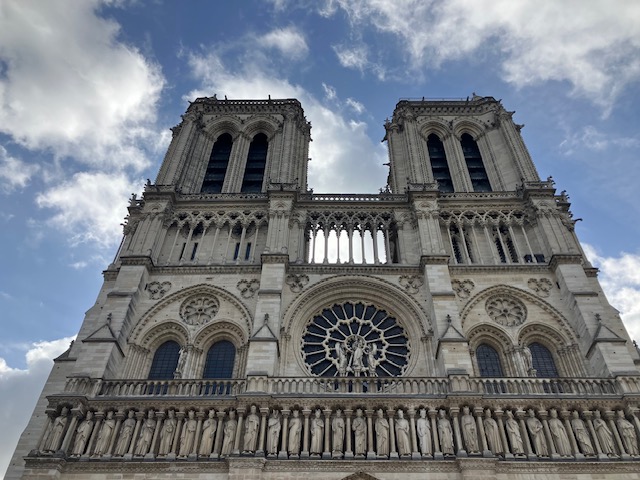
Once we finished breakfast and had our luggage ready for pickup, we were off to the Notre-Dame Cathedral of Paris.

And maybe this is taken for granted now, but the cathedral is constructed on a natural island in the middle of the Seine River—lle de la Cite`—“Island of the City.”

The famous cathedral (Photo Bill Pike)

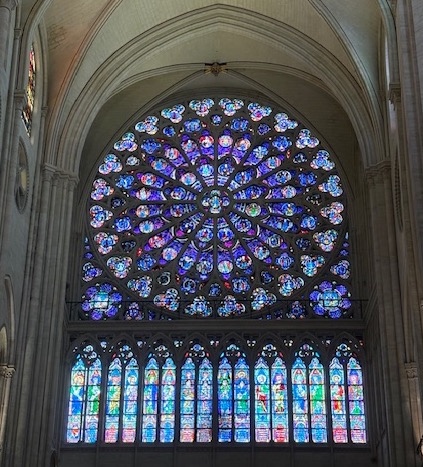
Fortunately, this magnificent building survived the devastating fire from 2019. Both the exterior and the interior of the cathedral are stunning.

One of the stunning windows (Photo Bill Pike)

Lots of people were at the cathedral on this pretty Saturday morning, but moving around was manageable.

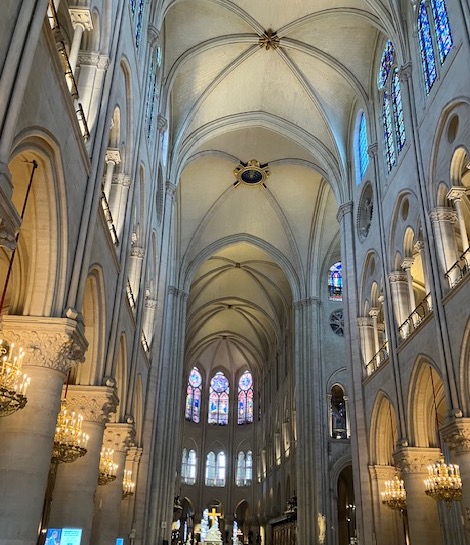
From the floor to the ceiling and in every direction, the craftsmanship and art are amazing.

Amazing interior (Photo Bill Pike)


The lighting, the stained glass, the stories from the Bible that are brought to life through art are beautiful.

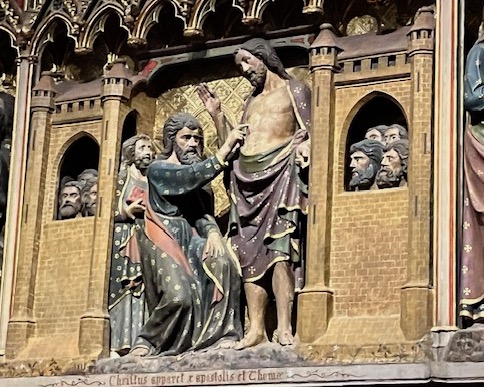
I’m drawn to one of my favorite people in the Bible, Thomas. I love the truthfulness of his honesty after the crucifixion of Jesus. Thomas doubts. He wants to poke a finger into the wounded body of Jesus.

Thomas poking (Photo Bill Pike)

The carved limestone statue captures this action from Thomas.

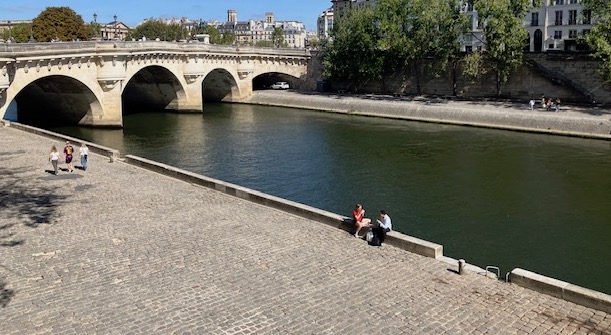
From the cathedral, we crossed over into the Left Bank. I’ll let you sort out the directional flow related to the compass and the direction of the river.

Neat bridge, cobblestones, and the river (Photo Bill)

There is lot’s to think about in this famous section of the city. The Latin Quarter, the University of Paris, and a variety of cafes and shops are part of the rich history.

In doing some post-visit research, I stumbled upon this quote: “Paris learned ‘to think’ on the Left Bank.” Many famous artists, philosophers, and writers roamed through the streets of the Left Bank.

Multiple vendors, legendary shops, and a prominent steady pulse from the busy streets and the river kept us on the go.

Around mid-day, we regrouped for the metro. We started working our way to the area where our ship, MS Bizet is docked.

Without too much stress, we make our way to the Port De Javel Bas. We are greeted warmly by the crew when we board. Knowing that we are still within the time frame for lunch, we head to the dining room.

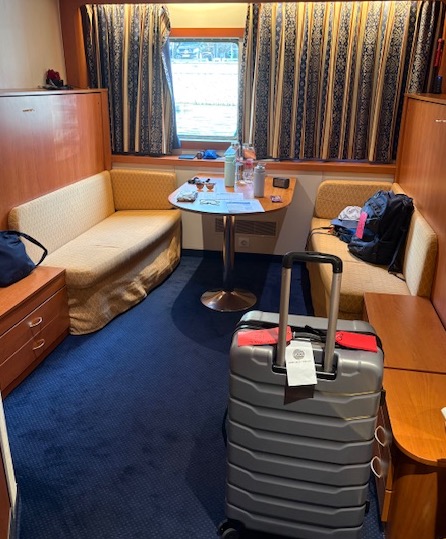
By mid-afternoon, our luggage had arrived in our rooms, and we spent a bit of time getting organized.

Our room (Photo Bill Pike)

We easily met the requirement to be on board by 4 p.m. At 5 p.m. we attended our welcome briefing, followed by a safety orientation, and introduction of the crew.

This evening, we were skipping dinner on the ship to attend a concert at Saint Chapelle. We had to be ready for our van ride at 6:45 p.m.

The concert in this famous building would feature four musicians respectively playing violin, alto(viola), and violoncello.

Composers represented in this performance were Haydn, Mozart, Schubert, Borodine, and Dvorak.

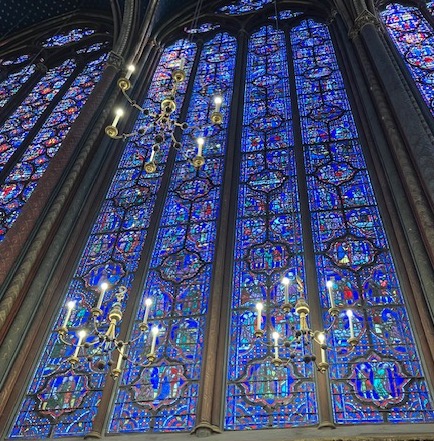
The building dates back to 1248. According to the handout for the program here is a bit of its history: “A masterpiece of the rayonnant period of French gothic architecture. The Sainte-Chapelle is known throughout the world for its multicolored transparency. The chapel was constructed under Louis IX to house precious relics from the Passion of Christ, of which the most important were the Crown of Thorns and a piece of the True Cross.”

One of those magnificent Sainte-Chapelle windows (Photo Bill Pike)

The musicians were very gifted. They clearly had worked with diligence to learn these pieces for a concert performance. Their skills allowed them to eloquently capture each piece. In this public performance, it was clear that the musicians were putting their hearts and souls into each note.

Now, I will be honest with you, at times during the concert, the music soothed my travel weary body, and yes, I nodded off. For some unexplained reason, I think the person sitting behind me noticed my shortcomings. She must have been annoyed because the frame of my chair was clunked from behind more than once.

Upon the completion of the concert, we were shuttled back to the ship. Knowing that we were out for the evening, the kitchen staff had prepped each of us a plate of food, and delivered this treat to our rooms.

After enjoying our food, I was ready for sleep as we had a busy Sunday ahead of us.

“The train’s moving fast”

I appreciate the invitation from Judy to speak this afternoon.

It is an honor to be with you.

To tell you the truth, the date snuck up on me.

I finally sat down on Sunday afternoon and started working on what I might say.

Like a commercial spouting the benefits of a new wonder drug, there are also possible side effects for that drug.

I feel obligated to warn you about my side effects. Here are my disclaimers.

First, in any shape or form, I’m not a theologian.

Methodist bishops and district superintendents in Virginia cringe and groan when alerted that I’m yakking at fellow Methodists.

However, over a long stretch of time, I have developed an appreciation for the nuggets of wisdom that are written in the Bible.

And finally, my purpose this afternoon is not to offend.

Back in June, I was asked to pinch hit for a pastor at a Methodist church in the Richmond area.

When the service was over, a lady in the congregation with a half a mad on, made a bee line for me. With no hesitation, she told me how much my sermon had offended her.

Again, this afternoon, my purpose is not to offend. I want to poke at our hearts. Make our hearts ponder and think for a few minutes.

So, if you’re brave enough, let’s get started.

For some reason, I was drawn to this scripture from Colossians Chapter 3 verse 15: “Let the peace of Christ rule in your hearts, since as members of one body you were called to peace. And be thankful.”

In his book Leading With The Heart, former Duke University basketball coach, Mike Krzyzewski, during the season would remind his players: “The train’s moving fast right now, guys. Are you on board?” (Page 126)

Coach Krzyzewski was reminding everyone on the team managers, players, assistant coaches that the season was moving fast, and that he needed everyone on board ready to move forward to the next stop, the next game.

It seems to me that after Halloween, the pace of the year speeds up.

We vote.

We celebrate Veterans Day.

Thanksgiving arrives.

Black Friday blitzes.

With very little fanfare the first Sunday of Advent puts us on notice— Christmas is rushing toward us.

That seasonal train is suddenly moving very fast.
If you don’t believe me, take a look at your calendar.

And while you are looking at your calendar, revisit the scripture from Colossians: “Let the peace of Christ rule in your hearts, since as members of one body you were called to peace. And be thankful.”

In the opening of Colossians, Paul and Timothy, are identified as the authors. By the end of the final chapter of this book, Paul tells the reader that he is in prison.

When I think about Christmas and all of its commercial trappings, I wonder if it is a type of “chosen” incarceration?

Each Christmas I choose to become caught up in the traditional commercial whims of the season.

During this time of the year, I question myself?

I wonder why peace doesn’t rule in my heart?

What keeps me from being at peace with the people who surround me?

How thankful am I for all of my blessings?

How often do I take for granted those blessing?

I have a roof over my head, reliable access to food, a wife, children, grandchildren, health, friends, and freedom.

And despite my questions, the peace of Christ often seems to be missing in my heart during this season.

Back on November 2 at the University of Richmond, our neighbor and friend, Judy Bice, and I taught a class on Virginia Evans’ book The Correspondent.

We taught the class through the Osher Lifelong Learning Institute. Judy is also an accomplished writer with her book, Hey, White Girl.

My sister-in-law, Abby, sent me The Correspondent as a Christmas gift last year. While I appreciate fiction, most of the books I read are non-fiction.

Yet, I will admit, once I started reading The Correspondent, I could not put the book down.

The Correspondent is an epistolary novel. Virginia Evans wrote the book using letters as the main communication between the characters.

This might be a stretch in today’s terms of letter writing, but that is what Paul was doing with the Colossians. He was writing to them conveying his thoughts while attempting to guide them in their living.

In our presentation, Judy and I wove together good information about the author, the characters in the book, and we offered questions to the class participants that were designed to prod them to think and share.

We did this by citing a few quotes from the book.

Here is an excerpt from a letter that the main character, Sybil Van Antwerp, wrote to a young friend of hers:

“It is beyond my comprehension the lengths to which children will go in the name of cruelty, and I know you know this, but I want to repeat that when someone(s) treats you poorly, it is a reflection of him or herself and the misery within the heart of them.” (The Correspondent Page 51)

For lots of reasons, I find myself revisiting those words “When someone(s) treats you poorly, it is a reflection of him or herself and the misery within the heart of them.”

I ask myself, do I treat Christmas poorly because my heart is trapped in the misery of the season beyond the walls of my church?

Is this entrapment, this incarceration keeping me from finding the true peace of Christ in my old heart?

In a few days, I know the commercial train of the season is going to be moving fast.

Am I going to jump on board like I usually do, or am I going to nudge my heart for the boarding of a different train, a train centered on my reach for peace and a deeper sense of thankfulness?

Every Christmas, I have this internal conversation with myself, and every Christmas I continue to jump on board that fast moving version of Christmas.

How about for you?

Do you have that same conversation with yourself?

Which train will you board this year?

Perhaps you saw the movie Castaway. Released in 2000, the film stars Tom Hanks.

Mr. Hanks portrays a FedEx employee, Chuck Noland. Mr. Noland is given up for dead when the FedEx cargo plane he was traveling on crashes in the severe turbulence of a violent storm in the South Pacific.

Here is the spoiler alert.

It is a long emotional, grueling, and traumatic journey, but Mr. Noland survives.

His initial return to America is challenging.

On that return, his plane is forty five minutes out from landing at the FedEx headquarters in Memphis. There a carefully planned homecoming is awaiting Mr. Noland.

Before landing, a close FedEx friend, Stan, tells Mr. Noland that his former fiancee moved on. She like everyone else believed he was dead.

In that conversation, Mr. Noland learns that a funeral was held for him. And in that same conversation, Mr. Noland acknowledges that shortly after his funeral, his friend Stan had a funeral for his wife, Mary.

Mr. Noland says to Stan, “I’m so sorry I wasn’t around when Mary died. I should have been there for you, and I wasn’t. I’m so sorry.”

After all these years is that what I convey to God and Jesus, regarding that fast moving commercial train of Christmas?

“God and Jesus, I’m so sorry that I haven’t truly been around at Christmas. I continue to jump on board the fast moving commercial Christmas train. My heart should have been there for you, honoring peace and thankfulness. I haven’t been present for you. I’m so sorry.”

Maybe this holiday season, my heart can do better with that fast moving commercial train.

Maybe to do better, to position myself for a change, my heart can chip at that train a little bit every day.

If I take the time to chip at it everyday, I slow down the train. More importantly, by doing this, I slow me down.

Slowing me down allows me to see Christmas from different angles.

What might be in the light of those angles?

In nine days, we will celebrate Thanksgiving.

Trapped between Halloween and Christmas, Thanksgiving despite being overrun by football and Black Friday is a pivotal holiday.

Thanksgiving attempts to remind me to be thankful.

No matter what that fast moving seasonal train throws at me, I need to be thankful.

No matter what I throw at myself from the misery of my heart, I need to find the peace of Christ.

No matter what other people throw at me from the misery of their hearts, somewhere in all that seasonal chaos there is a quiet peace waiting for me to chip into it.

And as Colossians reminds us, when we find that peace of Christ, we need to be on board as one, and be thankful.

Train’s moving fast.

Which train will your heart board this season?

Note from author: This piece was written as a devotional and shared at Lakewood, a retirement community, in Henrico County, Virginia. Our church provided a weekday afternoon worship there on November 17, 2026.
Fighting to address mental illness, stop soldier suicide

Tuesday, November 10, 2026
OPINIONS
Richmond Times-Dispatch
Fighting to address mental illness, stop soldier suicide
VETERANS DAY


On the morning of Saturday, May 9, I was shocked to read in Facebook Messenger that our college classmate, John, had passed away.


That shock was grounded in having seen John at our 50th college reunion in October 2025.


At that gathering, John seemed like John.


He looked healthy and fit.


John’s engaging eyes still had a sparkle of mischief in them. I’m sure those eyes were critical to him as a Marine pilot flying missions in a helicopter.


On the evening of the reunion’s first gathering, I enjoyed talking with John.


John had a good memory. He asked about my career in public education. Specifically, he wanted to know about my work as an elementary school principal. I shared with him how fortunate I had been with that assignment.


I had lots of questions for John about his career and his life after the Marine Corps. John kept his attachment to the Marines by serving as a Junior ROTC instructor at a high school in North Carolina. However, the schedule for the evening put those questions on hold.


The hard truth of John’s passing has made me think more about him.


I remember reaching out to him when I was serving as principal at Lakeside Elementary School in Henrico County. For a career day, I was hoping John might be able to pull some strings that would allow a Marine Corps helicopter to land on our playground. John tried his best. Red tape kept this from happening.


John wasn’t shy about speaking his heart. There was no camouflage. You knew his convictions.


I’m sure in his daily living and his career that the ups and downs of life found John too.


I don’t know why, but something internally really gnawed at me about John’s passing. Based upon my class reunion encounter with him, this loss just didn’t feel right.


A few days after reading the Facebook Messenger post, I learned from a classmate that John had died by suicide.


I was crushed. Sadly, our family, our neighborhood, our church, our schools, and our community are too familiar with died by suicide.


My wife lost her oldest sister. Our neighbors lost their oldest daughter, a very gifted high school social studies teacher.


In my public schools’ work, we lost parents, students and peers. I’ll never forget losing a former secretary at a school where I worked.


America knows died by suicide.


The CDC (Centers For Disease Control and Prevention) reported that in 2024, 48,824 people died by suicide.


In 2023, the annual report from the U.S. Department of Veteran Affairs recorded 6,398 veterans who died by suicide. Even though each death is a tragedy, this number was down from the previous two years.


I can’t begin to imagine the despair felt by John and others in their struggles with living. And, I’m certain I’m not the only one asking — why do we continue to lose our veterans?


On Saturday, July 11, our family was traveling to Topsail Island, North Carolina.


Not able to check into our rental house until later in the afternoon, we stopped at the Salty Turtle, a popular craft brewery.


The Salty Turtle dates back to 2017. Two former Marines and a business partner were responsible for its opening. The Salty Turtle has done well in crafting its beers and giving back to the Pender County community.


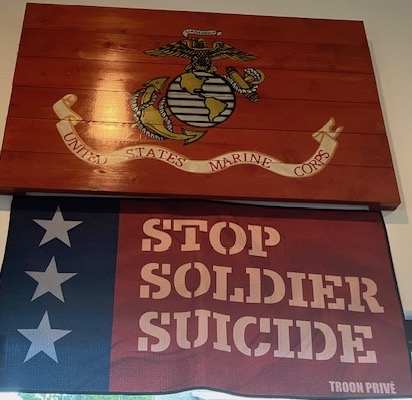
While enjoying my beer, I noticed a flag on the wall stating: Stop Soldier Suicide.

From the wall display at the Salty Turtle (Photo Bill Pike)


Beside the flag was a large framed display. Inside the frame was everything related to Master Sgt. Andrew G. Sullivan’s career in the Marine Corps.


His dress uniform, medals, and the American and Marine Corps flags were a part of the display.


Curious about the display, I asked a server about it. I learned that Master Sgt. Sullivan was a friend of the two Marines who started the Salty Turtle. Sadly, Master Sgt. Sullivan died by suicide.


The display honored Master Sgt. Sullivan, and it conveyed to customers that died by suicide continues to impacts our veterans.


I am deeply sorry for the loss of John.


I know from experience that the impact on family and longtime friends is difficult.


I hope John is at peace. America should never be at peace until died by suicide is no longer a reportable statistic.


Mahatma Gandhi said: “The best way to find yourself is to lose yourself in the service of others.”


Don’t we owe it to our veterans to “lose ourselves” in support of their mental health?


Don’t we owe it to our veterans to ensure that services are in place to support their mental health?


Not just on Veterans Day, but every day, with real urgency, we must answer yes.

Note from author: I was honored to have this op-ed published in the Richmond Times-Dispatch on Tuesday, November 10, 2026. Be sure to thank a Veteran today, and in truth, everyday. Bill Pike

Summer vacations, it was all about my parents

I’m 73 years old.

As a product of the North Carolina public schools, I remember those first week of school writing assignments about the summer break.

As a retired public schools educator, I probably issued that same assignment to my students too.

During the summer, I can remember attending vacation Bible school at our church. I also played on softball teams for two different churches. With no cares, I rode my bike to practices and games.

Yet, when I think of the summer break, I think of my parents. My father was one of ten children. Early in my mother’s life, her father deserted his wife and my mother’s two siblings.

My gut tells me that a vacation was never a part of growing up in their post-depression world.

For my mother, once the desertion occurred, my grandmother moved her family from Mississippi to the mountains of North Carolina.

I’m thinking for my father his enlistment into the U.S. Navy during World War II was the most he ever traveled. He was stationed on the coast of Washington.

Despite these hardships, I think my parents were determined that life would be a bit different for my sister and me.

Our vacations were never extravagant. Those trips were based upon the frugalness of my parents. They put aside whatever they could to be able to afford getting away for a few days, sometimes a week.

Food was part of their thriftiness A picnic lunch was packed for those trips. Looking for a roadside picnic table around noon was an adventure. Especially, in the middle of nowhere, but we usually found one.

Those getaways were regional—North and South Carolina, and Virginia. I believe education was a part of their agenda too. Colonial Williamsburg, Monticello, and the heritage of Cherokee including the outdoor drama Unto These Hills were all visited.

On occasion, my mother’s mother, Granny, traveled with us.

If we ventured to the North Carolina coast, Granny was up early looking for seashells and sand dollars. Today, when our family is on the coast, I’m certain my early morning rising came from her.

I’ve never forgotten her comment when traffic slowed down in Canton, North Carolina. Canton was home to a huge pulp mill.

An unpleasant aroma came from the processing of the pulp. From the backseat of our car, Granny shouted to my father, “For God sakes Bill, don’t stop here!”

Life was a lot simpler in the early 60s.

I was content with those uncomplicated summer getaways from our hometown, Burlington.

And at the time, I’m sure that I had no clue about the sacrifices made by my parents for those trips.

The growing up years for my parents had been grounded in the sacrifices made by their parents.

I have no concept for being one of ten children. I have no comprehension for being deserted by your father.

However, it is through the endurance and sacrifice found in those families that my parents framed their lives together.

On some sleepless nights, I travel back to those days of sacrifice.

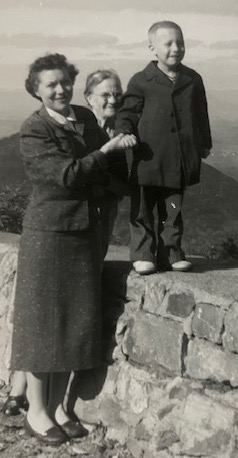
I recall black and white photographs of our family along the Blue Ridge Parkway.

My mother, Granny, and me. (Photo courtesy of Pike family scrapbooks)

On a hot summer day, I can feel the damp coolness of Luray Caverns.

Driving toward Carolina Beach, I remember the flatness of the coastal plain.

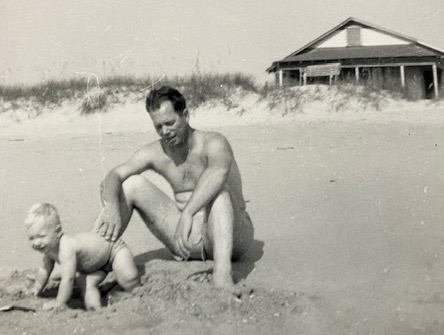
My father and me on the North Carolina coast (Photo courtesy of Pike family scrapbooks)

Memories like that and many more drift through what’s left of my old brain.

Those memories are forever linked to the sacrifices of my parents.

I will cherish them until my last breath, and pray that I’ve made the right sacrifices for our children.

Author’s note: I entered this piece into the O’Henry magazine’s essay contest. I wasn’t the winner, but I enjoyed thinking about how lucky I was growing up.

How are your flock cameras?

Recently, flock cameras have accrued many headlines.

As an imperfect driver, I attempt to abide by the rules of the road. Yet, I wonder in our “impatient, me” world if we are capable of following those rules.

This reluctance to hold ourselves accountable has pushed localities to install a camera technology to capture our driving shortcomings.

Despite efforts by local governments to improve crosswalks for pedestrians, slow neighborhood traffic with speed humps, using traffic circles to provide a constant, but controlled flow of traffic, and radar speed signs to remind us that we are speeding, we appear to be incapable of a self-imposed monitoring of our driving.

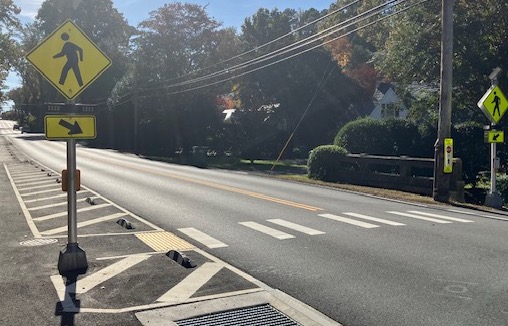
An improved crosswalk in our neighborhood (Photo Bill Pike)

In our attempt to be supportive grandparents, my wife and I attend soccer games for our granddaughters through the Tuckahoe YMCA.

At these games, I notice that all the coaches wear a t-shirt with the following words printed on the back: caring, honesty, respect, and responsibility.

How many of our problems related to our driving habits are because of our inability to care about ourselves and those we encounter when we drive?

How does our lack of honesty with ourselves to admit that we are the problem behind the wheel factor into this reckoning?

Have we lost so much respect for ourselves and the drivers we encounter that the responsibility to reasonably comply doesn’t matter any more?

I think the answer can be found in how many close calls I’ve had at intersections when multiple cars run a red light, when yield signs are completely ignored, and despite a clearly marked crosswalk with flashing lights drivers disregard the right-of-way of pedestrians.

We can “flock” all we want.

However, the real question is how our human compass handles caring, honesty, respect, and responsibility when we drive.

Only on Sunday would an expansion joint fail

At a church building, the transition of heating and air-conditioning systems with the change of seasons can be a challenge.

I love October, but sometimes its cool mornings might require that we fire up a boiler, or two, or three at our church.

On the morning of Sunday, October 25 at Trinity United Methodist Church, I made a decision to turn on the boilers that serve the Sanctuary and Welcome Center. Thermostats in these large areas were reading 65 degrees.

To save pennies, I usually try to hold out to the first 32 degree morning before firing up a boiler in the building. Maybe my aging has made my HVAC heart softer for making the congregation feel comfortable on Sunday mornings.

The boilers fired properly. Within an hour the Sanctuary and the Welcome Center were losing their coolness.

That was not to be the case on the other side of the building.

Earlier in the week, I had turned on the boiler that provides heat for the Trinity Hall wing. That wing gets lots use by our congregation and community.

As I was coming into the building this morning, I noticed that the windows in the East Entrance stairwell were steamed up. True, it was cool outside, but not really cool enough to steam up those windows.

Curious, I made my way into the stairwell. I checked the door at the bottom of the stairs. This door leads into the mechanical room. The door was warm and moist to the touch. That door isn’t supposed to feel warm and moist.

When I opened the door, I could hear water spilling on to the hard concrete floor. The room was warm and steamy like a sauna.

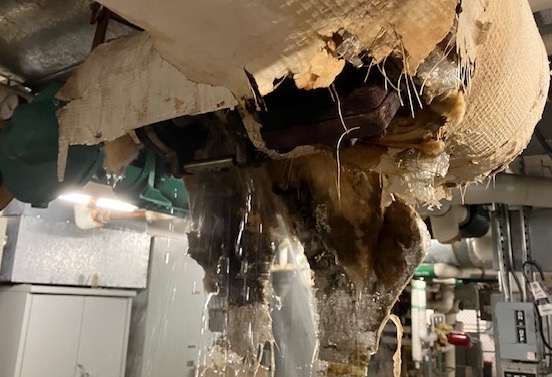
With the lights on, I walked toward the hot water boiler. In the lower part of the ceiling, hot water was rapidly showering out from the middle section of a large pipe.

The water was spewing out from a link located between two mounted pumps. Quickly, my broken brain prodded me into action.

Water escaping (Photo Bill Pike)

First, I shutdown the boiler, followed by turning off all the pumps in the room. Even turning off the pumps did not slow the shower of water.

Next, I shutdown the hot water heater and the single pump that distributes hot water into the wing.

I traced down the two shut off valves for the leaking pipe.

With an assist from an old, wobbly, wooden ladder, I attempted to turn those valves. Formed like a small steering wheel, I couldn’t budge either valve.

I moved some junk away from the spewing water. Next, I made sure that the water wasn’t going to intrude on anything electrical.

To remove the steamy air, I opened one of the doors that empties out into the freight well. I propped open the door to the mechanical room and the exterior door on the ground floor, and opened a window at the top of the stairwell.

I put in a call for service to our HVAC company.

While waiting for the technician to arrive, I let our senior pastor know what was taking place. I went back into the mechanical room and walked into the freight well.

Armed with a broom and a bucket, I cleaned out the leaf debris near the drain. Once that was clear, I started sweeping the water into the freight well drain.

The HVAC technician called me. He was working his way down Interstate 95. I explained the challenge to him. He was about twenty minutes out.

When he arrived, I walked him into the mechanical room. He double checked my findings with the shutoff valves.

Being younger and a lot stronger, he had no trouble in turning off the first valve. However, the second one was lots of trouble.

He described the valve as being seized up. Trying to find just the right angle for his tools to work, he finally found it. It took some minutes, but the valve started to turn.

Gradually, the water shower began to slow to a trickle out of the pipe.

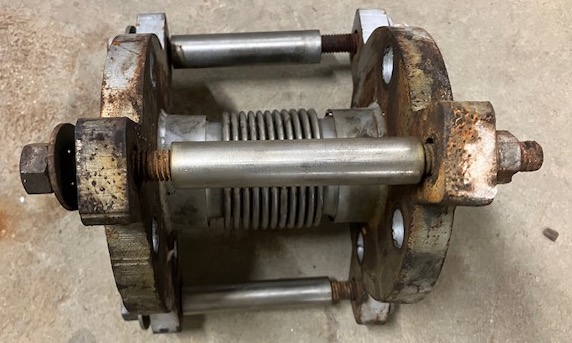
With the soggy insulation cut away, I could see where the pipe expansion joint had failed.

We discussed a plan for further assessing the failed joint. He would notify the proper people in his company for this assessing on Monday morning.

The weary expansion joint (Photo Bill Pike)

I started to think about the people who would be using the building on Monday. This would mean communication to our staff and building users.


As the tech and I were preparing to leave the mechanical room, he commented how it seems that HVAC problems tend to appear at the most inconvenient time “on Sunday mornings.” I agreed with his assessment, and thanked him for letting me disrupt his Sunday morning.

The failed expansion joint was original to the construction of the building in 1986. An expansion joint is designed to absorb movement and vibration as chilled or hot water travels through HVAC piping.

I was appreciative of the forty years of continuous service from the expansion joint. Like my old body, parts of me are slowly wearing out too.

On some days, deep inside of me, I think to myself—this old building is wearing me out. How many more unpleasant mechanical surprises are lurking in places that the congregation never see?

I wonder if God and Jesus feel the same way as they look down upon this old world?

Are they quietly saying to themselves—this old world is wearing us out. In this old world today, how many more unpleasant human experiences will erupt and break our hearts?

From all my years working in large school buildings and this cantankerous old church, I learned it is impossible to satisfy each person’s individual human thermostat. Despite this fact, my old heart tries to make people comfortable.

And perhaps at the end of the day, whether it is a failed expansion joint or a human tragedy on the other side of the world, it comes down to our hearts. How will we respond?

Maybe up in heaven, God and Jesus are still hoping that our hearts will wake up and that we can figure out how to stop breaking their hearts and ours too.

On John Lennon’s first solo album is a song titled “Hold On.”

Under two minutes in length, this pretty little song has a simple reminder for us:

“Hold on world, world hold on, it’s gonna be alright, you’re gonna see the light. Oh, and when you’re one, really one, well, you get things done like they’ve never been done, so hold on.”

Like God and Jesus, I keep hoping this old world is going to see the light.

And when that happens, we’ll figure out the path for working together and getting things done.

Even when expansion joints fail on a Sunday morning, and the world headlines continuously reveal our shortcomings, I’m trying to hold on.

Despite my theological shortcomings, I do think about the Bible and wisdom from 1 Thessalonians Chapter 5. Verses 16 through 22 caught my attention.

“Rejoice always” it is tough to rejoice when an expansion joint fails and a school shooter ruins lives in Bend, Oregon.

I do “pray continuously”. Even in my bleakest moments with a crabby church building and an unsteady world, my prayers haven’t stopped.

I do attempt to “give thanks in all circumstances.” Maybe the failed expansion joint could have been worse. In Bend, Oregon if the shooter hadn’t been confronted, the results would have been even more tragic.

These verses also tell us to “reject every kind of evil” and “hold on to what is good.”

Around our world, I wonder if we are truly capable of rejecting every kind of evil? Have we lost the capacity to counter the evil in the world and in ourselves?

Is our inability to reject those evils, keeping us from seeing the light and finding the good in the world and ourselves?

That’s a lot to think about.

In truth, you, me, we, us are beyond the thinking stage.

We must find “what is good” and put that good into action.

The weary hearts of God and Jesus can’t take much more.