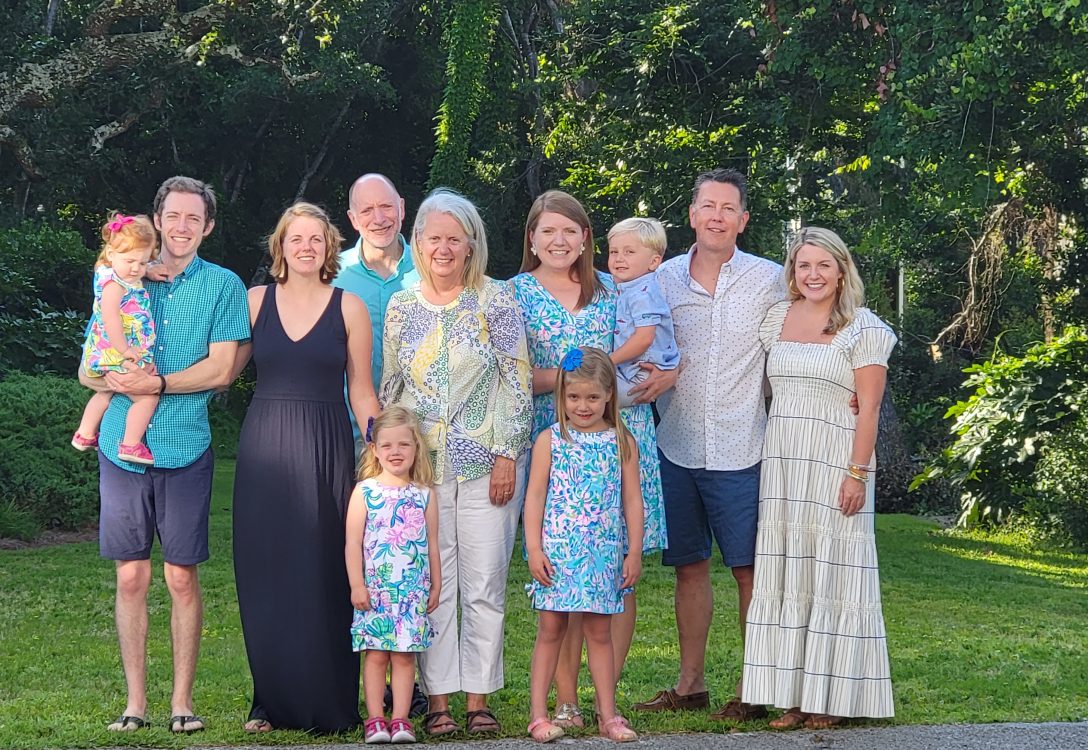
I’m 73 years old.
As a product of the North Carolina public schools, I remember those first week of school writing assignments about the summer break.
As a retired public schools educator, I probably issued that same assignment to my students too.
During the summer, I can remember attending vacation Bible school at our church. I also played on softball teams for two different churches. With no cares, I rode my bike to practices and games.
Yet, when I think of the summer break, I think of my parents. My father was one of ten children. Early in my mother’s life, her father deserted his wife and my mother’s two siblings.
My gut tells me that a vacation was never a part of growing up in their post-depression world.
For my mother, once the desertion occurred, my grandmother moved her family from Mississippi to the mountains of North Carolina.
I’m thinking for my father his enlistment into the U.S. Navy during World War II was the most he ever traveled. He was stationed on the coast of Washington.
Despite these hardships, I think my parents were determined that life would be a bit different for my sister and me.
Our vacations were never extravagant. Those trips were based upon the frugalness of my parents. They put aside whatever they could to be able to afford getting away for a few days, sometimes a week.
Food was part of their thriftiness A picnic lunch was packed for those trips. Looking for a roadside picnic table around noon was an adventure. Especially, in the middle of nowhere, but we usually found one.
Those getaways were regional—North and South Carolina, and Virginia. I believe education was a part of their agenda too. Colonial Williamsburg, Monticello, and the heritage of Cherokee including the outdoor drama Unto These Hills were all visited.
On occasion, my mother’s mother, Granny, traveled with us.
If we ventured to the North Carolina coast, Granny was up early looking for seashells and sand dollars. Today, when our family is on the coast, I’m certain my early morning rising came from her.
I’ve never forgotten her comment when traffic slowed down in Canton, North Carolina. Canton was home to a huge pulp mill.
An unpleasant aroma came from the processing of the pulp. From the backseat of our car, Granny shouted to my father, “For God sakes Bill, don’t stop here!”
Life was a lot simpler in the early 60s.
I was content with those uncomplicated summer getaways from our hometown, Burlington.
And at the time, I’m sure that I had no clue about the sacrifices made by my parents for those trips.
The growing up years for my parents had been grounded in the sacrifices made by their parents.
I have no concept for being one of ten children. I have no comprehension for being deserted by your father.
However, it is through the endurance and sacrifice found in those families that my parents framed their lives together.
On some sleepless nights, I travel back to those days of sacrifice.
I recall black and white photographs of our family along the Blue Ridge Parkway.
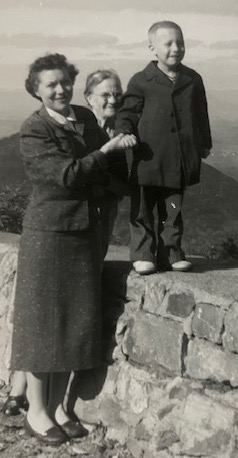
On a hot summer day, I can feel the damp coolness of Luray Caverns.
Driving toward Carolina Beach, I remember the flatness of the coastal plain.
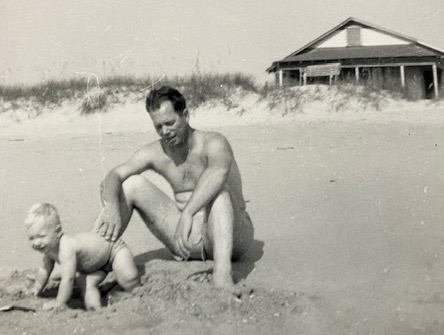
Memories like that and many more drift through what’s left of my old brain.
Those memories are forever linked to the sacrifices of my parents.
I will cherish them until my last breath, and pray that I’ve made the right sacrifices for our children.
Author’s note: I entered this piece into the O’Henry magazine’s essay contest. I wasn’t the winner, but I enjoyed thinking about how lucky I was growing up.


