Virginia must unite to end food insecurity
FEEDING VIRGINIA
Bill Pike

Recently, in The Times-Dispatch, reporter Dave Ress and Dennis Hatchett, president and CEO of Feed More, wrote about the extent of food insecurity in Virginia. The Ress article cited a recent study that found 42% of Virginia households experienced food insecurity at some point between May 2025 and May 2026. Hatchett’s guest column conveyed Feed More’s efforts to address that insecurity.
Sadly, I wasn’t surprised by the study’s findings, nor by Feed More’s plea for “unity to fight rising hunger.” My lack of surprise is based on the congregation’s weekly food collections for local food pantries at Trinity United Methodist Church.
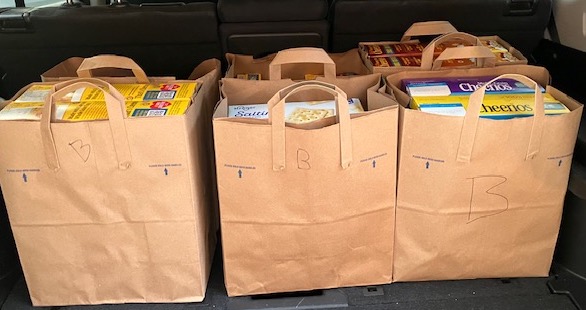
Trinity isn’t the only congregation in Richmond making weekly food collections. I note the presence of other houses of worship when we make deliveries to the food pantries at the Methodist churches of Belmont, Sherbourne and Welborne.
Before the pandemic, we focused on Sherbourne, a small church in northern Chesterfield County. Post-pandemic, we expanded to include Belmont in south Richmond and Welborne in Henrico’s affluent west end.
Every week, we encourage our congregation to donate. Occasionally, I deliver the collected food to the pantries. With those deliveries, I see firsthand the impact these pantries are having on families who are food insecure.
Distribution days differ at each pantry. Dedicated volunteers help stock the shelves and prep food bags for distribution.
Each pantry depends upon additional food support from houses of worship, grocery stores and Feed More. Financial donations allow the pantries to purchase fresh fruits, vegetables and meats.
On their distribution days, it is not unusual for shelves to be depleted by the time the last client is served. From that point until the following week’s distribution, there is a sense of urgency at each pantry to restock.
In Dave Ress’ article, the study’s data clearly captures the urgency for the families impacted by a lack of reliable access to meals.
Changes to federal food assistance programs may add to the pressures these families face. They may also increase demand at local food pantries. How much longer will these pantries be able to serve their communities if access to food continues to shrink?
Virginia Tech was a partner in the food insecurity study.Communities across Virginia aren’t the only ones impacted by food insecurity. College students are feeling this too.
Virginians might be surprised to learn that The Market on the Virginia Tech campus was created to reduce student food insecurity. In the Fall 2025 edition of the Virginia Tech alum magazine, there is a fullpage advertisement about The Market.
Here are The Market’s impact points from the 2024– 25 academic year: more than 69,000 pounds of food distributed, a 375% increase in visits during Open Market Hours, 829 students supported across its programs and $130,520 raised for The Market.
Is Virginia Tech alone in helping students experiencing food insecurity? Are other colleges and universities in Virginia experiencing the same level of food insecurity among their students?
Our college campuses aren’t alone in dealing with reliable access to food for students. Food insecurity is also present in our public schools.
Some schools have a family advocate on their staff. A family advocate works to assist families who are struggling to find stability with clothing, food and housing.
In the Ress article, Duke Storen, commissioner of the Virginia Department of Social Services, said it best: “No Virginian should go hungry — ever.” I agree.
But how do we change that statement? Dennis Hatchett, in his column, stated, “We cannot do this work by ourselves.” Again, I agree.
Yet, I wonder how much communication and collaboration takes place between Feed More, food pantries, grocery stores, houses of worship, school systems and other nonprofits that provide essential services to families? Might more communication and collaboration across Virginia help us to reduce food insecurity?
With the recent passing of Richmond community leader Jim Ukrop, I was intrigued by his wisdom: “A résumé tells me what you’ve done, but not who you are. So tell me your story.”
This study on food insecurity is Virginia’s résumé. The study reveals the challenges Virginia faces.
To change Virginia’s résumé, we must get to the heart of the stories in households that experienced food insecurity during the past year. We must discover in those stories what triggered that insecurity.
Learning what triggered that insecurity could help us determine if our current template is effective and efficient. If it isn’t, then we owe it to those families to figure out how to implement change for their good.
Virginia, stopping food insecurity is in those stories.
Our collective “unity” is needed to ensure that “no Virginian goes hungry — ever.”
Note from author: Friends, I was honored to have this Op-Ed piece about food insecurity published in the Richmond Times-Dispatch on Thursday, October 22, 2026. Perhaps, your community has similar needs. If that is the case, please help out. Thanks, Bill Pike