Led By God

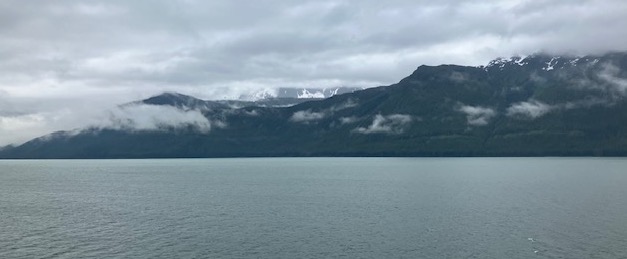
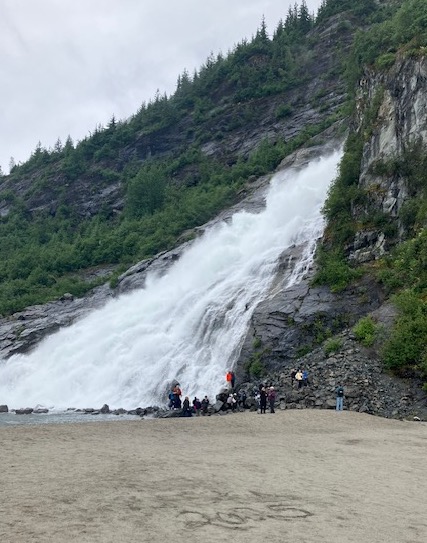
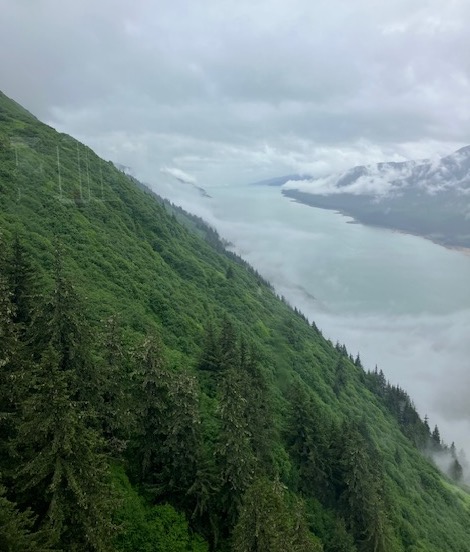
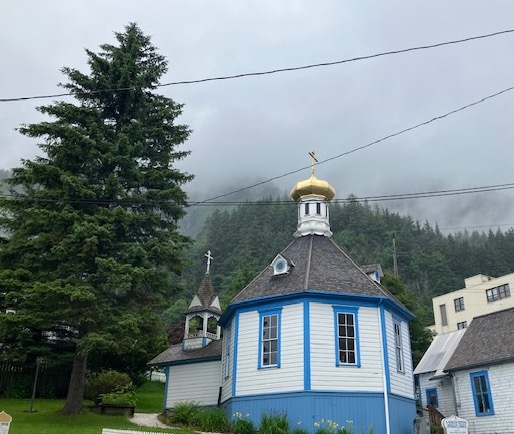
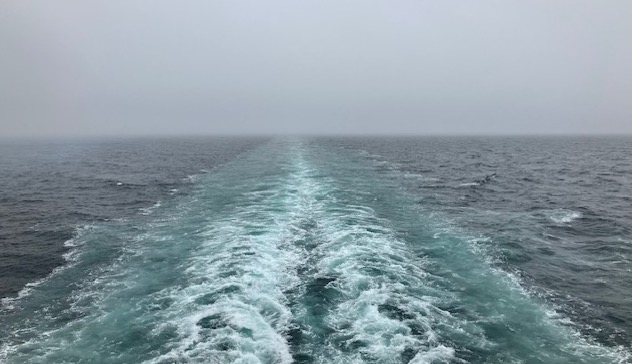
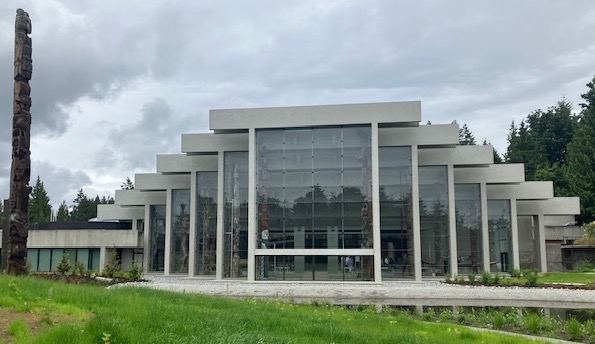
Cover from the Upper Room (Photo taken by Bill Pike)

Read Mark 10:46-52

Trust in the Lord with all your heart, and do not rely on your own insight. In all your ways acknowledge him, and he will make straight your paths. Proverbs 3:5-6 (NRSVUE)

I enjoy taking early morning runs, and before I leave the house, I check the weather conditions from the nearby airport.

One morning, the visibility at the airport was down to one mile. A thick layer of gray clouds hung above the treetops.

As I ran, I heard a plane overhead, but because of the cloud cover I couldn’t see it; I knew that the pilots couldn’t see the ground either.

Pilots must always rely on their training and sophisticated instruments to safely fly and land the plane, but this is especially true when visibility is reduced.

Sometimes I struggle to see where I need to go in life. l lose focus, and finding my way is difficult.

In those moments, I work to regain my bearings with these words from Proverbs 3:5-6— “Trust in the Lord with all your heart, and do not rely on your own insight. In all your ways acknowledge him, and he will make straight your paths.”

Trusting in God is not always easy.

Yet, that is exactly what Bartimaeus did when he asked Jesus to restore his sight; he trusted God in his heart.

On those days when the way is unclear, my heart needs to be more trusting, just like Bartimaeus.

Prayer: Faithful God, help our hearts to trust you when our vision is clouded. Guide us through your word. Amen

Thought For The Day: When the way seems unclear, I will trust God to lead me.

Bill Pike (Virginia, USA)

Note from the author: Friends I’m honored to have this piece published in the November-December edition of the Upper Room today, Tuesday, November 18, 2025. In case you are interested, I’ve also included the original piece that was submitted to the Upper Room. Thanks for your reading time, be safe, Bill Pike

Flying With God

Read Mark 10:46-52

Trust in the Lord with all your heart, and do not rely on your own insight. In all your ways acknowledge him, and he will make straight your paths. Proverbs 3:5-6 (NRSV)

I still enjoy taking an early morning run through our neighborhood.

I keep a running journal. Before I leave the house, I jot down the current weather conditions from the local airport.

Most mornings, the visibility is listed at ten miles. At the dawning of this day, the visibility at the airport was down to one mile.

In our neighborhood, a layer of thick, gray clouds hung above the treetops. As I started my run, I could hear the whine of jet engines in the cloud cover, but I couldn’t see the plane.

When visibility is reduced, pilots must rely upon their training and the use of sophisticated instruments to safely bring the plane through the clouds for a landing.

Sometimes in life, I struggle to see where I need to be landing. My vision becomes blurry. I lose focus. Finding my way is difficult.

In those moments, I work to restore my sight with these words from Proverbs 3:5-6: Trust in the Lord with all your heart, and do not rely on your own insight. In all your ways acknowledge him, and he will make straight your paths.

Trusting in God or Jesus when my vision is cloudy is not easy to do.

Yet, that is exactly what Bartimaeus did when he asked Jesus to restore his sight—his heart trusted.

On those days when my vision is reduced, my heart needs to be more trusting like Bartimaeus.

Prayer: Father of us all, help our hearts to trust you when our vision is reduced. Amen

Thought For The Day: When the clouds of life reduce our vision, trusting in the Lord can lead us to his light.

Submitted to the Upper Room 4/6/24

Veterans Day 2025: valor

My friend, Mike Cross, a Veteran, who served his country as a Marine during the Vietnam War, invited me to the Virginia War Memorial.

On the evening of Wednesday, October 29, we would be attending Leadership In America. This is a lecture series presented by the Virginia War Memorial Foundation.

The presenter was Dr. Michael Bell, a United States Army combat veteran, who is currently the Executive Director of the World War II Museum’s Institute for the Study of War and Democracy.

Dr. Bell’s topic for the lecture was—America Returns: The 81st Anniversary of the Battles of Leyte and Leyte Gulf. These battles were in the Philippines during World War II.

According to Dr. Bell and other historians, in October of 1944, the Battle of Leyte Gulf became the largest Naval battle ever fought. (World War II Museum)

These battles were also punctuated by the leadership of General Douglas MacArthur.

In March of 1942, General MacArthur had been ordered to leave the Philippines to escape the Japanese invasion. This is when MacArthur made his famous promise: “I shall return.”

MacArthur fulfilled that promise on October 20, 1944.

On that date, he waded ashore on the Philippine Island of Leyte, and in a radio communication stated: “People of the Philippines I have returned! By the grace of Almighty God, our forces stand again on Philippine soil—soil consecrated in the blood of our two peoples.”

MacArthur’s reference to blood in the battles of Leyte and Leyte Gulf would be significant for America and Japan. Thousands and thousands of sailors and soldiers were killed in these battles.

Yet, historians are in agreement that the battles for Leyte and the Gulf of Leyte were pivotal for the war in the Pacific. America’s victory in these battles crippled for the remainder of the war the Japanese Navy. Japan lost 26 ships of war in this battle. More importantly, Japan’s supply lines had been disrupted.

Additionally, the battle of the Gulf of Leyte marked the first kamikaze attack of the war. A Japanese pilot with desperation and purpose dove his plane into the deck of the USS St Lo, an escort carrier. Sadly, this suicide attack wasn’t the last in the Pacific for American sailors to endure.

The world remains pocked with the physical and emotional scars of war. There is no escaping this toll.

With war, there has been and always will be a toll. Perhaps, the most difficult part of that suffering is our failure to learn from these conflicts. Peace remains elusive.

I wonder in Dr. Bell’s role at the World War II Museum if they have ever conducted an in depth study as to why peace remains elusive in the world?

Clearly from Dr. Bell’s comments in that packed lecture hall, we have learned a great deal from the study of the Battles of Leyte and Leyte Gulf. Yet, in all of that research do those accomplished historians ever ask why didn’t the peace at the end of World War II last?

As we were driving back to our homes, Mike and I talked for awhile about the Medal of Honor.

The Medal of Honor is the United States Armed Forces’ highest military decoration and is awarded to recognize American soldiers, sailors, marines, airmen, guardians, and coast guardsmen who have distinguished themselves by acts of valor. (Department of Defense 2017)

I learned from Mike that the Medal of Honor design for the Army and Air Force has the word valor displayed. The Navy’s design features an anchor.

I am not a Veteran.

I can only begin to imagine the acts of valor that came from the recipients of the Medal of Honor.

In James Bradley and Ron Powers’ book Flags Of Our Fathers, I read about two Medal of Honor recipients from World War II.

Jacklyn Lucas threw his body onto two Japanese grenades. His body was blown into the air. Neither his fellow soldiers, nor the doctors on the hospital ship, Samaritan, could believe he lived through the explosions. When the authors asked Mr. Lucas why he had thrown himself on those grenades, he answered: “To save my buddies.” (Page 175)

Corpsman George Whalen refused to come off the battle field despite suffering three serious wounds. Again, the authors asked Mr. Whalen—why did he continue to render aid ignoring his own dire physical condition? He responded: “Because I cared for my buddies.” (Page 234)

Valor.

On Sunday, November 9, 2025 our church held the twenty-fourth Veterans Pancake Breakfast.

Our special guest speakers for the event were David L. Robbins, an accomplished American author, and Phil Trezza, an Army combat medic who served in Operation Iraqi Freedom.

Mr. Robbins founded the Mighty Pen Project. He works through the Virginia War Memorial in offering a writing class to Veterans who want to capture their stories from when they served our country.

Mr. Trezza has been a participant in the Mighty Pen Project.

Both Mr. Robbins and Mr. Trezza gave us heartfelt snapshots about the Mighty Pen project and its impact on Veterans.

Near the conclusion of our Veterans Pancake Breakfast, we always call the names of the Veterans from our church who passed away during the year. On Sunday morning, we called three names. This is immediately followed by the live playing of taps, and a prayer.

Valor.

And the final act of the program, we ask all of our Veterans to gather for a group photograph. When I look into the aging faces of our Veterans, I see valor.

Trinity United Methodist Church and our Veterans. Joined by David L. Robbins far left second row and Phil Trezza first row far right. (Photo Bill Pike 11/9/25)

If you have followed my blog, you know that over the years, l have confessed that I am a worrier. There is no valor in worrying.

While lots of things cause me worry, right now, I constantly worry about America.

I want to know if America understands valor.


I want to know how we rediscover our valor, not just in our service men and women, but in every American citizen.

I want to know if we comprehend how important valor is to our democracy.

On Veterans Day or any day for that matter, if you encounter a Veteran please take a minute to thank them for their service and their valor.

And while you are thanking them, remember the words from Jacklyn Lucas and George Whalen about saving and caring for their “buddies” in the brutal harshness of the battlefield. Their valor saved you, me, we, us back home in America too.

By the grace of God, we must never forget the valor of our Veterans.

Part I: Back To New Orleans

I know nothing about the planning for the June of 1958 road trip to New Orleans.

My father was a member of the Civitan Club. The Civitans were having a convention in that famous city.

Founded in 1917, the Civitans are an international organization “of volunteer service clubs, dedicated to helping people in their own communities.”

This convention was the reason for the road trip. By car, we traveled with another couple from Burlington, Melvin and Tula Wilson. The Wilsons were a delightful older couple who also were a part of the congregation of Davis Street Methodist Church where my parents attended.

As far as the road trip, I remember a stop somewhere on a beach along the Gulf of Mexico. I also recall a long ride over a bridge. I assume this was across Lake Pontchartrain.

Once in New Orleans, there was a bus tour of the city. The tour guide referenced a swimming pool we passed. He said it was filled with muddy water from the Mississippi River.

Another memory was a cafeteria that had fresh watermelon on the serving line.

My mother tracked down her father who deserted her mother and her siblings early in their Mississippi lives.

For some reason, we took the train back to North Carolina. I recall a kind porter who made me a ham sandwich. I think one of my father’s brothers picked us up at the train station in Greensboro and drove us home to Burlington.

And thanks to my parents, I was decked out as a five year old tourist.

What a sport (Photo courtesy of the Pike family)

Now 66 years later, on Wednesday, May 8, 2024, my wife and I are traveling back to New Orleans. This isn’t a road trip to a Civitan convention. No, my main purpose is to visit the National World War II Museum.

Luckily for me, I benefit from the detailed trip planning from my wife, the Commander Supreme. No one is better at trip planning.

We left Richmond on a Boeing 757-200(HD) with a stop in Atlanta. On this first leg, I continued my reading of Isabel Wilkerson’s book The Warmth of Other Suns. From Atlanta to Richmond, there was lots of cloud cover. I watched part of a documentary about Jimmy Carter.

As we approached New Orleans, the visibility improved, and I saw lots of brown water.

Once we landed, the driver of the jetway had a tough time connecting to the front exit door of the plane. Eventually, the mechanical gods cooperated. This was followed by the rush of passengers exiting the plane.

New Orleans has a very nice airport.

Through our son’s in-laws, we had a driver ready to pick us up. The driver drove us into the business district and dropped us at the Magnolia Hotel. This hotel gave us good access to the places we wanted to visit in the city. With the exception of a street car ride, we walked everywhere.

Our feet wasted no time in immersing us into the city.

In the French Quarter, we enjoyed lunch at Landry’s Seafood.

We walked into Jackson Square. We were immediately taken by the St. Louis Cathedral.

(Photo Bill Pike)

With its ties to the King of France, this stunning building dates back to 1720. Lots of adjectives have been used to recount the exterior and interior beauty of the building.

(Photo Bill Pike)

From Jackson Square, we were able to catch our first views of the mighty Mississippi River. With an assist from Mark Twain, the Mississippi might reveal the soul of America.

(Photo Bill Pike)

We made the predictable tourist stops at the Cafe Du Monde and Pat O’Brien’s. For some reason, the famous Hurricane drink reminded me of drinking Kool-Aid as a kid.

As we worked our way back to the hotel, no matter where our eyes scanned, the architecture of the buildings and homes held us captive. Brick work, wrought iron, flowers, and a palette of just right paint shades were in every direction.

(Photo Bill Pike)

After a quick refresh at the hotel, we mapped out our walk to our dinner restaurant—Herbsaint. Located on St. Charles Avenue, we enjoyed our exceptional food and service at an outside table on this pretty May evening.

From our early start in Richmond, our day had been long, but our first afternoon in New Orleans was enjoyable.

Despite the treasured prettiness of New Orleans, I noted that the city isn’t immune from what I see back home.

Struggles that are small and large—missing street signs, sidewalks in need of repair, impatient beeps, a mix of aromas some pleasant, some unpleasant, and the homeless.

No matter these challenges, New Orleans has a soul. A soul that still draws people to it. A soul that continues to survive no matter what comes its way.

With a good night of rest, I hope to learn more about the city’s perseverance on Thursday.

re· ject· ed

Another School Shooting

Sadly, on August 27, 2025, the Washington Post reported on another school shooting. This one at Annunciation Catholic School in Minneapolis, Minnesota killed two students and injured seventeen.

Everyday across America, families send their daughters and sons to school. Those families trust that their cherished daughters and sons will come back home.

Too frequently in America, that trust is violated. Children aren’t supposed to come home in a body bag.

There is something wrong with a country whose innocent school students continue to be murdered in alleged safe settings.

No matter our legislation, school rules, intruder drills, and school security officers, we are unsuccessful in preventing school shootings.

I spent over thirty-one years working in education. In my career, I had experience working in public, private, and department of correction schools.

As different as those school environments were, none were immune from disruptive behaviors from students. In those unique school settings, I kept coming back to a recurring concern—the erosion of our families.

In 2019, the Pew Research Center reported that “America has the world’s highest rate of children living in single-parent households.”

A 2022 report by the Annie E. Casey Foundation found that more than 23 million children live in single-parent homes in America.

To be clear in my career, I worked with many competent single parents.

Yet, I believe for too many years, we have failed to understand the impact on students in our school environments when the parent or family is dysfunctional in providing the support a child needs in school.

That instability makes me wonder how many of our school shooters came from unstable homes? Regrettably, I wonder how many more might come from those stressful settings?

In James H. Cone’s book, The Cross And The Lynching Tree, he quotes Dr. Martin Luther King, and a comment he made after the assassination of John F. Kennedy. Dr. King told his wife: “This is what is going to happen to me also. I keep telling you this is such a sick society.”

Dr. King was correct—we are a sick society.

Our mental sickness has left its blood stains on every school shooting that America has endured.

America is overdue to cure our sickness.

This is urgent.

Failing to solve guarantees more school shootings.

Haven’t we had enough?

Written by Bill Pike submitted to the Washington Post on August 28, 2025.

Dismissal of Virginia Tech Football Coach

I have no allegiance to Virginia Tech football. Our oldest daughter is a Hokie. From this connection, I have quietly pulled for the Hokies. In life or death losses, the extreme pain of Hokie friends has eluded me.

Contrary to some Atlantic Coast Conference(ACC) fans I was not opposed to the expansion that brought Virginia Tech into the ACC. Academically and geographically, this invitation made sense to me.

In today’s college athletics, not much makes sense. The transfer portal and Name, Image, and Likeness (NIL) have completely changed how conferences and coaches function.

I’ve never met Brent Pry who was relieved of his coaching duties at Virginia Tech on Sunday afternoon. Yet, I have no idea why anyone wants to coach college football.

The internal and external pressure to win is relentless. Getting those wins means a coach puts his life in the hands of young men who are 18-21 years old.

Recruitment of players can be ruthless. Despite a coach putting his heart and soul into signing a player that doesn’t mean the player will be loyal and play all four years for that coach.

Loyalty and patience are dead in college athletics. Money is the sole driver.

With Virginia Tech’s three losses, no one from Tech’s President, the Athletic Director, or alumni were willing to be patient— might Coach Pry turn the season around?

The humiliating loss to ODU on Saturday night in Lane Stadium was too disgraceful. Impatience exploded.

In President Sands announcement to the Hokie Nation, he has essentially given his blessing to a task force that in short order must: “develop a financial, organizational, and leadership plan that will rapidly position the Virginia Tech football program to be competitive with the best in the ACC.”

Too bad the charge for those Virginia Tech leaders can’t be to return common sense to college athletics, with an emphasis on financial saneness, and a realistic strategic plan that molds an athletic department into an equitable portion of the university— not an isolated empire.

Written by Bill Pike submitted to the Roanoke Times on September 17, 2025.

Author’s note: No matter how passionate the writer, submitting letters to the editor of a newspaper is never a guaranteed acceptance. Yet, I think I will continue my writing whine until my last breath.

October finger-tippers

Even though I know that the dew covering the windows on my car will soon become frost, October, I’m glad you’re back.

(Photo Bill Pike)

You are my favorite month.

I don’t want you to leave.

I know when you depart, November moves me one step closer to winter.

Mentally, I fight winter.

While I still respect winter, I’ve lost my constant school boy hope and prayer for snow.

At 72, my old brain doesn’t revere snow anymore. That wish for snow is for our grandchildren and school teachers.

So October, I’m going to cherish you.

The last few days the harvest moon has been like a spotlight in the predawn western sky. Its brightness teasing as it hovers by church steeples and plays hide and seek descending behind tree lines.

(Photo Bill Pike)

To my west, cold fronts hurtle their northwest winds over the Blue Ridge Mountains. Rushing east toward Richmond, these winds paint your sky with the clearest, bluest blue my eyes have ever seen. I want to daydream into that blue forever.

Although I dread my annual battle with your fallen leaves, I adore the palette of colors found in the bright sun against that blue sky backdrop.

Even though, my affection for today’s baseball is gone, October brings the world series. I remember sneaking my transistor radio and earplug into Miss Avery’s sixth grade class at Hillcrest Elementary School. She figured out that I was trying to listen to the world series. For some reason, she didn’t kill me.

And just to be fair, I can grumble about October too.

I whine about the retailers who thrust Christmas on us way too early. I couldn’t believe that even our neighborhood hardware store had a Christmas Sale display today.

(Photo Bill Pike)

And to continue the fairness, I will confess that I do not understand our increased fondness for Halloween. Yards throughout our neighborhood are transformed with all kinds of displays. I’m surprised someone hasn’t come up with a tacky Halloween tour like we have for tacky Christmas lights.


On a recent morning run, I turned off Horsepen Road and made a right on Devon. A few yards down the street two houses across from each other are decked out in Halloween gear. What caught my attention were the skeletons.

Each yard has an array of skeletons. Yet, my eyes were drawn to the high wire that stretches across the street from a tree in each yard. Skeletons in a variety of positions dangle from that high wire.

In particular, there is one skeleton that I really focused on. High above the yard, this skeleton is hanging by its fingertips. I wonder how many people I encounter on a daily basis who are hanging on by his or her fingertips?

(Photo Bill Pike)

I worry about those finger-tippers.

Unless we are completely oblivious, day to day living in this challenging world is tough.There is a tension that makes people more fragile, more vulnerable.

What really worries me about those finger-tippers is I might never know how close they are to letting go.

The constant barrage of discouraging news headlines makes me a pessimist at heart. I wonder when are we going to wake up? Perhaps that’s what keeps a bit of optimism—a bit of hope in my old heart. Hope that we will find our hearts again.

Maybe those finger-tippers can find some hope in October.

Maybe finding hope requires us to strip away the layers of hurt in our hearts like stripping layers of paint off on an old battered door.

(Photo Bill Pike)

Maybe that hope is in the October bloom of a camellia shrub.

(Photo Bill Pike)

Maybe that hope is the shiny red berries from a dogwood tree.

(Photo Bill Pike)

Maybe that hope is early morning sunlight coming through window shutters as it cast a pattern of light against a sanctuary wall.

(Photo Bill Pike)

Maybe that hope is you, me, we, us realizing that a finger-tipper is in close proximity.

Maybe that hope is you, me, we, us starting a conversation with the finger-tipper.

Bruce Springsteen said: “At the end of every hard day, people find some reason to believe.”

Maybe for finger-tippers, you, me, we, us, and October can become a reason to believe at the end of their hard day.

After all, 1 Thessalonians 4:18 states: “Therefore, encourage one another with these words.”

Help from a stranger at the Stop, Drop, and Roll 5K

Wearing rain gear, participants walk to the start line. (Photo Bill Pike)

Saturday morning, September 27, I found myself in a place I did not expect to be. Along with 99 other runners and walkers, I was inside the Summerfield, North Carolina fire station. We were patiently waiting for the ninth running of the Stop, Drop, and Roll 5K.

My wife and I were in town from Richmond, Virginia. By chance, I learned of the 5K from our oldest daughter who lives in Summerfield. Just after lunch on Friday, I registered for the 5K. Late that afternoon, I picked up my race packet at the fire station.

With a gentle rain falling over Summerfield, inside the station where shiny red firetrucks are normally parked was a good place to be. Participants wandered around the large open space. Some stretched, most chatted, and a few firefighter chefs watched over the last moments of cooking their famous chili. The chili was to be a post-race treat.

At 8:45, there was a kids fun run —a hundred yard dash around the fire station. With their youthful energy and spirit, it didn’t take long for for these sprinters to cross the finish line.

Old man that I’ve become, I made sure my bladder was content before heading toward the start line. After the playing of the national anthem, the race director gave the participants our final instructions.

With a blast from an airhorn, we were off. We made a right turn out of the fire station and headed toward the driveway in front of Summerfield Elementary School.

Past the school, we made a left turn and worked our way to the entrance of Summerfield Community Park. We followed an asphalt trail.

Peppered with wet fall leaves, the splotching of this surface reminded me of kindergarten students gluing seasonal fall colors to the frame of a paper tree.

Antique that I am, I slowed my already slug pace on the downhill stretches. Coming out of the park, we were on a road that ran behind the elementary school. Eventually it took us through a neighborhood of homes before we hit a turn around spot where there was a water stop.

Along the way, orange traffic cones and volunteers marshaled the course. Some were students who were members of the Civil Air Patrol.

A few of these students were energetic with their encouragement as they blasted away on their kazoos and shouted out “you got this!”Proceeds from the 5K are going to help this organization.

Running close to me was a young mother who was pushing a stroller with her daughter tucked away from the raindrops. Sometimes, she would pass me, and sometimes I would pass her.

As we prepared to re-enter the park, I veered to the next left turn too soon. This kindhearted lady noted my mistake, and cordially shouted out to me “wrong way!” I quickly corrected my steps.

From past experiences, I know events like this don’t happen without volunteers. Working my way back to the finish line, I called out to the volunteers thanking them for being out on the course.

Summerfield Fire Department volunteers (Photo Bill Pike)

Heading out of the park, walkers and runners are greeted with one final challenge—a steep hill. With steady determination, I chugged up the incline.

Back at the elementary school driveway, the three mile sign marker came into view. Now, I had one tenth of a mile to go. Like a horse sensing the closeness of the barn, my old body picked up the pace, and I crossed the finish line.

While the chili cast a tempting aroma, I opted for a bottle of water and some orange wedges.

I sought out the mother with the stroller who corrected my turn. I thanked her. She gave me a high five, and said your welcome.

In America today, a person will make a wrong turn. For some that turn might become a tragedy.

On Sunday, September 28, Americans received more devastating news.

Late on Saturday evening, in Southport, North Carolina, a man killed three people and wounded five in an attack on a popular waterfront restaurant.

Then on Sunday, a gunman killed four and injured eight on an attack of a church in Grand Blanc, Michigan.

In these too frequent American tragedies, I always wonder what pushes the attacker to make such a devastating choice? I want to know if someone could have changed the attacker’s decision to harm innocent people?

The book, “Somebody Told Me,” is a collection of newspaper stories written by Rick Bragg. In writing about the 1995 Oklahoma City bombing, Bragg hears these words from people he interviewed: “This doesn’t happen here.”


America, we have work to do.

Our challenge is to help people from making those wrong turns.

“This doesn’t happen here,” must become a reality.

Old American who needs to get to work. (Photo Betsy Pike)

Evil is eroding America. Will this be our requiem?

RICHMOND TIMES-DISPATCH THURSDAY, OCTOBER 2, 2025|A6


OPINION

Evil is eroding America. Will this be our requiem?


LETTERS TO THE EDITOR


In Earl Swift’s book, “Chesapeake Requiem,” he writes about the watermen of Tangier Island, and their shrinking precious land. On Jan. 8, 1964, Tangierman Asbury Pruitt started to measure the disappearance of his beloved island.


Every Jan. 8, Mr. Pruitt returned to the same spot on the island and took a measurement to learn how much of the shoreline disappeared each year. From his first seven years of recording the measurements, Mr. Pruitt learned that “the Chesapeake tore away, on average, twelve feet of shoreline.”


I am an imperfect American. For many years, I have felt America has been slowly eroding just like Tangier Island. However, this erosion is different from the relentless pounding of America’s shorelines from the Atlantic and Pacific oceans.

No, this internal erosion is of our own doing. It is as if we are afflicted with an internal cancer. A cancer so vile and divisive that we are unable to find a cure.


No matter how horrific the loss of life is from gun violence, we point accusatory fingers of blame at each other. In that wasteful burn of energy, we are unable and unwilling to find any common ground that might lead to a solution.


Our cancer thrives on incivility, disrespect, selfishness and discrediting the truth.


Immunity from this cancer appears to favor those who are loyal to its incivility, disrespect, selfishness and discrediting the truth.


Even though it’s been 33 years, I still despise the cancer that robbed my mother’s life.


Yet, I detest even more this internal evil cancer that is eroding and robbing America because it has seized our hearts.


William Shakespeare wrote: “My tongue will tell the anger of my heart, or else my heart concealing it will break.”


America, do we really want this to be our requiem?


Bill Pike Henrico

Note from the author: I’m honored that my letter to the editor was published today in the Thursday, October 2 edition of the Richmond Times-Dispatch.

(Pearl Harbor, Hawaii photo Bill Pike)

America was once

For a long time, I have been worried about America. Let me attempt to explain why.

On the afternoon of Saturday, August 23, my wife and I were driving back to Richmond, Virginia from Durham, North Carolina.

We were on I-85 still south of Petersburg when I heard a roaring sound. I was in the passing lane. I looked at my rearview mirror to find a man driving a motorcycle riding the center line between both lanes. Two things caught my attention: the speed of the motorcycle and the driver’s total disrespect for his life and the life of the drivers in the other vehicles and their passengers.

As we continued toward home, on Chippenham Parkway, we approached Forest Hill Avenue. There, three vehicles traveling at high speeds, recklessly wove in and out of the two lanes of traffic. Again, these drivers, showed no respect for their lives, nor the people in the vehicles they were passing.

Every Thursday morning, I take groceries from our congregation to the food pantry at Belmont United Methodist Church. Once off Chippenham Parkway, I take the Belmont Road exit. As this road merges with two other roads there is a traffic circle. Four yield signs are properly placed around the circle. Rarely, do drivers obey the yield signs. They opt to gun through the circle without regard to other drivers.

On the evening of Friday, September 12, my wife and I were driving to our local high school for a football game. While stopped in the left turn lane at the intersection of Forest and Three Chopt, two cars barreled through this intersection blatantly running the red light. If my wife who was driving had made her left turn quickly into the path of these two vehicles, the results would not have been pleasant.

In our neighborhood, stop signs at Stuart Hall and Rock Creek roads are frequently ignored by drivers.

Also in our neighborhood, the county has invested quite a bit to install crosswalks for pedestrians on quiet and busy streets. It is rare when drivers truly stop to allow pedestrians to cross safely.

I will confess, I’m an imperfect driver, but I do attempt to follow the rules of the road. So, Mr. Whiner, what does this have to do with your worries about America?


While seemingly minuscule, my concern is the disregard and disrespect for the rules of the road is part of the continuing erosion of America. My point is from an interstate to a neighborhood street this disregard and disrespect emboldens people to become more defiant.

We’ve seen this disregard and disrespect play out in other public settings too. From school board meetings to the Office of the President, our civility and decorum are absent.

In December 2002, Earl Scruggs, Doc Watson, and Ricky Skaggs performed a concert at the RJR auditorium in Winston-Salem, North Carolina. These gifted bluegrass musicians delighted the audience with their playing, singing, and storytelling.

During the performance, Earl Scruggs shared a story about learning to play the banjo. Mr. Scruggs had learned a part of a song, and he couldn’t wait to share this accomplishment with an older brother. When the time came to share it with his brother, the brother heard the run, and said, “Is that all you know?”

When it comes to my worries about America, that’s not all I know.

Writing in Bloomberg, journalist, Adam Minter, describes a new $62 million dollar high school football stadium in Buford, Georgia. “The stadium features 15 corporate suites, 10,000 seats, and a 3,600 square foot state-of-the art scoreboard.” As shocking as that maybe for you, here’s another jolt for you to consider: “Texas has 10 high school stadiums that cost $50 million or more.”

I wonder in Georgia and Texas how many school buildings are in disrepair?

Closer to home in Virginia, on the afternoon of Sunday, September 14, Virginia Tech fired its football coach, Brent Pry. The Hokies started their season with three consecutive losses.

We shouldn’t feel too bad for Coach Pry. Thanks to his agent/lawyer who negotiated his six year contract with Virginia Tech leaders, that agreement was worth $27.5 million dollars. It is reported that the buyout provision in Pry’s contract will require Virginia Tech to pay him $6 million over the next two years. In 2021, Virginia Tech paid former head football coach, Justin Fuente, a lump sum of $8.75 million when he was dismissed.

Somewhere in America today, a person was fired from a job. If they were fired for poor performance, I doubt there was a buyout provision. Why should a college football coach be awarded with a buyout provision for poor performance?

I wonder when college athletic directors and administrators are going to be held accountable for their poor hires and financial irresponsibility?

Doesn’t matter if it is reckless disregard for the rules of the road, an outlandish high school football stadium, or a ludicrous buyout provision for a college football coach, America from “sea to shining sea” is eroding.

Nothing signals that erosion more than our on-going loss of life from firearms. Doesn’t matter where the shooting death occurs— on a street corner, a school, house of worship, retail settings, public venues, or a university, we clearly don’t care because the bodies and broken hearts continue to pile up.

If we dared to truly care, we would work collectively and cooperatively to solve our sickness. How can we be the greatest country in world and be so negligent for so long in failing to address this issue?

In our current sickness and blindness could you, me, we, us even attempt to apply this scripture from Philippians 2:3-4 to our daily living:

“Do nothing from selfish ambition or conceit, but in humility regard others as better than yourselves. Let each of you look not to your own interests, but to the interests of others.”

When are we going to wake up and call out our “selfish ambition”?

On our visit to Durham, we took a trip to Hillsborough. We walked around the downtown and the surrounding neighborhood to admire some stunning historic homes.

In one yard was what appeared to be a homemade sign.

On top of a golden background was the American flag. At the top of the sign were the words—Never Give Up!

On the four sides of the flag printed in the golden margins were the words we should never give up: Truth, Equality, Justice, and Compassion.

If we have any chance of living through our current chaos, our voices and every ounce of strength must never give up those words.

We can’t become an America that was once grounded in truth, equality, justice, and compassion.

(Photo by Bill Pike)

Out at Cedarfield: Ouiser, fears, craziness, and bad moods

“I’m not crazy M’Lynn. I’ve just been in a very bad mood for forty years.”

Those words were spoken by Ouiser Boudreaux, the character portrayed by actress, Shirley MacLaine, in the movie Steel Magnolias.

In truth, Ouiser Boudreaux, reminds me of my mother’s sister, Mildred.

I loved Mildred because like Ouiser, Mildred was always honest. She never held back.

Robert Harling wrote the play, Steel Magnolias, and the screenplay that was made into a movie. The play was based upon Harling’s experience of his sister’s death.

I sense it would be fairly easy to take Ouiser’s observation about herself and apply it to our lives.
To the therapist: “I’m not crazy, Dr. Watson, I’ve just been living with my wife for the last fifty one years.”

To the superintendent of schools: “No m’am, I’m not crazy, I’ve just been trying to teach middle school students for the last thirty one years.”

To your doctor: “No sir, I’m not crazy, I know operating the television’s remote control for six hours a day isn’t a cardiovascular activity.”

I wonder if people ever felt that Jesus was crazy?

Think about Matthew Chapter 8 verses 23-27: “And when he got into the boat, his disciples followed him.  A gale arose on the lake, so great that the boat was being swamped by the waves; but he was asleep.  And they went and woke him up, saying, ‘Lord, save us! We are perishing!’  And he said to them, ‘Why are you afraid, you of little faith?’ Then he got up and rebuked the winds and the sea; and there was a dead calm.  They were amazed, saying, ‘What sort of man is this, that even the winds and the sea obey him?’”

The collective question of the disciples says it all—“What sort of man is this, that even the winds and the sea obey him?”

Maybe what they were really thinking was—“Is this man crazy?”

But in truth, the toughest question in this passage comes from Jesus: “Why are you afraid, you of little faith?”
From the disciples perspective, their fear is grounded in the intensity of the storm that is battering their boat.

Think about it— no life preservers, no flares to fire off, no cell phone, no Coast Guard helicopter in route.

Nope all they have is this crazy guy Jesus.

I’ll be truthful with you, my faith and fear are grounded in this—I still struggle to always understand this crazy guy Jesus.

I will go to my grave wondering why prayers for one friend battling cancer are answered while prayers for another friend are not.

How can a woman with a longstanding health problem in Luke Chapter 8 barely touch Jesus’ clothing and her medical condition is immediately cured?

Talk about crazy, that story drives me nuts.

All this suffering in the world, even in this beautiful facility at Cedarfield, and that touch from Jesus seems so far away.

And yet, I don’t think Jesus is far away.

No, I think the problem is that I have continued to distance myself from him.

And that distance comes from my inability to see and understand Jesus’ craziness.

I think it would be very fair for God and Jesus to say: “We’re not crazy Bill. But because of all the challenges we see on earth everyday, we’ve just been in a very bad mood for a zillion years.”

You, me, we us know that God and Jesus have lots of reasons to be in a very bad mood when they look down upon us.

No doubt, the world can put us in a very bad mood.

But, if we let that very bad mood consume us, we will lose our hope.

A few years ago I received an email from Tommy Yow. A long, long time ago, Tommy was the Associate Pastor and Youth Director at Davis Street United Methodist Church in Burlington, North Carolina.

Tommy who now is retired in Alabama read an op-ed piece I wrote about the closing of Davis Street. The piece appeared in three North Carolina newspapers. Through one of those newspapers Tommy tracked me down.

I loved reconnecting with him.


Every week Tommy forwards to me thoughtful emails from Richard Rohr, a Franciscan friar and ecumenical teacher, the retired Reverend Dr. Terry E. Walton from the North Georgia Conference, and Linda Henley at Lake Junaluska. I try to skim those writings. Occasionally, something in those posts will stick with me.

I have no idea who Jo Cato is but this quote from her was used in one of those postings: “Be brave. The unfamiliar will shape you more than the familiar ever could.”

It is tough to be brave when life becomes unfamiliar.

Yet, I think Jo Cato is correct. We have an opportunity to learn from these unfamiliar times.

I guess the real question is— are we willing to learn from these unfamiliar times?

The disciples were in unfamiliar territory with the storm pounding their boat. Fear gripped them.

For lots of different reasons, fear grips me today too.

I recently listened to an interview with Jane Fonda on the National Public Radio show Fresh Air.

Yes, I know people can still have strong feelings about Jane Fonda.

But this exchange about “fear” in the interview caught my attention.

JANE FONDA: And I wrote a book, and I lost my fear.

HOST TONYA MOSLEY: You wrote a book about aging.

JANE FONDA: Yeah. Yeah. The thing to do when you’re scared, at least for me, is I make what I’m afraid of my best friend. I learn all about it. I wrap my arms around it and squash it to death (laughter).

HOST TONYA MOSLEY: Why do you do that?

JANE FONDA: Because then I’m not afraid anymore.

There are things in life that can make us fearful, things in life that can make us crazy, and things in life that can put us in bad moods.

And in all that fear, craziness, and bad moods, and despite the impact these things have on us, God and Jesus are still hanging around.

They are ready to help us face our fears, craziness, and bad moods.

They want to help us answer Jesus’ questions: “why are you afraid, where is your faith?”

People who have known me for a long, long, long time know that I was a marginal student. I drove my parents crazy with my poor performance in school.

Yet, somehow, my parents stuck with me. They didn’t abandon me. Their deep faith anchored them in hope that some day their knucklehead of a son might land on his feet.

Though Jesus was aggravated with his disciples as the storm thrashed their boat, he did not abandon them.

At this very moment, if we have any chance of enduring this unfamiliar world, its fears, its craziness, and its bad moods, we can’t abandon the calmer of the sea.

And that requires you, me, we, us to be as honest with our hearts as Ouiser Boudreaux.

While it might be a stretch, our hearts want to say—we’re not crazy Jesus, but you know the truth.

Our hearts have been very bad at ignoring you when the unfamiliar storms of life hit us.

Don’t give up on us yet.

Toss us your life preserver of hope.

Maybe, we’ll get it right this time.

Author’s note: On the afternoon of Tuesday, September 16, 2025, I had the privilege of presenting a devotional at Cedarfield. Cedarfield is an United Methodist retirement community in Henrico County, Virginia. For eleven years, our church, Trinity United Methodist, has been presenting worship gatherings for Trinity members and Cedarfield residents. These gatherings take place four times a year.

Cedarfield (Photo Bill Pike)

The Prayer Decoy

On the afternoon of Thursday, August 21, just a few minutes shy of 3 p.m., a man knocked on the door to the Stuart Hall Road entrance to our Sanctuary.

Our head building caretaker responded to the knock.

When he opened the door, this stranger said he wanted a pastor to pray for him.

Our building caretaker walked the stranger toward the church office.

Once there, our assistant pastor met with the stranger.

The request for prayer quickly shifted to a financial need to cover the cost of car insurance.

When our assistant pastor asked some basic questions about the car insurance, the stranger became belligerent and indignant. Displeased, he responded by cursing our assistant.

With this abusive language, the stranger was asked to leave the building. He was escorted out by our assistant and another staff member.

This pretense of prayer reminded me of an episode of The Andy Griffith Show titled “A Black Day For Mayberry.” The story is about a shipment of gold that is scheduled to go through Mayberry on its way to Fort Knox.

Of course, Mayberry’s biggest blabber mouth, Deputy Barney Fife, lets it slip out that a shipment of gold is on the way. This creates havoc among the citizens of Mayberry. They create an unwanted welcoming for the gold truck and its personnel.


Through a series of bungled assumptions by Deputy Fife, and his recently deputized associate bungler Gomer Pyle, we learn that the truck going through Mayberry was a decoy. The truck carrying the gold went a different route.

When Sheriff Taylor, Deputy Fife, and Deputy Pyle learn this, Deputy Pyle exclaims: “Shazam, a decoy.”

On Thursday afternoon, when I learned of our prayer seeking intruder, I felt like shouting: “Shazam, a prayer decoy.”

Yet, deep inside of me, I was angry, infuriated. Perhaps, I was just as angry as our prayer seeker when he learned that no financial assistance was to be provided because his prayer decoy plot had failed.

When I spoke further with our assistant about this stranger, turns out he wasn’t unknown to Trinity. In fact, I have his name on my prayer list.


In the past, with random infrequency, this person has shown up at Trinity seeking assistance. However, this was the first time that his interaction with church personnel was unacceptable.

One of the wristbands on my right arm says—“be kind.”

I wonder if Jesus would have been “kind” to our prayer seeker?

Might Jesus have confronted the prayer seeker by physically flipping him over like he did the tables in the temple?

Situations like this continue to erode what little Christianity I have left.

I wonder how the prayer seeker is wired?

How can a person falsely request prayer, immediately switch to ask for financial assistance, and seconds later become verbally abusive when asked reasonable, clarifying questions?

I wonder if he had worked his way down Forest Avenue stopping at each church trying the same prayer decoy?

But what I really want to know is what in the person’s lifetime put him in this position?

What is even more aggravating is I’ve been praying for this guy for years, and it appears that my prayers haven’t changed his behavior.

Maybe, I’m the problem.

Maybe, I’m a lousy prayer.

And to be even more truthful, this prayer deceit really bothered me because everyday, I’m praying for people who are in life or death situations with cancer, families who are providing care for loved ones with dementia, friends of our family who have children whose personal lives have fallen apart, and lifelong friends and co-workers whose hearts are forever crushed after tragically losing a daughter or son.

I can make this even more complicated by thinking about Hebrews 13:2: “Do not neglect to show hospitality to strangers, for by doing that some have entertained angels without knowing it.”

I’m sorry God, but I fail to see any angelic traits from the prayer decoy schemer.

I look forward to the arrival of the magazine The Week in our mail. I always read the Wit and Wisdom section. This section features quotes from a wide variety of mostly famous people.

In the September 5-12 edition, I came across this quote from American writer, James Baldwin: “The reason I will never hate anybody again is that it’s too demeaning a confession on your part if you need to hate somebody. It means you are afraid of the other thing, which is to love and be loved.”

Mr. Baldwin is correct.

I strongly dislike the method of the prayer decoy seeker.

Because of this tactic, I am afraid, unable to love the prayer decoy seeker.

Why is my heart incapable of doing this?

Stuart Hall Road doors (Photo Bill Pike)