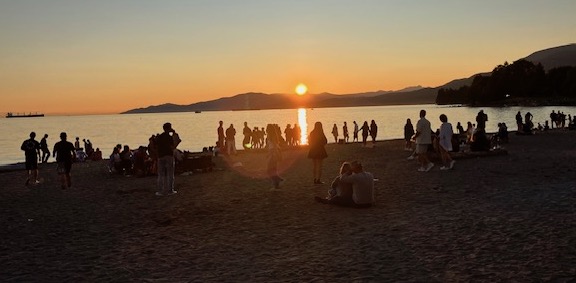
Exploring Vancouver

On the morning of Friday, June 27, 2025, I was up early. I planned to go for a run.

Prior to our trip, I purchased a pair of Hoka trail running shoes. As much as I love my Brooks running shoes, I wanted to have one pair of shoes that I could go for a run in and use on a variety of terrains in Alaska. Additionally, the Hokas were GoreTex to reduce possible water intrusion.

Out at the Vancouver airport the temperature was 55 degrees. It was mostly cloudy with an east southeast wind, dew point 53, humidity 96%, and visibility was at twenty miles.

I walked through the quiet lobby of the Sylvia Hotel, and headed toward a concrete base trail along English Bay. The trail was a connector into Stanley Park.

I wasn’t the only early riser. I came across four herons. One was disrupting the quiet of the morning squawking from a tree.

Some type of filming was taking place in this location as there were several production trailers lined up.

Along the edges of the trail, I noted that the water near the shoreline of English Bay was translucent. I could see the bottom in the shallows.

Around one bend, I came across a very nice municipal pool complex. Someone put quite a bit of thought into its development. Every amenity seemed to be included in the design.

The runners I encountered were friendly. Numerous good mornings were exchanged.

A cruise ship was getting an early start maneuvering through the pretty harbor.

I discovered a beach that was covered with fragments of cracked purple from the inside of mussel shells.

The trees in Stanley Park form an appealing backdrop along the trail.

And woven into that beauty are some homeless souls sleeping in sleeping bags on secluded park benches. I don’t know how lucky I am.

At some point, I turn around and retrace my steps to the hotel.

After cleaning up from the run, we gather for breakfast. I had the perfect bowl of oatmeal with a smidge of brown sugar and a variety of fruit to top it off.

Our plan for today was to take a Uber out to the University of British Columbia.

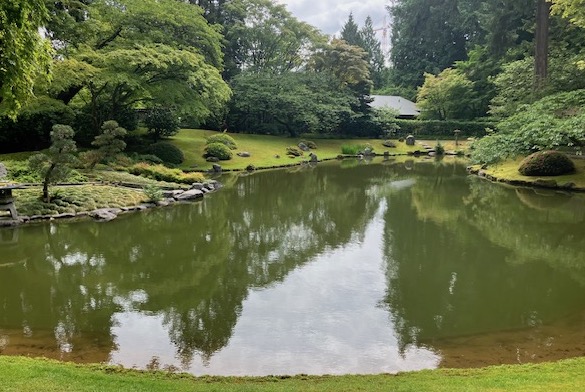
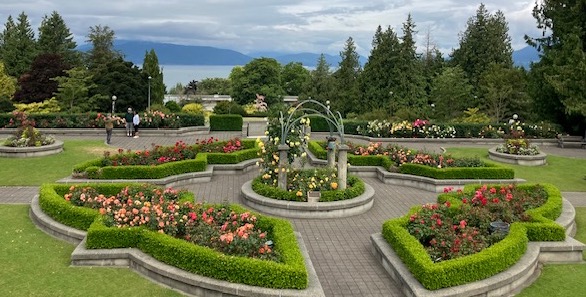
This well maintained campus kept us busy as we enjoyed a Japanese garden, a rose garden, and the stunning Museum of Anthropology.

Part of the Japanese garden at the University of British Columbia (Photo Bill Pike)
Some of the roses on display (Photo Betsy Pike)

On trips like this, I always wonder about the vision of the people who planned and put this wonderful Museum of Anthropology together.

Every display was intricate and thoughtfully designed.

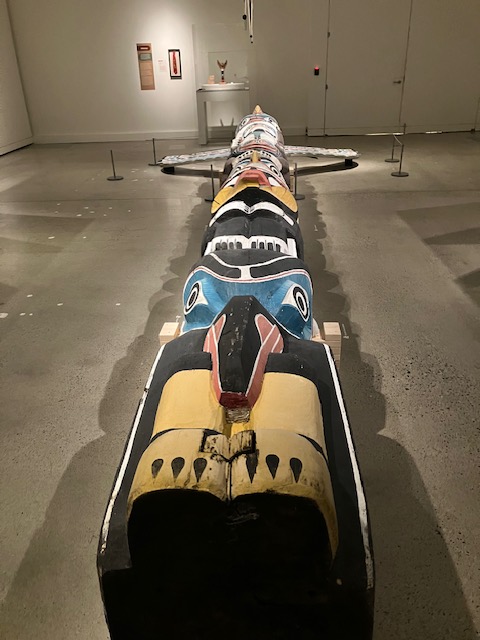
Most impressive were the totem poles. No doubt it takes a lot of skill and patience to create a totem pole. But one can feel the passion and soul from the artisans who created them.

One of the colorful totem poles inside the museum (Photo Bill Pike)

I learned that red cedar is the favorite choice for carving totem poles. Red cedar has a “straight grain and soft tissue—ideal for carving.”

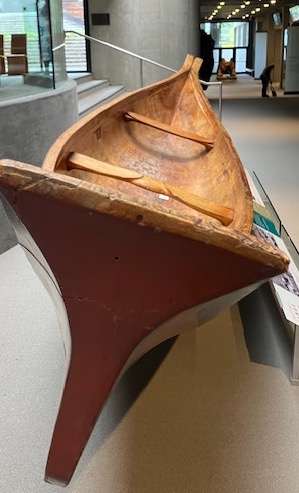
Cedar is also the choice for crafting a canoe. A massive single cedar log can be used to form a canoe.

One of the hand carved canoes on display (Photo Bill Pike)

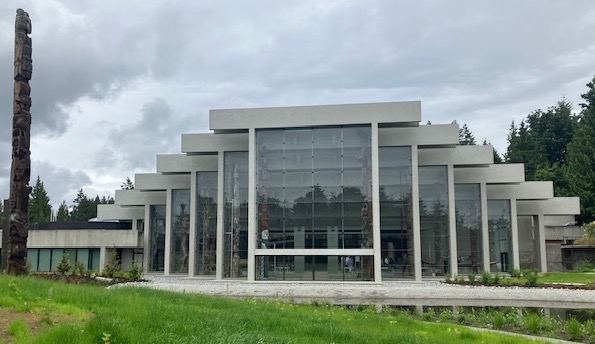
At some point, we walked outside to grounds at the back of the museum. This gave us a different look at how the architect developed the backside of the building.

Museum of Anthropology from the backside (Photo Bill Pike)

It looked like the grounds in this area had just been recently completed. Once this area is fully developed, it will add another dimension to the museum.

We had a light lunch at a Tim Hortons located at a food court on campus.

As we planned our way back to the hotel, we opted to take a Uber tour through Stanley Park. The park is massive. I understand why the park is always in motion— the people of Vancouver love it.

After the tour of Stanley Park, we stopped at Three Brits where I had a birthday beer.

From Three Brits, we walked through the shopping district near our hotel. I was amazed at the ethnicity of the restaurants and fruit stands on every block.

With my pals being nice to me, we had dinner at Craft Beer. It was an ok local spot, but it was loud inside—too loud for an old geezer like me.

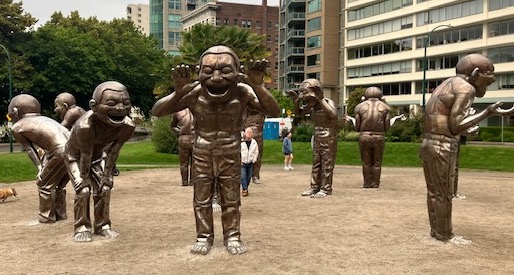
After dinner, we walked through a display of human statues that were made of metal. The exhibit is called A-Maze-Ing-Laughter. Fourteen patinated-bronze figures are featured. The statues were created by Chinese artist Yue Minjun.

Unique statues (Photo Bill Pike)

After the statues, we continued our walk to the hotel. I noticed a lady stopping at every trashcan. She was rummaging for aluminum cans.

Multiple high rise buildings make up the neighborhood. On this fading afternoon, we noticed on the rooftop of one of those buildings a large tree growing.

Back at the Sylvia Hotel, we opt for a nightcap before catching some sleep.

I’ve had a nice day, a good birthday.

My parents were really good parents.

I’m thankful that they opted to have children.

My sister and I were lucky.

I like to think that Louise and Bill would like the way we landed on our feet. This is despite the ups and downs the old world often hurls at people.

I have been so fortunate my whole life. That good fortune comes from my parents. They loved me despite my many, many faults.

That good fortune comes from my wife too and the dear friends we are traveling with on this trip.

And deep in my old soul, I know from watching the homeless sleeping on benches in Stanley Park to the lady going through every trash can this evening—one wrong move, and I could be in their shoes.

Richmond to Raleigh to Vancouver to Alaska

On the afternoon of Wednesday, June 25, 2025, we left Richmond driving to Raleigh.

Later that afternoon, our friends, the Sherrills, left Greensboro heading to Raleigh.

And on Thursday morning, June 26, further north in Maryland, our friends, the Callows, would be up well before dawn and drive to the Baltimore airport.

The Callows were booked on a flight from Baltimore to Chicago.

After a night of rest in a Raleigh hotel near the airport (RDU), the Pikes and Sherrills would also be early risers to catch a shuttle to the airport. We had an Air Canada direct flight into Vancouver.

When we left Richmond on Wednesday afternoon, the heat and humidity were brutal. As we worked our way down Interstate 85, just north of Henderson, North Carolina, we encountered a fairly strong thunderstorm.

The storm featured some sharp cloud to ground lightning. Plus, it was interesting to watch, the temperature take a downward plunge from the rain.

Not sure how much we slept, but we made it to the hotel lobby to catch the shuttle to RDU. We had a very good shuttle driver.

With our TSA approval, the initial check-in with Air Canada was seamless. Of course, traveling is much more complicated now. My backpack scan failed as my body lotion bottle was considered oversized.

We had a good flight to Vancouver. I was able to watch two movies, plus, we had a bonus—an empty seat between us.
The Callows also had a good flight from Baltimore to Chicago. But getting out of Chicago was a challenge.

They were forced to change planes because of a hydraulic problem on the plane. Of course, this caused a delay.

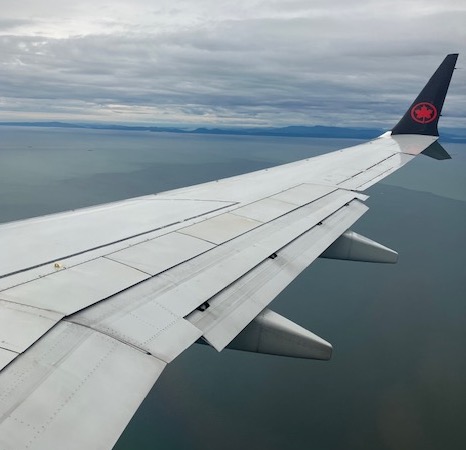
On our approach coming into Vancouver, I immediately was taken by lots of water.

Final approach into Vancouver (Photo Bill Pike)

The airport is located on Sea Island in Richmond, British Columbia.

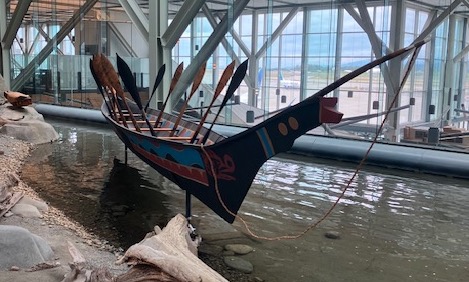
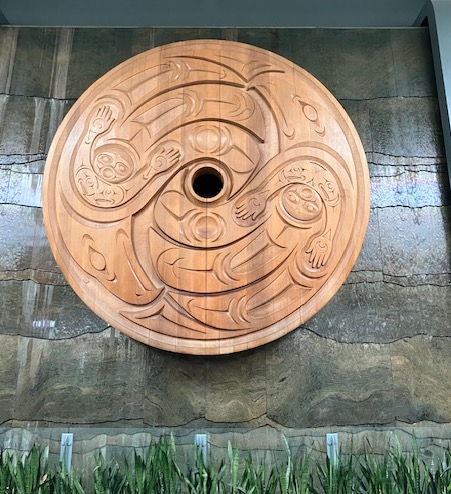
Strolling through the airport, I was taken by its open design. The architecture features water, nature, and an emphasis on the heritage of the Pacific Northwest.

Colorful canoe display (Photo Bill Pike)

I wanted to stop and look more carefully, but we needed to keep moving toward customs.

Stunning wood carving with water moving behind it. (Photo Bill Pike)

Because of enhanced technology, we cleared our entry into Canada easily.

We took an Uber to the hotel. The Uber driver was a talker. He kept yakking. He shared lots of tourist info, but ultimately he was trying to book us for a long ten hour day of driving to the sights outside of Vancouver

My ears were relieved when we arrived at the Hotel Sylvia.

We checked in, made it to our rooms, and headed to their dining room.

The Sylvia Hotel is a survivor. It is a classic old hotel with lots of charm. Our rooms featured no air conditioning, just open windows with a pleasant breeze

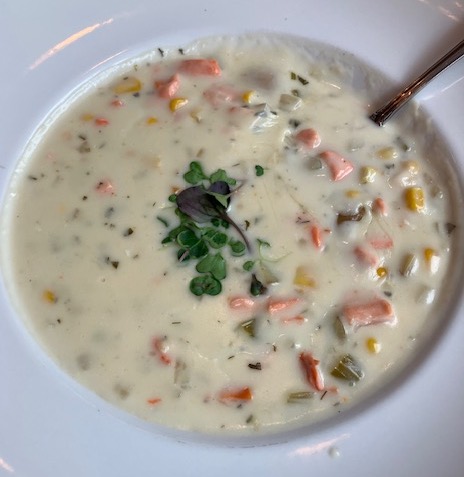
We worked our way to the dining room for lunch. Lunch was a hit with humus, seafood chowder, beet salad, and ahi salad. I loved my chowder, and I had the local Red Truck lager to sip on too.

My delicious seafood chowder (Photo Bill Pike)


It wasn’t too long before the Callows arrived, and we made plans for the afternoon.

We left the hotel and walked toward Granville Island. At some point, the braintrust figured out how to take a small ferry shuttle to the island.

Located on thirty five acres, the island is in the Fairview neighborhood of Vancouver. In its previous life, Granville was an industrial manufacturing area.

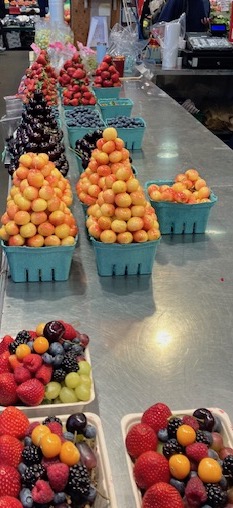
Today, its main feature is a public market. Fruits and vegetables are attractively displayed on every aisle. An amazing variety of food from local vendors weaves in and out of assorted food stalls and restaurants.

Assorted cherries further down the table top and other fruits in public market (Photo Bill Pike)

Gradually, we worked our way back to the mainland.

Light rain showers didn’t slow us down, and we had another good meal at Hook for dinner.
We walked back to the hotel, had a night cap while listening to a local singer performing solo with an acoustic guitar.

By now, sleep was starting to pull on us. It had been a long day of travel.

Before snoring off, I thought about the marvels of traveling, and all of the behind the scenes stuff that takes place every day.

No doubt, the plane’s pilots and crew are important, but think about all of those people working behind the scenes to ensure that you and your friends arrive at their destination.

It is all about people. An endless stream of people doing all kinds of work. Traveling, depends upon them, and I need to be more appreciative of the critical role they play.

Boo winter!

I’m not sure about where you live, but here in Richmond, Virginia since Sunday, January 18, the pending winter storm has been pounding incessantly through all forms of media.

The relentless, repeating blabber is as bad as back to school and political ads.

Even my wife, my commander supreme, from the jabbering of a local television weather forecaster has asked me where the shutoff valve is for our water line.

Grocery and hardware stores are elated.

Milk, eggs, bread, snow shovels, snow melt, and batteries are gone. Gleeful managers admire their empty shelves as they scramble to restock before the monster storm arrives.

The state’s highway department is already treating road surfaces with a spray concoction of chemicals designed to melt snow, sleet, and freezing rain. The road surfaces are left streaked with wobbly white lines of the drying chemicals.

Power companies are monitoring the developing storm with deep concern as forecasts shift from snow to sleet to the most dreaded—freezing rain.

Parents with school age children are trying to figure out how they will survive if this demon storm shuts down school systems for multiple days.

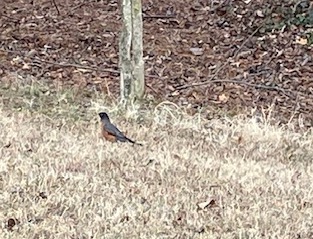
And then we have the robins.

A robin on frost bitten grass on a January afternoon. (Photo Bill Pike)

Long thought of as a sign of the return of spring, I’ve seen robins darting around our neighborhood since early January. Sorry, but there is no spring in this predicted winter storm. I hope the robins survive.

Speaking of survival, I wonder how the homeless will survive? The predicted low temperature for Monday night, January 26 is 3 degrees. That doesn’t include wind chill.

If we are the greatest country in the world, why are we unable to permanently solve this longstanding problem?

My love for winter precipitation is gone. I’m too old. That love for a snowflake has been passed on to our four grandchildren.

I hope we all survive the ferocity of this predicted winter storm.

As mighty as man pretends to be in out smarting the weather gods, I’m not sure we will ever out think a riled up mother nature.

In the post-storm days, there will be lines at car washes. Auto body shops will be giving non-stop estimates for repairs, and the noise of chainsaws and wood chippers will cascade in neighborhoods where trees have taken a tumble.

Those responsible for clearing parking lots will build mountains of snow that are piled high in out of the way corners of the lot. Like school children, these snow clearers quietly pray for another winter storm to help their seasonal bank accounts.

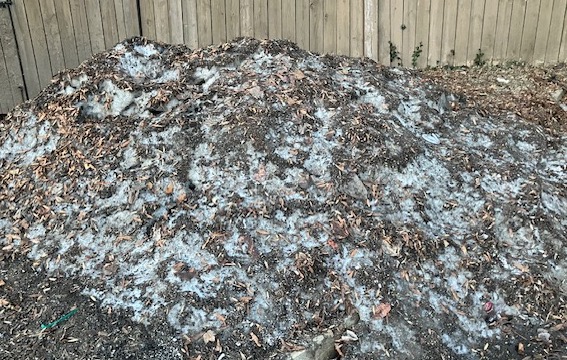
In the back parking lot of the Village Shopping Center, I’ve been keeping my eye on a shrinking mountain of snow. Tucked away in the back corner of the lot, this mound is leftover from our two December 2025 snowstorms.


The pure white color of the snow is gone. Its icy surface is now a dark charcoal gray with a layer of fallen leaves on top. I wonder what that graying, the darkening of the snow really tells us about ourselves and how we treat our world.

Polluted snow mound (Photo Bill Pike)

This time last year, we were in Marathon Key, Florida. If we had opted to return this January, we would have missed this winter madness.

And despite my curmudgeon whine against winter weather, I do find beauty in this season.

I love how the still water in the creek bed frames the reflection of the sky and the surrounding vegetation.

When driving on a country road, I admire how winter opens up the landscape. My eyes can peer deeply into roadside farms and stands of bare trees.

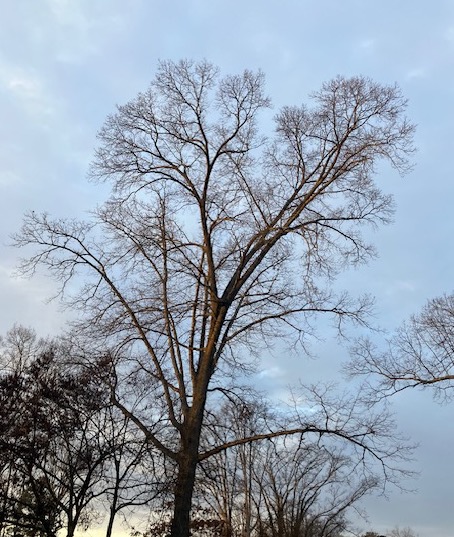
The stark bareness of those trees, lets me see the sculpting of their limbs contrast against an early morning sky.

Bare tree towers against the sky (Photo Bill Pike)

I appreciate the tenacity of a youngster shooting hoops on a nippy winter afternoon.

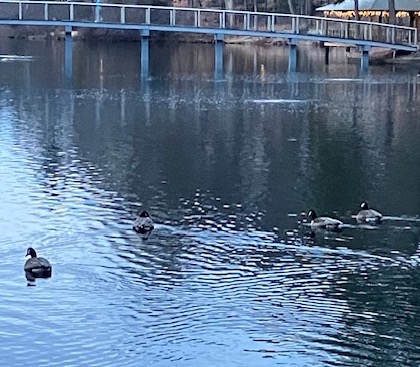
On the campus of the University of Richmond, in the Westhampton Lake, brazen ducks go for an early morning swim in water too frigid for me.

Brave ducks (Photo Bill Pike)

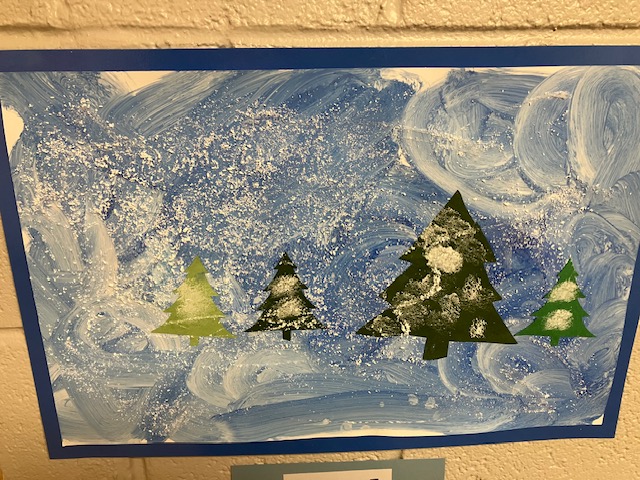
At the Trinity UMC Preschool, I’m captured by the wintry artwork of the students.

Student art work Trinity UMC Preschool (Photo Bill Pike)

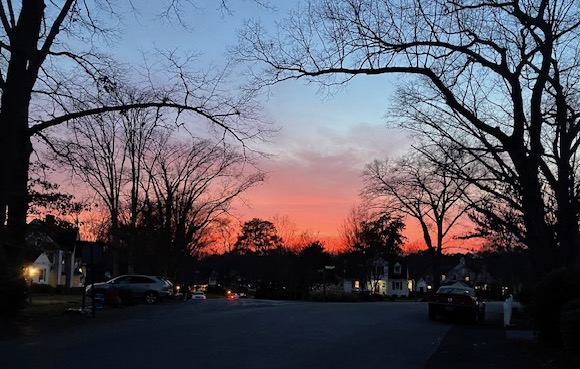
And late in the afternoon, there is nothing like the colors found in a sunset as the sun closes out another winter day.

Colors of a winter sunset (Photo Bill Pike)

Perhaps in your boo to the harshness of winter, you too can find a bit of its beauty.

And who knows, maybe that will help you endure this latest round of winter weather.

When angels revisit

I love the movie It’s A Wonderful Life.

I especially like the scene when Clarence, a want to be angel, is sent back to earth to save George Bailey.

Through his diligence and understanding of human nature, Clarence redirects George Bailey to reclaim his life. With this success, Clarence finally earns his angel wings.

On the morning of Thursday, August 28, 2025 at 6:29, I came upon a sign that showed me two angels had graced our home on Sweetbriar Road.

A gardenia bush on the west side of our yard had a singular open bloom at the top.

The August 28 gardenia bloom (Photo Bill Pike)

This gardenia had previously been full of blooms earlier during the summer. While I’m no expert on gardenias, I think it is rare for a gardenia to offer up a singular bloom after its traditional full summer blossoming.

This gardenia is a special shrub. It originally came from a cutting from my parents yard in Burlington, North Carolina.

I took this cutting and planted in the yard of our first home in Richmond.

I’m sure I wasn’t supposed to do this, but when we sold that house, I dug up that gardenia and transplanted it in our yard on Sweetbriar.

Despite some challenging winters and uncomfortable summers, the gardenia has thrived.

The gardenia was a favorite flower of my parents. I believe my father really loved the sweet fragrance from its white bloom.

I’ve written about this before, but I never forget the last week of August. On August 31, 1992, we lost my mother. Ten years later on September 1, 2002, we lost my father.

For some reason, on the day of my mother’s funeral, a singular gardenia bloom blossomed on the large shrub by the front door of the home of my sister, Lisa, and her husband, Eric, on Parkview Drive in Burlington.

On August 28, when I came across that singular gardenia bloom in our yard, I immediately thought of my parents. Perhaps, a horticulturist could explain why that perfect bloom appeared.

While there might be a perfectly logical science based answer, I have my own reasoning—two angels, Louise and Bill.

I still struggle to comprehend how my parents tolerated me. At times, I was a worthless disappointment.

Fortunately, I sense some of their better qualities did rub off on me.

Part of me believes that at 72, I’m still around because they continue to keep an eye out for me.

My old brain believes the appearance of that singular gardenia bloom on August 28 was their way of reminding me that despite the heartburn and the sleep deprivation I caused for them—they still love me.

As they glide around in that blue yonder, I still cherish and love all they did for me.

And yes, my old heart continues to cherish and love them.

San Francisco Day Seven: The Seventeen Mile Drive and Point Lobos State Park

I was up early on the morning of Tuesday, May 13. My old body told me I needed to go for a run.

I followed this internal self-talk. I ran from the hotel to Otter Point in Pacific Grove. This is a part of the Monterey Bay Coastal Trail.

The trail had been dampened by some pre-dawn rain showers. That didn’t slow me or the other walkers, joggers, and bike riders who too were up early.

No matter where my eyes scanned, I had pretty views of the neighborhood and the bay. This run is not likely to leave my memory. The setting is too special. If I had the endurance and the time, I could have stayed on this trail all day. But another trail was calling me.

After breakfast, the Commander had us scheduled to start our exploration of the Seventeen Mile Drive. As much as I had liked the views from my run, the views for the remainder of the day would only become more incredible.

Much has been written about The Seventeen Mile Drive, I doubt I can add much to these praises. Let’s leave like this, if you are given the opportunity to make the drive, don’t turn it down.

I did not focus on the opulence of the homes or the famous golf courses. No, I focused on the determination of the Pacific Ocean, and the rugged coastline the ocean rolls into every minute of the day and night.

The Restless Sea (Photo Bill Pike)

Marker 4 on the drive is titled The Restless Sea, and here is the commentary about this section: “The Restless Sea earns its name as one of the most turbulent sections of coastline in Pebble Beach. Waves are constantly converging and crashing into each other, likely caused by submerged rocks.”

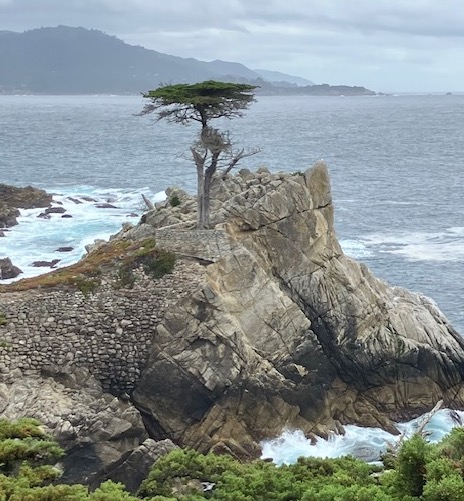
Each marker has a story to tell and a point to make. Perhaps the most famous is The Lone Cypress.

According to one marker, the Monterey cypress almost became extinct along the coast. Fortunately, it didn’t as the trees grow naturally here. The popular trees can reach heights up to seventy feet and can live up to three hundred years.

Yes, there is something special about The Lone Cypress. I admire its loyalty. No matter what nature has tossed at the tree, the cypress has remained loyal to its solitary perch.

The Lone Cypress (Photo Betsy Pike)

We made a short stop at the Pebble Beach Visitor Center. Next, we started working our way further south toward Point Lobos State Natural Reserve.

I’ll put this in the same category as The Seventeen Mile Drive—if you have the opportunity to visit Point Lobos, don’t turn the invitation down. Yes, you will walk more at Point Lobos, but those steps will reveal to you spectacular coastal scenery.

When we arrived at Point Lobos, the parking lot was full and closed. This meant we had to park along the shoulder of the highway that parallels the park.

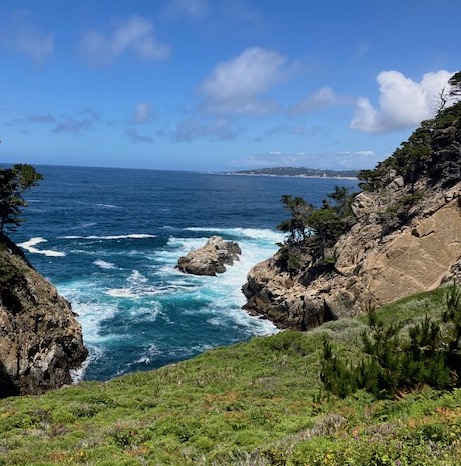
We walked back to the entrance, took some advice from park personnel, and started our exploration. In truth, what happened was we were so enthralled by the beauty that we kept pushing ourselves further and further into the available trails.

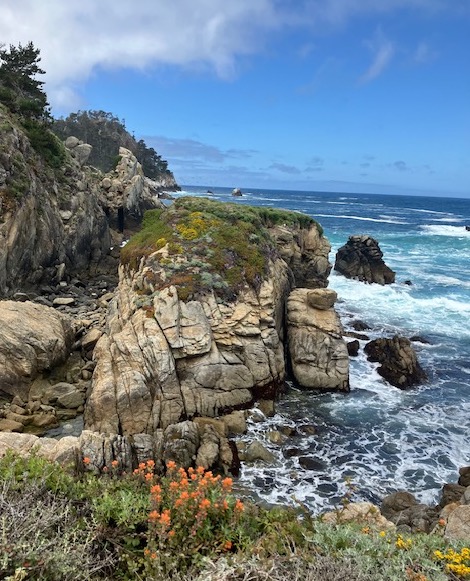
One of many pretty sights at Point Lobos (Photo Bill Pike)

Eventually, we worked our way to a stopping point and the walk back to our car, but neither of us regrets taking the time to explore. What we saw was nature at her best.

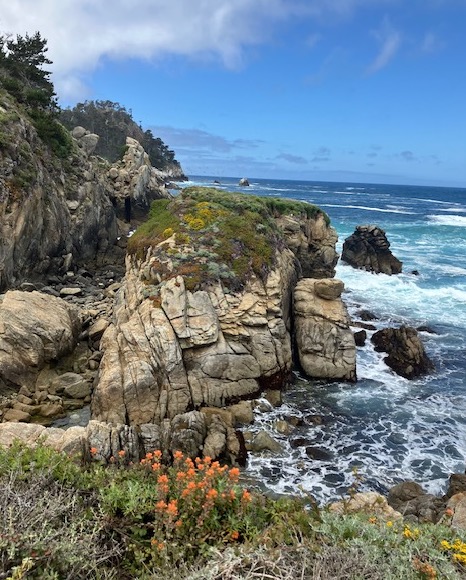
The ocean, the rocky shoreline, the wildflowers, an occasional appearance of wildlife, and the knowledge of park personnel added to the pleasure of the hike. Neither of us will forget this visit.

Point Lobos: rocks, surf, flowers (Photo Bill Pike)

Back out on the highway, we made a stop in the parking lot of Monastery Beach and enjoyed our Pebble Beach sandwich in the car.

From there we drove back into Carmel By Sea for more exploring. The focus here was to locate some of the Storybook Houses.

Unfortunately, our interpretation of local maps was being challenged. Luckily, a patient, local resident sensed this, and he redirected our steps guiding us to our first Storybook House.

Carmel By The Sea Storybook House (Photo Betsy Pike)

We strolled through the shopping district and made our way down to see the famous beach. Even though it was May, a few beach worshippers were present on this pleasant sunny afternoon. In a few weeks, I imagine this beach will be packed.

Our walk back to the car revealed more about the character of the town.

A plaque on a fence featured these words in bold print: LIV DE LIFE with this Emerson quote behind it: “The ornament of a house is the friends who frequent it.”

Another creative sign featured precisely cut letters from assorted license plates to form this colorful expression: Happy Go Lucky.

Colorful sign (Photo Bill Pike)

From Carmel By The Sea, we re-entered The Seventeen Mile Drive from the land side. We worked our way to The Inn at Spanish Bay.

The Commander navigated us to a sunlit, stone patio where she ordered a glass of wine and I had glass of beer.

(Photo Betsy Pike)

We sat in comfort admiring the view.

Gradually, we inched our way back to the hotel.

After a respite, we walked back down to Cannery Row, and had dinner with a view of Monterey Bay at Louie Linguini.

Tonight, this trip was coming to an end.

Early tomorrow morning, we would say goodbye to this stunning California coastline and drive back to the San Francisco airport.

Thankfully, we survived the drive to the airport and the drop off of the rental car.

Inside our gate area, I stumbled upon a church friend, Susan King, who had been in San Francisco visiting a friend. Later she would get a good laugh watching me stuffing an over stuffed suitcase into an overhead bin.

Before we took off, the Captain of the plane for Breeze Airways gave what was maybe the best welcome aboard and here’s what to expect speech I’ve ever heard from a pilot.

Remnants of thundershowers were around the Richmond area as we descended into the landing pattern, but our landing was smooth.

We grabbed our bags and worked our way to the shuttle van to return us to our parked car.

The only downer of our trip unfolded between the driver of the van and an airline employee who admitted she had a lousy day.

These two individuals grumbled over where the airline employee wanted to be dropped off. The tenseness between them was disappointing.

This tiny confrontation brought me back to reality. That magnificent California coastline was far away on the other side of America.

I wonder if the personalities of the van driver and the airline employee could have been soothed by a single pretty California vista?

That’s hard to know, but I know that my old brain and soul will forever cherish what California shared with me and the Commander, the best trip planner in the world.

It might be hard to see it at times, and often we do our best to destroy it, but we still live in a beautiful world.

For that I am grateful, and I must constantly remind myself to do my part to take care of this world.

Another pretty vista from Point Lobos (Photo Bill Pike)

San Francisco Day Six: Monterey Bay Aquarium

After a good night of sleep, we were refreshed.

We wasted no time after breakfast to start our morning.

Our walk to the Monterey Bay Aquarium took us by an assortment of homes, shops, and other businesses.

Making a visit to this unique aquarium had been a goal for a long time. This is a special place. A place where imagination and ingenuity have created an environment for capturing the stories about the Pacific Ocean and its impact on these California coastal communities. And at the heart of those stories are people.

Immediately, the displays draw visitors to people.

The ‘generosity and vision’ of David and Lucile Packard sparked the development of the aquarium. Mr. Packard once said that “the ocean is the most important frontier we have.” Clearly, the aquarium gives life to his words.

Through his fiction and nonfiction writing, American author, John Steinbeck, brought to life Monterey and Cannery Row. Steinbeck wrote about the people who breathed life into economy of harvesting the bounty of the sea.

Another important person was Ed Ricketts, who is described as “an ecologist before his time.” Mr. Ricketts helped people to learn about and understand the relationships of the Pacific’s sea life and its links to the region. His early studies helped to lay the foundation for future research. Also, Mr. Ricketts was the fictional character ‘Doc’ in Steinbeck’s Cannery Row and Sweet Thursday.

Without question, visitors learn about Cannery Row. The impact of harvesting fish and bringing the catch to the cannery for processing is told from the perspective of the workers.

Here is a quote that describes what it was like: “We used to dread getting up in the morning because we worked so hard. It was cold and wet with water running under your feet the whole time—Can you imagine squeezing the guts out of fish at three or four in morning?”

Early in our visit, we learned about sea kelp and its impact on the life of this region of the Pacific.

Critical sea kelp for these California coastal waters (Photo Bill Pike)

The entire aquarium is user friendly. Displays attract all age groups, but there is a special emphasis for children.

From the brilliance of the wave machine, the interior and exterior displays of sea life, the outside vistas, the friendly and knowledgeable docents, and the use of video to present information make the aquarium uniquely qualified to help us all learn.

Stunning jellyfish (Photo Betsy Pike)

This quote from Loren Eiseley caught my attention: “If there is magic on this planet, it is contained in water.”

From our first display until our last view from an outside vista, we felt the “magic of the water” at the Monterey Bay Aquarium.

An exterior view from the aquarium (Photo Betsy Pike)

After our visit to the aquarium, we regrouped at the hotel.

We continued to explore. Our goal was to visit the Point Pinos Lighthouse.

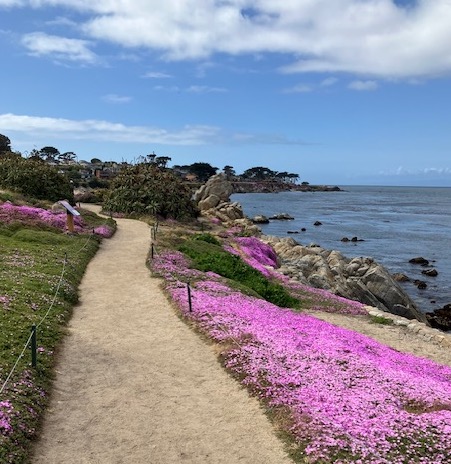
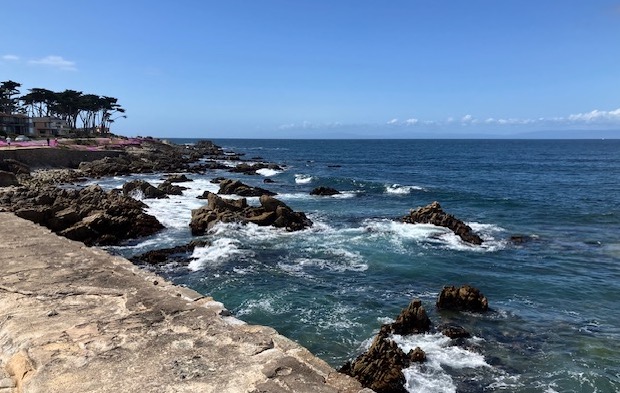
As we drove and walked along, the blue sky, beds of flowers, combined with a shoreline of scraggy rocks worn by a relentless Pacific, made for unforgettable postcard images.

Pretty path along the Pacific (Photo Bill Pike)

Occasionally, we came across a colony of at type of burrowing ground squirrel. Clearly looking for a handout from kindhearted tourists, these creatures did not rate highly with residents of Monterey.

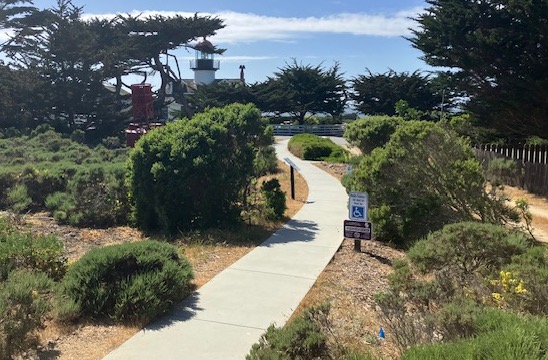
Unfortunately, the lighthouse was closed. But again, the rocky shoreline, the hues of the ocean’s water, the crashing waves, the glide of pelicans, and the steady progress of fishing boats heading into port made for a remarkable afternoon.

In the background the Point Pinos Lighthouse (Photo Bill Pike)

We drove back to the hotel, then took a short walk to a local dive—Sly McFly for dinner.

On our after dinner walk back to the hotel, we purchased some chocolate.

Then, we made a decision to drive back out to Asilomar State Beach with the hope of seeing the sun recline into the Pacific.

We found a good spot for watching the sun sink, but partly cloudy conditions and a light rain shower limited seeing the sun.

A slowly sinking sun (Photo Bill Pike)

Our drive back to the hotel wove us through the pretty coastal town, Pacific Grove.

Another non-stop day with lots of steps had us ready for rest.

The Monterey Bay Aquarium still swirled in my mind.

I thought again about how this magnificent facility for teaching and learning came together.

And my old brain has this reoccurring question—why can we collectively come together to create such a facility, and yet, we appear to be unable or unwilling to truly solve our ongoing challenges related to homelessness, health care, mental health needs, and food instability across America?

I wonder if we will ever fully see that contrast and commit to solving it?

(Photo Bill Pike)

San Francisco Day Five: Point Reyes to Monterey

After breakfast, we quickly gathered our belongings and headed toward checking out.

In the parking lot, the Commander Supreme made her final checks, and our journey to the Point Reyes National Seashore started.

We traveled the back roads of California toward the visitor’s center. Wisps of low clouds, lots of twists and turns, rolling hills with pretty land, and massive redwoods greeted us. Occasionally, we encountered brave bicycle riders on these narrow roads that offered very few straight sections for easy peddling.

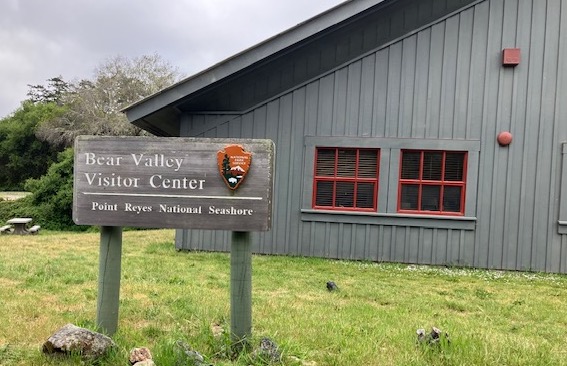
Upon our arrival at the Bear Valley Visitor Center in the Point Reyes National Seashore, we were greeted by a few quietly grazing deer in the rolling pastures around the building.

(Photo Bill Pike)

The visitor center has extremely helpful national park employees. No matter your questions, these knowledgeable and patient staff have the answers.

The center also has a nice layout of effective displays giving visitors a glimpse of what they might encounter during their visit.

From the visitor center, our goal was to visit the historical Point Reyes Lighthouse. The ride to the lighthouse was remarkable.

I’m sure I will repeat myself, but no matter where our eyes took us, we were greeted with striking scenery.

I didn’t expect to see beef and dairy cattle grazing on this magnificent land. But occasionally, we’d come across a weather battered farmhouse with barns and out buildings scattered around. I wondered about the loneliness that might brew in this isolated beauty.

Some of the pastures on the way to Point Reyes (Photo Bill Pike)

If you travel this road, you will come across the historic KPH Radio building. Set off the road, you will walk a straight path lined on both sides with magnificent Monterey cypress trees. This tree-lined walk toward the building will never leave your memory.

The walk toward the KPH building. (Photo Bill Pike)

It’s not long before we reach the parking area for the lighthouse.

According to the National Park Service, the Point Reyes Headlands ‘jut ten miles out to sea.’ This probe out into the Pacific Ocean creates a potential nautical challenge for ships venturing north of San Francisco.

In 1870, this lighthouse was constructed to serve as a warning to ship captains and their crews. In 1975, the United States Coast Guard put to rest the first light. A new automated light was installed adjacent to the original lighthouse.

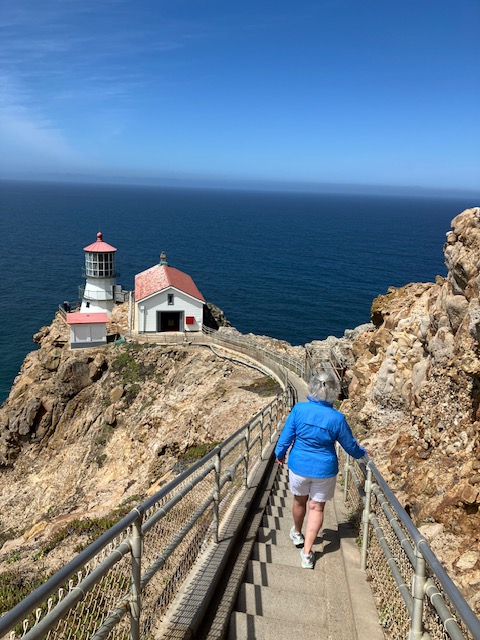
To truly encounter this magnificent lighthouse, visitors must descend 313 steps. This requires an alert patience in going down and coming back up, but the challenge of the walk is worth it. You will not want to stop taking pictures.

The walk down. (Photo Bill Pike)

Additionally, park rangers are on site to answer questions and guide you. It is worth a chat alone to hear about the extreme weather conditions that impact Point Reyes.

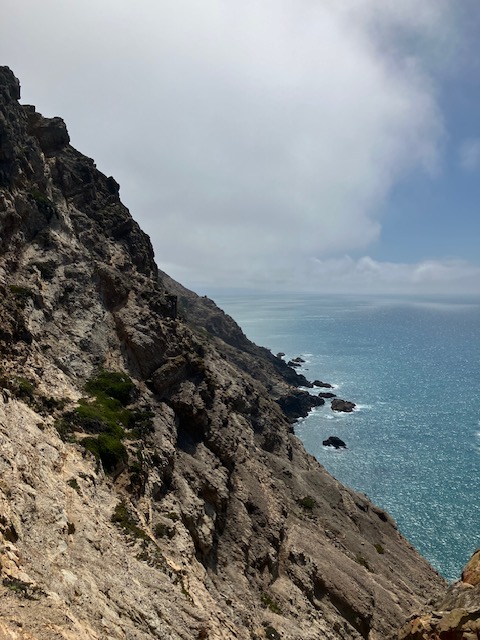
Fog to the south (Photo Bill Pike)

On the steps back to the parking lot, we paused a couple of times, caught our breath, and admired the view.

(Photo Bill Pike)

We regrouped in the parking lot, and from there we made stops at Chimney Rock, South Beach, and briefly explored a trail that were an ideal habitat for elk. And in each of those treks, wildflowers greeted us.

From a trail looking toward the Pacific. (Photo Bill Pike)

Again, I reminded myself of the people who had the vision and the will to preserve this priceless national park.

Land worth preserving. (Photo Bill Pike)

As we worked our way out of the national park, we stopped at the Tavern X Market for a sandwich. After lunch, I noticed the sign ‘Happy Trails’ hanging over the parking lot exit. Hopefully, the traffic gods would grant us ‘happy trails’ during the remainder of our afternoon driving toward Monterey.

Now following an interstate route, we skirted past Oakland. From a distance, we could see its attempts to re-invent itself, though graffiti was still a dominant nuisance in some stretches.

Occasionally, the traffic snarled with slow downs, but we kept moving.

The closer to Monterey, the more frequently we began to see the impact of farming on the outskirts of the Salinas Valley. But when we left the interstate, the farming communities really came into focus. Sure there was equipment, but I was more drawn to the richness of soil.

That soil reminded me of deep shades of chocolate and roasted coffee beans contrasted with healthy rows of green. Those fields were a tribute to the artistry of the farmers and their farmhands who year after year grow our nutrition.

Approaching the city limits of Monterey, the waters of the Pacific changed the backdrop.

It was Sunday afternoon, Mother’s Day, Monterey was still restless.

Our hotel on a side street in the city came into view.

We checked in.

Friendly staff at the front desk, guided our footsteps toward the Alvarado Street Brewery for dinner.

The walk back in the cool coastal air prepped us for our collapse and sleep.

Thanks California

The Carmel Pine Cone
Volume III No. 24 https://carmelpinecone.com June 13-19, 2025

TRUSTED BY LOCALS AND LOVED BY VISITORS SINCE 1915

Memorable trip
Dear Editor,

In early May, my wife and I had the privilege of exploring California from Point Reyes to Point Lobos. No matter where our plans took us, we enjoyed our journey.

The enjoyment of our visit was grounded in the vision and will of Californians to preserve such precious land.

No matter the vistas in the seaside parklands or along the 17 Mile Drive, we cherished the restless Pacific, its stone masonry on the shoreline, and the pretty blooming flowers along many trails.

Our lives have been enriched by graceful redwoods, the backstories found in Alcatraz and Angel islands, the coffee-colored soil in farmland near Watsonville, and the magnificent Monterey Bay Aquarium.

Additionally, we were impressed by the patience and wisdom of employees in the state and national parks, appreciated the knowledgeable waitstaffs in every restaurant, and were thankful for an understanding man, a transplant from Austin, who sensed we were lost in locating the famous Fairytale Cottages in Carmel-By-The- Sea. This stranger might have saved our almost fifty years of marriage.

In Robinson Jeffers’ poem “The Beaks of Eagles,” he writes about the life of a mother eagle. The author notes: “The world has changed in her time,” and despite these challenging changes, the mother eagle continues to find the way to survive.

Like the mother eagle, it is my hope that California with stubborn persistence will repel any wacky Washington attempts to dismantle these priceless plots of unparalleled beauty.

Our aging hearts will hold this trip forever, thank you.

                                                               Bill Pike,
                                                       Richmond, Va.

Author’s note: Today, I was honored to have this letter to the editor published in the Carmel Pine Cone, a weekly newspaper in Carmel-By-The-Sea, California.

Coastline, Point Lobos, California (Photo Bill Pike)

Ants, Car Creatures, Compressors, Peeps, Termites

I think some days that God is out to get me.

During Holy Week at our church, for some unknown reason, termites decided to erupt out of the wooden baseboard in the Forest Avenue foyer of the Sanctuary.

Our head building caretaker had been spiffing up the old black and white tile floor when he noticed my new best friends.

Sure enough, the termites had staged quite an invasion. They were curiously crawling around and inspecting these unfamiliar surfaces.

Maybe they were communicating to themselves, “Hey, where did the soft wood go, how did we end up here, we’re usually crunching wood in the dark, where did this light come from, who is this old guy holding a spay bottle?

Down on my knees, I probed deeper. Sometimes when we probe deeper into the outer layers more challenges are revealed. As I gently pried off the first piece of stained wood, I quickly saw that the next piece of trim work had been decimated by the termites.

No telling how long they had been silently chomping on the wood.

With a touch of agitation, I grabbed the spray bottle of Windex with ammonia in it. I started spraying. A long time ago, an exterminator told me that Windex with ammonia can temporarily help in eliminating creatures that show up at the wrong time.

I made the call to the company who has our termite contract. One of their technicians would stop by early on Thursday morning.
Not long after that encounter, a church member told me she forgot to tell me that ants had been sighted by one of the windows in the nursery on Sunday.

Sure enough, the ants were all over the window ledge and the HVAC register.

Once again, the ants met Windex.

Maybe in their defense, the ants were responding to the disruption they had experienced during our summer of 2024 building renovation project. That extensive project had peeled back all layers in one section of our building. I’m sure we intruded into the ants’ space.

Perhaps, the ants were seeking revenge. My guess is they were on a secret mission. The ants were working their way to the office of our Kids Director, Jen Williams, and her stash of Peeps. The ants were planning to disrupt Easter.

Again, I made a call to our pest control company, and our reliable technician was scheduled to visit the ants on Friday.

In the interim, I spent time cleaning up the ant massacre. I’d learn from past encounters its about eliminating access. I found no evidence of intrusion from the outside, so I concentrated on caulking up any openings and seams around the window trim and the HVAC unit.

Early on Thursday morning, I met the termite technician. He confirmed that the visitors were termites, not flying ants. For a few minutes, he share his options for treating the damaged area. For sure, he would treat the visible wood, but he also wanted to get inside the plaster wall above the trim work.

With this, we agreed on him drilling three small holes into the plaster. This gave access for treating the inside of the wall area. In turn, I agreed to patch the three holes.

Later on Thursday afternoon, I was able to get the damaged baseboard presentable for Easter.

Over in the nursery, the caulk work from Wednesday afternoon worked. No ants were scurrying around the window or the HVAC unit.

Easter Sunday was a pretty, warm day in Richmond. We had made the switch over to the summer season with the HVAC systems in the older sections of the building. Initially, these chillers with their compressors, pumps, and air handlers fired up properly.

While that initial start up had gone well on Thursday afternoon, that wasn’t the case on Sunday morning. The chiller for the Trinity Hall wing of the building was a bad bunny. The chiller despite prompting would not fire up.

Luckily, no one croaked from heat stroke in that section of the building on Sunday. However, the news wasn’t good when the unit was checked out by our HVAC service company the following week. One of the compressors for that chiller decided—“I’m done, I’m not working another Richmond summer, find another compressor to battle that heat and humidity.”

Now, our Trustees are reviewing a quote for replacing the uncooperative compressor. The cost is not pretty.

On Friday, May 2, the call came on my cell phone at 9:28 a.m.

Our youngest daughter, Elizabeth, had started her drive to Richmond from Raleigh. She was coming to attend a dance recital for two of our granddaughters on Saturday afternoon.

But this call wasn’t about how much napping I would do during the recital. No there was a sense of urgency. I could hear concern in Elizabeth’s voice.

She explained there was a noise coming from the dashboard of her car. The noise reminded her of the type of the scratching sounds that an agitated squirrel or mouse make when they are trapped inside the wall of a house.

Elizabeth was convinced that some crazed furry creature was going to explode through the dashboard or floorboard of the car as she sped up the interstate.

When I finally was able to settle her down, we walked through a series of unscientific tests. No creature exploded out from under the hood, nor from the dashboard.

At the gas station where Elizabeth had pulled over, a nice man noticed the raised hood. Clearly, he saw this young lady going through a sequence of unusual maneuvers while holding a cell phone. Possibly, he thought she was about to lose one or all of her marbles by the actions he saw.

He decide to investigate. With me listening in on the phone, he asked if she needed help?

Calmly, Elizabeth told him about the noise and what she was attempting to do.

Upon hearing her concerns, this kind stranger suggested that leaf debris might be in her ventilation system. He talked about the “squirrel cage” for this system and how debris can become trapped and blown around.

For now, that explanation made sense.

Elizabeth thanked him for his willingness to help. She continued her drive toward Richmond.

Later on Friday afternoon, we had a father-daughter bonding session.

First, we removed all tree debris from the windshield wiper area of the car and under the hood too.

Then, per the advice of the helpful stranger, we went inside the glove box of the car to remove the air filter for the car’s HVAC system. Yes, the filter for the HVAC system is located behind the glove box.

Despite watching helpful Youtube videos on how to access the filter, this work was not profanity free.

But inside the filter and the surrounding area, we did find leaf debris particles that could have been the noisy culprit.

During this endeavor, I did as all fathers are supposed to do. I put my hand into the cylinder for the vent, and I let out a scream. A scream that conveyed a furry creature had my hand.

Of course, this tactic worked. Elizabeth’s was initially quite startled, but not impressed with her immature father.

Elizabeth led the way in getting the filter and glove box back into the proper positions. Remarkably, we didn’t break anything.

Usually, situations with ants, termites, compressors, and car creatures can be remedied. However, that is not always the case for human beings.

Right now, despite fighting with all of their strength, and the best efforts of oncologists, someone within this hour is going to lose their battle with cancer.

Today, a darkness so deep and desperate will push a person to die by suicide.

With the end of another school year in sight, a single parent with three elementary age children wonders how they will survive the summer. Her concerns are based on the gutting of funding from leaders in Washington who have no clue about the reality of real American life.

Easter is over.

For me, Easter, despite its resurrection ending, is a difficult story.

Life is a difficult story too. Disruptive challenges are always, always part of that difficulty.

But with Easter, I always come back to Thomas. That’s right Thomas.

I identify with Thomas because he is honest. Like me he doubts. He doubted that Jesus had appeared before the disciples after his death.

Thomas wanted proof.

He wanted to see the wounds Jesus had suffered during his crucifixion.

How do we confront our doubts during life’s challenging moments?

Maybe, the key is to always hold on to hope.

Even when we doubt, and our faith is fading, we must not let go of hope.

And here’s why— Romans Chapter Five verses three and four: “because we know that suffering produces perseverance; 4 perseverance, character; and character, hope.”

Remember in the post Easter story, someone you encounter needs your perseverance, your character, and your hope.

Doesn’t matter if this person is confronting ants, compressors, car critters, termites, or the true reality of real life— someone needs hope.

On those bad days in an old church building when I’m convinced that God is out to get me, maybe he’s simply reminding me, “Hey knucklehead, someone you encounter today needs to hear that hope from Romans. Don’t let them down.”

Peeps saved from the ants. (Photo Bill Pike)

Marathon Key Day Eleven: Charter fishing trip with Captain Chuck

Thursday, January 30, 2025

Our goal was to leave the condo by 6:30 a.m. That would give us time to make it to the marina by 7.

We made sure we had with us the required items. Our self-checking found us to be ready.

The only hiccup we had was the news out of Washington, D. C.

Overnight, a military helicopter collided with a commercial jet liner that was in its final approach into Reagan National. Sadly, there were no survivors.

At the marina, we parked. The row of boats we saw on Wednesday afternoon were still silent. But one boat, Size Matters, is where I located Captain Chuck. He was busily preparing the boat for our trip.

Captain Chuck asked us to give him a few minutes before we boarded.

We didn’t wait long before he welcomed us aboard. The first duty was spraying down our shoes with water. Keep the deck clean.

Once this ritual was completed, we introduced ourselves. Captain Chuck gave us a quick orientation about the boat. That included where we were heading toward and what we might expect.

The chatter continued as we learned about Captain Chuck, and we shared a bit about ourselves.

We had what my Richmond friend, Jack Berry, calls a “chamber of commerce day”—perfectly pretty.

Soon, Captain Chuck had the boat emerging from its berth at the dock. We were quietly heading out of this inlet and into a broader one.

During this trip to the Keys, we had been overly focused on sunsets. This morning, we would be properly positioned to see the sun rise, and rise it did.

Sun rising Marathon Key (Photo Bill Pike)

At some point, we cleared the no wake zones, and Captain Chuck opened up the engines. Within seconds, we were scooting atop the calm surface. I wondered what the sea life below the surface thought about this roaring wakeup call.

We had one important stop to make before heading beyond the mainland—“the bait guy.”

The bait guy (Photo Bill Pike)

Anchored in a small harbor, we slowly approach his location. There are two, maybe more bait wells that capture a variety of live minnows. Charter captains arrive each morning asking for their favorite live bait.

If the bait guy can meet the captain’s request, he takes his dip net, goes into the bait well, scoops out the minnows, and transfers them into the captain’s boat well.

Cash is exchanged, the bait guy wishes the captain luck, and his attention turns to the next charter captain.

Captain Chuck makes his request. The bait is handed off to him in the dip net. He stows the bait, and the bait guy hopes we have a good morning. Next Captain Chuck positions the boat to make our run out to the Gulf of Mexico.

We cross under a bridge that handles traffic on the Over Seas highway. From Miami to Key West, I’ve read there are 42 bridges.

One of the 42 bridges in the Keys (Photo Bill Pike)

Heading out to the Gulf we are able to see multiple beautiful homes on either side of the water. Within minutes, we are out in the open Gulf.

Based upon his experience, Captain Chuck knows when we arrive in good area for catching fish. He throttles back the engines, the forward motion of the boat slows. Captain Chuck begins aligning the boat over one of his favorite spots. At the precise moment, he drops the anchor.

Then, he explains the technique to use. Next, he is baiting the hooks, and preparing to hand the rods over to us.

Dan surveying the scene (Photo Bill Pike)

On the back of the boat, attached to the exterior surface, and placed just below the waterline is a rectangular shaped cage. Designed for easy access this cage holds, a “chum block.”

A chum block is a block of frozen fish pieces. As it slowly melts, fish are attracted to this ‘gourmet’ fare.

Butch ready to start (Photo Bill Pike)

With our rods properly baited, Captain Chuck turns us loose.

I honestly don’t remember who hooked the first fish. There was a flurry of activity with each of us having our lines becoming taut. It seems as soon as Captain Chuck had removed the fish from the hook, measured its size, placed the fish in the cooler, and re-baited the hook, we had another fish on the line.

Then just as soon as this chaos started, it stopped.

Captain Chuck in the middle (Photo Bill Pike)

We pulled in the lines, and Captain Chuck repositioned the boat.

Again, Captain Chuck worked to prep our lines, and soon, we were catching fish again.

Our main catch was the Mangrove Snapper. We did manage to catch two different type of mackerel, and a couple of times the fish we caught were below the size limit, or the fish were not suitable for eating.

Captain Chuck was like an ichthyologist professor in a college lab identifying fish. No matter the fish on the end of line, Captain Chuck knew the fish on a first name basis.

Additionally, he knew if a fish posed any danger. One fish I caught, he quickly told me not to touch it. Captain Chuck told me an encounter with the fish’s fins would ruin my day.

The action slowed in this spot, and Captain Chuck pulled the anchor. He motored us quickly and skillfully to the site of an old houseboat wreck.

Once we arrived, Captain Chuck set the anchor, and baited our lines. He also coached us about how to work the wreck.

Turns out this was Dan’s lucky day. Over the wreck, Dan hooked a good size black grouper.

Dan’s grouper (Photo courtesy Butch Sherrill)

Unfortunately, grouper season starts in May. So, this pretty fish was gently put back into the Gulf of Mexico by Captain Chuck. We made a few more casts, but no nibbles.

We had a good morning. Our limit had been caught. Added to that excitement, Captain Chuck shared a wide range of stories from his experiences on the water.

With the anchor up, we started back toward Marathon Key. We made one quick stop at a bait trap that Captain Chuck maintains. With interest, we watched him pull up the trap, and carefully harvest the bait for his next charter.

The ride back to the inlet was just as pretty as the ride out to the Gulf of Mexico. Out on the water, we could see waterfront homes that might go undetected on a leisurely drive through a neighborhood.

Once the boat was snug in its berth, Captain Chuck gathered the fish from the cooler. He displayed them for photos, and then Captain Chuck put his filet knife to good use.

Our catch (Photo Bill Pike)

As we watched him work his magic, another boat owner appeared. This guy was a talker.

We heard about his experiences as a commercial pilot, and his tales as a dedicated fisherman. He talked with Captain Chuck about an upcoming fishing trip. I sensed we were listening with a grain of salt.

The brown pelicans had been keeping an expectant eye on Captain Chuck. I’m sure the pellies were having the same internal, self-talk— ‘I hope this Captain will share some of those non-filet scraps with us.’

Hopeful pellies (Photo Bill Pike)

The pellies were lucky. Captain Chuck made sure all the scraps hit the water. There was quite a pelican scrum in jockeying for those pieces.

Soon, the filets were ready. Captain Chuck iced them down, and we paid him for the trip and the memories.

We wished him luck with the remaining snowbird months and the upcoming grouper season. Captain Chuck told us when the grouper season is completed, he heads to Alaska to Captain fishing trips in that stunning environment.

On the drive back to Tranquility Bay, we chatted about this chapter of our trip.

Once inside the condo, we proudly showed our bosses the bag of filets caught from our morning of grueling work out in a harsh and hostile environment. These are smart ladies. They didn’t buy any of that fish baloney.

Butch took the lead in figuring out how many filets he would prepare for our dinner that night.

With the remaining filets, we opted to give them to Tranquility Bay’s support staff. I walked the bag over to the office, explained our intent, and the filets were graciously accepted.

Nothing like fresh fish for dinner. Butch seasoned and cooked the filets to perfection. The side dishes were a hit too.

Before dinner, I started my sad prep for Friday. On Friday, we would be working our way back to the Miami airport. There we would board our flights to return us to our homes and the reality of more winter.

If you have been reading this blog for the last ten days, you know I’m at best a mediocre fisherman.

Do I want to catch fish? Yes.

But, I have concluded, it is more about the opportunity to be outside in an environment that is different from home.

An environment where the solitude of the morning will overtake me in its beauty, a beauty that is different with the breaking of each new dawn.

That beauty can be seen in the shades of color as the morning rises up out of an eastern sky.

Its about the timing of the right moment to see a line of pelicans as they gracefully skim inches above the crest of a wave.

And it is appreciating stillness as a shorebird in the shallows silently stalks for minnows.

And, it is the wonder of the backlog of stories that give me the opportunity to daydream like a child staring off into the sparkling soul of seawater.

Maybe, it isn’t about the fish that are never caught.

Maybe, it is about appreciating the beauty of a weary and worn world that still has its heartbeat. A heartbeat that needs us to see it, hear it, feel it, protect it, and love it.

Oh how this world needs to be loved.