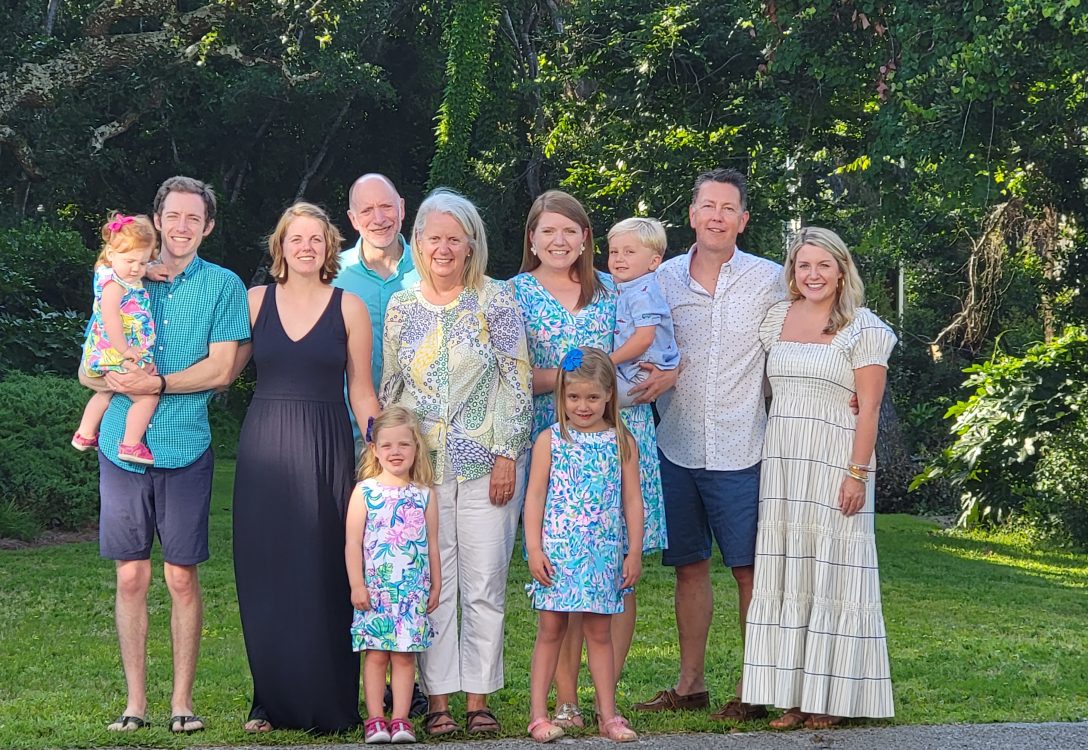
From June 17-20, Methodist from across Virginia hunkered down at the Atlantic Union Bank Center for the 244th Annual Conference in Harrisonburg, Virginia.
Methodist are pretty tame. I doubt if they needed extra security at the Atlantic Union Bank Center.
Occasionally, Methodist do get riled up on a social issue.
Related to Methodist clergy to be able to perform same sex marriages, it felt like the Methodist church took a million years to make a decision.
Even when common ground was found and changes were made, some congregations weren’t happy and left the denomination.
At this year’s annual conference, Bishop Sue Haupert Johnson will preside. Bishop Sue has a tough job.
Her job is not much different from being the superintendent of schools for a large school system. On some days, no matter what a bishop or superintendent tries, they can’t please everyone.
As a life long Methodist, I’ve attended a few annual conferences. The agenda for the gathering is grounded in reports, voting related to conference business, worship services, and opportunities to learn from fellow Methodist across Virginia.
Worrier that I am, I worry that we Methodists are still too resistant to change. At times, I sense we are trapped in the “that’s the way we’ve always done it’ mindset.
Hanging on to that mentality in the future won’t be helpful to Methodist churches.
In the Winter 2026 issue of the William and Mary alumni magazine, I read an interesting article about Will Payne, a 2001 graduate of the school. (Article written by Jeremy Norman)
The article covers many things that Mr. Payne has been involved since graduating.
At this stage of his life, Mr. Payne is heading up Squabble State Hard Cider and Spirits in Bristol, Virginia. This is a 68 acre agritourism destination.
At the core of Mr. Payne’s work are two dedications—“a drive to build things that matter and an unwavering belief in the potential of people.”
Those two givens are not dissimilar to church thinking—build opportunities for people to participate in programs that matter and utilizing the untapped potential of people.
For years, church attendance and participation has been in decline. Mr. Payne’s investments in southwest Virginia, an area that has struggled economically caused him to rethink what was before him.
He did not focus on that “decline.” Instead, he shifted his thinking to “opportunity” and believing that the region could be “reimagined.”
The keys to “reimagining” were linked to building relationships, understanding the region’s “undervalued assets” and wrestling with how “outdated perceptions limited the region’s potential.”
Reimagining churches could pivot off this template too. Developing new relationships, identifying a church’s “undervalued assets,” and understanding how “perceptions” of a church can limit its future are essential for church leaders and their congregations to consider.
Mr. Payne also learned quite a bit in the reimagining of the farm that was purchased and redeveloped. He stated that “farming teaches humility, weather, pests, disease. If it can go sideways, it will.”
Churches know about humility too. But I wonder if we truly understand humility?
How much of churches going “sideways” was caused by our inability to embrace Mr. Payne’s thinking—“honoring a region’s past and building its future are not opposing ideas.” Going forward can churches find a compatible balance between the two?
In his pursuit to make Squabble State a regional destination, Mr. Payne believes this—“Give people more than a reason to stop. Give them a reason to come back. That’s how you become a destination.”
For churches this means if a new family stops in on a Sunday morning for a visit, then what the church offers that Sunday morning must be compelling enough to make them want to come back. For a church staff and its congregation, that means from the pulpit to the last pew everyone must be at their very best every Sunday— not occasionally.
I hope annual conference went well.
And as clergy and their congregations begin another church year maybe some of these observations about Will Payne from his peers can be put to use toward reimagining our churches:
“Will is a problem solver, a uniter, and a natural servant leader.”
“Will has been successful mainly because he listens. Most people talk more frequently than they listen, and they believe they can persuade people to agree. Will approaches things differently. He allows people the space to express themselves, and then finds common ground.”
If the Methodist church in Virginia expects to impact the future of the communities it serves, the church will need to think differently.
Maybe E. B. White said it best: “The only sense that is common in the long run, is the sense of change – and we all instinctively avoid it.”
Methodist, we can no longer avoid change.


Bill, this is a wonderful post. As pretty much a lifelong Methodist also, I was so disappointed in the actions of too many Methodists after the decision and conclusion of our last General Conference. Nevertheless, a major change to the Book of Discipline was finally confirmed. (As you so aptly noted, after many decades of kicking the can down the road.).
I believe the mindset of so many, who saw this coming to fruition, was just unwavering. I’ve never believed in the ole axiom of “on the horns of a dilemma”. It simply must be either this or that. No, it doesn’t. And this is where the mindset of Mr. Payne provides solution. I think that “reimagining” is not a new concept, but Mr. Payne specifically points the way toward this process. And I certainly agree with you that this process is easily transferable to the church.
Honoring the past, the legacy and the traditions while building the future has compatibility, as you and Will point out. The key to finding the right balance lies in our ability, as Methodists, to build meaningful relationships, respect and love each other, and to genuinely confront “perceptions” that may hinder future growth.
Yes, change is inevitable. I’ve heard it said that the only constant in life is change itself. Well, maybe not. In this ever changing world, I’m thankful that the love of God, His mercy and grace, are unchanging. Knowing this, how are we to act? The Apostle Paul said it this way. Do not be conformed to this world, but be transformed by the renewing of your mind (“reimagining”), that you may prove what is that good and acceptable and perfect will of God (to act justly, love mercy and walk humbly with your God).
If it’s ok with you, I’d like to share your article with others. Thanks, Bill!
LikeLike
Chris,
I fussed at WordPress, not sure if that helped you with this response.
Thanks for sharing and making me think further, love your points.
Yes, by all means share the piece.
Be safe, Bill
LikeLike
Bill, thanks for advocating with WordPress. I’m not sure that helped. But I did find a workaround. I started using an email address that does NOT have a WordPress account associated with it. Thus, it doesn’t ask me to log in when I try to post a comment. Rather, it simply posts the comment! Yay! Thankful for this small blessing!
Have a great day!
LikeLiked by 1 person
Thanks for sharing your workaround.
LikeLike