Today, the Major League Baseball (MLB) season opens.
Seems too early to me.
Growing up, I never tried out for a baseball team in the community or at school.
Yet, baseball consumed me.
I purchased baseball cards.
Waited for the afternoon paper to arrive to check the box scores.
And at night, my AM only transistor radio could pickup the broadcast of the New York Yankee games.
I was a Yankees fan.
I listened to those games.
I could reel off with no hesitation the starting line-up for the Yankees.
Of course, Mickey Mantle was my favorite player.
At home in the backyard was my father’s large garden plot. Behind the garden was a barren field.
The kids in the neighborhood turned it into our “field of dreams.”
We played non-stop— girls and boys.
Bats were cracked, baseballs lost, and sometimes egos were bruised.
But, we always came back the next day to play.
My love of the Yankees faded.
My wife’s relatives converted me to a Red Sox fan.
When our oldest daughter lived and worked in Chicago, my allegiance shifted to the Cubs.
To tell you the truth, now that the Red Sox and the Cubs have each won a World Series, I barely pay attention to baseball.
At my age, I’m a natural born whiner.
So, I whine about the ridiculous salaries.
According to Sportico, “ the 15 highest-paid MLB players will earn an estimated $718 million overall in 2026.”
I was an English major in college, and even I know that’s a lot of money—just shy of $50 million dollars per each of those 15 players.
And with baseball still being our so-called “national pastime” I chuckle that Venezuela defeated the United States in the first ever World Baseball Classic.
Let’s get the disclaimer out here, I’m no expert about baseball. However, I sense that all players must have good eyes.
It is essential for hitting, and so many other taken for granted pieces of the game.
In David Halberstam’s book “The Summer of ’49,” I love the story about Ted Williams being called out on strikes.
Ted Williams was known for his remarkable 20/10 eyesight.
Being called out on strikes really agitated him.
For this game, the agitation continued in the dugout where teammates teased him about being called out on strikes.
In his bellowing about being called out on strikes, Williams asserted that—“home plate was out of line,” and that was the reason he was called out.
The next day, the Red Sox manager, Joe Cronin went out to measure home plate. Ted Williams was correct. Home plate was out of line.
In my aging, I have become more aware and sensitive about my vision. Cataract removals and two corneal transplants have made me more protective of my vision.
For sure these medical improvements have helped my eyesight, but I wonder have they helped me to truly see the world in front of me.
In the movie about baseball titled “Moneyball,” I appreciate the conversation between Peter Brand, the Assistant General Manager for the Oakland Athletics, and General Manager for the team, Billy Beane.
Using player data and computer analytics, Peter Brand is charged with finding value in players “that no one else can see.”
Mr. Brand states that “people are overlooked for a variety of biased reasons and perceived flaws—age, appearance, personality.”
How many times in my life have I failed to find value in people because of my “biased reasons” and their “perceived flaws?”
How about this place called church? How many times has the church failed people for the same reasons?
How many times have I been exactly like the person in the scripture from Luke 6:42: “How can you say to your brother, ‘Brother, let me take the speck out of your eye,’ when you yourself fail to see the plank in your own eye? You hypocrite, first take the plank out of your eye, and then you will see clearly to remove the speck from your brother’s eye.”
If good vision is essential for a baseball player, it is also essential in the real world too.
As a confessed whiner, I’m also skilled at worrying.
I worry about my country.
I love my country, but at this very moment— I don’t understand my country.
Yes, I am worried.
I think about this quote from Helen Keller: “Better to be blind and see with your heart, than to have two good eyes and see nothing.”
In the time I have left in this weary old world, I can no longer afford to see nothing.
I need to become better in finding the value in people that “no one else can see.”
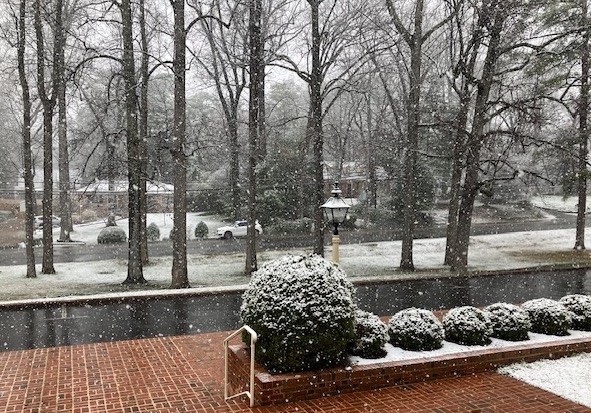
On the afternoon of Wednesday, March 11, a record high temperature of 89 degrees was set in Richmond, Virginia.
In Richmond, the next day, the afternoon temperature dropped to 39 degrees, and cold rain switched over to snow.
For two hours, heavy wet snow flakes fell turning trees and the grass white.
That mad March snow (Photo Bill Pike)
March is mad.
Beyond its weather madness, March is mad for another reason—college basketball.
March is the time of the year when the regular season comes to an end. Conference tournaments are held.
Then on Selection Sunday, this year, March 15, college teams across America wait to see if their season’s accomplishments merit being selected to participate in the sixty six team tournament.
For teams selected, there is a feeling of exhilaration.
For the teams who were not selected, heart crushing disappointment hits them and their fans.
When the tournament opens on Thursday, March 19, America is captured. A disruption occurs. Lives are consumed. Everything pivots off the games.
My introduction to basketball came in the fourth grade.
On a spring afternoon, two of my classmates, Johnny Huffman and Tommy Hinson, from Hillcrest Elementary School in Burlington, North Carolina walked to my house. They invited me to play basketball at the Huffman’s house.
We walked back to the Huffman’s house. For the remainder of the afternoon, I attempted to play basketball for the first time.
I could not have lived in a better location for basketball.
I lived in the heart of the Atlantic Coast Conference. Four of the conference’s founding teams—Duke, North Carolina, N.C. State, and Wake Forest were in close proximity.
I followed these teams by reading the boxscores in the Burlington Daily Times News. Listened to radio broadcast of games on an AM radio, and watched a weekly televised game on Saturdays broadcast in black and white.
I didn’t possess the skills needed to make teams at school, but I enjoyed playing in the neighborhood and on our church team at the YMCA.
Those days are long gone.
While I still love basketball, I no longer let the game consume me.
I follow the game from a distance.
That way I don’t torture my rapidly aging body with mental and physical stress. It isn’t good for an old man to shout foul, fiery language at an unresponsive television screen.
In 2009, our church started a program centered around Upward basketball and cheerleading. From January through February our fellowship hall is converted into two basketball courts. During the week teams have late afternoon practices. Saturday is game day.
I think the original intent was maybe, just maybe, this basketball and cheerleading offering might help our church to pick up new members. I sense that hasn’t been a win for the church.
On the afternoon of Saturday, February 21, 2026, I found myself sitting in the lobby outside our church office. I was waiting for the last Upward basketball game to end.
Earlier in the day, our lead building caretaker had been admitted to the hospital. I was there to get the building ready for Sunday.
While waiting, I noted a piece of paper on a table top. I went over to checkout the paper.
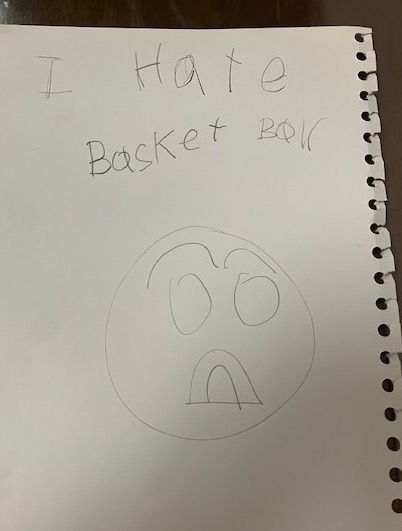
In the script of a young child, I read these penciled words: “I hate basketball.” Under that statement was a drawing of an unhappy face.
The heartfelt note (Photo Bill Pike)
I showed the note and drawing to our Director of Kids and Family Ministries. She had noticed a young girl sitting in the lobby working on that piece of paper.
Immediately, I was curious about the young lady’s reasoning.
Was she unhappy because her parents were requiring her to play basketball, or was she disgruntled because she was required to watch a sibling participate?
By the time I finished getting Trinity Hall its restrooms, hallways, and classrooms back in shape after being used by 400 people—I too could feel a bit of disdain toward basketball.
When I think about the game of college basketball that I grew up admiring compared to today’s game, quite honestly, I’m disgusted and disappointed.
That disgust and disappointment is all grounded in money.
That money has birthed:
Geographically Illogical expansions of college athletic conferences
NIL (name, image, likeness generates money for players)
The transfer portal has destroyed loyalty to a team
Players who play for one year and then bolt to play professionally
In my humble and non-expert opinion, each of these have hurt college basketball.
That hurting of college basketball is linked to the following questions:
At this very moment, how many college athletic departments are running in a financial deficit?
How many college presidents and board of visitors lack the spine and courage to say to alumni with deep pockets—we don’t want your millions to buy college athletes and potential national championships?
How many collegiate athletes who fail to earn their academic degrees, but secure large professional contracts end up filing for bankruptcy?
How many more investigations are lurking out there about coaches who can’t play by the NCAA rules related to recruiting and running their basketball programs?
The same question can be asked about student athletes and gambling. How many more investigations will uncover gambling with professional gamblers to fix a game?
In doing a bit of reading about this college basketball season, I sadly learned about how Anthony Grant, coach for the mens’ team at the University of Dayton has been treated this year.
Coach Grant and his players were the target of unhappy fans and gamblers after losing a game. These hateful messages were addressed by Coach Grant and the school’s Athletic Director.
Later in the season, some Dayton fans wore t-shirts suggesting that Coach Grant be fired.
Without question, college coaches and their players are always under pressure to win. I’m not sure all fans, including alumni, understand how challenging it is to secure a winning season and the potential championships that go with it every year.
This year, March Madness is a bit more mad for another reason—since February 28, the United States has been involved in a war with Iran.
For sixteen days, American service members have been attacking Iranian installations. I wonder what the families of the thirteen service members who have been killed in this war think about this madness?
That madness of losing a loved one will never leave those families—never.
Part of me would like to meet the young lady who left us the “I hate basketball” message.
I appreciate how she shared what was on her heart.
Maybe, she wanted to get the adults who run the program and her family to think deeper about her needs.
Maybe, she wanted our church, the church who sponsors the program, to think deeper about what we were offering.
In Pat Conroy’s book, My Losing Season, he thinks deeply about his senior year of playing college basketball at The Citadel.
Chapter 16 is titled Christmas Break. In this chapter, Mr. Conroy writes about eight days of practice that started on the afternoon of Christmas Day and ended on New Year’s Day.
He regarded those practices as “the worse time of my life as a ballplayer.”
I worry that our young note writer might feel the same way about her Upward basketball experience.
I hope that will not be the case for her.
Despite March and its madness, the month does have some good traits— St. Patrick’s Day, Spring officially arrives, and baseball season is around the corner.
With the March basketball madness, I wish you, your bracket, and your favorite team the best of luck.
Just remember, someone you encounter during this basketball madness might not be as steadfast as you are about keeping tabs on an orange ball.
This person might be having “the worst time” of his/her life.
And chances are that difficulty can’t be attributed to the madness of how a basketball bounces.
Some of my favorite Pat Conroy wisdom comes from his commencement speech for the Class of 2001 at The Citadel.
Near the closing of his speech, Mr. Conroy tells the cadets: “because I want you to know how swift time is, and there is nothing as swift—and you know this from the day you walked into Lesesne Gateway until this day—a heartbeat, an eye blink. This is the way life is. It is the only great surprise in life.”
Mr. Conroy was correct about time and its swiftness.
It is hard for me to believe that we lost him ten years ago on March 4, 2016. Those “heartbeats and eye blinks” are relentless in their swiftness—“this is the way life is.”
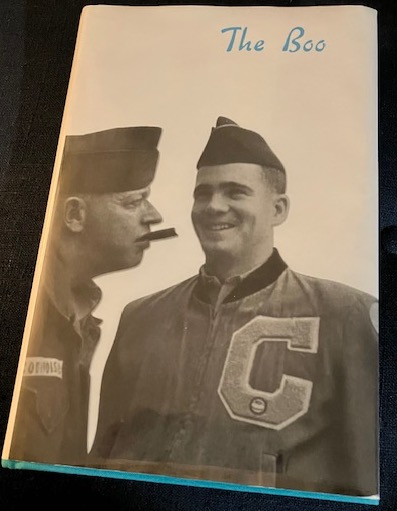
In 2025, I made sure that I read Pat Conroy’s first book, “The Boo.” That was the only book in his collection that I had not read.
The book is about Lt. Colonel Thomas Nugent Courvoisie (The Boo) who in 1961 was hired as the assistant commandant of cadets at The Citadel.
In the preface for the book, Mr. Conroy wrote that when he approached the Lt. Colonel about writing the book, he told Mr. Conroy: “It has to be a fun book, Bubba, and it can’t hurt The Citadel in any way.”
From my reading, I believe Mr. Conroy accomplished that goal.
Lt. Colonel Courvoisie had a tough job.
He was basically like an assistant principal in an all male high school who was charged with keeping the cadets in line.
In the book, the cadets certainly put the Lt. Colonel and themselves in many difficult situations, but one thing was clear—The Boo always attempted to do what was in the best interest of the cadet in those challenging circumstances.
Yes, I laughed at the stunts of college boys away from home.
But, my heart was also touched at how The Boo worked through endless situations with cadets who made regrettable mistakes.
I think the words from writers like Mr. Conroy are supposed to tug at our hearts.
In his books, through his fiction and nonfiction, Mr. Conroy uses his gift to make the reader ponder life. He knew living was a challenge, and he knew the power of a story could impact a person’s thinking.
I’m not sure if he ever fully anticipated how “The Lord’s Of Discipline” would impact his life and the school he loved—The Citadel. After the publication of this book, for twenty years, Mr. Conroy wasn’t welcomed at The Citadel.
Some of that disfavor of Mr. Conroy started with his first book “The Boo.”
And later he added to his disapproval, when he supported Shannon Faulkner in her pursuit to be the first woman admitted to The Citadel.
Even though, time moves swiftly, time can also bring reconciliation, a settling, and understanding. After those twenty years, there was a healing, and Mr. Conroy and the school found the way to move forward.
I’m glad this reconciliation took place. It represents another chapter, another story in Mr. Conroy’s life.
Because I was a teacher, my heart will always be drawn to “The Water Is Wide.” I could feel his passion in the work he did with his students.
In “ A Lowcountry Heart,” I love his respect for the teachers he met around America.
From page 102, Mr. Conroy wrote: “Teaching remains a heroic act for me, and teachers live a necessary and all-important life. We are killing their spirit with unnecessary pressure and expectations that seemed forced and destructive to me. Long ago, I was one of them. I still regret I was forced to leave them. My entire body of work is because of men and women like them.”
My stability in life is grounded in many factors, but I’m right there with Mr. Conroy—teachers impacted my life too.
Maybe it is because I grew up in the heart of the Atlantic Coast Conference, but as I was growing up, I had an early affection for basketball. I’m sure I could provide you with a long list affirming my present disillusionment with college basketball, but I’ll spare you my whining.
Clearly, I have said or written this before, but what I really want you to know is that Mr. Conroy’s book “My Losing Season” about his senior year of playing collegiate basketball at The Citadel is a must read for lovers of basketball.
For me, I believe that “My Losing Season” really captures the heart and soul of Mr. Conroy. At least once a week, I grab the book for a random re-reading of a section. Those re-readings can make me chuckle, moisten my eyes, or make me think deeply about life.
Mr. Conroy, I can’t believe that its been ten years since your passing.
I miss your writing and your ability to tell a story.
From “The Lords of Discipline” in Chapter 41, the words you wove into play related to the honor court reinforce your skills as a storyteller. Again, I could feel the passion you created in the characters on that brutal and tragic night.
Of course, I can’t write about Mr. Conroy without referencing his ability to expand my vocabulary.
In Chapter 29 from “My Losing Season,” Mr. Conroy recalls a conversation with his English professor, Colonel Doyle. Colonel Doyle asserts that Mr. Conroy “pilloried” him in a short story published in The Shako, the literary magazine of The Citadel.
Pillory means “to attack or ridicule publicly.” If he were living, I suspect that Mr. Conroy might have “pilloried” America’s current chaos.
On this day of your passing, maybe up in heaven you are holding court with writers you admired.
Maybe, you are interacting with members of your family.
Maybe, you and The Boo are chuckling over a forgotten story.
Or maybe, you are having a quiet conversation with a humble teacher hearing this person’s inspiring stories from the classroom of life.
Even though its been ten years since your passing, I want you to know like many others who loved your writing—I still miss you.
However, what I really want you to know is that the work of your life and your words continue to touch my rapidly aging heart.
Have a quiet day in that wild blue yonder.
If you bump into God up there, tell him our hearts need help.
The classic book cover, The Boo and Mr. Conroy (Photo of book cover Bill Pike)
I guess someone believes I need to improve my vocabulary.
I agree.
I don’t believe the words sent are sticking to me like pine tree sap, but I do hang on to a few of the words.
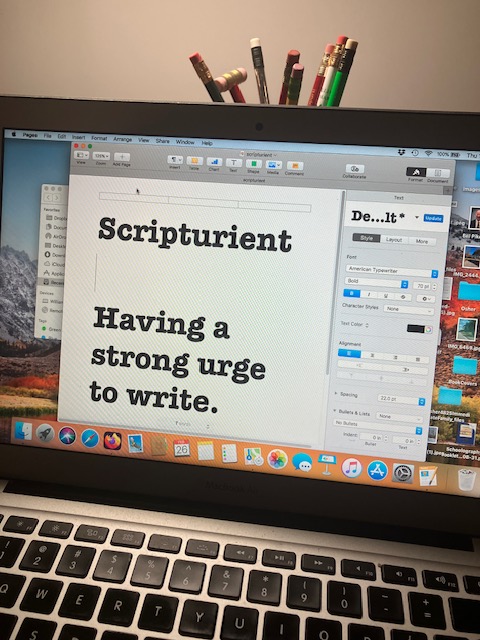
Recently, the word—scripturient was sent.
Scripturient is defined as “having a strong urge to write.”
Rightly or wrongly that is me.
As a scripturient, I have learned that rejection is part of the territory. I hope with every piece I submit to a publication that it might make the cut.
At least I know if the piece is rejected, I can share the failed writing with you on Might Be Baloney.
So today, I share with you two rejected letters to the editor.
I know they aren’t perfect, and that’s ok.
I tried.
In William Faulkner’s acceptance speech for the Nobel Prize in literature, he wrote: “I believe that man will not merely endure: he will prevail. He is immortal, not because he alone among creatures has an inexhaustible voice, but because he has a soul, a spirit capable of compassion and sacrifice and endurance.”
For America, I hope Mr. Faulkner is right.
This letter to the editor was written solely by Bill Pike. It is exclusive to the New York Times. Submitted 2/3/26
Everyday, reporters from the New York Times write stories about America’s leaders and the decisions they are making in Washington, D. C.
Doesn’t matter if it is the closing of the Kennedy Center, the chaos and tragedy created by ICE personnel in Minneapolis, or the removal of a slavery exhibit at Philadelphia’s Independence Mall, America is eroding.
From “sea to shining” sea, this erosion is grounded in a President who is more attuned to greed, disrespect, incivility, selfishness, abusive power, vindictiveness, and a complete disregard for the truth.
Clearly, Mr. Trump has a heart beating inside his chest, but the President’s heart has no understanding of the compassion needed to lead our country. His heartless leadership is hurting America.
In 1962, James Baldwin wrote in an essay for the New York Times: “Not everything that is faced can be changed; but nothing can be changed until it is faced.”
America, our shortcomings, including the President’s cold-hearted, ruthless leadership are overdue to be faced.
This letter to the editor was written solely by Bill Pike. It is exclusive to the Washington Post. Submitted 2/5/26
As reported in the Washington Post, I’m disappointed, but not surprised that the owner, Jeff Bezos, gutted the newspaper of 300 employees.
When Mr. Bezos made the purchase of the Washington Post in 2013, he didn’t do his homework.
With 76 Pulitzer Prizes, Mr. Bezos purchased one of the most prestigious newspapers in the world. However, did Mr. Bezos know of the downward spiraling of newspapers that began in the 1990s?
Was he aware of Northwestern University’s Medill School of Journalism’s report that found between 2005 and 2025, we lost 3,400 newspapers in America.
More importantly, people like Mr. Bezos, with gobs of money, but who know nothing about the day to day operation of a newspaper shouldn’t be allowed to buy one.
From this latest announcement, I suspect the U. S. Geological Survey detected numerous seismic shifts sparked by previous Washington Post editors and reporters rolling in their graves.
Unfortunately, I don’t think we’re done with newspapers dying in America.
And yet, we live in a time where we desperately need the courage of editors and reporters to be accountable in reporting to readers the truth—“nothing, but the truth, so help them God.”
President Trump’s disdain for the truth and the newspaper journalists who diligently pursue the truth in their work is adding to the erosion of America.
I’m no expert on newspapers, but in hindsight, I believe newspaper editors will look back with regret that they didn’t do a better job of reporting to their subscribers the operating challenges they were experiencing.
In his book, “The Paper: The Life and Death of The New York Herald Tribune” Richard Kluger wrote: “Every time a newspaper dies, even a bad one, the country moves a little closer to authoritarianism.”
This is urgent, we can’t let the Washington Post die.
In the Eaton Hall mechanical room, there are two boilers. A hot water heater. A couple of air handlers. All kinds of electrical panels—some dead, some living.
There are pumps, pipes, conduits where phone and communication lines merge and disperse.
We even have a tunnel.
A crawl space that connects the Eaton Hall mechanical room to a small mechanical room in the basement of the Preschool.
Maybe, the youth should forget about selling pumpkins in the Fall. Consideration should be given to transitioning to a haunted bowels of the basement tour at Trinity during Halloween.
Who knows Chip and Flip could make cameo appearances as the sump pump mudmumblers or the boiler buzzards with a guaranteed admission discount slashed from $39.95 to $19.95.
Mechanical rooms in this old church building make me weary.
Financial disaster, in the form of a piece of equipment failing is always lurking in a mechanical room. Its the law of the darkness— where deep inside a pump a worn coupler shreds, fails. The pump squawks and shrieks in its mechanized death until the power is cut.
For months, we’ve been carefully monitoring two sump pumps in a well deep in the concrete floor. These pumps perform a critical function—they remove intruding ground water.
On Tuesday, a skilled technician who is familiar with cantankerous sump pumps came back to install a new switch for a supposedly faulty one.
In preparing for this installation, the technician discovered a loose screw. This screw was impacting the proper operation of that pump.
The technician simply tightened down the screw. Following this reconnection, he adjusted a float mechanism, and turned back on the electricity. In a matter of seconds, the pump was engaged and working properly.
When the technician reported his findings, I was relieved to hear this good news, and yet, I wondered why can’t the complications of daily living be so simple?
How different this world might be if it simply came down to finding and tightening a loose screw.
James Taylor is a gifted songwriter, singer, and musician.
He is also a survivor.
At some point in his career, Mr. Taylor had to tighten the screws of his lifestyle in order to make it to another day.
In the third stanza of his song “Fire and Rain,” Mr. Taylor wrote: “Won’t you look down upon me, Jesus? You’ve got to help me make a stand. You’ve just got to see me through another day. My body’s aching and my time is at hand, And I won’t make it any other way.”
In this chaotic world, at this very moment, there is a human being who is hoping that Jesus is looking down upon them. That person no matter his/her circumstances needs help in making a stand.
What does it take to be seen through another day when no other options seem possible?
What are the chances that the right person with the right screwdriver will arrive and tighten down the loose screw for the person in need?
Might that screw tightener be you, me, we, us?
The other day, I stumbled upon this line of scripture: “Let me alone, for my days are a breath.”
Those words came from Job chapter 7 verse 16.
“For my days are a breath” reminds me of how quick time moves.
For that person who needs a screw tightened his/her time “is at hand.”
How will I respond if it is up to me to help that person to “make a stand?”
During the course of a year at our home, we receive alumni magazines from five colleges and universities.
I skim through these magazines. Quite often, I will find one or more articles that interests me, and I read those articles.
In the Fall 2025, Virginia Tech Magazine, an advertisement, a story about feeding Virginia Tech athletes, and a news release about a $229 million investment in student athletics caught my attention.
The advertisement and two articles made me think about a December 18, 2025 report from NPR. The reporter for NPR cited research from a national nonprofit, Swipe Out Hunger, who estimates that 2 in 5 college students face food insecurity.
Considering this information, I wrote a letter to the editor of the Virginia Tech Magazine.
At this point, I haven’t heard back from the editor of the magazine. But, I did hear receive an email from an administrator at Virginia Tech.
You can draw your own conclusions about my letter.
However, I think this is a solvable problem as Virginia Tech has an endowment of $1.95 billion dollars (June 30, 2024)
Letter
Tuesday, January 6, 2026
vtmag@vt.edu
I am not a graduate of Virginia Tech.
My connection to your outstanding university comes from our oldest daughter, a graduate of the Class of 2005.
I always enjoy skimming and reading the Virginia Tech Magazine.
In the Fall 2025 edition, Virginia Tech President, Tim Sands, starts his message with an interesting question—“Do you remember your first day on campus?”
Based upon a full page advertisement on page eight for The Market, I wonder how many current Virginia Tech students remember their first day on campus when they realized they were not going to be able to eat because of their financial situation.
The advertisement for The Market reveals “impact points” for the 2024-25 academic year. Ponder these points: over 69,000 pounds of food distributed, experienced a 375% increase in visits from students, 829 students received free meals, and $130,520 in funds were raised for keeping the pantry stocked. Additionally, there is a plea to make a gift to keep the shelves stocked.
In contrast to this plea to support The Market, on page seventeen is an article titled Fuel For Victory. This article is about feeding Virginia Tech’s “600 plus student-athletes across 22 sports.” Author Carter Brown states—“behind every athlete stands a dietitian equipped with a fueling strategy to help them feel and perform their best.”
I wonder if there is a dietitian behind the 829 students who received free meals from The Market?
And to carry this disparity further, on page forty-nine is the announcement that Virginia Tech has approved a $229 million investment in athletics. This funding is allocated “to position the university to compete with top Atlantic Coast Conference programs.” I wonder how many of those millions will be spent luring and paying upper tier athletes to play for Virginia Tech in hope that an elusive national championship be won?
Look, I know how important athletics are to college campuses. But along the way money has become the brain trust, not practical thinking.
In the January 2026 edition of the Kiplinger Personal Finance Magazine, I read with interest an interview with Julie Garcia. Miss Garcia is the Founder of Jewels Helping Hands in Spokane, Washington. This nonprofit offers a variety of services to the homeless in their community.
When asked about the hopes for the future of Jewels Helping Hands, Miss Garcia stated: “We hope that we’re out of a job at some point because we no longer have to fill these gaps in the community.”
As a leading public research university, might President Sands direct Virginia Tech toward solving the food challenges of its students so that The Market is no longer needed? How much of that $229 million could be redirected toward leveling the food playing field for all Virginia Tech students, not just student athletes?
Virginia Tech might not ever be able to invest enough in athletics to win a national championship.
But, how amazing would it be, if a cure for a type of cancer came from a Virginia Tech student who no longer had to worry about food insecurity.
President Sands, Virginia Tech has the ingenuity and the financial resources to solve this challenge.
At one time, Tommy had served as the Youth Director at Davis Street United Methodist Church in Burlington, North Carolina.
Davis Street was the church we attended when I was growing up.
The email was from the North Carolina Conference of the United Methodist Church. It was a request for prayers.
Penny Farmer a retired Methodist minister had been moved into hospice care. When I was growing up at Davis Street, Penny Farmer was Penny Dollar.
Penny was a part of the youth group at Davis Street, and she was a classmate at Walter Williams High School. We graduated in 1971.
I often wondered how she felt about her name. Did people tease her? Dd they ask foolish questions as jokes? Hey Penny, you dropped a penny. Hey Penny, do you have any dollars?
I will confess I haven’t been a good friend or Christian in keeping up with people over the years.
Yet, Penny had a distinguished and impactful career as a Methodist minister. No matter where she served in eastern North Carolina, no matter her title, people in those congregations held her in high esteem.
Her accomplishments, her leadership, and her ability to impact the lives of people no matter their age was impressive.
Penny’s partner in life has been her husband, John, who is also a Methodist minister.
With the news about hospice care, I added Penny to my prayer list.
On Saturday, January 24, my sister, Lisa, texted me that Penny had passed.
Moments like this make me pause. I pause and ask lots of internal faith questions.
I know Penny’s health had been declining, but I also always want to know why such a good person, a loyal servant, and a person who walked the walk and talked the talk much better than me isn’t still with us.
I also question the sad losses that Penny experienced in her life two brothers and a granddaughter, how can these losses happen to a committed Christian?
I know, I know what you are thinking, Bill, that’s the way life is. Bad things happen to good people everyday. You can’t do anything about it.
Yes, that is all true, but I always want to know why didn’t God intervene?
Where are God’s angels?
Where is the gentle touch of Jesus?
I think about all of those New Testament stories in the Bible where just the touch of Jesus or the presence of Jesus changed circumstance for individuals.
Where was that touch for Penny and others like her?
Come on Bill, you always get riled up and question God in moments like this. One of these days, God is going to say—all right Pike, I’ve had enough, you’re out of here.
But, deep in my heart, I know that you have the same questions, you’re just not as crazy as I am.
By now, you know that I listen to the National Public Radio Show Fresh Air. I listen to Fresh Air because I always learn from the interviews.
Recently, I listened to an interview with British author, Julian Barnes. I confess I have never read any of Mr. Barnes’ books. Part of that interview with host, Terry Gross, caught my attention.
In 2008, Mr. Barnes lost his wife in thirty-seven days from a very aggressive brain cancer. Mr. Barnes stated this was the most “appalling, the blackest” thing to happen in his life.
Mr. Barnes describes himself as an agnostic. He doesn’t believe in God.
Terry Gross asked Mr. Barnes: “Do you ever wish you could believe in a loving, comforting God who was your friend and a heaven where you’d be reunited with your wife of 30 years, and, you know, things would be calm and beautiful?”
Mr. Barnes responds: “No. I’ve never thought that. I’ve never had any religious belief. I think that life is all we have, and there’s nothing after it. It’s very hard to believe in a calm and loving God when you look at the state of the world.”
As the interview continues, Mr. Barnes cites an interview he heard with actor, Stephen Fry. Mr. Fry was asked: “So give me one reason why you don’t believe in God. And Stephen Fry answered, child cancer.”
To this line of thought, Mr. Barnes adds more comments: “If he’s a loving God, then why does – why do the just do badly? Why do the unjust succeed? Why does – why do innocent people get suddenly killed? It makes no sense, except that the defense from the religious angle is God moves in mysterious ways. We simply don’t know. We’ll find out later. That’s sort of not good enough for me.”
I think about what Mr. Barnes stated.
Part of me reckons, if we are truthful with each other, we have asked those questions at various points in our lives.
We still subscribe to Southern Living magazine. I love the Grumpy Gardener, but I love even more the column by Rick Bragg. Mr. Bragg makes me laugh.
Perhaps you know that Mr. Bragg is a Pulitzer Prize winning journalist. His book “Somebody Told Me” is a compilation of newspaper stories he wrote for the Birmingham News, St. Petersburg Times, and The New York Times.
The first chapter of the book is titled—Survivors. In this opening chapter, Mr. Bragg writes about the devastating tornado that struck Piedmont, Alabama on March 27, 1994.
Twenty people were killed when the tornado hit Goshen United Methodist Church. It was Palm Sunday. Six of the dead were children. One of those children was the four year old daughter of the church’s pastor, Reverend Kelly Clem. Her husband, Dale is also a minister.
In Mr. Bragg’s article, Robyn Tucker King states: “We are trained not to question God. But why? she said. Why a church? Why those little children? Why? Why? Why?”
Could it be that God might wish that “why” wasn’t a part of our language?
And yet, the curiosity of “why” can also be applied to Lara Love Hardin and her book—“The Many Lives of Mama Love.”
A New York Times Bestseller and an Oprah Book Club pick in 2024, this book is a true store of the author’s downfall and ultimate redemption. It involves the ugliness of addiction, arrest, incarceration, and the post-jail challenges of breaking free.
Some how, some way, Lara Love Hardin beat the odds, reinvented herself, and encountered a remarkable redemption—why?
Was it her random heartfelt prayers?
Was it her unyielding resolve not to lose her four sons?
Was it her relentless determination not to become another statistic of recidivism?
Was it luck, timing, her long buried gift of writing?
Why does Lara Love Hardin turn her life around, and thousands of other women who have been incarcerated fail?
Everyday, Tommy Yow forwards me an email. It is a meditation from Richard Rohr’s Center For Action and Contemplation.
On Friday, January 30, the meditation was written by Liz Charlotte Grant. The topic was how she reads the Bible today.
The last paragraph caught my attention: “You too have permission to question the sacred without fearing a backslide into unbelief. Knock loudly. Listen to your gut and let your tears run. Reject answers that do not admit complication. Seek the resonance at the base of the story. The seeking is the point. Because there, in your wandering, God is.”
It should be obvious that I would be drawn to “permission to question.”
I will also admit that losing good people like Penny Dollar, Julian Barnes’ feelings about God, and that Piedmont, Alabama tornado make me contemplate “a backslide into unbelief.”
Yet, some how, I’m still a wondering wanderer.
Maybe, Lara Love Hardin’s turnaround has something to do with that.
Late on the afternoon of Thursday, January 29, 2026, I needed a quiet place to organize paperwork at Trinity the church where I work.
The winter storm that hit Richmond made the first three days of this week challenging. The challenge was attempting to clear the church’s sidewalks of a ridiculously thick layer of frozen snow, sleet, and freezing rain. Why God didn’t you just send snow?
I went to room 317, the classroom where the Book Seekers class meets on Sunday mornings. This group of ageless wonders has lots of wisdom.
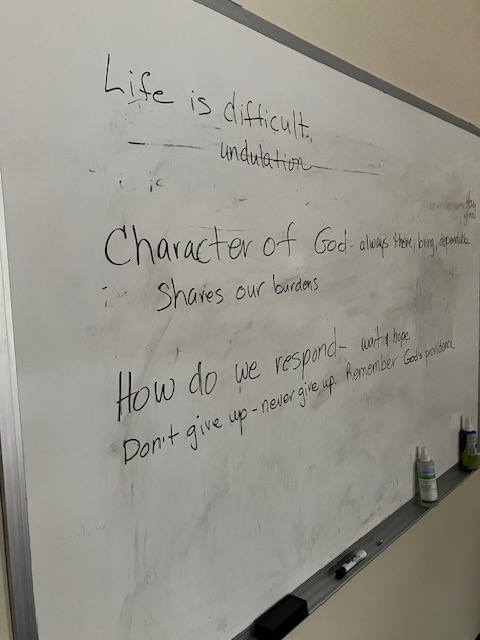
As I was finishing up my work, I looked at the whiteboard on one of the walls. Scribbled out in black dry-erase marker was some wisdom.
The first line caught my attention—Life is difficult.
I think to myself, yes it is.
Followed by—Character of God—always there, loving, dependable. Share our burdens.
Here, I start to struggle.
Always there, loving, dependable—is he? Shares our burdens—does he? Immediately, I’m thinking about troublesome headlines in America and the world.
Last line starts with a question—How do we respond? Wait and hope. Don’t give up-never give up. Remember God’s providence.
Maybe God is waiting for us to respond to those troublesome headlines.
Is he in a holding pattern up there?
Is he looking down hoping that we will wake up?
Is he hoping that we will never give up on ourselves or God’s providence?
Penny Elizabeth Dollar Farmer knew life was difficult.
Penny saw it with her own family and the congregations she served in her career.
But in the burdens of difficult lives, she knew and saw in her work the character of God—always there, loving, and dependable.
No matter the circumstances, Penny always responded. She could wait out with hope, she never gave up.
When I served as an assistant principal at Hermitage High School in Henrico County, Anthony Romanello was one of our students.
By the time Anthony was a senior, the faculty, staff, and his peers knew there was something special about him.
They also sensed no matter where Anthony’s future took him that he was going to have an impact in a positive way.
In 2025, Anthony announced that he would be leaving his job as Henrico County’s leader for economic development.
Truthfully, I was a bit sad by this announcement. I thought Anthony might become county manager in Henrico some day.
No matter the cities and counties where Anthony has served in Virginia, he has made a difference.
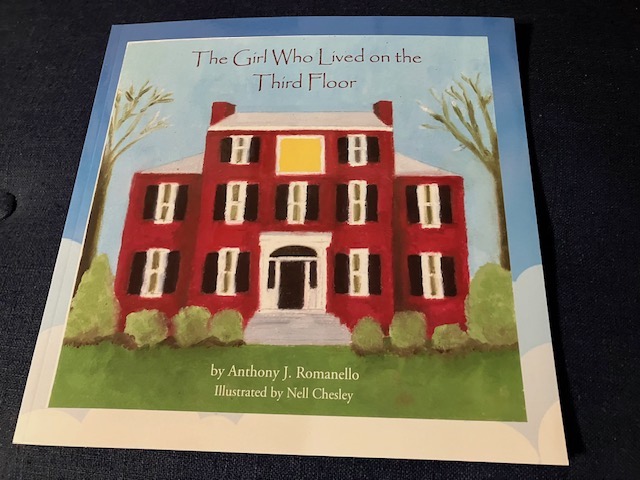
In his two books, “Random Thoughts: Reflections of Public Service, Fatherhood, and Middle Age” and “The Girl Who Lived on the Third Floor,” we learn about Anthony’s most reliable asset—his heart.
Starting with “Random Thoughts: Reflections on Public Service, Fatherhood, and Middle Age,” readers experience an up close look at Anthony’s leadership heart in action.
His heart reveals the importance of building relationships, listening, visioning, hard work, teamwork, empathy, loyalty, and two simple words—thank you.
With “The Girl Who Lived on the Third Floor,” the focus shifts to Anthony’s daily interactions with his wife, Diane, and their children. This book is based upon the commitment Anthony and Diane made as foster parents.
(Photo Bill Pike)
In 2016, with four of their own children, Anthony and Diane made a decision to adopt an eleven day old baby girl into their family.
From this adoption, we see Anthony’s heart from a different angle— an angle that reveals how his successful management skills can be impactful in a family setting too.
I believe those attributes and his compassion for people will continue to allow Anthony to grow in his new role as a managing partner for a local consulting firm.
But what I really hope is no matter how difficult the decisions might be that local leaders make, it is important for them to listen to their hearts.
When leaders disregard their hearts in making decisions, the people they serve lose.
Luckily for the people in the communities where Anthony Romanello has served, he has humbly listened to his heart.
It has been a year since wildfires devastated parts of Los Angeles, California. Recently, I have read and listened to follow-up reports about these deadly and destructive fires.
From the NPR show Fresh Air, I listened to host Tonya Moseley’s interview with journalist, Jacob Soboroff, about his new book “Firestorm: The Great Los Angeles Fires And America’s New Age Of Disaster.” Soboroff interviewed one firefighter who said, “there’s no fire season, it’s fire year.”
In truth, I feel that way about America at this time. I sense America is in a firestorm. From “sea to shining sea” and beyond our borders we are a raging hot spot.
We are burning out of control. There is no immunity. Every state and country has kindling ready to ignite.
(Photo Bill Pike)
ICE shootings in Minnesota and Oregon.
Another mass shooting in Clay County, Mississippi with six people dead. The victims range in age from 7 to 67.
A arson fire in Mississippi that burned through a historic synagogue destroying its library. In 1967, the same synagogue endured a bombing by the Ku Klux Klan.
Beyond our borders, America’s foreign policy has intense flames in Venezuela, the Ukraine-Russia war, the unrest in Iran, and the always volatile Middle East.
And despite these hot spots, the hottest, most intense fire burns in our nation’s capital.
The mentality of our leadership is fueled by greed, disrespect, incivility, selfishness, abusive power, vindictiveness, and a complete disregard for the truth.
As badly as we might want 2026 to be a better year, it is already “a fire year.”
In 1962, James Baldwin wrote in an essay for the New York Times: “Not everything that is faced can be changed; but nothing can be changed until it is faced.”
America we are overdue to face ourselves.
Author’s note: This piece was submitted to the Richmond Times-Dispatch as a letter to the editor on January 13, 2026. To the best of my knowledge, it was rejected.
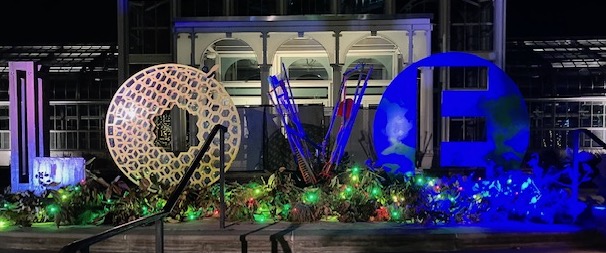
On the evening of Friday, January 2, 2026, my wife and I visited the Lewis Ginter Botanical Garden.
Our purpose for this trip was to view the Dominion Energy GardenFest of Lights.
This annual trek didn’t disappoint.
No matter where our footsteps took us, we like children were captured by the colorful and creative displays of lights.
GardenFest at Lewis Ginter Botanical Garden (Photo Bill Pike)
If you are a follower or occasional reader of my blog, Might Be Baloney, you know by now that I’m a pretty good whiner.
I try to whine for what I believe to be good reasons. I’ll let you figure out if the whines are on target.
Rightly or wrongly, I sometimes send a Letter To The Editor to newspapers across America. Quite often, my letters are rejected.
Though I’m disappointed from the rejections, I also try to see these rejections as an opportunity to learn. And no matter if a letter is accepted or rejected, our voices need to be heard.
I recently sent letters to the Chicago Tribune and the Washington Post.
I’m sharing these letters with you today.
As you will see, the frame of both letters is identical.
The letters were changed to meet word count requirements. All newspapers have word count requirements for a Letter To The Editor. Those word counts can range from 150 to 400.
Either way, the point in both letters is this— if we truly want to change our world, we must figure out how to love.
That love must be more than a pretty sign.
I leave you with both letters, and a hope and prayer that 2026 will be a gentle year for you and your loved ones.
Be safe, love, Bill Pike
Sent to the Chicago Tribune December 17, 2025
In the song “The Christmas Waltz” written by Sammy Kahn and Jule Styne is this lyric: “It’s that time of year when the world falls in love.”
While that optimism might be true for individuals who find the right person to fall in love with, it appears to me that our world is incapable of loving one another.
Where is our love for each other in these headlines:
Stockton, California at a birthday party, four people shot, killed, three of those were children, and thirteen injured.
In Palmyra, Syria, two U.S. military personnel and a civilian working as an interpreter were ambushed, killed, three others injured.
At Brown University in Rhode Island, two killed and nine injured at a shooting.
Sydney, Australia at Bondi Beach at least fifteen killed at a Hanukkah gathering.
Commenting after the attack on the U.S. military personnel in Syria, President Trump stated there will be: “a very serious retaliation.”
As an imperfect American who loves my country, but who doesn’t always understand my country, I want to know when are we going to take “a very serious retaliation” against ourselves.
By retaliation, I mean when will we fully commit to unraveling our mental illness and our dependency for solving any personal problem by shooting people.
It is disgraceful that we are politically unwilling to find the middle ground and backbone to discover a practical solution.
Why do we constantly fail to see what we are doing to ourselves?
Isn’t the carnage in schools, houses of worship, shopping centers, and other public settings enough?
How many more lives must we lose in America and other countries to violence from firearms?
Will our disrespect of our hard fought and blood stained freedoms bring America to our demise?
No matter the magnificence of America’s accomplishments, those achievements mean nothing if we can’t resolve the on-going erosion of our human infrastructure.
That erosion has emptied our hearts of compassion and courage.
Incivility, selfishness, division, and disregard for the truth have refilled our hearts.
What kind of America have we become to allow our leaders and ourselves to showcase such contempt?
Blink, and December 2026 arrives.
In that blink, we must embrace this wisdom from Martin Luther King, Jr. : “I know that love is ultimately the only answer to mankind’s problems.”
If we hope to change our headlines, we must love.
Sent to the Washington Post December 17, 2025
As reported by the Washington Post, Stockton, California, Palmyra, Syria, Brown University, and Sydney, Australia have unfortunately joined an elite club—communities where mass shooting have occurred.
This time of year, holiday songs like the “Christmas Waltz” suggest—“it’s that time of year when the world falls in love.”
In those heartbreaking headlines, no world is falling in love.
After the attack on U.S. military personnel in Syria, President Trump stated there will be: “a very serious retaliation.”
As an imperfect American who loves my country, I want to know are we ever going to take “a very serious retaliation” against ourselves?
By retaliation, I mean unraveling the source of our mental illness to understand our dependency to solve personal problems by shooting people.
It is a disgrace that our political backbones are unwilling to work cooperatively to solve this sickness.
Why do we constantly fail to see our shortcomings?
Isn’t the slaughter in schools, houses of worship, shopping centers, and other public settings enough?
How many more lives must we lose to firearms?
Our earned freedoms were hard fought and blood stained. Will our disrespect of these rights be America’s demise?
No matter the magnificence of America’s accomplishments, those achievements mean nothing if we can’t resolve the on-going erosion of our human infrastructure.
That erosion has emptied our hearts of compassion.
Incivility, selfishness, division, and disregard for the truth have refilled those hearts.
What kind of America have we become to allow our leaders and ourselves to showcase such contempt?
Blink, and December 2026 arrives.
In that blink, we must act upon this wisdom from Martin Luther King, Jr. : “I know that love is ultimately the only answer to mankind’s problems.”
Any hope to change those headlines means we must learn to love.
Pretty sign from GardenFest at Lewis Ginter Botanical Garden (Photo Bill Pike)



 might be baloney