The sanctuary of our church looks different today.
The same volunteers who in late November decorated it for Christmas have removed and packed away those decorations.
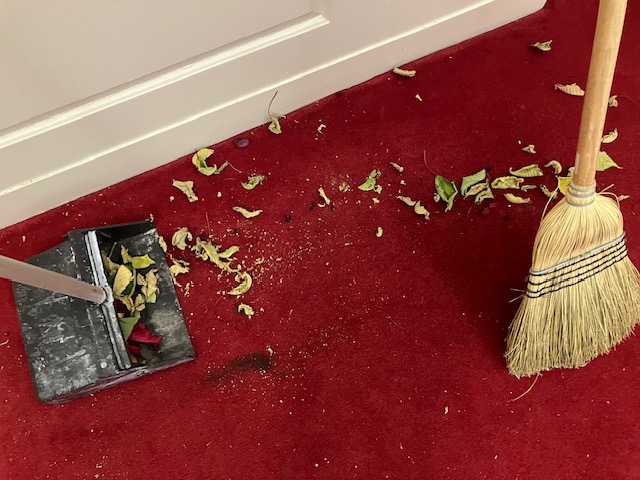
Window candles, garland, the Advent wreath, the Chrismon tree, live poinsettias, and what were once living branches from evergreen trees that formed pretty wreaths are gone.
To me, the poinsettias and the wreaths are the saddest departure.
Even though they are patiently watered, the poinsettias take a beating from interior temperature fluctuations. Their pretty red and green leaves dry out. They crumple just like the fallen brown leaves on church grounds.
The most brutal change is the drying evergreen wreaths. Snug in their metal circular frames, those woven branches become brittle. Hundreds of needles fall when they are removed from lighting fixtures.
I wonder what I have learned from my seventy second Christmas?
I wonder what I will carry with me into 2026?
What in this timeworn Christmas story will stay with me?
What will flicker inside of me as the pace of a new year picks up?
To tell you the truth, I’m not sure.
No matter where my faltering eyes peer, this weary world is in turbulent turmoil.
I fear this turmoil is our end.
Yet, I continue to grasp what might be the Bible’s best scripture— “The light shines in the darkness, and the darkness has not overcome it.”
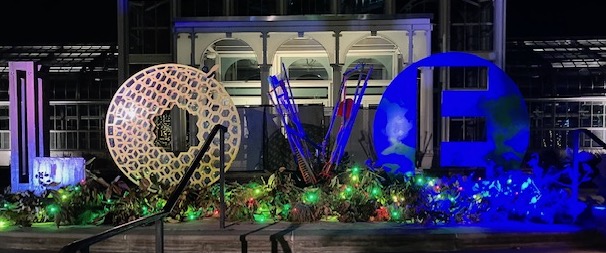
On the evening of Friday, January 2, 2026, my wife and I visited the Lewis Ginter Botanical Garden.
Our purpose for this trip was to view the Dominion Energy GardenFest of Lights.
This annual trek didn’t disappoint.
No matter where our footsteps took us, we like children were captured by the colorful and creative displays of lights.
GardenFest at Lewis Ginter Botanical Garden (Photo Bill Pike)
If you are a follower or occasional reader of my blog, Might Be Baloney, you know by now that I’m a pretty good whiner.
I try to whine for what I believe to be good reasons. I’ll let you figure out if the whines are on target.
Rightly or wrongly, I sometimes send a Letter To The Editor to newspapers across America. Quite often, my letters are rejected.
Though I’m disappointed from the rejections, I also try to see these rejections as an opportunity to learn. And no matter if a letter is accepted or rejected, our voices need to be heard.
I recently sent letters to the Chicago Tribune and the Washington Post.
I’m sharing these letters with you today.
As you will see, the frame of both letters is identical.
The letters were changed to meet word count requirements. All newspapers have word count requirements for a Letter To The Editor. Those word counts can range from 150 to 400.
Either way, the point in both letters is this— if we truly want to change our world, we must figure out how to love.
That love must be more than a pretty sign.
I leave you with both letters, and a hope and prayer that 2026 will be a gentle year for you and your loved ones.
Be safe, love, Bill Pike
Sent to the Chicago Tribune December 17, 2025
In the song “The Christmas Waltz” written by Sammy Kahn and Jule Styne is this lyric: “It’s that time of year when the world falls in love.”
While that optimism might be true for individuals who find the right person to fall in love with, it appears to me that our world is incapable of loving one another.
Where is our love for each other in these headlines:
Stockton, California at a birthday party, four people shot, killed, three of those were children, and thirteen injured.
In Palmyra, Syria, two U.S. military personnel and a civilian working as an interpreter were ambushed, killed, three others injured.
At Brown University in Rhode Island, two killed and nine injured at a shooting.
Sydney, Australia at Bondi Beach at least fifteen killed at a Hanukkah gathering.
Commenting after the attack on the U.S. military personnel in Syria, President Trump stated there will be: “a very serious retaliation.”
As an imperfect American who loves my country, but who doesn’t always understand my country, I want to know when are we going to take “a very serious retaliation” against ourselves.
By retaliation, I mean when will we fully commit to unraveling our mental illness and our dependency for solving any personal problem by shooting people.
It is disgraceful that we are politically unwilling to find the middle ground and backbone to discover a practical solution.
Why do we constantly fail to see what we are doing to ourselves?
Isn’t the carnage in schools, houses of worship, shopping centers, and other public settings enough?
How many more lives must we lose in America and other countries to violence from firearms?
Will our disrespect of our hard fought and blood stained freedoms bring America to our demise?
No matter the magnificence of America’s accomplishments, those achievements mean nothing if we can’t resolve the on-going erosion of our human infrastructure.
That erosion has emptied our hearts of compassion and courage.
Incivility, selfishness, division, and disregard for the truth have refilled our hearts.
What kind of America have we become to allow our leaders and ourselves to showcase such contempt?
Blink, and December 2026 arrives.
In that blink, we must embrace this wisdom from Martin Luther King, Jr. : “I know that love is ultimately the only answer to mankind’s problems.”
If we hope to change our headlines, we must love.
Sent to the Washington Post December 17, 2025
As reported by the Washington Post, Stockton, California, Palmyra, Syria, Brown University, and Sydney, Australia have unfortunately joined an elite club—communities where mass shooting have occurred.
This time of year, holiday songs like the “Christmas Waltz” suggest—“it’s that time of year when the world falls in love.”
In those heartbreaking headlines, no world is falling in love.
After the attack on U.S. military personnel in Syria, President Trump stated there will be: “a very serious retaliation.”
As an imperfect American who loves my country, I want to know are we ever going to take “a very serious retaliation” against ourselves?
By retaliation, I mean unraveling the source of our mental illness to understand our dependency to solve personal problems by shooting people.
It is a disgrace that our political backbones are unwilling to work cooperatively to solve this sickness.
Why do we constantly fail to see our shortcomings?
Isn’t the slaughter in schools, houses of worship, shopping centers, and other public settings enough?
How many more lives must we lose to firearms?
Our earned freedoms were hard fought and blood stained. Will our disrespect of these rights be America’s demise?
No matter the magnificence of America’s accomplishments, those achievements mean nothing if we can’t resolve the on-going erosion of our human infrastructure.
That erosion has emptied our hearts of compassion.
Incivility, selfishness, division, and disregard for the truth have refilled those hearts.
What kind of America have we become to allow our leaders and ourselves to showcase such contempt?
Blink, and December 2026 arrives.
In that blink, we must act upon this wisdom from Martin Luther King, Jr. : “I know that love is ultimately the only answer to mankind’s problems.”
Any hope to change those headlines means we must learn to love.
Pretty sign from GardenFest at Lewis Ginter Botanical Garden (Photo Bill Pike)
A long time ago when I was a public school student in Burlington, North Carolina, I prayed for snow. Now as a rapidly aging, grumpy, geezer, snow has lost my affection. That endearment to snow has been shifted to our four school age grandchildren.
Even with my 31 years of work in public education, I watched faculty and staff members do their chants, dances, and prayers for a snow day. There is something about a snow day that is good for morale and a weary teacher’s mental health.
The challenge with snow is that it disrupts our regular routines. For parents with school age children that means being able to adjust those routines so that the daily needs of the children are met. Not every family has the built-in luxury of having grandparents who can pinch-hit when a snowstorm upsets those routines.
For school superintendents closing school due to inclement weather is never an easy decision. No matter the choice made by the superintendent that decision is always under the scrutiny of the public.
Thus far in the Richmond area, two storms have disrupted the routine for local school systems. It is easy to second guess those decisions.
For example, I wonder if the mild winter storm that closed schools in the Richmond area on December 5 could have merited a delayed opening?
With the December 8 storm, the snowflakes really didn’t start to accumulate on road surfaces until late morning. Could schools have opened and then closed early in the afternoon?
I know superintendents and their staffs do not take weather related closings of school lightly. In making that decision they carefully review the forecast, consult with local police and road departments about street conditions, and depend upon personnel in pupil transportation to make real time assessments.
Despite every effort to carefully make the right decision, a superintendent can’t please everyone.
I experienced this when I served as an assistant principal at Hermitage High School. Several days after a significant winter storm schools reopened.
With that reopening, a phone call came in from an upset mother. While driving to school that morning, her son had been involved in an accident. She was angry at the school system for reopening. Nothing I said calmed the mother’s fury.
Honestly, at the heart of closing a school system for winter weather, you will find an attorney. Attorneys are thinking about safety from multiple angles. They ask lots of questions all related to reducing the potential for liability:
Can school system maintenance personnel properly clear parking lots and sidewalks?
Can bus drivers safely maneuver their buses through less traveled neighborhood streets?
Can faculty and staffs, student drivers, and parents who are responsible for transporting their children arrive at school safely?
No one associated with the school system wants any injuries from slippery sidewalks, fender benders in high school parking lots, or a school bus accident.
Perhaps, the greatest pressure is on school bus drivers. Driving a school bus under normal conditions is challenging enough. Mix in frozen winter precipitation with impatient civilian drivers who believe they are invincible with their all wheel drive vehicles, and the potential for accidents rises.
Recently, another phenomena has occurred in the decision to close schools related to winter weather. More frequently, superintendents are closing schools before the first snowflake has fallen.
I suppose this early announcement helps families to better implement their alternative plans for a snow day. However, I can only imagine what a superintendent will endure if that forecast fails to materialize.
As difficult as it is to close schools, making the decision to reopen can be challenging too. Depending how much instructional time has been missed, superintendents must also figure out how to recoup the missed time.
Perhaps, these questions are worth reviewing:
Do superintendents know of alternatives beyond the traditional make up days or extending the hours of the school day for regaining instructional time?
Might developing a year round school calendar reduce winter weather interruptions?
Could attorneys find a year round school calendar more compatible for reducing potential liability?
Do superintendents solicit post-winter storm feedback from students, parents, teachers, bus drivers, and maintenance personnel as a means for helping to shape future weather closing decisions?
And of course, there is always the insights of our friends and neighbors from other parts of America who rarely close their schools for winter weather. What might Southern superintendents learn from these “no fear of snow” superintendents?
As we waddle our way through the remainder of winter, maybe the weather gods will be kind to us with no more snow days. While that might disappoint students, superintendents will sleep better.
Note from the author: This rejected Op-Ed piece was sent to the Richmond Times-Dispatch in response to December 2025 school system closures from wintry weather. Bill Pike Richmond, Virginia
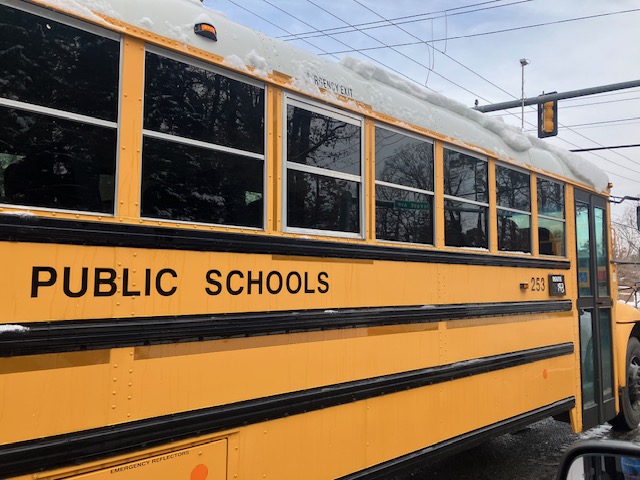
School bus with snow along its roof line (Photo Bill Pike)
I read with interest the opinion piece: Want Children To Learn? Ban Smartphones from the Chicago Tribune that appeared in the Sunday, November 30, 2025 edition of the Richmond Times-Dispatch.
In the spring of 2025, Illinois Governor, J.B. Pritkzer, attempted to rally support for a bill that would have banned cellphones from classrooms. The bill failed, but Governor Pritkzer intends to try again. I admire his tenacity.
In my thirty one years of working in the public schools of Virginia, I once worked with a principal who reminded his faculty and staff frequently that “children take their signals from adults.”
I wonder how many Illinois legislators during the sessions for the proposed banning of cellphones were actually using their cellphones for communication not related to the bill?
Ask yourself, how many times have you been in public meetings where the adults in attendance were asked politely to silence their cellphones? Despite this gentle reminder, a cellphone usually rings.
Crafting a ban on cellphones for students must also have a standard for school personnel too.
A phone free learning environment policy is now in place in the school system where I once worked. The core of this policy is that cellphones must be stored and silenced during class time. That approach seems reasonable. Time will tell if the policy is having an impact.
And of course, it is easy to blame cellphones when students struggle to find success on state tests that measure math and reading skills. As your piece points out there are “other factors” that have possibly contributed to these test score declines.
Personally, I don’t think we work hard enough at understanding those “other factors” that impact learning.
How much of the decline in test scores comes from our inability to break vicious generational cycles related to substandard housing, inadequate mental and physical health care, inconsistent nutrition, trauma related to unstable families, and deteriorating school buildings with low student and faculty morale.
I wish Governor Pritkzer the best of luck in his pursuit of a cellphone ban.
If the bill fails for a second year, I hope the Governor will redirect his energy toward “other factors” that impact student performance.
Those “other factors” have been around before cellphones.
We are overdue to address their impact too.
Note from the author: This rejected letter was sent to the Chicago Tribune in response to an Op-Ed piece from the Chicago Tribune that appeared in the Richmond Times-Dispatch on November 30, 2025. Bill Pike, Richmond, Virginia
By now you know, I don’t have a theological brain.
During Advent, Christmas, this holy season, I think about Luke Chapter 2 verses 8-10:
“And there were shepherds living out in the fields nearby, keeping watch over their flocks at night. An angel of the Lord appeared to them, and the glory of the Lord shone around them, and they were terrified. But the angel said to them, “Do not be afraid. I bring you good news that will cause great joy for all the people.”
Ok, I’m a shepherd.
It’s dark, cold. I’m in the middle of nowhere.
I pray that a coyote, fox, or wolf will not disrupt the stillness and try to steal one of my flock.
In my years of being a shepherd, I’ve been lucky. I’ve always been able to scare off those prowlers.
But tonight, a light appeared on the horizon.
That light kept moving toward us.
The light traveled quickly across the sky becoming brighter and brighter, until finally the light was right on top of us.
I cowered. I tried to make myself smaller, but the light was too bright. Fear shivered down my weakening spine.
And then the fear shook me more. The light spoke.
The light said, “do not be afraid.”
“Do not be afraid”— are you kidding me? How ridiculous.
Listen you wing flapping angel, I’m tempted to take my sling shot and hurl a stone at you.
If I’m lucky enough to make it up to heaven some day, I’m liable to track you down.
And when you least expect it, I’m going to get even, and scare the feathers off your wings.
Let’s be honest here.
Even though the angel did convey the good news of Jesus’ birth, the delivery carried a fearful tone.
Let’s continue the honesty, Joseph and Mary, the bewildered parents of Jesus, experienced fear too.
Start with this puzzling intrusion of their engagement by God.
When it is time for Mary to give birth, fear hovered around the young couple. With this census taking place, rooms were difficult to secure. So a stable, with all the amenities—a manager, hay, gentle animals, and swaddling cloths came together quickly from a generous innkeeper.
Today, fear is rarely absent in our lives.
From the beginning of time, I suspect has been one of our most reliable pests.
Truthfully, I think fear is always rambling in the background of Advent with questions like this:
What happens if I can’t find the perfect gift?
What will I do if I overcook this batch of cookies?
When will I loose patience in the beauty of this season and snap at a loved one?
Why should I fear offering assistance to the apparent homeless person in the median of a busy intersection?
What drives me in my work to try and make every person happy? Why do I fear saying no, I can’t make that happen?
Earlier in December, at Trinity, the church where I work, I had an especially trying stretch of busy days.
On a Friday afternoon, the internal workings of a toilet sent a profanity alert to heaven.
No matter what I tried a valve and a flapper did not want to align properly. The good Lord must have tired of my poor choice of words.
He nudged me one more time. My eyes found my two installation errors. I exclaimed, “God still lives.”
While riding my exercise bike on the morning of Tuesday, December 22, I listened to an interview on the NPR show, Fresh Air. Host Terry Gross, interviewed Vanity Fair writer, Chris Whipple.
Mr. Whipple had conducted eleven interviews with Susie Wiles to write an article for the magazine. Miss Wiles is the White House Chief of Staff for President Trump.
During the course of the interview with Terry Gross, Mr. Whipple reported that Miss Wiles believes in what she calls “disruptors.”
I’m certain that Miss Wiles and I would clash over the “disruptors” that surround her.
But I wonder if we could agree that Jesus was a “disruptor?”
For lots of different reasons, I have an affection for the movie, Steel Magnolias.
I’m particularly drawn to the character, Ouiser, portrayed by the actor, Shirley MacLaine.
In a scene where Ouiser is hustling to a pedicure appointment, she is gently confronted by Shelby, the daughter of a friend.
Shelby has met a former flame of Ouiser’s. Shelby presses Ouiser to see if she might have any interest in seeing this gentleman again.
Ouiser, with no hesitation, asks Shelby, “does this story have a point?”
Every Christmas, I ask myself the same confounding internal question about the birth of Jesus—“does this story have a point?”
And despite whatever doubts I might wrestle, I think the birth of Jesus does have a point.
Jesus is a disruptor.
He disrupts darkness, John 1 verse 5: “The light shines in the darkness, and the darkness has not overcome it.”
Maybe where you live, tacky Christmas lights are popular. In our neighborhood, there are a couple of homes that have made the tacky light tour.
During the holiday season tour buses, vans, and special limousines drive by these homes. At each home, the drivers of the vehicles pause so their passengers can gawk and stare at the tacky displays.
I’m happy for the people who enjoy the tacky light tours.
But during Christmas, I search out less obvious seasonal lights.
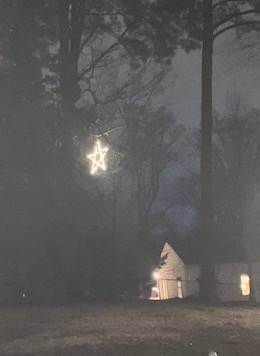
Two streets over from our home, I’m drawn to a singular light of a pretty star dangling beneath the limbs of pine trees in a backyard.
My favorite star (Photo Bill Pike)
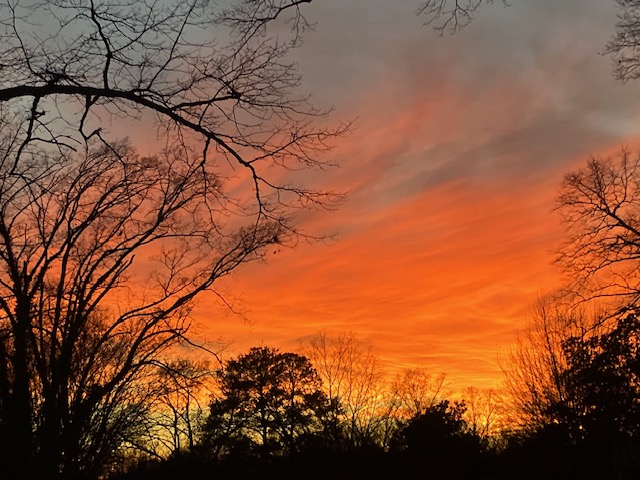
On some late winter afternoons, from the intersection of Stuart Hall and Sweetbriar Roads, I look west into the spectacular colors of a sunset.
One of our stunning sunsets (Photo Bill Pike)
In my daily ramblings around Trinity, I come across the intrusion of sunlight in our sanctuary.
I love how the golden light of a rising sun cast upon a window pane.
Early morning golden sunrise (Photo Bill Pike)
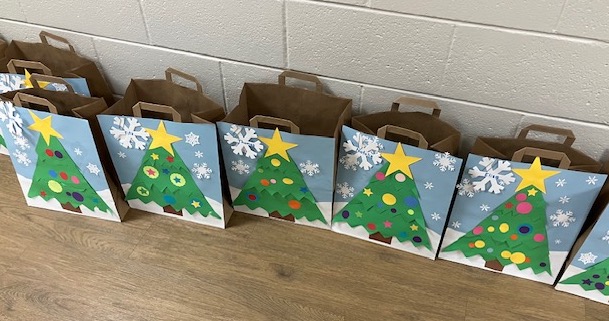
Over in the Preschool, I see the star of light atop a Christmas tree in artwork created by children who are eager for Christmas to arrive.
Pretty artwork from Preschool students (Photo Bill Pike)
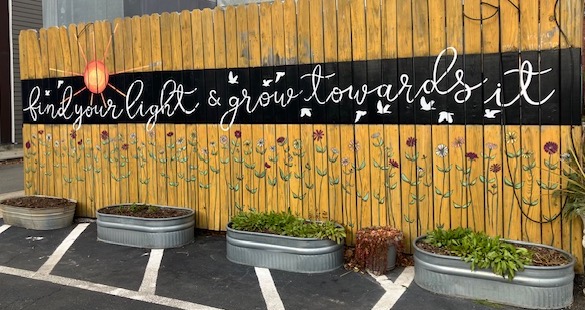
On December 17, the Trinity staff took a lunch break at the studio of our music director, Ben Miller. In close proximity to the VCU campus, this section of Cary Street has seen a rebirth.
As we were leaving, I read these words artfully displayed on a fence: “find your light and grow towards it.”
(Photo Bill Pike)
That disruptor, the Bethlehem Bundle, needs us to find his light.
He needs us to disrupt the lurking darkness found in every corner of this old world.
He needs us to disrupt with hope and love.
When we become disruptors with hope and love, our story will have a point.
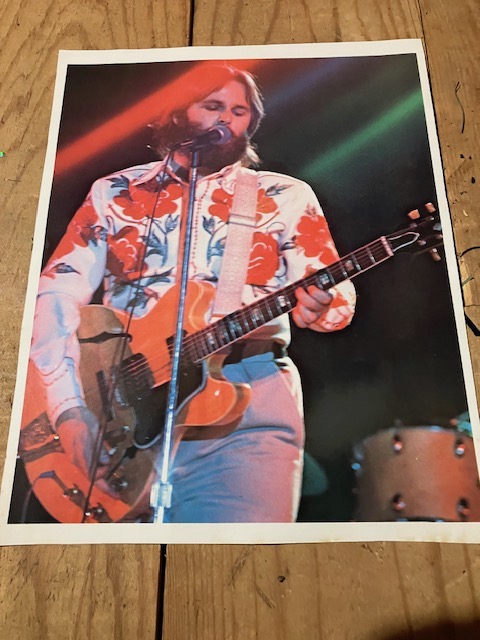
Today, Sunday, December 21 is the anniversary of Carl Wilson’s birth date. Born in 1946, had he beaten back the cancer that took his life, Carl would have turned 79 today.
Ultimately, Carl’s passing broke up the group, the Beach Boys, that he helped found.
The Beach Boys continued to perform and record after the passing of drummer, Dennis Wilson in 1983.
But with Carl’s death, the remaining members— cousins Brian Wilson and Mike Love, Al Jardine, and Bruce Johnston fractured and split like a California vault line. This seismic shift resulted in multiple business disagreements and countless lawsuits.
Of course in 2012, those remaining members put aside their differences for a new album and a world tour in honor of their 50th anniversary.
Still, I will always wonder what the Beach Boys would have been like if Carl had lived, and that applies to his brother, Dennis, a bit too.
Author Kent Crowley’s book, Long Promised Road, takes us into the ups and downs of the Beach Boys. There is a lot of coastline to cover in Carl’s life with and without the Beach Boys. Crowley attempts to capture this journey.
I can only begin to think what it must have been like for Carl as the youngest brother to Brian and Dennis. Their mother, Audree, must have had her hands full raising these distinct personalities.
Her husband, Murry, by all accounts could be challenging too. Yet, the love of music in the Wilson household was linked to Murry, a businessman, and a frustrated songwriter.
Early on, the oldest son, Brian showed promise in music. Most documented writings about the Beach Boys reference a story when Brian requests that his mother make Carl sing with him rather than allowing Carl to join in a neighborhood baseball game.
Mothers tend to have an intuitive sense about their children. According to longtime Beach Boys’ historian, David Leaf, Audree Wilson noted this about her youngest son: “Carl was born 30.”
In 1961, when the Beach Boys first started finding traction around Los Angeles, Carl was their 15 year old lead guitarist.
Three years later in December 1964, Carl’s maturity would steady the band on the concert road when Brian experienced his first nervous breakdown.
With the exception of a period time in the spring and summer of 1981, Carl led the Beach Boys when they toured. Carl departed in 1981 to tour as a solo artist in support of his first solo album.
He opted to return to continue his work with the Beach Boys, but with this mandate to his bandmates—1981 must mean as much as 1961 once did. With that ultimatum Carl set out to reinvigorate the groups’ live performances.
One of my favorite periods for the Beach Boys was from 1970 through 1973. Carl was at the heart of this productive period for the group in the studio and on the road.
Four strong studio albums released by Warner Brothers/Reprise/Brother Records: Sunflower(1970), Surf’s Up(1971), Carl and the Passions “So Tough”(1972), Holland(1973), and The Beach Boys In Concert(1973), found favor with their fan base and music critics too.
Always strong live performers, through the mid-70s, the Beach Boys became a top concert draw again. Their trademark harmonies and musicianship led the way.
Recording engineer, Stephen Desper, a visionary manager, Jack Rieley, and Carl’s steadiness in working with each member of the band in the studio and on the road helped to facilitate this turnaround.
That surge pushed into 1975, when Capitol Records released the Beach Boys’ album Endless Summer. This double album introduced a new generation of fans to the groups’ deep catalog of hit records.
Endless Summer was a huge commercial success. That success translated to even more people attending their concerts at larger venues across America.
Ironically, the triumph of Endless Summer actually brought an end to that early 1970s stretch of songwriting creativity from the Beach Boys.
For the remainder of their careers when the Beach Boys performed live, they became an oldies act. Sure, they did the obligatory promotional performances of new singles from their latest studio albums, and on occasion, a setlist included a rarely performed nugget, but by and large, they became a jukebox with the old hit songs dominating the show.
Through all of these changes, Carl Wilson endured. He led the group on stage ensuring that the singing and playing met his high expectations.
I have no idea how many times I saw the Beach Boys in concert, but Carl’s singing and playing were always a treat for me. His voice rang true whether singing lead or blending into the harmonies.
No matter if Carl’s lead was a tender love song like “Only With You”(from the Holland album), or a rocker like “Darlin’”(from the Wild Honey album), or a fan favorite like “God Only Knows” from the Pet Sounds album, his voice was unmistakeable.
From the Sunflower album, early in the song “Cool Water,” there is a marvelous section of interplay with the background vocals from Carl and his brother, Brian. I’m sure glad that Audree made Carl sing with Brian when they were growing up. Examples like this capture the chemistry of their vocal cords that only brothers could have.
With his guitar playing, Carl had all of the required chops and more.
Whether playing a solo or supporting the structure of a song, he knew the sound he needed to capture for live performances. Carl was competent on six string acoustic or electric, and twelve string as well.
During his career, Carl played guitars made by Fender, Gibson, Epiphone, and Rickenbacker. In 2000, Rickenbacker guitars released a new signature model guitar named after Carl.
In October of 1989, I was able to meet Carl Wilson. This is a longer story that I will document some day. But, he could not have been kinder to me.
Cancer continues to be one of the most rotten things on earth. I absolutely despise it. I don’t know why cancer had to destroy such a gifted musician. But again, I do know why cancer robbed us of Carl—cancer doesn’t care who it invades.
Although I play no musical instrument, nor can I carry a tune, I have a deep admiration for musicians.
There is something special about music and its capacity to touch our souls.
I think Carl Wilson’s gift of music touched many souls.
For some reason, Psalm 32:7 makes me think about Carl: “You are my hiding place, you will protect me from trouble and surround me with songs of deliverance.”
I think music can be a hiding place. A place where the troubles of the world can be soothed by songs that can transport us ever so briefly from the tough realities of the moment.
Sometimes, that is all we need—the strength of a song to buffer us through the challenge before us.
Like me, Carl Wilson was an imperfect human being.
Yet, I admired his endurance with the musical contributions he made to the Beach Boys.
I also appreciated the spirit of his battle to beat back the cancer that took him.
Yes, I miss Carl Wilson.
I’m certain his family misses him too.
But at the very least, I can still listen to the music he made with and without the Beach Boys.
And on those days when I need a distraction, one of those songs for a few minutes will humbly touch my sagging, old heart.
In that joyful sound, I will appreciate God’s gift to Carl.
After his death in 2000, the album Like A Brother was released. This album was a collaborative effort featuring Gerry Beckley from America, Robert Lamm from Chicago, and Carl Wilson from the Beach Boys.
The album features the songwriting, singing, and musicianship from each of these gifted musicians who had been friends for many years.
From this recording, one of Carl’s songs “I Wish For You” has been a favorite. Carl collaborated with Robert White Johnson and Phil Galdston on this effort.
The song features a pretty lead vocal from Carl and heartfelt lyrics.
With Christmas a few days away sharing these two lines from the song seem appropriate:
“I wish you hope through your share of tears, I wish you peace all your living years.”
At this very moment, no matter where you are in your life, I wish and your families hope and peace this Christmas and in 2026.
Good Lord knows we need it.
Love you all, be safe.
Original photo courtesy of my friend, Jeff Aaron, via the Appalachian State University yearbook staff November 1972.
Cover of this year’s devotional book (Photo Bill Pike)
Luke Chapter 2 verse 19: 19 But Mary treasured up all these things and pondered them in her heart.
I’ll be honest, when Christmas is over, I’m relieved. That is because I fail to resist the commercial trappings of Christmas. Those trappings are a sharp contrast to the almost unthinkable birth of Jesus in quiet and humble Bethlehem.
And yet, despite my annual failure, Christmas draws me back. My return is grounded in Luke Chapter 2 verse 19: “But Mary treasured up all these things and pondered them in her heart.”
I can’t imagine Mary’s reflection about her son’s birth. Clearly, she had lots to ponder. Watching him grow, I sense Mary had days of joy, wonder, and despair.
That’s not much different from pondering our lives today. Joy, wonder, and despair aren’t absent.
With despair, we ponder in our hearts will this weary world ever solve its challenges and find a enduring peace?
Our hearts wonder how Mary’s unyielding belief can counter our despair by nudging our hearts to become contributors to that lasting peace.
For treasuring the joys of life, I find it in sighting the brilliant red of the cardinal on a bleak December morning, the harmony of children’s voices on Christmas Eve, and unexpected acts of kindness that lighten burdened hearts throughout the year.
Who knows, maybe this is the Christmas, where Mary’s joyful heart leads me past my seasonal shortcomings.
Prayer: Father of us all, help our hearts to always treasure Mary’s joyful light. Amen
Bill Pike Richmond, Virginia
Note from author: Friends, I’m honored to have this devotional published in the Society of St. Andrew’s annual Advent devotional book for today, Friday, December 12, 2025.
Steeple at St. James’s Episcopal Church Richmond, VA (Photo Bill Pike)
Read Luke 8: 43-48
For surely I know the plans I have for you, says the Lord, plans for your welfare and not for harm, to give you a future with hope.
Jeremiah 29:11
On a pretty September afternoon, my wife and I attended the funeral for a neighbor. The sanctuary was at capacity. This celebration of her precious life was perfect. There was only one problem—I don’t think this daughter, sister, wife, mother, friend, and nurse should have died.
Our neighbor beat cancer once. I’m sorry God, but I think if a person beats cancer once, this person should have immunity from a second battle with this disrespectful disease. We need a new commandment: Thou shalt not have cancer a second time.
From Luke 8, I struggle with the instant healing of the woman who barely touched Jesus’ clothing. God, don’t you think a person battling cancer for the second time should have such a redemption? Surely, our neighbor believed just like the woman in Luke believed.
I always found comfort in Jeremiah 29:11. Yet, in real life moments like the passing of our neighbor, it is difficult to find that reassurance. She needed those hopeful plans for good welfare and no harm.
I apologize for whining God. However, I don’t think I’m a solo whiner when it comes to a recurrence of cancer. Despite my imperfections, I know you love me, but we need that new commandment.
Prayer: Father of us all give us the strength to endure when cancer pushes against us. Amen
Prayer Focus: Anyone battling cancer.
Thought For The Day: Bless those who are working to defeat cancer.
Note from author: On October 7, 2025 this devotional was submitted to the Upper Room for publication consideration. December 4, 2025, the standard email of rejection arrived. While disappointed, I understand, and I attempt to learn from every rejection. Be safe, Bill Pike
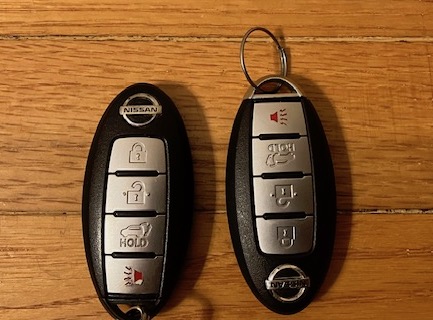
I’ve got the Monday morning key fob blues, that old key fob has made me weary right down to the soles of my shoes. Like a vengeful woman on Sunday night, that key fob battery has made my revengeful Monday morning a sorrowful plight.
On the morning of Monday, December 1, I had a plan.
Step one—drop off a letter that had been incorrectly delivered to our home to a US Postal service mailbox at a neighborhood shopping center.
Step two— open up Trinity United Methodist Church.
Step three—return home and work out on my old exercise bike.
Just before 6:30, I started my plan.
I drove to the shopping center.
I did not park in a parking space. I looped my car around parallel to the building with the car pointing in the direction I needed to go to exit the parking lot.
Turned off the car, walked a few steps to the postal box, and dropped in the letter.
Walked the few steps back to my car and attempted to start the car.
The car would not start.
A message flashed on the panel in front of me: Key ID incorrect.
No matter what I tried. The car would not start. The message remained the same—Key ID incorrect.
How in the world could the Key ID be incorrect? I wondered if the key fob had been overtaken by some outer space alien who wanted to disrupt my Monday.
A young man from a local construction company pulled in a parking space in front of the 7-11. I politely interrupted his entry and asked if he had any ideas?
He didn’t, but we had a good conversation about his company who had replaced the steeple at our church a few years ago.
With that I started a walk home. I was worried that my improper parking might get the car towed before I could get home and return with the backup key fob.
The Mobil service station was open. I stopped in and asked Jeff, the attendant, if he had any ideas. He suspected the key fob’s battery, but was perplexed by the message. I thanked him and returned to my walk back home.
At the corner of Rock Creek Road and Forest Avenue, the young man from the construction company pulled over and offered me a ride to my house. I gladly accepted. Turns out two of his four children attend Trinity’s preschool.
I thanked him profusely, and rushed in the house to get the second key fob.
With that key, I started my walk back to the shopping center.
I decided to stop at Trinity on the way back to open up the building.
Once that was done, I started a slow, sprint back to my car.
It was cold and my fingers were frozen. When I arrived at the car, those frigid fingers had a hard time working the second fob.
Unfortunately, the key fob gods were not in my favor on this Monday. The second fob greeted me with the same message— key ID incorrect.
Good thing I didn’t have a hammer.
I noted that my friend, James, was working in the 7-11. James also works part-time at the Mobil station. I walked in and explained to James my Monday morning key fob blues.
James walked outside and tested the fobs for opening the car’s doors. Neither fob responded—both fob batteries were dead.
As James walked back into the 7-11, Jeff from the Mobil station pulled up in his truck. Jeff had done an internet check. He discovered that by holding the fob directly against the ignition button that the car should start.
I got back in the car. My still icy fingers struggled to make the proper connection.
I tried a couple of times with no luck.
With Jeff’s insistence, he suggested that I align the fob again, and for whatever quirky reason—the car started.
Again, I thanked Jeff for his diligence.
Back home, I explained to my Commander Supreme what had transpired. She couldn’t believe it. I felt drained.
But, my Monday morning key fob blues were not as draining as this headline: 4 dead and 10 wounded in shooting at banquet hall in Stockton, California.
Among the dead were three children ages 8, 9, and 14. This event was a birthday celebration for a child.
Regrettably, this event only reconfirms what we already know about America—the trigger puller had no respect for his/her life, nor the respect for the lives of the people attending the birthday party.
San Joaquin County, Sheriff Patrick Withrow, made this statement: “I am confident in our team and with the work that we have done so far that we will find these animals that did this and bring them justice, but we still need the public’s help.”
“Animals”
Is this what America has sadly become?
I’ve got the Monday morning Stockton, California birthday party blues, with broken hearts that never heal as senseless shootings continue no matter the venue in a disrespectful America with a dying red, white, and blue.
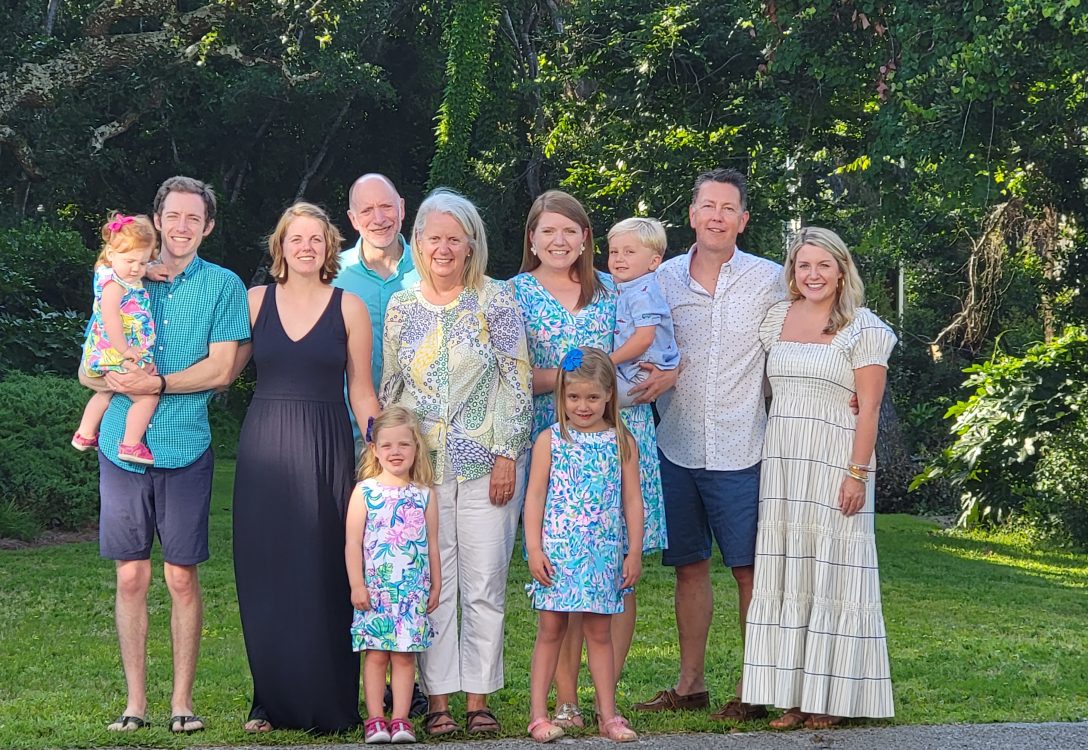
On behalf of the Pike and Reinking families, we are honored to have you with us for Thanksgiving.
Back in October, our world was flipped over when Betsy’s left shoulder took one last clunk on the sidewalk at the corner of Rock Creek and Forest.
In a blink, plans for her seventieth birthday and our fiftieth wedding anniversary changed.
That’s when family and friends took over and planned this Thanksgiving Day gathering.
Without this support and your willingness to pitch in, we’d be eating Jimmy John’s turkey subs this afternoon.
A special thanks to Lauren and Doug, Andrew and Kathryn, Elizabeth and Jackson, Ken and Adrienne, Norman and Jo, and Jay and David for their assistance.
Tucked in there too are the nieces and nephews—George, Lydia, and Sarah, Nana’s heroes, her grands—Caroline, Josie, Ellie, and Hudson, and we can’t forget Jay’s daughter, our Olympic swim coach, Katie, who is with us this afternoon. Katie, we could have used some of your deep breathing techniques when the turkey caused some kitchen tension earlier this afternoon.
Fifty years ago today (11-27-75), we were in Milton, Massachusetts for Thanksgiving at the home of Bertha Avery Crosby.
That was Betsy’s grandmother. Everyone called her Nammer.
We had quite a feast with the Crosby and Cloud families.
Two days later (11-29-75), Betsy and I were married in West Hartford, Connecticut.
There are many reasons why marriages fail and work.
For Betsy and me, I think we had good role models in our parents— Ken and Liz and Bill and Louise.
They weren’t perfect, but their loyalty, support, sacrifice, and teamwork were hard to beat. I think these qualities rubbed off on us.
On the night that I finally mustered the courage to ask Betsy’s father for her hand, I used two words that Betsy’s oldest sister, Susan, told Betsy that I must use—love and respect.
I can still hear my quivering voice—“Mr. Cloud, I love and respect your daughter.”
Despite all of the things I do that drive her absolutely bonkers, Betsy, I still love and respect you as much as I did on that night fifty years ago.
In 2020, a German advertising company created a holiday commercial for the European pharmaceutical company, Doc Morris.
This heartfelt commercial ends with these words—“So you can take care of what matters in life.”
Betsy, for these fifty years, thanks for taking care of what matters in our lives. Here’s to Betsy.







 might be baloney