Back to school, back to church

New school year start times vary across America. Some begin before Labor Day, and others start after this holiday.

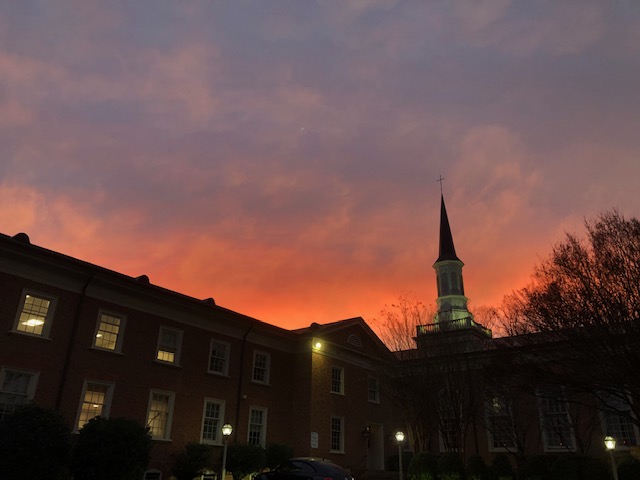
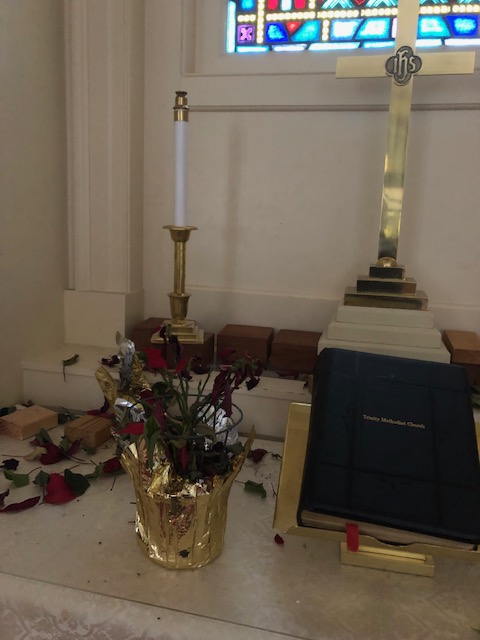
Photo by Bill Pike

The first Sunday after Labor Day, often signals the start of a new church year.

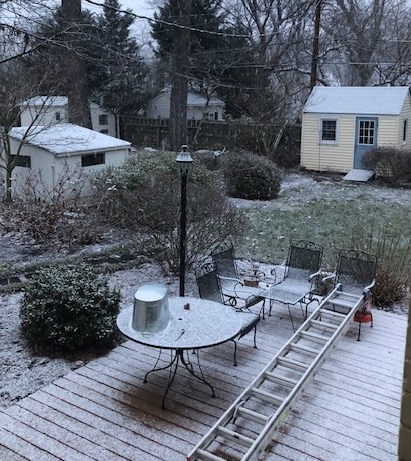
Photo by Bill Pike

From a variety of angles, schools and churches share some similarities.

For example, the COVID-19 pandemic was an unexpected disruption. It created multiple levels of tension. School and church leaders often found themselves in impossible conflicts with parents and congregations.

In schools, the imperfect switch from in person instruction to virtual learning resulted in students falling behind academically and socially. It will take schools and students years to recover from this lost instruction.

With churches, a similar struggle evolved from the pandemic. In trying to protect their congregations, some churches alienated members with stringent protocols. Enforcing these health protections pushed some churchgoers to leave their church.

More similarities between schools and churches are seen in the areas of: human sexuality, finances, safety, and public opinion.

Even before the pandemic, schools and churches often found themselves on public display. Quite honestly, public perceptions can make decision making by school and church leaders a no win situation.

So what must school and church leaders do in order to regain ground lost from the pandemic?

A good starting point for school and church leaders is investing in the time to listen.

Whether they are right or wrong, communities and congregations want to be heard. Leaders who fail to take the time to listen will find framing the teamwork needed for future change difficult.

Schools and churches in their communication must always be honest and transparent, especially when plans go wrong. Telling the truth is an opportunity to rebuild trust.

In their communities, schools and churches must become better at conveying their stories of success even in difficult situations. Not sharing stories of success is a missed opportunity to build relationships.

Sadly, safety continues to be a concern for schools and churches. Both are too familiar with shooting tragedies. These tragedies are birthed in their communities. How might churches and schools collaborate to improve safety in both environments?

Also linked to safety is the physical condition of school and church buildings. Neglected or delayed maintenance only creates more problems in providing conducive environments.

Churches and schools require sustained financial support to stay open. Over the last several years, studies of church data from the Pew Research Center have documented the decline in church attendance. Shrinking attendance impacts the giving capacity of congregations.

For school systems securing their fair share of tax revenues can be a challenge. This is especially a concern when the needs of the community are significant at all levels of operation.

Neither churches nor schools are immune from challenges related to human sexuality.

For churches, some denominations have split over doctrines and policies related to human sexuality. These differences create stress and division. In the end, these divisions hurt people and contradict the premise that churches are supposed to be grounded in “love” for all.

Sometimes lawsuits related to human sexuality rights have required school systems to adjust policy manuals and student codes of conduct. These by law changes can also impact the physical facilities of a school and require special training for school staff.

In the August 2022 edition of the North Carolina based Our State magazine, I read an interesting story about chef, Rob Clement.

Mr. Clement makes the point from his early work in restaurants about the ability to be “adaptable.” And he carries that further by emphasizing the importance of the “pivot.” Mr. Clement states: “In a restaurant kitchen, every minute is a pivot, I don’t know how not to pivot.”(Our State, p.116)

As schools and churches work to recover ground from the pandemic, they need to ask these internal questions: “Are we adaptable, and can we pivot?”

If schools and churches can’t adapt and pivot, that leads to another question: are their traditional models of leadership and operation outdated?

Having worked in public schools and a church, I sense both are capable of pivoting and adapting, but implementing real systemic change can be a challenge. Sadly for churches, change is difficult.

As schools and churches fully reopen, I believe their ability to regain lost pandemic ground will depend upon their willingness to learn more about how to adapt and pivot.

Our communities still need schools and churches.

However, if schools and churches expect to be a vital part of our future, their leaders and their communities must not fear change.

Fearing change reduces the ability to adapt and pivot.

If a chef can adapt and pivot in the kitchen of a restaurant, then our schools and churches must be capable of the same flexibility.

Aren’t we all odd buckets?

Flood buckets on pallets waiting to be loaded.
(Photo by Bill Pike)

On the morning of Friday, November 11, I suspect some of the bucket brigade who showed up at the Virginia Conference office to move and load flood buckets are a bit stiff, maybe achy in the arms and shoulders, and moving a little slower. That is to be expected when 3,752 buckets containing cleaning supplies are moved from storage areas to wooden pallets and loaded on to a tractor trailer.

In truth, I was one of those volunteers who showed up to help, and yes, I took a couple of ibuprofens this morning. Apparently, we had close to 30 volunteers. It was a good group of women, men, and staff from the conference office.

The experts who directed us were kind and patient. There is a precision to loading pallets with buckets, and then using shrink wrap to encase the stacked buckets. Our friendly leaders reminded us:  expose the corners on the pallets, stack three high, keep handles to the inside, and don’t rush, this isn’t a competition.

Shortly after 9, we started, and as we approached 10:30, storage rooms in the building and two U-Haul box trucks had been unloaded. With each pallet properly stacked and wrapped, forklifts were used to lift the pallets onto the ttractor-trailer

 While the buckets all appeared to be uniform in height that wasn’t always the case. The orange and blue colored buckets provided or purchased from those two big hardware retailers were a perfect match. But, sprinkled into the donations were some different colored buckets and their height didn’t match the orange and blue. As the moving and loading progressed, those different buckets were named odd: “We need some odd ones to finish offloading this pallet, let’s set the odd ones off to the side for now.”

That naming made me think about the volunteers for this task, and internally, I asked myself– aren’t we all a bit odd?

 After 47 years of marriage, I’m certain my wife would affirm that I have some oddities.

When I take a look at my fellow volunteers, we are a diverse group, some might consider us odd for participating in this loading.

Then I thought about the people in need who will receive the kits, how might they be odd? Is it because they are the victims of a natural disaster?

And I pushed my thinking a bit further, isn’t the Bible full of odd people? Noah, Job, Sarah come to mind.

How about Jesus and the people he encountered?

In recruiting his disciples, do you think it odd that these men basically dropped what they were doing to follow Jesus? Think about the people in the parables, were they seen as being odd by society?

We might all be odd buckets, but we have something in common, our hearts.

Yes, it was our hearts that pushed us to fill a bucket with cleaning supplies, drop it off at our church, and then volunteer to insure the buckets were properly secured on a pallet, and with great care loaded on a tractor-trailer.

Relax, in a couple of days, the soreness will exit our bodies.

And yet, I hope our hearts will never forget the teamwork and energy that took place in the parking lot of the Conference Office on a just right fall morning.

 Because in the long run, it is the work of the heart that makes a difference in the lives of all odd buckets.

Author’s note: I was honored to have this piece in the November 15 edition of the Advocate, the weekly newsletter from the Virginia Conference of the United Methodist Church.

Day Two: Hartford, Dulles, Frankfurt, Budapest and one hiccup

Sleep came easily on Monday night October 10. The long drive from Richmond to West Hartford made that a certainty.

But, if we thought Monday was a long day, today, Tuesday, October 11 would be even longer.

On Tuesday morning, we weren’t sleepy heads. We had to make sure we were ready to depart to Bradley International Airport right after lunch. My mother-in-law was organized, but she had a few last minute needs, so I ran a couple of quick errands for her.

When I returned, we made sure that our luggage and our carry-on bags were ready. We did a final check for purses, wallets, passports, COVID-19 vaccination cards, and ID’s. Shortly after lunch, we loaded the car and drove to Bradley Field.

We took the non-interstate route. As we neared the airport entrance, an impatient driver was just off our rear bumper. At the last stoplight just off the airport’s grounds, he passed us, sped through the red stoplight at a significant intersection, and flicked his middle finger back at us. The irresponsibly reckless were still with us.

The Commander Supreme had found a reasonably priced vendor where we could park our car with valet service to and from the airport. Getting to the terminal was easy, and our first check-in with United Airlines went well. A wheelchair had been requested for my mother-in-law. Once the wheelchair and the attendant arrived, this person wove us behind the scenes to get us to the departing gate.

Prior to the trip, the Commander Supreme spent significant time reworking our seating assignments. One day everything worked well, but several days later we would be notified of another change. Those multiple changes created stress and tension for the Commander.

The flight down to Dulles outside of Washington, D.C. went well. At Dulles, the security and the screening ticked up a notch. But once again, traveling with Betsy’s mother afforded us quicker access in the screening process. For the flight from Dulles to Frankfurt, Germany we were able to board the plane early and get settled in our seats.

The B777-300 is massive. Everything about the exterior of the plane is big. Huge engines, wings, tail structure, and tires. While the interior of the plane seems wide and endless that interior size is deceptive.

In truth, I’m dreading this flight. Crunched in an uncomfortable middle seat for hours, flying across the Atlantic at night, and hoping that the pilot and the crew keep this big bird aloft.

I have distractions a book, Stealing Home, by Eric Nusbaum, a non-fiction book about how the Los Angeles Dodgers’ stadium was built in Chaves Ravine in Los Angeles, the flight tracker, and I can always watch a movie.

We are close to our 5:25 p.m. departure time, as the 777-300 gradually lifts off the runway. It is a long time until our predicted touch down in Frankfurt at 7:20 a.m.

Early on in the flight, the flight tracker captures my attention. We are at 35,000 feet, going well over 500 miles an hour, and I notice the temperature outside the plane is exceptionally cold, many, many negative degrees below zero. I also note the speed of the tailwind, and how at some point the tailwind disappears and the plane is barreling into a headwind. And, of course, there is always some chop, turbulence to keep everyone alert and in touch with Jesus.

At some point a meal was served, I don’t recall what I ate. To try to make you sleepy and cozy, United Airlines dimmed the cabin lights and provided everyone with a lightweight blanket.

I decided to watch the movie, Elvis. In truth, I don’t know a lot about Elvis, but the movie captures the ups and downs of his short life. Austin Butler, the actor who portrays Elvis, did his homework. His mannerisms and gyrations match what Elvis created all those years ago.

But, the real reason, I watched this movie is Tom Hanks. I have always admired his work, and Mr. Hanks does capture the complicated personality of Colonel Parker who was Elvis’ manager.

I’m not sure of the precise moment when the Atlantic disappeared, but the flight tracker had us arching over land. Soon my mother-in-law was commenting about the headlights from early morning traffic as we made the approach into Frankfurt.

Departing the cabin of a large jet is sheer human madness. Airlines should contract with retired elementary school teachers on how to effectively and efficiently get grumpy travelers off the plane.

Not sure how, but we cleared the security and passport checks into Germany. I recall being asked to remove my hat so that the clerk could insure that the bald head on my mug shot matched the bald head in person.

The German airline, Lufthansa, was responsible for flying us into Budapest. For this flight, the Commander and her mom were seated together, but I was solo way in the back. This was a ninety minute flight. I was looking forward to getting out of this airplane.

Pretty cloud cover Frankfurt to Budapest Photo by Bill Pike

The approach into the Budapest airport was pretty. The Danube River couldn’t be missed.


Assuming we knew where we were going, the attendant with Betsy’s mother, quickly took off to the baggage area. We lost them, and we made several wrong turns trying to get to the baggage area. Eventually, we made the right steps and arrived, and Betsy’s mother was already there. Good news is our luggage made it, and at about the same time, the Commander’s brother and his wife walked into baggage claim too.

With Betsy’s mother and our luggage, we quickly found Viking personnel with their red signs. They arranged us and our luggage by groups, and soon we were in a van heading toward the ship.

We saw a lot on that ride to the river. Traffic cooperated, and soon we were dockside unloading and entering the ship for check in.

Our room wasn’t ready, but Viking personnel took control of our luggage and whisked us into the dining room for lunch.

During lunch, we learned about what would turnout to be the only hiccup for the entire trip. Our youngest daughter, Elizabeth, would not be arriving today.

On Tuesday, she was aboard her plane in Raleigh waiting to depart for Toronto. Unfortunately, the operator of the jetway, clunked the plane. When a jetway clunks a jet airliner, a engineer is called to inspect the plane for structural damage.

Of course, airframe engineers aren’t exactly on call. This interruption resulted in Elizabeth getting her luggage and going back home. She was not going to make the connecting flight in Toronto.

To her credit, Elizabeth diplomatically badgered Viking to secure her a better flight.

After lunch, our rooms were ready, and we got settled in.

Viking wastes no time in getting you acclimated to the city.

Early in the afternoon, we assembled in the ship’s lobby for a short walking tour of the neighborhood where the ship was docked.

Each guest has an electronic device with an ear plug. This allows you to hear clearly the tour guide.

Our tour guide was a resident of Budapest (pronounced Bu da pesh), and he was excellent. In fact, we found all of our guides on the trip to be exceptional. Each knew their history, but more importantly they knew the flow of their cities, and they wove in witty humor, and some current political insights too.

The heart and soul of this trip is Danube River. Clearly, no river, no trip, but this journey will feature the cities and landscapes on its majestic banks.

In our brief afternoon tour, I immediately was captured by the architecture, including the design of two bridges close to the ship, and the legendary great/central market hall.

Not long after the completion of the tour, Abby and Art arrived.

Before we knew it, we were seated in the dining room for our first dinner. Immediately, the waitstaff won us over with their attention to detail and humor.

After dinner, we took a walk. We crossed the river at the bridge nearest the ship, and followed the river path to the next bridge. We crossed this bridge and made it back to ship.

The beauty of Budapest revealed itself even more as the lights of the city etched out the landmarks and cast reflections on to the river’s surface.

We were looking forward to our second day in Budapest, but we needed a good night of sleep too. Hopefully, we would find it.

Night shot of bridge crossing the Danube River in Budapest photo by Bill Pike

Church Doors

When I was growing up in Burlington, North Carolina, a couple of miles from our home up Route 7( now called West Front Street) was Elon, home to Elon College.

Elon College has been magnificently transformed into Elon University. That transformation illustrates that leadership, vision, and pennies can be a powerful partnership.

Elon was a sleepy speck of a town. A railroad track ran behind the college. To either side of the steel rails ran parallel dirt and gravel roads.

The one sided storefronts of Elon also sat across from the college. I know there was a barber shop, some kind of grill, and a small grocery store was down a side street.

I can remember eating cheese dogs at the grill. A rectangular shaped block of cheese was shoved into a hot dog bun, and then smothered in chili. Horrible for the health of the heart, but it was tasty.

Just past the storefronts, on the west side of North Williamson Avenue sits Elon Community Church. According to the church website that building opened in 1959. Prior to that opening, the church met in various spaces at Elon College.

On the morning of Thursday, August 11, 2022, I was meeting my sister there. We were going to drive together to visit our mother’s niece, Martha, and her husband, John.

We had a good visit with Martha and John. Our conversation centered upon our families. We remembered, laughed, pondered, and learned.

When I met my sister, we had parked in the parking lot behind the church. Once we had returned, and said our goodbyes, a display in front of the church caught my eyes. I stopped and parked my car.

The display was six doors painted in rainbow colors with these words singularly spaced on each door: “God’s doors are open to all.” At the base of each door were religious symbols.

I took a couple of photographs, and started my drive back to Greensboro.

Over the course of the next week, I showed the photograph to family and friends. All responses were positive.

Thumbing through photographs on my phone, I see those doors, and I say to myself, “too bad that churches don’t really embrace those words.” We church people, myself included, might talk a good game, but our doors are not always open and welcoming.

On the afternoon of Friday, October 21, I was on the front grounds of our church. A second shipment of pumpkins and gourds had arrived. I looked up and saw a young man with a bicycle, a skateboard, and no helmet.

He rode the skateboard, near some steps off of a brick walkway. I always worry when I don’t see a helmet. So, I said to the young man: “how’s your head?” He looked perplexed. I repeated my question with some elaboration related to him not having a helmet.

This time he responded with “I lost it, and my mom has ordered a new one, but it’s not here yet.”

Then, I gave him some gentle grief about protecting his head, with a reminder about all that could go wrong if he were to fall.

I asked him where he went to school, and he stated, “Quioccasin Middle School.” Then, I asked if he lived in the neighborhood around the church and he said, “no.”

With that exchange, we both parted.

The old educator in my brain started to wonder if he was suspended, or maybe skipping school, or maybe he had a legitimate early dismissal for the afternoon.

Maybe because I fussed at him about not having a helmet, or I asked too many questions, he grabbed his bike and skateboard, and started walking toward Forest Avenue.

I called out to him again. Even though, I never told him he couldn’t ride his skateboard on our front grounds, I let him know if he wanted to skateboard some more, he could on the backside of our building.

He had no response to the offer. He returned to his walk heading to Forest Avenue. Forest Avenue is a narrow two lane road, it always has traffic, and there are no sidewalks. I hoped he could navigate riding his bike without a challenge from a car.

One afternoon this week, I was in the preschool wing of our building. As I glanced out a window facing Forest Avenue, I saw a young lady walking on our grounds heading toward Rock Creek Road. She caught my attention because her hair color was purple.

I wondered what her story was with the hair. Internally, I pushed that question a bit further. I wondered how I and other members of our congregation would respond to this young lady if she showed up in our Sanctuary on a Sunday morning.

Also, I’d like to know what the skateboarder thought about his encounter with me.

Maybe he internalized, “If church people are like that grumpy old guy, I don’t want anything to do with churches in my future.”

Matthew 7:7 states: “Ask and it will be given to you; seek and you will find; knock and the door will be opened to you.”

Even before the pandemic, churches didn’t exactly have people knocking down their doors.

Those six doors on the lawn of the Elon Community Church should serve as a gentle reminder for churches.

Coming out of the pandemic, it is quiet possible that churches might experience more knocks on their doors.

If this happens, then churches must be ready to respond to those knocks in the same manner as the words on the doors state: “God’s doors are open to all.”

But, it is also possible that churches should consider being the door knockers.

How might churches, without being evangelical or overbearing, communicate to their communities?

In my old mind, churches need to keep it simple.

It is a two way street of stories—telling the story of the church—the past, the present, and the future.

But perhaps more importantly for a community, it is the capacity for the church to listen and learn the stories of the community where the church is located.

For the church, that two way story telling needs to be grounded in— we’re here.

If you need an ear—we’re here.
If you have a question, we’re here.
If you are curious about our work in the community, we’re here.
If you want to meet for coffee or a beer, we’ll be there.
If you have an idea, we want to hear it.
If you’re struggling, we struggle too, how can we help?

Clearly, the focus of the dual storytelling and learning can be more or less.

However, for the church, it is absolutely essential that either side of the knock needs to be grounded in the words on the display at Elon Community Church: God’s doors are open to all!

Elon Community Church door display on their front grounds. Photo by Bill Pike

Day One Richmond to West Hartford: irresponsibly reckless

For the first time in sixty-nine years of living, I have a passport. And, for the first time in my life, the Commander Supreme and I are going to Europe.

This trip was hatched by my sister-in-law, Abby. The goal is to honor my mother-in-law’s upcoming birthday. Good Lord willing, in February 2023, she’ll turn 95.

It is a good trip—a cruise up the Danube River from Budapest, Hungary ending in Passau, Germany.

The planning started in June, and all of a sudden the trip is here.

Leg one for us started on October 10, 2022 with a drive from Richmond to West Hartford, Connecticut where my mother-in-law resides.

Since 1975, we have driven many times to West Hartford. Monday was the absolute worst drive we’ve ever had.

After stopping for gas on the way out of Richmond, we were on the road heading north after 8:30 a.m.

Just before Ashland, Virginia my brain started playing with me.

When I rearranged the luggage in the back of the car at the service station, my brain kept asking—“did I put all of the luggage back in the car?”

That question prompted me to take the Ashland exit. Being former educators, the Commander Supreme and I jumped out of the car and completed a quick luggage count. Luckily for me, all luggage was present.

If I had left a suitcase on the cold concrete pad at the service station, divorce filing #772 would have started.

Road trips, airplane flights, and all of the logistics creates a tension, a strain that pushes an organizer and its travel companions into an impatient orbit. There is a pursuit of perfection that every detail of the trip will go well. That’s impossible when dealing with interstates, airlines, and human beings.

It is clear to me that people who create the flight paths for airlines have no concept of geography.

For example, my wife, her mother, and I fly south from Hartford to Dulles. My wife’s brother and his spouse fly north from Richmond to Detroit. Our daughter flies north too— Raleigh to Toronto. Surprisingly, Abby and her husband, fly east toward Europe from Los Angeles without a stop. I think on that long nonstop flight, I would need to be sedated.

Airlines don’t think about geography. They think about pennies, and how many people they can uncomfortably cram into seats that are perfectly designed to hold children, but not adults.

Airlines make these ridiculous geographical connections so that no seats are empty. A packed airplane fuselage reminds me of tractor trailers barreling down the interstate with their crammed crated passengers of turkeys, hogs, and cows.

And speaking of interstates, our drive on Monday was constantly delayed by accidents and seemingly small construction projects. Those slow downs revealed how stubborn we are as Americans to try to get ahead by a car length when interstate lanes scrunch down from three to one.

This is even more infuriating because all drivers were warned several miles earlier that the lane scrunch was coming.


In this pause of traffic, I want to jump out of my car, climb on the hood, and in my best outside voice scream, “Hey, can’t you knuckleheads read?”

But in today’s America, if I did this, I’d be cursed, the insolent middle finger would be directed toward me, or quite sadly, I might be shot.

The inability to comply continues.

In the Baltimore tunnel that we took, the signage clearly reminds drivers not to change lanes inside the tunnel. As we worked our way through the tunnel, up ahead of us, we witnessed the same driver at a high rate of speed, dangerously switch lanes twice.

The good news is despite being about two hours late, we made it to West Hartford in one piece.

But that lane changing driver in the tunnel stayed with me.

I want to know why we have become so irresponsibly reckless in our walk through life?

What pushes us to totally disregard simple rules of the road that are designed in the name of safety not only for ourselves, but the people who surround us too.

Our failure to comply with reasonable requests is troubling.

If our response to reasonable requests continues to be grounded in irresponsible recklessness, what kind of future does America have?

Not even a scoop of ginger ice cream from A. C. Petersen Farms on Park Road in West Hartford can sooth the burn of that question.

Author’s note: Graphic design for the highway sign created by Elizabeth Pike.

LETTERS TO THE EDITOR


Finger-pointing over test scores is a waste of energy

When test score results from public school students are disappointing, politicians get riled up.

They point accusatory fingers.

Their “hot aired” finger pointing is a wasteful burn of energy.

That energy needs to be channeled to do the hard work to solve the problems our communities face in our public schools.

Clearly, the pandemic disrupted the instructional delivery for students in Virginia.

But the truth of the matter is our public schools, have been quietly eroding for a long, long time.

That erosion is grounded in our inability to solve malignant challenges related to our human infrastructure.

We can no longer ignore the instability of families.

Vicious generational cycles connected to poverty, employment, housing, safety, mental health, and equity need to be disrupted.
How do we disrupt these cycles?

Perhaps, a starting point would be for our politicians to spend a week shadowing a teacher in a challenging school. I wonder what an elected official might learn from being in the trenches with an actual teacher?

Additionally, in Virginia, we have nearly twenty five years of SOL data.

Does that data tell us anything about how to work more effectively with students who come to school everyday from unstable families?

We need political cooperation, not political finger pointing to solve the challenges found in our public schools.

Maybe this quote from “Hidden Figures” author, Margot Lee Shetterly, says it best: “You don’t get the good without the bad, but you really do have to see it all in order to make progress.”

If we want to improve our public schools in Virginia, we must be able to see it all for our families, our students, and our teachers.

Bill Pike
Henrico

Author’s note: I am honored anytime a newspaper accepts one of my submissions. This letter appeared in the OPINIONS section of the Richmond Times-Dispatch on Friday, October 28, 2022. As a retired public schools educator, I worry about the morale of our teachers. If you know a teacher in your community, please take the time to thank them for their work.

Back To School

Photo by Bill Pike

When I was a kid, summer seemed endless. In August 1975, I entered the teaching profession. For the next thirty one years, I learned that summer doesn’t last forever.

In Virginia, it is good that school systems are starting classes before Labor Day. Who knows maybe our push away from an agrarian calendar will nudge school system leaders to develop year round schools.

One of the best things about schools opening before Labor Day is back to school sale ads end. Those ads can be annoying like political ads.

On Thursday, August 18, the Virginia Department of Education released the annual results from the Standards of Learning tests that students take each year. Release of the scores always generates media headlines and comments from appointed and elected officials.

It should be no surprise that for the second consecutive year, student performance was down when compared to results before school systems were slammed by COVID-19. This was despite efforts from school systems to maintain learning by switching from in person instruction to virtual instruction.

I believe it will take students, their families, and teachers years to recover from this significant disruption. Unfortunately, the family and technology infrastructure needed to make virtual instruction successful was not always in place.

Virginia’s Superintendent of Public Instruction, Jillian Balow, stated on Thursday: “We were addressing an achievement gap before the pandemic and now we have even more ground [to make up] today.”

Why are we always trying to recover ground related to achievement gaps in Virginia?

In 1998, Virginia’s students started taking SOL tests. What have we learned from twenty four years of testing data? Are we better equipped to understand students, their families, our communities, schools, and teachers?


For example, during the pandemic in single parent homes does the data capture the impact of older siblings missing multiple middle and high school classes to assist younger siblings?

Does the data uncover the effect disruptive students have on their learning, and the learning of classmates?

Does the data reveal the consequences of prolonged achievement gaps?

Are these gaps grounded in our inability to solve malignant challenges related to family, poverty, mental health, housing, safety, and equity?

Does the data capture the morale of teachers who everyday attempt to deliver quality instruction in challenging environments?

If we hope to recover instructional ground and close achievement gaps, we must commit to the hard work of answering those questions and more.

Continuing to place blame for unsatisfactory SOL test results on the shoulders of teachers and school system leaders by appointed and elected officials is misguided. Maybe a week shadowing a teacher in a challenging school could change some minds.

Since we are quick to blame disappointing SOL scores on teachers, I wonder if Governor Youngkin’s “tip line” saw an uptick in calls when the results were released. Additionally, I wonder if the “tip line” contributed to the current teacher shortage school systems face?

Truthfully, school systems always scramble to fill teaching positions before school opens. In 1975, I was a last minute hire.

We have witnessed many changes since 1975. Sometimes in immeasurable ways, students are affected by disruptive changes in their families and communities. Despite these changes, teachers are continually asked to handle our societal challenges while still delivering instruction.

Politicians babble about improving pay and benefits for teachers.


Yet, teachers consider respect and support just as critical as the pay and benefits. Interestingly, respect and support are essential for struggling students and their families too.

If we truly want to improve SOL test scores and close achievement gaps, we need to move beyond predictable political finger pointing.

With urgency, we must commit to a deeper dive into the troublesome data. In troubling data is a struggling student. We can no longer ignore the multiple needs of these students.

Understanding how the academic potential for these students is impacted by family, poverty, mental health, housing, safety, and equity is pivotal. If we fail to make this discovery for every struggling student, then we will see no improvement in SOL scores, nor will we close gaps in achievement.

Maybe this quote from Hidden Figures author, Margot Lee Shetterly, says it best: “You don’t get the good without the bad, but you really do have to see it all in order to make progress.”

In Virginia, if we are going to make progress with SOL scores and achievement gaps, we must work together “to see it all” for every student.

Author’s note: If you know a school teacher or someone connected to public education no matter the location, please consider sharing this piece with them.

No right to whine about the cost of beer

On March 3, 2022, at our neighborhood Publix grocery store in Richmond, Virginia, I noted that the Brooklyn Brewery from New York already had their Brooklyn Summer Lager on display.

Photo by Bill Pike

According to my calendar checks, the first day of Spring was 17 days away on March 20, and the first day of Summer June 21 was 113 days away.

Talk about rushing the season. On March 3, I’m hoping that I might find a spring bock beer. But, not many breweries brew a spring bock anymore.

On July 27, I was in COSTCO. I always check out the beer selection. On this date, I found an India Pale Ale(IPA) brewed by Zero Gravity in Burlington, Vermont— a four pack in sixteen ounce cans is priced at $9.49.

On the shelf directly below the Vermont beer was another IPA brewed by the Bingo Beer Company in Richmond, Virginia. The packaging was the same for the Bingo IPA, but the cost was $12.99.

Photo by Bill Pike

My longstanding question returns.

I want to support the local brewery, but their IPA cost $3.50 more than the IPA brewed in Vermont. The brewery in Vermont is at least 620 miles from Richmond. Considering that distance and the cost of fuel, how can the Vermont brewery sell their beer at $9.49?

With Oktoberfest upon us, I traveled to my local Total Wine and More to check out their selection of Oktoberfest beers. Being the cheapskate that I am, I made two selections.

From Wisconsin’s Leinenkugel Brewery, I purchased a six pack of their Oktoberfest beer, and a 16.9 ounce bottle of Oktoberfest beer from the Ayinger Brewery in Germany.

Photo by Bill Pike

The Leinenkugel cost $9.99 for a six pack, and the Ayinger beer was $3.99.

A few days later, I saw the same six pack of Leinenkugel at a Food Lion selling for $11.49. That’s a $2.50 difference in cost, why?

Additionally, how can a beer brewed in Germany, shipped across the Atlantic Ocean only cost $3.99? Similar sized American beers can cost much more.

Back on September 17, we were returning from a visit with our oldest daughter and her family in North Carolina. We stopped at a Lowes Food.

Here, I wasn’t a cheapskate. I paid $14.99 for a six pack of Oktoberfest beer brewed by Red Oak, a long standing craft brewer in Greensboro.

When I was making my selection, I looked further down the line of beers on the shelving. I saw an Oktoberfest six pack from the famous Shiner Brewery in Spoetzl, Texas. The Shiner Oktoberfest was selling for $8.99. Again, the question is—why does the local beer cost $6.00 more than the beer from Texas?

I’m sure state regulations, cost of beer ingredients, brewery equipment, personnel, and marketing all factor into how a beer is priced. My limited research indicates that retail markups are in the 30-40% range. I’m sure that varies with each retailer depending upon the size of the store, foot traffic, and how deep the pockets of the customer might be.

I’ve been whining about this disparity in pricing for years. I really don’t think that state ABC boards, beer distributors, and craft brewers give a rip about a grumpy old geezer who questions how beer is priced.

At the end of the day, the brewers, distributors, and retailers are more focused on the pennies and carving out a profit.

I acknowledge the need to earn a profit. However, I also believe consumers should be provided a more transparent understanding of how the retail price of beer is determined.

Despite my grumpiness and whining, I think that is a reasonable request, not only for beer, but other consumable food items as well.

But in truth, I have no right to be whining about the price of beer.

Here’s my reason.

Every Friday from 9-2 at Trinity Methodist Church, we ask our members to drop off food to support food pantries at these Methodist churches: Belmont, Sherbourne, and Welborne.

Some Fridays, we are really good at filling up the designated tables for each pantry. Other Fridays, we’re not as strong.

Regardless of our response, the directors at each food pantry report they see no decline in the need for food in their communities. In fact, they report increases in the number of families they serve from week to week.

Rebounding from the pandemic and recent increases in food prices are driving these weekly surges.

In 69 years of living, I’ve never gone hungry.

Take a look in your community, and find how you might make a difference for a family by donating food to a local pantry.

I guarantee that food donation is better for your soul than my whining about the cost of beer.

There is no pursuit of happiness in cancer

On the afternoon of Friday, August 26, our family friend from California, Larry Marino, called to tell me goodbye. Thirty one days later on Monday, September 26, I received a text message that Larry had passed. Thanks cancer.

That Monday afternoon, I had been at the top of a ladder prepping one of our second story windows for a repainting. I thought to myself before coming down, I’m going to give Larry a call.

Since August 26, I had not pestered him, I tried to give him space. I sent a couple of text messages, but he did not respond. I know the cancer was wearing him down.

Larry had been married to my wife’s oldest sister, Susan. This was Susan’s third marriage, and Larry’s second.

My wife, Betsy, and I first met Larry in the Philadelphia Airport. Betsy and her siblings and spouses were heading to Bermuda to celebrate their parents fiftieth wedding anniversary.

We learned quickly that Larry had a sense of humor.


When we were introduced to Larry, he had an eye patch over one eye, and tattoos all over his forearms. Not sure if he was trying to convince us that he was a pirate or a biker. Within a few minutes, the eye patch was removed, and he went to the restroom to wash the water based tattoos off his forearms.

While in Bermuda, he kept us laughing.

We had several good visits in California and Utah with Larry and Susan. He owned a beautiful getaway home in Strawberry Point, Utah, and once the same Bermuda crew met in Las Vegas. In those trips, Susan and Larry were delightful hosts.

A couple of times, Larry and Susan came to Duck on the Outer Banks of North Carolina for Thanksgiving. And they also traveled east for the college graduations of our son, Andrew, and youngest daughter, Elizabeth. Susan attended the graduate school ceremony when Lauren, our oldest daughter, finished her masters at DePaul in Chicago.

When Lauren, and her husband, Doug, honeymooned in Italy, Larry had a friend pick them up at the airport and whisk them to their hotel.

A handful of times during a year, we would check in with each other by telephone. He always asked about all of the nieces and nephews in the family. Larry wanted to know what they were up to and how they were doing.

I countered his questions by asking about his 100 year old mother, who lives in Las Vegas, his son, Chris, and Larry’s two grandsons. I also learned a bit about Larry’s success in the swimming pool business. His company did residential and commercial work. They maintained pools all over southern California and did new construction as well.

None of us ever saw this coming, but on May 3, 2011, Susan made the decision to take her own life.

After this tragic loss, it took quite a bit of time, but somehow, Larry found a way to regroup. Larry once shared with me that he did not want to spend the last years of his life alone, nor did he want to die alone.

I don’t recall the timing, but Larry did remarry to a very nice and successful business woman, Lisa. We met Lisa one summer in California at Abby and Art’s home. She was very gracious, and it was clear that Larry and Lisa were a good match. Her Italian heritage had something to do with them being very compatible.

Sadly, that happiness was short-lived. Larry called me on December 22, 2016 to let me know that Lisa had passed away. Thanks cancer. From earlier telephone calls, I knew Lisa was battling cancer, but I don’t think anyone anticipated her life ending so quick.

Lisa’s passing was a tough punch for Larry. He continued to manage and be very hands on with his business. I know he traveled some, and he always had activities planned for his grandsons when they came to visit their father during the summers.

And Larry wasn’t immune from his own health skirmishes. His heart created some intense life threatening intrusions. Somehow, the nurses and doctors continued to pull more life from his damaged heart. It took lots of recuperative time, but Larry recovered from the heart attacks and surgery procedures that kept his heart beating.


Again, I know his heart needed companionship, loneliness in the latter stage of life was not something he wanted. In early April 2021, Larry married Nelva.

I’ve never met Nelva, but I know he was smitten by her. However, I quickly got to know Nelva as Larry had another challenge with his heart. From the end of April into early May, I received daily updates from Nelva about his status including how the doctors were working with him in the hospital.

Despite this heart setback, somehow, Larry found the strength and will to rebound again.

During the late spring or early summer of 2022, Larry let me know that cancer was creating some challenges. I know from talking with him that the doctors were trying to pinpoint the area/areas of the cancer’s intrusion. This was to be followed with recommendations for treatment.

When Larry called me on August 26 to say goodbye, it was because the doctors had run out of options, the current treatments were not fighting the cancer. I could hear his wife, Nelva, crying in the background.

I never talked with Larry about the cause for his first marriage ending. When a man loses his second wife to suicide, and his third wife to cancer, it seems unkind to me that more misfortune should enter his life.

Surviving multiple heart challenges is one thing, but dying from cancer after all that Larry has endured is life malpractice to me.

Cancer, cancer, cancer, you are spineless and worthless.

Cancer, you are unfit to be on this planet, and yet, you continue to rob lives, and leave loved ones with empty, broken hearts.

Lots of money is raised each year for cancer research, but on September 26, $325 million was spent crashing a NASA spacecraft into the asteroid, Dimorphos. The goal was to see if this impactful crash might push the asteroid off course. Pushing an asteroid off course might save a collision with earth in the future.

My question is why can’t we use that $325 million to push cancer off course permanently?

Currently, I’m reading The Sun Does Shine, a book about the life of Alabama death row inmate, Anthony Ray Hinton.

When Mr. Hinton first arrived in his cell on death row, he sat on the edge of his bed and had the following internal conversation with himself: “There was no God for me anymore. My God had forsaken me. My God was a punishing God. My God had failed and left me to die. I had no use for God. Forgive me, Mama. I thought to myself as I threw the Bible under the bed. I had no use for it. All of it was a lie.” (Hinton, page 105)

I’m sorry God, but that is the way I feel toward you when it comes to cancer.

I feel forsaken.

Good people are punished.

You failed them, and they die.

I imagine families who lose loved ones to cancer have a similar internal conversation.

They want to know why.

If Jesus healed people with a simple touch, and raised people from the dead with his words, where are Jesus and God when it comes to cancer?

As frustrating as that may be, I also realize that something kept Larry’s faltering heart alive after hours spent in an operating room followed by days in intensive care.

Why was that?

Was it my prayers, and prayers of others that allowed him to dodge death?

I’m not sure, but I hope Nelva and Larry’s family will somehow find a bit of comfort in knowing that cancer is no longer beating him up. And maybe just like me they will hold out hope that at some point in the future, cancer will have the life beaten out of it.

In moving forward, I will cherish Larry’s love of life.

I will never forget his ability to make me laugh whether by phone or in person.

And even though, his heart caused him trouble, deep inside Larry’s heart was a kind, considerate man who touched a lot of lives along the way.

He also was good at keeping in touch by phone with my mother-in-law, Liz, in Connecticut. Football, especially the Miami Dolphins was a favorite topic.

And, I don’t think I will ever have another meal of pasta without thinking of his love of his favorite food. I believe Larry could have eaten pasta at breakfast, lunch, and dinner.

Yes, God, like Anthony Ray Hinton, I am frustrated.

Frustrated that cancer took a friend away too early.

But, God, I think you know that, and somehow, I will hold on to these words from John 1:5: “The light shines in the darkness, and the darkness has not overcome it.”

Cancer can’t snuff out the light that Larry brought into this world.

And that’s because the Italian philosopher, Thomas Aquinas, captured that light in a different way with these words: “There is nothing on this earth more to be prized than true friendship.”

Larry, thanks for being my true friend.

Rest in peace.

My friend, Larry Marino, making me laugh at Rachel and Garth’s wedding Agua Dulce, California Photo courtesy of Lauren Reinking

I’m a pitiful Christian who offends God


I have never watched the entire 2005 movie The Three Burials of Melquiades Estrada. But, I have watched one scene many times.


That scene features actors Tommy Lee Jones, Barry Pepper, and Levon Helm. Mr. Helm was the drummer in the rock group, The Band.


In this scene, Mr. Helm portrays a blind man who lives alone in a frail house in the borderland between Texas and Mexico.


Mr. Jones is fulfilling a promise. He is carrying by horseback the body of his friend, Melquiades Estrada, to properly bury him in a Mexican village.


Mr. Pepper portrays the United States border guard who shot Mr. Estrada.


They stop at Mr. Helm’s home to ask for water for the three horses. Mr. Helm has no qualms about providing the requested water, and he even extends the hospitality by providing the strangers a meal.


At the kitchen table, Mr. Helm serves the food. Then, he extends his two hands across the table for Mr. Jones and Mr. Pepper.


He says, “let us pray.”


Awkward silence and hesitancy capture Mr. Jones and Mr. Pepper. Uncomfortable seconds pass until Mr. Jones extends his hands to Mr. Helm and Mr. Pepper.


Curious about how Mr. Helm lives and survives in such harsh conditions, Mr. Jones asked a few questions.


We learn that Mr. Helm has some food stashed away. His son usually comes to visit him once a month to bring supplies, but he hasn’t seen his son in six months.


After the meal, Jones and Pepper collect the three horses, and prepare to depart.


Mr. Jones thanks Mr. Helm, and then Mr. Helm asks Mr. Jones for a favor.


Mr. Jones replies with “anything you want.”


Mr. Jones clearly does not anticipate Mr. Helm’s heart wrenching question: “I wanted to ask you, if you could shoot me?”


A quiet, astonishment takes over the scene. Mr. Pepper instantly looks at Mr. Jones awaiting his response.


Mr. Helm explains his rationale.


His son isn’t coming back—he has cancer. Mr. Helm does not want to leave his home, and most importantly in his mind, he does not want to offend God by taking his own life.


After a few seconds of reflection, Mr. Jones responds that he can’t shoot Mr. Helm, and makes the point that he does not want to offend God either.


Mr. Jones and Mr. Pepper ride off with Mr. Helm still requesting that he be shot.


That scene makes me think of my own so called life as a Christian. I wonder how many times have I offended God?


In my mind, I reason that I have offended God quite a bit.


My brain will not let me forget the imperfections of my flawed judgment.


I curse my God who created the agitated yellow jacket that stung me while working on our church grounds.


I’m highly critical of others without considering my own shortcomings.


I silently swear at any driver who runs a yield or stop sign, or a stoplight.


There are days when my impure heart, mind, and soul feel like the devil is a half step behind me.


I wrestle with the inability of the church to see that the redundancy of its long worn templates might not work anymore.


I have let the current division in America make me a judge. I struggle to understand how insightful friends who were made by the same God that made me can’t see what I see in this division.


I ask why are they so blinded? How can their reasoning be so impaired?


Why have I lost my capacity to communicate with them? Is it because I have lost my ability to listen without judging?


Perhaps, they see me in the same way. Maybe, they ask the same internal questions about me?

In our division is fear the fuel that divides us? Is fear what drives the faulty logic founded in misinformation?


Yes, The Three Burials of Melquiades Estrada is a Hollywood script, but a raw honesty comes from the blind man portrayed by Levon Helm.


Perhaps, he should fear the two strangers. He doesn’t.


Mr. Helm provides heartfelt hospitality without knowing anything about their circumstances.


He extends his hands at the dinner table to offer prayer to the strangers. Something inside their troubled hearts makes them take Mr. Helm’s hands.


And that makes me ask myself, why can’t I extend my hands to those with whom I disagree?
Pitiful Christian that I am, will I continue to offend God?


Where is my commitment for these words from 1 Peter 3:8: “Finally, all of you, be like-minded, be sympathetic, love one another, be compassionate and humble.”


When will my stubborn heart wake up?

Photo by Bill Pike