CHANGING THE CRAFT
Stone Brewery’s closure and Legend’s pivot: What’s next for Virginia craft beer? | Guest column
BILL PIKE
Jun 29, 2026
Thanks to Times-Dispatch reporters Sean Jones and Eric Kolenich for reporting about changes in Richmond’s craft brewing community.
Recently, stories about the closing of Stone’s brewery and a shift in the brewing process at Legend Brewery caught my attention.
I’ve never forgotten my first beer at Legend, nor will I forget my final beer at Stone.
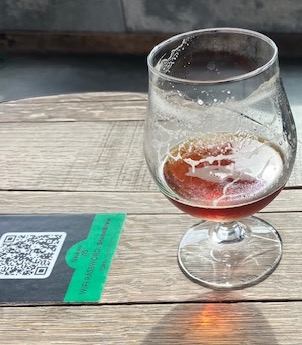
In terms of square footage and brewing capacity, Legend and Stone are opposites. However, both breweries were part of the rapid expansion of craft breweries across Virginia and America.
During this unprecedented growth, it was hard to imagine that craft breweries would oversaturate and peak out. The changes at Stone and Legend are also being felt throughout America.
In their annual report, the Brewers Association noted that in 2025, “production declined amid softer beer sales nationwide.” Despite this decline, “craft beer outperformed the broader beer category, and craft beer market share edged higher.”
For craft brewers still in the game, this is good news. But what this truly means is that brewers will need to continue to find ways to maintain the integrity of their quality while keeping their loyal customers happy.
Speaking of happy, the closing of the Stone Brewery is not a happy one. Good, competent, and dedicated employees lost their jobs.
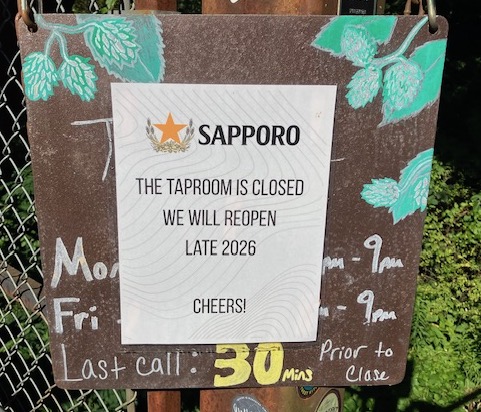
In 2022, the large Japanese brewer Sapporo purchased Stone. Four years later, Sapporo decided to sell Stone.
This is the second time that Sapporo has bought an iconic American brewery. In 2017, Sapporo purchased Anchor Steam Brewing in San Francisco. Thanks to what some employees and industry experts called Sapporo’s poor management decisions, Anchor Steam was closed in July 2023.
Now, the former Stone Brewery will be brewing Sapporo’s lightweight beers. I hope Sapporo doesn’t have plans to purchase and destroy any more American breweries.
I’m glad that Legend has worked out an arrangement with another Richmond brewery, Hardywood, to keep brewing Legend’s best-selling beer, their Brown Ale. This is an excellent example of the quiet camaraderie found amongst brewers.
Unfortunately, I don’t think we’ve seen the end of changes in the craft brewing industry in Virginia or America.
The first brewers to set up shop in America also experienced success throughout the Northeast and Midwest. Those early brewers also developed loyal followers and welcoming halls for gatherings.
Today, some of those brewers like Miller, Coors, Budweiser and Yuengling are still around, but they’ve had their struggles, too.I’ve always admired the creativity and ingenuity of craft brewers. Their cleverness helped them to survive the pandemic.
I sense craft brewers are always thinking and working to figure out how to sustain, innovate and keep their loyal followers. Every week, craft brewers are not sitting still. Whether it’s a new beer, a collaboration with another brewer, providing local entertainment or offering hot trends in food, craft brewers keep pushing.
I’d like to know if that constantly pushing mentality could be used to help other businesses and organizations that are struggling. Could those inventive marketing strategies be applied to help declining churches rethink their outreach action plans?
Craft brewers have also been good at finding ways to give back a percentage of their sales by investing in good causes in their own backyards.
Might craft brewers be interested in expanding those community investments? In the art of brewing, lots of science is involved. Is there a way for the science of brewing to be applied to develop brewing apprenticeships or scholarships through our local community colleges and beyond?
In the same way, might our Richmond craft brewers be willing to create a series of beers that capture the goodness of Richmonders and their accomplishments? Could a portion of those sales be used to establish scholarships for students? Some bold Richmond brewer might develop — Michael Paul Williams Pulitzer Pilsner, Maggie Walker Penny Lager, Jonathan Austin Juggling IPA or Arthur Ashe Love 40 Saison.
Can craft brewers survive this downturn? I want to say yes.
But my yes is linked to their ability to understand how they became successful. This requires an exhaustive internal and external review of their strengths and areas for improvement. At the heart of that assessment lies their ability to pivot not only quickly, but with rational thinking.
In truth, I’m not a daily, weekly or monthly visitor to craft breweries. But when I do venture out, I love it when the people in those tasting rooms are a true cross-section of our communities.
For those special moments of diversity, I hope that our craft brewers survive.
Note from author: I was honored to have this op-ed piece published in the Richmond Times-Dispatch. The piece first appeared in the on-line edition on June 29, and it was published in print on Wednesday, July 8, 2026. The two photos included here were supplied by me. Neither appeared with the Richmond Times-Dispatch editions. Thanks, Bill Pike


