Missing Pat Conroy, It Has Been Ten Years

Some of my favorite Pat Conroy wisdom comes from his commencement speech for the Class of 2001 at The Citadel.

Near the closing of his speech, Mr. Conroy tells the cadets: “because I want you to know how swift time is, and there is nothing as swift—and you know this from the day you walked into Lesesne Gateway until this day—a heartbeat, an eye blink. This is the way life is. It is the only great surprise in life.”

Mr. Conroy was correct about time and its swiftness.

It is hard for me to believe that we lost him ten years ago on March 4, 2016. Those “heartbeats and eye blinks” are relentless in their swiftness—“this is the way life is.”

In 2025, I made sure that I read Pat Conroy’s first book, “The Boo.” That was the only book in his collection that I had not read.

The book is about Lt. Colonel Thomas Nugent Courvoisie (The Boo) who in 1961 was hired as the assistant commandant of cadets at The Citadel.

In the preface for the book, Mr. Conroy wrote that when he approached the Lt. Colonel about writing the book, he told Mr. Conroy: “It has to be a fun book, Bubba, and it can’t hurt The Citadel in any way.”

From my reading, I believe Mr. Conroy accomplished that goal.

Lt. Colonel Courvoisie had a tough job.

He was basically like an assistant principal in an all male high school who was charged with keeping the cadets in line.

In the book, the cadets certainly put the Lt. Colonel and themselves in many difficult situations, but one thing was clear—The Boo always attempted to do what was in the best interest of the cadet in those challenging circumstances.

Yes, I laughed at the stunts of college boys away from home.

But, my heart was also touched at how The Boo worked through endless situations with cadets who made regrettable mistakes.

I think the words from writers like Mr. Conroy are supposed to tug at our hearts.

In his books, through his fiction and nonfiction, Mr. Conroy uses his gift to make the reader ponder life.
He knew living was a challenge, and he knew the power of a story could impact a person’s thinking.

I’m not sure if he ever fully anticipated how “The Lord’s Of Discipline” would impact his life and the school he loved—The Citadel. After the publication of this book, for twenty years, Mr. Conroy wasn’t welcomed at The Citadel.

Some of that disfavor of Mr. Conroy started with his first book “The Boo.”

And later he added to his disapproval, when he supported Shannon Faulkner in her pursuit to be the first woman admitted to The Citadel.

Even though, time moves swiftly, time can also bring reconciliation, a settling, and understanding. After those twenty years, there was a healing, and Mr. Conroy and the school found the way to move forward.

I’m glad this reconciliation took place. It represents another chapter, another story in Mr. Conroy’s life.

Because I was a teacher, my heart will always be drawn to “The Water Is Wide.” I could feel his passion in the work he did with his students.

In “ A Lowcountry Heart,” I love his respect for the teachers he met around America.

From page 102, Mr. Conroy wrote: “Teaching remains a heroic act for me, and teachers live a necessary and all-important life. We are killing their spirit with unnecessary pressure and expectations that seemed forced and destructive to me. Long ago, I was one of them. I still regret I was forced to leave them. My entire body of work is because of men and women like them.”

My stability in life is grounded in many factors, but I’m right there with Mr. Conroy—teachers impacted my life too.

Maybe it is because I grew up in the heart of the Atlantic Coast Conference, but as I was growing up, I had an early affection for basketball. I’m sure I could provide you with a long list affirming my present disillusionment with college basketball, but I’ll spare you my whining.

Clearly, I have said or written this before, but what I really want you to know is that Mr. Conroy’s book “My Losing Season” about his senior year of playing collegiate basketball at The Citadel is a must read for lovers of basketball.

For me, I believe that “My Losing Season” really captures the heart and soul of Mr. Conroy. At least once a week, I grab the book for a random re-reading of a section. Those re-readings can make me chuckle, moisten my eyes, or make me think deeply about life.

Mr. Conroy, I can’t believe that its been ten years since your passing.

I miss your writing and your ability to tell a story.

From “The Lords of Discipline” in Chapter 41, the words you wove into play related to the honor court reinforce your skills as a storyteller. Again, I could feel the passion you created in the characters on that brutal and tragic night.

Of course, I can’t write about Mr. Conroy without referencing his ability to expand my vocabulary.

In Chapter 29 from “My Losing Season,” Mr. Conroy recalls a conversation with his English professor, Colonel Doyle. Colonel Doyle asserts that Mr. Conroy “pilloried” him in a short story published in The Shako, the literary magazine of The Citadel.

Pillory means “to attack or ridicule publicly.” If he were living, I suspect that Mr. Conroy might have “pilloried” America’s current chaos.

On this day of your passing, maybe up in heaven you are holding court with writers you admired.

Maybe, you are interacting with members of your family.

Maybe, you and The Boo are chuckling over a forgotten story.

Or maybe, you are having a quiet conversation with a humble teacher hearing this person’s inspiring stories from the classroom of life.

Even though its been ten years since your passing, I want you to know like many others who loved your writing—I still miss you.

However, what I really want you to know is that the work of your life and your words continue to touch my rapidly aging heart.

Have a quiet day in that wild blue yonder.

If you bump into God up there, tell him our hearts need help.
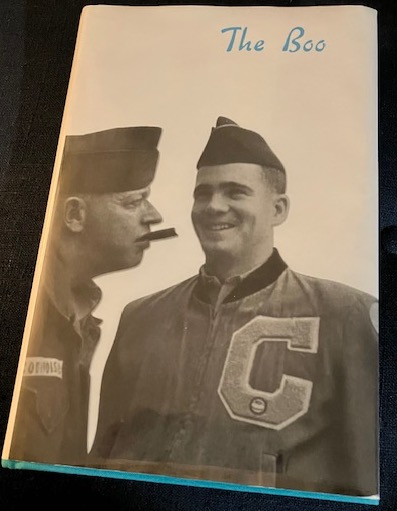
The classic book cover, The Boo and Mr. Conroy (Photo of book cover Bill Pike)

Annual email: The Wind That Shakes The Barley

For most of you, I will guess that you do not receive a weekly email from one of the local craft breweries where you live.

But here in Richmond, Virginia, I receive an email from Ardent Craft Ales every Thursday.

The email tells me about new beer releases and special events at the brewery.

Ardent is located in the Scotts Addition section of Richmond.

Over the last several years, this neighborhood has undergone a rebirth. With old commercial buildings being transformed into housing, restaurants, and breweries.

Unfortunately, adequate parking didn’t match the explosive growth.


When our church first started our Pub Theology program, Ardent Craft Ales was our most gracious host.

This time of the year, I’m hopeful to receive an Ardent email announcing the release of The Wind That Shakes The Barley.

On Thursday, February 26, 2026, the email arrived that confirmed The Wind That Shakes The Barely would be available on draft in the taproom.

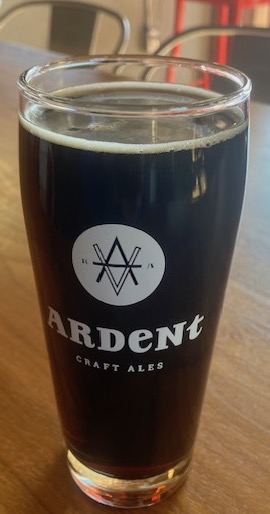
This Irish oatmeal stout has become a favorite beer of mine.

Last year on the afternoon of its release, I convinced my wife to go with me to Ardent so I could have a pint. She had a glass of wine and we split an hors d’oeuvres.

This year, I missed the opening afternoon, but I was able to have our son tag along with me on Saturday afternoon.

On this last day of February that felt like a spring day, Ardent was busy. Inside the taproom, customers formed two lines. To the credit of the cashiers, the lines moved quickly.

By the time we received our stouts, most seating on the outside deck and inside the taproom were taken. But, we found a couple of chairs at a table and sat down.

A teasing pre-Spring sun came through the window, and it was a perfect afternoon to enjoy a classic Irish brew.

This year’s version of The Wind That Shakes The Barley didn’t disappoint. The brewers made a quality beer.

I don’t possess a sophisticated beer tasting palette so notes of “baker’s chocolate and caramel” don’t register with me. However, I do agree this is a “light-bodied” stout, not has heavy as some stouts might be.

So, I must confess. I love, love the name of this beer. I think The Wind That Shakes The Barley is a perfect name for a beer.


I can imagine the golden field of barley that an Irish farmer has put his heart and soul into with a gentle wind rustling through the thickly planted grain.

According to several sources, The Wind That Shakes The Barley has quite a history in Ireland.

In 2006, this was the title of a successful film about two brothers who join the Irish Republican Army to fight for Ireland’s independence from England. The plot takes an interesting twist as the brothers are on opposing sides during the Irish Civil War.

But the title of the film, actually comes from the song written by Robert Dwyer Joyce. The song is tied to the 1798 rebellion in Ireland.

Mr. Joyce wrote this Irish ballad as a poet and English professor. I listened to several recordings of the song. Each rendering captures the heartfelt passion of the history and the young man and woman portrayed in the tune.

I checked to see if barley is referenced in the Bible, and yes, it has quite a presence. I like this citing from Deuteronomy 8:8: “a land with wheat and barley, vines and fig trees, pomegranates, olive oil and honey;”

So barley has been providing for us for a long, long time.

I hope the wind will continue to shake the barley in the fields of farmers around the world.

And, I hope the brewers at Ardent Craft Ales will brew this favorite beer of mine in 2027.

In fact, I hope they never stop brewing this annual beer.

And, I hope, I’m around to enjoy another pint next year.

The Wind That Shakes The Barley (Photo Bill Pike)

Ketchikan

Tuesday, July 1, 2025 Day Seven Ketchikan

Ketchikan by Bill Pike

Per usual, I’m up early.

At 5:05 a.m., the ship’s foghorn sounds every two minutes.

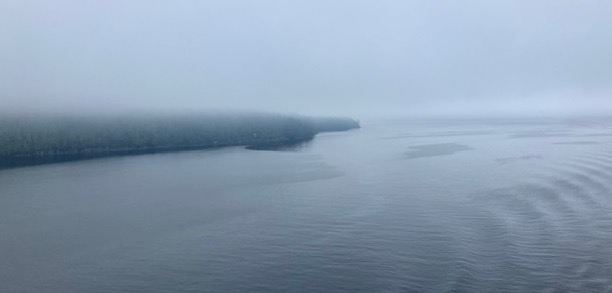
A gray fog is trying to conceal the Alaskan coastline. The water is a darker shade of gray.

Foggy morning as we head into Ketchikan ( Photo Bill Pike)

We are scheduled to dock in Ketchikan at 6:30 a.m.

I always enjoy the last few miles of the approach into a port. A few minutes ago, a small, sturdy boat departed from the back of the ship. This is all guessing on my part, but I’m assuming, this was to drop off a local captain to help guide the ship into the Ketchikan harbor.

Our group is excited about exploring and touring around Ketchikan. We have a window from 8:30 to 2:30 p.m.

Closing in on Ketchikan, the visibility begins to improve. The hills and mountains that form the backdrop for the town are still shrouded with fog and low clouds.

Our first bald eagle is spotted. The eagle was resting on top of a singular docking pole.

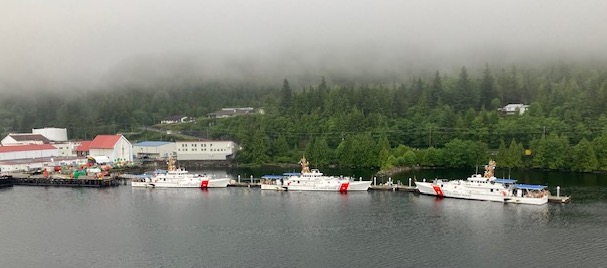
As we inch closer to our docking berth, I notice a massive yacht complete with a helicopter, Coast Guard station with three ships, and a NOAA ship.

Coast Guard station (Photo Bill Pike)

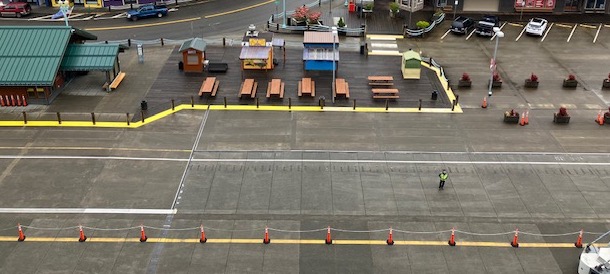
It is interesting to watch the landing crew on the dock doing their final preps. A safety perimeter is set using cones and rope.

Dock area (Photo Bill Pike)

For the two gangways, a separate crew is present. With finesse and precision, they connect the ship to the dock.


Looks like some of the merchants closest to the dock are already open for cruise ship traffic. The store fronts look inviting.

The Commander and I hustle to breakfast. A few minutes after 8:00 we are off the ship.

I’m fortunate to be with a savvy tour guide. We want to take in as much of Ketchikan as we can before our scheduled excursion out to Totem Bight State Historical Park.

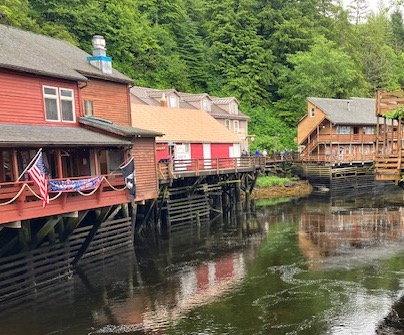
Our feet push us off, and we quickly come across Ketchikan Creek. This pretty creek runs through sections of downtown.

Ketchikan Creek (Photo Bill Pike)

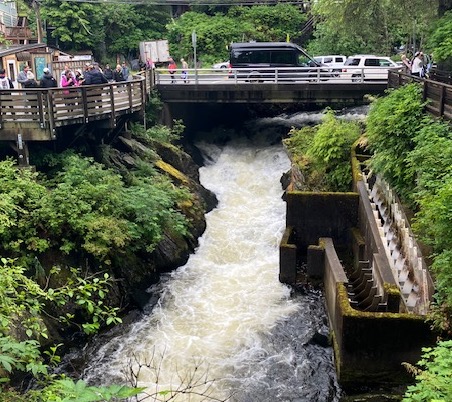
We skirt through a section of shops on historical Creek Street. Following the creek bed, we notice an emphasis on salmon. A salmon ladder is part of the creek.

Salmon ladder (Photo Bill Pike)

With the creek as our guide, we work our way to the Deer Mountain Fish Hatchery. Apparently, we were too early for any peeks at fish or tours.

Near the hatchery is City Park, a very pretty park that is part of the Ketchikan Salmon Walk. This is a very doable 1.5 mile walk that winds along the creek and some quiet neighborhoods.

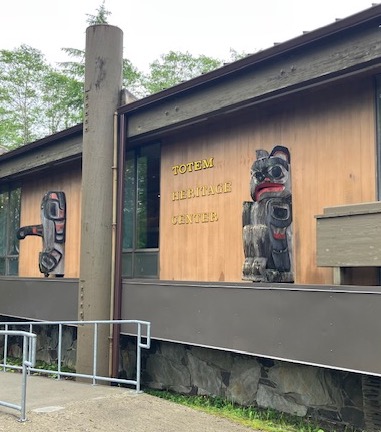
From City Park, it is a short distance to The Totem Heritage Center. This museum dates back to 1976. While totem poles are the main feature, the museum also has contemporary art that is linked to local culture and heritage.

Totem Heritage Center (Photo Bill Pike)

From the Totem Pole Heritage Center, we walked back into town. We spent time exploring a few of the Creek Street shops and learned a bit about its history. At one time, this was “early Alaska’s most infamous red-light district.”


Before heading back to the ship, we stopped at the Arctic Bar. This famous bar opened in 1937, and it appears to be just as popular today as when it first opened.

We regrouped with our pals and boarded the bus to Totem Bight State Historical Park.

A young lady, a college student was our bus driver and tour guide. She was outstanding.

On the drive out to the park, she provided a trove of local information with facts and humor.

At the park, she capably toured us around with a balance of stories related to the culture and totem poles.

Points of emphasis were made about the location. Basically, we’re in a rainforest. Five species of trees make up the core of this region, and we also learned about the skunk cabbage, and salmon berries (similar to raspberries).

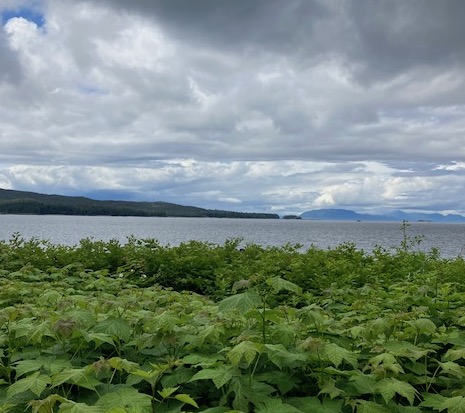
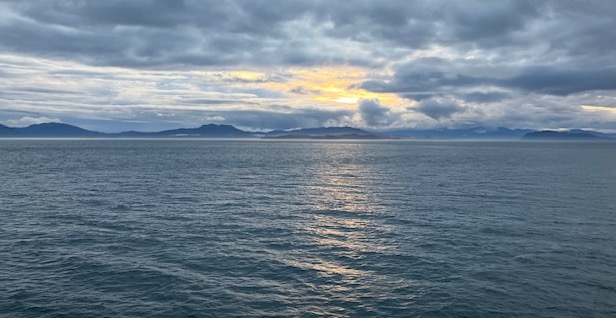
Created in 1959, the park consists of 33 acres in Tongass National Forest. The park also presents views on the Tongass Narrows waterway.

Tongass Narrows Waterway (Photo Bill Pike)

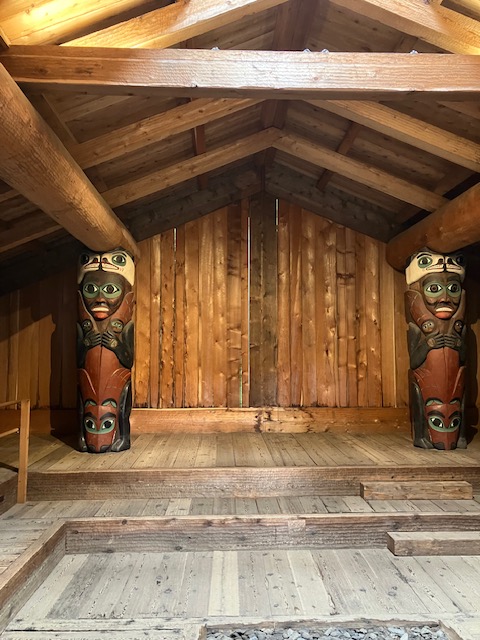
A variety of totem poles are on site. The park also includes replica of a traditional chieftain’s house. The low, oval entrance will catch the attention of visitors.

Inside Chieftain’s house (Photo Bill Pike)

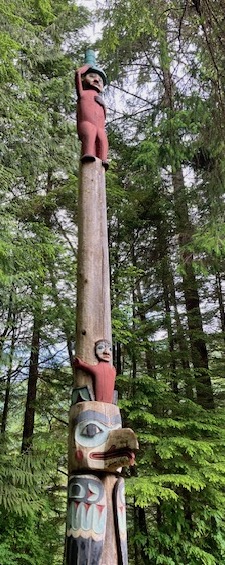
For me, my takeaway on the totem poles is that each one tells a story. Woven into those stories and the carved displays are the eagle, frogs, the mystical thunderbird, ravens, bears, beaver, watchman, and blackfish or killer whale.

Totem pole (Photo Bill Pike)

With an eye on the clock, our guide gave us time to work our way back to the bus before our departure.

We made it back to the ship on time. Facial recognition was used to speed up the pace for getting us back on board.

After a late lunch, we watched the pushing away from the Ketchikan dock. Lots of activity was waiting for us during this departure.

From the top deck of the ship, we had a good observation spot.

Our main point of interest was the Ketchikan airport. Access to the airport comes via a ferry that runs every thirty minutes.

This afternoon, we were treated to float planes landing and taking off, and commercial jets landing.

From the top deck, we departed to attend an information session about our upcoming transition from sea to land.

After this, we regrouped and made ourselves ready for dinner. The dinner hour on the ship amazes me as the staff works to meet the needs at every table with perfection.

With dinner over, we tried our luck in trivia with 80s music, attended an Irish sing-a-long, took in a comedian, and spent a bit of time with a jazz trio.

Maybe to try and rejuvenate ourselves, we took one walk around the ship with a cold, brisk breeze hitting us. For some reason that walk pushed us to needing some sleep so, we headed to our rooms.

I enjoyed Ketchikan.

It was interesting to experience the pride from the original Alaskans related to their culture and heritage. Like the stories found in a totem poll, the stories in the history of these people is fascinating too.

And yet, here I am, far away from the troubles of the world.

I wonder if the troubles of the world could be solved by revisiting the stories of our troubled pasts? Might we be able to say to ourselves— we’ve been down the tragic road before, why do we want to go again?

Looking forward to Juneau tomorrow and a visit with a glacier.

Sun setting after a good day (Photo Bill Pike)