They served America: Hill, Feinstein, McWilliams, and Love

At first glance Hill, Feinstein, McWilliams, and Love sounds like a group of lawyers, accountants, or doctors. But, they aren’t.

No, these people impacted America. In their own unique way, they gave us their hearts. Recently and sadly, their time on earth ran out.

Clint Hill was a Secret Service agent. At the age of 31, Mr. Hill was the agent who jumped on to the back of the presidential limousine when President Kennedy was assassinated on November 22, 1963. When this occurred, I was in the fifth grade at Hillcrest Elementary School in Burlington, North Carolina. Our teacher, Mrs. Cline, was in tears.
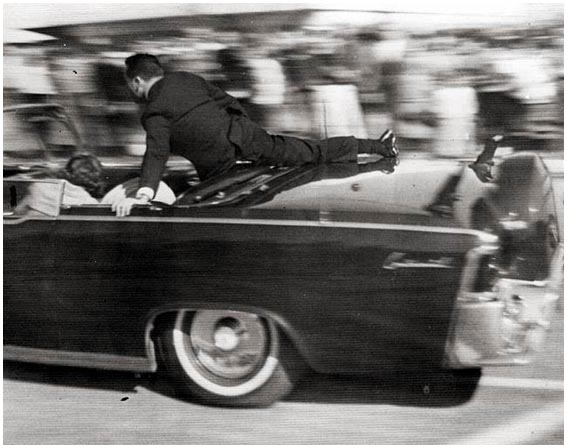
Agent Hill (Photo Wikipedia)

I never knew the guilt that Agent Hill carried with him after this murder. For years, he blamed himself for not being able to react in time to save the President. Though some believe he saved the President’s wife as she attempted to help her fallen husband.

That turmoil in Dallas shadowed Agent Hill as he continued to serve three more presidents. He attempted to wash that torment away with alcohol. In 1975, Agent Hill retired from the Secret Service, and a doctor warned him, “if he didn’t stop this self-destructive behavior, he would die.”(The Week)

In the 1980s, he was able to give up alcohol.

Surprisingly, Agent Hill in 1990 made a return trip to Dallas. He visited the site of that horrible November afternoon. Perhaps, the passing of time, or the wisdom of a different angle “convinced him that he couldn’t have done anything to prevent the tragic outcome.” (The Week)

In 2024, Agent Hill was asked by an interviewer how he wanted to be remembered. He replied, “Two words, I tried.” (The Week)

John Feinstein was a gifted writer. He found success in writing about sports. Mr. Feinstein was a sports reporter for the Washington Post and the author of over forty books. Additionally, his skills as a writer allowed him to write sports novels geared for a younger audience.

John Feinstein (Photo Wikipedia)

In my random collection of books, I have four written by Mr. Feinstein: Forever’s Team, A Season On The Brink, A March To Madness, and A Civil War.

His gifts went beyond the printed word as he was a commentator for college basketball and football games, an adjunct professor at Duke, his alma mater, and this year, a writer-in-residence at Longwood University in Virginia.

Some might view Mr. Feinstein as a nuisance. Yet, at the heart of his work was a drive and determination to find and capture the truth in the people and topics he covered.

I think this quote from a NPR report about Mr. Feinstein captures his passion.

Barry Svrluga, a Washington Post columnist who said he took Feinstein’s sports journalism course as a senior at Duke, recalled the experience Thursday:

“He got whoever he could to talk to the class — Gary Williams on a game day when Maryland was in town, Billy Packer, Bud Collins. Bob Woodward called in,” Svrluga said. “And you could just tell that part of his reporting prowess — how he got into locker rooms and front offices and onto the range and in clubhouses at PGA Tour events — is because he could really develop relationships, and people just liked to talk to him. Part of that had to be because he didn’t pander. You knew exactly where he stood. And that gained respect.”

My takeaway from this remembrance is “he could really develop relationships.” No matter where we walk in our lives building relationships is critical.

Unlike Mr. Hill, Mr. Feinstein, and Miss Love, I had the privilege of knowing Jody McWilliams. He was a member of our church. And if there was one person in this world who had a clear understanding for the importance of building relationships, it was Jody McWilliams.

Mr. McWilliams understood the importance of commitment in those relationships. His commitment, his loyalty impacted his wife, their children, and their families. Those qualities applied to his service to the United States Army, the United Methodist Church, and as the Executive Director of the William Byrd Community House in the Oregon Hill neighborhood of Richmond, Virginia.
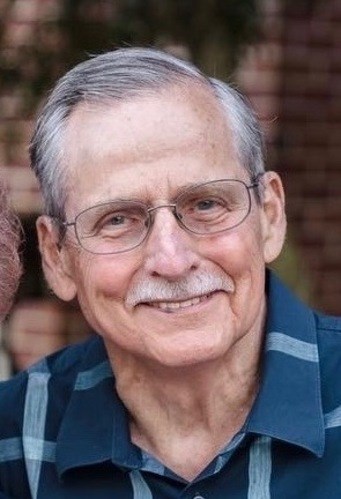
Jody McWilliams (Photo Courtesy of the McWilliams family)

For thirty three years, he served in that role, and he once told the Richmond Times-Dispatch: “We are in business to serve the working poor, people who fall through the cracks. We serve people from birth until death, from the womb to the tomb.” During his tenure, close to 4,000 people used the services available from the William Byrd Community House on an annual basis.

With three master’s degrees, Mr. McWilliams also taught at the collegiate level. There he instructed and mentored future social workers. He gave them some very wise advice as they started their careers: “Be open to learn from those you serve.”

Until I read her obituary in the April 4, 2025 edition of The Week, I knew very little about Mia Love.

Mia Love was the daughter of Haitian immigrants. In 2014, Miss Love became the first black Republican elected to serve in Congress from the state of Utah.
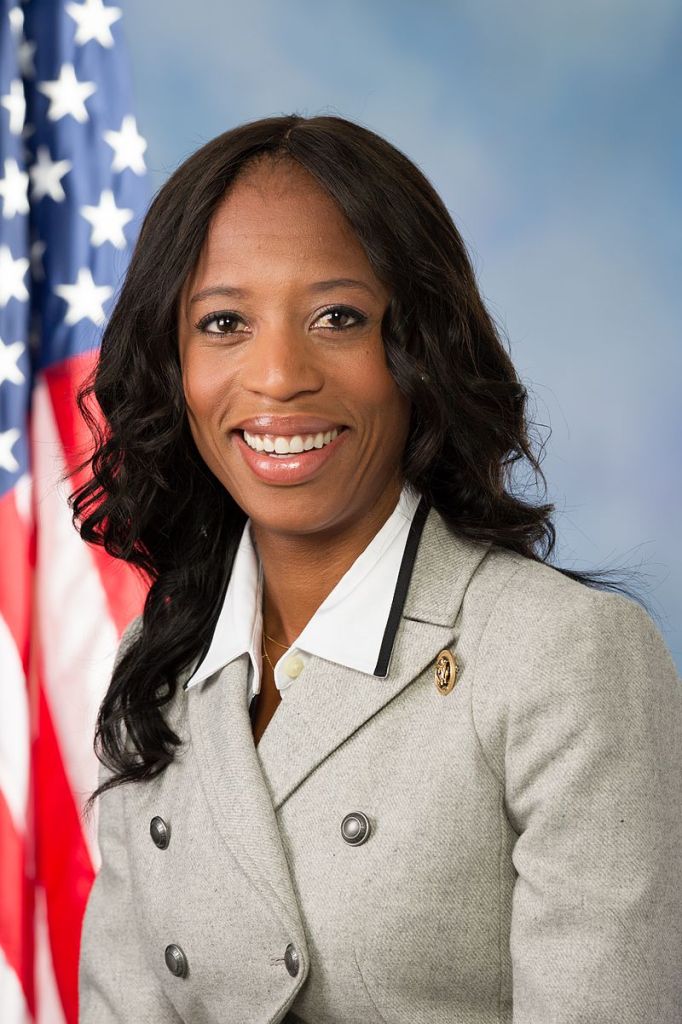
Mia Love (Photo courtesy of United States Congress)

In The Week’s summary of her life, several items caught my attention. She was opposed to the 2016 election of Donald Trump as President of America.

At a Republican caucus meeting, she pushed back against a member of the caucus who made unflattering remarks about Haiti. Miss Love said, “If you don’t see me as an equal, you can remove me from this conference, and if we don’t see everyone as equal under God we have a bigger problem.”

In 2022, she learned that brain cancer was raging inside of her. That cancer ended her political career.

Before her death, Miss Love wrote: “I believe the American experiment is not a setting sun, but a rising sun. We must fight to keep the America we know.”

Unless you have been able to block out the turmoil and chaos coming out of Washington, “the America we know” is under attack. Piece by piece, it is being dismantled.

This disgraceful dismantling is impacting a wide range of people in America.

As Americans, we must work to counter this dismantling. We must regain Clint Hill’s courage, reclaim our voices to question like John Feinstein, recapture the unshakeable endurance of Jody McWilliams, and recommit to fight for America like Mia Love.

And in that fight for America, we need leaders in our country to embrace Mr. McWilliams’ logic: “Be open to learn from those you serve.”

While Hill, Feinstein, McWilliams, and Love might not have been a group of lawyers, doctors, or accountants, it is clear they were a group of human beings who possessed hearts that cared and who were willing “to learn” from the people they served.

At this very moment, we can’t “pander.”

We have to do more than “try.”

We must exhaust every ounce of our strength to build the “relationships” needed to save the imperfect soul of the America that “we know.”

My friend rejection: Florida Keys, Miami, Greensboro, Charlotte, Washington, New York

Let’s get the truthful apology out early. To my wife and family, I know I spend too much time at my laptop writing.

Whether I’m good or lousy at writing, I couldn’t tell you. At this point in my old life, the writing is more about spouting out what is in my old heart.

And that spouting is grounded in this fact, I’ll be 72 in June. I don’t have much time left to put you into nap mode with my words.

If a person writes with the goal to be published, then that person must know that rejection is part of the territory.

I try to learn from rejection.

I once took the aggravation from a rejected submission and used that frustration to create another piece that was accepted for publication.
That made me feel better.

So for this post, I’m releasing some recent rejections.

I’ll provide a footnote giving background as to why I wrote each piece.

If you choose to continue your reading, ponder this. My whining about words being rejected is nothing compared to the rejection people experience in their day to day living.

What’s remaining of my old brain can still recall those moments when I hurt people by rejecting them. If those moments are still within me, they must still be within the person I rejected. That’s not good.

In the Hulu series Only Murders In The Building, the three main characters know rejection in their lives and careers.
Their rejection experiences also equal loneliness, a quiet killer in our chaotic world.

Moving forward in what is rapidly becoming an inconsiderate world, I need to be more aware of the rejection and loneliness that are around me everyday.

My heart needs to care more.

I need be more attentive to the green wristband I wear that simply states: “Be Kind.”

Kindness can counter rejection.

That wrist band means nothing if I don’t live it.

Letter To The Editor

From January 20 – January 31, my wife and I, and two couples from our college days had the pleasure of visiting the Florida Keys. Marathon was our base.

Let’s start with the confession. Since we arrived from Maryland, North Carolina, and Virginia, I think we were responsible for the unseasonably cool, cloudy, and windy weather that annoyed the Keys for a few days.

We adapted, and fortunately, no frozen iguanas fell from a tree and clunked our noggins.

In truth, I wanted to thank the people of the Keys for their hospitality. From Key Largo to Key West, we dined, snorkeled, fished, biked, walked, jogged, and learned. No matter where we visited, the people who greeted and assisted us were patient, considerate, and knowledgeable.

I don’t think any of us were prepared for the volume of traffic that the Overseas Highway handles. This main route never rests. Vehicles of every size and shape keep moving even in the dicey sections where the throughway narrows.

In that traffic mix are school buses. As a retired public schools educator, I want to compliment the Monroe County school bus drivers. While we were in Marathon, I marveled at the skills of these drivers.

School bus drivers are required to multi-task. They monitor their priceless cargo while managing the challenges of heavy traffic and the often deficient judgment of clueless drivers.

If we have the privilege of visiting the Keys again, we’ll work not to bring winter air with us. I think the iguanas would be appreciative.

Keep up the good work.

Bill Pike
Richmond, Virginia

Submitted to the Florida Keys Weekly Newspapers 2/5/25. Two ideas, thanks for the hospitality, and many thanks to the bus drivers in this school system. They need a pat on the back.

Letter To The Editor

On Friday, January 31, 2025, I was in the Miami International Airport. I was headed home to Richmond, Virginia. My last visit to Miami was in 1978.

Over those 47 years, Miami, Florida, and America have experienced the ups and downs of change.

Knowing I had a long wait for my flight, I wanted to purchase the Friday edition of the Miami Herald.

When I entered an airport variety store, I was pleasantly surprised to find your paper in stock. In a flying trip last May, neither the Richmond nor Atlanta newspapers were available for sale in their airports.

After paying for my copy, I was shocked by the paper’s appearance. It was thin, lightweight, and totaled 24 pages.

The paper reminded me of how a friend looked after experiencing the trauma of cancer surgery and post-operative treatments.

I imagine the painful gutting of your personnel to save pennies was similar to what our journalist experienced in Richmond and hundreds of other newspapers across America.

If I return to Miami, I hope I will be able to buy a Herald.

Those 24 Pulitzers mean something.

Miami, Florida, and America need your paper.

Don’t die.


Submitted to the Miami Herald on Sunday, February 2, 2025. Long after I am dead, I truly believe that someone will figure out that one of the reasons newspapers died in America was grounded in the inability to report about their internal struggles to their subscribers. To date no newspaper has an accepted a letter to the editor or an op-ed submission from me that pushes the newspaper to report their struggles.

Letter To The Editor


The men’s Atlantic Coast Conference(ACC) Basketball Tournament opens in Charlotte on March 11. I assume that ACC commissioner Jim Phillips and his employees have adjusted to moving the conference office from Greensboro to Charlotte. But, with relocations and college basketball, one should never make assumptions.

For example, how can it be possible that the Southeastern Conference (SEC), a conference known for its college football accomplishments, has more of its basketball teams ranked in the Top 25 than the ACC?

Maybe, this is an embarrassing single year anomaly. Commissioner Phillips and conference leaders can only hope this is true.

While this SEC dominance is concerning, what I find more alarming is an article from the January/February edition of the Carolina Alumni Review.

The UNC athletic department “faces a $17 million shortfall this year.” Additionally, Board of Trustees member Jennifer Lloyd stated in May 2024 “that the athletics department is projected to have a $100 million cumulative deficit in the coming years.”

If UNC is running at a deficit, how many of the athletic departments for the other seventeen ACC schools are in similar situations?

I wonder if the flawed geographic configuration of the ACC, the economic challenges of Name, Image, and Likeness, the relentless pursuit of power, and unrealistic athletic goals will doom this once treasured conference?

I hope not.

I hope a conference leader, who has courage and wisdom, will stand up and state— this isn’t working, we need to fix it— now.

Submitted to the Greensboro News and Record 3/6/25
I care too much about the legacy of the Atlantic Coast Conference. In my opinion, one of the best college athletic conferences in America has been destroyed. Greensboro News and Record allows 250 words.

Letter To The Editor

The men’s Atlantic Coast Conference(ACC) Basketball Tournament opens in Charlotte on March 11.

For Commissioner Phillips and his employees, I hope the tournament goes well.

Clearly, they have more to worry about than the tournament.

For example, how is it possible that the Southeastern Conference, a conference known for its college football, has more of its basketball teams ranked in the Top 25 than the ACC?

Perhaps, this is an embarrassing single year anomaly.

Yet, more concerning is an article in Jan/Feb edition of the Carolina Alumni Review that states: “the UNC athletic department faces a $17 million dollar shortfall this year.”

Do the other seventeen ACC schools face a similar deficit?

I wonder will the flawed geography of the ACC, the burden of paying players, and unrealistic athletic pursuits implode the conference?

I hope not.

I hope conference leaders find their backbones.

This template isn’t sustainable.

Submitted to the Charlotte Observer 3/6/25 Taking the frame from the Greensboro letter and sending it to the Charlotte paper. Word count is important to editors, every newspaper is different. If you don’t meet the word count, your letter will not be published. Charlotte News and Observer allows 150 words.

Letter To The Editor


I’m not surprised by this Washington Post headline from March 14: Virginia’s top school leader, Lisa Coons, abruptly resigns.


Hiring Coons was a mistake by Virginia Governor Glenn Youngkin. Perhaps, the Governor believed that Coons would bring change to Virginia’s Department of Education while also embracing his education agenda.


This is the second botched education hire by the Governor. The former Superintendent of Public Instruction, Jillian Balow, also resigned. Neither Balow or Coons were able to deliver recommended changes to public schools related to new history standards.


Communications Director, Rob Damschen, announced that Deputy Superintendent of Education, Emily Anne Gullickson, will be the interim State Superintendent of Public Instruction. Interestingly, Gullickson came to Virginia from Arizona. In 2014, she founded A For Arizona.


Maybe the Governor needs a refresher course in American geography and human resources. Coons, Balow, and Gullickson hailed from Tennessee, Wyoming, and Arizona. Where were candidates from Virginia in those searches?


Having spent thirty plus years working in the public schools of Virginia, I know that our state has many gifted and qualified superintendent candidates. Perhaps, none of these leaders merited consideration by Governor Youngkin because they can’t embrace his agenda.


When it comes to public education, it is discouraging and disappointing that politics obstructs the capacity to do what is right for students, parents, and teachers. Frequent bickering over divisive political allegiances, fails to provide the support that students, parents, and teachers need in their schools everyday.

As I read the headlines about Virginia’s declining student performance on state and national tests, rarely do educational leaders and politicians take a deeper dive into why those results continue to plummet.


We must have vast amounts of data about students, their schools and communities. Shouldn’t we be using this data to improve our schools? Are we afraid of revealing the truth about decades of generational neglect related to substandard housing, deficient mental/physical health care, safety, family erosion, and disheartened morale in communities and schools. Housing, health care, safety, family stability, and morale all impact school instruction and performance.


As a former collegiate athlete, Governor Youngkin, knows the difference between talking the game and playing the game.


At this point, he must play the game.


That means hiring a State Superintendent of Public Instruction who is from Virginia.


Nothing else is acceptable for students, parents, and teachers.


Submitted to the Washington Post in March 2025. Surprisingly, the Post has raised their word count for letters to 400. Poking at the Virginia governor for not finding talent within our state.

Letter To The Editor


For over thirty years, I had the privilege of teaching in the public schools of Virginia. Those first four years, I was a Title VII remedial reading teacher. Each year, my position was dependent upon funding from Congress. Luckily, the federal funding continued. This allowed struggling students to grasp an essential life skill—reading.

On March 20, with his signature President Trump dismantled the Department of Education. It will be interesting to learn how many students will be devastated by the President’s negligent decision.

Could the Department of Education be more effective and efficient? Maybe.

Is there a better way to make needed changes? Yes.

In 1964, the St. Louis Cardinals defeated the New York Yankees in the World Series.

After the final game, reporters asked Cardinals, manager Johnny Keane, why he remained with starting pitcher, Bob Gibson, to finish the game?

Mr. Keane responded, “I had a commitment to his heart.”

Demolishing the Department of Education was easy for this President. Mr. Trump has no commitment to any American heart other than his own selfish, uncaring one.

Submitted to the NY Times 3/24/25 New York Times allows 150 to 200 words. This letter took a poke at the dismantling of the Department of Education.

Graphic design courtesy of ELP at Independent Lab Productions

Easter with Warren Zevon and Jesus

Warren Zevon was a gifted songwriter, singer, and musician.

You might recall two of his songs “Excitable Boy” and “Werewolves of London.” Each garnered attention, and yes, “Werewolves of London” has become a Halloween standard.

Through his songs, Mr. Zevon was a storyteller. His characters were from all walks of life. His lyrics captured all human emotions. At times, his words were not for the faint of heart.

I chuckle when I hear these lines from “Excitable Boy”:
“Well, he went down to dinner in his Sunday best. Excitable boy, they all said. And he rubbed the pot roast all over his chest. Excitable boy, they all said. Well, he’s just an excitable boy.”

And I chuckle more with “Werewolves of London”:
“He’s the hairy-handed gent who ran amuck in Kent.
Lately, he’s been overheard in Mayfair. You better stay away from him, he’ll rip your lungs out Jim. But hey, I’d like to meet his tailor.”

But the chuckling stops with “Carmelita”:

“ I hear Mariachi static on my radio. And the tubes they glow in the dark. And I’m there with her in Ensenada, and I’m here in Echo Park. Carmelita hold me tighter. I think I’m sinking down. And I’m all strung out on heroin, on the outskirts of town.”

Singer Linda Ronstadt respected Mr. Zevon’s song “Hasten Down The Wind” so much that she recorded it and used the song as the title to one of her albums.

The song will pinch your heart and moisten your eyes:
“She tells him she thinks she needs to be free. He tells her he doesn’t understand. She takes his hand. She tells him nothing’s working out the way they planned. She’s so many women, he can’t find the one who was his friend. So he’s hanging on to half her heart. He can’t have the restless part. So he tells her to hasten down the wind.”

Even in 1978, America had challenges with lawyers, guns, and money. This song of the same title notes how risk and luck don’t always complement each other:
“I was gambling in Havana. I took a little risk. Send lawyers, guns and money, Dad, get me out of this. I’m the innocent bystander. Somehow, I got stuck, between the rock and the hard place, and I’m down on my luck.”

At times, maybe in each of us, we have a desire to be left alone, isolated from the world. In “Splendid Isolation” Mr. Zevon wrote:
“I want to live alone in the desert. I want to be like Georgia O’Keefe. I want to live on the Upper East Side, and never go down in the street. Splendid Isolation, I don’t need no one.”

Clearly, those characters envisioned in Mr. Zevon’s lyrics are thousands of miles and years away from the people Jesus encountered during his life.

Yet, I sense there might be some similarities.

How might the Demoniac compare to the “Excitable Boy” or the “Werewolves of London”?

Does the son in “Lawyers, Guns, and Money” have any connection to the Prodigal Son? Each son is looking to be saved and ultimately forgiven by their fathers.

What does the Leper have in common with the man addicted to heroin in “Carmelita”? Each is impacted by the circumstances of their health. Each needs an intervention. In their situations, both men are seen as outcasts.

In “Hasten Down The Wind” might that have been a conversation between Mary and Joseph as they tried to sort out the complications of God’s unexpected intrusion? Or, maybe this matches with the woman at the well, whose relationships with men haven’t been successful.

And for “Splendid Isolation” how many times in Jesus’ ministry did he truly need time to be alone? Did he reach his limit with the masses of followers and individuals who needed just a touch of his clothing to change the circumstances of their lives? In those moments, perhaps Jesus felt like embracing Mr. Zevon’s words: “I don’t need no one.”

By now, you must be thinking poor Bill. He has really gone off the deep end this time— comparing Warren Zevon’s characters to the people that Jesus encountered during his lifetime.

Well, maybe I have.

But, the bottom line is that both Jesus and Mr. Zevon were remarkable storytellers. More importantly, these characters, these people, no matter when or where they lived provide us an opportunity to learn from their challenges in life.

And to tell you the truth, at the age of 71, I’m not sure I’m any closer to truly understanding the challenges in the Easter story.

Maybe that’s because the world has become more complicated.

Or has the redundancy of the Easter story diminished my curiosity?

Could it be that I’m a shallow Christian, reluctant to dig deeper to break the predictability of Easter?

Maybe, I’m part of Romans 5 verse 6: “You see, at just the right time, when we were still powerless, Christ died for the ungodly.”

Yes, Jesus knows my old sack of bones. He has a file on my ungodly ways.

And, despite my “ungodly” confession, I still hold on to the hope that Easter offers. For me, that hope is tied to love.

On September 7, 2003, Warren Zevon lost his battle with inoperable lung cancer. Diagnosed in 2002, Mr. Zevon spent those miserable declining months recording his final album.

The last song on the album is titled “Keep Me In Your Heart.” Simply, this is Mr. Zevon’s way of saying goodbye to his family and friends.

Always insightful with his lyrics, here is the opening of the song:
“Shadows are falling and I’m running out of breath, keep me in your heart for awhile.
If I leave you it doesn’t mean I love you any less, keep me in your heart for awhile.
When you get up in the morning and you see that crazy sun, keep me in your heart for awhile.
There’s a train leaving nightly called when all is said and done, keep me in your heart for awhile.”

Despite the ups and downs that Mr. Zevon experienced in living his life, I think in the end his song “Keep Me In Your Heart” was his way of acknowledging the importance and value of love.

With Easter, isn’t that what our take away should be?

Isn’t that what Jesus needs from us?

That we keep him in our hearts.

That we share his love with the people we encounter everyday.

Isn’t that what Jesus did when he encountered people?

No matter their status or circumstances, he loved, he kept them in his heart.

“When all is said and done,” is that too much to ask of my heart?

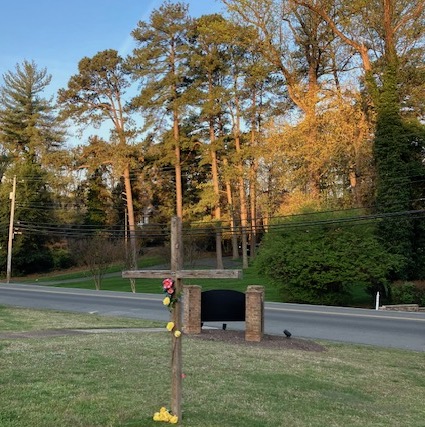
Easter 2024, the cross starting to fill with flowers. (Photo Bill Pike at Trinity UMC)

Tension in Henrico: “redistricting”

If one were to survey students, parents, teachers, school boards, and board of supervisors about their least favorite word in public education, “redistricting” would win.

Redistricting, the realigning of school attendance zones to balance overcrowding in large school systems, is quite simply a skunk. It stinks.

I haven’t forgotten redistricting from my fifteen month appointment to the Henrico County School Board. That was in the fall of 2018. Fast forward seven years, and redistricting still riles up the public.

To work through this odorous environment, a school board usually hires a consultant. The consultant reviews data, maps, and solicits feedback. From this, the consultant will develop multiple options for the school board to consider.

Public meetings are held. I remember attending those emotionally charged sessions. I also responded to phone calls, emails, and met individually with concerned parents.

The bottom line is no parent wants the comfort zone of their current school assignment disrupted for their student. The parental mentality is not for the good of the cause. The thinking is solely—move someone else’s child, disrupt their family, but not mine.

In 2018, the redistricting focus was similar to what the school system experiences today. Based upon the disagreeable joint meeting of both boards on March 20, the concern is still about overcrowded schools in the west with a smidgen in the east.

My school board term ended in December of 2019. Redistricting continued to shadow the board. Then in 2020, COVID-19 arrived. Redistricting became a flatten skunk in the board’s rearview mirrors.

Here we are five years later, and the skunk has returned to the table. In reading the frustrating comments from members of the Board of Supervisors, redistricting hasn’t lost its emotional pungency.

Accusatory hot air, body language, and asserting that money isn’t the issue doesn’t exactly create an atmosphere conducive for collaboration. Board of Supervisors member, Misty Roundtree, from the Three Chopt District, encouraged “out of the box” thinking to solve the issue.

Yes, if there is a new approach for solving overcrowding in schools other than redistricting, we need to learn about it.

Maybe what we need is a shift in tectonic plates that would merge the county into one whole plot instead of an east and west linked together by a slender northern corridor.

Despite in some instances, Herculean efforts, the disparity between schools in the eastern and western halves are a constant undertow. That current is relentlessly pulling at our communities and leaders.

While Henrico County isn’t perfect, the county is blessed to have visionary leadership and an economic stability that is respected beyond Virginia.

I suspect that the heart of redistricting and discrepancies between the schools in the east and west can be improved by asking tough questions and providing support, not just financial support.

Students, parents, and teachers who are in the trenches of the county’s schools need leaders to understand what it takes to survive everyday.

These survivor questions roil through every school in the county:


How do you support the teacher who despite reaching out has never had a meeting with the parent of a student who is a behavioral challenge everyday in the classroom?


How do you support the gifted student whose home is an unstable motel room?


How do you support the single parent who is raising three students while stringing together multiple jobs?


How will human resources find qualified teachers to teach in our schools where no one wants to teach?


How do we transform those schools where no one wants to teach into schools where everyone wants to teach?


How do we better equip classroom teachers to be more effective in working with a constantly changing student population?


How do we support parents to become better at being parents?


Additionally, I believe one of the most difficult challenges facing our public schools is the continuing erosion of families. That instability lies at the heart of what ails our schools.


Listen carefully, I’m not saying we don’t have effective single parents. I worked with many.


I’m suggesting Henrico leaders review the data to learn how our schools are impacted by families who are struggling to survive.

How frequently are classroom environments disrupted by students who can’t cope in the classroom because of a dysfunctional family?

Correspondingly, how much of redistricting is shaped by an on-going energy burn about the discrepancies between the east and the west?

How might that wasteful whining be repurposed by truly understanding and working to solve what it takes for a struggling Henrico public school family to survive in our county?

No matter the struggles faced by our families, either directly or indirectly, these stresses impact that skunk—redistricting.

We must solve this redistricting.

1901 Map Image of Henrico County, Virginia
(Courtesy of Library of Congress, Geography and Map Division)


Remember 42

                                                                             OPINION

LETTERS TO THE EDITOR

Remember 42

Regarding Kevin B. Blackstone’s April 7 Sports column, “Dodgers’ visit to White House goes against Robinson’s legacy”:

As reported in the Washington Post, the Los Angeles Dodgers accepted an invitation to visit the White House to recognize their 2024 World Series championship.

To me, the Dodgers’ management accepting this invitation is a disrespectful slap to Jackie Robinson, the first African American player to sign with and play in the major leagues, with the Brooklyn Dodgers.

How could the Dodgers, the team who made this courageous decision and commitment to bring Robinson into the major leagues, take such a backward step?

In his book “October 1964,” David Halberstam’s shared a story from Robinson’s time playing for the Kansas City Monarchs, a successful team in the Negro Leagues:


“There was a place in Muskogee, Oklahoma, where they had always gassed up, but where the owner never let them use the rest rooms. Robinson had not known that, so when the bus pulled in, ready to fill up its twin fifty-gallon tanks, he got out to go to the men’s room. “Where you going, boy?” the owner said, and Robinson answered that he was going to the men’s room. “No, you’re not,” the owner said. Robinson never hesitated. “Take the hose out of the tank!” he said immediately, and that was no idle threat, for one hundred gallons of gas was a big sale, a fair percentage of the amount of money the man might make on a given day. The man looked at Robinson and saw the anger and the strength on his face. He was not the first, and certainly not the last, white man to see that conviction, and he immediately backed down. “You boys can use the rest rooms,” he said. “Just don’t stay there too long.”

How can the Dodgers’ management be so blind by comparison?

Has fear of retribution from a vengeful president caused the Dodgers’ management to ignore the significance of the legacy of its 1947 signing of Robinson? Where is the “anger and strength” of the team’s integrity to turn down this shameful invitation?

According to Forbes, the Dodgers are valued at $6.8 billion.

Are the Dodgers more loyal to the preservation of those billions than to Robinson’s groundbreaking achievement?

Unfortunately, the answer seems to be yes.

Bill Pike, Richmond

Note from the author: Friends, I was honored to have my letter to the editor published in the Washington Post today, Saturday, April 12, 2025.

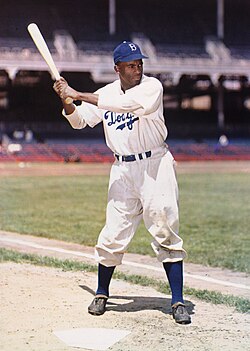
Jackie Robinson (Photo Wikipedia)

The Last Cast

On the afternoon of Sunday, March 23, I arrived in Summerfield.

Our son-in-law, Doug, was traveling for business. This meant that our daughter, Lauren, needed some extra hands in managing the school and extracurricular schedules of our two elementary age grandchildren.

Lauren, a detailed planner like my wife, the Commander Supreme, had everything organized.

Over the winter, some of the landscaped beds in their yard had undergone a few changes. What were once young cooperative shrubs and trees had become overgrown and unruly.

In key areas in the back and front yards, these shrubs and trees had been taken down. This included stumps being ground.


One of my assignments was to get these beds back in shape.

On Monday morning, with the kids safely in their elementary school, the Commander and I started our yard chores. The Commander was working on the first invasion of spring weeds, and I tackled one of the beds where trees had been removed.

It was overcast and cool. During this work, a gentle rain shower came down.

By mid-morning, I had that first bed back in shape. Weeds were gone, stump mulch was blended and leveled into the soil, and my worn, but trusty spade shovel had carved out a fine edge to the bed.

The Commander made progress with her weeding too.

We took a break for lunch.


Interestingly, the Commander’s long time friend, Leslie Brinker, and her husband, Dave, were over in Oak Ridge. They were in town from Peoria, Illinois. Leslie and Dave were fulfilling the same duties that we were for one of their sons and his family. We had a good lunch and visit comparing notes about our chores.

Before we knew it, the school bus was dropping off Caroline and Hudson. Our attention turned to errands, shopping, and a stop for ice cream.

The remainder of the afternoon passed quickly. Soon, Lauren was home. Dinner was prepared, and we looked ahead to Tuesday afternoon.

For Caroline, the Commander Supreme would be driving her to dance class. Hudson and I would be trying out his new fishing rod at the neighborhood lake.

The fishing rod had been a gift from us at Christmas. It was a simple push button reel with a small tackle box. The tackle box contained an assortment of small hooks, line weights, and lightweight floats (bobbers, fish indicators). With this simple set up, Hudson would learn if he had any interest in fishing becoming a hobby.

With better weather on Tuesday, the Commander and I continue our assignments in the yard. Progress was steady.

Seemed like the bus arrived earlier this afternoon, but one thing was for sure—Hudson was full of energy for the fishing expedition.

He scurried around and found the tackle box. He wanted to make sure that I had a few worms, and I did.

We met on the back deck, and with Hudson’s help, I started to prep the rod.


A hook was selected. I tied it on. We added one on line weight pellet. Next, we positioned the bobber at a sufficient distance from the hook.

Before we started our walk to the lake, we talked about the hook and some basic consideration for safety before casting the line into the lake. And, we talked about how fishing is basically unpredictable—we might catch a fish or we might not.

With that, we made sure we had a couple of worms, and we started our walk to the lake. We took the short path through the backyard woods and into a neighbor’s yard. At this house, there was a chance that one of Hudson’s school friends might join us, but that didn’t happen.

As we approached the lake, we walked down the hill. We chose a spot on the west side of the lake. This gave us a full view of the surrounding shoreline and plenty of room for casting on either side of a bed of rock. The bed of rock was in place to slow rainwater as it rolled down the sloped hill from the yard behind us.

Hudson held the rod as I baited the hook.

For a few minutes, I acclimated myself to the mechanics of the push button rod. A made of couple of pitiful casts, and when I finally improved, I started to work with Hudson.

From the beginning, I was a horrible teacher. I totally forgot that Hudson is left-handed. I was trying to have him cast with his right arm.

That didn’t work. Once I realized my idiocy, Hudson quickly picked up the mechanics and the timing of the release of the line.

With each cast, the angle and distance into the lake improved.

Hudson was a good listener. We talked about how to position his feet when he cast the line. The slice of his cast to the left went away when his first step went straight.

Anxious for a bite, he checked his bait quite a bit. We talked about the condition of the lake. Near the shoreline even with leaf debris, the water was clear. That clearness looked to be present beyond the shoreline too.

We were not paying attention to time, but at some point, Hudson let me know he was just about ready to head back to the house.

Almost at the same moment, we both said “ok, let’s get one more good cast.”

And that’s what happened. Hudson’s last cast was his best. The line lightly splashed just short of the middle of the lake.

In a blink, I did a double take. The bobber had disappeared. It was underwater.

I took a couple of quick steps toward Hudson. I tugged on the line, and said, “ I think you have a fish on.”

Our energy zoomed.

I helped him to coordinate his reeling of the line. The fish took off on him. The bobber zigged and zagged for a few feet.

But Hudson started to gain control of the line and the fish. There were a few more zig zags as Hudson worked the fish closer to the shoreline.

Finally, in the shallows, we could see the fish. Just as Hudson brought him to the edge of the shoreline, the fish came off the hook.

The fish landed flat on its side in very little water. I was able to step down and pick up the fish with my gloved hand.

Now the trick was to get my phone out of my pocket for a photo. The photography gods must have been looking out for me.

With some luck, I was able to snap a photo of the fish with Hudson in the background, I took three quick ones. Then, I returned the fish to the lake.

Stunned for a few breathless seconds, the fish quickly acclimated to the water and swam off.

I don’t know who was more excited—the fish who returned to the lake, Hudson, or me. I couldn’t believe that on his last cast he hooked a nice fish.

I kept saying over and over again, “I can’t believe you caught a fish.” He smiled and nodded in agreement.

We secured the rod, picked up the tackle box, and started the walk to the house.

Our excitement was with us every step of the way.

Of course, I texted photos of this memorable moment to the family. Those photos created another round of enthusiastic responses for Hudson.

With more daylight around, I returned to the yard work.
My old brain would not let go of Hudson’s fish story. It kept replaying in my mind.

How lucky I was to be a part of Hudson’s story.

And the more, I thought, I was reminded of the kind hearts that helped me appreciate casting a fishing line—my father, Betsy’s dad, Betsy’s brother, and Betsy’s brother-in-law, Art.

And, I pondered more, how many youngsters in this world will never have the pleasure of casting a fishing line and catching a fish?

And there is another piece to this story— the earthworms and the fish.

Thanks to the earthworms for your sacrifice.

As for the fish, what the locals call a “crappie,” thanks for being a good sport.

Your decision to take the bait gave an old geezer and his grandson a reason to never lose hope on the last cast.

No words required (Photo Bill Pike)

Hey God, are you anxious? If you’re not, I am.

Early in my life, I remember my parents started their day reading the daily devotional from the Upper Room at the breakfast table.

I’m not quite sure when or how, but I start my day with the Upper Room devotional too.

As an early riser, nothing else goes on in my life until I read the devotional and the recommended scripture.

Next, I pray, a prayer that I’m sure God and his angels are thankful when this detailed, prolonged plea concludes with—thanks for listening to my prayers.

On Saturday, March 29, the main scripture in the Upper Room was Philippians 4:6: “Do not be anxious about anything, but in every situation, by prayer and petition, with thanksgiving, present your requests to God.”

If you have been a loyal reader of Might Be Baloney, perhaps you have figured out that I’m a certified worrier at the local, state, national, and international levels. Worry might as well be a name for me.

Worriers are also anxious. As an imperfect Christian and American, at this stage of my life, I have never been so anxious and worried about our country, the United States of America.

I wonder if God and Jesus, and their angels are anxious and worried about America?

My reason for asking is grounded in my honesty. While I always pray for America, since January 20, I’ve been praying more for our country.

Despite my anxious and extra prayers for America, the dismantling of our country continues. Almost everyday, a new executive order is signed and issued. With that single signature, many American lives are forever altered. Quite often those changes are not for the good.

I wonder if my daily prayers are doing any good? If my prayers are having an impact, then why is our president and his staff continuing to make all of these hurtful changes?

In the movie, The Shawshank Redemption, actor Morgan Freeman, portrays inmate, Ellis Boyd “Red” Redding. Mr. Redding is serving a life sentence. The film sequences ten year intervals where Mr. Redding appears before the parole board.

At years, twenty and thirty, Mr. Redding gives the answers that he thinks the parole board wants to hear. He feels confident that his answers will result in earning his release from prison. Unfortunately, Mr. Redding’s parole requests are denied.

In his fortieth year, Mr. Redding appears before the parole board. This time his attitude isn’t hopeful or optimistic. A bitterness hovers over him, a bitterness that conveys I don’t care anymore, go ahead, and deny my parole again.

Yet, in this hearing, there is a difference.


In Mr. Redding’s previous hearings his answers to the questions come across as scripted. Being sorry for his horrible crime seems distant, an after thought.

With this hearing, Mr. Redding’s bitterness reveals what his heart is feeling.

Mr. Redding addresses the chair of the parole board with these two questions: “What do you really want to know? Am I sorry for what I did?”

The chair of the parole board asks Mr. Redding: “Well, are you?”

Here is Mr. Redding’s response: “There’s not a day goes by I don’t feel regret. Not because I’m in here, or because you think I should. I look back on the way I was then, a young, stupid kid who committed that terrible crime.

I wanna talk to him. I wanna try to talk some sense to him — tell him the way things are. But I can’t. That kid’s long gone and this old man is all that’s left. I gotta live with that.”

Screenwriter Frank Darabont’s words delivered by Mr. Redding make me think about America. I want to take that second paragraph and direct these lines to our country— “I wanna talk to America, I wanna try to talk some sense to America—tell America the way things are. But, I can’t.”

And the reason I can’t is because America’s self-talk is singularly focused on—dismantling. There is no trying to talk sense to America because our common sense has disappeared. As for the way things are, our leaders are one dimensional—this is the way things are going to be.

Where is our hard earned democracy in the decisions that are being made?

Where are our voices?

Where are the voices of our politicians in Washington?

Are they silenced by fear?

Anyone with an ounce of common sense knows that our budget deficits needed correction.

Making those corrections would not be easy. However, making those corrections wisely and with an ounce of human compassion was possible.

Unfortunately, wisdom and compassion are absent from the leaders who are making these decision.

The absence of wisdom and compassion in these cuts makes me anxious.

My friend, Anne Burch, recently sent me a link to an interview with former Duke University basketball coach, Mike Krzyzewski(Coach K). The interview was conducted by Duke University professor and author, Kate Bowler.

Early in the interview, Professor Bowler, provides Coach Krzyzewski with a small white board. The assignment is for both of them to write down a word about the pending interview. Coach K wrote on the board “hopeful.”

As I reflect about Coach K’s answer, I’m sorry to tell you this, but I’m not very “hopeful” about America’s current status.

Perhaps, you are thinking, Bill, I’m not surprised in your lack of feeling hopeful about America. You often come across as a whiny pessimist.

While I respect your honest observation, hope is something that I will always hold in my old heart.

And to tell you the truth, I think that is the problem in Washington.

The leaders in Washington who are making these decisions have no heart.

They have no concept of working for the common good of all Americans.

If God is the least bit anxious about America, his concern is about our hearts.

Our hearts have lost their way.

Maybe this quote from Aleksandr Solzhentltsyn is worth pondering: “The line separating good and evil passes not through states, not between classes, nor between political parties either—but through every human heart.”

As far as I can tell with the no hearts in Washington that line has disappeared. With no conscience, evil dominates this empty-headed thinking.

Seems to me this thoughtless Washington thinking is more aligned with Proverbs 17:24: “A man of understanding sets his face toward wisdom, but the eyes of a fool are on the ends of the earth.”

I see no understanding or wisdom in these hurtful decisions. Their eyes are set on revengeful, selfish personal gains.

Yes, I’m anxious for America.

But more anxious about the silence of our hearts.

Maybe, I’m just as vacuous as our Washington leaders.

Every morning, one of my prayers to God is that our president and vice-president find their hearts.

Light from our eat-in kitchen cast out into the predawn of our backyard. (Photo By Bill Pike)