A plot of land about the size of a postcard on the north side of our church’s grounds has become a home for the unwanted, the castaways.
Growing in this plot are towering Loblolly pines, delicate dogwoods, a couple of magnolias, a Bradford pear, one crepe myrtle, and a random assortment of other plantings.
It is my rapidly aging, sympathetic heart that has let this plot become a home for the unwanted, the castaways.
Over the years, clumps of flowers and singular shrubs have found a home in this landscape.
These relocations occur when gardeners in the neighborhood change their landscape plan.
They dig up the flowers or shrubs that no longer fit. Often, I happen to be in the wrong place at the wrong time to claim the unwanted.
Once I transport the plants to church, I work to find these outcasts a good spot in the tract. A part of the planting includes a good soaking from a deep bucket of water.
At Easter, the altar in the Sanctuary of our church is adorned with real, live potted lilium longiflorum, better known as the Easter Lily.
After the Easter services, the lilies are offered to the congregation. Most are taken, but a few always remain.
My conscience will not allow me to even think about tossing an Easter lily. Last year, I started transplanting the lilies that no one claimed.
Trinity member, Dianne Moore, encouraged me to give this a try.
Weeks after Easter, I began my work. I’m not sure how many I planted, but in the end, I had one lily that looked frail and puny. I was certain this lily was dead.
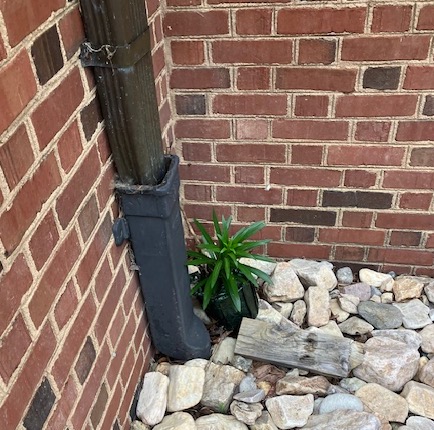
For some reason, I left the dried up flower in its pot, and I tucked it away in an outside corner of our building.
The lily was out of my sight lines, somewhat concealed by a downspout and two electrical transformer boxes.
Through the summer, fall, and into the winter, I completely forgot about the lily.
And, I don’t know why, but this year, a few days after Easter, something nudged me to look into the corner.
When I did, my eyes stared in disbelief. The discarded and forgotten lily was peering out by the downspout where it had been placed.
Several inches high, with healthy green leaves sprouting from its stem, the lily looked just like a lily should.
On the morning of April 11, Dianne was at church for a United Women In Faith meeting. When there was a break, I asked Dianne to walk outside with me.
I led her to the lily’s spot and showed her the green miracle. This viewing also included my admission that I had been completely negligent in providing any care.
Perhaps, you are familiar with the scripture from Matthew Chapter 6 verses 28-29:
“And why do you worry about clothing? Consider the lilies of the field, how they grow; they neither toil nor spin, 29 yet I tell you, even Solomon in all his glory was not clothed like one of these.”
I guess I shouldn’t have worried about whether the scrawny lily was going to survive.
Seems to me that the uncared-for Lily wasn’t worried about surviving. The lily was better in trusting God than I am when worry consumes my life.
After sharing the lily’s story with Dianne, I transplanted it along with a couple of other shrubs that had straggled into my life.
Maybe, the real question for me is how do I respond to the people who straggle into my life who appear to be discarded, tossed aside, and forgotten?
Do I pay attention to their needs, their struggles, or do I toss them into a corner?

 might be baloney
Thanks Bill
LikeLike
Appreciate your reading time, be safe.
LikeLike