I read with interest the opinion piece: Want Children To Learn? Ban Smartphones from the Chicago Tribune that appeared in the Sunday, November 30, 2025 edition of the Richmond Times-Dispatch.
In the spring of 2025, Illinois Governor, J.B. Pritkzer, attempted to rally support for a bill that would have banned cellphones from classrooms. The bill failed, but Governor Pritkzer intends to try again. I admire his tenacity.
In my thirty one years of working in the public schools of Virginia, I once worked with a principal who reminded his faculty and staff frequently that “children take their signals from adults.”
I wonder how many Illinois legislators during the sessions for the proposed banning of cellphones were actually using their cellphones for communication not related to the bill?
Ask yourself, how many times have you been in public meetings where the adults in attendance were asked politely to silence their cellphones? Despite this gentle reminder, a cellphone usually rings.
Crafting a ban on cellphones for students must also have a standard for school personnel too.
A phone free learning environment policy is now in place in the school system where I once worked. The core of this policy is that cellphones must be stored and silenced during class time. That approach seems reasonable. Time will tell if the policy is having an impact.
And of course, it is easy to blame cellphones when students struggle to find success on state tests that measure math and reading skills. As your piece points out there are “other factors” that have possibly contributed to these test score declines.
Personally, I don’t think we work hard enough at understanding those “other factors” that impact learning.
How much of the decline in test scores comes from our inability to break vicious generational cycles related to substandard housing, inadequate mental and physical health care, inconsistent nutrition, trauma related to unstable families, and deteriorating school buildings with low student and faculty morale.
I wish Governor Pritkzer the best of luck in his pursuit of a cellphone ban.
If the bill fails for a second year, I hope the Governor will redirect his energy toward “other factors” that impact student performance.
Those “other factors” have been around before cellphones.
We are overdue to address their impact too.
Note from the author: This rejected letter was sent to the Chicago Tribune in response to an Op-Ed piece from the Chicago Tribune that appeared in the Richmond Times-Dispatch on November 30, 2025. Bill Pike, Richmond, Virginia
At first glance Hill, Feinstein, McWilliams, and Love sounds like a group of lawyers, accountants, or doctors. But, they aren’t.
No, these people impacted America. In their own unique way, they gave us their hearts. Recently and sadly, their time on earth ran out.
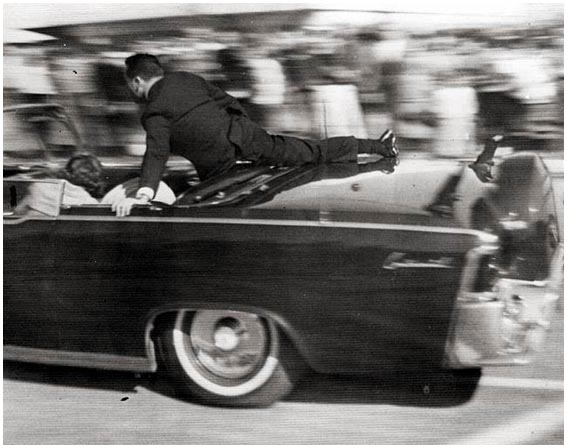
Clint Hill was a Secret Service agent. At the age of 31, Mr. Hill was the agent who jumped on to the back of the presidential limousine when President Kennedy was assassinated on November 22, 1963. When this occurred, I was in the fifth grade at Hillcrest Elementary School in Burlington, North Carolina. Our teacher, Mrs. Cline, was in tears.
Agent Hill (Photo Wikipedia)
I never knew the guilt that Agent Hill carried with him after this murder. For years, he blamed himself for not being able to react in time to save the President. Though some believe he saved the President’s wife as she attempted to help her fallen husband.
That turmoil in Dallas shadowed Agent Hill as he continued to serve three more presidents. He attempted to wash that torment away with alcohol. In 1975, Agent Hill retired from the Secret Service, and a doctor warned him, “if he didn’t stop this self-destructive behavior, he would die.”(The Week)
In the 1980s, he was able to give up alcohol.
Surprisingly, Agent Hill in 1990 made a return trip to Dallas. He visited the site of that horrible November afternoon. Perhaps, the passing of time, or the wisdom of a different angle “convinced him that he couldn’t have done anything to prevent the tragic outcome.” (The Week)
In 2024, Agent Hill was asked by an interviewer how he wanted to be remembered. He replied, “Two words, I tried.” (The Week)
John Feinstein was a gifted writer. He found success in writing about sports. Mr. Feinstein was a sports reporter for the Washington Post and the author of over forty books. Additionally, his skills as a writer allowed him to write sports novels geared for a younger audience.
John Feinstein (Photo Wikipedia)
In my random collection of books, I have four written by Mr. Feinstein: Forever’s Team, A Season On The Brink, A March To Madness, and A Civil War.
His gifts went beyond the printed word as he was a commentator for college basketball and football games, an adjunct professor at Duke, his alma mater, and this year, a writer-in-residence at Longwood University in Virginia.
Some might view Mr. Feinstein as a nuisance. Yet, at the heart of his work was a drive and determination to find and capture the truth in the people and topics he covered.
I think this quote from a NPR report about Mr. Feinstein captures his passion.
Barry Svrluga, a Washington Post columnist who said he took Feinstein’s sports journalism course as a senior at Duke, recalled the experience Thursday:
“He got whoever he could to talk to the class — Gary Williams on a game day when Maryland was in town, Billy Packer, Bud Collins. Bob Woodward called in,” Svrluga said. “And you could just tell that part of his reporting prowess — how he got into locker rooms and front offices and onto the range and in clubhouses at PGA Tour events — is because he could really develop relationships, and people just liked to talk to him. Part of that had to be because he didn’t pander. You knew exactly where he stood. And that gained respect.”
My takeaway from this remembrance is “he could really develop relationships.” No matter where we walk in our lives building relationships is critical.
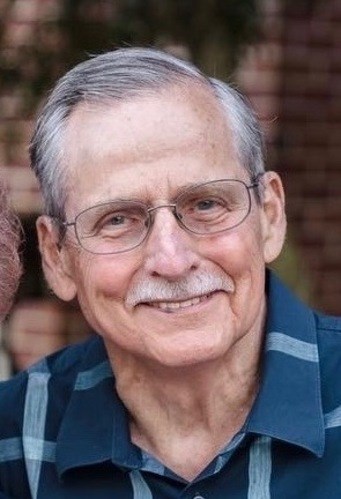
Unlike Mr. Hill, Mr. Feinstein, and Miss Love, I had the privilege of knowing Jody McWilliams. He was a member of our church. And if there was one person in this world who had a clear understanding for the importance of building relationships, it was Jody McWilliams.
Mr. McWilliams understood the importance of commitment in those relationships. His commitment, his loyalty impacted his wife, their children, and their families. Those qualities applied to his service to the United States Army, the United Methodist Church, and as the Executive Director of the William Byrd Community House in the Oregon Hill neighborhood of Richmond, Virginia.
Jody McWilliams (Photo Courtesy of the McWilliams family)
For thirty three years, he served in that role, and he once told the Richmond Times-Dispatch: “We are in business to serve the working poor, people who fall through the cracks. We serve people from birth until death, from the womb to the tomb.” During his tenure, close to 4,000 people used the services available from the William Byrd Community House on an annual basis.
With three master’s degrees, Mr. McWilliams also taught at the collegiate level. There he instructed and mentored future social workers. He gave them some very wise advice as they started their careers: “Be open to learn from those you serve.”
Until I read her obituary in the April 4, 2025 edition of The Week, I knew very little about Mia Love.
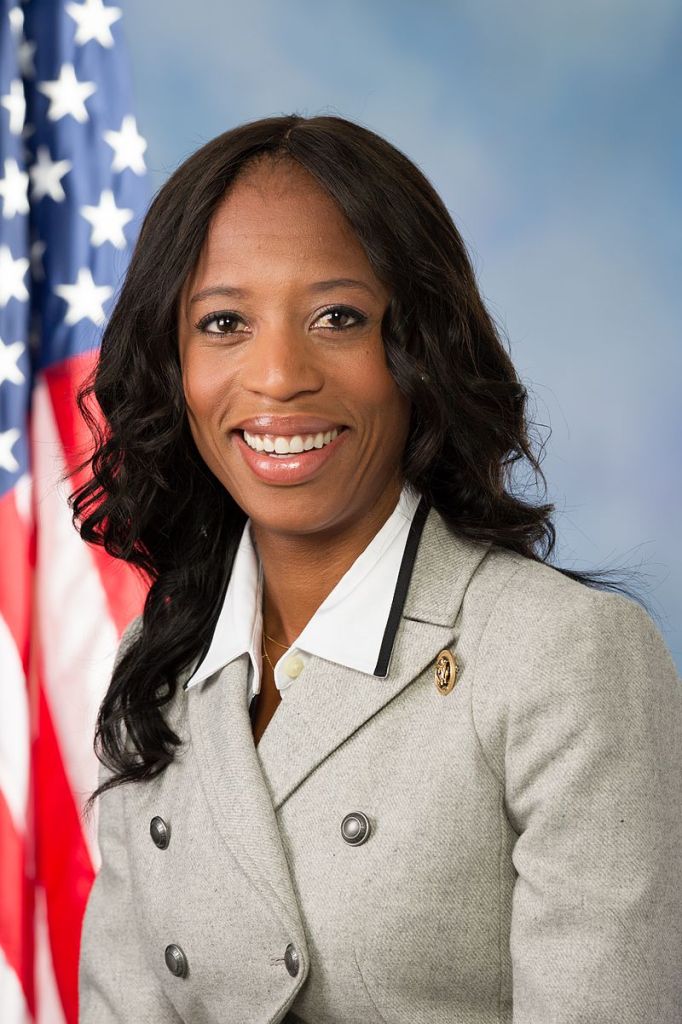
Mia Love was the daughter of Haitian immigrants. In 2014, Miss Love became the first black Republican elected to serve in Congress from the state of Utah.
Mia Love (Photo courtesy of United States Congress)
In The Week’s summary of her life, several items caught my attention. She was opposed to the 2016 election of Donald Trump as President of America.
At a Republican caucus meeting, she pushed back against a member of the caucus who made unflattering remarks about Haiti. Miss Love said, “If you don’t see me as an equal, you can remove me from this conference, and if we don’t see everyone as equal under God we have a bigger problem.”
In 2022, she learned that brain cancer was raging inside of her. That cancer ended her political career.
Before her death, Miss Love wrote: “I believe the American experiment is not a setting sun, but a rising sun. We must fight to keep the America we know.”
Unless you have been able to block out the turmoil and chaos coming out of Washington, “the America we know” is under attack. Piece by piece, it is being dismantled.
This disgraceful dismantling is impacting a wide range of people in America.
As Americans, we must work to counter this dismantling. We must regain Clint Hill’s courage, reclaim our voices to question like John Feinstein, recapture the unshakeable endurance of Jody McWilliams, and recommit to fight for America like Mia Love.
And in that fight for America, we need leaders in our country to embrace Mr. McWilliams’ logic: “Be open to learn from those you serve.”
While Hill, Feinstein, McWilliams, and Love might not have been a group of lawyers, doctors, or accountants, it is clear they were a group of human beings who possessed hearts that cared and who were willing “to learn” from the people they served.
At this very moment, we can’t “pander.”
We have to do more than “try.”
We must exhaust every ounce of our strength to build the “relationships” needed to save the imperfect soul of the America that “we know.”
The recent dismantling in Washington and the ensuing turmoil have been brewing for decades.
Failing to acknowledge our shortcomings, Americans quickly blame political parties and their leaders. Rarely, do we blame ourselves.
For example, presidential election data from the University of Florida Election Lab finds that in 2024 nearly 90 million eligible voters did not vote. At such a pivotal time in America, that is unconscionable.
Additionally, a newly elected president at the stroke of a pen can overturn decisions championed by the previous president.
I don’t understand why leaders take pride in these selfish, vengeful reversals.
In the Pledge of Allegiance to our flag, we purport these beliefs: “one nation under God, indivisible, with liberty and justice for all.” Those beliefs are eroding.
Recent data on religion in America from the Pew Research Center shows we are no longer “one nation under God.”
On a daily basis, our division is rarely absent. Even houses of worship experience disunity.
As for liberty and justice for all, “all” keeps losing ground.
In the famous “They call me Mr. Tibbs” scene from the movie “In The Heat Of The Night,” two piercing questions are asked: “My God what kind of people are you? What kind of place is this?”
Those questions roil through my heart everyday.
Part of me wonders if America is experiencing its own internal D-Day.
Will we implode because our hearts have been misguided and overtaken by disrespect, fear, greed, hate, incivility, revenge and selfishness?
H.L. Mencken wrote: “The men the American people admire most extravagantly are the most daring liars; the men they detest most violently are those who try to tell the truth.”
America, what kind of people are we, what kind of place is this?
Bill Pike.
Henrico.
Author’s note: This letter was published in the Thursday, March 20 on-line edition of the Richmond Times-Dispatch. The letter started as an 800 word op-ed piece. The editors declined the op-ed, but wondered if I could cut 500 words and make it into a 300 word letter. Somehow, I trimmed 500 words. If by chance the letter resonates with you, please share it. Thanks for your reading time be safe, Bill Pike


 might be baloney