They served America: Hill, Feinstein, McWilliams, and Love

At first glance Hill, Feinstein, McWilliams, and Love sounds like a group of lawyers, accountants, or doctors. But, they aren’t.

No, these people impacted America. In their own unique way, they gave us their hearts. Recently and sadly, their time on earth ran out.

Clint Hill was a Secret Service agent. At the age of 31, Mr. Hill was the agent who jumped on to the back of the presidential limousine when President Kennedy was assassinated on November 22, 1963. When this occurred, I was in the fifth grade at Hillcrest Elementary School in Burlington, North Carolina. Our teacher, Mrs. Cline, was in tears.
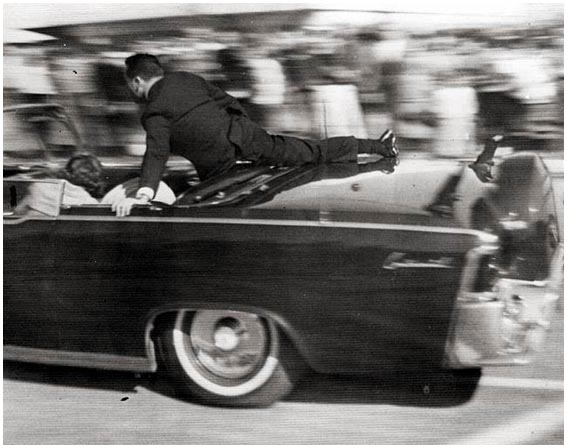
Agent Hill (Photo Wikipedia)

I never knew the guilt that Agent Hill carried with him after this murder. For years, he blamed himself for not being able to react in time to save the President. Though some believe he saved the President’s wife as she attempted to help her fallen husband.

That turmoil in Dallas shadowed Agent Hill as he continued to serve three more presidents. He attempted to wash that torment away with alcohol. In 1975, Agent Hill retired from the Secret Service, and a doctor warned him, “if he didn’t stop this self-destructive behavior, he would die.”(The Week)

In the 1980s, he was able to give up alcohol.

Surprisingly, Agent Hill in 1990 made a return trip to Dallas. He visited the site of that horrible November afternoon. Perhaps, the passing of time, or the wisdom of a different angle “convinced him that he couldn’t have done anything to prevent the tragic outcome.” (The Week)

In 2024, Agent Hill was asked by an interviewer how he wanted to be remembered. He replied, “Two words, I tried.” (The Week)

John Feinstein was a gifted writer. He found success in writing about sports. Mr. Feinstein was a sports reporter for the Washington Post and the author of over forty books. Additionally, his skills as a writer allowed him to write sports novels geared for a younger audience.

John Feinstein (Photo Wikipedia)

In my random collection of books, I have four written by Mr. Feinstein: Forever’s Team, A Season On The Brink, A March To Madness, and A Civil War.

His gifts went beyond the printed word as he was a commentator for college basketball and football games, an adjunct professor at Duke, his alma mater, and this year, a writer-in-residence at Longwood University in Virginia.

Some might view Mr. Feinstein as a nuisance. Yet, at the heart of his work was a drive and determination to find and capture the truth in the people and topics he covered.

I think this quote from a NPR report about Mr. Feinstein captures his passion.

Barry Svrluga, a Washington Post columnist who said he took Feinstein’s sports journalism course as a senior at Duke, recalled the experience Thursday:

“He got whoever he could to talk to the class — Gary Williams on a game day when Maryland was in town, Billy Packer, Bud Collins. Bob Woodward called in,” Svrluga said. “And you could just tell that part of his reporting prowess — how he got into locker rooms and front offices and onto the range and in clubhouses at PGA Tour events — is because he could really develop relationships, and people just liked to talk to him. Part of that had to be because he didn’t pander. You knew exactly where he stood. And that gained respect.”

My takeaway from this remembrance is “he could really develop relationships.” No matter where we walk in our lives building relationships is critical.

Unlike Mr. Hill, Mr. Feinstein, and Miss Love, I had the privilege of knowing Jody McWilliams. He was a member of our church. And if there was one person in this world who had a clear understanding for the importance of building relationships, it was Jody McWilliams.

Mr. McWilliams understood the importance of commitment in those relationships. His commitment, his loyalty impacted his wife, their children, and their families. Those qualities applied to his service to the United States Army, the United Methodist Church, and as the Executive Director of the William Byrd Community House in the Oregon Hill neighborhood of Richmond, Virginia.
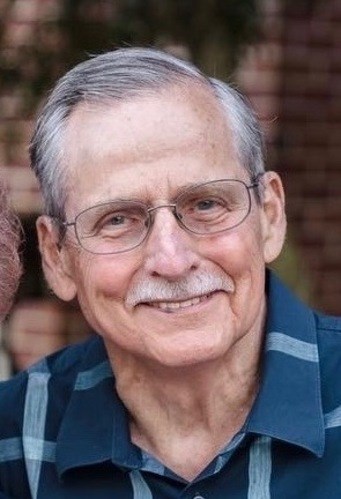
Jody McWilliams (Photo Courtesy of the McWilliams family)

For thirty three years, he served in that role, and he once told the Richmond Times-Dispatch: “We are in business to serve the working poor, people who fall through the cracks. We serve people from birth until death, from the womb to the tomb.” During his tenure, close to 4,000 people used the services available from the William Byrd Community House on an annual basis.

With three master’s degrees, Mr. McWilliams also taught at the collegiate level. There he instructed and mentored future social workers. He gave them some very wise advice as they started their careers: “Be open to learn from those you serve.”

Until I read her obituary in the April 4, 2025 edition of The Week, I knew very little about Mia Love.

Mia Love was the daughter of Haitian immigrants. In 2014, Miss Love became the first black Republican elected to serve in Congress from the state of Utah.
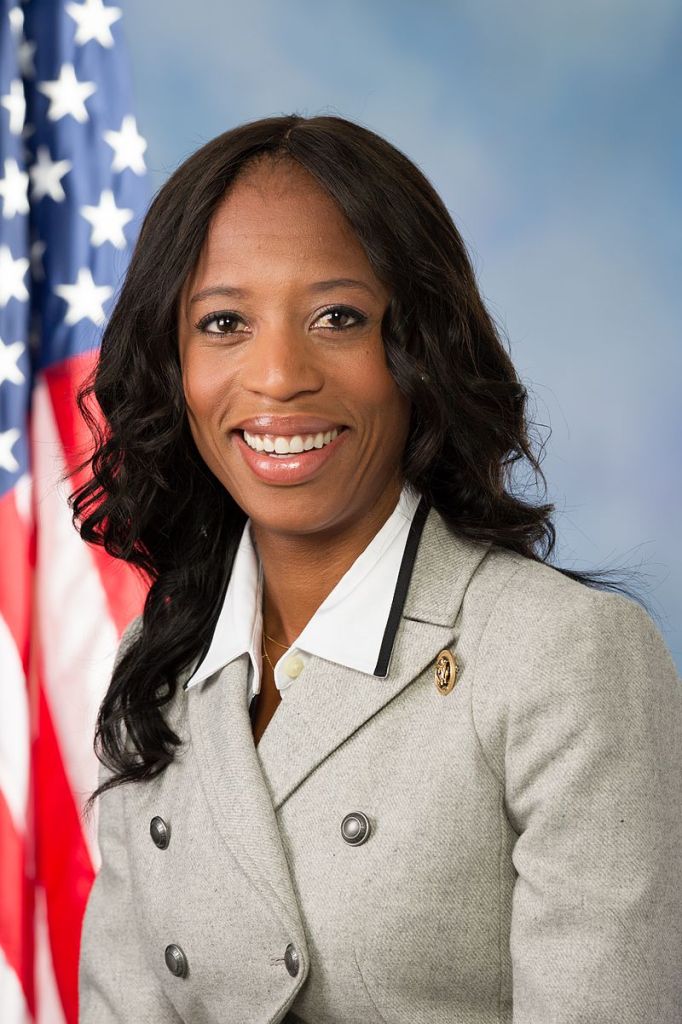
Mia Love (Photo courtesy of United States Congress)

In The Week’s summary of her life, several items caught my attention. She was opposed to the 2016 election of Donald Trump as President of America.

At a Republican caucus meeting, she pushed back against a member of the caucus who made unflattering remarks about Haiti. Miss Love said, “If you don’t see me as an equal, you can remove me from this conference, and if we don’t see everyone as equal under God we have a bigger problem.”

In 2022, she learned that brain cancer was raging inside of her. That cancer ended her political career.

Before her death, Miss Love wrote: “I believe the American experiment is not a setting sun, but a rising sun. We must fight to keep the America we know.”

Unless you have been able to block out the turmoil and chaos coming out of Washington, “the America we know” is under attack. Piece by piece, it is being dismantled.

This disgraceful dismantling is impacting a wide range of people in America.

As Americans, we must work to counter this dismantling. We must regain Clint Hill’s courage, reclaim our voices to question like John Feinstein, recapture the unshakeable endurance of Jody McWilliams, and recommit to fight for America like Mia Love.

And in that fight for America, we need leaders in our country to embrace Mr. McWilliams’ logic: “Be open to learn from those you serve.”

While Hill, Feinstein, McWilliams, and Love might not have been a group of lawyers, doctors, or accountants, it is clear they were a group of human beings who possessed hearts that cared and who were willing “to learn” from the people they served.

At this very moment, we can’t “pander.”

We have to do more than “try.”

We must exhaust every ounce of our strength to build the “relationships” needed to save the imperfect soul of the America that “we know.”

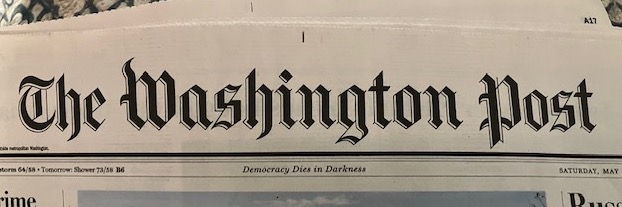
My friend rejection: Florida Keys, Miami, Greensboro, Charlotte, Washington, New York

Let’s get the truthful apology out early. To my wife and family, I know I spend too much time at my laptop writing.

Whether I’m good or lousy at writing, I couldn’t tell you. At this point in my old life, the writing is more about spouting out what is in my old heart.

And that spouting is grounded in this fact, I’ll be 72 in June. I don’t have much time left to put you into nap mode with my words.

If a person writes with the goal to be published, then that person must know that rejection is part of the territory.

I try to learn from rejection.

I once took the aggravation from a rejected submission and used that frustration to create another piece that was accepted for publication.
That made me feel better.

So for this post, I’m releasing some recent rejections.

I’ll provide a footnote giving background as to why I wrote each piece.

If you choose to continue your reading, ponder this. My whining about words being rejected is nothing compared to the rejection people experience in their day to day living.

What’s remaining of my old brain can still recall those moments when I hurt people by rejecting them. If those moments are still within me, they must still be within the person I rejected. That’s not good.

In the Hulu series Only Murders In The Building, the three main characters know rejection in their lives and careers.
Their rejection experiences also equal loneliness, a quiet killer in our chaotic world.

Moving forward in what is rapidly becoming an inconsiderate world, I need to be more aware of the rejection and loneliness that are around me everyday.

My heart needs to care more.

I need be more attentive to the green wristband I wear that simply states: “Be Kind.”

Kindness can counter rejection.

That wrist band means nothing if I don’t live it.

Letter To The Editor

From January 20 – January 31, my wife and I, and two couples from our college days had the pleasure of visiting the Florida Keys. Marathon was our base.

Let’s start with the confession. Since we arrived from Maryland, North Carolina, and Virginia, I think we were responsible for the unseasonably cool, cloudy, and windy weather that annoyed the Keys for a few days.

We adapted, and fortunately, no frozen iguanas fell from a tree and clunked our noggins.

In truth, I wanted to thank the people of the Keys for their hospitality. From Key Largo to Key West, we dined, snorkeled, fished, biked, walked, jogged, and learned. No matter where we visited, the people who greeted and assisted us were patient, considerate, and knowledgeable.

I don’t think any of us were prepared for the volume of traffic that the Overseas Highway handles. This main route never rests. Vehicles of every size and shape keep moving even in the dicey sections where the throughway narrows.

In that traffic mix are school buses. As a retired public schools educator, I want to compliment the Monroe County school bus drivers. While we were in Marathon, I marveled at the skills of these drivers.

School bus drivers are required to multi-task. They monitor their priceless cargo while managing the challenges of heavy traffic and the often deficient judgment of clueless drivers.

If we have the privilege of visiting the Keys again, we’ll work not to bring winter air with us. I think the iguanas would be appreciative.

Keep up the good work.

Bill Pike
Richmond, Virginia

Submitted to the Florida Keys Weekly Newspapers 2/5/25. Two ideas, thanks for the hospitality, and many thanks to the bus drivers in this school system. They need a pat on the back.

Letter To The Editor

On Friday, January 31, 2025, I was in the Miami International Airport. I was headed home to Richmond, Virginia. My last visit to Miami was in 1978.

Over those 47 years, Miami, Florida, and America have experienced the ups and downs of change.

Knowing I had a long wait for my flight, I wanted to purchase the Friday edition of the Miami Herald.

When I entered an airport variety store, I was pleasantly surprised to find your paper in stock. In a flying trip last May, neither the Richmond nor Atlanta newspapers were available for sale in their airports.

After paying for my copy, I was shocked by the paper’s appearance. It was thin, lightweight, and totaled 24 pages.

The paper reminded me of how a friend looked after experiencing the trauma of cancer surgery and post-operative treatments.

I imagine the painful gutting of your personnel to save pennies was similar to what our journalist experienced in Richmond and hundreds of other newspapers across America.

If I return to Miami, I hope I will be able to buy a Herald.

Those 24 Pulitzers mean something.

Miami, Florida, and America need your paper.

Don’t die.


Submitted to the Miami Herald on Sunday, February 2, 2025. Long after I am dead, I truly believe that someone will figure out that one of the reasons newspapers died in America was grounded in the inability to report about their internal struggles to their subscribers. To date no newspaper has an accepted a letter to the editor or an op-ed submission from me that pushes the newspaper to report their struggles.

Letter To The Editor


The men’s Atlantic Coast Conference(ACC) Basketball Tournament opens in Charlotte on March 11. I assume that ACC commissioner Jim Phillips and his employees have adjusted to moving the conference office from Greensboro to Charlotte. But, with relocations and college basketball, one should never make assumptions.

For example, how can it be possible that the Southeastern Conference (SEC), a conference known for its college football accomplishments, has more of its basketball teams ranked in the Top 25 than the ACC?

Maybe, this is an embarrassing single year anomaly. Commissioner Phillips and conference leaders can only hope this is true.

While this SEC dominance is concerning, what I find more alarming is an article from the January/February edition of the Carolina Alumni Review.

The UNC athletic department “faces a $17 million shortfall this year.” Additionally, Board of Trustees member Jennifer Lloyd stated in May 2024 “that the athletics department is projected to have a $100 million cumulative deficit in the coming years.”

If UNC is running at a deficit, how many of the athletic departments for the other seventeen ACC schools are in similar situations?

I wonder if the flawed geographic configuration of the ACC, the economic challenges of Name, Image, and Likeness, the relentless pursuit of power, and unrealistic athletic goals will doom this once treasured conference?

I hope not.

I hope a conference leader, who has courage and wisdom, will stand up and state— this isn’t working, we need to fix it— now.

Submitted to the Greensboro News and Record 3/6/25
I care too much about the legacy of the Atlantic Coast Conference. In my opinion, one of the best college athletic conferences in America has been destroyed. Greensboro News and Record allows 250 words.

Letter To The Editor

The men’s Atlantic Coast Conference(ACC) Basketball Tournament opens in Charlotte on March 11.

For Commissioner Phillips and his employees, I hope the tournament goes well.

Clearly, they have more to worry about than the tournament.

For example, how is it possible that the Southeastern Conference, a conference known for its college football, has more of its basketball teams ranked in the Top 25 than the ACC?

Perhaps, this is an embarrassing single year anomaly.

Yet, more concerning is an article in Jan/Feb edition of the Carolina Alumni Review that states: “the UNC athletic department faces a $17 million dollar shortfall this year.”

Do the other seventeen ACC schools face a similar deficit?

I wonder will the flawed geography of the ACC, the burden of paying players, and unrealistic athletic pursuits implode the conference?

I hope not.

I hope conference leaders find their backbones.

This template isn’t sustainable.

Submitted to the Charlotte Observer 3/6/25 Taking the frame from the Greensboro letter and sending it to the Charlotte paper. Word count is important to editors, every newspaper is different. If you don’t meet the word count, your letter will not be published. Charlotte News and Observer allows 150 words.

Letter To The Editor


I’m not surprised by this Washington Post headline from March 14: Virginia’s top school leader, Lisa Coons, abruptly resigns.


Hiring Coons was a mistake by Virginia Governor Glenn Youngkin. Perhaps, the Governor believed that Coons would bring change to Virginia’s Department of Education while also embracing his education agenda.


This is the second botched education hire by the Governor. The former Superintendent of Public Instruction, Jillian Balow, also resigned. Neither Balow or Coons were able to deliver recommended changes to public schools related to new history standards.


Communications Director, Rob Damschen, announced that Deputy Superintendent of Education, Emily Anne Gullickson, will be the interim State Superintendent of Public Instruction. Interestingly, Gullickson came to Virginia from Arizona. In 2014, she founded A For Arizona.


Maybe the Governor needs a refresher course in American geography and human resources. Coons, Balow, and Gullickson hailed from Tennessee, Wyoming, and Arizona. Where were candidates from Virginia in those searches?


Having spent thirty plus years working in the public schools of Virginia, I know that our state has many gifted and qualified superintendent candidates. Perhaps, none of these leaders merited consideration by Governor Youngkin because they can’t embrace his agenda.


When it comes to public education, it is discouraging and disappointing that politics obstructs the capacity to do what is right for students, parents, and teachers. Frequent bickering over divisive political allegiances, fails to provide the support that students, parents, and teachers need in their schools everyday.

As I read the headlines about Virginia’s declining student performance on state and national tests, rarely do educational leaders and politicians take a deeper dive into why those results continue to plummet.


We must have vast amounts of data about students, their schools and communities. Shouldn’t we be using this data to improve our schools? Are we afraid of revealing the truth about decades of generational neglect related to substandard housing, deficient mental/physical health care, safety, family erosion, and disheartened morale in communities and schools. Housing, health care, safety, family stability, and morale all impact school instruction and performance.


As a former collegiate athlete, Governor Youngkin, knows the difference between talking the game and playing the game.


At this point, he must play the game.


That means hiring a State Superintendent of Public Instruction who is from Virginia.


Nothing else is acceptable for students, parents, and teachers.


Submitted to the Washington Post in March 2025. Surprisingly, the Post has raised their word count for letters to 400. Poking at the Virginia governor for not finding talent within our state.

Letter To The Editor


For over thirty years, I had the privilege of teaching in the public schools of Virginia. Those first four years, I was a Title VII remedial reading teacher. Each year, my position was dependent upon funding from Congress. Luckily, the federal funding continued. This allowed struggling students to grasp an essential life skill—reading.

On March 20, with his signature President Trump dismantled the Department of Education. It will be interesting to learn how many students will be devastated by the President’s negligent decision.

Could the Department of Education be more effective and efficient? Maybe.

Is there a better way to make needed changes? Yes.

In 1964, the St. Louis Cardinals defeated the New York Yankees in the World Series.

After the final game, reporters asked Cardinals, manager Johnny Keane, why he remained with starting pitcher, Bob Gibson, to finish the game?

Mr. Keane responded, “I had a commitment to his heart.”

Demolishing the Department of Education was easy for this President. Mr. Trump has no commitment to any American heart other than his own selfish, uncaring one.

Submitted to the NY Times 3/24/25 New York Times allows 150 to 200 words. This letter took a poke at the dismantling of the Department of Education.

Graphic design courtesy of ELP at Independent Lab Productions

Rejected by the Washington Post

In David Halberstam’s book Summer of ’49, he writes about the pennant race between the Boston Red Sox and the New York Yankees. But, he also captures, the importance of daily newspapers for baseball fans.

He writes: “After an early dinner, men and boys would hustle down to the nearest candy stands where every evening bundles of New York City newspapers were dropped. Those fans couldn’t wait to buy a copy of their favorite newspaper to read the recaps of the day’s games and to study the boxscores.”

As a youngster, 525 miles from New York City in Burlington, North Carolina, I awaited the delivery of our afternoon paper, The Daily Times News. On those hot summer days when the paper arrived, I quickly turned to the sports section and the box scores.

Those cherished days are gone. And if we aren’t careful, newspapers, one of the foundations of our communities might soon be gone.

In October 2021, my wife and I stopped receiving a hard copy of the Richmond Times-Dispatch in our home. Subscription cost kept rising. Without explanation devoted journalist at the Times-Dispatch kept disappearing, and the depth of reporting stories across the metro area diminished.

We now subscribe to an on-line version. I despise it. Newspapers and the newsprint they are printed on are meant to be held in the hands of readers.

That story of canceled subscriptions has played out across America. The impact of these cancellations can be found in sobering research from the Medill School of Journalism at Northwestern University.

Consider these findings: “The loss of local newspapers accelerated in 2023 to an average of 2.5 per week, leaving more than 200 counties as “news deserts” and meaning that more than half of all U.S. counties now have limited access to reliable local news and information.”

At this point in America, we need more than ever newspapers to give Americans full access “to reliable local news and information.” Sustaining our country and shaping its future depends on newspapers.

I have no journalism expertise. Yet, I believe newspapers have failed to adequately report their decline.

Don’t readers of newspapers deserve the same type of transparent reporting about the day to day challenges that publishers and editors face in keeping newspapers afloat?

Based upon a December 9 report by National Public Radio(NPR) the answer is no.

According to NPR, acting Post Executive Editor Matt Murray blocked publication of a story about the paper’s Managing Editor, Matea Gold’s departure. Gold is leaving the Post to take a similar role at the New York Times. Murray stated that “the paper should not cover itself.”

By opting not to “cover itself” Editor Murray is missing an opportunity. Part of me senses that the survival of the Washington Post and newspapers in America depends upon a newspaper’s ability to cover and tell its story.

Failure to “cover itself” is a sharp contrast to the commitment that post reporters and editors have made in reporting critical stories about the ups and downs of America. The Pulitzer Prizes earned by the Post didn’t come from timid leadership. Those Pulitzers were grounded in courage.

It takes courage to be a journalist. Early in his political career, Jimmy Carter learned this.

Mr. Carter was running to become a state senator in Georgia. He had uncovered voter fraud in Quitman County. Despite his findings, Georgia democrats and local press were unwilling to investigate this story.

Undaunted, Mr. Carter reached out to John Pennington, a reporter, with the Atlanta Journal. Pennington agreed to look into Mr. Carter’s claims. It was Pennington’s courageous, in-depth, fact driven reporting that exposed this corruption and help Mr. Carter to be elected.

Subscribers to the Washington Post and any other newspaper in America deserve the same courageous, in-depth, fact driven reporting in doing the difficult work of “covering itself.”

The Policies and Standards for the operation of the Washington Post covers many topics that are at the heart of journalistic integrity.

In the Opinion section, I read clearly about the paper’s “solemn and complete” commitment to keep news columns separate from the editorial pages.

However, I was curious about the following statements: “This separation is intended to serve the reader, who is entitled to the facts in the news columns and to opinions on the editorial and “op-ed” pages. But nothing in this separation of functions is intended to eliminate from the news columns honest, in-depth reporting, or analysis or commentary when plainly labeled.”

If the Post’s readers are entitled to honest, in-depth reporting, then why did the paper fail to run the story about Matea Gold’s departure?

The publisher and editors of the Post must understand that if “democracy dies in darkness” so can a newspaper.

Author’s note: I submitted this op-ed piece to the Washington Post on Saturday, January 4, 2025. I knew the piece would not be accepted. I know nothing about journalism and the daily operation of newspapers. But I believe newspapers in America have failed to adequately report the unraveling of their internal challenges. To me that is disgraceful to subscribers and readers of newspapers. We need transparent reporting of America’s continuing story more than ever. That transparency must include newspapers “covering themselves” not cowering to their owners.

When a school day goes wrong

In Henrico County, sleep might have been non-existent or extremely restless for school system and county government personnel on the evening of December 4. Earlier that day, a student was stabbed at Henrico High School.

Shortly after twelve noon, two students were involved in an isolated confrontation. One student used a knife to attack and stab a fellow student.

Early news reports stated that the wounded student was fighting for his life. Today, Thursday, December 5, local media reported that following surgery the student’s condition had stabilized.

I’m sure that news brought a slight sense of relief to the victim’s family and the personnel who responded to this unacceptable behavior.

As the investigation continues, maybe we will learn the reason for such a vicious attack. What school system and county leaders learn from this severe disruption of the school day might help to prevent similar conflicts in the future.

For 31 years, I served in the public schools of Virginia. As a teacher, assistant principal, and principal, I remember difficult moments when the day went wrong. When the life of the school is disrupted with extreme violence, students, parents, and school personnel can’t push an erase button. That day stays with them.

No matter how much is budgeted toward security systems, resource officers, extensive safety training for personnel, state and federal legislation, and a stringent code of conduct for students, school systems have no immunity from unsafe, violent disruptions of the school environment.

During the course of a school year, our Virginia public schools are required to make reports about student code of conduct violations. I’m not opposed to the reporting of this data. But, I want to know how the Virginia Department of Education and school systems use this data.

For example, can the review of this data be used to help schools reduce severe disruptions in the school day?

What can we learn about the frequency, timing, and location of these disruptions?

How early are we able to track tendencies of non-compliant student behaviors?

What triggers their non-compliance? Is it unsuccessful academic performance? Poor interpersonal skills? Instability at home? Mental/physical health trauma?

What might we lean about the two students involved with the stabbing at Henrico High School by asking similar questions?

Additionally, more probing questions must be directed at public school systems to understand how non-compliant students impact the morale of the school. For example:

How many students do we have in our high schools who should be rising seniors, but who are still considered freshmen because of not earning enough academic credits?

What type of audits are in place to determine if alternative education programs are truly meeting the academic and behavior needs of non-compliant students?

How many faculty and staff members file workmen compensation claims based upon injuries from breaking up dangerous fights or attempting to restrain an out of control student?

How many teachers resign each year from the pressure and stress of attempting to work with difficult students in challenging school environments?

If we have all of this data, and we aren’t using it to ask deeper questions to find ways to reduce disruptive behaviors and to make our school environments safer and more conducive for learning, then why do we continue to value its collection?

In the movie Moneyball, Peter Brand, an evaluator of the skills of baseball players, tells his general manager, Billy Beane, “There is an epidemic failure within the game to understand what is really happening.”

With our public schools in Virginia, I think there is an “epidemic failure” to understand the impact that vicious generational cycles of community neglect have on the daily performance of students who struggle academically, behaviorally, or both.

I will go to my grave wondering why we fail to see how the erosion and instability of our families impacts our schools. If we think our families aren’t in challenging circumstances, then how do we explain the creation of Family Advocate positions in our school systems?

As the investigation of this life threatening stabbing unfolds, we can expect finger pointing. Finger pointing makes for headlines and sound bytes, but rarely does it solve problems.

In our classrooms, data is a part of our instructional curriculum.

To improve our schools, when a school day goes wrong, don’t we owe our students, parents, teachers, and communities a thorough review of each incident including pivotal corresponding data about students and their families?

We know the answer is yes.

If we neglect the study of this information, we can expect more serious student incidents in our schools and less sleep for students, parents, teachers, and communities.

And that is unacceptable.

(Photo by Bill Pike)