More Glacier Bay

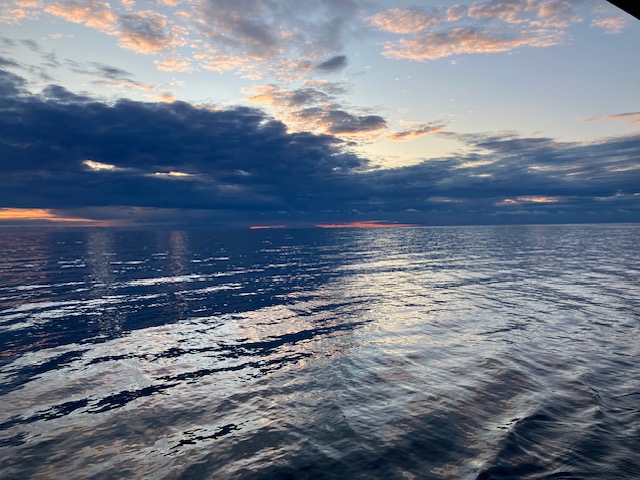
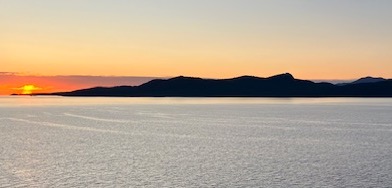
Ok, my first photo this morning was taken at 4:50 a.m.

Sunrise July 5, 2025 (Photo Bill Pike)

I think the photo is a keeper.

For you late sleepers out there, I’m not your guy for sleeping late.

Since arriving in Vancouver, my old body sleeps, but my old body wakes up early too.

I’m also beginning to think that the sun doesn’t sleep in this part of the world. It is light when I go to bed and light when I wake up.

The ship is equipped with a very nice fitness room. In a few minutes, I’m headed there for a workout. I’ve had the privilege of using this room some other mornings, and the experience has been good.

A row of windows on one side of the room allows passengers to take in the pretty views of the Alaskan wilderness and shoreline. This morning, a gentleman working out on a machine close to the windows reported seeing a couple of dolphins jumping. I missed that sighting.

This is our second full day at sea. Today, Saturday, July 5, 2025, we would begin the repacking process.

After breakfast, I started working through the set of specific instructions given to each passenger. Those instructions would be important to follow as we are preparing for leaving the ship on Sunday.
One order caught my eye, our luggage had to be outside our rooms by 11 p.m.

Taking a break from the preliminary packing, we opted to attend a couple of video presentations—one on whales, and the other a behind the scenes look of what it takes to run the ship during a cruise.

The piece about whales: Alaska Up Close: Pacific Giants was well done and informative.

The behind the scenes look, titled: A City On The Sea was impressive.

In this piece, what caught our attention the most was food—pounds and pounds of food.

But, we were also enlightened with the construction of the ship, including the technology used to provide water, electricity, and keeping the ship in motion.


Connected to each of those essential components is a member of the crew. From tip to tip of the ship, the key factor for me is the dedication of the crew.

After this enlightenment, we attempt to attend the Dutch brunch, but there was fifteen minute wait. So, we walked to the Lido dining room where they were celebrating Cake Me Away! If you were a cake lover, this was the place you needed to be.

Our afternoon was unremarkable—walking the deck, reading, napping, and finalizing our packing.

Saturday afternoon (Photo Bill Pike)

We could have opted to participate in the Polar Bear Plunge at the Sea View Pool, but our sanity prevailed.

Throughout the afternoon the scenery continued to be enjoyable as the Captain and his crew pushed the ship toward College Fjord.

College Fjord was discovered in 1899. Located along a twenty mile section of Prince William Sound, the glaciers located here are named after East Coast colleges. Schools for women and men are included in the naming.

Here we would be able to view Harvard Glacier.


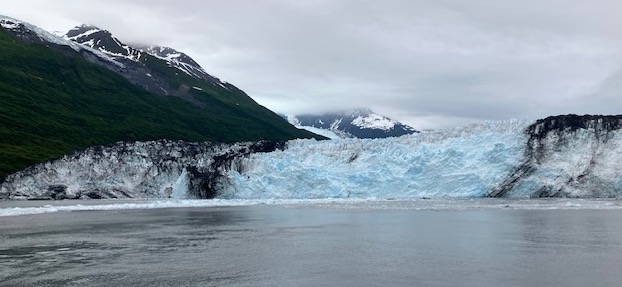
Located in Prince William Sound, the Harvard Glacier is a beast.

The face of the glacier is 1.5 miles. The glacier is 300 feet thick, 24 miles long, and covers 120,000 acres in the Chugach National Forest.

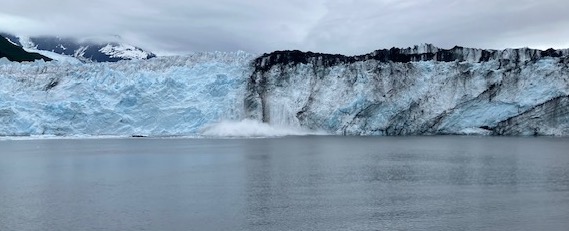
Additionally, the glacier is known for its calving and blue ice. Calving is when large chunks of the glacier break off crashing in the water below.

While we were viewing, this calving happened several times.

Note the calving in the middle (Photo Bill Pike)

With the calving, when the large pieces of the glacier hit the water, waves immediately start to roll across College Fjord.

I overheard a lady comment that the rumblings of the glacier reminded her of thunder rolling and echoing off the parched land of a Midwest prairie.

I admired her description.

That glacier thunder is an indescribable sound. There is no flash of lightning. Some where deep in the chasms of the ancient ice a silent fracture becomes a resounding clash and crash of percussive sound— a thunder clap. That thunderous calving disrupts any tranquillity in College Fjord.

That thunder is topped only by the contrast in the colors of the glacier. For sure sections of snowy white are present. From that white, we saw contrast into shades of gray and coal black. Unfortunately, some of those darker shades are related to pollution.

Yet among, the grays and dark charcoal colors are various shades of blue—a blue that your eyes will never forget.

Remarkable blue (Photo Bill Pike)

Here is one explanation for the blue color of the glacier from the USGS: “Glacier ice is blue because the red (long wavelengths) part of white light is absorbed by ice and the blue (short wavelengths) light is transmitted and scattered.

This glacier viewing experience was enhanced by commentary from the ship’s Wildlife Guide.

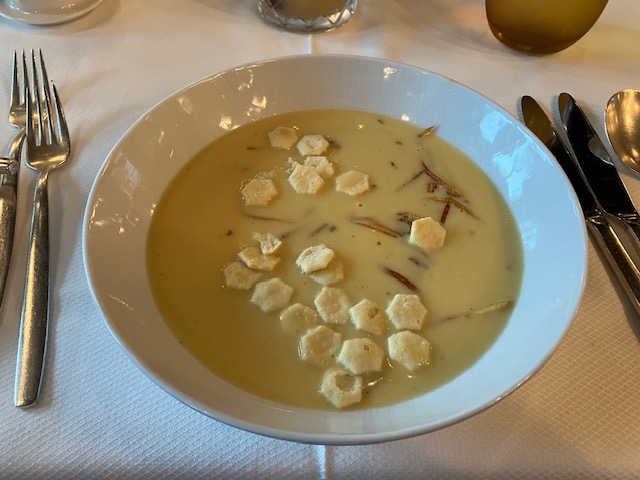
Our last night of dining on the ship, we had reservations at the Pinnacle restaurant. I opted for grilled halibut. I wasn’t disappointed.

A delicious dinner soup (Photo Bill Pike)

Gradually, the ship was charting a course away from the College Fjord. The Captain and crew intended for us to have a late night docking in Whittier, Alaska.

Back at the room, we finished up the packing, and placed our properly tagged luggage in the hallway.

Couldn’t resist a few minutes on our deck/porch/veranda!

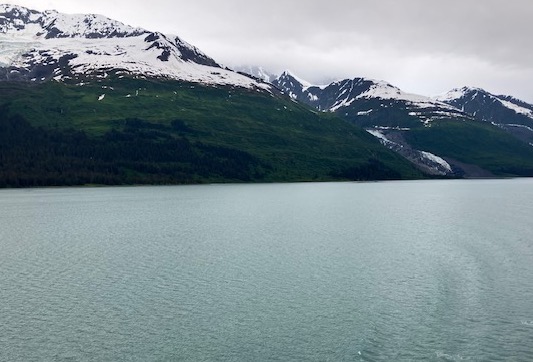
Staring into the wilderness beyond the rocky shorelines. the majestic deep green of the trees inch their way up the inclines of the mountains.

With these two days on the water, sometimes, the green is broken from the silent intrusion of a waterfall. Like a ribbon of white, it cascades down toward the shoreline.

Near the rocky peaks of the mountains, snow is still hanging around. The snow like me is reluctant to leave this pretty place.

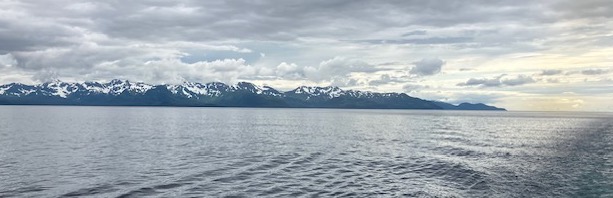
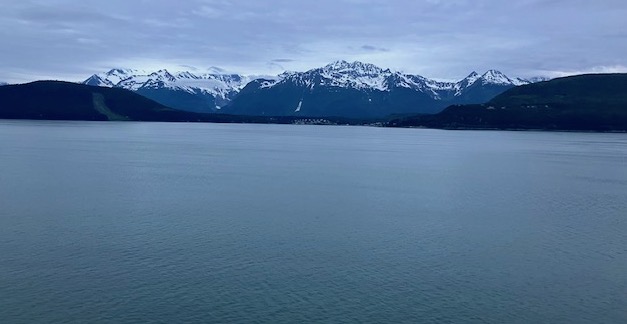
Pretty mountains with snow hanging around (Photo Bill Pike)

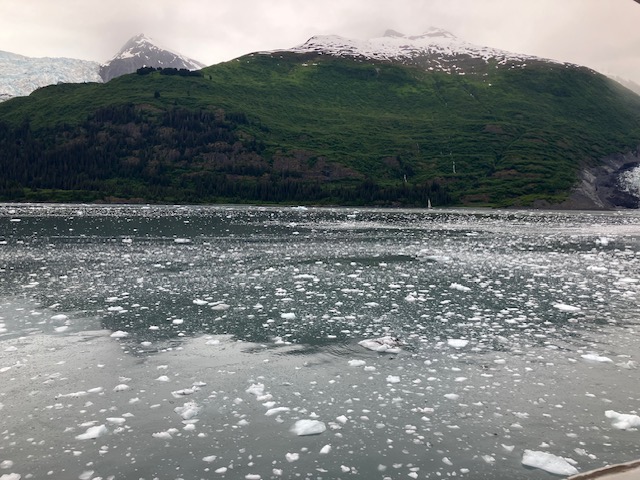
Just as memorable as the glacier blue is the surface of water moving away from College Fjord. It is dotted with dollops of ice.

Pieces of the glacier (Photo Bill Pike)

I hope Alaskans and Americans will continue to preserve this precious land and water.

(Photo Bill Pike)

Glacier Bay National Park

Our day started early.

This morning, we had guests from the National Park Service on board to share their knowledge about Glacier Bay National Park.

With the emphasis on the Margerie Glacier, different forward levels of the ship were open. We started outside of this area, and then moved inside to the crow’s nest.

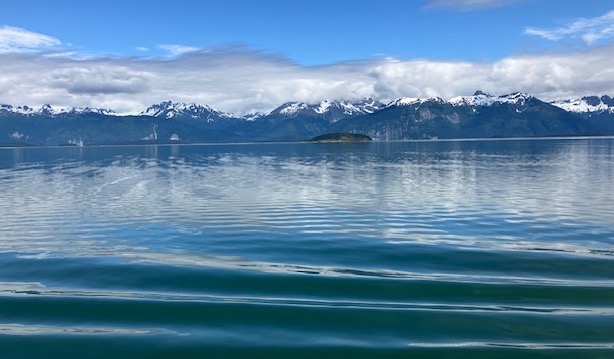
A view from the ship (Photo Bill Pike)

We were a part of a large crowd of early risers. Three pieces of information were shared—a short introduction of our guests, the plan for viewing the Margerie Glacier, and tips for spotting wildlife.

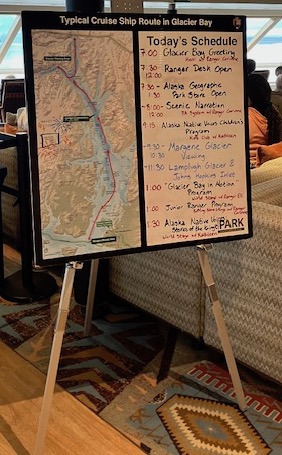
Schedule for the day (Photo Bill Pike)

From here, we left for breakfast and plotted out glacier viewing strategy.

When we returned to the viewing area, my Commander Supreme opted to join a long line for the pop-up National Park Service Store. The outside air was colder this morning, so I went back to the room to add an extra layer of clothing.

We reconnected on the front edge of one of the forward decks. This was a good viewing spot to see the glacier and to hear the ranger’s commentary.

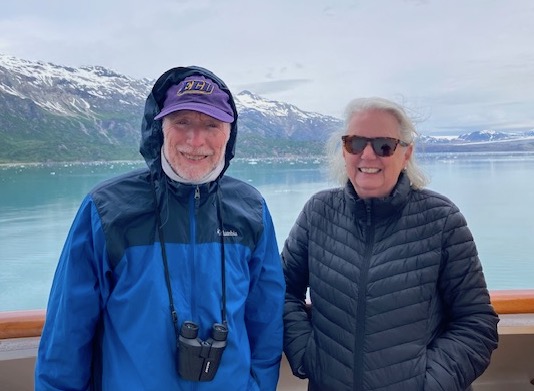
Nippy morning (Photo Betsy Pike)

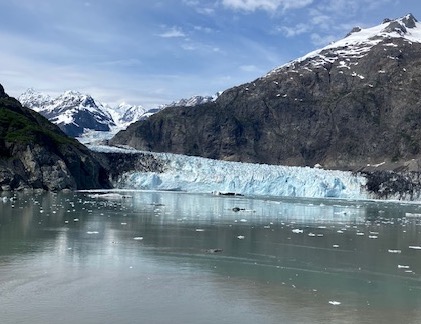
According to the National Park Service, the Margerie Glacier is twenty-one miles long. That length is traced back into the Fairweather Range where some of the elevations peak out at 9000 feet.

Additionally, the glacier is 0.85 miles wide. Its ice face towers at 200 feet above the water.

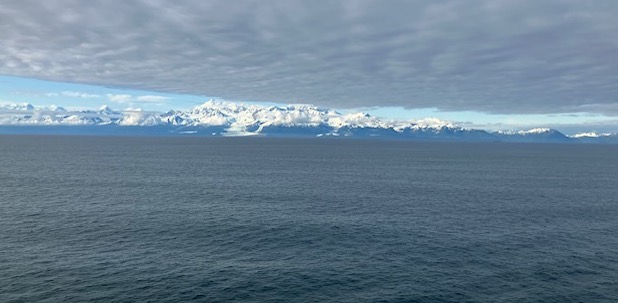
The glacier of the day (Photo Bill Pike)

The ship’s Captain and his crew are to be credited for positioning the ship for a full viewing experience of the glacier. This included careful navigation through an ice field as the ship moved toward the glacier.

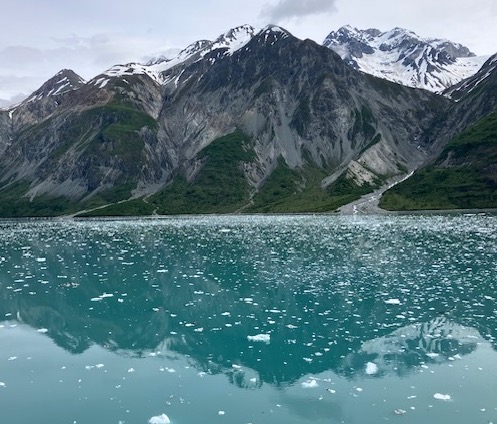
Pretty, but potentially perilous water (Photo Bill Pike)

Eventually, we worked our way back to our room. We sat out on the balcony and continued to view the glacier. This included the excitement of large sections of the glacier tumbling into the bay.

The morning morphed into lunch time and a trek into the overly crowded Lido dining room—asparagus soup and a grilled pear and brie cheese sandwich hit the spot.

After lunch, we attended a lecture by the ranger and a local indigenous people representative. Each presenter conveyed their areas of expertise with lots of passion.

From the lecture, Betsy, Dan, and I walked to deck three, the designated walking deck. Here we had the opportunity to interact with the Park Ranger.

(Photo Bill Pike)


To our surprise, we also had multiple opportunities to see whales spouting. The whales were feeding close to shore. This included a few tail flops from whales huddling close to the surface.

The cutest view was when a sea otter on its back came surfing by the ship with an infant resting comfortably on the mother’s stomach. Neither appeared to have a care in the world.

After walking, Betsy and Dan played pickle ball on one of the decks with some likeminded passengers.

For dinner, we had signed up for a special treat—a seafood boil. At $35.00 a piece, we had a blast.

We started with a delicious bowl of clam chowder.

This was followed by each of us receiving our own kettle of seafood.


Inside the kettle in a delicious broth were clams, mussels, shrimp, Dungeness crab legs, salmon, corn, potatoes, and a perfectly seasoned small loaf of crusty bread. The bread was perfect for sopping up the broth.

From the staff, we were given bibs, and small bowls for washing our fingertips. We had lots of fun— that included interacting with and asking questions about the logistics of this meal with the staff.

Not that we had room, but dessert was a berry crumb with vanilla ice cream.

After dinner, we needed air and exercise, so we walked the deck.

An after dinner view (Photo Bill Pike)

We came back inside for an outstanding performance of Broadway songs and more trivia. With the trivia, we finished in a three way tie. In the tie breaker, our answer was off by one year.


Next, we took in a set with the ship’s house band.

By now, sleep was calling us, but we didn’t collapse right away.

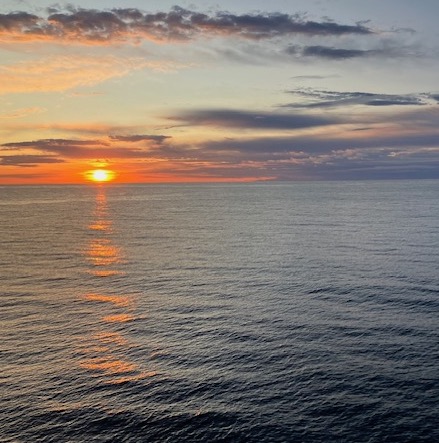
Sitting on our balcony, a couple of whales teased us, and we were treated to a colorful sunset.

Nothing like a sunset (Photo Bill Pike)

Saturday would bring another day of travel on the open waters with a final look at glaciers in the College Fjord.

Whittier was our destination, the point where we would leave the ship for the land part of our journey.

In truth, I rarely thought about the Fourth Of July today.

I’m not a huge fan of fireworks, but the reality is that Alaska’s beauty and wonder were our fireworks.

This is a precious place.

Skagway

Sorry to annoy you, but I’m up early.

I’m out on our balcony.

I snapped this photo at 4:29 a.m.

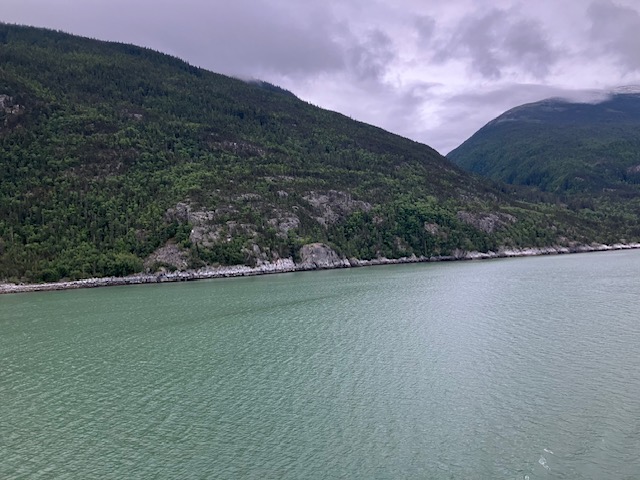
Final approach into Skagway (Photo Bill Pike)

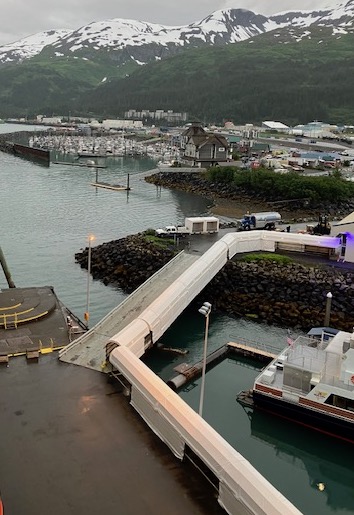
We are on our final approach into Skagway.

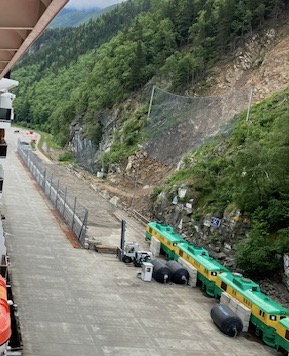
Once the ship is docked, the first thing I notice is how a land/rock slide has impacted our departing the ship.

Land/rock slide (Photo Bill Pike)

Later this morning, we will be boarding a tender(a small boat, holds 120 passengers) for a short distance to enter Skagway. Using the tender is a safety precaution.

The downtown area of Skagway is more compact. It possesses lots of charm.

Once off the tender, we reorganized and found our bus for a ride out of Skagway.

While waiting to board the bus, we explored a nice green space that provided lots of information about the Klondike Gold Rush National Park.

This included information about the U. S. Army arriving in 1942 because the Japanese had bombed Dutch Harbor and invaded Attu and Kiska Islands in the Aleutian archipelago. (National Park Service U.S. Department of the Interior)

Once on the bus, we learned quickly that we had an exceptional tour guide.

The success of the tourist season in Alaska depends upon reliable people. Many of the guides return each summer to drive tourists around and share a bit about themselves and the town that continues to lure them back every season.

A combination of humor, local color, and knowledge about the area from a variety of angles is a plus for a guide.

Heading out of town, our guide told us about medical care, the successful K-12 school, graduating class of 7, and how Holland-America provides the prom for the high school age students. The prom takes place on the ship.

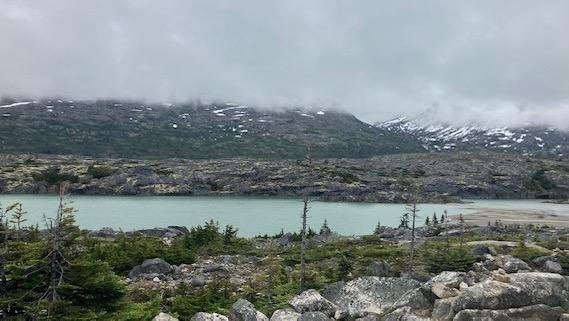
On the ride out of Skagway, it was interesting to note how the landscape changed. Our guide was going to give us a bit of a bonus, we were going to briefly re-enter Canada.

A pretty view outside of Skagway (Photo Bill Pike)

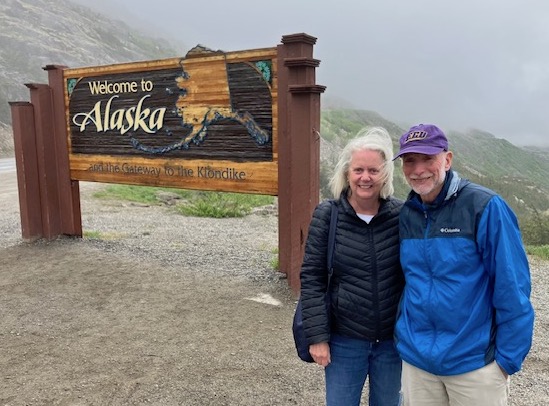
This was one of his enduring diplomatic accomplishments in showing us the border and how it works way out here.

My wife and I after our short bus ride across the Canadian border (Photo Betsy Pike)

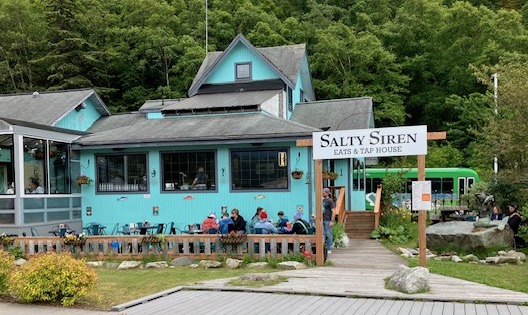
Once back in Skagway, we found our way to the Salty Siren for lunch.

The restaurant was busy, but we found a table outside that could accommodate us.
I enjoyed my bowl of fish chowder which featured salmon, halibut, and Pacific greenling.

A good place to eat (Photo Bill Pike)

After lunch, we spent time exploring downtown. I think Skagway is a jewel. It has a unique spirit about it. The shops are not as repetitive, but the business district is smaller.

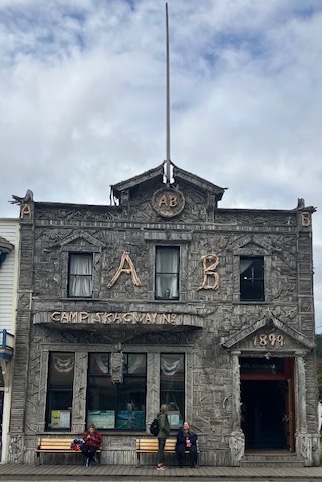
Certainly, the Arctic Brotherhood Hall will catch your eyes. This building was constructed in 1899, and its facade features driftwood pieces. The building’s history goes back to the Klondike Gold Rush.

Arctic Brotherhood Hall (Photo Bill Pike)

After the shops, Betsy, Dan, and I regrouped for a hike in Yakutania Point Park.

If you have the time, don’t turn down an opportunity to hike around this park.

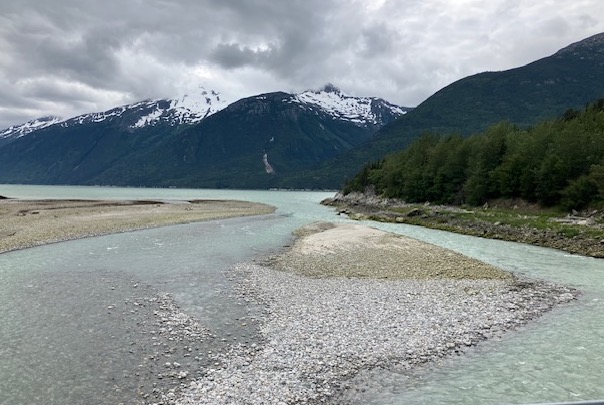
To get there, we walked out of town, past the airport, and took a footbridge across the Skagway River.

Skagway River (Photo Bill Pike)

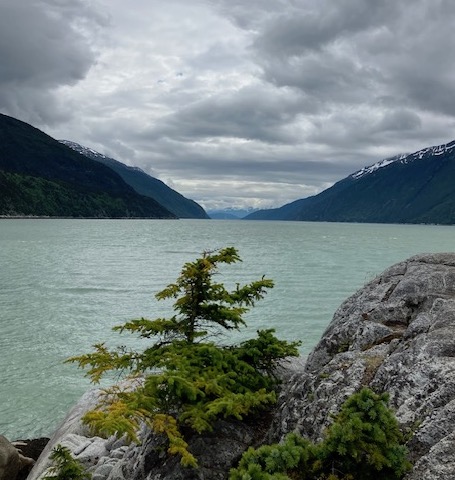
We came across many pretty vistas as we moved through what is described as a moderate two-mile loop.

From Yakutania Point Park (Photo Bill Pike)

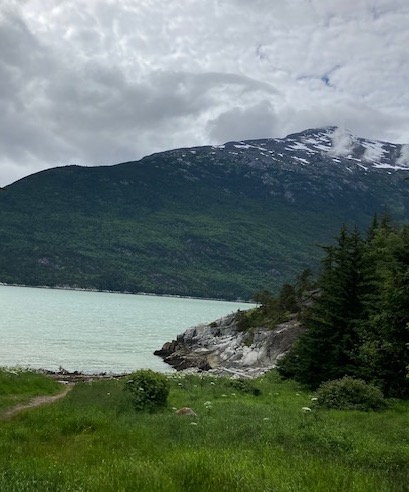
Part of the park is tied to Smuggler’s Cove, a tidal inlet. Apparently, this inlet was used by rumrunners during Prohibition.

Smuggler’s Cove (Photo Bill Pike)

We walked back to the ship. There we regrouped with our pals and worked our way to dinner.

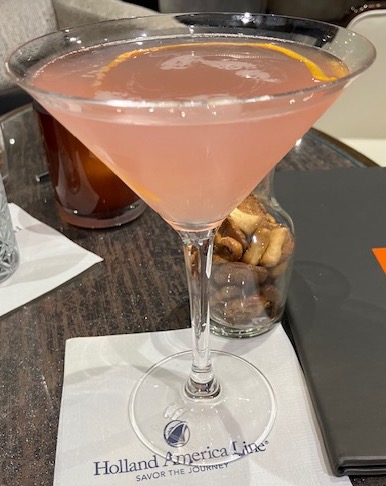
This was Holland-America’s “Orange Party” day, a day to honor the cruise line’s Dutch heritage, and King’s Day in Holland. For dinner I wore an orange shirt. Someone from our group ordered this cocktail, I think it was named an Orange Mule.

In honor of King’s Day (Photo Bill Pike)

After dinner, trivia, a comedian, and a band leading a Holland celebration were a part of our rounds.

We had a good day, lots of variety.

Back at the room, I followed my nightly routine to sit out on the balcony for a few minutes.

Watching the subtle changes in the landscape and the water is enjoyable as the ship glides along.

I believe our itinerary has us sailing for two days. We are working our way into Glacier Bay National Park.

Still thinking about the extension of daylight on this cruise. This final picture of the day was taken at 10:06 p.m.

Another late daylight view (Photo Bill Pike)

So far, the beauty of the land and sea hasn’t disappointed us in Alaska. How lucky we are to be experiencing this journey.

How lucky we are for the Holland-America employees and the tour guides who continue to show up every season.

Ketchikan

Tuesday, July 1, 2025 Day Seven Ketchikan

Ketchikan by Bill Pike

Per usual, I’m up early.

At 5:05 a.m., the ship’s foghorn sounds every two minutes.

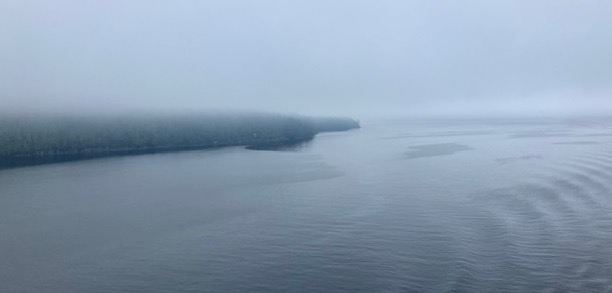
A gray fog is trying to conceal the Alaskan coastline. The water is a darker shade of gray.

Foggy morning as we head into Ketchikan ( Photo Bill Pike)

We are scheduled to dock in Ketchikan at 6:30 a.m.

I always enjoy the last few miles of the approach into a port. A few minutes ago, a small, sturdy boat departed from the back of the ship. This is all guessing on my part, but I’m assuming, this was to drop off a local captain to help guide the ship into the Ketchikan harbor.

Our group is excited about exploring and touring around Ketchikan. We have a window from 8:30 to 2:30 p.m.

Closing in on Ketchikan, the visibility begins to improve. The hills and mountains that form the backdrop for the town are still shrouded with fog and low clouds.
Our first bald eagle is spotted. The eagle was resting on top of a singular docking pole.

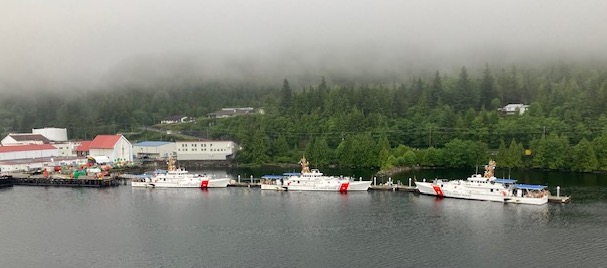
As we inch closer to our docking berth, I notice a massive yacht complete with a helicopter, Coast Guard station with three ships, and a NOAA ship.

Coast Guard station (Photo Bill Pike)

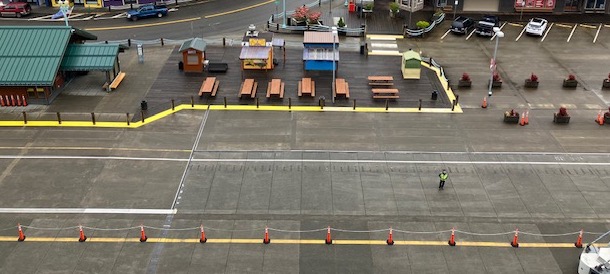
It is interesting to watch the landing crew on the dock doing their final preps. A safety perimeter is set using cones and rope.

Dock area (Photo Bill Pike)

For the two gangways, a separate crew is present. With finesse and precision, they connect the ship to the dock.


Looks like some of the merchants closest to the dock are already open for cruise ship traffic. The store fronts look inviting.

The Commander and I hustle to breakfast. A few minutes after 8:00 we are off the ship.

I’m fortunate to be with a savvy tour guide. We want to take in as much of Ketchikan as we can before our scheduled excursion out to Totem Bight State Historical Park.

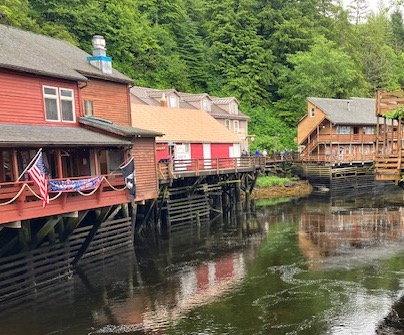
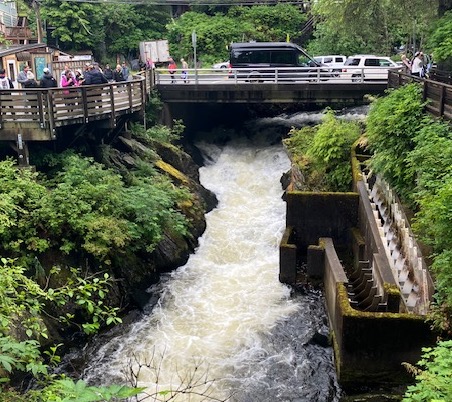
Our feet push us off, and we quickly come across Ketchikan Creek. This pretty creek runs through sections of downtown.

Ketchikan Creek (Photo Bill Pike)

We skirt through a section of shops on historical Creek Street. Following the creek bed, we notice an emphasis on salmon. A salmon ladder is part of the creek.

Salmon ladder (Photo Bill Pike)

With the creek as our guide, we work our way to the Deer Mountain Fish Hatchery. Apparently, we were too early for any peeks at fish or tours.

Near the hatchery is City Park, a very pretty park that is part of the Ketchikan Salmon Walk. This is a very doable 1.5 mile walk that winds along the creek and some quiet neighborhoods.
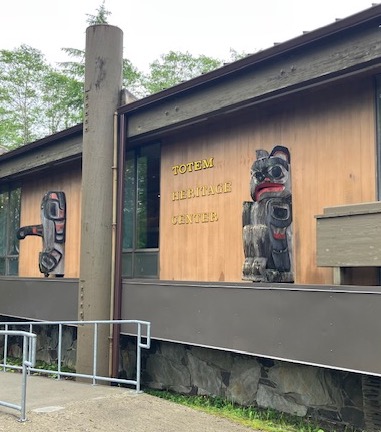
From City Park, it is a short distance to The Totem Heritage Center. This museum dates back to 1976. While totem poles are the main feature, the museum also has contemporary art that is linked to local culture and heritage.

Totem Heritage Center (Photo Bill Pike)

From the Totem Pole Heritage Center, we walked back into town. We spent time exploring a few of the Creek Street shops and learned a bit about its history. At one time, this was “early Alaska’s most infamous red-light district.”


Before heading back to the ship, we stopped at the Arctic Bar. This famous bar opened in 1937, and it appears to be just as popular today as when it first opened.

We regrouped with our pals and boarded the bus to Totem Bight State Historical Park.

A young lady, a college student was our bus driver and tour guide. She was outstanding.

On the drive out to the park, she provided a trove of local information with facts and humor.

At the park, she capably toured us around with a balance of stories related to the culture and totem poles.
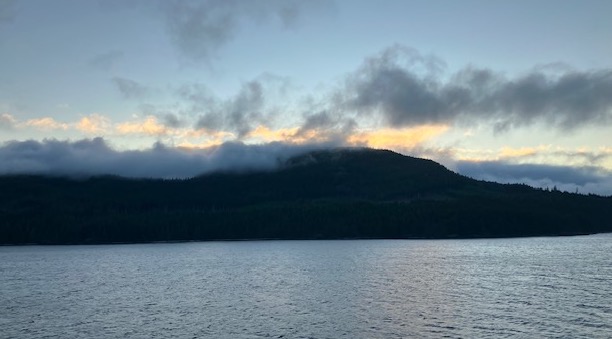
Points of emphasis were made about the location. Basically, we’re in a rainforest. Five species of trees make up the core of this region, and we also learned about the skunk cabbage, and salmon berries (similar to raspberries).
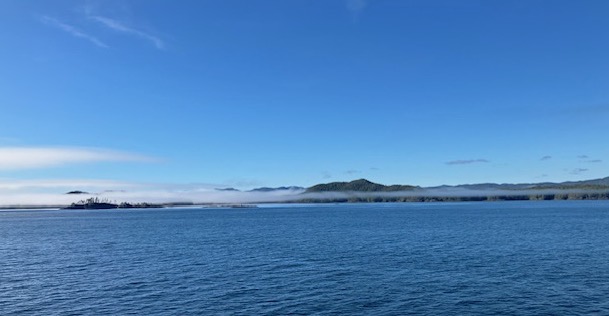
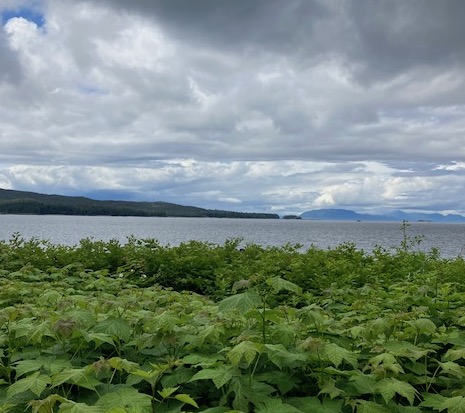
Created in 1959, the park consists of 33 acres in Tongass National Forest. The park also presents views on the Tongass Narrows waterway.

Tongass Narrows Waterway (Photo Bill Pike)

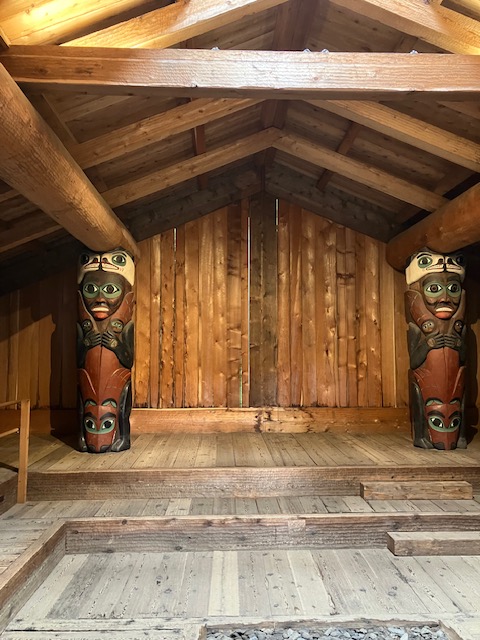
A variety of totem poles are on site. The park also includes replica of a traditional chieftain’s house. The low, oval entrance will catch the attention of visitors.

Inside Chieftain’s house (Photo Bill Pike)

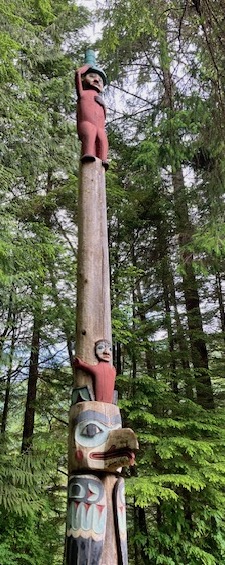
For me, my takeaway on the totem poles is that each one tells a story. Woven into those stories and the carved displays are the eagle, frogs, the mystical thunderbird, ravens, bears, beaver, watchman, and blackfish or killer whale.

Totem pole (Photo Bill Pike)

With an eye on the clock, our guide gave us time to work our way back to the bus before our departure.

We made it back to the ship on time. Facial recognition was used to speed up the pace for getting us back on board.

After a late lunch, we watched the pushing away from the Ketchikan dock. Lots of activity was waiting for us during this departure.

From the top deck of the ship, we had a good observation spot.

Our main point of interest was the Ketchikan airport. Access to the airport comes via a ferry that runs every thirty minutes.

This afternoon, we were treated to float planes landing and taking off, and commercial jets landing.

From the top deck, we departed to attend an information session about our upcoming transition from sea to land.

After this, we regrouped and made ourselves ready for dinner. The dinner hour on the ship amazes me as the staff works to meet the needs at every table with perfection.

With dinner over, we tried our luck in trivia with 80s music, attended an Irish sing-a-long, took in a comedian, and spent a bit of time with a jazz trio.

Maybe to try and rejuvenate ourselves, we took one walk around the ship with a cold, brisk breeze hitting us. For some reason that walk pushed us to needing some sleep so, we headed to our rooms.

I enjoyed Ketchikan.

It was interesting to experience the pride from the original Alaskans related to their culture and heritage. Like the stories found in a totem poll, the stories in the history of these people is fascinating too.

And yet, here I am, far away from the troubles of the world.

I wonder if the troubles of the world could be solved by revisiting the stories of our troubled pasts? Might we be able to say to ourselves— we’ve been down the tragic road before, why do we want to go again?

Looking forward to Juneau tomorrow and a visit with a glacier.

Sun setting after a good day (Photo Bill Pike)

Alaska Sailing The Inside Passage

I think I could be dead and still wake up early.

My internal clock has me pegged as an earlier riser. No alarms set. I just wake up.

Today, Monday, June 30, 2025 is no different.

Overnight, our Holland American ship has been sailing the Inside Passage. On Tuesday, July 1, we are scheduled to arrive in Ketchikan, Alaska at 6:30 a.m. That will be our first port stop.

Today, all of our activities will be focused on what the ship offers.

Out on our balcony, I’m surprised at how close we appear to land. Scattered low clouds and a speck of color from the rising sun make for pretty scenery.

Quiet start to the day. (Photo Bill Pike)

This morning, I’m going to the gym to workout. My goal is to ride a stationary bike and use some light weights.

With a couple of wrong turns, I make it to the gym. The equipment is nice and available for me to use. The room is equipped with good windows perfect for watching the water and the coastline.

After the workout, we gather for breakfast. The options are overwhelming. So, I keep it simple—oatmeal and the European spin on muesli. I love the muesli.

At some point after breakfast, we were notified that the Captain of the ship had made a navigational shift pushing the ship out into the open sea. Not sure of his reasoning, but he knows more about these waters than I do.

At some point, we lose the snips of fog and gray cloud cover for blue sky.

Blue sky, blue water. (Photo Bill Pike)

We took another stroll along deck three, and as the morning progressed we immersed ourselves in the following: a cooking demonstration, a stringed duo who perform on viola and cello, general knowledge trivia, stretch class, lectures about upcoming stops.

Had a hotdog for lunch. Then took it easy for a bit.

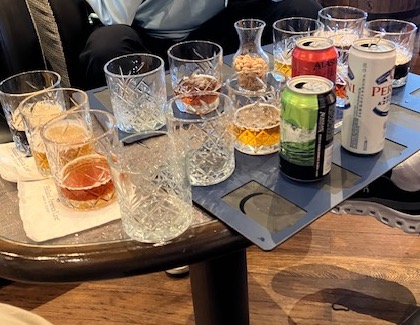
The guys regrouped and attended a beer tasting session. For the beer tasting, Peroni from Italy, Guinness from Ireland, and an amber ale and an IPA both from the Alaska Brewing Company in Juneau were featured. Butch, Dan, and I enjoyed the tasting and the comments from the staff.

Our sampling choices (Photo Bill Pike)

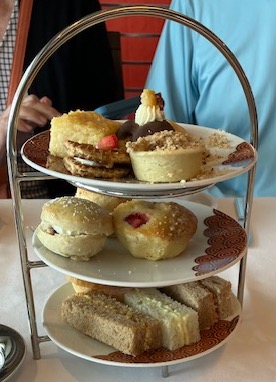
Also in this afternoon rotation was a Dutch tea. There was quite an offering of food with this event.

Dutch tea treats (Photo Bill Pike)

After the tea, the remainder of the afternoon passed quickly. Before we knew it, we were working our way back to the dining room for dinner.

Stuffed from the dinner, for the remainder of the evening, we roamed around the ship.

We walked through the casino. This seems like a waste of space to me.

Music attracted us to a solo pianist and then a cover band. It was clear these musicians had a real passion for music.

At some point, our collective body clocks reminded us that sleep was important. Roaming stopped. Our rooms were calling. We said good night.

Before drifting off, I think about the Inside Passage.


This thousand mile route runs from the coast of Washington state to Skagway, Alaska.

By comparison, back home the Intracoastal Waterway runs from Massachusetts rounds the tip of Florida, and meanders along the Gulf of Mexico coastline ending in Brownsville, Texas.

Both the Inside Passage and the Intracoastal Waterway provide cruise and commercial ships, and pleasure boats some protection from the open ocean waters.

I wonder what the early explorers of the Inside Passage thought as they traversed these beautiful waters?

Did they think it would ever have an end point?

I wonder how tempted they were to pull ashore on any of the remote islands or coastlines on either side and explore.

As they progressed did they stare in amazement at a soaring eagle, the sighting of a whale, or a ginormous grizzly bear feasting on the shoreline?

I’m not sure, but I know my old eyes have enjoyed the stunning scenery today, and I look forward to more as we come into Ketchikan in the morning.

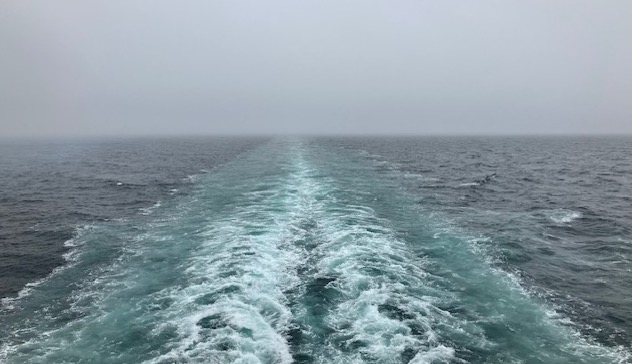
Churned up waters from our ship (Photo Bill Pike)

Stanley Park, goodbye Vancouver

On the morning of Sunday, June 29, 2025, Betsy, Dan, and I were up early.

In a few hours, our group would be leaving the Sylvia Hotel and transitioning to a Holland America ship.

We wanted to explore Stanley Park a little more before departing.

A quiet, bright blue sky greeted us as we left the hotel.

Stanley Park opened in 1888. It is Vancouver’s “first, largest, and most beloved park.” (City of Vancouver) I can tell you there is much for residents and visitors to love about this park.

The size alone, 400 hectares, adds to this wonderment. A hectare is larger than an acre. A conversion to acres is 988.

Situated in a natural West Coast rainforest as you might expect there is lots of green to see.

And of course there is lots of water to view too. Visitors are aided by the Seawall trail for stunning panoramas of English Bay. “This seaside greenway is the world’s longest uninterrupted waterfront path.” (City of Vancouver)

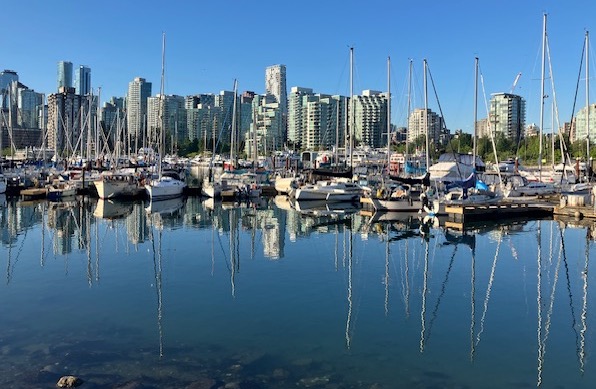
A pretty harbor off Stanley Park (Photo Bill Pike)

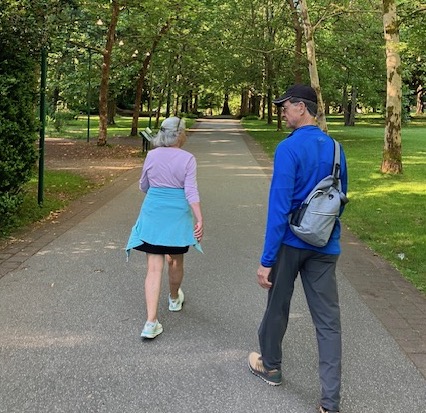
With the guidance of Betsy and Dan, we secured our bearings and started out.

Good guides (Photo Bill Pike)

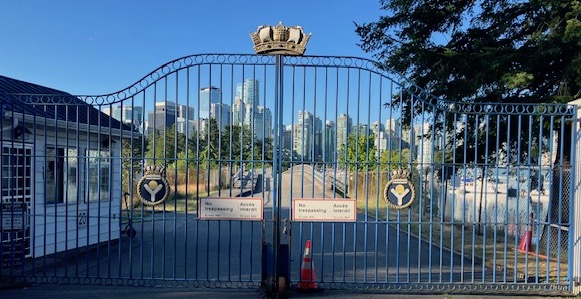
One of the first places we came across were the gates to the HMCS Discovery. Located on Deadman’s Island, this naval reserve facility also features a naval museum.

Gate entrance Deadman’s Island (Photo Bill Pike)

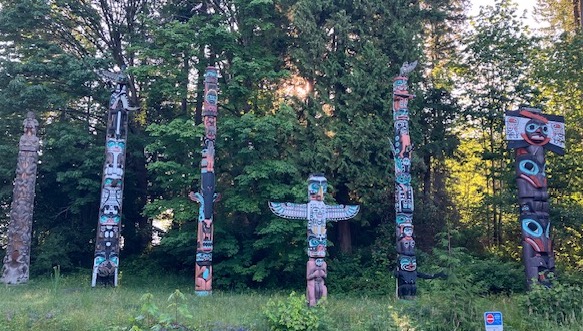
Next, we came across a section of totem poles. Some were singular others formed a group. All were unique and colorful.

Group of totem poles in Stanley Park (Photo by Bill Pike)

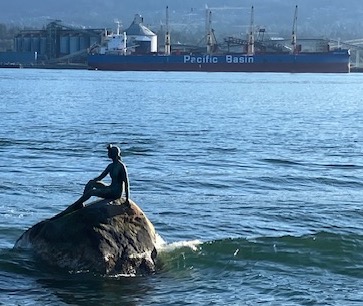
The water views capture everything from a statue of a girl in a wet suit to cargo ships passing under a suspension bridge.

Girl in the wet suit with a large ship docked in the background. (Photo Bill Pike)

Additionally, there are assorted historical memorials positioned throughout the park.

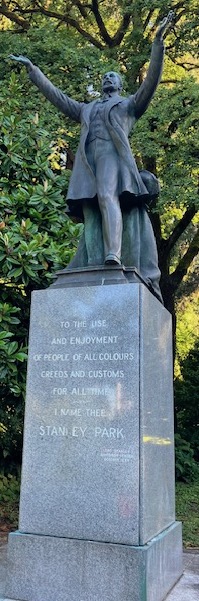
My favorite is Governor General Lord Stanley from October 1889. Inscribed at the base of the statue are these cherished words: “To the use and enjoyment of people of all colours, creeds, and customs for all time. I name thee Stanley Park.”

Lord Stanley statue (Photo Bill Pike)

With an eye on our watches, we worked our way back to hotel for breakfast.

After breakfast, we attended to the final details of our packing. This was followed by checking out and waiting for our two Uber cars to arrive.

We experienced no traffic snarls in getting to the terminal. Our check-in on the ship was trouble free too.

No time was wasted in finding our rooms. We completed the mandatory safety orientation, found our way to lunch, and started exploring the ship.

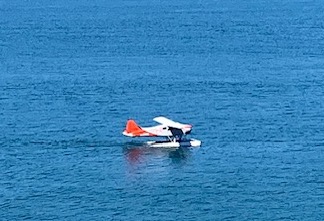
The crawl for the big ship out of the harbor was slow, but there was lots of activity with float planes and other watercraft in motion.

Float plane prepping for take off (Photo Bill Pike)

Seemed like the afternoon rolled by quickly, and we were back in a dining room for dinner.

After dinner, we took a walk on deck three for a couple of loops.

I guess we weren’t too weary as we found our way into a 60s music trivia contest. Our team tied with another team for first place, but we lost in the third tie breaker.

We shook off this setback with more exploring of the ship and stopped along the way for assorted live music.

When we returned to our room, we sat out on our balcony to enjoy the sunset and some unexpected whales. Passengers who were outside cheered their brief appearance.

Nothing like a sunset on the water (Photo Bill Pike)

I wonder what tomorrow will look like.

I think to myself, how lucky I am to be here.

I wonder more about the inscription on Lord Stanley’s statue. That was in 1889. I loved his inclusion.

Why is this concept still a struggle for us today?

Vancouver treated us well.

Thanks for your hospitality.