California Day Three: Carpinteria by Bill Pike

Somehow, I persuaded our youngest daughter, Elizabeth, to go for a morning run today. Might have been just before 7 that we started out for a slow jog. Carpinteria was waking up. The sun had already crept over the mountain tops, and some commuters were heading out just like us.

We went straight up Walnut, made a left on Carpinteria Way, and followed this down to the Best Western. There we turned around, came back up Carpinteria, and made a right on Linden Avenue into the main part of town.

Housing, store fronts, murals on the sides of buildings, and a variety of landscape plantings greeted us on our route.

Once back at the house, we regrouped for breakfast.

We decided to alter our trek through the neighborhood as we headed for the Lucky Llama Coffee House. Espresso, tea, and a variety of breakfast bowls were their specialties. A friendly staff who knew how to handle first time tourists helped us with our choices. A compact building, every inch of space had been thoughtfully put to use including an outside deck. When our orders arrived, we enjoyed every sip and bite.

In the vacant lot beside the Lucky Llama is the Wardholme Torrey Pine. This Torrey pine is thought to be the largest in the world. Stopping to take in the tree and snapping a photograph is worth the effort. The tree dates back to 1888, and it clearly is a tribute to the tree’s toughness— surviving in a California environment that is notorious for making life challenging at times.

After breakfast, we transitioned for the walk to the beach. A week-long camp for junior lifeguards was taking place, and we took note of the flurry of activity around these school aged boys and girls.

But, we had a much larger surprise awaiting us this morning near the entrance of the beachfront. It was hard to miss the deceased California sea lion that the Pacific had washed ashore during the night.

Lifeguards had used bright orange traffic cones to four corner the massive sea lion from all us gawkers. The animal’s girth was enormous, and just like my deodorant sometimes fails me, our once active friend’s decomposing aroma wasn’t too pleasant.

It appeared that a shark had taken a huge bite out from the back side of the sea lion’s neck.

Other than that, our group enjoyed a long day at the beach. It was broken up with walks to the inlet, dips in the ocean, breaks back at the houses, and a walk back to The Spot for another lunch sampling.

As the afternoon progressed, we slowly made our ways back to the houses for cleaning ourselves up for dinner. Sometimes that clean up meant removing tar from our feet. Four oil rigs sit offshore perched in front of the Channel Islands. I’m assuming those rigs have something to do with our feet unknowingly attracting the tar as we walked through the surf.

Anyway, the locals have a remedy for removal— baby oil and a paper towel. This combination immediately removes the tar.

After cleaning up, some of us found our way back to the Island Brewery Company. An easy walk between our two rental houses, we once again enjoy their beer and the hospitality of their open air tasting room.

Abby has ordered Chinese take out for dinner tonight, and this spread did not disappoint.

A planned walk down to the beach for sunset didn’t happen. Late in the afternoon, a gray fog had pushed in from the Pacific. Saying goodbye to the sun for another fine day of work wasn’t going to happen.

With my body still linked to an internal East Coast time zone, I was ready for sleep. So, I started my walk back to our other house on Walnut.

California Day Two: Agua Dulce to Carpinteria by Bill Pike

Daylight came early on Tuesday morning. I know I slept, but I knew we needed to be organized and ready for our next departure. So, I started getting out of bed.

Abby and Art’s daughter, Rachel, her husband, Garth, and their two children, Charlotte and Grayson, were already up. They had flown in a week ago from McKinney, Texas. Abby and Art’s son, Parker, his friend, Brandy, and her son, Tyrell, had flown in from Hawaii, and they were stirring too.

After some chitchat and a great bowl of oatmeal, Abby started getting us ready for the ride up to Carpinteria. Just shy of a two-hour ride, Carpinteria is a beach town 12 miles south of Santa Barbara.  Abby had worked her connections and found two houses within easy walking distance to the beach that could accommodate all 13 of us.

IMG_1513

Gradually, we were organized. Vehicles were stuffed with the necessary junk for our four nights in Carpinteria. The youngsters were heading out first. Betsy and I were riding with Abby and Art, and we had one important job to do—drop Lucy, the irresistible family dog off at the kennel.

With Lucy dropped off, Art drove to California State Highway 126 and the trek north started. Near Ventura, the 126 funnels into the famous U.S. Highway the 101 along the Pacific coast.

Farming towns like Piru and Fillmore fill both sides of the highway with active and inactive fruit tree farms and an assortment of other crop plantings. Weather worn fruit stands pop up every few miles with most featuring oranges and some strawberries.

As we close in on Ventura the Pacific Ocean comes into view on the left side of the car, and the hills and mountains cast a back drop on the right. Art, a native Californian, points out to us in those time and weather scarred hills where last winter’s wildfires changed the landscape and sometimes lives.

California has always intrigued me, but I never have thought I was carved out to live here. For me, I narrow the worrisome part of California down to the three S’s: shake, smoke, and slide.

On this morning, the Pacific is sparkling shades of gray, blue, and green with the white foam of cresting waves adding to that palette. The Ventura County Fair is taking place, and at one exit our movement along the 101 is slowed.

While in the back of my mind, I’m worried about being away from my work for two weeks, I have been quietly excited about visiting Carpinteria all summer.

Pretty soon, Abby is telling Art the exit to take, and Carpinteria is right in front of us.  We drive into the downtown section and work our way to the two houses. Slowly, we unload items into their proper locations, and then it was  time to think about some lunch.

From one of the houses, we took an easy walk to The Spot. This tiny location reminded of a food truck that had been permanently locked into a prime corner location for locals and beachcombers. We placed our order, paid in cash the only transaction accepted, and waited for our number to be called. No pun intended, but our food “hit the spot”.

After lunch, our youngest daughter, Elizabeth had arrived. She had taken a bus from LAX. We picked her up at a local shopping center.

At some point during the afternoon, we gradually found our way to the beach. Carpinteria bills its self as the safest beach in the world. I have no way of confirming that for you, but carved out like a half-moon between two inlets, it seems to be in a perfect location. Loaded with plenty of sand and a level walk to the ocean lots of people were enjoying its charms this afternoon.

Boogie boarders, paddle boarders, kayakers, surfers, body surfers, and swimmers were in the water, water that for the Pacific was warmer than usual.

After the beach, a few of us made the quick walk to the Island Brewing Company. Nestled in a parcel of connected commercial buildings, this local favorite has a sun drenched, open air tasting room, and twelve beers on tap.

We enjoyed the hospitality, the beer sampling, and the conversation.

Soon, we were heading back to the house near the community garden and the train stop for the Amtrak Pacific Surfliner. Abby had warned us that the track ran right through Carpinteria. The blasts from the train’s horn and the rumbling of its steel wheels had already greeted us earlier in the afternoon.

IMG_1530

Abby had organized a dinner of pork carnitas with all of the trimmings. Those packed tortillas were delicious.

It had been a long day for all of us, but a good first day.

My east coast clock sleep time was calling me. I was ready to call it a day, and walk back to the other house.

California Day One: Richmond to Houston to Los Angeles by Bill Pike

My wife, Betsy, the Commander Supreme, and her sister, Abby, another Commander Supreme, had been in collusion. Abby took the lead in planning and pitching a trip to California where she and her husband, Art reside.

Agua Dulce, about an hour northeast of Los Angeles, in the landscape of the high desert is their home.

Now, don’t blab this to anyone, but Agua Dulce, (which is barely a speck on any map) is a treasure in my mind for one exceptional  reason—it is quiet. Even the leaves on the California pepper tree barely rustle when a late afternoon breeze ripples through them.

This trip would have many moving human components. Abby and Art’s three children and two grandchildren would be a part of this expedition. Schedules would only allow one of our three children to tag along.

IMG_1486

Promptly at 2:50 on the afternoon of Monday, August 6, our neighbor, Bobbie Ansell, drove us to the Richmond airport. It was exceptionally hot and humid as a passing rain shower’s moisture had been instantly reheated by the sun that had quickly reappeared.

The drive to the airport was uneventful. We thanked Bobbie, grabbed our luggage, and with a tad of excitement in our steps found the check-in counter.

Thankfully, the Commander Supreme took over, and we made the walk to the security check point. For this flight, the TSA had granted us the less intrusive security check. Once again, I followed the Commander Supreme’s leads, and somehow I cleared the security hurdle.

The walk to our gate was short, and there were no surprises waiting for us. In the summer, flying through the Southeast during the afternoon can be a challenge because of thunderstorms. But our plane coming from Houston was in the air and only running a few minutes late.

Airplanes and flying fascinate me. But getting on the plane, stowing carry-on luggage, and squeezing into a seat that I’m certain continues to shrink as the plane flies irritates me.

For the ride to Houston we would be flying an Embraer 175. Four seats, two on each side lined the fuselage. The overhead bin did not want to take the Commander Supreme’s over stuffed carry-on. I thought I was going to crack the flimsy plastic edging of the bin as I shoved the bag overhead.

Despite appearing to be a relatively new plane, the brain-trust at United Airlines wasn’t thinking about the comforts of their passengers. Clearly, they were thinking— shrinking the size of the seats means we can cram more seats into the plane—meaning more seats = more passengers = more opportunity for profit.

As a passenger, this compression made me feel like a sardine packed in a tin of sardines, or like three bulky stalks of romaine lettuce shoved into a too small plastic bag.

Finally, all of the sardines were packed on the plane. Safety procedures were noted, and the pilot made no promises about making up lost time in the air.

Taxing out to the runway for take off added another half-day of travel to this cross-country trip, but we eventually gathered speed and lifted off. Visibility was good as the plane scurried us away from Richmond.

The first attempt to serve beverages and a pitiful bag of pretzels was aborted. The pilot warned us about some choppy turbulence. Eventually, items were served, but the unsettled air continued to taunt the plane most of the way to Houston.

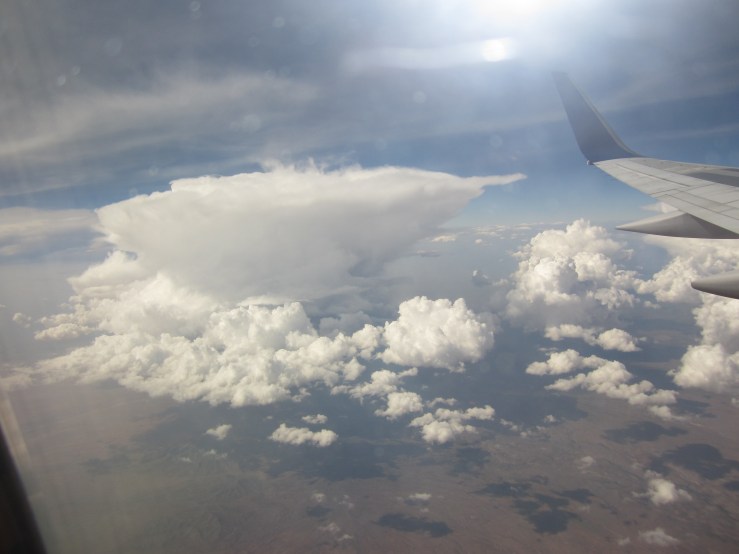
As the pilots lined up the approach into Houston, I could see a stormy skyline with rain showers falling. The wing on my side of the plane easily sliced through the summer clouds. Our descent was slow—slower than a slug moving through a flower bed.

But eventually, we did touch down with a hard thud. If you had been napping, you were awake now.  The pilot taxied the plane toward the terminal. Again, it seemed like we were driving  into downtown Houston to unload the plane it took so long. This Houston airport named after the first President Bush is massive.

Finally, we reached our gate, and it took us a bit of time to figure out the gate for our next departure. Of course, our next plane was departing in a different terminal. This meant catching a ride on the airport’s shuttle system.

I had hoped to sample a Texas craft beer while waiting to depart for Los Angeles. A single craft beer on the plane cost a mere $7.99!!  But, we barely had time for a bathroom break as we found our next gate. United personnel at this gate had already started lining up the sardines and romaines for entering the plane.

For the flight out to Los Angeles, we were on a Boeing 737/900, a much bigger plane, but with continuously shrinking seats too.

As final preps were being made for departure, the pilot highlighted the flight plan and weather conditions along the way.

Without too much delay, we took the twenty-mile trip out to the runway. With the engines revved up, we quickly were above Houston. The fading sunlight created a colorful backdrop of pastels on assorted clouds as the pilot steered the plane west.

Darkness timidly encroached the sky. Soon, the lights of cities and towns were dotting the landscape. Occasionally, I would spot a remote singular light with vast darkness surrounding it. I wondered how lonely that light was and if the people out in that spot were lonely too.

Our pilot did a nice job of keeping us updated along the way. The crew actually made up some time in the air as he announced many passengers on the flight had international connections to make.

As we made the approach into Los Angeles, lights were everywhere, but even with all of those lights, I know there are lonely people in the city of angels.

Even at this hour of the evening, the freeways were still buzzing with high volume traffic. We had another hard, jolting touchdown, and another long taxi to the jet way for deplaning.

Just as all of the sardines and romaines stood up to start their exit, we were told one passenger had a medical emergency. We were asked to sit back down.

Out the window, I could see emergency trucks had been waiting for us to arrive. The delay wasn’t long, and as we exited the plane, medical personnel were working with the person.

We found our way to the luggage carousel, made a pit stop, and exited into the chaos of LAX with other departing sardines and romaines searching for their rides.

The Commander Supreme had been texting our outside position to Abby and Art. There were lots of cars, buses, and taxis jockeying for curb position.

Just before we were picked up, there was a commotion to our right. We notice shrieks and quick footwork and the picking up of luggage. Soon, we realized what was causing the commotion—a rat, not mouse was looking for a ride home. As he scampered by us, the lady beside me jumped on top of a safety bollard to avoid the rat.

Just as she made her leap on to the bollard, Abby and Art drove up. Abby wondered what had caused her to do this.

That rat was a nice welcoming touch by the city of Los Angeles. Maybe the rat heard that weary, compressed sardines and romaines were going to be piling off the airplanes this evening.

Art managed to get us out of LAX unscathed. More importantly, no extra passenger hitched a ride to Agua Dulce with us.

It was well past my East Coast bedtime when we crashed into bed.

Sleep was what I needed, and, luckily, I had no nightmares about sardines, romaines, and rats.

Kaboom: “God Hates Us All” by Bill Pike

For the last six months, our church has been working with a consultant. We’re trying to figure out the present and our future. Working with a consultant means meetings. I was part of a meeting with a small subgroup who had the assignment of making recommendations regarding our facilities.

Near the end of that meeting, our leader shared a brief story from a recent hiking experience in western North Carolina. My friend and her family were near Winding Stair Gap in the Nantahala National Forest. Capture

She noticed a young lady with a tattoo on one of her legs. Initially, all my friend could see was the top of the cross tattoo with the word—“God.” Curious, my friend wanted to know the remaining words from the tattoo.

As they were preparing to exit the shuttle bus, the cross tattoo came into clear view, and it stated:  “God hates us all.”

My friend felt an immediate urge to ask the young lady about the tattoo. She wondered what might have prompted a person to choose such a statement for public display. But respecting, the young lady’s privacy and freedom of speech, my friend didn’t approach her.

Initially, my friend was a bit shocked, and then very sad as she wondered even more about the reasoning for the young lady choosing this tattoo.

I too became curious about the statement. A few weeks after our meeting, I googled “God hates us all.”

The first link to come up was attributed to an American thrash metal band named Slayer. This was the title to their ninth studio album.

In a Wikipedia article, I learned that the album themes focused on a variety of topics—“religion, murder, revenge, and self-control.”

Even the album’s cover, a Bible with nails driven through it and splattered in blood created a stir. An alternative cover sleeve was designed so that retail outlets could display the album. Plus, the cover already had the record industry’s  parental advisory label on it for explicit lyrics.

To top it off, the album was released on September 11, 2001.

Interestingly, guitarist, Kerry King, who wrote most of the lyrics on the album stated in an interview with Guitar World the following:  “I definitely wanted to put more realism in it, more depth. God Hates Us All isn’t an anti-Christian line as much as it’s an idea I think a lot of people can relate to on a daily basis. One day you’re living your life, and then you’re hit by a car or your dog dies, so you feel like, “God really hates me today.”

I am constantly amazed and reminded about how many layers are in our world. Layers that I know absolutely nothing about. Slayer and their music would be one of those layers. But, I think I understand what Mr. King is referencing in his comments about living life.

Perhaps, like me, you have experienced something I call the kaboom moment. A kaboom moment is an unwanted and unexpected intrusion into my daily living experiences. A kaboom quickly changes everything, and without fail, I blame my pal, God.

In my mind, cancer might be one of the worst kaboom moment offenders.

Kaboom in 1992, my mother died from cancer.

Kaboom—in September 2016, my cousin Alice’s three year old grandson was diagnosed with leukemia.

Kaboom—A friend who a few years ago lost one of her daughters in a tragic collision with a car while riding her bicycle has just been diagnosed with breast cancer.

Kaboom—Another friend at church buried her husband in March after he lost his duel with cancer.  Four months later, she is planning the funeral service for her son who also lost his intense encounter with cancer.

No matter where I look in all those layers of the world, we all experience kabooms, and sadly kabooms aren’t always short-term disruptions.

And, I know myself well enough that deep inside my heart, in the quietest, agitated whisper I have, I’m asking God—“What are you doing? Where are you in this?  Why did you let this happen? How could you double kaboom a person?”

Now, in fairness to God, he might be looking down, scratching his head, and asking similar questions about how I respond to the kabooms?

Back on April 25, the quote of the day from the Daily Skimm was this:  “Repetitive, self-contradictory, sententious, foolish”—GQ, explaining why the Bible is on its list of books you don’t have to read.”

This article titled— “21 Books You Don’t Have To Read” was composed by the editors of GQ (Gentlemen’s Quarterly magazine). The editors also provided recommended alternatives to each book that made the list.

Ok, I have a confession. Until several years ago, I was not a reader of the Bible. And, I might agree with a couple of the comments from the GQ editors.

But, the word “sententious” caught my attention. The word is not in my daily vocabulary. So, I looked it up: “given to moralizing in a pompous or affected manner”. Synonyms included: pious, self-righteous, preachy.

Made me wonder what “sententious” has to do with “God hates us all”?

Is the future of the church socially and emotionally grounded in understanding “God hates us all” and the Bible being on the GQ not required reading booklist?

Maybe churches need a kaboom moment— a dose of reality.

Hey church wake up, the world has changed. Don’t get left behind mired in your past.

Church, the past is important, but holding on to every piece of it probably will not nudge what remains of your congregation into the future.

Church, put on your thinking cap.

Find the courage to take a look at your current status. Assess what’s working and what’s not working—do not be afraid to prune.

And church, maybe your future really comes down to this—can you, me, we “listen without judging?”

The voices inside and outside the walls of our churches need some quality listening time.


Could listening be the kaboom moment for the future of the church?


Church what can be learned from a tattoo and a GQ booklist?


Church are you listening?

Cape Charles Day 3 by Bill Pike

Our granddaughter, Caroline, extended her sleep time by another five minutes this morning. She awoke at 5:55, but gave her parents a respite until 6:35. By then she was raring to go.

I was an early riser too with my light sleep jolted by the blast of a train engine’s whistle on the tracks that run beside state road 184. Never heard the rumbling of cars being towed, just three distinct toots letting me know the sun was up and a new morning was making its presence known.

IMG_0903

Late the previous afternoon, I had rigged up my fly rod and one of my surf rods. The plan was to fish along the Cape Charles’s beach front.

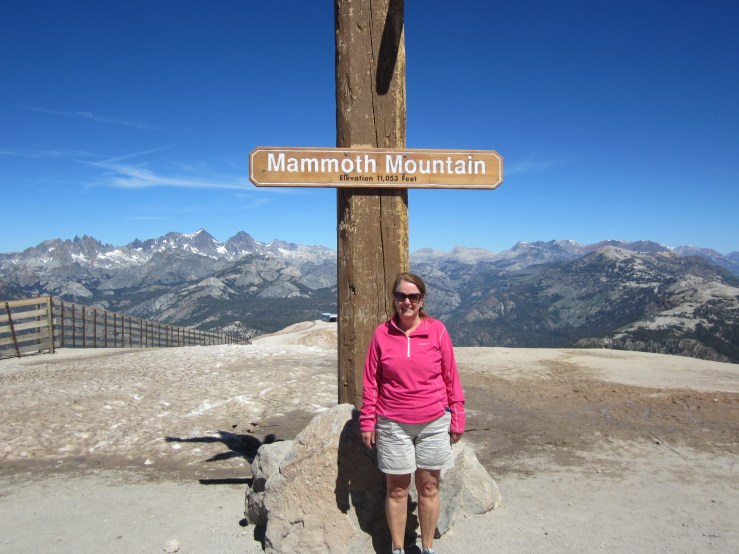
My wife’s brother-in-law, Art, would have hooted at my rigging of the fly rod. All I was really interested in was to see if I could remember some of the casting fundamentals that he had attempted to teach me over the last few years. The beach front was wide open. No scrubby bushes or tree limbs for a line to tangle. This uncluttered beach was unlike some of the streams and rivers we had fished near Mammoth Mountain, California.

For the saltwater rod, I tied a short leader to the end of the line, and then clipped on a lure that had worked in the past. I knew the locals would recommend a fresh-cut bait of some type. But, for this three night stay in Cape Charles— I was keeping it simple.

I drove into town, parked parallel to the beach, and made the short walk down to the shoreline. I placed the tackle box on the packed alabaster tinted sand. Then, I snugged a surf rod holder into the same sand, pulled a pair of needle nosed pliers from the tackle box, and with fly rod in hand strolled toward the water.

A breeze was coming off the Chesapeake that consistently kicked up little breakers. Casting a light fly line into the wind didn’t gain much distance, so I turned my body to the right. This allowed my casts to float northward with a bit more distance.

Slowly, my rusty casting shoulder limbered a bit. My aging brain recalled a trace of the required motion. However, I am certain anyone scanning the horizon with a pair of binoculars from one of the homes across the street wondered what in the world is that old man doing?

I wasn’t optimistic about catching any fish. On the previous day, I had seen some good-sized minnows swiftly, scampering by me in the ankle-deep shallows. Further down to my right, two teenage boys with rods in hand waded out past me to try their luck, and sadly they had no luck.

Way out on the horizon, a couple of large ships were moving through the bay. Remaining from the previous day were two large tankers still anchored in solitude.  Even if I don’t get a nibble, I did catch something— the beginning of a beautiful morning on Virginia’s Eastern Shore.

Each day we are anchored to the beginning of a new day. The opening words found in Hebrews 6:19 seem to fit here:  “We have this hope, a sure and steadfast anchor of the soul.”

No matter where I am in my daily living, I need something to anchor my soul. For when I am in restless, uncharted waters, consumed with worry, doubt, and anxiety, I’ll take a cast in the steadfast hope found in the good Lord.

Because in that hope is a peacefulness, a quietness, and a reassurance.

Cape Charles Day 2: End Road Work/GDSWORK by Bill Pike

Our almost two year old granddaughter seems to have an internal alarm clock like me, her grandfather. She is consistently an early riser with 5:45 her target.

This morning, she gave her parents an extra five minutes. I must have been tired. I didn’t hear her.

I rushed my packing for this trip and realized my running shoes were still in our bedroom closet back in Richmond. I had worn on the drive down my previous pair of very tired running shoes that I still wear for my YMCA workouts. I wanted to get in a run while here, so I decided to gamble that the old shoes still had enough support to let me amble out of the neighborhood.

A few minutes after 7, I was on my way headed toward 184. My goal was to run into town and back. Yesterday, it appeared to be a doable route. As I started lifting my feet and legs, I quickly felt the early morning heat and humidity. The sun was behind me, but it was up, and it rays were already starting to bake the atmosphere.

Out on 184, there was a good bike lane that allowed me to run facing the oncoming traffic. A number of cars must have realized a senior citizen was out for a jog as they gave me a wide berth when they whizzed pass me.

IMG_0908

I barely noted on my left the framed shell of an old brick building that summer vegetation was doing its best to conceal. Railroad tracks also paralleled on my left side. Weeds and grass along the track’s bed had been treated with chemicals to push back their growth. The treatment worked as the foliage had turned from green to a faded tan.

A chubby farm dog wove in and out of soybean rows near the side of the roadway on my right. I guess the sound of a passing car kept him from joining me.

As I slogged along, a bright orange, End Road Work sign was posted on the right shoulder of the road. Within a few steps of passing that sign, a car passed me with a license plate— GDSWORK. My feeble brain matter interpreted those letters into God’s Work.

Crepe myrtles continued to make their presence known. One farm lane had a spectacular line of crepe myrtles on both sides with their rich, blushing pink extending as far as I could see.

IMG_0905

As I neared town, the speed limit had dropped to 25. Since I was barely moving at turtle pace, I had no worries about receiving a Bernard P. Fife citation for speeding.

Most of the store fronts were quiet, a couple had some coffee activity. I worked my way along the street where the beach front starts. Sand dunes with designated pedestrian access split the sandy mounds. To the credit of the town of Cape Charles, there is no parking fee for beach access, and the town even provides a blanket state saltwater fishing license for all anglers on the town’s fishing pier.

I made the right turn that would take me back to 184. This street revealed block after block of all sorts of houses. Nifty exteriors showcased an array of colors combined with attractive landscaping creating a pleasant environment. Also sprinkled along this route were churches. Catholic, Episcopal, Methodist, and Baptist were among the denominations represented.

With the town line fading behind me, I chugged even slower along 184.  A butterfly fluttered in front of me heading across the roadway. I wondered if it could dodge the grills of passing cars.

As I moved eastward, the beaming sun’s heat was in collusion with the humidity and dew point. Shady spots were sparse. I kept hoping my left turn was around the next bend.

Along the road’s shoulder, scattered pieces from someone’s fender bender caught my eye as did the faded wooden top from a bushel basket. I guess out here that basket might have held crabs or vegetables.

No dry spot appeared anywhere on my body, my eyes scanned further ahead. Like a child on a long family road trip, my mind was calling out, “Are we there yet?”

I thought about the End Road Work sign and the license plate I had seen earlier GDSWORK. Made me think for a moment—unlike the road work project that eventually comes to an end, our runs in life with God are always a work in progress.

That license plate had it right, I am God’s Work. Apparently, on this sweltering morning, God’s not willing to leave me on the roadside as a collapsed puddle of nothing. I reckon He’s not finished with me yet as the left turn for Plum Tree Road finally shows up.

No matter where we are in life, God, if we let him is always at work in us.

Richmond to Cape Charles, Virginia Day:1 by Bill Pike

A bit after 12:30 p.m. on Monday, July 17 the journey started. My wife, the Commander Supreme, had orchestrated this deployment to Cape Charles, Virginia. In truth, this excursion had significant other commanders, our oldest daughter, her almost two-year old daughter, my mother-in-law, and our youngest daughter. Our son-in-law and I were clearly outnumbered, but we had endured such road trips in the past, and we knew how to mind our manners and pick our moments.

IMG_0907

So far, July had given notice that summer was officially here.  With a Bermuda high anchored off the mid-Atlantic generating 90 plus degree temperatures combined with high humidity and dew points, your were guaranteed the following:  if you ventured outside at anytime of the day, if you moved you were going to perspire, and if you really put your body in motion the sweat from your body would drench your clothes and puddles would form from the runoff where ever you stood or sat.  We were hopeful that breezes from the Chesapeake and the Atlantic might make Virginia’s Eastern Shore a tad cooler.

The brief drive down I-95 south, connecting us to I-64 east was uneventful.  A couple of slow pockets of traffic appeared in the Williamsburg to the Hampton Roads tunnel entrance section, but we kept moving. Eventually, we saw the sign for Exit 282 that would connect us with US 13 north and the Chesapeake Bay Bridge Tunnel.

We worked our way onto US 13, and soon the traffic thinned and stop lights became more sparse.  Before long, we were in an EZ pass lane paying the toll. The first segment of bridge showed water in every direction.

Our convoy of two cars had agreed to meet at Fisherman’s Island to stretch our legs and check out the view. While there, we caught a glimpse of a huge tanker ship heading west toward port. Once we were back on the road, that tanker probably skimmed right over us in the first section of the tunnel.

Much has been written about this engineering and construction fete of linking the mainland of Virginia to Virginia’s Eastern Shore. As our son-in-law, Doug, and I drove, we wondered out loud about how all of this came together.

The logistics for staging the equipment, materials, and all of the construction workers must have been incredible, and then toss in the whims of mother nature to make the project even more interesting. Doug wondered about posting the depth of the water where the tunnel sections are placed, and then reasoned that maybe travelers would not like to know how many feet down they were.

Before we knew it, the bridge spans and underwater tunnels were behind us. Sandy shore line and green vegetation filled our field of vision as we entered into the National Seashore. That lush green was interrupted by stately deep pink colored crepe myrtles sporadically appearing along the roadside. We continued to push north along US 13 looking for our next connector state route 184 that would take us into Cape Charles.

Since our Vacation Rental By Owner house could not be accessed until 4 p.m., we drove into the town of Cape Charles, parked, and started our walk to the Brown Dog. This local ice cream place was active with locals and tourists buying an assortment of handmade flavors on a hot Monday afternoon.

The ice cream revived us as we headed toward the house and unpacking the cars. Located off 184, this development probably in its previous life had been farm fields. Flat with very few trees, an assortment of houses and a swimming pool for the neighborhood now dotted these acres.

Laziness hit us, and a carry out dinner was ordered from a local seafood restaurant. Might have been the best fish tacos I have ever eaten with thick grilled pieces of Mahi-mahi garnished with a perfectly mixed coleslaw, tomatoes, and lime wedges.

Just before an after dinner walk,  I spotted a couple of lightly tanned deer, munching on grass in an open field down past our house.

By 9, I was ready for some sleep, and headed up to try to read. I might have read a couple of pages before the Commander Supreme saw me dosing off. She recommended that I give up on the book, and I did.

It’s Alive by Bill Pike

I keep the charging cord for my flip phone in a drawer in the kitchen. That’s correct, I said flip phone. IMG_1376.jpg

My wife and our grown children shake their heads that I still use a flip phone. I think they are embarrassed when I need to use the phone in their presence.

All these new phones have too much junk on them for a rapidly aging grump like me. When it comes to cell phones, I believe in the KISS principle (keep it simple stupid).

Yes, texting is a pain on my phone, but I generally will send back one word responses if someone sends me a text.

I am a bit intrigued about newer phones that have improved photographic and video capacity. Almost daily, I’m reminded that if I had a new phone, my access to our grandchildren via technology would quickly improve.

That’s a good point, but I’m not ready to cave in—yet.

But, I do have a concern about the cord I use to recharge my cell phone—I’m pretty sure it is alive.

I have a hunch that deep down inside, you have reached a similar conclusion about your charging cord.

However, you have been hesitant to say this out loud in public. You are probably concerned that someone might think the gray matter between your ears is leaking if you told a friend in confidence that the charging cord for your cell phone is alive.

That’s ok, I’ll say it for you, and all of the rest of the timid souls out there—my cell phone charging cord is alive.

Here is my theory.

When I’m charging my phone, somewhere in that cord is an embedded microscopic cell. While the phone is charging, some of the electricity from the outlet is diverted to this cell and stored.

After my phone is charged, I disconnect the cord from the outlet. I gently roll the cord back up into a small circle. I return it to the drawer.

In couple of days, I come back to the drawer ready to use the cord again. I unravel the cord and stretch it out. To my dismay, I find that somehow, someway, the cord has formed a loop in the middle of the cord. If I pulled it tight, a knot would form.

How can this be? How does a cord left alone in a drawer for two days move about to form a loop, and not just any loop, but a loop that could become a knot?

I’m pretty sure that all the great minds of science Wally’s friend Clarence, (nicknamed Lumpy), Ernest T. Bass, and Uncle Jed’s nephew, Jethro, have reached the same conclusion:   the cord is alive.

That stored cellular electricity in the cord brings life, and the cord like a stealthy intruder, silently moves around in the drawer and creates this entanglement.

I’m convinced the cord knows these covert maneuvers drive me nuts. One day, when I least expect it the cord will spring from the drawer and rapidly wrap me up. Then it will alert similar cords in the house, and a redemptive revolution of some sort will take place.

Sometimes, my life feels like a twisted and knotted cord.  Despite my best efforts, I become so entangled with  all of my responsibilities that I lose my focus and effectiveness.

I recently turned 65.

I am constantly reminded about how fast time is moving.

Sitting at a stoplight the other day the clicks of my turn signal seemed to match the nonstop soundless clicks on my watch.

Time is relentless. Time clicks.

Time never rests.

It is always on the move.

That coiled charging cord in the drawer is moving too.

But, a twisted cord in a drawer is nothing compared to the entanglements that sometimes wrap my life, and maybe your life too.

While my entanglements wear on me, I often find my blunders are pale in comparison to challenges of people all around me.

How do we free ourselves from such snarls?

How do we prevent these twisted coils from tightening even more?

It took a lot of years, and while I am not perfect in my loyalty, I have found that entanglements can recoil with prayer.

In Psalm 42 and 43, the following verse appears three times:

 Why are you cast down, O my soul, and why are you disquieted within me? Hope in God; for I shall again praise him, my help and my God. (Psalm 42:11)

Clearly, entanglements have the capacity to cast me down while internally silencing me.

But in those worrisome seconds that are ticking by, wearing me down, I need to slow my pace, and realize— I can also find help and hope in God.

Over A Beer by Bill Pike

Our 86-year-old next door neighbor occasionally will ask me, “When are we going to get a beer?”

Richmond, like other towns and cities across America has experienced an explosion in the growth and development of craft breweries.  In any direction, a beer lover can find a local brewery with a uniqueness all its own, but bonded by making and serving beer.beer

So on a beautiful, but warm Thursday, May 3, I asked our neighbor if he is willing to ride over to Final Gravity, a small brewery in the Lakeside community of Henrico County. He accepts.

Within a couple of minutes, we are organized and ready to depart. I am exceptionally careful on these excursions. Even though, he doesn’t think so, my neighbor’s mobility and balance are not what they used to be. So, I’m with him every step.

I know before this trip is over, I’m going to hear about Richbrau.

Richbrau came to life in Richmond in 1933. The brewery brewed beer for Richmonders until it closed in 1969. My neighbor told me there was always a tap of beer available for Richbrau employees. The only rule was— do not over indulge.

As we drove toward Final Gravity, sure enough, Richbrau surfaced in our conversation.

Somehow the Lakeside community has held on. Part of that holding on was grounded in the opening several years ago of the Lewis Ginter Botanical Gardens. It has become quite a showplace in our state.

We park in a parking lot that is the home for the Lakeside Farmers Market. It is a slow, but steady walk to the brewery.

Final Gravity started as supply store for home brewers. A few years ago, the owner decided to showcase his brewing skills and opened the brewery. So now, the location is both a store for home brewers and a successful craft brewery.

I scan the list of offerings. I’m looking for a beer that will satisfy my neighbor’s old school beer palate. The order is placed, our beers promptly poured, and we find an empty table.

My neighbor takes a sip, and he proclaims, “This is a good beer.”

I explain to him the home brewing store and how this place became a brewery. In his hey day, my neighbor was a commercial builder. Even as we sit, his still keen eyes scan the bones of this building.

He talks about the upcoming college graduation of one of his granddaughters. I sense his pride, and he reminds me she is graduating early—completed her requirements in three years.

And then out of the blue, my neighbor shared with me the story of this granddaughter’s brother. He is in jail.

The teenage years for this young man had been a challenge for him and his family. School was a battle of ups and downs. Both public and private schools were a part of that journey. Eventually, a plan was developed that allowed him to also pursue an early graduation track. That plan worked, but life after high school consisted of more challenges.

He encountered skirmishes with individuals and difficulty at times complying with law enforcement.

As his grandfather, my neighbor had many conversations with his grandson. He tried to offer wisdom, guidance, and prayer. If any of that counsel was absorbed, it was short-lived.

His life continued a trek of bad choices. The grandson favored driving an old, beat up, pickup truck that apparently had no windshield.

Late one night, a young lady was riding with him. The grandson wrecked the vehicle, and the young lady was thrown from the truck. She was killed.

In seconds, the lives of two families were impacted forever. The grandson is serving seven years for his careless and reckless ways.

I could hear the sadness and disappointment in my neighbor’s words as he shared this story. I can only guess how his grandson’s parents must feel,  and I have no concept of the grief the family of the young lady must experience.

Growing up is never easy. I had my challenges.

And you know, I still have my challenging moments.

Moments when advice and wisdom have fallen on my deaf ears too. I think about all of the mistakes I have made—the people I have hurt, let down, and disappointed.

I wish I hadn’t. But, I did. I wish I could correct. But, I can’t.

Growing old isn’t easy either.

My neighbor is as stubborn as a turtle who emerged from the thick woods only to find a two lane country road to cross. The turtle is determined to make it to the other side.

In a similar journey, my neighbor is determined to stay in his home. Both the turtle and my neighbor have tough journeys ahead of them.

We finished our beer.

A group of runners is gathering outside the brewery for their weekly Thursday afternoon run.

We make the walk back to the car without a stumble.

Psalm 143:10 states:  “Teach me to do your will, for you are my God. Let your good spirit lead me on a level path.”

I hope my neighbor and his grandson will find the good spirit of God to lead them on a level path.

It’s Not Supposed to Be That Way by Bill Pike

Late on the afternoon of Saturday, May 5, I was sitting at a table in Trinity Hall at our church having dinner.

Our guests, homeless families from CARITAS (Congregations Around Richmond To Assure Shelter), had finished eating. Parents and their children were getting acclimated to a new environment.

homelessmomandchild (2)

These families are with us for two weeks. A commercial bus drops them off every afternoon and returns to pick them up every morning. At the end of the two weeks, these families will regroup and go to another church. Sometimes during that time frame, a family will have the good fortune to find housing. Securing that stability in their lives is an important step.

Sitting to my left is the overnight shelter supervisor. The rest of the table is filled out with friends from church.

I asked the supervisor a few questions about his work. His answers were transparent and reflected his 17 years of working CARITAS.

During that time, he had seen first hand the challenges experienced by the homeless. Not much that he hadn’t seen. From the pre-existing health condition that caused a person to pass away during the night to the expectant mother who was ready to give birth.

One of my friends at the table who has always been a part of our church team in working CARITAS shared a story.

Last year, there was a young lady in the program who was expecting. She was 17 years old. Her delivery moment arrived at our church. Fortunately for my friend, the expectant mother made it to the hospital in time.

The next day, my friend went to visit her at the hospital. He was surprised to find the young mother alone in her room. My friend asked about her parents. The young lady responded that her parents had disowned her. When he asked about the child’s father, her response was she didn’t expect to see him either.

At this point, my friend said to himself—“it’s not supposed to be this way.”

I wonder why in the Bible, Jesus states in Matthew 26:11“For you always have the poor with you, but you will not always have me.”

Does he say this to challenge us?

Look folks, the poor are always going to be with you, so I need you to work to figure out ways to eliminate all of those issues the poor are facing. And by the way, I’m not always going to be around to remind you of this obligation, so get busy.

CARITAS has been around since 1987 working to help the homeless. Here we are 31 years later, and while I’m sure CARITAS makes progress each year, we still have the challenges the poor face with us no matter where we look in our city, state, country, and world.

Recently, I watched the PBS series Super Skyscrapers. This show focused on the construction of one skyscraper in New York City. The title of the episode was The Billionaire Building.

Someone paid $90 million for the penthouse on the top floor that looks out over Central Park.

No luxury was spared anywhere in the building.

Bathrooms were constructed of imported Italian marble. Kitchens were custom made by hand in England by master craftsmen. The building even has it own state of the art window washing apparatus.

The show was fascinating from the perspective that we have the capacity to build such a skyscraper.  But, I  also found the show extremely sobering. We can build the most luxurious skyscraper in the world, but we can’t solve the daily challenges faced by the poor.

Why is this? Why can’t the talent and skills used to plan and build the skyscraper be applied to solve homeless problems around the world?

Maybe, the answer is that we silently affirm Jesus’ words: “You will always have the poor with you.”

All of those nonprofits and government agencies can handle the poor. Why should I worry and push myself to become involved?

Maybe because deep in my heart, I think Jesus made that statement as a challenge.

My friend’s comment about the deserted young mother:  “It’s not supposed to be that way,” caused me to reflect further.

If we really wanted to solve the problems of the poor, I want to believe we could.

But, I don’t think we see this as an urgent priority.

After all, the poor have always been with us.

The lyrics to Bruce Hornsby and the Range’s first hit record, “The Way It Is” have always intrigued me. The four lines from the chorus make me pause:

That’s just the way it is.

Some things will never change.

That’s just the way it is.

Ah, but don’t you believe them.

If Jesus was still walking around today, he would affirm that last  line.

He wants us to realize, “It’s not supposed to be that way.”