COVID-19: One Big Cootie

If you grew up in the 60s, then I hope you have watched the movie That Thing You Do. This film was written and directed by Tom Hanks.

And while I am no expert, the movie perfectly captures the life cycle of a one hit wonder band. In fact, the name of the band created and followed in the movie eventually is named The Wonders.

Hanks spares no details in telling the story of The Wonders. From their humble beginnings to a top ten hit with all of the ups and downs in between. The actors and actresses cast are perfect. And so are the sets and all of the props. 

The soundtrack for the film matches the popular music styles from that era complete with the disc jockeys who play the songs on those local AM radio stations.

Along with writing and directing the movie, Tom Hanks plays a pivotal role as Mr. White, an A&R (Artists and Repertoire) executive from Playtone Records.

In real life, The Wonders hit record “That Thing You Do” was actually written by Adam Schlesinger a bass player and songwriter in a real band —The Fountains of Wayne. If you listen to “That Thing You Do” your ears will automatically be transferred back to the British Invasion. There is even a scream before the guitar solo just like John and Paul could do.

But as real as the movie and the soundtrack are at capturing that joyful time in music, the now of everyday real life can be jolting too.

On Wednesday, April 1, 2020, at age 52, Adam Schlesinger died from complications of COVID-19.

In the movie, That Thing You Do, there is a backstage scene where Mr. White is telling The Wonders how important their performance at this show is for them. He points out a rotund man, K. O. Bailey, with a cigar who is an important local disc jockey. Mr. White refers to Mr. Bailey as “the biggest Cootie I ever saw.” 

Well, that’s the way I feel about COVID-19, it is the biggest cootie I have ever seen. But, here is the problem—cooties are basically fictional germs grounded in the playfulness of our childhood. There is nothing fictional about COVID-19. 

On the afternoon of Thursday, April 2, I found myself on I-85 working my way back to Richmond. The interstate message boards in Virginia and North Carolina basically carried the same communication: Stay Home. I had a valid reason for traveling.

Along those lengthy straight stretches on I-85, at times it appears that the road builders just cut a swath through timeless pine forests to make the road. On both sides of the highway,  long tall pines stand upright with other trees and undergrowth dwarfed by their size.

 At certain points along the roadway the green spring landscape is broken. Clusters of Eastern redbud trees unite together. Their purple blooms breakup the sameness found in the median and shoulder of the interstate.

Out of all the trees that grace the Middle Atlantic states, I think redbuds are one of my favorites. Clearly, they are a reliable signal that spring has arrived. But, I also sense redbuds are dependable and resilient. Plus, when their leaves form, they are in the shape of a heart. To push back this big cootie, COVID-19, we will need lots of resilience in our hearts.

Closer to Richmond, I pickup our NPR station. I caught the last thirty minutes of Fresh Air. Host Terry Gross was interviewing a British trauma surgeon, David Nott.  Dr. Nott has written a book—War Doctor: Surgery on the Front Line.

Toward the end of the interview, Terry Gross asks Dr. Nott to comment about those extremely intense, high anxiety moments when he felt like his life was on the line based upon the pending doom around him. For example, in the middle of a life or death surgery, the following suddenly happened to him:  the hospital is being bombed, the lights go out, and the personnel in the operating bunker with him leave out of fear.

Dr. Nott without hesitation admits, he does not pray everyday, he is not very religious, and he doesn’t attend church very often. 

And yet, Dr. Nott without any uncertainty acknowledges the following:

“On occasions where my life has been almost on the line, where I felt that within a split second, I’m going to die here … something happens in my head and I start to pray and I feel like I have a frequency band on the radio in my head that I turn on to. And I do go on to that frequency and I feel that I am able to talk to God.

And I do feel that he is listening to me and he’s listening to my severe anxieties at the time. And it gives me enormous comfort to realize that I am talking to him and that he is giving me some strength back.”

I am certain that you and I, (who knows, maybe even ourselves), know someone in our lives who have had similar Dr. Nott experiences in their lives. In those harrowing moments, in a matter of seconds, silent prayerful words are spoken. And then just as quickly, a form of relief or a solution can be felt by the person making the request.

So much for God being dead!

Dr. Nott is also involved in treating patients in Great Britain who are battling COVID-19. He says, “Treating this deadly virus is like fighting an invisible enemy.”

I wish COVID-19 was a harmless, whimsical cootie, but that’s not the case. Just ask the family of Adam Schlesinger and his children, and sadly thousands of other families.

Recently, I received a delightful handwritten letter from a former colleague at Hermitage High School. It has been 24 years since she and her husband retired to Arkansas. Unfortunately, her husband passed a few years ago.

In her letter, my friend told me she still loves to read. Interestingly, books about World War II are a part of her reading landscape. 

That made me think of Ray Lambert’s book Every Man A Hero. In World War II, Lambert was a medic. He was on Omaha Beach during D-Day. 

Once he landed on the beach, his work was nonstop.

At some point, Sgt. Lambert went into four feet of shoreline water to pull out a wounded soldier. With the weakened soldier in tow,  an approaching landing craft rushed in and dropped its ramp on to Sgt. Lambert. That blow knocked Lambert and the soldier below the cold Atlantic.

For countless seconds Lambert and the soldier were trapped underwater. The weight of the ramp prohibited any movement. Mr. Lambert thought his life and the life of the soldier he was trying to rescue was over. No matter how he tried, he could not move.

And then for some reason, the ramp went up. With the soldier still in his grasp, Lambert surfaced and gulped for air. Somehow despite breaking the fourth and fifth vertebrae in his back, Lambert made it to the shoreline with the soldier.

Clearly, Ray Lambert has reflected a lot about that moment. He has inspected the situation from multiple angles and asked a wide range of questions. 

But, here is what Ray Lambert has concluded:  “But, I’ve come to believe God had a hand in it. For whatever reason, I was meant to survive that day. I was meant to do other things after storming the beach and helping my men. I’m still working on what all those things may be.”

I think it is safe to say that COVID-19 is the biggest cootie of my lifetime. And I think it is also safe to say that pushing back COVID-19 will come down to two things: the same courage and strength that Ray Lambert exhibited on Omaha Beach, and God’s hands.

Remember, God is no one hit wonder.

Any doubt, ask Dr. Nott and Ray Lambert. 

And while you are asking, check on their hearts.

I think you will find their hearts to be just as resilient as the heart shaped leaf of the redbud tree.

And a quick reminder for you, your hearts are resilient too. 

Don’t even think about forgetting that.

 Because a big cootie can’t handle a resilient heart.

 Footnote:  Wikipedia and NPR sources were reviewed in the writing of this blog post. If you really want the scoop on cooties check out Jane C. Hu’s article in the May 2019 issue of the Smithsonian.

“Are you crying?”

Perhaps, you remember the scene from the movie A League of Their Own, when manager, Jimmy Dugan, chews out one of his players, Evelyn. Evelyn made a mental throwing error that caused her team to lose their lead in the game.

After Dugan berates Evelyn, he walks back to the dugout. Evelyn remains on the edge of the playing field, and she starts to cry. Manager Dugan sees this, and asks Evelyn, “Are you crying, are you crying?” Even though she is crying, Evelyn responds with a “no.” 

Dugan explodes again, charges back out to Evelyn and emphatically tells her—“There is no crying in baseball.”

Well, maybe there is no crying in baseball, but there is crying in real life.

On Friday morning, February 28, I had a good cry.

 A dear family friend had to make a difficult decision.  That news pushed me to the edge. The week had already been rough with some frustrations pinging me from lots of directions. I sobbed for several minutes. I needed that cry.

On Sunday afternoon, my friend and neighbor, David Teague, and I  went to see the documentary, Once Were Brothers. The film is about The Band. No one in the history of rock music has a story like The Band. Despite their successes and the mark they left on the music industry, The Band’s narrative at times is very sad.

After leaving the theatre, David and I acknowledged how sometimes a song or the performance of a song can move a person to tears. A couple of times during the documentary, David’s eyes filled with tears over some of the songs. 

It is ok to cry.

I love this quote from Ray Charles about crying:  “I suppose I’ve always done my share of crying, especially when there’s no other way to contain my feelings. I know that men ain’t supposed to cry, but I think that’s wrong. Crying’s always been a way for me to get things out which are buried deep, deep down. When I sing, I often cry. Crying is feeling, and feeling is being human. Oh yes, I cry.”

I think what I love about Mr. Charles’ quote is the simple honesty. I can’t tell you how many times tears have welled up in my eyes listening to his live recording of “You Don’t Know Me.” I can hear the heartache in his voice. 

On Friday morning, I was crying out of sadness and admiration. A person had been given a second chance by our friend. 

Our friend had invested a lot of time, hoping this person would beat the odds, figure things out, and make life work. It took an incredible amount of courage and risk for our friend to do this. But now, no one will ever be able to say our friend didn’t provide an opportunity for change to take place. 

American writer James Baldwin has these words of wisdom attributed to his thinking:  “People can cry much easier than they can change.” I agree with him. It is tough for a person to change. Especially when he or she can’t see the need to make an adjustment.

Now, our friend will need to recast how to move forward without this person. I know that will not be easy. But, sometimes second chances also apply to the people who initiate them. Now, our friend has an opportunity, a chance to change the future for the good.

I hope our friend can hold on to this logic from Audrey Hepburn:  “For beautiful eyes, look for the good in others; for beautiful lips, speak only words of kindness; and for poise, walk with the knowledge that you are never alone.”

After making a difficult decision, it is easy to lose your poise, your confidence, your trust in yourself, and others. 

But the key to moving forward is just like Miss Hepburn stated—remember “you are never alone.” 

Don’t forget that.  

And even though there is no crying in baseball, it is ok to cry in real life.

And you will not be alone in your crying.

COVID-19: Honking For Jesus

On the morning of Monday, March 30, I went for a run. 

It was a pleasant 59 degrees in Richmond.

My plan was to have started the run earlier. It is now 7:20. I am easily distracted.

A few steps on Sweetbriar, then a left on Stuart Hall where it merges into Sweetbriar, and down the neighborhood’s favorite winter hill for sled riding. Cross the creek, a wrong left turn entry on to the front drive of Trinity UMC, left on Rock Creek, and then a right on Baldwin.

At Baldwin and Westham Parkway, I had a decision to make, stay on Westham, or crossover and get back on Baldwin. My brain said, make the crossover. It’s late, you will possibly encounter cars despite COVID-19.

I followed my brain’s reasoning even though this would mean a long, long chug up a long, long, long hill on Horsepen.

Spring was still sprouting. It was really sprouting pollen. That yellow green powder had coated everything. 

Bursts of colors, splotched the landscape. Azaleas were starting to add to the palette. I don’t know why, but the purple blooms  of the redbud trees always catch my attention.

Signs of COVID-19 are in the neighborhood. Silent parked cars sit in driveways and along curbsides—no morning commute or school drop off today.

Occasionally, I spot a teddy bear in a window. Part of giving children and their parents something to search for as walking has returned as an almost daily activity.

I see lots of sidewalk, driveway, and roadway chalk art.

 This increased on Friday afternoon as teachers from Tuckahoe Elementary School rode through our streets. Those messages were heartfelt—the word love dominated—“we love our teachers.”

I always marveled at artwork from students in school buildings. That art at any level brings a building to life. But, in truth too, I marveled at the skills of the art teacher who could guide a student into creating something unique and lasting.

Horsepen hill is what it always is for me a challenge. My heavy legs don’t want to go forward. But, I keep moving. I could never be a mountain climber. I would expire before reaching the summit.

Finally, I come to my left turn that will meander me back to Westham. Next, I will crossover to Woodberry and make my way to a left on Hollins.

Hollins is split by a creek that kids in the neighborhood love to explore. Most of the time it is a trickle of water, but a downpour from  summer thunderstorm can change that quickly.

Just as Hollins splits into two roadways, I notice among the chalk art the following words:  Honk For Jesus.

I wonder what prompted that posting. Was it COVID-19 or some other personal need? As I continued to run, my brain reasoned Honk For Jesus was more of a reaction to COVID-19. 

One of the best human beings that the good Lord ever created was Al Dudley. Al was a remarkable social studies teacher at Hermitage High School. Al was a friend to all. His heart was golden. So many times, he gave of himself to me and others. 

I remember once talking with Al over the state of America, and Al said very simply:  “America will need a religious revolution to right itself.” 

I have no idea if Al was correct in his assessment. 

But, it seems to me that at this stage in our history, and the data bears this out, our interest in attending church and checking in with Jesus on a regular basis are in a significant decline.

Will COVID-19 slow that slide, I’m not sure. But, I would wager that right now, there are lots of people in America and other parts of the world who are honking for Jesus. A pandemic causes that type of honking.

Perhaps, what I need to realize is this—Jesus has always been there quietly honking in my life. But here is the real question—when do I truly reach out to him? If I’m really, really honest, that reach out comes when I’m in crisis. Who knows, maybe it is that way for others too.

I am no expert on World War II, but there is something unique about the grit and determination of that generation. I think they really understood sacrifice. I’m not sure I do, and I’m not sure America does either. 

But, I don’t think the World War II generation honked for Jesus. They didn’t need to, for the most part that grounding in Jesus was soundly in place.

Today, COVID-19 is grounding us.

 What is this virus grounding us in? 

Are fear, uncertainty, disbelief, instability, insecurity, worry, and anxiety, consuming our thoughts?

I’m not going to lie. Those unsettling words are rattling between my ears too.

But, I’m also working to counter those troublesome words. With some Jesus honking from Galatians 5:22-23:  “By contrast, the fruit of the Spirit is love, joy, peace, patience, kindness, generosity, faithfulness,gentleness, and self-control. There is no law against such things.”

And, I’m also holding on to the words from a t-shirt I saw on a gentleman at a restaurant in Beaufort, North Carolina in August 2019. Basically, the printed words on the t-shirt said this:  “I’m a dealer in hope.”

A honk for Jesus is a honk for hope.

Richmond West Breakfast Lions Club speech

Back on February 10, 2020 I had the privilege of speaking at the monthly meeting of the Richmond West Breakfast Lions Club.

I want to thank my friend, Bruce Watson, for inviting me to speak. This invitation is probably the only mistake Bruce has ever made in his life and career.

In all seriousness, the good Lord doesn’t make a human being any better than Bruce. Doesn’t matter the setting—education, church, or community, people have high praise for Bruce and his work. He has touched a lot of lives for the good.

You know my wife reminds me,  William, you have a resume full of experiences, but you are still a knucklehead.

 So, let this knucklehead get started.

Perhaps, you are familiar with this verse of scripture from James Chapter 3, verse 1:  “Not many of you should become teachers, my brothers and sisters, for you know that we who teach will be judged with greater strictness.”

When I served as principal at Lakeside Elementary School, we were in our second year of SOL testing. Our results from the first year were not acceptable.  We were nowhere near passing. Accreditation wasn’t on the radar.

During that second year, on a beautiful spring afternoon, I called for a faculty meeting. Calling for a faculty meeting that wasn’t on the calendar was probably a bad idea, but I did it any way.

On the previous afternoon, our faculty and I had a frustrating meeting with one of the big enchiladas from the school board office. The focus of the meeting was our SOL testing prep.

The next morning that big enchilada was waiting for me when I arrived at Lakeside. We met, talked. It was a civil conversation. But, deep inside I was still agitated. 

Immediately after that ambush, I went into a disciplinary review hearing on student, with his parents, and the school board’s hearing officer. If there was a gauge for measuring stress in a body— mine was about to go off the scale. I felt like an old pressure cooker hissing  and shaking on a stove top.

Somehow after the hearing, I tried to get back to the routine of the school day, but something kept gnawing at me. I was worried about the mental state of our faculty. I needed to shift the pressure they were feeling off of them and on to me.

So, I decided to call for that faculty meeting.

We gathered in the auditorium. Then I asked the faculty to follow me out into that beautiful spring afternoon. We huddled up in the middle of the playground far away from the building. I had a scrap of paper with me—the words from James Chapter 3.

I read those words to the teachers, and then told them that I believed in them, that I trusted them, and that I would handle the big enchiladas. 

At the end of that school year, our students gave us the SOL success we needed.

I have often asked myself—why did this occur?

I really think the answer has many possibilities, but I keep coming back to support. 

At the end of the day, I would wager any teacher in America would tell you being supported is often what they need the most, and sadly, that support is often what is lacking the most.

I was an imperfect teacher and administrator. But, no matter where I worked in my career, my imperfections were balanced out and improved by the quality of the people who surrounded me.

Think about your own careers, your own lives, think about those people around you. How did they mold you, shape you? How did they make you better?

That is what teaching is all about—molding, shaping, and making a student better.

Molding, shaping, and helping a student grow takes place in classrooms across the Richmond metropolitan area every day. 

But the challenges teachers face in doing that molding, shaping, and improving is now more difficult.

Teaching, perhaps more than ever in our history has become tough, tough work. In my old brain, there are no easy school environments anymore. 

Challenges exist in all schools, and they are not going away.

The real customers school systems serve today have changed dramatically. That customer base change is on going. School systems, their principals, and most importantly the classroom teachers deal with a changing customer base and community literally everyday.

So, why is this work, teaching, so tough at this very moment?

Well, unless you are prepared to stay here until this evening, I can’t give you all of the possible answers.

So, let’s talk about beer and ice cream for a minute. Yes, I know what you are thinking, Bill has lost his mind.

The craft beer explosion in America has changed the playing field. And to a smaller degree, so have tiny family run creameries related to ice cream.

If you don’t believe me, walk into your favorite grocery store and check out the shelf space for beer and ice cream.

 What you are likely to find is that the major beer and ice-cream producers are still around, but their shelf space has been encroached upon by smaller breweries and creameries. For the big producers, their market share has gradually been impacted. They never anticipated this intrusion.

My point is this— when it comes to properly funding public education to the levels needed in every part of our state and country— that shelf space for legislators is over packed. There is only so much funding shelf space available our public schools.

That shelf space available for public school funding needs to expand.

Money always has been and always will be a critical need in public education. But, believe me, I know that money tossing is not the cure all. 

However, I wonder how the life of a classroom teacher might be improved with the right kind of support? 

Superintendents, school boards, school board staffs, principals need to have a conversation with teachers now. I’m not talking about an on-line survey.  I’m talking  about a real one on one conversation. 

Yes, I suspect in those conversations officials will hear comments about money. But, I think teachers might also express “don’t promise me the money, promise me your support.”

Educators have I want to fix and save the world mentality. 

They are committed to this. 

But after years in the classroom, with all that society, policy makers, and experts who have never been in the trenches toss at them, they become weary and worn down.

When a teacher becomes weary and worn down, fixing and saving the world is seen through a hopeless lens.

Let me move away from gloom and doom.

At this very moment in a school, a student is learning an essential life skill. That student is learning how to read.

At this very moment in a school, a student with special needs has physically accomplished something that was thought to be impossible.

At this very moment, a high school nursing student has been accepted into a summer nursing program as an apprentice at a local hospital.

At this very moment, a teacher and a parent are joyfully crying because they figured out how to work collaboratively with a challenging child.

There are more examples to share, but that molding, shaping, and improving that I just described really came down to this critical piece—building relationships.

Building relationships comes from our internal energy, our interior  fortitude to find the ability, capacity, and desire to build trust with a person who we might view as a difficult challenge.

When parents trust educators, educators trust parents, and students see that relationship—there is an opportunity for molding, shaping, and improvement.

As we look to the future, my barely functioning brain tells me, if we really, really want to solve some of the challenges we face in public education and society in general—we must stop the erosion of the American family.

The decline of that partnership, that unit, that commitment is hurting us more than we want to admit. 

Hear me, I’m not saying that there aren’t exceptional single parents out there. I have worked with many outstanding single parents in my educator career.

But, we need to take a serious look at the breakdown of our families. No one wants to admit it, but I think it is a crisis.

Mark Twain once stated:  “ Humor is mankind’s greatest blessing.”

Here is a pitiful attempt at that greatest blessing.

The doorbell rang, and the lady of the house discovered a workman, complete with a tool chest, on the front porch.  

“Madam,” he announced, “I’m the piano tuner.”

The lady of the house exclaimed, “Why, I didn’t send for a piano tuner.”

The piano tuner replied, “I know, but your neighbors did.”

From 1981 to 1989, Dr. F. Douglas Dillard, Jr., served as the senior pastor at Trinity Methodist. 

At home, I have a book of Dr. Dillard’s sermons. 

In a sermon titled “Staying With It,” I have one line of wisdom from that sermon highlighted.

Dr. Dillard wrote: “Problems yield to sustained effort.”

That is a powerful sentence. 

I believe those words.

And I believe the challenges, the problems, we face in public education can be solved by our sustained effort.

Individually and collectively, we have no choice.

We can’t wait.

That molding, shaping, and improving for every child is depending on us.

It has been an honor to be with you this morning.

I’m happy to take any questions.

COVID-19 silence

As I start writing this piece today, I am reminded that March 29 was my father’s birthdate. I know that he, his parents, and his siblings lived through a lot. 

Eleven children—eight boys and three girls, income came primarily through tenant farming in Alamance and Guilford counties in North Carolina. And there was something else—a will to survive and a grounding in faith.

From those eleven children, only one survives today, Harry, the youngest. He is our family historian. If you have a family question, chance are Harry has the answer.

 There was sadness along the way. 

One of the daughters Mabel Ann, died not too long after she came into this world, and the oldest son, Boyd,  went down with the destroyer the USS Simms in the Coral Sea during World II. This was the result of an attack by Japanese planes.

I have no idea why I am sharing this history with you other than one word—perseverance.

Since the late spring of 1982, I have been running the roads through our neighborhoods Rollingwood, Westham, and College Hills. I say running, now it is more like the pace of a turtle. 

I’ve run in rain, fog, snow flurries, frigid temperatures, high humidity, the surprise of an early morning thunderstorm, pristine dawns, and the changing of our seasons. But in all of those runs, I have never experienced the early morning silence brought on by COVID-19.

Gone are the squeaks and rattles of a passing school bus, along with the chatter of parents and their children at a bus stop. 

Infrequent are the cars that zoom by in a rush on Westham Parkway whose drivers are trying to compensate for their tardiness.

It is so quiet that I can hear the plop of my heavy feet on the weather worn road surface, and my labored breathing inching up a hill like a tortoise. 

My brain takes me back to a mission trip with our church youth group to Galveston, Texas. We were working on an old shotgun style framed house that Hurricane Ike had pounded.

As long as I live, I will never forget the heat and humidity of that trip. Returning from our lunch break on a sweltering afternoon,  one of our youth noted—“not a single person was out.”  The locals new the intensity of the mid-afternoon heat. They knew better. Only fools from Virginia working on that dilapidated house would be out in such misery.

Perseverance.

It is no secret, COVID-19, has turned our world upside down. 

We are so accustomed to turning clockwise in our daily routines. Now, we are in a counterclockwise spin. 

The movements of a hurricane in our Northern hemisphere spin in a counterclockwise motion. That motion combined with many contributing factors build its formation,  strength, and steering currents. I wonder what we might learn about our steering currents from this COVID-19 counterclockwise encounter?

COVID-19’s impact is like the pebble dropped into the flat, tranquil surface of a body of water. Those ripples from that singular drop are hitting everyone. No immunity exists. Disruption is guaranteed. How will we endure these circumstances?

Perseverance.

I have noted in my runs that the silence is broken by the backdrop of birds singing, chirping, and pecking. Distinct among those sounds is the woodpecker. Talk about perseverance, the woodpecker defines it.

If you are looking for a book to read during this counterclockwise time, you might consider Erik Larson’s Issac’s Storm. This book is about the hurricane that devastated Galveston, Texas in September 1900. Larson focuses on Isaac Cline, the chief weather forecaster, for that part of Texas.

Larson says about Cline, “But this storm had dragged him into its heart and changed his life forever.”

COVID-19 will drag us into its heart and this pandemic will change lives forever too. 

Upon reflection, we learned a lot about the Galveston hurricane.

I hope we have the courage to reflect and learn about COVID-19 as well.

Perhaps, you have a favorite Bible verse. 

I am not an automatic Bible verse quoter. My brain is more likely to spout out a mindless song lyric (do wah diddy, diddy, dum, diddy do) than a Bible verse.

But, there is one verse that hangs around in my piddling gray matter from Hebrews 12:1.  The last 13 words read:  “and let us run with perseverance the race that is set before us.”

My grandparents, Charley and Izetta Pike knew something about perseverance, faith, and the race of life. 

I pray we do too.

A perspective from a collection box

On Wednesday, March 18, I think we sensed something was up. 

A nice lady put new signage on two of us.

We had been rebranded:  Sherbourne Food Pantry, Oak Grove-Bellemeade Elementary School, and Henrico County Public Schools.

Then on Thursday morning, we really knew something was different.

An old geezer took us outside the church building. For years, we had been cooped up inside.

I think a bit of fear ran through our cardboard walls. 

He walked us down the steps of the Welcome Center.

Next, he placed us along the Forest Avenue side of the driveway curb.

He spaced us out a bit, and since it was a breezy day he placed a brick on our floors. I guess he didn’t want a March wind to blow us away.

Then, he took a couple of steps back and snapped our picture. I think we looked pretty good even though our eyes were still adjusting to the sunlight.

A few minutes after 10 that morning, a lady drove up in her car. She got out of her vehicle with a bag in hand.

The old geezer knew her.  He greeted her, and he thanked her for making a donation. I sensed she was a member of the church.

But, one thing was clear by the words I heard her use—this lady has a good heart.

On that first day, we were out there from 10 – 2. People came by in spurts with their donations. 

The donors were pretty gentle people. They didn’t roughly toss in their donations. We all dread those rough tossers as they sometimes bruise our walls.

While we were out there, my pal, Wally, on my right was thankful some bird didn’t take target practice on us with some well aimed droppings. 

And, to my left,  my friend, Ouiser, wasn’t too grumpy, but she wondered if the old geezer was going to give us any sunscreen. After all this was our first time out in the sun. 

Promptly at 2 o’clock, the old geezer showed up with a hand truck. He struggled a bit, but he eventually returned us to the Welcome Center.

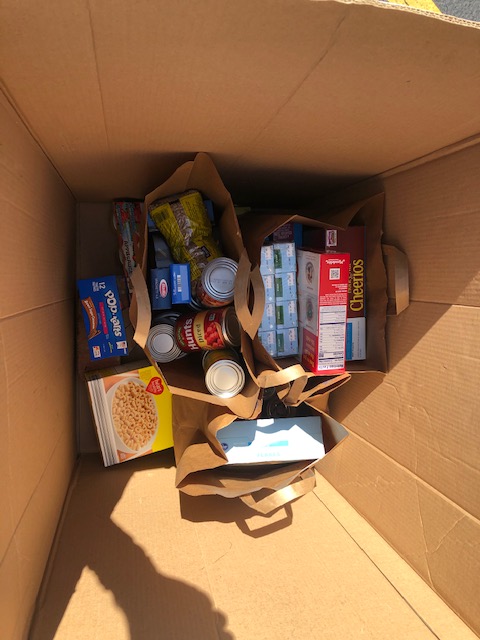
On Friday morning, just before 10, we were back in the driveway. We had a busier day. By 2, each of us was just about full with donations.

The old geezer really struggled this time to move us back inside. He had to remove some of our heavier donations so that the hand truck could carry us. 

On Monday morning, some nice people sorted out the donations we had collected.

I heard them breakdown the counts as follows:

Henrico County Public Schools: 7 containers of snack food

Oak Grove-Bellemeade Elementary School:  6 bags of books, 21 hygiene items

Sherbourne Food Pantry: 31 bags of groceries

That wasn’t bad for two days of work in a new environment. 

Especially under these COVID-19 conditions.

 I’m not sure exactly who COVID-19 is, but it sounds like to me COVID-19 has become skilled at not being very nice to people.

The old geezer seemed pleased with the results. But, more importantly people in our community who need help will receive it.

Speaking for Wally, Ouiser, and myself, Otis, I hope we get to go outside again soon. 

Even with COVID-19 around, we enjoy collecting for people in need.

It’s good for our hearts, and your hearts too.

Weary Wind

March is here.

I can confirm that for you.

On the return leg of a recent Saturday morning run, the wind was blowing directly into me. It was relentless. Only a couple of times did it give me a break.

The wind blew over trash cans, scattered flower petals from early blooming trees, and the chill it brought had robins searching for warmth.

In real life, I felt like the March winds had been pushing against me too.

My wife and I are still working to assist a dear family friend.

 Our friend had to make a difficult decision regarding a relationship. The relationship wasn’t working. Our friend made a wise move and ended it.  We’re trying not to dwell on the collapse of the relationship. Instead, we are attempting to assist our friend in making the transition to move forward.

My work at church is making me restless. Our annual stewardship campaign has not hit its projected target. I think we are heading into budget cut territory.

Additionally, some recent changes in programming have agitated segments of our congregation. They are grumbling and organizing their voices.

I do some volunteer work with the Virginia United Methodist Conference. I sit on the Board of Higher Education as the property chair for the Wesley Foundation campus facilities. That environment is changing too. 

On Friday, I responded to an e-mail request from a campus minister. Unfortunately,  my response revealed my lousy attitude. The request was simple— send us our allocated funding for our property projects. 

My lousy attitude can be attributed to a visit to another campus ministry on Thursday. The Thursday visit revealed a campus ministry that is struggling. There is a world of difference between the ministry that made a funding request and the ministry where the template for success isn’t in place.

Wrongly, I aimed my agitation at the successful ministry’s request. My e-mail upset some nice people. I am ready to resign if asked.

Oh, March, you are a collision.

 Your winds swirl with a winter that doesn’t want to let go, and a spring trying to push winter out.

Life is often a collision too. 

The winds of life are a contrast. 

Sometimes,  the winds push us appropriately along our way, and other times those winds push us back, push us down. 

That push back creates a tension, a weariness.

How much more can I take of that wind pushing me back, pushing me down?

I suppose that should be part of my daily conversation with God. 

Two verses in Isaiah 40 (30-31) come to mind:  “Even youths grow tired and weary, and young men stumble and fall; but those who hope in the Lord will renew their strength.”

I think we all have our tired and weary moments no matter our age.

But, even though I know what is in front of me is a difficult challenge, I’m going to hold out for the good Lord’s hope. 

And hope that He can renew my strength for what lies ahead. 

Three unmistakable voices

I have no musical skills.

I never learned to play an instrument even though my parents gave me opportunities.

And when it comes to singing, I can’t, not even in the shower.

But, I love listening to music. And, I have a deep respect for people who can master an instrument and carry a tune.

Growing up, I remember two Christmas gifts that transformed my ears—a transistor radio and a small boxed shaped record player.

That radio complete with a small earphone was amazing. Even though, it only had the capacity to pick up AM stations—at night, that radio took me to big cities like Boston, New York, and Cleveland. 

I could listen to New York Yankee baseball broadcasts. Mickey Mantle was my favorite player.

But, it was the music that captured me. The Beatles had stormed America. The invasion, the revolution was on. That tiny transistor took me deeper into it.

For the record player, the first record I bought was a 45, a single. 

I purchased it at Clarks. Clarks was an early big box store. It was located on old U.S. highway 70 in Greensboro an easy walk with a relative from my grandmother’s house.

That first single was by the Beach Boys. It was their Christmas hit “The Little St. Nick.” On the flip side was an a cappella rendering of “The Lord’s Prayer.” With that one record purchase, I was hooked for life on the sound of their voices.

Writer Dave Barry coined this phrase—“brain sludge.” That term basically describes useless information that is stored in the brains of men. When it comes to the Beach Boys, I have lots of “brain sludge.”

I’ll share some Beach Boys sludge with you now. Who is Jeffrey Foskett?

Since 1981, Mr. Foskett has been a part of the Beach Boys and Brian Wilson’s touring bands. He is a gifted guitarist, but also, he is blessed with a beautiful, high soaring voice. 

If you placed Mr. Foskett’s voice beside a young Brian Wilson’s voice it is tough to tell the difference. In live performances with the touring Beach Boys and when Mr. Wilson returned to performing live with his own band, Mr. Foskett sang those stratospheric background vocals. 

Mr. Foskett has recorded his own solo albums, produced records, and worked with an assortment of famous recording artists during his career. 

But, early in 2018, Mr. Foskett suffered a significant set back. He was diagnosed with Anaplastic thyroid cancer. The surgeries and treatments that he worked through stole one of his vocal cords. 

Despite this significant set back, Mr. Foskett released an album titled Voices in November of 2019. He realizes that the recording might be his last. 

But in an interview with Billboard magazine, Mr. Foskett stated:

“God gave me such a beautiful voice, and I really did use it to honor him and to sing my best at every single performance. It’s killed me to walk off some of those (recent) performances knowing I just didn’t sound very good. So when I listen back to these songs I cut before my voice really went downhill, it’s like, ‘Wow, I wish I could do that again.’”

Whether Mr. Foskett’s remaining vocal cords will sustain him further is uncertain. But long time followers of Brian Wilson will always appreciate the genuine support and love he gave to Brian. Mr. Foskett was an integral part of rejuvenating Brian’s career in concerts and in the studio.

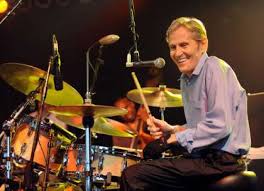
Levon Helm might not be a household name to you either. But maybe, you recall from the late 60s a group named The Band. Mr. Helm was the drummer and a singer in that group. His voice is unmistakable. 

Somewhere in your memory banks, you might remember these songs from The Band: “The Weight” from the soundtrack of Easy Rider, “Up On Cripple Creek,” “Rag Mama Rag,” and “Ophelia.” 

When Bob Dylan switched from folk to rock, The Band was his backing band. 

The Band was comprised of four Canadian musicians and one American from Arkansas, Mr. Helm.

Mr. Helm’s accent was perfect for some of the songs cast by The Band. Additionally, his accent put him into movies. He appeared in Coal Miner’s Daughter where Mr. Helm portrayed Loretta Lynn’s father, and in The Right Stuff where he portrayed Chuck Yeager’s friend, Major Jack Ridley. 

Unfortunately, Mr. Helm was a lifelong smoker—50 years. 

In 1996, his voice after a performance at the Helena Blues Festival became very hoarse. Despite his efforts, Mr. Helm could not shake this condition. Turns out, Mr. Helm was going to be battling throat cancer.

Fortunately for Mr. Helm, some family friends directed him to the Sloan-Kettering Cancer Institute in New York City. Two doctors, specialists with this type of cancer, devised a plan of treatment. 

Levon Helm must have had an angel hanging around him. 

He eventually regained the use of his voice. That allowed him to relaunch his career. From 2007-2011, Mr. Helm earn three Grammy awards for the albums Dirt Farmer, Electric Dirt, and Ramble at the Ryman.

Then unexpectedly, the cancer returned. His family announced this on April 17, 2012. Sadly, two days later, Levon Helm was gone.

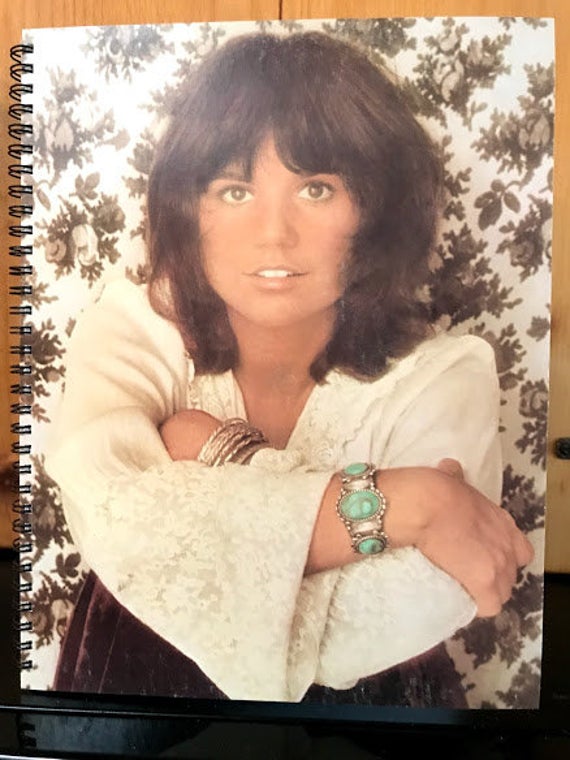
Linda Ronstadt was a record company’s dream come true—stunning in appearance and blessed with a pure and powerful voice. I’ll admit to gazing into her photo on the album cover Don’t Cry Now for more than a minute.

I am no music critic, but if you take a look at Miss Ronstadt’s career, specifically, the diversity of her catalog of recordings, I don’t think there is anyone like her. Folk, rock, opera, big band standards, country, pop, Latin, and her collaborations with other recording artist had no boundaries.

Perhaps, my favorite Linda Ronstadt album is Dedicated To The One I Love. I don’t believe the critics loved this recording. It is a collection of familiar songs performed as lullabies. Probably perfect for background music in a nursery, but soothing for an old man like me as well.

Sadly, Linda Ronstadt, experienced a significant change in her voice too. In 2011, Miss Ronstadt announced her retirement citing a degenerative condition—progressive supra nuclear palsy. 

Her beautiful voice was silenced.

Mr. Foskett, Mr. Helm, and Miss Ronstadt are three unique musicians and performers each with an unmistakable voice, a distinct sound solely attributed to them, but with the capacity to resonate with people around the world.

We all have voices too. Each is unique as well. 

And while we might not believe it, each of our voices has the ability to resonate with people in ways we might not expect either.

Somewhere out there in our lives, someone needs our voices.

We may want to deny this, but using our voices to help others in need is part of our collective journey in life. 

We don’t need to have the gifted voices of Mr. Foskett, Mr. Helm, or Miss Ronstadt to be the voice for someone in need.

As a long washed up English teacher, I always made a point with my American literature students to read and ponder American writer, William Faulkner’s speech, when he won the Nobel Prize in literature in 1949. Here is a short excerpt from the final paragraph:

“I believe that man will not merely endure: he will prevail. He is immortal, not because he alone among creatures has an inexhaustible voice, but because he has a soul, a spirit capable of compassion and sacrifice and endurance.”

Not at any point in the days ahead of me can I let my voice be silent. 

Someone out there needs my compassion, sacrifice, and endurance.

My voice needs to be inexhaustible for this person.

But, here is the real question.

 Will I find my courage to use my voice to speak for that person in need?  

Assorted websites were researched in the writing of this essay— among them Wikipedia, Billboard,  and the book This Wheel’s On Fire by Helm and Davis.

*Footnote for Mr. Foskett and Mr. Helm:

Nice work cancer, I’m not surprised at your inconsiderate plundering. You know cancer, one of these days your track record as a spineless disruptor will end.

Go ahead God, keep piling on me

Hey God, it’s me your favorite long-winded whiner.

I don’t know how things are up in the wild blue yonder, but down here in the chaos of life, I think I need to flag you like a football referee. Here is my call— personal foul #2020 excessive piling on.

God, in case you haven’t figured out from all of your years of work, you are an easy target. You are blamed for many things, and probably unfairly.

Let me start my pity party list of whines for you.

While the MOHS surgery to remove a skin cancer on the top of my left hand was successful, my insurance company disappointed me with their coverage.

My 2005 Toyota Highlander did not pass state inspection—a leaking strut and one of the engine mounts is failing.

At work, struggles between turf and personalities in the pursuit of changing a few things has created a tension. God, you might recall I work for a church. I didn’t think churches were supposed to have tension with turf and personalities.

My work keeping an eye on the Wesley Foundation college campus facilities for the Virginia Conference of the United Methodist Church is about to drive me bonkers. That’s all about pennies—there aren’t enough.

And, if word hasn’t reached you yet, you know that the United Methodist Church is in turmoil too. It appears that my life long church is about to become very skilled at hurting people. That seems to be a direct contrast to what your son tried to teach us.

My wife of almost 45 years tells me that she has never seen me so grumpy.

I think I have a right to be grumpy—it’s the pile on, plus I’m a natural born worrier.

My guess God is that you are a worrier too. 

As you look down upon us, your fists are probably white-knuckled, your jaw is clinched, your brow is furrowed with uncountable worry wrinkles, your antacid doesn’t work, and I can only imagine what you are silently muttering.

George Harrison was right in his song “Isn’t It A Pity”: “Now, isn’t it a shame, how we break each other’s hearts and cause each other pain.” 

God, I would imagine that your heart is just about broke.

So, I’ll stop my whine. Thanks for listening, you’ve heard enough.

It’s ok if you keep piling on me because sometimes in the pile on there is good.

I’m thankful for the scoreboard technicians from Roanoke who were able to get our Upward basketball scoreboard working again.

I’m appreciative of a kind word from a church friend who understands the need for change.

I love the vision of a Wesley Foundation campus leader who is thinking out of the box for a sustainable future.

I’m thankful that my wife is still hanging around a grumpy husband.

And God, I’m thankful that you haven’t given up on me— although I’m sure I drive you nuts too.

But as I attempt to work through the pile on, I’ll hold on to these words from Jeremiah 29:11:  “For I know the plans I have for you,” declares the Lord, “plans to prosper you and not to harm you, plans to give you hope and a future.”

Maybe working through the pile on comes down to what is at the very bottom of the pile—hope.