BUILDING TOGETHER
Richmond Times-Dispatch Wednesday, April 29, 2026
Guest Column BILL PIKE
During the first four months of 2026, the reporters and editors of the Richmond Times-Dispatch have provided a variety of stories and opinion pieces about affordable housing.
These reports have covered legislative efforts, involvement from local governments, and St. Elizabeth’s Catholic Church breaking ground for a new affordable housing project.
It is my hope that we can continue to nudge affordable housing initiatives forward.
As a retired public-school educator, I’ve seen the impact that housing instability has on families with school-age children. Additionally, I’ve seen that same uncertainty for families who seek financial assistance related to housing at the church where I work.
For the past three years, I’ve had the privilege of volunteering on the Faith Council for the Richmond Metropolitan Habitat for Humanity. The Faith Council works to seek the involvement of houses of worship in Habitat’s work to provide affordable housing.
Habitat for Humanity has a long history of working to provide affordable housing at the national and international levels.
In fact, 2026 marks the 40th year of the Richmond branch in building and rehabbing homes. During May, the Richmond Habitat staff and volunteers expect to complete construction on their 400th home. This is a significant accomplishment.
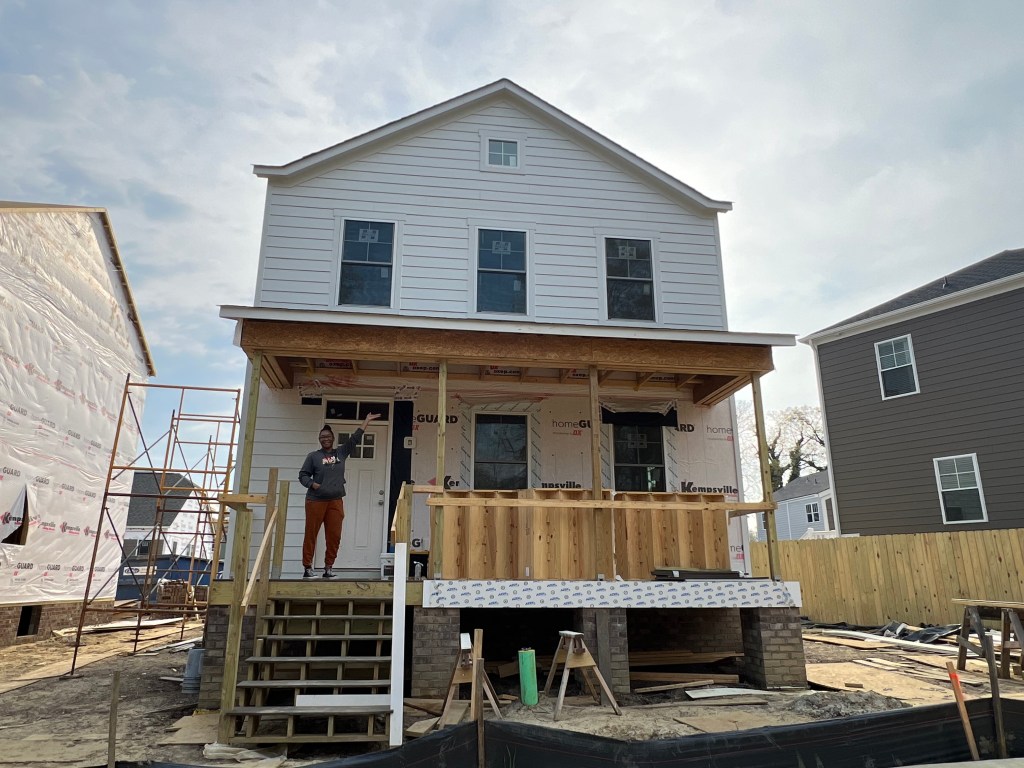
I’ve had the privilege of volunteering on Habitat projects in North Carolina, South Carolina and Richmond. On those sites, I have been impressed by the efficiency of the house designs, the quality of the work completed by Habitat staff and volunteers, and the support of local building suppliers who provide materials.
Yet I always walk away wondering how much more might Habitat accomplish if additional collaborations and partnerships could be brokered?
What happens if Habitat and similar affordable housing non-profits pool resources? Will that allow more houses to be built or rehabbed?
How can our local governments partner with Habitat? Could land donations, financial incentives and opportunities for employees to volunteer on Habitat projects happen in the near future?
With houses of worship, how might their financial resources and volunteers be committed to building a house?
Look at our Richmond neighborhoods and the proximity of churches to each other. Does that geographical closeness lend itself toward building relationships and partnerships for developing more affordable housing projects?
Another consideration with houses of worship is how many empty church buildings are there in Richmond? Can these empty buildings be renovated into housing? If the building can’t be salvaged, can the building be torn down and the land donated for an affordable housing project?
In continuing to explore resources for affordable housing, what is the involvement of our community colleges, Virginia Union University, Virginia Commonwealth University, Virginia State University and the University of Richmond in these initiatives? Are students and professors currently involved? If not, how do we secure their involvement?
Pushing further into our education communities, is there a way for high school students who are enrolled in construction-related Career and Technical Education programs to work on Habitat building and rehab sites?
Clearly, we have lots to consider in the push to support efforts for affordable housing throughout Richmond. Pushing beyond the predictable to find creative and practical ways to sustain Habitat’s work is important.
With my small role on Habitat’s Faith Council, I sense the leadership for Richmond Metropolitan Habitat for Humanity has positioned itself for the long run into the future of our communities.
When the Richmond Habitat office opened in 1986, I wonder if those determined leaders could have predicted the construction of 400 homes in 40 years?
This is a remarkable accomplishment and one worth celebrating.
And yet, I wonder how many more affordable homes Habitat could build in its next 40 years with the development of new relationships and partnerships across Richmond.
We need to find out.
Bill Pike is the director of operations at Trinity United Methodist Church. He can be reached at wapike1@gmail.com.
Note from author: I was honored to have this guest column in the Richmond Times-Dispatch on Wednesday, April 29, 2026. To learn more about Richmond Metropolitan Habitat For Humanity and their forty years go to: https://richmondhabitat.org/

 might be baloney