A long time ago when I was a public school student in Burlington, North Carolina, I prayed for snow. Now as a rapidly aging, grumpy, geezer, snow has lost my affection. That endearment to snow has been shifted to our four school age grandchildren.
Even with my 31 years of work in public education, I watched faculty and staff members do their chants, dances, and prayers for a snow day. There is something about a snow day that is good for morale and a weary teacher’s mental health.
The challenge with snow is that it disrupts our regular routines. For parents with school age children that means being able to adjust those routines so that the daily needs of the children are met. Not every family has the built-in luxury of having grandparents who can pinch-hit when a snowstorm upsets those routines.
For school superintendents closing school due to inclement weather is never an easy decision. No matter the choice made by the superintendent that decision is always under the scrutiny of the public.
Thus far in the Richmond area, two storms have disrupted the routine for local school systems. It is easy to second guess those decisions.
For example, I wonder if the mild winter storm that closed schools in the Richmond area on December 5 could have merited a delayed opening?
With the December 8 storm, the snowflakes really didn’t start to accumulate on road surfaces until late morning. Could schools have opened and then closed early in the afternoon?
I know superintendents and their staffs do not take weather related closings of school lightly. In making that decision they carefully review the forecast, consult with local police and road departments about street conditions, and depend upon personnel in pupil transportation to make real time assessments.
Despite every effort to carefully make the right decision, a superintendent can’t please everyone.
I experienced this when I served as an assistant principal at Hermitage High School. Several days after a significant winter storm schools reopened.
With that reopening, a phone call came in from an upset mother. While driving to school that morning, her son had been involved in an accident. She was angry at the school system for reopening. Nothing I said calmed the mother’s fury.
Honestly, at the heart of closing a school system for winter weather, you will find an attorney. Attorneys are thinking about safety from multiple angles. They ask lots of questions all related to reducing the potential for liability:
Can school system maintenance personnel properly clear parking lots and sidewalks?
Can bus drivers safely maneuver their buses through less traveled neighborhood streets?
Can faculty and staffs, student drivers, and parents who are responsible for transporting their children arrive at school safely?
No one associated with the school system wants any injuries from slippery sidewalks, fender benders in high school parking lots, or a school bus accident.
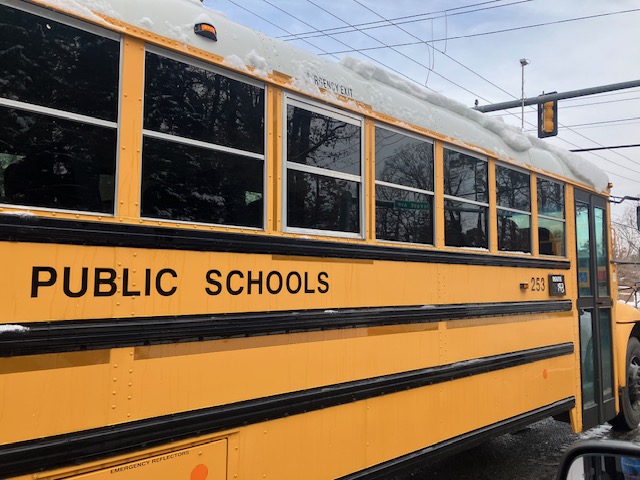
Perhaps, the greatest pressure is on school bus drivers. Driving a school bus under normal conditions is challenging enough. Mix in frozen winter precipitation with impatient civilian drivers who believe they are invincible with their all wheel drive vehicles, and the potential for accidents rises.
Recently, another phenomena has occurred in the decision to close schools related to winter weather. More frequently, superintendents are closing schools before the first snowflake has fallen.
I suppose this early announcement helps families to better implement their alternative plans for a snow day. However, I can only imagine what a superintendent will endure if that forecast fails to materialize.
As difficult as it is to close schools, making the decision to reopen can be challenging too. Depending how much instructional time has been missed, superintendents must also figure out how to recoup the missed time.
Perhaps, these questions are worth reviewing:
Do superintendents know of alternatives beyond the traditional make up days or extending the hours of the school day for regaining instructional time?
Might developing a year round school calendar reduce winter weather interruptions?
Could attorneys find a year round school calendar more compatible for reducing potential liability?
Do superintendents solicit post-winter storm feedback from students, parents, teachers, bus drivers, and maintenance personnel as a means for helping to shape future weather closing decisions?
And of course, there is always the insights of our friends and neighbors from other parts of America who rarely close their schools for winter weather. What might Southern superintendents learn from these “no fear of snow” superintendents?
As we waddle our way through the remainder of winter, maybe the weather gods will be kind to us with no more snow days. While that might disappoint students, superintendents will sleep better.
Note from the author: This rejected Op-Ed piece was sent to the Richmond Times-Dispatch in response to December 2025 school system closures from wintry weather. Bill Pike Richmond, Virginia

 might be baloney