Day Seven Marathon Key: Pigeon Key, Burdines, football

Another pretty day greeted me this morning.

I made the short trek to my hopeful fishing spot.

I fished with shrimp.

Per usual no nibbles.

But I did enjoy watching a wet blue heron land and shake his feathers.

A young father and his two sons stopped for a few minutes. Turns out this young man was a University of Richmond graduate. While its not an across the street walk, I told him we could walk to the university from our house in Richmond.

At the beach condo, breakfast was coming together as were our plans to visit Pigeon Key. We wanted to make sure our arrival allowed us to be on the first train to the key.

With our reservations confirmed, we were out the door around 9:30. It was a short drive to the staging area. We parked, made sure we had everything, checked in, and found seats on the train.
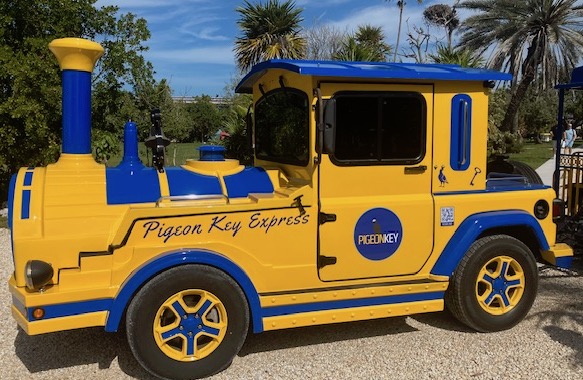
The engine that pulled us along the bridge (Photo Bill Pike)

Once everyone was seated, we received a brief orientation about our visit. There are multiple options for guests to chose from. We opted for a guided tour with time to explore the the five acre key with its eight buildings. This site is also on the National Register of Historic Places.

It is a two mile ride on the train to Pigeon Key. This was a $41 million project to repurpose and renovate the bridge for the public. This project had good results for walkers, runners, bike riders, and curious guest who want to learn more about Pigeon Key. Plus the views from the bridge in any direction are pretty.
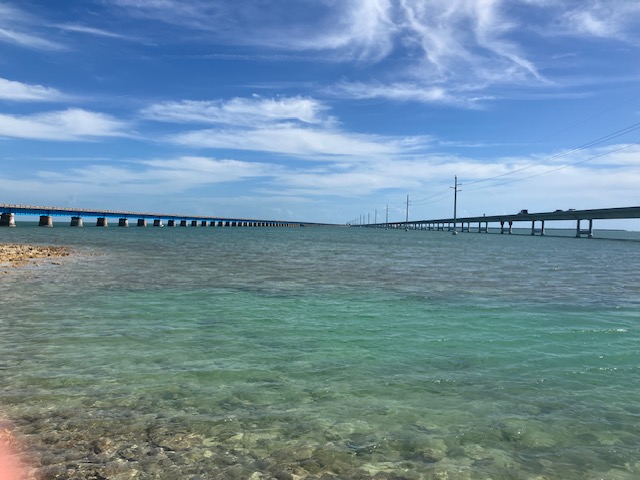
Bridge spans from Pigeon Key (Photo Bill Pike)

Our guide had given us some good insights on the ride to Pigeon Key. Once off the train, our guide organized us, and she started her historic script.

Essentially, Pigeon Key is all about Henry Flagler and his efforts to build The Florida East Coast Railway. This determined, persuasive, and successful businessman had the vision and resources to pursue this goal.

Pigeon Key was the work camp for the men who hired on to build the railway. Our guide was very knowledgeable, maybe too knowledgeable. Her wealth of information cut into our self-guided exploration.


Still we enjoyed learning about the design of the original dormitory that is now used as an education center. It still showcases the use of Dade County pine throughout the facility.
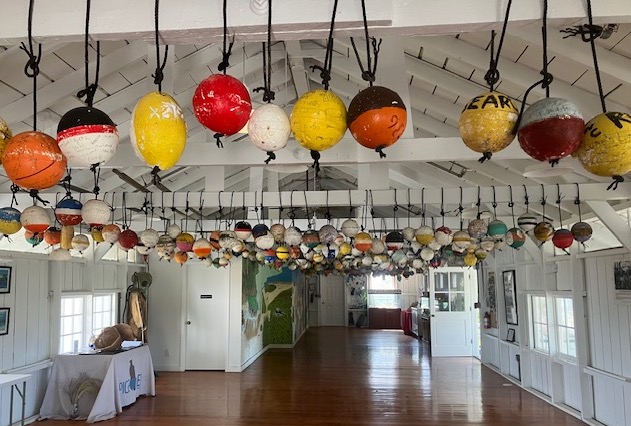
Former dormitory, now an education center, note original hardwood flooring (Photo Bill Pike)

The buildings and grounds are well-maintained. Moving around the plot isn’t difficult. No matter where your feet take you the views are very pleasant, and we enjoyed the calm presence of two Great White Herons who are like family to the staff.
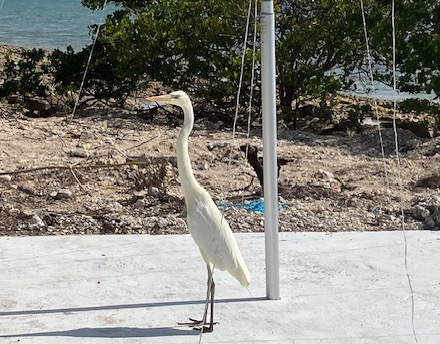
One of the herons. (Photo Bill Pike)

Our departure time came quickly, and once Pigeon Key personnel had accounted for everyone, we were ready for the two mile ride back to the mainland.

Judy opted not to go on the Pigeon Key excursion, so we drove back to Tranquility Bay and picked her up.

From there, we headed to Burdines for lunch. This restaurant had been recommended to Butch and Marian by a local shopkeeper. Earlier in the week, we attempted to eat at Burdines, but the unseasonably cool air and brisk wind pushed us away from this open air restaurant.
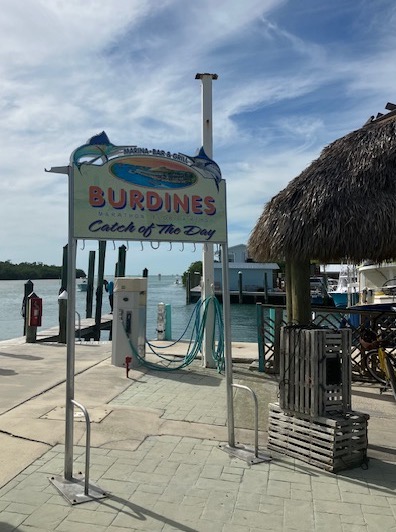
(Photo Bill Pike)

Today, we hoped to do better under a partly sunny sky. Initially, we were seated on the side of the restaurant where a brisk wind was coming off the water of Boot Key Harbor. Sensing this uncomfortable shaded coolness, Butch negotiated a seating location change for us with the hostess.

Off the main highway, Burdines is ideally located next to a marina. It serves diners who arrive by boat or car. There is nothing fancy about Burdines as is stated on their menu: “As we say in the islands, this ain’t no fast food joint, so relax mon!”

To get us started Betsy ordered hush puppies, and they were good. Burdines might not be a “fast food joint” but I was amazed at how quickly our food arrived. Our lunch orders filled us up, and none of us were interested in ordering a piece of fried Key Lime pie to go.

Back at Tranquility Bay, the abundant sunshine was an attraction to sit by the pool. At some point, Dan and I headed to the workout room to burn off Burdines. Football was on the agenda too, as it was NFL playoff time, and then we had to make decision about dinner.

I think Marian had a hankering for spaghetti. Butch, Dan, and I made a mad dash to Publix. Under Butch’s guidance, we picked up the items so that he could create a spaghetti dinner for us.

Upon our return, we all pitched in to help our master chef prepare his special sauce. The sauce was delicious and this pasta meal hit the spot. It would be the carbo load we needed for walking around Key West on Monday.

I was excited about our day trip to Key West, and I had also enjoyed our Sunday in Marathon Key.

Even though our tour guide put my brain on information overload, I heard enough from her about the ups and downs of Henry Flagler that I would like to learn more about him. Specifically, the back stories about the creation of the Florida East Coast Railway sound very interesting. I can only begin to imagine the economic, environmental, and logistical challenges of this project.

Maybe before I croak, I’ll get to Les Standiford’s book—
Last Train to Paradise: Henry Flagler and the Spectacular Rise and Fall of the Railroad That Crossed an Ocean.


Rest up Key West, we’re checking you out tomorrow.

Author’s note: My teachers: kindergarten (Mrs. Simmons at Davis Street Methodist) and first grade (Mrs. Hughes at Elon Elementary) would be disappointed in my math skills related to blog post. Obviously, seven comes before eight. So, I had day seven ready, but I forgot that post was completed. In the future, I’ll work to improve my counting skills. Thanks patient readers.

Day Five Marathon Key Friday, January 24, 2025: Crane Point Hammock

On Friday, January 24, 2025, more gray skies, cool temperatures, and a brisk wind greeted me.

This morning, I opted not to use a lure for fishing. Instead for bait, shrimp was my choice combined with a fish finder rig.

In the same spot, I cast in lots of directions. I let the rig land gently on the bottom. I waited patiently for a tug on the line. Despite having fresh bait, the fish were not interested in the shrimp.

I kept fishing until my line was cut. Not sure who did the cutting— maybe a quiet crab or a sharp rock, but the rig did not return to the surface. With that, I secured my line, and made the breezy walk back to the condo.

After breakfast today, we would take the short ride to Crane Point Hammock. Crane Point features a museum, nature trails, and two unique houses.

When we entered the museum, an employee gave us a general overview of the grounds and how to maneuver ourselves to the trails and the two homes on the property. This overview also included a short video orientation.

In the Keys, a hammock is a tropical woodland. Along the trails, we developed an appreciation for the unique hardwoods and native plants.

For example, the beautiful thatch palm only grows here, nowhere else in America. Additionally, the staff and volunteers have installed signage for identifying these distinctive species.

Thatch Palm (Photo Bill Pike)

Back in 1949, a couple from Massachusetts, Francis and Mary Crane purchased this land. The Cranes had a causeway built to Big Rachel Key. Lots of mosquitoes and thick underbrush did not stop them from building a beautiful home here. Today, the home is available for hosting all types of social events.

One of the views from the Crane house (Photo Bill Pike)

From the Crane’s house, we made the walk to the Adderly House. George and Olivia Adderly were from the Bahamas. In the late 1890s, they came to the Keys.

Eventually, they built their Bahamian style, tabby constructed home and lived here for many years. This house is the oldest in the Keys outside of Key West.

The Adderlys sustained themselves by harvesting sponges and making charcoal from the exotic tropical hardwoods found in the hammock. George used his sailboat for transportation to sell his goods in Key West.

After the passing of his wife in 1948, George sold the property to the Crane family in 1949.

We enjoyed exploring Crane Point. The paths/trails are well maintained and wide.

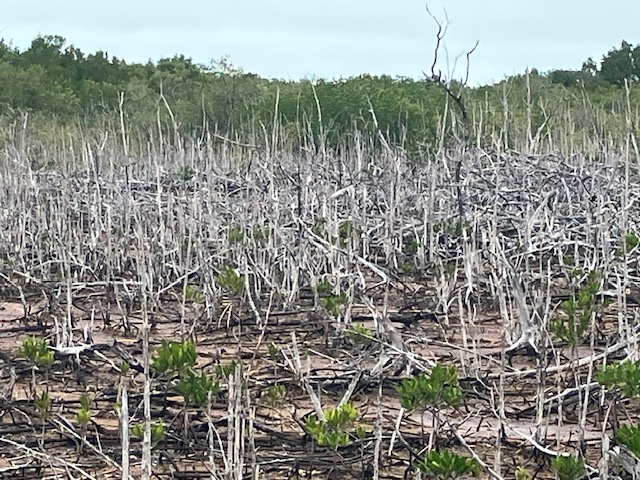
Additionally, there is the opportunity to trek off the main trails and to explore deeper into the hammock. Butch, Dan, and I did this. We came upon a section of the hammock that explained how the mangrove species adapt to the salty and soaked environment.

Battered mangroves (Photo Bill Pike)

From Crane Point Hammock, we made the short drive to Herbie’s Bar and Chowder House for lunch. This popular spot was packed, but the experienced staff was able to seat us. Herbie’s existence dates back to the 1940s. The restaurant was also featured on Guy Fieri’s Dinners, Drive-ins, and Dives.

From Herbie’s, we stopped at Savannah’s for ice cream.

After the ice cream, we drove to the Marathon Air Museum. This small museum has quite a bit of local aviation history. In truth, I think we made the day for the two docents when we came into the museum.

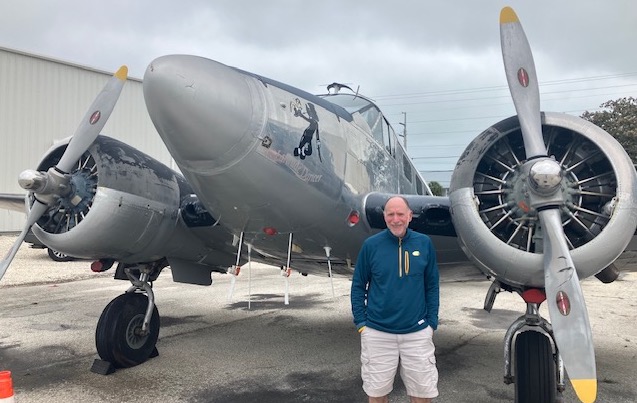
Both men were passionate about the airplanes and the artifacts. Most impressive was the docent who was in his nineties. This aviation enthusiast is still flying his priceless Piper Cub. Outside on the tarmac was a vintage twin engine passenger plane from World War II.

Look at those propellers! (Photo Dan Callow)

We thanked our docents, piled into the car, and drove back to Tranquility Bay.

At some point that afternoon, some of us took a walk toward Seven Mile Bridge.

That night after dinner, we watched the movie You Gotta Believe. This baseball themed film is about a little league baseball team and their coach who is battling cancer.

After the movie, we headed toward our rooms for rest. We were cautiously optimistic that on Saturday morning the sun would wake us up.

Today, we had another good day of exploring. I’m always curious about the passionate vision of an individual or group of individuals who can see and understand the importance of protecting a piece of land. Our exploring at Crane Point Hammock earlier today was an example of that vision.

By 1978, a group of concerned citizens had formed The Florida Keys Land and Sea Trust. This nonprofit focuses on the “preservation, conservation and the restoration of rare and endangered areas of the Florida Keys.”

In 1989, the Trust purchased Crane Point Hammock saving it from being developed into private homes and another shopping center.

I’m thankful for the passion and vision of the Florida Keys Land and Sea Trust.

And I “gotta believe” that the sun will greet us on Saturday morning.

Day Three Marathon Key Wednesday, January 22, 2025: flexibility

I was up early on Wednesday morning.

Downstairs at the dining room table, my usual routine took place.

I skim the Bible verse of the day from Bible Gateway. My prayer script/prayer lists traveled with me as did the Upper Room.

I honestly don’t know if my prayers make a difference. Some days, I ask myself—why do you keep this regimen?

My answer is my old heart. Its softness will not let me cease this daily ritual.

Besides someone must keep poking at God before this rotten old world wears us out. I hope, and yes, I pray we wake up.

Slowly, the house wakes. Butch and Dan are early risers, but not as early as me.

That quietness in the early morning is like my comfort zone. I cherish those minutes.

This morning, the landscape is gray at Tranquility Bay on Marathon Key, Florida.

Much cooler air is in place. Gray clouds block the sun. Blustery winds ripple through the palm trees.

Dressed in shorts and layers above my waist, I make sure I have everything I need to make the short stroll to the sandy path that leads to a boardwalk.

At the edge of the boardwalk is a small cove. The cove is fed by a restless channel with water from the Gulf of Mexico.


This conduit is not wide and probably not very deep. Yet, I’m hoping the rip it creates might send fish into the cove

In prepping to leave Richmond, I thought I had packed three small fishing rods in my new carrying case. In the hectic atmosphere of packing, I brought three reels, but with my moony mind I only packed two rods.

This morning, the lure I was casting worked well. Sometimes, the wind caught the lure and carried it further into the cove. Fortunately, my casts were accurate, and the lure skimmed across the water.

On a point across the channel, I noticed what appeared to be a night heron. This bird had been keeping a watchful eye on me.

Can you spot the heron? (Photo Bill Pike)

The heron’s posture reminded me of commuters standing on the subzero shoulders of a Chicago street corner. The bird’s hunched stance aligned it with the uncomfortable commuters on this unseasonably cool Florida morning.

Overhead, pelicans glided with the stiff wind, and a couple of seagulls teased my lure by diving down for a closer look.

While I enjoyed my hopeful casting, no fish was foolish enough to chase the lure on this chilly morning.

As I walked back to the condo, I hoped Butch would fix a pot of his rib sticking oatmeal. He did, and the winter intrusion I felt while fishing was melted by the hearty oatmeal.

While eating breakfast, we noted some activity out on the lawn. Turns out a photo shoot was taking place on the grounds today. Models were wearing summer clothing to promote a fashion line. It was interesting to note all of the preparation taking place behind the camera to capture just the right photo.

After breakfast, Butch and Marian took the short walk to a store on our side of U.S. 1 named Mr. Beans Books and Beans. It is a bookstore and coffee shop. They browsed around and asked the owner about local restaurant recommendations. He told them about Burdines.

As lunch time approached, we piled in the car and made the short drive to Burdines. In this industrial looking section of Marathon, we found a place to park.

At the top of the stairs, we entered Burdines to find a nice, but open to the elements restaurant. The breeze whipping into the seating area was too cool for our aging bodies who were looking for warm Florida weather, so we departed.

Back in the car, in the same neighborhood, we found another tucked away restaurant, Castaway Water Front Restaurant and Sushi Bar. The good news was the main sitting area was inside, protected from the unfriendly chilly wind and gray clouds.

We hustled in where we were greeted by a friendly staff. With our lunches ordered, we admired the cluttered, but interesting interior. Additionally, we learned that on warm days manatees show up in the waters just off the dock of Castaway.

After lunch, we did a bit more exploring, and then we drove back to Tranquil Harbor.

The rest of the afternoon was quiet. Yet some comparative chatter did surface about the three restaurants where we had eaten. Our comments noted what worked and didn’t work in each unique setting.

Gradually, the afternoon slipped away. Before we knew it, we needed to figure out dinner. Once again the winter like feel in Marathon pushed us to order pizza. An order was placed at Driftwood Pizza.

Though it took Butch and me a second call to our braintrust to verify the location, we were not disappointed in the pizzas.

Toward the end of dinner, we were given in depth insights about the need for airplanes to be de-iced in harsh winter weather. Our resident private pilot, Dan, knew the technology and science behind how important it is to keep airplane wings ice free. The ingenuity of how engineers design these safety systems varies in each airplane, but getting this snapshot was fascinating.

Since we are all older, health is another topic that surfaces into our conversations. Again, we learn from each other’s experiences in coping with the ups and downs of aging.

Before drifting off into sleep, we reviewed the weather forecast. Not until Saturday would the sun fully return, so we worked on a plan for the next two days.

Unwilling to let the weather hinder us, we made alternative suggestions to counter the weathers gods for Thursday and Friday.

In our over fifty years of friendship, I’ve developed an appreciation for how we ponder and respond to the inconveniences of life. I’m reminded of Dan’s important aviation wisdom for emergency situations—aviate, navigate, and communicate.

Figuring out a plan for Thursday and Friday, required us to aviate—keep flying the plane, or in this case keep the focus on our trip—keep it moving.

For the pilot, navigate means know your location. The same applies to us in planning. We need to know the options that will be available for us in the Florida Keys.

And with communicate, the pilot talks with the people who are monitoring his flying. Knowing our local options for tourists helps us to communicate what will best meet our needs and get us moving in this non-typical Florida weather.

Of course, in this planning for two days of sightseeing, it helps to be flexible.

I like this quote from former Xerox CEO, Anne M. Mulcahy: “Even under the most difficult circumstances you can have creative flexibility.”

Granted our inclement Florida Keys weather wasn’t a trip ender, but this nuisance did require us to assert our “creative flexibility” and we did.