Church, “What time do you start?”


I had missed the Maundy Thursday program because of a school board meeting.

Early on the morning of Good Friday, I untacked the purple cloth that had graced the wooden cross on the front lawn of our church. I replaced it with torn scraps of black cloth and tacked the pieces back into the cross.

Since early in the week, the weather forecasters had everyone stirred up with predictions of severe storms for later on Friday afternoon.

 I tried to focus on the details of getting us ready for Sunday.

We were anticipating the arrival of Easter lilies for the Sanctuary at some point today. 

The warm, unsettled humid air was going to require our HVAC technicians to switch our systems from winter to summer. 

Trinity Hall needed to be put back together after the Maundy Thursday’s program.

 Before the stormy weather showed up, a few items outside needed attention. 

And at some point chairs needed to be staged in the Welcome Center as we hoped for attendance that would overfill the Sanctuary on Sunday. 

As the afternoon arrived, the skies opened up with a heavy rain shower. Severe thunderstorm and tornado watches and warnings were posted by the National Weather Service. Office staff took a number of phone calls from members wondering if we were going to cancel the Good Friday service because of the forecasts. 

We kept an eye on the radar reports and warnings, but somehow the rough weather stayed to the west and southeast of Richmond. I agreed to monitor the weather during the Tenebrae service. But aside from another drenching rain shower just prior to the start of the service, we were lucky.

The dark somberness of Tenebrae on Friday evening was sharply contrasted with a bright just about perfect spring day on Saturday. 

Chores at home on Saturday clearly wore me out, so I was dragging as I headed to Trinity a bit after 5 on Sunday morning. I had lots to do.

Cool, crisp dry air was in place—the moon was high in a clear sky. It looked to be a perfect Easter morning.

Along with the usual building rounds, the cross on the lawn needed to be transformed again. Black cloth removed, chicken wire forms put in place to hold fresh flowers.

Slowly, the behind the scene volunteers arrived. Don Boyd and Ken Hart worked in the Trinity Hall kitchen grilling fish filets for the sunrise service. Lynn Berry made final preps for communion. Associate pastor, Drew Willson, worked on staging for the Sunrise service setup, including a portable fire pit.

Three distinct aromas started to make their presence in the building. The perfume fragrance of the lilies was a sharp contrast to unmistakeable whiff of fish being cooked, and somewhere the wood smoke from the fire pit served as a median between the two. I just hoped the smoke from the fire pit didn’t set off the smoke detectors in the Welcome Center from the propped open doors.

As I was putting the finishing touches to attaching the chicken wire to the cross, a car pulled into the driveway in front of the Welcome Center. The driver put down the window and asked, “What time do you start?” 

He was inquiring about the start time for the Sunrise service. I responded 6:30. The driver must have checked his watch. Because he drove a bit further up the drive and pulled over to park. He decided to stay.

The sky was slowly beginning to show the first hints of blue in the East. I started to run back through my mental checklist, and I was pretty sure I had completed my assignments.

With one final assessment, I headed back home to get something to eat and to change my clothes.

When I arrived at the house, I picked up the  newspaper off the front sidewalk and brought it into the house. The Commander Supreme was up and ready to attend the 8 o’clock service. Our son, his wife, and their almost two year old daughter were going to attend this service with us.

My breakfast was going to be a light one, as we had been invited to brunch at our son’s home later in the morning.

As I was getting ready to sit down to eat, the Commander tossed in my direction Section B of the paper. She pointed out the following headline:  United Methodists edge toward breakup over LGBT policies.

“Nice,” I thought to myself, “couldn’t the editors of the newspaper delayed the printing of this article until Monday?”

I skimmed the article, ate quickly, and hustled upstairs to get changed.

The first hymn we sang on Easter morning was “Christ the Lord is Risen Today!” There is a line in the fourth stanza that states three words— “made like him,” meaning you, me, we were made like Jesus. 

I’m thinking if we truly were “made like him,” then why can’t we open our hearts to people like Jesus did? Why are we as Methodists so divided and willing to split up our church over these LGBT policies?  

Author Hampton Sides wrote the book, Hellhound On His Trail, an account about the eventual capturing of James Earl Ray, the assassin, who took the life of Dr. Martin Luther King, Jr.

Dr. King had been asked to come to Memphis, Tennessee in support of striking garbage workers. The first march in Memphis in support of the workers had been a disaster. Violence broke out.

In planning a return visit to Memphis to lead another protest, Dr. King was challenged by his staff. They did not think a return to Memphis was a good idea. Dr. King became so agitated with the non-supportive attitude of his staff that he walked out of this critical planning meeting. His staff was shocked. They had never experienced an explosion like this from Dr. King.

But, his abrupt departure worked. His leadership team now felt more obligated to figure out how to move forward, and they did.

Hampton Sides assessment of this pivotal meeting came down to this—“Out of dissension, a consensus had formed.”

I wonder if this current dissension in the United Methodist Church could lead us to reach an all inclusive positive consensus regarding LGBT?

While I like to hope that we could, I sense we are too stubborn— too set in our ways.

This issue has been in front of our church for many years.

I find it discouraging that we can’t find common ground or hear  the voice of reason. Church attendance is in decline. Don’t we realize that shutting our doors to clergy and people from the LGBT communities only hurts our churches?

Dietrich Bonhoeffer once stated:  “The ultimate test of a moral society is the kind of world that it leaves to its children.”

That statement poses a lot of internal questions for me.

Do I want to leave for my children a Methodist church that is unwilling to welcome and love those who are LGBT?

Does the church’s response mean that I must stop my friendships with family members, neighbors, friends, church members, and peers who are LGBT?

If as the hymn states that I you, me, we, the church are “made like him,” then why can’t I, you, me, we, the church act like him by following his lead— “You shall love your neighbor as yourself.” (Mark 12:31)

Perhaps the real question for me should be—“What time do I start?”

When do I stop thinking about myself and start thinking about the future for my children and grandchildren?

Contrary to popular belief, clocks don’t slowly tick. No, clocks spin at a maddening pace.

I hope it’s not too late for me to start to “love my neighbors.”

I think the spinning of time might slow for that journey.

I need to start. Church, how about you?

IMG_0376

Poking a tiny bit of fun at the Atlantic Coast Conference

Wednesday, April 10, 2019

The Commissioner of the Atlantic Coast Conference and his staff are to be commended. 

They have done extraordinary work. 

Expanding the number of teams in the league was pure geographical  genius. 

Growing the conference’s brand was bountifully brilliant.

 Marketing that brand exemplified exceptionally clever creativity.

Recently, two original founding members of the conference, Clemson University and the University of Virginia, won national championships in football and basketball. 

These outcomes probably sent the Commissioner and his staff reeling into a crisis mode. 

Damage control manuals and procedures were immediately opened and implemented. 

Counter measures were deployed to assure non-founding league members that their assets were safe.

The Commissioner was overheard telling his staff the famous words from an honorable North Carolina lawman, Deputy Barney Fife, “We’ve got to nip it, nip it in the bud!” We can’t allow teams from our founding members to earn any more national championships, our non-founding members might bolt— “Nip it in the bud!”

From a grumpy Alamance County native, congratulations founding members, Clemson and Virginia, you keep right on bud nipping!

Bill Pike

Richmond, Virginia

“Don’t freak out, but you’re going the wrong way.”


We were up at 4:00 a.m. Just a few minutes before 5, we had the car loaded, and ready to drive to the Richmond airport.

The predawn was dark, cloudy, and wet as we found our way to I-64. Next, we caught the brief merge to I-95, and then left I-95 for I-64 again.

We were in and out of rain. The temperature was 62. Chicago was the destination. No way that 62 would be waiting for us when we touched down at O’Hare International.

The Commander Supreme had coached me well on the game plan. Drop her off at the terminal with our two bags, then go park the car in the long term lot. Don’t forget my pack back, turn off the car lights, get the keys, and remember where the car is parked.

Somehow, I managed. The parking lot company even gave me a card with the lot letter and parking space number.

The shuttle back to the terminal was painless. I found the Commander Supreme waiting for me. She had successfully checked us in, but she gave me a warning, “Don’t freak out when TSA checks your ticket.”  For some reason, the ticket printed Pike/Pike no Bill or William. 

The Commander wasn’t sure if that hiccup might cause a concern with the TSA personnel. Fortunately, I experienced no hassle. Maybe the TSA Pre-check had helped.

Soon, we were called to start the boarding process. A Bombardier CRJ700 was the plane that would carry us to Chicago. Designed for regional flights, this one was part of American Airlines.

The CRJ700 was not engineered with passenger comfort in mind. 

My guess is a passenger might have more room in a one ounce container of Tic Tacs. 

Storage bins above the seats are compressed like a sandwich on a panini grill. I clunked my head on those low hanging bins as I scrunched my body angling toward the window seat.

Even my slight frame felt crunched and confined in the this small space. And that space shrunk even more when the passenger in front of me reclined his/her seat back into my knees.

The usual safety updates were given. Eventually, we were pushed out of the gate. The trek out to the departure runway took a long time. Let me state that again, the departure out to the runway took a long time, I mean a long time.

Just as we were starting to sprint down the runway, the first light of a gray dawn began to appear. 

We had been told by the pilot before taking off that we would experience some choppiness in the cloudy unsettled air, and this was true.

Gradually, the bumping around improved, and the last leg of the flight was smooth and tension free. Our approach into O’Hare took us out over Lake Michigan, and soon the skyline of the city was in view.

This trip was for a birthday celebration for our grandson, Hudson, who was turning one. No doubt, his first year of life had flown by for his family.

But in truth, time flies by for everyone. 

Time only has its wings clipped when we reach the end of our paths, our roads, our directions, our journeys.

I have always been intrigued with the science of flying, but always thankful when the plane safely lands at our destination.

But as we all know, journeys in life do not always end well. 

images

Sometimes in life we go in the wrong direction.

This past week, I heard an interview where a person stated, “Remember, life isn’t a straight-line.”

Tomorrow is Sunday, April 14. It is Palm Sunday. Turns out, this will be a Palm Sunday not soon to be forgotten. 

Palm Sunday in Chicago was miserably cold, gray, and wet with what could only be described as a misplaced winter snowstorm.

After attending church at St. James Lutheran, we went to brunch at the Blue Door. 

From our table, we could watch the fury of the famous windy city winds furiously tossing snowflakes. 

When brunch was over, our walk back to the car put us in the direct path of the wind’s temper and blowing snow. We were miserable. Once at the car, our three year old granddaughter, Caroline, commented, “We should have stayed at home!”

We all laughed and agreed. Leave it to a child to have the clear perspective and assessment.

Holy Week is here. I need clear perspective and assessment. 

I must confess, I’m not sure I always understand this walk, this journey, this end that Jesus is approaching. 

Part of me believes, someone should have nudged him.

 Excuse me, Jesus, but I can see the worried look deep in your eyes. I sense you are going in the wrong direction. Maybe you and your father need to talk a bit more about this straight line you are following.

I think God and Jesus did talk, but there was no wavering, no backing down, no adjustment, no compromise. 

Sadly,  the fear of not understanding Jesus fueled this uncivil environment he entered. Mankind’s irrational meanness was not absent. No matter the good in Jesus, his time had come.

In the movie, An Officer and A Gentleman, actor Richard Gere reports to Aviation Officer Candidate School. There he and his fellow recruits encounter an exceptionally tough Marine drill instructor portrayed, by actor, Louis Gossett, Jr. 

The hopeful jet pilot and the drill instructor have a turbulent relationship. 

In one pivotal scene, the drill instructor attempts to berate the candidate into resigning, giving up his chance to become a pilot. 

No matter the harsh verbal approach taken by the drill instructor, the aviation candidate stubbornly holds fast to his straight line. He will not resign.

Finally in exasperation, the drill instructor forces the resignation stating, “That’s it—your out!”

An emotional outburst comes from the aviation recruit, who strongly responds to the drill instructor:  “Don’t you do it, don’t you do it—I got nowhere else to go, I got nowhere else to go!” 

Jesus had nowhere else to go. 

The path, his road, his journey, his final destination was the cross.

Outwardly, Jesus didn’t freak out. 

I sense in his heart, Jesus knew he was going the wrong way.

I would have skipped out.

He didn’t.

Sacrifice.

Psalm 22:  “My God, my God, why have you forsaken me?”

Brushed Aside


Clearly, there are many tough jobs in our world. 

Here are a few that easily come to mind—police officer, emergency room doctor, port-a-john technician, school bus driver, and parent.

Being a parent might be the toughest one. 

While the passion of creating a child is magical, when that bundle of joy arrives, it is all hands on deck. And believe me, it takes a lot of helpful loving hands to raise a child. 

Just as parents attempt to mold and shape their children, parents are also molded and shaped by those same children.

 All kinds of things impact that molding and shaping. Some are good. Some are bad. Some are in between, and some things happen to parents and their children that just can’t be explained. 

While serving on our local school board, I have discovered there has been one constant in our monthly meetings—reviewing recommendations from the superintendent for student expulsion.

Expulsion for all practical purposes means that a student has come to the end of the line—the ride is over. 

Expulsion molds and shapes lives too. 

Sadly, the lives of some students have been unraveling since the day of their birth. For others, their lives can be torn a part in one split second with an unwise choice.

Years ago, when I served as a high school assistant principal, expulsion often meant that all educational services for a student ceased. Today, school boards and superintendents look to alternative educational opportunities for students who have been recommended for expulsion.

Sometimes after a year, a student will reapply for admission to the school system. During that year with lots of support, plus their own fortitude, a student has learned from the expulsion experience. Good things have taken place. Readmission is granted. That good molding and shaping while it might be rare makes hope a reality.

My old body still allows me to take a run through our neighborhood from time to time. Those runs can be good think time. 

One thing I have noticed on my runs is that I can really see the surface of the road.

IMG_1882

In the winter, remaining sand and salt particles from a snow storm gradually start to accumulate on the shoulder of the road. Sometimes pine tags, broken twigs, and litter become a part of that mix as well. Friction from whirring tires, wind, and rain contribute to this brushed aside build up.

That build up makes me think about students in a school who have been brushed aside. Could be any number of  reasons, but the school system in those moments has failed a student. 

When school systems lose track of a student nothing good is going to happen. Eventually, the student will lose track as well. When the student loses track of his/her relevance, the path to making poor choices immediately expands. Once a student makes one lousy choice, too often more lousy choices are on the horizon.

My mind asks me how many students did I brush aside in my career as a public educator? How often did I fail to recognize those students who just never seemed to fit, who never quite figured school out? Where was I in their baggage? Why couldn’t I have been better at helping them figure things out? Why didn’t I intervene on their behalf?

I have no good answer, only excuses. My excuses are not acceptable.

IMG_0183

Sometimes I will run across a road surface that is full of cracks, fissures running in all directions. Sooner or later, that road surface will need to be repaired. 

Students, parents, and school systems can be full of cracks too. Those cracks allow for intrusion. Intrusions can wear us down. All of those things out there that are beyond our control begin to take over. When this happens, it is easy to lose hope.

On a daily basis, a student, a parent, and a school system can lose hope.

So, how do we regain hope?

I recently attended the National School Board Association’s annual convention in Philadelphia. My brain is still recovering from information overload.

But, there were some recurring themes.

For example, who is being overlooked in our schools?

How do schools create a sense of belonging for those who are being overlooked?

If I want to reach the brushed aside student, the student full of cracks, the overlooked student, or the student who has no sense of belonging, how do I make those needed repairs. The experts believe the answer comes down to a couple of words—building relationships.

Building relationships isn’t a simple snap of fingers. 

Building relationships takes time. 

In the ticking of those seconds, building a relationship will require endurance, endless energy, carefully chosen words, the capacity to communicate acceptance, and a resilient heart. 

I wonder how many expulsions could have been prevented by not brushing off a student or by not letting a student intrude into the cracks of the system.

Today, I often forget about a role model who didn’t brush off people during his short time on earth. No, Jesus had a skill set that allowed him to build relationships while he moved through a variety of environments. He was deliberate and precise in his teaching moments.

I wonder what it was like to be his parent? I wonder if it was a tough job? I wonder what Joseph and Mary thought about his extraordinary skills? Did they truly understand him?

 I would imagine their hearts were full of questions about their son.

I too have lots of heartfelt questions about Jesus and his work. 

 But, I also have questions about my own heart.

How can I make my heart less likely to brush aside the people I encounter who are overlooked with no sense of belonging?

I need to search my heart and find that answer. 

How about you?

Remember, it’s about building relationships.

Church: “Do You Know What I Mean?”

IMG_0218

Friday morning, March 29, the Commander Supreme dropped me off at the Amtrak station on Staples Mill Road. I’m taking train #84 to the National School Board Convention in Philadelphia.

I have flown into Philadelphia before, but only to make a connection for another flight. So, I’m hoping to find a bit of time to see the City of Brotherly Love.

The train was on time, and it was a long walk down to the business class car. We pulled out of Staples Mill headed for the next stop, Ashland, also known as the Center of the Universe.

After Ashland, we kept pushing north with the conductor announcing Fredericksburg as the next dot to connect with along the route.

The dots continued—Quantico, Alexandria, and finally into Washington, DC where the train’s engines are switched from diesel to electric. This routine takes a good 20 minutes, and I know when the transition is complete. The lights and air come back on, and the train is slightly jolted when the electric engine is coupled to the remaining cars.

We slowly move out of the dark, underground parking garage for trains. It is good to see daylight again.

The further north we inch, the less of the encroachment of spring we see. 

Along this route, I have done some reading, dozed off several times, and gazed into the passing landscapes. The only intrusion into my sluggish routine is the business man sitting behind me. 

He is taking important phone calls. His voice isn’t playground loud, but his voice dominates the quietness in the car. But, all of his phone conversations include the following words—“Do you know what I mean?” All I can say is I should have kept a count. 

Every conversation included “Do you know what I mean?” In many of those conversations, that question was used multiple times. I’m sure my count would have found a place in the Guinness Book of Records for the most repetitious use of a question while riding a train from Richmond to Philadelphia.

Quite often along this route, my gazes into the passing landscapes are unexpectedly jolted by an oncoming train. It appears the separation between the two trains is about the length of a ruler. I can feel the force of the speeding energy as the silver streak zips by Train 84, “Do you know what I mean?”

Baltimore, northern Maryland, and Wilmington, Delaware are behind us. The engineer has the train bearing down on the 30th Street station in Philadelphia. 

Somehow the coaching from the Commander Supreme works, and I order without incident a Uber to take me to the hotel. It is a slow ride with lots of traffic. These Uber drivers must have ice water in their veins. If I were driving, I’m sure I would have exploded. I can see the headline—School board member from Virginia jailed for traffic meltdown.

My hotel check-in was painless. I barely walked a half city block and crossed the street into the convention center. This place is huge. Another seamless registration occurs as a symbol on my cell phone was simply read by a scanner.

Slowly, my colleagues arrived. We gathered for a reception and dinner.

I brought along my running gear. I planned to get in an early Saturday morning run.

After checking with the friendly attendant at the front desk about a recommended route, I left just before the beginning of civil twilight.

It didn’t take too many steps to feel a pinch in my heart— as homeless individuals dotted my route. 

Some were stretched out over metal grates that were spewing a cloudy exhaust vapor of warm air. Others were wedged against a building. Still some had carved out covered spaces in the whimsical building designs of an architect. Their bodies had become acclimated to their routines and environments, unlike society, sleep did not desert them.

One of my turns took me to the corner of Arch and Broad streets home of Arch Street United Methodist Church. I made a left turn.

 As I plodded past this side of the church, a rectangular shaped sign caught my eye, printed on the sign were the following words: 

                                                             Arch Street

                                                  United Methodist Church 

                                                A Reconciling Congregation

I made a mental note and resolved to come back for another look.

It was a good run. Back at the hotel, I cleaned up, grabbed some breakfast, met colleagues in the lobby, and we walked over for the opening session.

Nearly 5000 people were packed into the main hall of the convention center. No matter who you were up on the large stage, you were going to be seen as massive monitors were carefully positioned in the hall. 

At a midday break from the convention, I walked over to Arch Street UMC. I took a photo of the sign and walked around the building again. 

 The sun was out. Spring was teasing Philadelphia. 

IMG_0225But the Gothic gray of this aging building could not hide in the warm sunlight. I’ll bet there are stories in each inch of the church’s architecture. Even the homeless had temporary homes in its exterior nooks.

Once the afternoon sessions were complete, we readied ourselves for another reception, this time at the Franklin Institute Science Museum. We were only in one section of this facility, but it was instantly impressive.

The reception was very nice, and when I arrived back at the hotel, I did some research about Arch Street UMC. I was hoping they might have an early morning service. Turns out, the church hosts 8:30 and 11:00 services.

So on Sunday morning, I was up early. I went down to the workout room, and rode a bike for 20 minutes. Then came back to the room, took a shower, dressed, and went to the lobby for breakfast.

IMG_0227After breakfast, I regrouped, and then left the hotel for the short walk to the church. The Philadelphia half marathon was taking place so lots of runners were streaming by the convention center. It was a good morning for a run, cool and overcast.

The 8:30 service was held in the Chapel. A small, but enthusiastic  crowd had gathered. The focus for this service was going to be about mission work the church supports in their neighborhood and Philadelphia. Good music and hospitality marked this simple worship service.

I departed just before the service finished, so I could walk back to the hotel and  gather what I needed for the opening session at the convention center.

The last session I attended on Sunday afternoon focused on equity in school systems for all students. Lots of points were made, but one that stuck with me was creating a “sense of belonging.”

Back in September of 2018, I started teaching a Disciple I Fast Track class. Since January, we have been working on key pieces of the New Testament of the Bible. Last week in class, one of my classmates wondered out loud—“why doesn’t the Methodist church speak out more on important social issues?”

A really good question, and I didn’t have the research expertise to respond.

But, I might guess that the United Methodist Church is still staggering from the most recent decision that was made at the church’s General Conference in February. This decision resulted in a “tightening of its ban on same-sex marriage and gay clergy.”(NY Times)

Circling back around to equity, this recent decision by the Methodist church, isn’t creating “a sense of belonging.”

In the Sunday morning bulletin at Arch Street UMC, there was an announcement that on Sunday, April 7, LGBTQ members and constituents would be ushering at the 11 a.m. service. Then following the worship service, the LGBTQ group would be going to brunch at a local restaurant. While enjoying their food and fellowship, the topic for conversation is going to be “If The Church Were Christian.”

My goodness what a conversation starter!

Today, I read a scripture from Isaiah 55, verses 5-6, this first line caught my attention: “We all, like sheep, have gone astray, each of us has turned to our own way;”

I can’t tell you how many times in my life I have gone astray and gone my own way. But somehow, I have always been pulled back to the church. 

Now, it seems to me that the Methodist church has gone astray and is moving in a direction that doesn’t create “a sense of belonging.”

On the Arch Street UMC website, the following statement appears about its status as a reconciling congregation:

Arch Street United Methodist Church is a community of faith-keeping and faith-seeking people who embrace diversity in our congregation and community, and affirm the dignity and worth of every person as created in the image of God. We celebrate and give thanks for all of the gifts of God among us. Our welcome knows no boundaries, whether of age, racial or ethnic background, gender, sexual orientation or gender identity, economic or marital status, or physical or mental ability. We welcome all to share in the ministry, fellowship, and blessings of full participation as members of Christ’s body.

That statement of a reconciling congregation would seem to be the foundation for creating a “sense of belonging.”

United Methodist Church— “do you know what I mean?”


God Will See You Now

IMG_1424

The e-mail showed up out of the blue. I sensed it was legitimate. 

A neighborhood magazine that I do some writing for was referenced.

The e-mail was simple:  Bill, wonder if you might be interested in interviewing me? If you are, meet me at the corner of West Franklin and North Pine in the city. You are an early riser, see you at 6:45 on Friday. I’ll be in uniform.  Thanks for your time and consideration, God

God!!!!!!!!!!!!!!!!!!!!????????????

No way, this is a hoax of some type. I’m sure one of my pals is up to something. 

But a few minutes later, another e-mail appeared. It stated— Nice try this isn’t a hoax. Confirm you are going to show up or the interview offer is withdrawn.  Sincerely, God

I knew the location well. The corner of Franklin and Pine is where the former Pace United Methodist Church building is located. It sits across from Monroe Park.

 Now, the building is home to a campus ministry, the Wesley Foundation, a part of the Virginia Conference of the United Methodist Church.

I had some decisions to make. 

The first one was do I tell anyone about this e-mail? 

Answer—no. 

If I tell anyone that I’m going into Richmond to interview God, whoever I share my secret with will immediately confirm what he or she has suspected for a long time—Bill Pike you are without a doubt— crazy. Don’t move, let me call Henrico County Mental Health for you.

Next consideration, how can I overcome my fear?

 I mean after all this is God. Knowing myself, I could ask the wrong question, and poof I could be like Uzzah in the Bible here one minute gone the next. Plus, I know my track record in criticizing God isn’t good. I would imagine those heavenly data collectors have a pretty thick file on me already.

Good points, but I must go. It is an opportunity. I don’t want to regret not showing up.

On Friday morning, with a legal pad and a couple of sharpened DIXON Ticonderoga #2 pencils. I left the house and drove to my destination.

My brain is swirling. I park in front of the Pace Center. I’m five minutes early. No one is standing at the corner of Franklin and Pine in a uniform.

Then, there is a light tap on my window. Now, I’m spooked. I turn and there is a guy who looks just like Clarence, the angel, from the movie It’s A Wonderful Life.

I open the door. He speaks, “Bill, good to see you. Thanks for driving in this morning.” 

He continues, “ A couple of quick reminders for you, leave your cell phone and your camera in the car. Your legal pad and pencils are fine.”

I open the top to the middle console and drop my cell phone and camera in and close the lid.

By now, I’m out of the car. I attempt to ask my first question. 

“Excuse me sir, but you look like Clarence from the movie It’s A Wonderful Life, any chance that’s who you are?” 

“Mr. Pike, we are on a very tight schedule today, no chit chat,” the Clarence look alike responded.

He continued, “ Now walk to the alley behind the Pace Center. You will see a trash truck. Get in on the passenger’s side, and wait there. Go ahead, get moving, God will see you now.”

I quickly walk, make the left turn into the alley, the truck is sitting there, I get in as instructed.

No one is in the driver’s seat, I glance down at my legal pad for a second. I heard no door open, and then I look back to my left, and a driver is in the seat.

“Good morning, Mr. Pike, as my assistant, Clarence told you, I’m on a tight schedule. I’m doing a series of interviews today. Please ask your questions as I drive this route,” the driver states.

The driver puts the truck in gear and I ask my first question.

Over the last several years, there has been speculation that you are dead. Any truth to those rumors? 

The driver slams on breaks, I figure I’m about to be ejected, but then I see a pedestrian in the blinding sunlight who somehow didn’t see this massive truck.

“Oh, that rumor has been around for years. I like  Mark Twain’s quote—“The report of my death was an exaggeration.” No, I’m not dead, in fact I’m busier than ever.”

Word on the street is that you and your staff have been enrolled in anger management classes. Seems that was caused by how we are handling ourselves down here on earth. Are you and your staff enrolled in classes like this?

“Well, we do have our moments where we become quite exasperated with some of the decision making on earth,” God answered.

God continued, “In those moments of exasperation, we regroup, rethink, dig deeply into our heart personality data, and look for innovations that might have an impact, but we are not enrolled in any anger management classes.”

A young pastor in Tennessee, Jacob Armstrong, asks this question to his congregation:  “What is breaking God’s heart?” 

So tell me, God, anything out there in your daily encounters that is breaking your heart?

“First, for the record, my heart is in good shape. Plus, as you might guess, there is quite a team of heart specialists available to me if I need one in heaven. But, in all honesty, my heart worries a lot about the under current of tension in the world. That tension is dangerous. It moves us away from loving and caring for each other. Plus, the tension serves to divide us. We need to fix this. Living like this isn’t healthy,” God stated without any hesitation.

I’m assuming that you know church attendance in America is in decline. Do you have any insights as to why church attendance is in a downward spiral?

God was quiet for a few seconds, and then he responded, “You know I’m not a person who likes to hurt people with criticism, but I think churches have been too resistant to change. Church leadership has been overly reliant on what has worked in the past. Relying on your past without any new innovations is a formula for disaster.”

So tell me God, do you have a sense of humor? Do you and your staff enjoy a good laugh?

“Ha, finally a good question from you,” God stated.

“Yes, I have a sense of humor, and my staff and I have some good chuckles everyday. Last year during Lent, we laughed at you. We laughed so hard that we were in tears as we watched you trying to find your special hole marker to slide the cross into on your church’s front lawn. We could clearly see from our perch up in heaven the zinc covered handle. But, you kept walking all around it. We actually cheered when you finally found it.”

God informed me, “Mr. Pike, your time is almost up. I’m going to circle back into that alley behind the Pace Center. You have time for one more question.”

“Well, how about this,  God, why don’t you ask me a question,” I made my request without any trembling at all.

God quickly responded, “Ok, I will. Did you recently attend an Elton John concert in Raleigh, North Carolina?”

I answered, “Yes, I did.”

God asked, “Did you learn anything during the performance about Mr. John?”

“Yes, I did learn something. Mr. John told the audience that in the early 1990s he realized that his life was spinning out of control. Because of health challenges and issues with alcohol Mr. John found some courage, and said these three words:  “I need help.”

The truck was back in the alley, and positioned in front of a dumpster. 

God looked over at me and said,  “I need help too.”

I asked, “ How can I help?”

God replied, “It is pretty simple, let people see me through your work and action.”

For a split second, I looked away from him.

Then, I turned to give him my answer, and the driver’s seat was empty.

Derailed: One, But Not Done, It’s March!

IMG_0169

It is here—March. 

In the United States, unless you live under a rock, or have the mental fortitude to blockout all of the media coverage and hype, this means college basketball. March Madness is the pursuit of winning the national championship. This madness is not for the faint-hearted. Having ice water in your veins is helpful.

Having grown up in Burlington, North Carolina, basketball, and the original framework of the Atlantic Coast Conference are imprinted in my heart. In terms of team allegiance, lets just say that I lean toward the North Carolina based team whose uniforms are the darker shade of blue.

As a fan, I have mellowed. 

When I was a kid, if the darker shade of blue team lost to that sky blue team, I was a mess. I was beyond a poor sport. Anger, tears,  mean excuses abounded. 

As a mellowed adult, if the darker shade of blue team lost to that sky blue team, I was a mess. I was beyond a poor sport. Vicious, unflattering, non-Sunday school words were hurled at the TV set. 

It took me a while to figure out that the players, coaches, officials, and commentators could not hear my frustrations and recommendations. But my brilliant wife, the Commander Supreme, pointed out to me that our children could. 

So, at some point, I watched college basketball games with duct tape across my mouth. Now, that’s not true. However, I did for my sanity and the sanity of the family make an adjustment. 

I started following games from a distance by periodically checking game progress on my computer in the basement where I write. I’m sure the TV in our den appreciated my departure. At this point, my computer hasn’t filed any complaints with the Commander Supreme. As I mentioned earlier I have mellowed.

March Madness is also famous for those circumstances that cause a team to be derailed. Only the basketball gods can explain the unexpected slaying of a giant team by the Davids of college basketball. When a power house team falls, that only adds to the madness of March basketball.

However, college basketball has some other pennies on its tracks  that have the potential to really derail the game.

From my small mind, many of the challenges in college basketball are tied to money. 

 Recruiting of players-money, one and done players-money, admission scandals—money, contracts for coaches-money, lucrative TV contracts-money, shoe contracts-money, financial gain for the school—money, honesty, values, integrity, ethics, decency— thrown under the train—money.

Maybe, March Madness should take a year off so that the pennies on the tracks can be cleaned up. That will never happen—money.

Maybe, a different final four could be held. 

Take a year off from the traditional madness.

Let the four division one NCAA teams who have never made it into the 64 team tournament play for the national championship. Or even better, let the four teams with the highest graduation rates play, or the four teams who have the most seniors. Nice ideas, but will never happen—money.

While I’m sure this 2019 edition of March Madness will consume us, and for sure someone’s favorite team will be derailed, life continues, or does it?

A derailed person created a worse type of madness in New Zealand this week as he murdered 49 peaceful people who were worshiping in a Mosque.

Back on Sunday, March 3, the madness of a powerful tornado ripped through Lee County, Alabama killing 23 people and destructively derailing several communities.

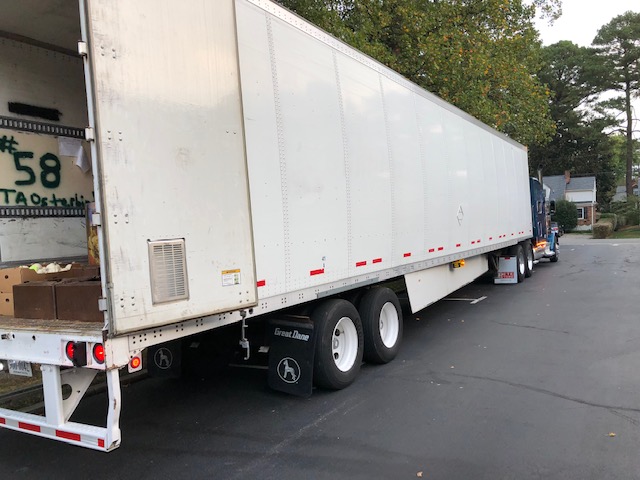
Two days later,  Tuesday, March 5, a derailment was brewing at  the Sherbourne Food Pantry. Their shelves were bare. Food was needed for Wednesday’s distribution to their clients. Our church was sent an urgent SOS.

On Sunday, March 10, a dear friend notified me that one of their children who has been valiantly battling substance abuse challenges— derailed. He was charged with a DWI in the college town where he attends school.

March is mad. 

But in truth, March is no madder than any other month. Human madness along with its derailments persist year round, not just in March. 

A  basketball team can endure the last intense seconds of a game and hang on for a win.

At the exact same time a basketball team is hanging on for a win, somewhere in the world a human being is barely hanging on hopeful for a different type of victory.  

If you were in that New Zealand mosque, maybe you were better at playing “opossum” during the mad rampage than the person beside you.

In Alabama, maybe the solid construction of a house allowed a family a place to hold on as the fierce winds of the tornado battered everything in its path.

Maybe the clients at the Sherbourne food pantry were able to feed their families on Wednesday night because some good hearts from a sister church brought in food.

Maybe the young college student with the DWI will realize his parents do love him as they keep hanging on for him.

On Saturday morning, the Commander Supreme and I drove over to Lewis Ginter Botanical Gardens. We walked the grounds looking for signs of spring’s encroachment. We were not disappointed.

As I attempt to improve my rapidly aging green thumb, I continue to be impressed with helleborus orientalis, you know Lenten roses.

Somehow these perennials survive everything Mother Nature tosses at them—heat, cold, drought, dampness, even an incompetent green thumb.

Lenten roses are survivors on a bleak winter landscape. They are the first to tell us with their pastel blooms—it’s ok, winter is fading, spring is approaching.

No one is immune from being derailed in life. 

When life derails us, there is a very real question asked in 2 Kings 6:33:  “Why should I hope in the Lord any longer?”

In all honesty, I’ve had those points in my life when I have asked the same question.

I’m not sure why, but no matter how frustrated the entanglement of my life with the world becomes,  I will hold on to hope.

Holding on to hope means while I am one, I’m not done.

If a Lenten rose can be a mark of strength, endurance, perseverance, survival and hope why can’t I?

That means making myself available to offer support for anyone whose derailment in life has left them clinging with their last pinkie for hope.

Enjoy your journey into March Madness. I wish your team the best.

But don’t forget in the madness of this world, someone is down to their last pinkie hold.

They need our hope.

Lunch With The Future

image2Late on the afternoon of Tuesday, March 5, I headed home to change into school board meeting attire. I had to be at Hermitage High School for the kick off of Student Government Day. 

Student Government Day is an opportunity for high school seniors across Henrico County to shadow county government and school board employees. This event has been around for 62 years in the county, but this one was to be my first. 

Even though I had read through all of the notes and e-mails outlining how everything is supposed to work, I will admit I was nervous. Nervous about botching something up for the young lady who would be shadowing me as the Tuckahoe District representative on the school board.

I arrived at Hermitage, conversed with people who I knew, and then searched for my student from Douglas Freeman High School. Somehow, I walked to the correct area where the students from Freeman were waiting. 

Name tags were a plus. I found my new school board member. We exchanged greetings, and slowly our nerves relaxed as we started to learn a bit about each other.

Soon, we found our way into the auditorium. That’s when my tired brain botched the first protocol. My shadow had to be seated on stage. So, I found her, walked her on to the stage, and introduced her to Judge Wallerstein, the Chief Judge of the Circuit Court. Judge Wallerstein had sworn me in back on October 4. 

We moved to our reserved seats, my shadow with her soon to be sworn in board members, and me with my current board members.

At that point, the program began to move quick. 

A sheriff deputy called everyone to stand just like in a courtroom. The investiture was a combination of timid and confident voices with a few moments of humor. Greetings were brought from the County Manager and the Superintendent of Schools, and then we were dismissed for a reception.

My shadow and I talked a bit more. I made sure she had transportation and that she knew to report to the East End Government Center out on Nine Mile Road. This is where the school board office is located. She confirmed a ride and directions were in place, and with that I departed.

On Wednesday morning, I took the back way over to the school board office. I parked, checked in with the Clerk of the School Board, and headed to a breakfast gathering for everyone who was involved.

It was to be a busy morning and day. 

First, on the agenda was a board meeting where our shadows worked with the Chair of the School Board and the Superintendent on the agenda items for an upcoming work session. Once this was completed, we talked about our roles and responsibilities and responded to questions.

Keeping the schedule, we departed the Superintendent’s conference room, and took our place for a building tour. I think the highlight for the students was the TV production center. Here the staff gave each of them the opportunity to participate in a news cast complete with weather, sports, and school board news. 

From there, we walked into a session where students were working on a special assignment— how social media impacts students. Broken into small groups, these students were formulating ideas that would be presented  after lunch at the mock school board meeting.

This was a brief stay as we were scheduled to attend a mock disciplinary review hearing. 

Without question, this segment generated lots of interest, insights, and questions. After lunch, at the mock school board meeting, the fate of the student who had been recommended for expulsion during the hearing would be decided by the new school board.

At this point, we moved back to the Superintendent’s conference room for a thorough review of the agenda and script for the mock school board meeting. The goal is for these new board members to run the meeting with very little assistance. They were all in with their participation and questions, and this really served as a tool for the new board members to get to know each other better.

Our new board members represented the following high schools:

Virginia Randolph, Highland Springs, Hermitage, Deep Run, and Douglas Freeman.

A review of the agenda and script concluded, and by then lunch had arrived. It was during lunch that the real learning for me took place.

There was an equal exchange of questions and answers from the Superintendent, school board members, and our new board members.

These were sharp students. Their insights were from the heart about their schools, the adults who run them, their classmates, and themselves.

I found it interesting that as seniors they had a sense about why some teachers are exceptional in working with all kinds of students.

 Each student confirmed those exceptional teachers know how to build a constructive working relationship with students. The teachers because of their commitment secure a buy in from the students, and that buy in carries the student and teacher on a pretty successful path.

But, the students were quick to point out, that they also needed structure in their lives in the environment of their schools. To them this meant fair and consistent implementation of school expectations by the administrative teams in each of their schools.

Interestingly, students felt the commitment to build relationships as being a key ingredient for changing both challenging school and community environments.

Hearing the students affirm and confirm some education and life guidelines that are always swirling in my old brain did my heart good. 

As always, time was catching up with us. We needed to be heading over to New Bridge site of the school board meeting. 

They worked out their rides and directions to New Bridge, and soon we were there. The mock school board session was called to order with the pounding of the gavel.

There were a few hiccups, but there are a few hiccups in a real board meeting too.

Soon it was over. Certificates of participation were presented, photos taken, and new friendships positioned to grow.

I left feeling pretty good. 

This diverse group of students gave me a bit of hope. 

My mind kept returning to the lunch conversation. I hope I can pursue the points they articulated.

If we want to change how a school, a community, a county,  a city, a state, a nation, and our world work through any of the challenges in front of us, we must build relationships one person at a time. 

How do we make this happen?

First,  we need to talk to each other. No technology interference—we must talk. 

 Learning to listen without judging is also a key. 

This includes a complete understanding of what it is like to be in someone else’s shoes. 

Never forget, there is learning in our stories. But, we can only learn if we are willing to share our stories.

I learned from the hearts of students today. Their stories are worth hearing.

The future of schools, communities, counties, cities, states, and this upside down world are in their stories.

I need to embrace and act upon their young wisdom—even when reluctance consumes me. 

Hesitating isn’t an option.

It is all about building relationships.

Fertile For Conflict by Bill Pike

images

Our youngest daughter is a graduate of East Carolina University located in Greenville, North Carolina. The school’s mascot is a pirate. As a parent, I can officially say the tuition for our out of state student made me feel like I had been robbed by a band of pirates. But, she did earn her degree, and she was happy.

On our initial drives to Greenville, I was captured by the flatness of the coastal plain in that part of North Carolina. That table top flatness led to clear views of acres  of farmland. 

These drives gave us the opportunity to watch the seasonal transitions for these fields, and I marveled at the dark richness of the soil. Clearly, this soil was very fertile as the planted seeds seemingly always sprouted into lush green fields.

Other travels through the Northern Neck of Virginia, the Delmarva peninsula, the flatlands of northern Indiana and central Illinois, and rolling sections of Pennsylvania along I-81 reveal farms with that same rich, dark fertile soil.

But the robust appearance of these farmlands aren’t immune from conflict. I suppose one of the biggest challenges farmers face is the whims of weather patterns. Additionally, certain pests can impact those plants, and woven into this would be fertilizers and assorted chemicals used to promote growth and reduce pests.

Just like these stunning fields are not immune from conflict, nor are human beings. In fact, at times,  we appear to be fittingly fertile for conflict too.

Families are a proven test ground for conflict. 

On that first scan of the family field everything might appear lush and green, void of any upsetting intrusion. But families, no matter how hard they attempt to project a healthy image are not immune from rattled nerves, stinging words, and bruised egos.

Could be as simple as the name chosen for a new grandchild. I just knew they were going to name that child after me, why didn’t they? I am going to give my niece an earful the first chance I have.

Who is on the wedding guest list? You’re not inviting our friends that we haven’t corresponded with for thirty years, how could you be so inconsiderate? Because of your thoughtless decision, we will not attend the wedding.

Even planning a funeral can be challenging. Who is going to sit by momma during the service? I was her favorite, I think it should be me. Now, wait, a second, I was momma’s favorite. Everyone knows that. You both are wrong, I was the favorite, you will both be sitting on the pew behind us.

And if you really, really want to spice up family gatherings  just bring up the “p” word, you know, I’ll whisper and shrink it— politics.

But, ranked up there in the fertileness of conflict with families is an unassuming, quietly reserved, tranquil place— the church.  Bill, are you kidding me, a church. God’s holy house ripe for conflict, no way, this is absurd. 

Churches are supposed to be about loving, caring, giving, supporting, nurturing, comforting, and the Golden Rule. 

Bill, I’m not buying that a church can be just as fertile for conflict as families. No sir, that is a flawed observation. You are way off target on that one.

Well, I am no great historian, but I’m pretty sure many examples exist that would validate my claim. But put history aside for a minute, and let’s move to present time.

Since my baptism, rightly or wrongly I’ve been a Methodist. Without question, this is not the same world that raised me into who I am today 65 years later. The world has changed.

This week, the United Methodist Church decided to “tighten its ban on same-sex marriage and gay clergy.”(NY Times)

Yes, churches are fertile for conflict.

I’m sure much will be written and discussed about this decision by experts and non-experts like me. 

The turmoil in this decision has the potential to hurt and impact many people from lots of different angles.

We live in a world loaded with hurts. Sadly, that might be one of our best attributes, intentionally and unintentionally hurting people.

The future of the Methodist church is tangled in that hurt. 

Whether the Methodist church can untangle itself from this hurtful policy remains to be seen. Perhaps, that depends on how fertile we are inside to wrestle with this position.

One question I keep coming back to is this—how am I supposed to love someone that I disagree with on any significant social issue? Maybe my inability to love that person is grounded in fear.

Fear drives lots of decisions. Fear drives emotions. Fear drives the unknown.

I wonder what can we learn from fear? I wonder what we are willing to learn from our fears? From my fears can I learn to love those with whom I disagree?

On Tuesday, February 26, the Richmond Times-Dispatch published a column by David Brooks of the New York Times.

I found the column— Social Fabric:  A nation of weavers to be very interesting.

Mr. Brooks also gives speeches a couple of times a week in various parts of America. His topic is about social isolation and social fragmentation. The topic and travel has allowed interaction with all kinds of Americans, and his take away from these encounters is “They share a common thread:  our lack of healthy connection to each other, our inability to see the full dignity of each other, and resulting culture of fear, distrust, tribalism, and strife.”

That shared “common thread” is full of negatives— lack, inability fear, distrust, tribalism, and strife. Sadly, I think these words match pretty well with the United Methodist decision that was made this week. They are in sharp contrast to words that I often associate with a church— loving, caring, giving, supporting, nurturing, comforting, and the Golden Rule.

On my Saturday morning run, I noted at the corner of Beechwood and Westham Parkway the same house empty lot that I pass whenever I take this route. The lot is filled with weeds and an assortment of trees. I note the beech trees on this lot. Beech trees are the last to drop their leaves. 

Today is the second day of March, and the beech leaves colored like sun baked newsprint for whatever reason are stubbornly committed to their DNA—they are not leaving the tree.  

Seems like the United Methodist church has a similar stubborn grip on its past DNA, hanging on no matter how much it will potentially hurt the present and future of the church.

The brand promise of the United Methodist church open hearts, open minds, and open doors isn’t going to work with this week’s decision. But maybe, we have an opportunity to shore up that branding with one faithful word—hope.

I hope Methodist congregations are willing to search and find the fertileness inside our hearts and souls to think deeply about the impact of this decision. 

I hope we are willing to talk, share,  and explore how to convey that we do have open hearts, minds, and doors to those who now think we don’t.

 I hope we are willing to learn and to use our learning to bring about inclusive change. 

I hope we will be risk seekers by understanding silence is not an option. 

And, I hope our discernment will move us to hold these words from Esther 4:14 in our hearts:  Perhaps, this is the moment for which you were created.

Church, there is no perhaps, this is the moment.

Footwork To Spring

IMG_1877

As I’m writing this morning (2/20/19), it is lightly snowing outside. The ground is covered. But, so far the snow is not falling hard enough to blanket the road in front of our house. Maybe the two hour delay in opening our schools was the right decision. Give those weather angels up in the wild gray yonder a shot at figuring out.

Perhaps you are like me— I’m tired of winter. I suspect winter makes us more weary than the other seasons.

Winter is cold. At times, it is dreary, painted in battleship gray. Often winter is wet for what seems like endless days. Winter can also be a tease. 

For example, sixteen days ago I went for an afternoon run on February 4. The temperature was 66 degrees. We all know it’s not supposed to be 66 degrees in February in Richmond. A few days prior to the 66, we were in the grips of the polar vortex. Come on winter don’t tease like that!

On the afternoon of the 66 some people were taking advantage of the tease.

 I saw a lady relaxed in a chair in her front yard, shades on, with her chair angled perfectly toward the sun. A few turtle steps later, a car came by me with its convertible top down, and kids riding bikes or shooting hoops were in shorts and t-shirts. Even I was running in shorts.

I guess teases like this are good. They give us hope. Hope that spring is out there somewhere.

Spring is about footwork. As we all know to get to spring, our footwork has to walk us through winter.

Recently, at the Tuckahoe YMCA, I was riding an upright stationary bike in a connecting foyer between the gym and a huge workout room packed with fitness equipment and people. Little did I know that I was about to see a lesson in footwork unfold in front of me.

The bike I ride is equipped with a viewing monitor, and the computer brains of this bike allow me to choose a location where I want to ride. I’ve ridden in Ireland, Paris, the Swiss Alps, and Sequoia. It is a cheap way to travel.

 This morning, I went back to Sequoia. At one point, I glanced away from the screen and just a few feet in front of me a young man with a trainer showed up. The young man was dancing on his feet while shadow boxing. He was moving through this space like he was in a boxing ring, working every inch of the corridor bobbing and weaving with his nimble feet propelling him.

The trainer was coaching. He quietly directed commands toward his pupil. With his seasoned words, he offered corrections in his student’s upper body movements. And, the trainer carefully watched the young man’s footwork.

 This was a brief, but enlightening distraction from the bike ride. The young man in a short span of time really worked hard.

 Who knows, perhaps we need the unexpected intrusion of a spring like day in winter to distract us. 

Maybe those intrusions lighten our footwork. Maybe our lighter footwork gives  a bit of confidence. Maybe, we start to think, ok, I can count this down one day at a time. I can hang on— keep my footwork moving forward, and spring will arrive.

But those unexpected, warm intrusions in winter always give me pause. Silently, I wonder what lies ahead, winter isn’t over. I don’t trust it. Winter can still sting with a stiff north wind, that can rapidly drop temperatures, and rain in a blink can change to snow. 

The same can be said for life. It too can change in a blink.

Recently, two friends have experienced a blink—the return of an unexpected, unwanted intruder—cancer. 

Talk about a downer, I can’t imagine anything worse. If a human being survives one unbearable skirmish with cancer, he or she should be given immunity from any future encounters—period.

But, clearly, life does not work that way.

Makes me wonder, where is God’s footwork in this? I thought God should be able to out maneuver the devil’s footwork, especially when it comes to the repeat performance of cancer.

Well, there you go again Bill blaming God. I’m surprised God has kept you around for 65 years. Talk about footwork, you better keep an eye on yours. 

You know you are right about my God blaming. I’m sure He is tired of me. 

But, let’s be honest, I think we all have our God blaming moments.

 And you know what God blaming really comes down to? It is trying to understand Him. 

God what are you thinking? Where are you? How are you working on this?

Now, if I’m starting my second battle with cancer, I might really have a difficult time buying into Jeremiah 29:11:  “For surely I know the plans I have for you, says the Lord, plans for your welfare and not for harm, to give you a future with hope.”

How can a second battle with cancer be a future with hope?

The only hope there is in cancer is if your footwork allows you to find the strength to punch it out of your body for a second time.

American writer, Dashiell Hammett once stated:  “You got to look on the bright side, even if there ain’t one.”

I can find some bright sides to winter. 

I love the unobstructed view of bare trees framed against thickened gray clouds. On a crisp, cold, clear day the rich blue sky is an endless daydream. After a cold night of rain, the breaking dawn air feels like it has been scrubbed and cleansed. And, the fading light of an almost full moon peek a booing through a cloud bank makes me stop and stare.

And I’m sorry, but I can’t find any bright side in the meanness of cancer, especially when it shows up for round two in my friends.

But, just as that trainer kept a helpful eye on the footwork of his boxing student, I must do the same for my two friends. My  footwork needs to be a bright side for them.

And even though I don’t always understand God, and I’m sure he doesn’t understand me, I must trust his footwork. I need him to coach my footwork to support my friends.

My blaming Him will not help the footwork of my friends in their cancer battles.

They need me, they need you, and they need God.

Our footwork in life will face many challenges. 

But, it seems in those difficult life moments, my footwork will have a better chance if I’m grounded to these words from Psalm 94:18:

When I thought, “My foot is slipping,” your steadfast love, Oh Lord, held me up.