Baby Road: Day 3 by Bill Pike

The guest bedroom was gone. It was now the home of the Princess and her big girl bed. There was no coin toss, but I was assigned to the couch in the living room, and Nahna the inflatable mattress in what would become the bedroom for the new arrival. Baby3
I had slept well, but my internal east coast alarm clock woke me too early to be stirring around the condo. Somehow, I fell back to sleep.

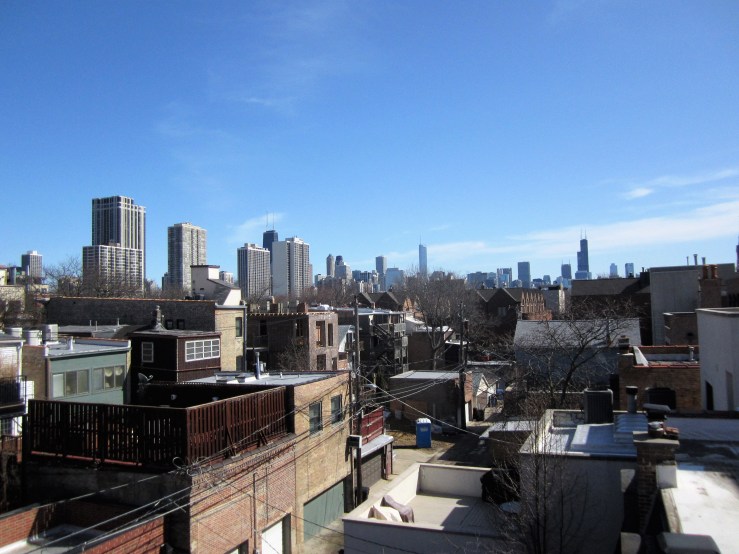
When I awoke, the darkness of the neighborhood was just being graced by light from the east. Thankfully, the predicted snowfall amounts didn’t occur in Lincoln Park. A few traces were scattered up and down the street.

Yesterday, our daughter thought the new baby might return to the womb if the ground had been covered in snow. But, that wasn’t the case. This was to be a day of bright sunshine and blue skies in every direction. But, the non-spring like cold temperatures were still hanging around along with a constant nippy wind.

Slowly, the condo came to life. Breakfast for the Princess came first. While coffee beans were ground, sporadic recanting of the training from the day before filled out the kitchen.

At some point, there was a loud clunk on one of the clear pained living room windows.  I caught a glimpse of a stunned bird. Somehow, the bird recaptured the needed balance and landed in a tree still bare from winter.

The bird appeared to be a downy woodpecker checkered in black and white with a small patch of red on the top of its crown. Perched on a branch in the warming sun, the small woodpecker slowly regained its senses—shuddering a few times before flying off.

Just before nine, our son-in-law whisked the Princess away to an indoor Pee Wee camp at a local fitness center. An action packed morning awaited her with exercise, creating some collectible artwork, and swimming.

While he was doing the drop off, Nahna and I took out the trash and the recycling, made a short walk to mail a couple of letters, and stopped in CVS to buy a newspaper for the new arrival.

When our son-in-law returned, we had one more review of today’s game plan. Our daughter and her husband made a final check of all the things they needed at the hospital. The Uber was ordered, photos taken, hugs exchanged, and they were out the door.

A little bit before 12 noon, Nahna had us organized to go pick up the Princess. The fitness center was near the heart of DePaul University. When we arrived, all of the kids were in the pool working with instructors. Soon, the camp was over, and Nahna knew the drill for securing the Princess for departure.

We made the ride back. I dropped Nahna and the Princess off in front of the condo, got them in, and I left to park the car.

It was nap time for the Princess. After reading a book to her, the Princess zonked out.

Nahna’s phone rang. It was our son-in-law. Excitement filled us. But, he was only letting us know that they were still waiting to get in the operating room. An emergency procedure for another person had bumped them out of their 12 noon slot. So, we were in a delay, a holding pattern.

We briefly heard from our daughter around 1:30 with an update and maybe a hint that they would be heading into the operating room soon.

For the remainder of the afternoon, no matter how I attempted to distract myself, my always present demon, William Worry, was perched up on my shoulder. In every slow tick of the clock, I worried that something was going wrong at the hospital.

Finally at 5:05 p.m. central time, our son-in-law called. Hudson Leo Reinking had arrived. A big boy at 9 pounds 12 ounces and 21 inches in length. It had been a long afternoon, but his report was good.

I was relieved.

Seems like I forgot about the word “Trust” on the back of the tractor-trailer we had passed on Wednesday morning.

Baby Road: Day 2 by Bill Pike

The Fairfield Inn treated us well— good sleep. The breakfast spread hit the spot too. After breakfast, we regrouped in the room, then checked out, reloaded the car, topped off the tank, and found our way back to I-65 north.

All along our journey, tractor trailers were traveling on both sides of the interstate in heavy numbers. Sometimes, we even saw flatbed train cars hauling the trailers too.

This morning, I noticed on the back of a trailer from the Danny Herman Trucking Company the following words:

Isaiah 40:30: Trust.

Mr. Herman’s company is based in Mountain City, Tennessee. Scripture references are standard on the back of all of their trailers.

I-65 is straight and flat.  Both sides of the interstate are dominated by farmland. No signs of spring are visible on this gray overcast morning. In fact, if I didn’t know this was April, this morning easily looks and feels like November or February.

From the roadway, singular farmhouses, barns, and fields seem lonely, like they are looking for spring to swoop in for a rescue.

But occasionally, I see a slight sign of spring. A hopeful farmer has given his fields an early plowing turning the dark rich soil over as a message to the remnants of winter—you need to leave, I’m ready to plant.

We continue passing trucks. Soon we are connecting with I-90 that will carry us into Chicago. Behind us are once thriving industrial towns of Gary and Hammond, Indiana. Brief glimpses of Lake Michigan are cast in the distance, and it isn’t long before the skyline of Chicago comes into view.

With minimal unpleasant language from me, we are finally on Lakeshore Drive. Familiar landmarks serve as a reminder of poet, Carl Sandburg, poem “Chicago.” Yes, we are in “the City of Big Shoulders.”

The LaSalle Avenue exit is waiting for us. A few more turns and we stop in front of our destination. The street is deserted. New water pipes had been installed by the city. Per order of the city, no parking is allowed on the street prior to 7 p.m. until repaving is completed.

Our son-in-law is present to help us unload. The goal is one trip. With hands full, we make the hike up the stairs to the third floor.

It is a good aerobic workout, and worth every step. At the top landing, our daughter and granddaughter are waiting. The radiant, expectant mother is about to pop, and our granddaughter is dressed like a princess.

The Commander Supreme, now called Nahna, is quickly out of control with a bag of surprises for the Princess. Her sweet charms as a grandmother work their magical bonding and with no hesitation from the Princess, they are off to play.

After lunch from Potbelly Sandwich Shop, the afternoon is a combination of running errands and instruction. We receive instruction on  everything related to keys, vehicles, technology, and all of the finer details on how to manage the routines of the Princess. I’m told we will be quizzed before the expecting parents depart for the hospital on Thursday.

Gray clouds, no sunshine, below average temperatures, and a brisk wind keep us inside after the running of errands. Plus, the weather forecast called for the late afternoon rain to change to snow with a possible accumulation of 1-3 inches. Local media reports this April in Chicago has been the second coldest on record in 130 years.

Around lunch time, our daughter had received the orders from the doctor and confirmation of when to be at the hospital on Thursday.  After dinner, she and her husband made sure they had everything ready for the trip to the hospital. They were planning to Uber to the hospital.

Large snowflakes were falling steadily as we prepped for bed. I watched the flakes in light cast by streetlights as they tumbled toward the hard surfaces below.

Again, I was ready for some sleep, but thankful for a safe arrival in Chicago, and thankful that Nahna and I are available to help out.

I thought back to the Isaiah scripture reference on the the back of the truck with the word— Trust.

Thursday, April 19 would be a day grounded in trust. Trust that the good Lord would continue the baby journey with our daughter and her husband, and trust that all the medical personnel involved with this birthing are at their best.

Baby Road: Day 1 by Bill Pike

IMG_3117.JPGThis last week has been a blur. Too many responsibilities on the radar, life is moving too fast. Departure day for heading out to help with the coming of grandchild number three had arrived.
On Tuesday, April 17, we were hoping to be on the road heading toward Chicago by six, latest seven. At 6:30 a.m. we were pulling out of the driveway. The goal was to make it to Lafayette, Indiana. That would leave us with two to three hours on Wednesday morning to make it into the Windy City.

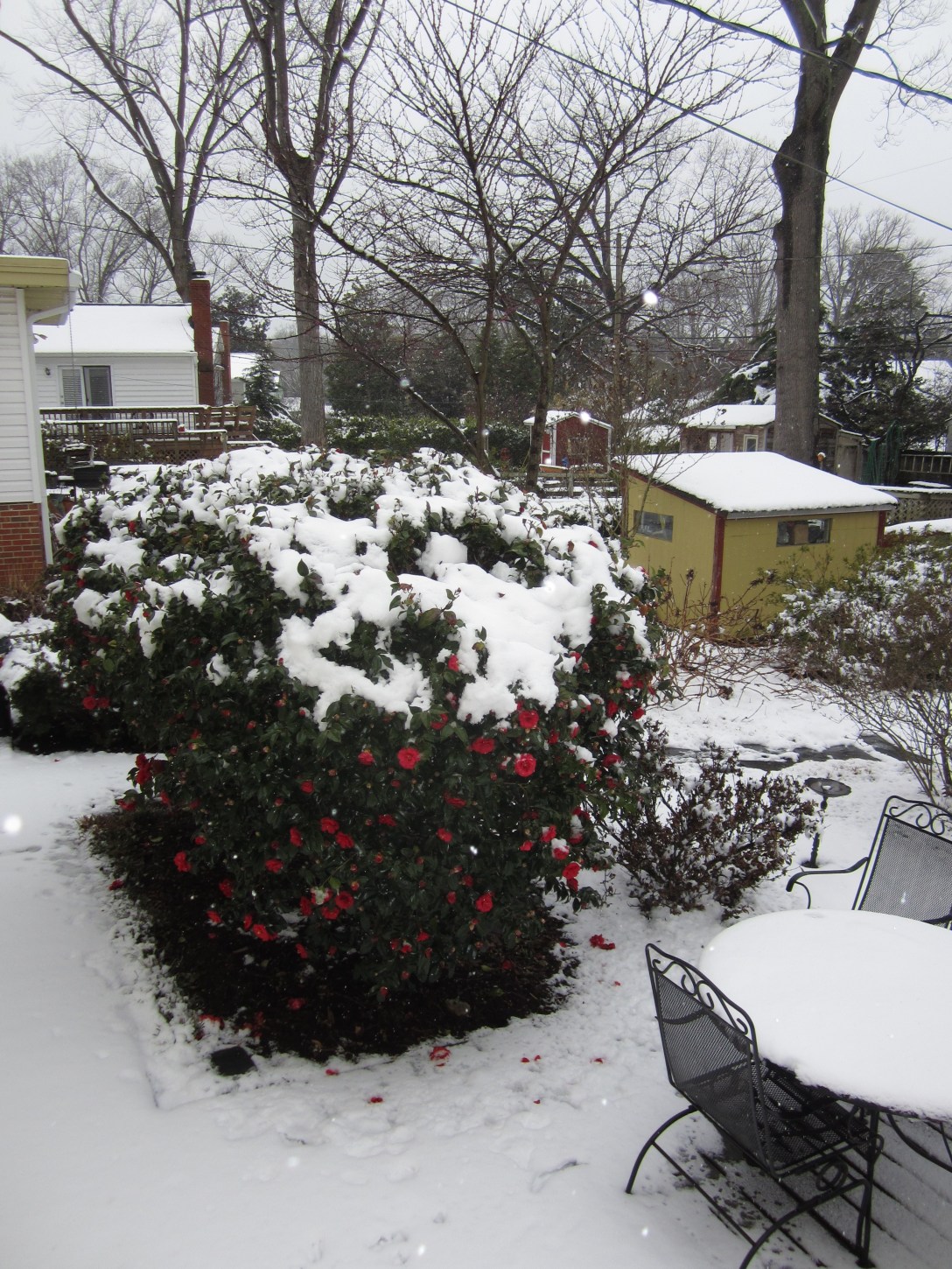
We had been experiencing wacky weather this spring in Richmond. In the 80s on Saturday, and now in the 30s as we are leaving. But, this morning, the sun was out with some clouds. A familiar route awaited us— Patterson to 288, to I-64, to I-81, and back to I-64 again pushing west. Past Lexington, Virginia, the teasing of the sun on treetops was gone. A gray sky contrasted early pops of color dominated by the purple flower of the redbud trees.

The ferocious storm front that caused havoc on Sunday left behind swollen, muddy rivers and creeks. As we prepared to exit Virginia and enter West Virginia, it appeared that snow was falling against the back drop of the mountains.

Sure enough, a flurry of fine flakes awaited us. Digital signs in the median flashed a winter weather advisory. Here we are twenty-five days into spring, and winter is making up for what it failed to deliver.

We kept going, admiring the snow-covered landscape, and we guessed it had steadily fallen during the night or just before dawn. The good news was the road surface had not been impacted, so we kept moving.

My rapidly aging body needed a potty break. We stopped at the West Virginia Welcome Center. I commented to the friendly lady at the information desk, “nice spring weather.” She responded, “Yes, I don’t know what we did to deserve this.”

We survived the twists, turns, and steep climbs of the West Virginia Turnpike. Soon the gold dome of the capitol building in Charleston was in sight. Parallel to the interstate at times ran the bloated Kanawha River where a single tugboat pushed an empty barge upstream.

The snow-covered hills had disappeared, and north of Charleston, we opted to exit 64 and pick up U.S. 35. Eventually, U.S. 35 would carry us into Ohio. The further north we pushed, the more the sun played pick a boo. But, we were well past Indianapolis before the sun decided to really show up.

Traffic around Indianapolis hinted at the rush hour exodus, but we kept moving at a steady speed. We connected with I-65 and Lafayette starting appearing on the mileage signs.

Wasn’t long before we had taken a Lafayette exit, the Commander Supreme’s research landed us a room at a Fairfield Inn by Marriott.  We checked in and figured out a dinner plan.

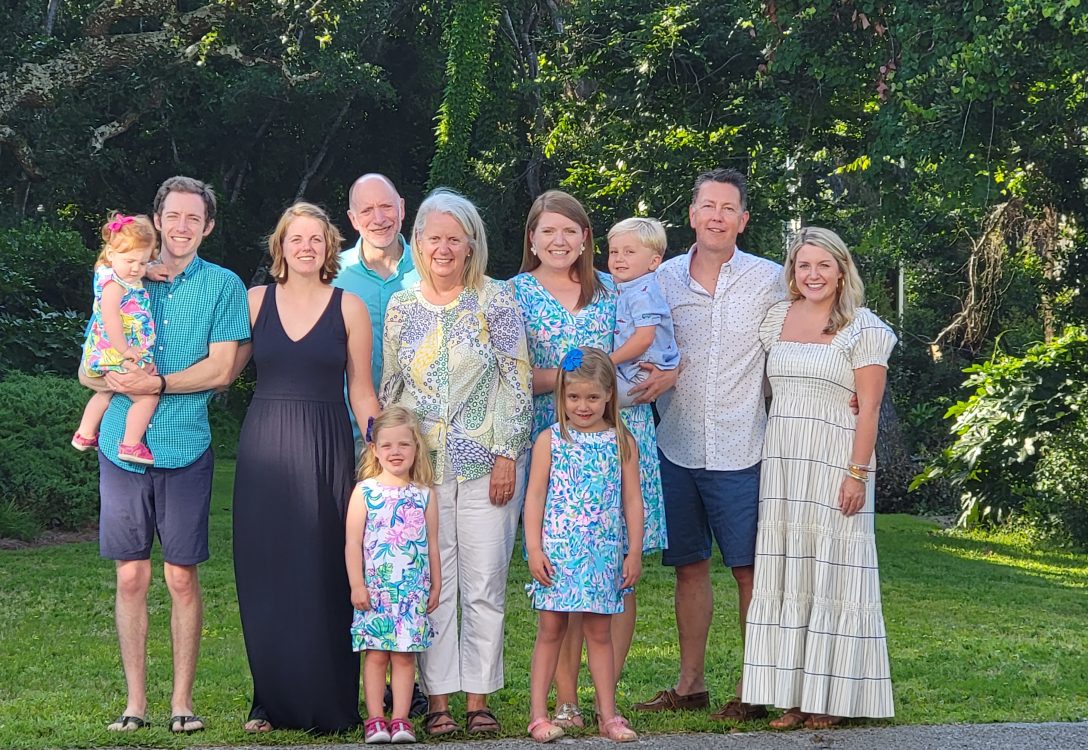
Our oldest daughter, her husband, and two-year-old daughter live in Chicago. Their second child was due April 26, but the ultrasounds revealed a baby in the breeched position. So, we are coming in early to help out with a bumped-up arrival date.

After a good dinner at the 25-year-old Lafayette Brewing Company, we purchased a couple of sweet treats from Kathy’s Kandies. Our iPhone navigator, Nigel, complete with a British accent, led us back to the Fairfield Inn.


Sleep was needed. I’m hoping for a boy!

Attempt At Being Clever Part II: AVAILABLE by Bill Pike


I wonder how preachers would respond if asked to compare the activities of Holy Week to Christmas Eve services?

At our church, we have four services on Christmas Eve.  During Holy Week, we have three services on Palm Sunday. This is followed with services on Maundy Thursday, Good Friday, and four services on Easter Sunday.

From my perspective, whether Christmas Eve or Holy Week, preachers pursue perfection in the planning of these services. But, I think the pressure is a bit more intense during Holy Week. Maybe part of that is mental preparation, as a preacher must really be on his or her “A” game to make Jesus’ resurrection resonate with a congregation.

The ride through Lent to get to Easter is longer, 40 days. While the season of Advent is 24 days. What a church staff plans out for their congregations during Advent and Lent is also important. Those activities/events might predict how well a church does in reaching people for Christmas and Easter.

For these last seven years, I’ve had the privilege of serving on our  church staff. However, during that time frame, this was my first experience being present for all of Holy Week and Easter Sunday services. I have an excuse. My wife and I celebrated Easter either in Connecticut or North Carolina with family.

Here are some of my take aways from my Holy Week.

When Holy Week is in March keep your eye on the weather guys. They can create a lot of heartburn. One day its in the 70s and the air conditioning is needed. Three days later, a cold front pushes through, and we need the heating system again.  This roller coaster in temperature change only increases the balding process on my old noggin’.

 Back on February 14, we placed a wooden cross out on the front lawn of our church, and we draped it with a purple cloth lightly secured with roofing nails. 

Early on the morning of March 30, the purple cloth was taken off, and pieces of torn black cloth were tacked back on the cross.

Then on Easter morning, just as the light of the dawn was slowly rising from the East, the black cloth came off, and we wrapped chicken wire around the cross. The placement of the chicken wire allowed our congregation to decorate the cross with an array of fresh flowers celebrating the resurrrection.

For Palm Sunday, the focus is on palm fronds. Children parade into the Sanctuary waving the palm fronds. Members of the congregation are given a cross made from dried palm branches to pin to their attire.

The highlight of the communion service on Maundy Thursday was the gentle and compassionate foot washing.

On Friday morning, the church had a different feel— something about that cross draped in black. Later, that somberness would continue with the scripture readings and the snuffing out of candle light in the Tennebrae service.

Saturday morning brought in a group of volunteers to ready the Sanctuary for Easter. They  were focused on placing the highly fragrant Easter lilies at the altar.

Also, on Saturday, I took a break from church. I made a day trip to Snow Camp, North Carolina in Alamance County for a family Easter gathering. It was clear blue skies, and unseasonably cool when I left Richmond a bit after 7.

Heading out on I-95, it wasn’t long before I made the merge on to I-85 pushing me south.

My memory recalled an observation about I-85 from my college roommate, the Reverend H.D. Sherrill, Jr. While attending divinity school at Duke, one of his professors noted that the section of I-85 north of Durham to Petersburg was the most God forsaken stretch of interstate highway in America.

 I might beg to differ with the professor seeing how I was born in the Old North State. For me, there is something intriguing about the starkness of rolling hills and plots of thick woods that lay bare in the transition from winter to spring. I can peer into those woods, and see the heart of what holds them in place from year to year.

Occasionally, on the drive south, I view empty roadside billboards with the word AVAILABLE boldly printed. An advertiser’s scheme of trying to lure a potential customer.

But way after, a delicious southern spread of food for lunch and conversation with cousins and uncles, that word available was still stuck in my brain as I started my drive back home.

After reaching Durham, I ditched the interstate for my return to Richmond. I opted to come in the backdoor via US 58 and 360. That allowed me more thinking time about available.

What is it in our make up that pushes us to be available to attend church in significant numbers at Christmas and Easter?

Sanctuaries are near capacity for those two special days in the church’s calendar. And, I assume every pastor in America wonders what he/she would need to do to insure such noteworthy attendance the following Sunday?

After all, churches— their services and activities are available throughout the year, not just two special days.

On Easter Sunday our total attendance for our four services was: 1,173. One week later, our three services on Sunday, April 8, we totaled: 427.

That’s quite a difference.

By Friday, April 6, the once  fresh flowers poked into the chicken wire on the cross were starting to fade. So, it was time to remove the flowers, the chicken wire, and the cross.

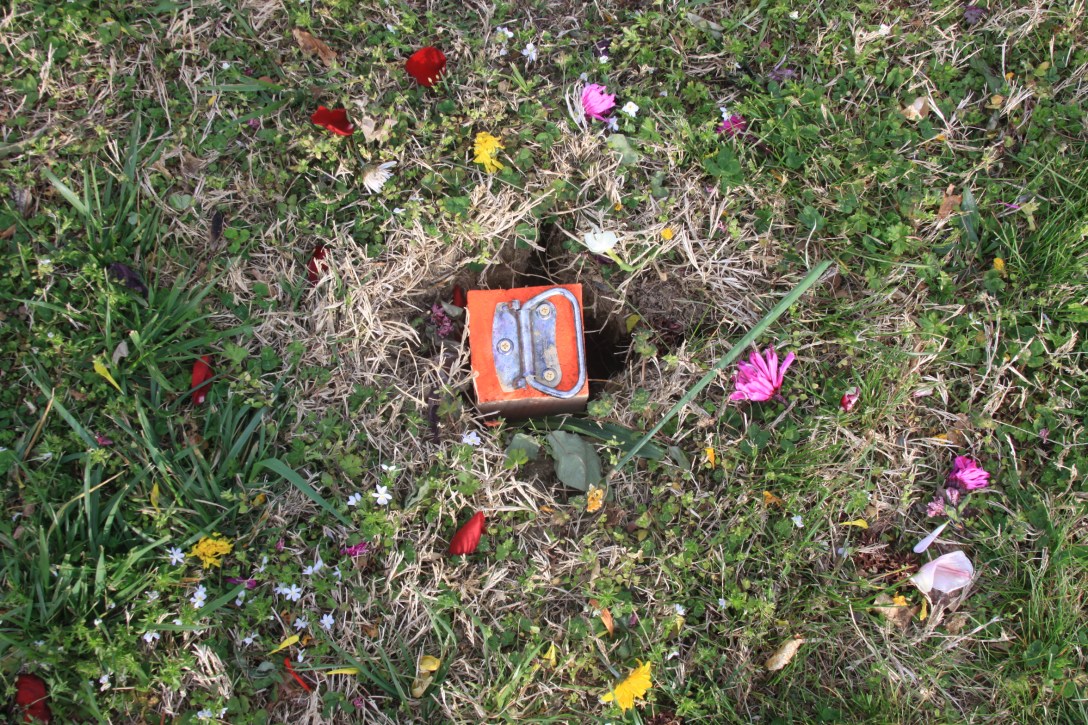
Earlier in the morning, I had cleaned up the 4×4 marker post that I would slide back into the hole that had been dug for the cross. Hoping to eliminate a long search next spring to find the hole filler, I spray painted the square top with a bright orange paint. Also, I used longer screws to reattach the handle back into the top of the post.

Our head building caregiver, Ronnie Johnson, helped me lift the cross out of the ground. We carried it around to its resting place in the Eaton Hall mechanical room. 

I came back out with my non-patented “hole filler” and dropped it gently into the opening. Quietly, I thought—just like at Christmas, now all of the signs of Lent and Easter are neatly tucked away.

Is that the way God and Jesus want things to be? Do I want them to be neatly tucked away in my life until Christmas arrives again?

My mind wandered back to the empty billboards on I-85 with the boldly printed: AVAILABLE.

It is clear that I need to make myself available, more accessible to the teachings of God and Jesus.

 And, this also means peering into myself, like I scanned those uncovered hills and stands of trees along that God forsaken stretch of interstate.

When I look inward, I find stacks of excuses like unread magazines piled on a table.

What’s in the heart of those excuses? 

Do I take for granted Hebrews 13:8:  Jesus Christ is the same yesterday and today and forever.

Do I make a similar assumption regarding Matthew 28:20:  “And remember, I am with you always, to the end of the age.”

I don’t know about you, but I need something in my daily living that is consistently available. 

Meeting that need really comes down to this— am I willing to make myself available?

Waiting for Christmas, or next Easter can’t be my answer.

My excuses need to be put away, I must be available, and I must remember—“I am with you always”.

March and Its Madness: “It’s Crazy!” by Bill Pike

Recently, in the comic strip Frank and Ernest, creator Bob Thaves, shows his two characters outside shooting hoops on a partially snow covered basketball court. They are shivering in their shorts and t-shirts. One character comments: “It’s crazy! One day it’s 70 degrees and sunny, then the next day there’s a foot of snow! This is the real March Madness.”

While March has become famous for the NCAA men’s basketball tournament and the madness it brings to college basketball teams and their fans, March is also known for the transformation of winter letting go and spring trying to arrive. Toss in St. Patrick’s Day, the season of Lent, maybe Easter, and March can be a bit chaotic.

But, if we really took time to think about our twelve months, I think we might discover bits of madness in each one.

For example, back on February 12, I went for an early morning run. I noted in my running journal entry—it was 65 degrees, and I ran in shorts. I’m not supposed to go for a run wearing shorts in February—that’s madness!

But back to March for a minute. This year, Spring arrived on Tuesday, March 20.

That night, we had a local forecast for snow. Sure enough, Wednesday morning snow was falling. The heavy wet snow fell with such a burst of sustained tenacity that superindendents closed schools for the day.

Daffodils, flowering trees and shrubs, along with the birds didn’t know what to think about this madness.

Thankfully, this was a true southern snowstorm. It disrupted Wednesday. But, by late Thursday afternoon, bright sunny skies with rising temperatures had melted the snow—it was gone.

Now, we were back to Spring attempting again to emerge.

We want winter to be a disappearing speck in our rear view mirrors. This change is needed. Come on winter let go, and let spring have all of its allocated days.

Perhaps, the seasons of the church also have a touch of madness.

The commercial trappings of Christmas can create an unbearable madness.

No matter when it falls, March or April, Holy Week is madness.

Palm Sunday arrives full of vitality, followed by the challenges found later in the week.

The “it’s crazy” comment from Frank and Ernest seems appropriate for Holy Week.

Just like the seasonal tugging of territory between winter and spring, understanding Holy Week remains an internal tug of pondering for me too.

It is a question I ask alot—how could this happen to Jesus?

I ask the same “how could” question about our recurring tragic headlines— Parkland, Florida, Syria, Charlottesville, Virginia.

Sadly, no matter where I look meanness, hate, and incivility appear to dominate.

At times, I wonder if the world has really changed that much since the death of Jesus?

It is a crazy world.

But, does it have to be?

Sadly, the world seems incapable of change, and you know who else is incapable of change—me!

If I want meanness, hatred, and incivility to tumble forever over the horizon, I must change.

If I want to find hope in the resurrection at the end of Holy Week, I must change.

If I want to change me to become part of the solution, then I must sacrifice.

And for that to happen, I must completely embrace Romans 12:12:

“Love puts up with all things, trusts in all things, hopes for all things, endures all things.”

Happy Easter!


That Wind by Bill Pike


At 1:42 a.m. on Friday, March 2, 2018, the show started.

That’s when I was jolted from sleep with a phone call from the security company who is responsible for monitoring our church.

As soon as the technician told me the location of the alarm, I knew who to blame—that wind.

Up on the third floor of the education wing, when the wind is howling outside, a slight draft occurs. In an old building, that draft is just enough to disturb an overly sensitive contact.

But in truth, what is really taking place is this.

Over time, property managers for Methodist churches gradually learn that the ghosts of the Wesley brothers sometimes race along empty hallways and corridors on windy evenings playing hide and seek.

I know this first hand from previous security calls. There is no other way to explain an elevator door opening in the middle of the night, and no one walks out of the elevator.

Our pals at the National Weather Service had alerted us that we were going to be battered by strong, sustained winds into Saturday. On Thursday and early Friday morning, our staff had been busy making preparations for a 1 p.m. funeral on Friday.

We had lost Don Pierce. A person who had touched many lives with his servant heart. We anticipated a large turn out for Don’s funeral.

Also, we knew that our church is located in a neighborhood with lots of stately trees. Our prior knowledge with power outages from hurricanes, severe thunderstorms, ice storms, and that wind told us to be aware.

Friday was a beautiful blue sky day. Bright sunshine was abundant, but that wind was relentless. As the morning progressed, local news outlets were covering stories about fallen trees and power outages. That wind was having an impact.

The start time for the funeral quickly arrived. The Sanctuary filled. Our bereavement team volunteers were ready to receive family and guests in Trinity Hall following the service with a reception.

The family had organized and created a slide show with wonderful photos capturing Don’s life. This was to be played during the reception. Additionally, they supplemented that presentation with more framed photos displayed on a table in Trinity Hall.

But this service also had some special technical requests from the family. Don’s son Al resides in Boston, Massachusetts. Sadly, like Don had been, Al was in a hard fought battle with cancer. Al was unable to travel to Richmond for his father’s funeral.

In our Sanctuary, we have the capacity to live stream our Sunday morning worship services. The family asked if we would be willing to do this for the funeral service, and of course the answer was yes. One of our members, William Marriott, who has skills working with technology, was planning to be at the funeral and agreed to handle the video board.

With a full Sanctuary, our Music Director, Charles Staples, began quietly playing hymns at the piano as late arrivals hustled to find a seat. Senior Pastor, Larry Lenow, was in the parlor with the family offering final instructions and prayer as they prepared to enter the Sanctuary.

That wind continued its howling outside. Just as the family started their walk down the center aisle, we heard two loud booms. The electrical supply for the building was gone.

Booms like we heard are not a good sound. Usually, this was a sign that a tree or a large limb had harshly encroached a power line, downing the line, and probably blowing a transformer.

Inside the Sanctuary, the service didn’t miss a step. Thanks to some quick thinking, by Andy Duerson, the Pierce’s son-in-law, and others, cell phones were used to send live the progression of the service to Al in Boston.

Outside the Sanctuary, we started to develop a plan for moving people through darkened hallways into the reception area. Staff members, Paula Cadden, Ronnie Johnson, and volunteer, Lynn Berry, began to figure out a response.

Candles were located and placed in the restrooms by Trinity Hall. Lynn remembered that some attending the funeral service had mobility challenges. No power, meant no elevator.

So, it was reasoned the best way to move these people to the reception was to suggest that they return to their cars and drive to the handicapped entrance area of Trinity Hall.
The bereavement team in Trinity Hall was ready for the reception. They too had improvised with candles and cell phone flashlights in the kitchen. Through the Trinity Hall windows, the southern exposure was providing ample sunlight into the room.

During the witness and homily sections of the service, we were able to convey to Charles Staples the plans made to move people out of the Sanctuary. Charles shared this with Larry who made these announcements before concluding the service.

Guests made their way to Trinity Hall without incident. Bright sunlight filled the room.

With teamwork, and a bit of luck the service and reception took place without significant challenges.

It was after 5:30 p.m. before power was restored to a now empty church.

A few remarked that the loss of power was something Don had planned. They reasoned it reflected the sparseness of the lifestyle by the villagers in the mountainous regions of Honduras. This is where Don had led countless medical mission trips through the Friends of Barnabas organization.

Clearly, there was nothing sparse about Don Pierce’s life when it came to his capacity to touch the lives of people at home and in Honduras.

Fortunately for us, his leadership and graceful service will continue to live. Don through his wisdom developed a practical template for future Trinity leaders to follow in making a difference in Honduras.

Yes, that lousy, stinking, good for nothing, rotten, mean, disrespectul, cancer took Don’s last breath.

But, it didn’t take his spirit.

Consider these words from John 3:8:
“The wind blows where it chooses, and you hear the sound of it, but you do not know where it comes from or where it goes. So it is with everyone who is born of the Spirit.”

Don was born of the spirit.

That wind of the spirit pushed Don.

We need to let that wind of the spirit push us as well.

That would please Don.


All In The Timing by Bill Pike

Sunday, February 25 was going to be a busy morning at our church.

We were having two informational breakfast sessions for our annual stewardship campaign.

When I opened the building around 5:45, I initially spent a bit of time in Trinity Hall rechecking the set up for the breakfast.

Next, I started working my way through the building— unlocking doors, turning on a few lights, and checking the temperament of our boilers.

I had walked through the lobby at the Stuart Hall Road entrance to the Sanctuary. I took a few steps into the Sanctuary when I heard this horrible noise behind me.

I wondered if the good Lord had finally had enough of me, or maybe a grumpy student from my past was stopping by with a greeting.

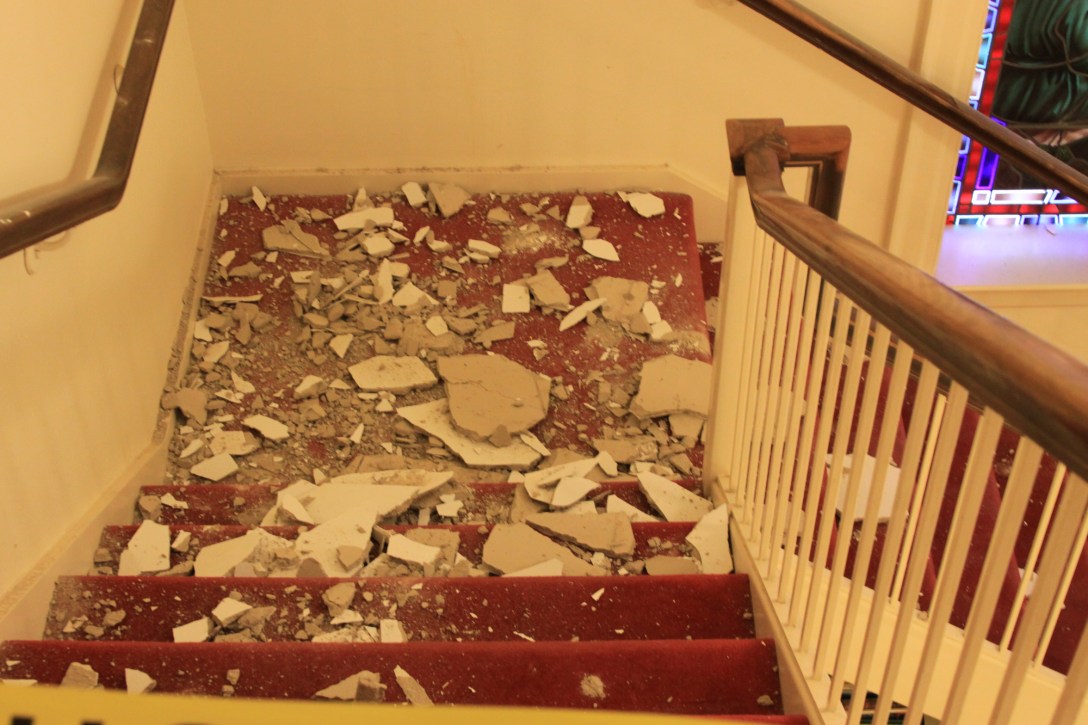
I stepped back into the foyer, and I saw a cloud of dust. I looked to my left at the staircase and saw it was covered in debris. Then my eyes scanned upward where I could see that a 4×4 foot section of the ceiling was missing.

Immediately, I was thinking, God what in the world are you trying to do to me? It’s not like I don’t have anything else going on this morning.

Then, I was looking for someone to blame besides God. And I settled on the music director for our church, Dr. Charles Staples.

For years, some in the congregation have complained that Dr. Staples plays the organ too loud. So my theory is that all of those sound waves from an organ played too loudly finally conspired with Mr. Newton. This resulted in the ceiling saying— “I’ve had enough of this vibration nonsense, I’m going to collapse.”

Something pulled me out of my blame game daydream, and I started figuring out what I needed to do.

I shut doors to slow down the dust. Opened an exterior door and put a box fan in it to pull out the dusty air.

Then I worked to seal off access to the stairwell in the lobby and at the balcony entrance. Next, I made a quick call to our senior pastor, Larry Lenow, to let him know he needed a hard hat when he entered the building.

When Larry arrived, we agreed not to cleanup the debris. We opted to focus on getting us through our Sunday morning plans.

As the congregation started to arrive, there were lots of questions. Some speculated that I had conspired to have the ceiling collapse just in time for the stewardship breakfast. Jokingly, Larry even insinuated that line of thought in his morning announcements.

Well, we made it through the morning with no more rumblings from the ceiling. On Monday, we made arrangements to have the ceiling material tested for the fearful “a” word— asbestos. Lucky for us, the test came back negative.

Later in the week, with dust masks on, we cleaned up and bagged the debris. Even though, we can see some fissures in the remaining ceiling, no more plaster came tumbling down.

Perhaps, when we take the old ceiling down, we might discover why it decided to collapse. I don’t think God, or the organ being played loudly made the ceiling take a downward tumble.

But, I do think something can be said about God’s timing. For whatever reason, the ceiling decided to collapse with no one standing under it. Clearly, significant injuries would have occurred if people had been on the staircase when the ceiling mumbled internally— I’ve had enough. I am thankful we had no injuries.

I often wonder what is in God’s timing. We live in an impatient world. Nanoseconds dominate. I don’t believe God is on nanoseconds time.

Reminds me of Acts 1:7: “Jesus replied, “It isn’t for you to know the times or seasons that the Father has set by his own authority.”

Can’t be much clearer—it isn’t for me to know what is in God’s timing. But, I know I will continue to be curious.

This quote from Lailah Gifty Akita reaffirms the wisdom from Acts: “We can neither hurry nor hasten the works of God.”

And if that’s the case, it becomes even more important for me to hold on to these words from Psalm 27:14: “Wait for the Lord; be strong and let your heart take courage; wait for the Lord!”


Can Churches Be Saved?

During the last week of September 2017, fourteen members from Trinity United Methodist Church  attended a conference for church leaders at the Church of the Resurrection (COR) in Leawood, Kansas. This is the largest United Methodist church in America— 20,000 members, four campuses.

Locked-Church-Doors-660x350-1478772863

Led for 27 years by Adam Hamilton, COR today has moved from its humble beginnings in a funeral home to become a mega church. Overtime, COR has developed an annual leadership conference that is a hotbed for the latest trends and ideas related to churches.

Our team consisting of laity and staff attended with no desire to mold Trinity into a mega church. We went in the search mode, open to new ideas and strategies.

From Wednesday thru Friday, the pace was nonstop.

General sessions presented a variety of speakers from seasoned veterans to fire hot millennial church leaders.

After each presentation, like an established talk show host, Adam Hamilton, conducted insightful interviews, peppering the experts with worthwhile questions.

On Thursday afternoon, the session with Tony Morgan, founder of the Unstuck Group, was an attention grabber. Mr. Morgan’s topic— Seven Stages of Church Life Cycle: Moving the Church from Being Stuck to Unstuck, was a real look at the life cycle of a church. Mr. Morgan’s presentation was sobering with a serious sense of urgency.

His work is grounded in four areas: assessment, planning, structure, and action. Additionally, a bell curve is used to capture the phases of life for a church.

Seven phases are the focus for church life. These range from the initial launch of the church to the final sad action— placing the church on life support. Throughout this session, I kept thinking about Trinity and where we might register on the bell curve.

Mr. Morgan’s presentation impacted every member of our team. He touched a nerve.

It is no secret that for several years, attendance and interest in churches is in decline in America. Our church, Trinity, hasn’t been immune from this downward trend. An analysis of our attendance data over the last 15 years confirms Trinity’s slippage.

For the last eight years, I’ve had the privilege of being a part of the staff at Trinity. I am no expert on churches as my prior life was in public education. However, I do have some observations.

Within my first year of work at Trinity, aside from an annual financial audit, staff evaluations, and a required charge conference at the conclusion of each church year, it appeared that we had no formal assessment or evaluative tools neither internally or externally to really take a close look at how the church is doing.

From my work in education, I can remember schools I served participating in an evaluative/accrediting process with the Southern Association of Colleges and Schools. Local fire and police departments, periodically are assessed by professional organizations. Such evaluative assessments for accreditation are utilized by other professionals in our communities as well. A timeline for these evaluative interruptions might be every 3 to 5 years.

For the most part, a simple template is used— evaluate everything that is currently in place, make recommendations for improvement, and develop a realistic strategic plan.

But, there is one key ingredient, the assessment is conducted in cooperation with the local organization, but with the expertise coming from individuals outside the local organization.

With churches this would be a significant shift in evaluative thinking. But, from my humble perspective a shift that churches can’t avoid if they expect to keep their doors open.

At Trinity, we are taking a risk.  We entered into an agreement with Mr. Morgan’s Unstuck Group. Our twelve months of work is in its initial phases.  I hope to live through this experience to tell you about it!!

Several years ago in the aftermath of Hurricane Katrina, I had the privilege of accompanying our senior high youth to coastal Mississippi. On our last day of work, a member of the church where we had been staying during the week stopped to talk with me.

He wanted to thank us for coming to help. But, he also wanted to share an observation.  With tears in his eyes, he said, “The church people are the only ones left. They are the only ones still sending teams down to help us. Everyone else has pulled out.”

Now, I know churches are far from perfect. We have our flaws.

However, if we churches expect to “pull out” of our current mire, then we must significantly adjust our current scope of evaluating and assessing.

This means we must commit to assess every piece of our church beyond our normal predictable routines.

Who knows, disrupting those predictable routines might salvage a few churches.

So Much For Being Clever

Last year after Easter, I thought I had a clever idea.

For the last seven years, one day prior to Ash Wednesday, I take a shovel and a post hole digger, and walk out to the front lawn of our church.EA64732F-A7F8-4EF0-BBFE-3A4A3B82D7B3.jpeg

I scout out a spot with good visibility from Forest Avenue. Next, I start the process of digging out a hole for the placement of our wooden cross.

But on this spring morning after Easter, I thought— why should I dig a different hole every year for Lent and this cross?

What might happen if I measured the depth of the hole by marking it on the cross before I tug it out of the ground? Then I could take that measurement, match it to the length needed on another piece of 4×4, and cut a separate piece to put back into the hole. And to finish it off, I could screw on to the top of the 4×4 a zinc coated handle that would allow me to easily pull the timber out of the ground next year.

Sounded like a reasonable idea to me. I found a scrap piece of 4X4, measured twice, made the cut, installed the handle, and dropped it into the hole. It was a good fit. The metal handle sat below the grass mowing line out of the range of a lawn mower blade.

So here we are in 2018, Ash Wednesday is rapidly approaching. I start thinking to myself. I’ve got to get the cross out front. Then my aging brain starts to play games with me. Didn’t you place a special timber into the ground last year? Remember, you were hoping not to keep digging a hole for the cross every year.

That was a year ago. Did I really complete this project?

So on the afternoon of Monday, February 12, I walked out to the front lawn.

I knew the general area where the cross was placed each year. With my eyes glued to the winter colored turf, I paced back and forth multiple times.

I’m thinking to myself that zinc coated handle should be easy to see. I keep walking and scanning. I’m so intent on my search that I stumble over a pumpkin stem leftover from our annual fall pumpkin sale.

I expand the search, and I find an indention in the turf. It gives me hope. I poke around with my fingers expecting to feel that metal handle, but no luck.

Frustrated, I start to think did you really cut a timber and slide it into that hole last year?  Out of annoyance, I stop my search for the afternoon.

On Tuesday, I return. This time, I’m kind of scuffing my feet along the turf. I’m hoping that the soles of my shoes will hit against that metal handle. I search my memory trying to remember where I dug the hole last year.

I’m sure anyone watching from the building or a passerby must be thinking what in the world is that old man doing? He keeps trudging back and forth with his head down— is he ok? Is he doing some type of penance before Lent?

By this time, I too am beginning to wonder about myself as well. Did I really sink that 4×4? Tomorrow is Ash Wednesday. Looks like I’m going to be digging a new hole.

On the morning of Ash Wednesday, from 7-8 a.m. our church hosts ashes, blessings, and coffee. A person can drive into our  long driveway receive the sign of the cross and a blessing from one our ministers and get a free cup of coffee. For two years now this has been a successful event with church members, neighbors, and strangers pulling in for this experience. We’ve had over 80 people each year.

In between taking photos of the morning’s activities, I head back to my plot searching again for my hidden handle. Clearly, luck isn’t on my side, the handle isn’t spotted.

Again, I give up. I head inside spending the remainder of the morning working on my to-do list. After midday for some reason, I’m drawn back to that plot of turf.  The southern exposure from the winter sun is casting a brightness on the front lawn.

I start walking again. Head down. Scanning. Then just a couple of feet to my right my old eyes catch the slightest weathered sparkle. I move closer to the spot, and it is the elusive handle.

Quickly, I check below, and it is still connected to the timber. I can’t believe I finally found it. Yes, there is a God! Maybe He had grown weary watching me pace back and forth.

So, now, all I had to do was wiggle the timber, pull on the handle, and slide it out of the wet ground.

I jiggle the timber up a bit, give a few soft tugs, and the timber is cooperating. I pull harder on the handle, and just like that the handle pulls away from the timber.

A minute ago, I was thanking God profusely, and now on the front lawn of His church words only fit for a potty were swirling through my brain.

I wasn’t about to be defeated by a handle malfunction. I used a pry bar to wrestle the timber around a bit more, and then I called in my secret weapon, the afternoon caretaker of our building, Bobby McShaw. Younger and stronger than me, Bobby took a couple of tugs on the timber, and then he pulled it right out of the ground. I thanked Bobby for being my instant hero.

But, my work wasn’t done. I carried the cross out to the lawn from the Eaton Hall mechanical room. Once at our cross site, I gently eased its base into the hole. It fit snuggly. Then I tacked on the purple cloth and walked away.

Upon reflection, I wondered to myself why did it take me three days to find the timber’s handle? Why did I head back out for one more search? Cast with just the right angle of bright sunlight, why did my eyes pick up that handle?

Deep in my heart, I believe the good Lord nudged me back out there.

He was quietly saying to me—ok, Bill, go one more time. Open your old eyes. Use my sunlight. Don’t give up.  Persevere.   

I have not been an avid follower of the 2018 Winter Olympic Games from South Korea, but one headline caught my attention:

Kikkan Randall Wins Her First Medal In Cross-Country — A Gold — After 18 Tries

At age 35, Kikkan Randall is the only mother on Team USA. With her teammate, Jessica Diggins, they won the gold medal in the team sprint free final in cross-country skiing.

By 0.19 seconds Diggins and Randall edged out the Swedish team. They had been battling the Swedes the entire hilly course of 4.66 miles. Until this victory, no American woman athlete had ever won a medal in cross-country skiing.

So what do a zinc covered handle screwed to a 4×4 timber and an Olympic gold medal in cross-country skiing have in common?

Probably nothing.

But take another minute, and think about part of verse 25 from the first chapter of James:  “persevere, being not hearers who forget, but doers who act.”

That first time gold medal in cross-country skiing was all about perseverance.

During this season of Lent, I need to consider my own perseverance by answering these two questions:

Am I going to be a forgetful hearer or a doer who acts?

Much of my life, I have been a forgetful hearer.

If I take a careful look at my world, there is no way I can continue to be a forgetful hearer.

Just like the good Lord nudged me one more time to look for that handle, he is going to continue to nudge me closer to become a doer who acts.

It is clear He needs my help.  

The real question is— will I respond to His nudges and use my perseverance to assist?


Restorative Wrestling

Depending upon your age, you might remember singer/songwriter, Michael Martin Murphey. His biggest hit song was titled “Wildfire”.  Mr. Murphey had the unique ability to be successful with two audiences of listeners. His crossover capacity was effective in Adult Contemporary and also Country.Bible_Study_Online_Jacob_Wrestles_Angel

In 1990, Mr. Murphey re-invented himself as a singer of cowboy songs. This proved to be a wise gamble. His first album called Cowboy Songs earned gold certification for selling over 500,000 copies.

That album is one of my favorites. It is a mix of classic cowboy tunes, and newer compositions that depict the challenges of being a real cowboy—none of that Hollywood stuff.

One song “What Am I Doing Here?” — captures my feelings about a conference I’m attending.

The chorus states: “So, what am I doing here Lord?  What am I doing here? There’s got be something better out there, so what am I doing here?”

Starting on Friday, January 12 and running through noon on January 13, I’m a participant in the Candidacy Summit put together by the Virginia Conference of the United Methodist Church.

There are 33 of us, women and men, all age groups, with diverse backgrounds who are trying to sort out what a ministry path might look like.

For me, I’m focused on learning about the requirements for becoming a Local Licensed Pastor.

The Summit is being held at the Roslyn Retreat Center just off of River Road in western Henrico County, Virginia.

The Roslyn Center is managed by the Episcopal Diocese of Virginia. The beautiful, rolling grounds are framed by majestic trees, the Kanawha Canal and the James River, an active train track, and stunning vistas in every direction.

Check in starts at 10:30, followed by an opening worship service in the Chapel. The first session before lunch is an overview of the candidacy journey.

After lunch, a panel with expertise in each possible ministry path, conducts an informal, but informative discussion about the journey.

Once our questions are answered by the panel presenters, we move forward into three unique sessions.

All of the activities are designed to provide good information about the assorted ministry paths. But, the leadership team has also broken us down into three small groups for an assortment of activities. These are designed for us to get to know each other as candidates, but also for the leadership team to start learning a bit about us.

The first one is the River of Life: A Life Review Activity. This exercise is based upon a book by author, Joyce Ann Mercer. Sent to us before the summit, the exercise contains six reflective categories to ponder. The goal is for me to draw my own River of Life capturing a wide range of life’s experiences. Then in our small groups we share our rivers. Our small group leader, a local Methodist minister, was a patient and wise guide as we shared our stories.

Our next activity brought all of the participants back together for insights related to our StrengthFinders’ survey. Formulated by Don Clifton and now part of the Gallup Organization this survey gives a participant a snapshot of their Signature Themes.

This session was very insightful as the leader had a wealth of knowledge about the survey process. His skills were grounded in helping us understand the practical applications for what we had learned about ourselves. But more importantly, he was able to help us project how our strengths and themes might be woven into a pastoral leadership environment.

After dinner, our small group was back together. This time the focus was on The Call, and the reading and study of Luke 5:1-11.

In this exercise, the scripture reading was read aloud by assorted participants. Our leader directed us to listen carefully during each reading for a word that resonated in our minds. Then we shared our selected word and offered a rationale as to why that word was important to our discernment.

Our day of work was closed with a tranquil worship service in the Chapel. Our leaders gave us a few reminders for Saturday morning, and we dismissed for some sleep.

Before breakfast on Saturday, we were back in the Chapel for a Morning Eucharist. After breakfast, we learned about the Appointment System process followed by a session on Spiritual Growth and Self-Care.

Next, we were back with our small groups, and a very interesting exercise with a table full of photographs. Our instructions had us circling the table and studying the photographs. After several quiet minutes of study, our leader directed us to choose a photograph. Once we had selected a photograph, we were asked to share the significance of our choice in relation to our lives and the candidacy.

The packed morning had moved quickly. We were ready for the closing worship service. Once again, the thought and planning for each chapel service reflected the strength of the leaders for the Summit.

Lunch was optional. The big breakfast was still sticking to my ribs. Goodbyes and thanks were shared, and I headed home.

While I wasn’t overloaded with information, my old brain was swirling a bit. I kept coming back to the River of Life exercise. I was drawn to the stories from the people in my small group.

My attention was captured by their transparency. They held nothing back relating to the hardships of their journeys. Addiction, parents who were addicts, failed marriages, failed relationships, instability with careers, and health issues for children.

Yet, I heard from their hearts, their capacity to survive and endure, despite these extremely challenging circumstances. But without question in the scars and wounds of their living was the light and acceptance of the Lord. Each attributed their progress and fragile stability to the good Lord. Their hearts were grounded in His love.

The passion of these stories will stick with me for a long, long time, and their openness will make me more carefully examine my call and discernment.

So, like that cowboy out on the range, I continue to wonder “what am I doing here Lord?” What am I doing at this Candidacy Summit?

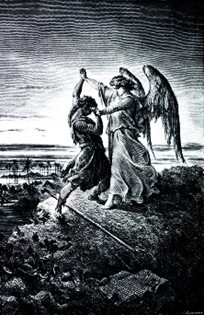
I’m reminded of Jacob wrestling with God in Genesis.

My mind keeps returning to the people in my small group.

As individuals they have wrestled with extreme life circumstances. And despite these obstacles, a restorative God has wrestled them away with his grace and love.

I think I will continue to wrestle with God about my interest in becoming a Local Licensed Pastor. That checklist of requirements is intense.

The wrangling required to make that decision will not be easy. I’m sure tangling with God isn’t supposed to be easy. But he is a willing supplier of resources—James 1:5:

 If any of you is lacking in wisdom, ask God, who gives to all generously and ungrudgingly, and it will be given you.”

Clearly, I’m going to need that wisdom.