Heart work in grocery bags

Around nine on the morning of Tuesday, October 27, the fog had started to lift. I guess a hidden sun was working behind the scenes slowly burning it off. 

Earlier this morning out at the Richmond airport the visibility had been recorded at 0.06 miles. Normally, the visibility is listed as 10 miles. But, then my internal voice reminded me— this isn’t a normal world anymore.

I was headed over to Sherbourne United Methodist Church in north Chesterfield County with a pickup truck load of groceries for their community food pantry. Our congregation has been supporting this food pantry for many years. 

But, as you might have guessed COVID-19 has increased the activity at food pantries across America. The need for food in our communities has seen a significant rise, and this need isn’t going away.

I had two able loadmasters from our staff, Ronnie Johnson and Kim Tingler, help with the loading of grocery bags and boxes into the bed of the truck. Our congregation has been remarkably consistent in dropping off food every Friday since late March.

By now, I think the old pickup truck could make the drive to Sherbourne blindfolded. But, I will not try that especially as traffic merges on to the Chippenham Parkway.

For some reason, my eyes were distracted by a banner hanging from the roofline of the large hospital complex that sits off the parkway. The banner was red with white lettering. I’m sure some marketing person would be excited to learn that my old eyes were drawn toward the sign. Luckily, my old eyes could still see and read the following words:  We heal the most hearts.

Ancient grumpy grouch that I am, I wondered how the hospital determined that they are the leader in healing hearts?

Maybe, I should give them a call and ask for a statistical review of their data compared to the other hospitals in the Richmond area that work on hearts. But, knowing my luck, I could have the Fred Sanford big one, and end up at this hospital. 

I can see the doctor peering down at me ready to work on my ticker when a marketing person bursts into the operating room and exclaims: “Stop! Don’t touch that patient! This is the old grumpy grouch who questioned our healing the most hearts banner.”

You know lots of beautiful heartfelt music came out of Detroit, Michigan via the Motown recording company. I’m sure you have a list of your favorite Motown artists and their songs. But, there is one song—“What Becomes of the Brokenhearted” that has always resonated with me. 

The song was written by William Weatherspoon, Paul Riser, and James Dean. Recorded in 1966 by Jimmy Ruffin the ballad reached into the top ten charts in America and England.

In truth, sometimes I hear this song, and I tear up. My eyes water, the lyrics pierce my heart. 

And then I think, this song should be in church hymnals. Or at the very least performed in churches. After all, Psalm 34:18 states: “The Lord is close to the brokenhearted and saves those who are crushed in spirit.”

I am thankful for doctors who have the skills to medically save a human heart.

But as we all know, matters of the heart can’t always be solved with the competent hands of a surgeon. And sometimes, I wonder if hearts can ever, ever, ever be healed.

Maybe during the roar of news stories during the past couple of weeks you heard the name Samuel Paty. 

Mr. Paty was the teacher in France who was beheaded. 

Apparently, in a class about freedom of speech, Mr. Paty showed caricatures of the Prophet Muhammad. Because of this, Mr. Paty received threats, and one 18 year old young man made the threats a reality. Now, two families have broken hearts as French police shot and killed Mr. Paty’s murderer.

This horrific situation has also created more “division” in France.

What becomes of the brokenhearted in these senseless acts of rage?

Where does this rage come from?

What kind of heart could behead a teacher or any human being?

What has become of our world?

Why are we so divided?

What is wrong with our hearts?

Maybe in that same roar of the news you have recently heard the name of Mitch Couch.

Mr. Couch and his family are from Lemoore, California. Mr. Couch has gained some national media coverage because he with the assistance of his family have been making desks for students.

Thanks to our pestilence COVID-19, schools across America are teaching students via a virtual format. For his family, Mr. Couch realized his children needed desks for their school sessions. 

So, he made a desk for his daughter. Next, Mr. Couch put together a step by step video for constructing the desk. That video has inspired other wood workers across America to build desks. At this point, Mr. Couch and his family have built and donated over 60 desks, and they are still building.

I love that story. 

It is a good story—a good heart work story.

And yet, Mr. Couch’s good heart makes me wonder—why and how can our hearts be so different?

What pushes a heart to violence? 

What pushes a heart away from love?

That person in “What Becomes of the Brokenhearted” is real.

Every description in those lyrics is an experience of real life.

That person is searching for healing.

In our current circumstances, I don’t sense that our hearts are searching for healing.

Why is that?

Well, maybe,  we are not listening to that puny little voice in our hearts. 

That voice is crying out to us. 

It is trying to get our attention. 

That voice is saying:  “Hey, Bill you knucklehead, there are many brokenhearted people in your community who are hurting. Put your heart to work. Start the healing. Don’t wait. Time isn’t on your side. The big guys in the blue yonder can’t do it all. Get busy.”

So, I’ll ask—What is that puny voice in your heart saying to you?

Is it like mine?

 My heart is annoyingly plucking at me daily. I sense it will continue to pluck at me.

And in that plucking, my heart is saying to me—Contrary to the hospital banner, it’s not about who heals the most hearts.

It’s whether I can use my heart to help the heart of one person heal.

I’ll take one heart at a time.  How about you?

In every bag of groceries in that old pickup truck is a heart—a heart at work.

And in every recipient, there is a heart that depends every week on that heart in a grocery bag. 

That’s one grocery bag, one heart at a time. 

That’s what the guys in the blue yonder need from my heart.

They are the puny voices plucking in my heart.

Do you hear them?
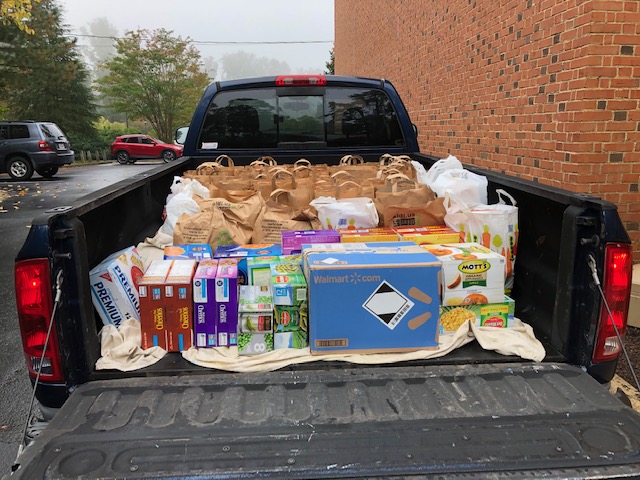
Groceries headed to the Sherbourne UMC food pantry, photo by Bill Pike

Part II: Yard work is good for your soul

All week the weather had been October perfect. 

No temperature complaints, humidity not noticeable, and a blue sky not matched by anything created by a paint chemist in a lab mixing colors. Toss in some tree leaves starting to change their attire, and you have what I believe is God’s best month—October.

But by Friday, the weather gurus at the National Weather Service started tossing raindrops into the forecast for Saturday, October 10.

That was to be our second yard work is good for your souls at Trinity.

When I checked the radar early on Saturday morning, I could see the rain creeping toward us. Retrieving the paper from the front lawn, the sky was gray with those low, thick clouds just waiting for water to be squeezed from them like a wet dish rag. It looked like rain, felt like rain. Unless there was an unexpected delay by the weather angels, it was going to rain.

We were scheduled to start working at 8:30. By 8:00, raindrops had started to fall.

I told the Commander Supreme, I was going to Trinity to put signs on doors—stating that the work day was canceled.

But, she said, “Why?”  And she followed up with, “Some people might like working in the rain, if it isn’t coming down in buckets.”

I liked the logic. I grabbed a hat, an old raincoat, and headed to church. 

Quickly, I staged bottled water, access to restrooms, and a few tools.

By 8:30, four brave souls had found their way to Trinity. Pat Satterfield, Callie Stuart, the Commander, and David Priest were present and dressed for the weather. The three ladies worked in three different sections weeding and trimming, and David with his power washer tackled a section of curbing and sidewalk on the Stuart Hall Road side of the building.

A mountain of mulch awaited me in the front parking lot along Forest Avenue. Previous weeding and edging under dogwood trees and butterfly bushes were now ready for mulch.

I had an old piece of laminated particle board to use as a ramp for curb jumping. If I was lucky enough to dump and spread mulch in that first round of targets, then the next area would be the Veterans Memorial Garden.

The rain came down gently. This was what a farmer might call a soaking rain needed to quell a long dry spell for a thirsty earth. The raindrops didn’t pound the ground and run off. No, those drops hit softly, and slowly slid down toward the roots below the weedy turf.

Once again, church member, Mike Hildebrand, provided the dark rich mulch. Load by load, the pile started to shrink a bit.

At some point, I took a break to check on our waterlogged team. They were all in good spirits. And their handiwork was quite visible. By 10:30, the ladies were ready to call it a day, but each promised to return on one of those postcard October days.

David and I kept at it a bit longer. I’m always amazed at how different sidewalks and curbs look after an encounter with a power washer. Like the ladies with the weed eating and trimming, David had the magic touch.

Mulch was now spread under the dogwoods and butterfly bushes. Multiple loads of mulch had been dumped in the Veterans garden. I would work on the spreading next week.

I looked up at the American flag in the Veterans garden. At the top of the flagpole, it too was rain soaked. The flag was draped around the pole, listless and resting. But even on this no sunshine day, it was an undimmed splotch of color against a gray backdrop.

What I thought was going to be a washout, a day of work to be rescheduled, turned out to be a nice surprise. 

Four good hearted people said to heck with the rain, I’m going out there anyway. And in their own unique way, their commitment was a bit of unselfish sunshine.

We all are going to face gray, rain dampened days in life. 

But unbeknown to us, sometimes our capacity to weather those days are found in the hearts of quiet souls. They show up when least expected. But, they are like a ray of sunshine when life has just about washed us out.

Rain dampened flag Veterans Memorial Garden Trinity UMC photo Bill Pike

covidography

Michael Martin Murphey is a very gifted singer and songwriter. 

Perhaps, you might recall his first hit single “Wildfire.” The song was about a pony, and the inspiration for crafting the song came to Mr. Murphey in a dream.

But in 1990, Mr. Murphey chose to reinvent himself with the release of the album Cowboy Songs. This was a compilation of traditional songs and some new ones about the real lives of real cowboys out on the wide open ranges west of the Mississippi River.

I love that album. I would want it with me if I was washed ashore on some isolated island. The songs on the album made me laugh, cry, and ponder. 

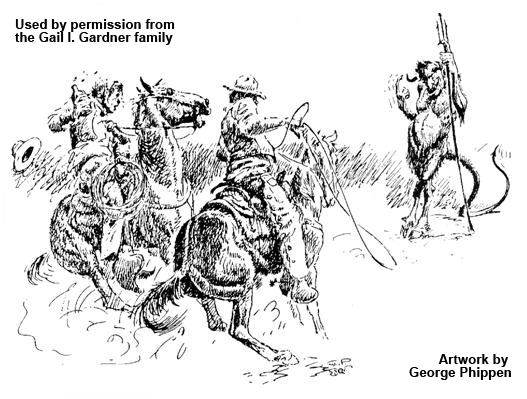
I especially like Mr. Murphey’s version of “Tying Knots In The Devil’s Tail.” This song is actually based upon a poem written by a real cowboy from northern Arizona, Gail Gardner.

The song describes two cowboys who decide they need a break from working with cattle.

In fact one of the cowboys, Sandy Bob, declares:  “I’m tired of this cowography and allows I’m going to town.”

They go to town, get wound a bit too tight at the saloon, and on the way back to their cow camp they encounter the devil on the trail. 

Needless to say, the devil made an unwise decision to challenge two cowboys that late afternoon. Sandy Bob and Buster Jiggs didn’t finish him off, (too bad they didn’t), but they did leave a lasting impact on the devil.

Right about now, I can identify with Sandy Bob when he declared: “I’m tired of this cowography!”

Just maybe, you might be ready to shout out like Sandy Bob, in your loudest outside voice:  “I’m tired of the covidography!”

I can’t imagine anyone from any corner of the world who has not grown weary from the devilish impact of COVID-19. It is a mean demon— a robber of life, a master at disruption, and a divider.

Being a natural born worrier, covidography worries me. 

I worry about my family, neighbors, friends, co-workers, and strangers. 

I worry about those who have lost loved ones. 

I worry about people who have lost their employment and the tidal wave of hurt this has caused for them. 

I worry about how lives have been forever altered, and because of these changes people might not ever, ever recover.

I worry about the scramble to develop a reliable vaccine. I worry  that much needed protocols will be skipped or ignored in the race to find a profit.

I worry about the mental health of every person who is in the trenches with COVID-19 during all their waking hours. 

I worry about the mental health of people who are at their wits end trying to figure out how to survive.

I worry about students in school systems who will continue to fall behind in this environment.

I worry about the morale of teachers.

I worry about the capacity of churches to meet needs.

But, out of all of my worries related to covidography, here is what worries me the most:  division.

A long, long time ago, I can remember hearing a principal in a faculty meeting asking as the meeting was wrapping up—“Does anyone have anything for the good of the cause?”

Yes, I do. 

At this very moment, I fear that we have lost our collective desire to be a part of the good of the cause.

And to that, I want to be like Gomer when Barney issued him a ticket for making an illegal u-turn. 

When Barney hands him the ticket, Gomer mutters something under his breath. 

But, sparked by his frustration, Gomer shifts his demeanor and shouts at Barney what he had previously mumbled: “You just go up an alley and holler fish!!”

I want to holler at our covidography division something more vile than Gomer’s uncharacteristic outburst.

Where is our unity, our sacrifice, our good of the cause against this out of control tormentor? 

Why is it so hard for us to comply with a simple request like wearing a mask?

The non-Einsteinian answer is this:  selfish.  

I know I could be wrong, way, way wrong, but during World War II, if our leaders said to America—“we need your help, we need you to wear not one, but two masks outside your home at all times.” My heart believes Americans would have complied.

What’s the difference now?

We are selfishly divided.

We are not thinking for the good of the cause.

I will confess to you I have many, many, many selfish moments in my life, and I suspect I have more in me too. 

But, why would I want my selfishness to continue to allow covidography to have a trouble free path of destruction?

Don’t you, me, we, us want to be a bit like Sandy Bob and Buster Jiggs in their encounter with the devil?

Don’t we want to rough up COVID-19 by making its path more difficult?

Maybe we should ask the families of the 220,000 Americans who lost a loved one? Would that number be different if we chose to be more compliant rather than more selfish?

Here is another worry I have—what are we going to learn from covidography, what will be our takeaway?

What will be different the next time America is faced with such a crisis? 

Will we have the courage to see covidography as an opportunity to learn?

 Or, will we do like we have done with other troubles— barely survive, forget the good of the cause, and move on?

I pray the takeaway is more than this observation—you know whenever I wear my mask with my glasses on— my glasses fog up.

If that is our only takeaway, then we’re as good as dead—both now and in the future.

We can’t let that happen.

Sandy Bob and Buster Jiggs did not retreat from their encounter with the devil.

Currently, our selfish non-compliance encounters with covidography are not working. This unacceptable mentality will only allow for more death, disruption, and division. 

I am a poor mathematician, but in Hebrews Chapter 11, I count the use of the word “faith” at least 25 times. I too am a poor student of the Bible, but that chapter cites examples of faith in the lives of all kinds of people.

If America is to push back covidography, we need to find a way to renew our faith in each other.

Faith that we can work collectively and cooperatively for the good of the cause.

Sandy Bob and Buster Jiggs came together for the good of the cause.

Sandy Bob and Buster Jiggs had faith in each other.

They were not divided.

The devil could not handle the skills and tactics of those two cowboys.

Doesn’t covidography deserve a dose of what the devil experienced out on that trail?

I know the answer and so do you.

Our selfish division must stop.

Covidography loves our division.

Covidography can’t handle an America with faith and trust in each other. 

We are overdue to commit to the good of the cause.

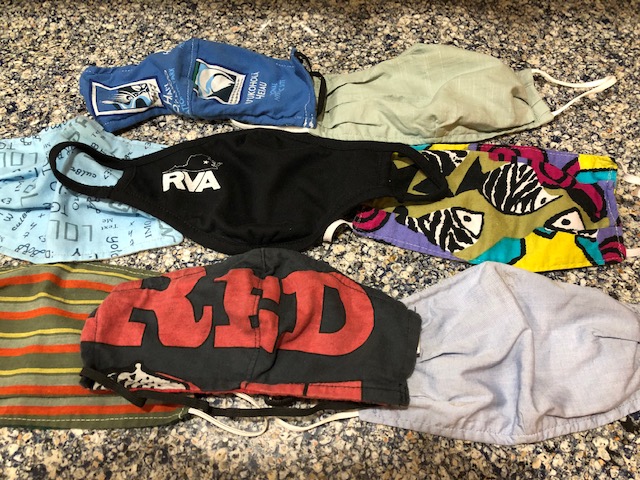
Masks for covidography by Bill Pike

Hey God, I have proof.

Thursday, October 8 appeared to be a normal day at Trinity.

HVAC technicians were working on ductwork, vents, and ceiling tiles on the renovation of the Mastin Room.

Our grounds crew was mowing, edging, and gathering up leaves.

Trinity member, Mike Cross, was going to do some power washing for us. His wife, Teresa, volunteered for a tough assignment— weed patrol in borders along the Stuart Hall Road side of the building.

I was going to work on prepping areas on the front lawn for mulching. If the weather holds, we have some volunteers coming on Saturday morning to help with this project.

It took me a bit of time to get organized, but I eventually  started.

The beds under three dogwood trees needed to be edged and weeded before mulch could be spread.  From that work, I gathered several loads of turf debris in a wheelbarrow. 

As I wheeled those loads by the preschool students on the playground, a few would say:  “hi” and some would ask “what are you doing?” Sometimes, when I hear that question, I respond with—“I’m having fun.” I love seeing the puzzled looks on their faces with that answer.

My work continued into the midday Preschool dismissal. I witnessed the precision of this routine. Guided by Preschool staff, the parents and grandparents waited patiently as their precious cargo was handed off to them.

Seems,  it was after 12:30 when the tide of the day decided to shift. 

I had come into the building to check on a few things. I was walking back into the Preschool wing.

Just as I was on the first floor hallway, I thought I saw our Preschool Director, Katie Swartz, hustling out the exit door in the stairwell. It sounded like she yelled out my name, but I wasn’t sure.

I went to the next stairwell, and walked down into the basement floor of the Preschool. Now, I understood what had actually been the frantic holler of my name.

Water. 

Lots of water was quickly covering the floor in the girls restroom. 

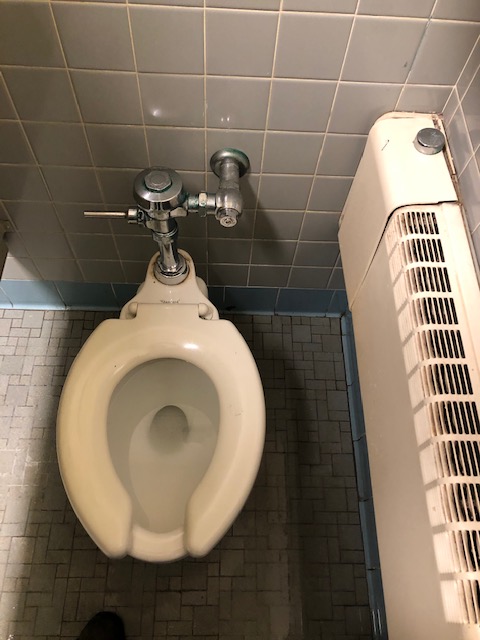
The flush valve on one of the toilets was stuck.

Rushing water was moving at such a force that it was spilling out of the toilet. 

Assistant Director for the Preschool, Mary Jones, and another teacher were there. They had taken old towels and constructed a dam. This was an attempt to keep the water out of the carpeted hallway.

To stop this flood, I needed to remove a metal cap. This was normally a simple unscrewing of the cap. I twisted the cap it kept turning and spinning.

I left the restroom, found our building caregiver, Ronnie Johnson, and asked him to get a carpet machine for removing the water.

I made my way to our tools. I grabbed pliers, a rubber headed hammer, and a large flathead screwdriver.

I hustled back to the restroom, the water continued to pour out. There was easily two inches on the floor.

I hit the area of the flush valve with the rubber hammer to see if that might stop the deluge. There was a nano pause, but nothing else.

I kept working on that spinning  cover cap.  Something told me to pull. I did, and the cap came off.

Now, I had access to the stop valve. I took the flathead screwdriver, inserted it into the head, and turned it clockwise as quick as I could. Thankfully, the water stopped.

Quietness returned as I sloshed through the water. Someone asked me if needed anything, and I said, “Get me a for sale sign for the building.”

Ronnie arrived. He helped me get started, and then he left to finish his cleaning checklist.

It took a while, but eventually all of the water was sucked up. All of that water wasted.  I thought some parched farmland or a firefighter out west would have loved that water.

Too bad that old bathroom didn’t have a floor drain. There is a floor drain in the HVAC closet beside the bathroom. 

I guess I could have grabbed a sledge hammer and knocked a hole in the base of the wall. But that would have taken more time and created another mess. 

After I mopped the floor with a disinfectant, I placed a box fan at the entrance, and started working to put tools and machines away.

For some reason, I am starting to believe that God doesn’t think I was properly baptized. Over the years, I’ve had some interesting encounters with water in this old building. 

Maybe, I should fax or e-mail him a copy of my baptism proof from Davis Street Methodist Church in Burlington, North Carolina. 

As unexpected and frustrating as this flood was for me, this little outing for ducks was nothing compared to what other people are trying to work through.

I think about the church member who was recently diagnosed with an aggressive brain tumor. She only has weeks to live.

Then there is the church member who is in the ICU at a local hospital with COVID-19. He is on a ventilator. His current prognosis is the uncertain day to day.

And there is the friend whose many years of marriage has unexpectedly unraveled.

And here is one more heart-tugger, a friend from high school who is quarantined with COVID-19 while her six year old grandson battles a brain tumor.

A misbehaving flush valve dumping water is nothing compared to what those nice, kindhearted people are experiencing.

So, God even though I can prove my baptism, you have made your point. 

Thanks for the help you gave me this afternoon, and thanks for the people who helped me. 

But, just as your son in a boat with his disciples stilled the waters from a chaotic squall on the Sea of Galilee, I would pray that in some way your presence might touch those friends I referenced here. 

They need you more right now than some old grump cussing a flush valve.

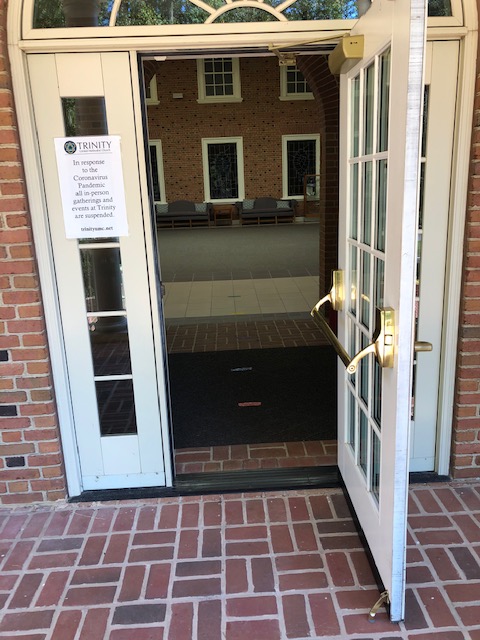
The infamous toilet with the stop valve cover resting on the radiator. Photo Bill Pike

“mute”

My itty-bitty brain believes the “mute” button on the remote control for our television might be one of the greatest inventions.

I’m sure you are as curious as Curious George to learn why I believe this.

Well, it is simple.

It is the only time in my life when I have complete control over any politician running for office.

 When a political ad pops up on the screen, my quick draw is incredible.

My squelching of the mute button is so fast that it can’t be timed.  

Zap, the politician is silenced.

I want to counter the advertisement with these words: “I’m Bill Pike, an American, and I disapprove of this ad.”

In an article written by Mark Murray for NBC News, Mr. Murray states: “The latest projections estimate that $6.7 billion could be spent on advertising in the 2020 election.”

That’s correct, I’m not making this up 6.7 billion dollars.

I don’t know about you, but I think we have lost our minds.

And what is sad about this absurd amount of money is that some of the candidates spending these big dollars will not be elected. 

I assume that the companies who make these political advertisements are laughing  all the way to their bank accounts.

Bill Foster was a gifted college basketball coach. He coached Jim Valvano as a player at Rutgers. Before Coach K at Duke, Bill Foster in 1978 got the Blue Devils to the NCAA championship game against Kentucky. After Duke he coached at the University of South Carolina and Northwestern.

After his passing in 2016, I watched an internet tribute to Coach Foster. Lots of his former players were a part of acknowledging their appreciation for him.

One South Carolina player shared a story from a practice session. The second string players were scrimmaging the starters. Nothing was going right for the starters. They could not hit any of their shots.

Coach Foster noted this. He called time out, and asked for the ball. At that point, Coach Foster took the ball and dropped  kicked it high up into the empty tiers of the coliseum. Then he said, “Something is wrong with the ball, get another one.”

That’s the way I feel about our election process—we need a new ball. 

Here is my first recommendation—political advertisements can only air on television from 12 midnight until 6:00 a.m. I’m sure the mute button on our television remote will appreciate this break in action.

Next, we must stop spending 6.7 billion dollars for advertisements. With all of the real problems we are facing in America, can’t we find a better economical path?

As a part of the content in the ads, we must consider eliminating  the mudslinging. I think the mudslinging only serves to contribute more to our already negative incivility. 

Perhaps politicians, their advisors, and the production companies who create the ads need to take a course in Mr Rogers.

And while I’m whining about political advertising, I will whack at mailings and robocalls.

It has become increasingly clear to me that politicians or maybe the people who work for them have a difficult time reading. 

On three separate occasions this fall, I have requested in writing that my name be removed from a mailing list. Despite my diligence, political mail still appears. I do not read mailed political ads. They are tossed in the recycling bin.

We all know there is nothing quite like a robocall. I love their tricks. Like using our area code to make me think— oh, this might be someone I know. 

But, what is even more interesting to me is the cowardly nature of these calls. If I attempt to redial the number, I can’t be connected, the number isn’t available.

The other day I listened to the beginning of a call. It started: “Perhaps you know this is an election year.” 

Are you kidding me? The only way I could not know this is an election year is if I was frozen and buried in Antarctica.

And yet somehow, despite all of its shortcoming, imperfections, and blurred vision, I am still an American who wants me and my country to wake up.

What is even sadder to me, no matter a person’s political party affiliation, and no matter how a person will vote, deep inside our hearts we all know that what I am spouting off about is the annoying truth.

I am not the brightest guy in the world, but I worry about our inability to see this.

In William Faulkner’s Nobel Prize acceptance speech, I love his words: “inexhaustible, endurance, heart, soul, compassion, duty, honor, and sacrifice.”

America, we must relearn these words.

We can’t “mute” them.

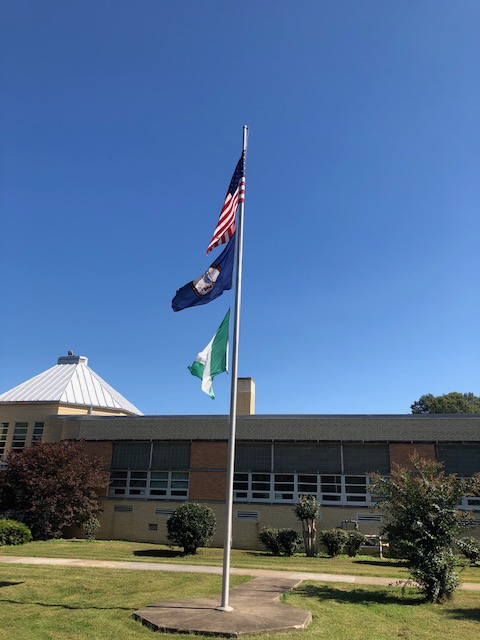
Flags of America, Virginia, Henrico County by Bill Pike

The Chipmunkshank Redemption: “That joker was fast!”

September 30 was stunning. Overnight, a front had brought wind and rain. The front pushed out lingering warm, humid air a leftover from summer.

At 10, I was scheduled to meet with our Kids Director, Jen Williams. She was in the initial stages of planning a couple of community events for young families with children. 

The morning was so beautiful, I asked Jen if she would be opposed to meeting outside. She agreed, and we sat on the front steps to the church’s Welcome Center. We socially distanced in the cool fresh air.

I had left the middle door to the Welcome Center propped open. Our meeting was going well. Jen’s plans would be a good alternative for families with young children.

But, in a blink the productiveness of that meeting changed. 

My body was positioned toward Forest Avenue. I couldn’t see the open door. 

Out of the corner of her eye, Jen had seen a chipmunk scamper across the brick pavers and enter the doorway.

She calmly stated to me, “I don’t know if you want to know this, but a chipmunk just entered the building.”

I got up, and thought in my mind this is just what I need today. I entered the Welcome Center. Sure enough, the intruder was present. 

I took a couple of steps to my right, and he took off heading toward the Preschool. He quickly crossed the threshold of the double doors entering that wing.

Student artwork drying on the ancient carpet rustled as he rapidly skirted over these freshly created masterpieces.

He made a sharp right turn into Room 200, and with his heart pounding, the chipmunk hid.

Luckily for me the room was empty. The students were out on the playground. I can only imagine the chaos my new friend would have created if the room had been full of students.

I stood frozen at the door way. My brain trying to figure out what to do. I wanted to sprint a way to get help, but if I left the room I would not know if he decided to stay put for a few minutes or escape to a room that was full of kids.

Finally, my brain told me to call the church office. I needed the bravest chipmunk searcher in the world, our chief building caretaker, Ronnie Johnson. 

In our office, Kim Tingler took my call and located Ronnie. And Diane Ladd notified the Preschool Director, Katie Swartz. It seemed like hours before they arrived at the room. 

Once we had a body to keep an eye on the room, I sprinted to get a dust mop. I figured the head of the dust mop would cover the door entrance. We could shut the door, put the mop head at the base to create a barrier in case our friend bolted toward the door. I was thinking containment.

So, we set that up, and Ronnie and I entered the room. I had the broom handle, and I used it to poke along the walls of the room where all sorts of hiding places existed. 

As I poked, I clanked against things making noise. Sure enough, a poke into to the back right corner of the room sprung the chipmunk. He was a blur, a streak of lightning.

The chipmunk zipped along the wall parallel to Forest Avenue, but he finally gave us a real break. The chipmunk entered the tiny restroom. 

However, he had plenty of cover in this space. A trash can, two cumbersome wooden steps, and the toilet created an obstacle course for me. I moved, and he countered my move.

Ronnie handed me a trash can to align on the floor in front of the door. I was in perfect position. I could see him, and he could see me. 

I was ready to nudge him into the trash can when that chipmunk disappeared. He vanished. Poof, he was gone.

Neither Ronnie nor I saw him scoot by us. It was like the floor had opened or a guardian angel for chipmunks had received a text from God:  “Hey swoop down into Room 200 at the Trinity Preschool, two old geezers have one of your lads cornered in a bathroom.”

Ronnie and I were stunned. We never saw the chipmunk come by us. 

We decided to recheck the room again. We poked. We moved furniture. We tilted and lifted things. But, we never saw the chipmunk.

If he was in that room, the chipmunk must have put on his nerves of steel. Or maybe, he was thinking—ok, I’ve got this. These two old slow geezers will never trap me. I’ll just let them think that I am Houdini or that God did send down a guardian angel to rescue me.

In truth, our evening building caretaker, Bobby, spotted the chipmunk back in the Welcome Center late in the afternoon. Bobby opened the same door the chipmunk had entered earlier in the day. However, Bobby can’t confirm that the chipmunk like Elvis had left the building.

I have rethought this intrusion quite a bit. 

I have asked myself what could I have done differently?

Well, for starters, I would have kept that door shut.

I wish I had grabbed a pair of gloves and a broom. Maybe I could have captured the chipmunk with those confidence builders.

But, the intruder has also made me laugh. 

That bathroom scene was a classic. I moved, the chipmunk moved. Ronnie was behind me coaching me. I would have liked to have seen our faces when that chipmunk vanished from the bathroom.

And, I will never forget Ronnie’s comment—“that joker was fast.”

Sometimes in the speed of life, we feel trapped.

No matter where we look—we see no options, no solutions, no way out.

Who knows, maybe the good Lord was using this encounter to point out to me—Hey, you knucklehead, there are lots of people out there who feel like a chipmunk trapped in a restroom. 

What are you going to do about it? 

How are you going to help them?

Maybe all they need is an open door, and an open heart.

The chipmunk’s point of entry, photo by Bill Pike

7:40 a.m. disgusted

The front that pushed through last night brought wind and rain. Thankfully, it blew out humid air that was making September feel like summer again.

This was a perfect morning to go for a run. The temperature was 59 degrees, clear blue sky, and the earth still damp from the overnight rain. 

But, I was disgusted with myself.

 It was taking me too long to get ready. The route I had been taking recently would put me on Westham Parkway heading north. Getting this late start meant more traffic to face. Yes, this was true, but I needed the run—my brain was swirling.

On the still damp road surface, some early fallen leaves had temporarily attached themselves. Some spots looked like they had been splotched  down with glue from first graders. 

Other spots along the way were crunchy with acorns. Those uncrushed, rain dampened acorns were as slick and slippery as an American politician.

I didn’t watch the first presidential debate on Tuesday evening. I sensed it would be ugly. The headlines I skimmed this morning confirmed the unpleasant event. And I think this is very sad.

An uncivil event like that doesn’t give me hope. I don’t know about you, but America needs a good dose of hope.

I keep thinking about my parents and their families during World War II. They made sacrifices for four long years. As Americans, it seems we are lost when it comes to understanding and applying sacrifice today. I think selfishness plays a role in that mentality.

Recently, I read Erik Larson’s book The Splendid and The Vile. Larson looks in depth at Winston Churchill, his family, and his leadership during the bombing blitz by Germany of England.

In those horrible circumstances, somehow, Churchill found the words to help the people of England to tough it out and hang on. Even when, the bombing was at its worst, they held fast.

I am certain that October, November, and December are going to be a challenge, and I pray that as a country we too can hang on.

As my old body rambles slowly through the neighborhood, I look for signs of hope. 

I see new life—recent spreading of grass seeds are now sprouting as  sprigs of green spire upward from spiked holes made by an aerator.

I marvel at the paths of the sunlight as it cuts angles through trees and between houses to cast the birth of a new day.

A rising sun peeking through trees photo by Bill Pike

Early morning sun angles a dogwood shadow by Bill Pike

And over on a quiet, straight stretch of Rock Creek Road, I admire the energy of a young girl who is sprinting down the old road without a worry in front of her mother.

On the weekend of November 30, 1940, Churchill’s first grandson was christened, and it was also the Prime Minister’s birthday. 

Toasts were made in honor of the grandson and Churchill. Something about the words spoken in the toasts touched Churchill, and he wept.

The author states that a call went out for Churchill to reply to the toasts. 

Larson wrote these words:  He stood. As he spoke, his voice shook and tears streamed. “In these days,” Churchill said, “I often think of Our Lord.” At that point, Churchill sat down, he could say no more.

In these days in America, I hope we are often thinking of Our Lord.

“we tried”

On January 2, 1961, episode #13 of the Andy Griffith Show aired. Titled “Mayberry Goes Hollywood” this show is about a Hollywood producer who comes to Mayberry. The producer is scouting locations for filming a movie.

Turns out, the producer likes what he sees in Mayberry. Friendly people, simple living, and scenery that meets the needs of the movie’s script.

You know Mayberry, word trickles out to its citizens. On the morning that the producer and his film crew arrive to start their work—Mayberry has changed. 

The people have transformed themselves and their shops into a downtown that resembles a gaudy tourist trap. Even Deputy Fife has a spiffy new uniform.

Mr. Harmon, the producer, isn’t happy. 

At a welcoming ceremony, in honor of this significant  milestone in Mayberry’s history, town leaders plan to take down a beautiful tree. And that’s when Mr. Harmon speaks up.

He gently chastises the mayor and his citizens. He wants the townsfolk and the storefronts to return to their normal appearances and routines.

Although there is some disappointment, the citizens listen. They head home to change out of their best Sunday clothes. Shop owners make preparations to remove the Hollywood inspired signage.

And the downcast Mayor, says to Sheriff Taylor:  “We tried to tell them didn’t we Andy.”

Of course, you know Mayberry well enough that it was Andy who “tried to tell them” not the Mayor.

Recently, I have started thinking about something I call the “reflective cringe.” 

This is when my memory goes way back, and I recall moments in life when someone tried to tell me something for my own good. Of course I didn’t listen. And when those reflective moments hit me, I cringe. 

I think to myself how could I have been so out of touch, unreasonable, impractical, selfish,  and downright stubborn?

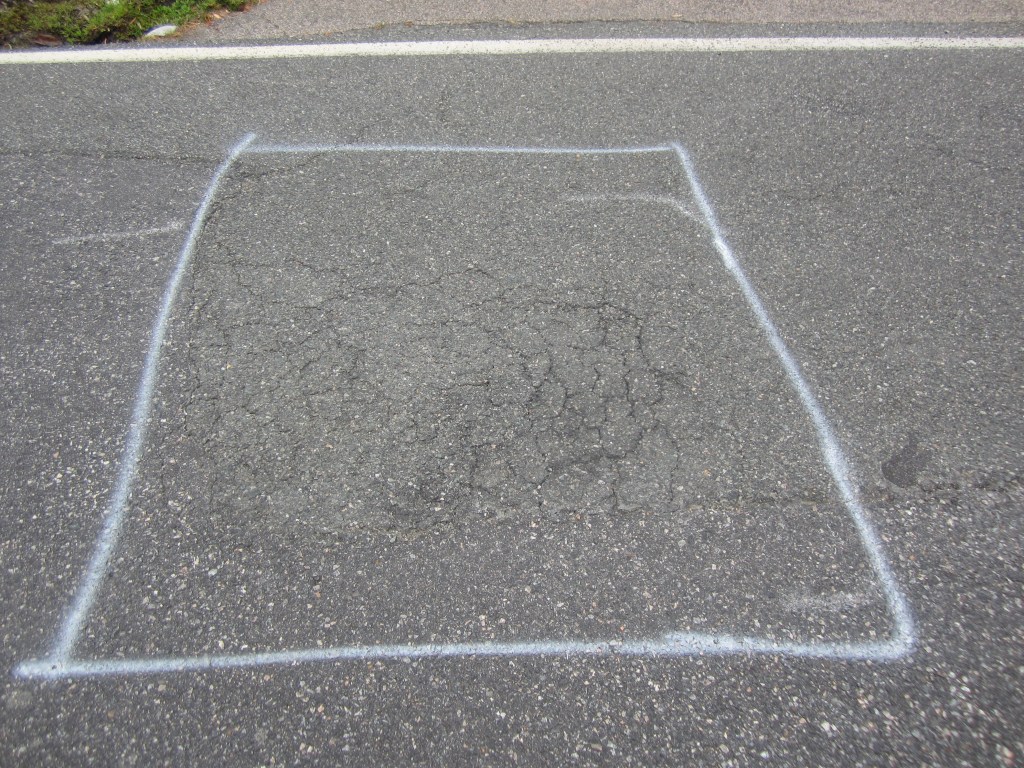
Those parts of my life, I would like to have permanently removed. Like when the broken, fractured, crumbling section of a road surface are cut out and repaired.

Road surface on Westham Parkway photo by Bill Pike

Right now, America isn’t much different from that road surface. America is worn, weather beaten, fractured, and divided.

Natural born worrier that I am, America worries me. 

In truth, America scares me.

When I reflect upon America, I cringe. 

Because I see the same in America that I see in me when someone who cared about me, maybe even respected, or loved me—“tried to tell me.”

I see America as being like I am sometimes— out of touch, unreasonable, impractical, selfish, and downright stubborn.

On Saturday, September 26, the scripture reading in the Upper Room was from Mark Chapter 7 verses 31-37.

Friends of a man who could not hear or speak brought him to Jesus. Jesus was near the region of Decapolis. They want Jesus to touch him, to fix his impairments, to make him normal.

Jesus takes the man aside. Jesus puts his fingers in the man’s ears. Jesus spits and touches the man’s tongue.

Next, Jesus looks toward heaven, he sighs, and then he says the word “Ephphatha” ( f ah tha) which means “be open.”

Bible stories like this where Jesus in an instant restores the man’s hearing and speech frustrate me. I cringe.

I want to know why in our present day world things don’t work like that?

For example, why can’t God’s angels take hurricanes that pummel the Gulf Coast and force them to make a left turn? Steer the remnants of the storm northwest go drop 10 to 20 inches of rain on California, Oregon, and Washington instead of states that are already soaked.

At times I wonder has God given up on us?

Maybe God knows about Episode #13 of the Andy Griffith Show.

Maybe God is thinking:  “We tried to tell them didn’t we Jesus?”

Maybe our problem is “Ephphatha” ( f ah tha).

Maybe we are not being open in the way God needs us to be open.

On Thursday and Friday of this past week, I virtually attended the Leadership Institute at the Church of the Resurrection out in Kansas. 

One of the keynote speakers was the Reverend Michael Curry, Bishop of the Episcopal Church. 

Bishop Curry concluded his presentation by telling a story about two neighbors in Daytona, Florida. One neighbor was white and one was black. It is a story of chicken coop droppings, illness, chicken soup, and roses.

But, it is also a story of reflective cringing and how to “be open.”

The quiet, humble hero at the heart of that story was love. 

Despite how she had been treated by her white neighbor, the black neighbor follows the teachings in the Bible—she gives love to her ill neighbor.

The Commander Supreme recently steered me to read Charlie Mackesy’s book:  The Boy, the mole, the fox and the Horse.

I think this book should be required reading for the whole world.

Perhaps, in an indirect way, the book is about how to “be open.”

Here is a sample:

“I’ve realized why we are here.” whispered the boy.

“For cake?” asked the mole.

“To love,” said the boy.

“And be loved, “ said the horse.

Makes no difference if its Mayberry, Decapolis, Daytona, America, or the world, to change the challenges in front of me I must be open to love.

Let us pray:

Father of us all, help us to be open. Open to love our neighbors. Open to allow you to work on our hearts and the hearts of those who surround us each day. In your name we pray, Amen.

Author’s note this piece was used as devotion for the Outreach Sunday school class on September 27, 2020.

This isn’t September

This isn’t September.

I know the calendar says it is September.

But, this isn’t September. 

Let me explain why.

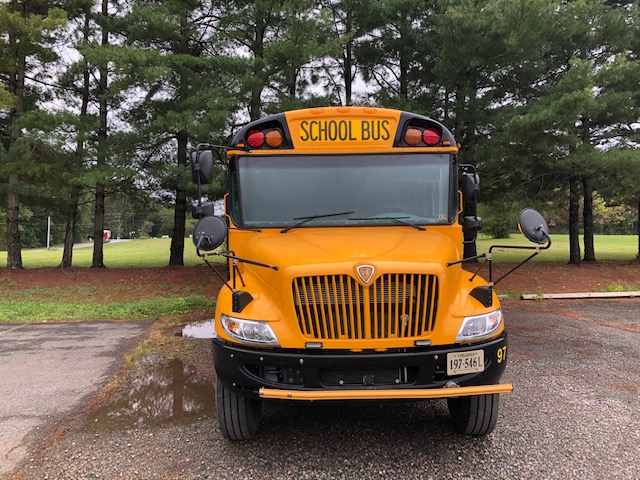
In the morning and the afternoon, the sound of a school bus no longer rumbles through our neighborhood streets.

I don’t see parents, their children, and the family dog gathered at bus stops.

When I am working on the grounds at my church, I no longer hear the happy playground voices of children carrying through the air from the nearby Tuckahoe Elementary School.

The early morning practice sounds of the Douglas Freeman High School marching band are silent.

I do not hear the voice of the PA announcer calling out the progress of a junior varsity football game as twilight falls over our backyard.

This isn’t September.

Those school sights and sounds are packed away all across America.

 We have traded in their normalcy for a virtual educational setting. 

All caused by a mindless virus intent on creating chaos. A disrupting demon, who finds joy in extending the mileage of division between us.

The stories from the first weeks of school are different. How could they not be?

I heard from a veteran high school teacher—“the toughest first week of my career.”

A friend who has a daughter who teaches kindergarten students had two parents arguing on line about the short break students were given in class.

Another friend who has a daughter teaching at the high school level described a virtual disruption to her class. The voice of a stranger entered her classroom and began to bad mouth another teacher.

And then there is the mute button. 

Students mute and unmute themselves at will. Of course, a non-muted computer is perfect for students to improve their vocabulary. Especially, when a parent observer in the background uses inappropriate language that every student hears.

Now if teaching wasn’t already one of the most challenging professions in the world, at this very moment, the degree of difficulty for teachers has increased a million times.

And like always, teachers, their schools, and their school systems have been called upon to do the impossible.

Do not even attempt to tell me teachers had it easy before COVID-19, and that they have it even easier now. If this is your mentality, I suggest you make an appointment with your local neurologist and have your brain completely rewired.

Teachers, like you, me, we, us are imperfect. 

And, like all professions cast into the public spotlight there are good teachers and teachers who struggle to be good.

Without question, technology is a powerful tool.

 Our world is in its grips. And unless there is a profound shift, we will continue to be grasped by technology.

But no matter how good technology might be, some students will struggle to learn with this tool.

Despite the efforts of school systems to provide a tablet or laptop to every student, the human infrastructure at home might not be in place to help that student adjust to this new classroom.

Part of my psychological makeup is that I am a worrier. And right now, I am worried about those students who are going to struggle mightily with this current virtual classroom environment.

 Essential foundation skills are taught in every elementary school across America. How are we to insure that students are developing competency?

How are we going to help those students who are not building those basic skills? How can we intervene virtually? 

Will these students fall so far behind that catching up will become a part of their permanent records—this is a COVID-19 student who fell behind because the virtual classroom setting was unable to offer the type of instruction this student needed.

During my career in education, I had the privilege of working at the elementary, middle, and high school levels. I have worked with teachers in our department of corrections schools, and I even went back into the classroom to teach for a couple of years in a private high school. 

That’s a lot of Septembers, and for the most part they were normal openings to the school year.

But, I have never seen a school September like this.

And, I am sure that lots of students, parents, and teachers hope they never see a September like this again.

As tough as this one is, teachers can’t whine in self-pity. 

Whining zaps energy. 

That energy is needed to keep nudging the students forward.

Somehow in the early stages of World War II, when England was bombed consistently by the Germans, Prime Minister, Winston Churchill, kept his wits and never stopped believing in the people of Britain. 

Right now, we can’t let teachers lose their wits.

We must believe in them.

Photo by Bill Pike

Quiet Beer Whiners

On the afternoon of Friday, August 28, I ventured into a local grocery store to pick up a missing item for dinner. I live in Richmond, Virginia. 

Once I found my item, I was drawn to a beer display sporting Oktoberfest beers. 

Just in case you want to know, brewers make sure that Oktoberfest beers start appearing on shelves in August. You know when states in the mid-Atlantic experience temperatures hovering in the 90s, and high humidity and dew points make a person yearn for a cool October day.

That’s all a part of the marketing strategies from those who tout beer. I will never understand those strategies, but I don’t think I am supposed to understand them.

Anyway, I am sure that you are aware, and probably disappointed to know that the annual Oktoberfest held in Munich, Germany has been canceled this year. Something about a virus caused this cancellation.

But, if it brings you any comfort, Oktoberfest has already been rescheduled for 2021. The first kegs will be tapped promptly at 12 noon on September 18, and the last call for beer will go out at 10:30 p.m. on October 3.

You can research further on line why an event that runs more days in September than October is named Oktoberfest, but it is linked to a historic wedding and good fall weather.

Marketing seasonal beers and the range of prices

But, let me walk you back to that display of Oktoberfest beers.

Here was the lineup, with the location of where the beer  is brewed:  Dogfish Head(Delaware), Sam Adams(Boston), Legends(Richmond, Virginia), Devils Backbone(Virginia), and Bitburger(Germany).

Let me toss out the price per six pack for you. Maybe you can match the cost to the beer:  $8.99, $9.99, $10.49, $10.49, and $12.99. 

A practical thinker might make the following logical pricing guess: the beer from Richmond, Virginia probably cost $8.99 and the beer from Germany might cost $12.99.

Sadly, there is no logical thinking when it comes to beer pricing in the beer industry, especially for craft beer brewers. 

Here is the how the pricing matched up:  Dogfish Head $12.99, Sam Adams $10.49, Legends brewed in my hometown $10.49, Devils Backbone $9.99, and Bitburger $8.99. 

That’s correct, the beer brewed in Germany and shipped across the Atlantic Ocean cost less per six pack than the four craft beers brewed in America.

If this makes no sense to you, I am right there with you.

Now, it is possible that Bitburger contracted to have the beer brewed here in America. If that was the case, then that explains the lower cost. But, I would be floored if Bitburger chose this path.

I have a deep respect and admiration for craft brewers, but even though I have tried, I do not understand how they determine the pricing of their products with retailers.

I sense that craft brewers can charge what they want knowing that a segment of people who purchase their products are not concerned about the price they pay.

There is part of me that believes that mentality is absolutely true. Here is an example.

Sticker shock when no sticker is present

Recently, I have noted that in small retail stores that sell wine, beer, and maybe a few speciality food items that some of the craft beer on shelves and in coolers have no price labels. 

According to the Virginia Alcoholic Beverage Control Authority, there is nothing in their guidelines that requires retailers to post/label prices for beer. I’m not sure this lack of pricing signage/labels is good for consumers.

Earlier this summer, a friend told me about purchasing two four packs of beer that were in sixteen ounce cans in a small retail store near his neighborhood.  He guessed the price per four pack was going to be in the 11 to 13 dollar range. 

When the cashier rang up his purchase, he was shocked. The cost was just under 40 dollars. He couldn’t believe the price, but also remembered their was no signage, no pricing label. 

My friend was buying based upon similar past purchases. No way he expected to shell out close to 40 dollars. And my point is this, if the cost for the beer had been properly labeled/displayed, my friend stated he would not have made this selection. 

In this situation, the purchaser experienced real sticker shock, and maybe this rude awakening could have been prevented with the presence of a price sticker.

However, is it possible this experience at the cash register is exactly what the retailer and the brewer want—a blind purchase of a beer, an impulse buy.  But, the customer,(and in this case a knowledgeable one) is buying on past pricing experiences. 

And in this situation, I don’t imagine too many customers as that sale is being recorded at the register are going to say—hold on— no way I’m shelling out almost 40 dollars for two four packs of beer. Potentially, that would be embarrassing for the customer and frustrating for the employee. 

But, is that what really needs to happen?

What kind of message would be sent to the retailer and the brewer if more consumers balked from sticker shock because no price was posted? 

I’m sure staffing a small retail store isn’t easy.

 Additionally, I’m assuming putting price labels on beer packaging is labor intensive and time consuming. But, consumers need to know the cost of the goods they are purchasing.

One small retailer commented to me, the customer can always ask the price of the beer being purchased. 

While this is true, asking an employee the cost of a six pack is also time consuming and potentially disruptive. This would especially be true if the customer asked continually about a number of non-priced beers.

If other larger retail outlets can effectively and efficiently put price labels on beer, why can’t smaller retailers?

I’m sure that answer is going to be linked to time, size of staff, and pennies.

It takes lots of courage to manage a small retail shop. Those shops usually offer valuable knowledge and helpful guidance to consumers who often become loyal customers. 

But, I think there is another piece to that loyalty— making sure customers who come into a store have the opportunity to be wise consumers if they want to be related to price.  A customer can’t do that if prices are not properly displayed. 

And quite honestly, as a customer who wants to support a small local retailer, I do not like walking around in a store where products that catch my attention have no price tag. 

That might be a marketing strategy toward an impulse buy or blind purchase, but I’m not that customer. Sadly, I am less likely to support that small local retailer.

A possible backward step

My third and final whine is about what I consider a backward step for some craft brewers. A few craft brewers are now brewing lower calorie beers and seltzer beverages.

If I remember correctly, many craft brewers started their breweries to provide a distinct alternative to big breweries and their lightweight beers. Quite honestly, I’m disappointed at this move toward lighter beers and seltzers. It appears so counter to the initial purpose for brewing craft beers.

In my mind, this move is about money, and maybe survival. 

During this COVID-19 pandemic, craft brewers across America have been forced to be very creative in adjusting how they continue to get their product into the hands of the public. I admire the brewers determination in this extremely difficult environment.

Yes, I am a rapidly aging old geezer. I will probably spend the days I have left on this earth finding things to whine about.  But in my mind, the craft brewing industry is worth the whining. 

The last thing on earth I would want to see is a craft beer commercial from Sam Adams or Sierra Nevada that takes the path of an old Miller Lite ad.

What the craft beer movement has carved out is an incredible story. That story deserves the opportunity to continue to grow.

I know craft brewing is labor intensive with huge financial risks. 

I know there is lots of data out there about craft brewers and their consumers. 

I doubt if much of that data pinpoints beer whiners. 

But, what craft brewers have to realize about data is that there are people in that data. And who knows the people in your data might just help craft brewers figure out what lies ahead.

Listening might be a dying tool for learning.

I think craft brewers have always been very good at learning, adapting, and taking risks.

What might craft brewers and their industry learn about themselves and their customers, including the whiners, with a little listening?

Who knows maybe there is  growth in listening?

Craft brewers who take the time to listen will learn there is a demographic in their customer base who is just as passionate as they are about craft beer.

It is like a principal seeking out the quietest teacher in the school  building for advice. That quiet teacher hears and sees a lot in that daily action. Sometimes quiet teachers offer helpful wisdom and practical ideas.

Maybe, the same might be said for quiet beer whiners.

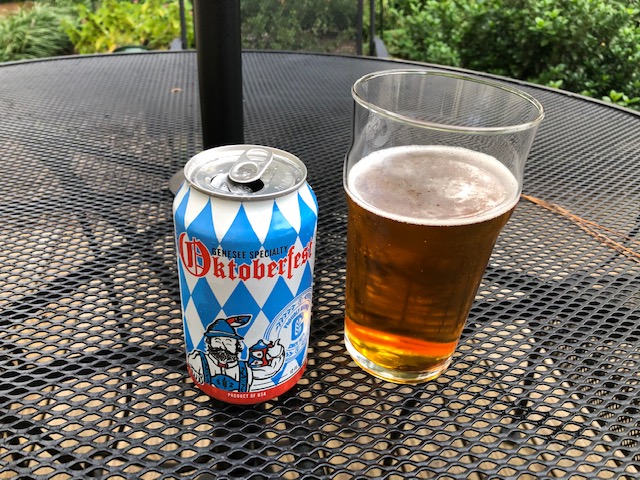
A quiet Oktoberfest beer on a pretty September afternoon photo by Bill Pike