“But, it’s Christmas, zoomies.”

My guess is you have never heard the name Frank Tarloff.

 In 1953, Mr. Tarloff was blacklisted. This happened after he was categorized as a hostile witness when he appeared before the House of Representatives Un-American Activities Committee.

For the next twelve years, he lived with family in England where Mr. Tarloff continued his craft as a screenwriter working under the pseudonym of David Adler.

During the eight year run of the Andy Griffith Show, one Christmas episode was developed and produced. Simply titled “The Christmas Story”, this show aired on December 19, 1960. That was the first year the Andy Griffith Show appeared on television.

Working in England must have rubbed off on Mr. Tarloff. The framework of the script for “The Christmas Story” is similar to Charles Dickens’ A Christmas Carol.

Christmas in Mayberry is disrupted by local department store owner, Ben Weaver.

Ben comes across as mean, ornery, and insistent that Sheriff Andy Taylor lock up Sam, a local citizen of Mayberry who is in possession of moonshine. 

As Sheriff Taylor tries to persuade Ben to put these charges on hold until after Christmas, Ben will not budge. 

When Deputy Barney Fife chimes in “But, it’s Christmas,” Ben expresses his contempt for Christmas—it means nothing to him.

Reluctantly, Sheriff Taylor complies and puts Sam, a family man in one of the jail cells.

At this point, Andy, Barney, and Sam realize that Ben Weaver has succeeded in crushing the spirit of Christmas. Their traditional plans, the normal celebrating, and all of the trimmings have been dashed by one miserable individual.

But, Andy in his own unique way ponders the situation and exclaims:  “No by dogged, there is more than one way to pluck a buzzard.”

At that point, Andy cleverly works to counter the meanness and contempt of Ben Weaver.

Andy saves Christmas in Mayberry. But, he also unknowingly will eventually see through Ben Weaver’s contempt of Christmas. Andy sees that Ben is looking for the same thing we are all looking for— love.

Right now, in America and around the world, we have learned quite a bit about disruptions. This is thanks to COVID-19 who unlike Scrooge or Ben Weaver doesn’t understand anything about love.

In John Feinstein’s book A Civil War: Army vs Navy, he writes about football related to the rivaled competition between the two military academies in their annual meeting. The book is an exceptional behind the scenes look at the longstanding traditions of this game. But, Feinstein also tells the story in real time which adds even more to the passion and emotion.

One chapter in the book is titled Zoomie Warfare. Zoomies is the nickname given to the cadets who attend the United States Air Force Academy. This name was bestowed upon them by their rivals at West Point and Annapolis.

Presently, that nickname appears to have some relevance in our current time. 

Since March, how many Zoom calls have you been a participant? 

I have lost count, but lots of us now could probably be called “zoomies.” Not because we have been trained to fly supersonic jet fighter planes, but because we have used Zoom technology to keep us connected.

During these months of disruption, my wife and I have a group of zoomies who we Zoom with twice a month on Sunday afternoons.

These zoomies are our college friends.

They are an exceptional group of people.

I learn something from them every time we Zoom.

For example, citrus farmers in Florida think a blast of cold winter air adds to the sweetness of oranges, not all guitars are made of wood, there are lots of different types of sheets for beds, selling an airplane requires an extra dose of patience, avoid ladders, we’re getting older, and when your wife wants a peace sign in her yard as a Christmas present—you make one.

That’s what our college pal, our fellow zoomie, Steve Boone did for his wife, Kathleen, in Charlotte, North Carolina.

We learned about this project a few weeks ago, and of course, all of the zoomies on the call had advice along with a dose of encouragement.

If you are interested in the recipe, here are the basics.

You’ll need at least 8 feet of 3/4 inch PVC tubing. 

Next, you must create a jig, a device that holds a piece of tubing in place so that it can be curved. 

To curve the PVC, hot water is needed. This allowed Steve to shape the PVC to get 1/3 of a curve. 

No glue is required. Steve mechanically connected the pieces so he can break the symbol down at the end of the displaying season. 

He used 160 feet of LED “fairy” lights.

Along the way, you will need the patience of Job, the brain of Albert, two huge oak trees, a bit of luck, and a wife who really loves you. 

Steve has them all.

The completed peace symbol is almost 8 feet in width, weighs close to 20 pounds. and is displayed prominently in their front yard between two timeless oak trees. 

Steve’s only worry is an ice storm, but he devised a quick release system in case of uncooperative winter weather.

Yes, our zoomie pal is a genius, but more importantly he has a kind heart.

In Frank Tarloff’s script, Ben Weaver needed a kind heart to disrupt his unkind heart. He needed someone to counter his drive to make others miserable during Christmas. That person was Sheriff Taylor. He figured out what Ben’s heart really needed—love.

For the life of me, I do not know how the very gifted guitarist and songwriter, Eric Clapton is still alive. The mental and physical abuse he put his body through via addictions and poor choices is unbelievable. Yet, he lives.

In one of the many pivotal points in his life, Mr. Clapton worked to kick a three year addiction to heroin. Mr. Clapton learned that the professionals treating him gave him something very important—“They gave me love, and I found that was the medicine I needed far more than the actual treatment.”( Slowhand Norman 269)

“But, this is Christmas.”

Thank God it is.

And while this Christmas might be the most disrupted one we have ever experienced, we can’t forget its key ingredient, the medicine for all our souls—even for Ben Weaver, Steve Boone, and Eric Clapton—love.

“But, this is Christmas.”

And as improbable as that time worn story might be, we can’t let go of Christmas because that story is love.

If we truly want peace on earth and good will toward us all, then somehow, someway, we must find the way to love.

“But, this is Christmas zoomies,” and we need to remember Christmas every day of the approaching new year. 

We need to use its love to disrupt our lives and the lives of the people  we encounter every day too.

Love + Will = Peace

Go disrupt zoomies. 

Use your love and will to change this world to bring us peace.

In our hearts, we know this is long overdue.

Merry Christmas!

*Author’s note Wikipedia, John Feinstein’s A Civil War, and Philip Norman’s Slowhand were sources for this piece. Thanks also to Steve Boone for his technical notes and this photograph of the completed project.


COVID-19: Not at your bedside

On the evening of Friday, December 18, this email came from my cousin Alice:

“Received a phone call from personnel at Duke Hospital tonight—Mom passed  away at 9:18 p.m. She was peaceful and not in any pain.”

This end of life for my Aunt Hedy came courtesy of COVID-19. 

For all you knuckleheads out there who refuse to validate the vicious nature of this virus, Hedy, even with an exceptionally strong heart, lasted a week. The virus smothered her lungs.

Sadly, this scene has played out across America and across the world too many times.

Time and time again, I have read about the challenge for families who have a loved one suddenly isolated in a hospital room. This COVID-19 patient is sealed off from the care, grace, and love of family. I can only begin to imagine how difficult that is.

During Hedy’s brief battle, she did rally. That rally through the magic of technology video allowed the family to see and interact with her. Even in her weakness, Hedy was amazed at the capacity of technology to do this.

But after that one rally, the email updates from Alice took a different path. The virus like a hurricane that gains strength from an extra helping of warm tropical air revved up its assault.

With the sudden downturn, the doctor, with an abundance of safety protocols in place allowed two family members to visit. Alice and her brother, David were able to see their mother. I’m sure that was tough for their brother, Stuart, who resides on the North Carolina coast near Wilmington.

After that visit, the doctor working with Hedy and the family thought she might last another three days. I wonder how many other families the doctor has delivered that same countdown?

When I think about the life that Hedy and her husband, my Uncle John, carved out with each other, one thing is crystal clear—love.

I don’t know that I have ever seen such an influential love. 

Their bond, their strength was grounded in so many things, but especially their love of family. And always, always embedded in their love was their faith in the good Lord. He was never absent in their journey, and they were never shy about proclaiming this.

With their love, Hedy and John were seed planters. 

Their three children Alice, Stuart, and David took the love of their parent’s template and built their families with the same love foundation. 

That love can be felt and seen with their children and grandchildren. It is one of those powerful generational links that I don’t believe can ever be broken with this family. The lessons are practical and strong with a dose of stubborn endurance.

But when I think of Hedy, one word comes to mind—sweet. 

I don’t think God made a sweeter person. She was as sweet as sugar cane, honey, and molasses.

That sweetness was her friendly smile, sparkling eyes, and I always felt she was a gentle listener. She wanted to know your stories, the stories of your children, and grandchildren. And like Santa Claus patiently listens, Hedy patiently listened too.

After my mother passed in 1992, our oldest daughter, Lauren, noted that Hedy became like a surrogate grandmother for her, and her siblings, Andrew, and Elizabeth. 

Hedy took them under her wing providing them with gifts and thoughtful cards. And, Hedy even knitted hats for Lauren’s two children. Just one more example of how sweet Hedy was to all of us.

For the rest of my living days, when I see Alice’s daughter, Erin, I will see Hedy. To my old eyes their is an uncanny resemblance.

I’m sure that Alice, Stuart, and David wanted to be at Hedy’s bedside, in that hospital room. 

It would have been part of the pay back for nursing them through measles, mumps, chicken pox, ear aches, flu, and stomach bugs.

There is no comfort in this, but right now, you were not alone in your inability to hold her hand, and to speak your last words of love to her. That’s what COVID-19 does—it robs us of normal.

And while it might rob us of normal, that demon can never steal the love that Hedy and John imprinted in you and on you. That is your DNA.

In the whirlwind of what lies ahead, revisit those cherished family stories, their bond, their commitment, and let the love in each of those sustain you and your families. 

And in the end, when you can’t be at the bedside hold on to the love from which you were molded. 

That love will keep you going.

And as that love keeps you going, don’t forget to find some laughter in your tears. 

Post bedside gatherings need humor too.

Thanks Aunt Hedy for your sweet love, say hi to Uncle John for us in the blue yonder.

*Author’s note: The photo included here is courtesy of our oldest daughter. It features our first granddaughter, Caroline, curiously exploring my cousin Alice’s face. Perfectly angled between Caroline and Alice is Aunt Hedy with her gracious loving smile. This photo was taken at the Saxapahaw General Store in Saxapahaw, North Carolina.

Early Christmas present, thanks Commissioner Swofford

Compared to all of the challenges in our world at this time, the announcement on Tuesday (11/24) that the ACC (Atlantic Coast Conference) Mens Basketball Tournament will be held in Greensboro in 2021 was an insignificant blimp on a radar screen.

But, as a rapidly aging and increasingly more grumpy geezer, I loved Commissioner Swofford’s press release. It was like an early Christmas present.

 Now, of course, we all know that demon— COVID-19 could once again cancel the entire tournament for a second year. But, hopefully, we will wise up and not let that happen.

However, if the tournament had remained as scheduled at the Capital One Arena in  Washington, D. C., there was another high disruptive risk— the ghost of Ernest T. Bass. 

Sources in inside ACC offices in Greensboro acknowledged that security personnel had expressed significant concern about Mr. Bass breaching the security perimeter at the Capital One Arena.

 Some security personnel view Mr. Bass’s ghost as harmless as thermals drifting around Mt. Pilot on a summer day. 

But others were concerned that if Mr. Bass found his way into the Capital One Arena, he could have inflicted an array of disruptions.

Additionally, there were unconfirmed reports that the ghost of Mr. Bass was training in the hollers of northern Virginia for such an intrusion. 

Some reports indicated that Mr. Bass had developed a paranormal stealth shield. If these stealth shield reports are accurate, then Mr. Bass could enter the Capital One Arena without detection.

Apparently, these unconfirmed reports were unsettling to Commissioner Swofford and his staff. The potential of this unpredictable risk from Mr. Bass is what led the ACC to quietly reach out to the management at the Capital One Arena.

Regardless of the ghost of Ernest T. Bass, returning the tournament to Greensboro makes good practical sense.

As I have stated and advocated for in the past, the ACC Mens Basketball tournament should only be played in one city— Greensboro.

In fact, before he retires and leaves office, I would encourage Commissioner Swofford to make his final declaration as commissioner to simply be this: For the next million years, the ACC Mens Basketball Tournament can only be played at the Greensboro Coliseum in Greensboro.

One exception to this decree would be for improvements to the Greensboro Coliseum. If this occurs, the tournament will temporarily switch sites to Charlotte or Raleigh.

Clearly, the league’s heart, character, and soul are grounded in North Carolina. Four of the original founding schools are located in North Carolina with Clemson and Virginia both an easy drive to Greensboro. 

The quality and competitiveness of the ACC was well established before expansions of the league occurred.

 Anyone with an ounce of common sense knows that the most recent expansions of the league were not grounded in geographical logic. No, those expansion decisions were grounded in pennies—lots and lots of pennies.

Some might say, Bill, you are just an obstinate old guy who wants to hold on to the past for all of the wrong reasons. Heck, you are still enamored with the Andy Griffith Show that first aired in 1960.

Well, I agree with your assessment of my stubbornness.

However, I would argue with my last breath from my Alamance County roots that the tournament should only be played in Greensboro and at the very least within the state of North Carolina. 

It took bold hearts on May 8, 1953 to leave the Southern Conference and form the Atlantic Coast Conference. That courage built a league of quality, dedication, and tradition.

Yes, it will take strong leadership to keep the tournament in Greensboro for a million years. But, playing the tournament in other arenas in other locations will not sustain the quality, dedication, tradition, and heart of this league. 

The founding heart is Greensboro—the future heart should be Greensboro too.

Greensboro has proven they have the capacity, energy, vision, and heart to sustain the tournament.

In this upside down world that ought to be worth something.

So, Commissioner Swofford before you leave office, do some good heart work— make that decree. 

The hearts of the people of Greensboro and North Carolina deserve it.

In your heart, you know it is right thing to do.  

And one more reminder, any cardiologist will tell you— riling up the ghost of Ernest T. Bass isn’t good for a heart.

Greensboro!

You are not my friend.

You are not my friend.

You never have been. 

You never will be.

And this might be very un-Christian of me, but I hope and pray everyday that someone, somehow will figure out the path to finally squeeze every breath of life out of your lousy, stinking, good for nothing, unscrupulous, mean, sneaky, intruding cells.

Yes, you know I’m talking about you— robber of life, disruptor of families, stalker of the young, the old and everyone in between—you with no conscience.

You are a disgusting, despicable demon, and what is sad is that you enjoy every minute of your work. 

And I bet you pout like a big baby when a person you invaded punches back. I imagine you really get annoyed when they punch and punch and punch at you with all their might. This would be especially true when your victim is a child or a mother. 

Heck, in 1992, you took my mother. I have never forgiven you. I never will. That’s why I pray everyday for your last breath.

You took my favorite, Beach Boy, Carl, the youngest Wilson brother who had the voice of an angel.

And my first and only principalship was because your cancer forced the resignation of the principal who I had the honor to try to replace.

I could rail against you everyday, but here is what set me off this time. 

On Tuesday, December 1, a co-worker sent out this e-mail. It is in reference to kind hearted human being that we both had worked with at our church:  

I saw on Facebook today that KM has metastatic breast cancer (she had breast cancer last year).  It is now in her lymph nodes and her bones.  She says although it’s not curable, it’s treatable.

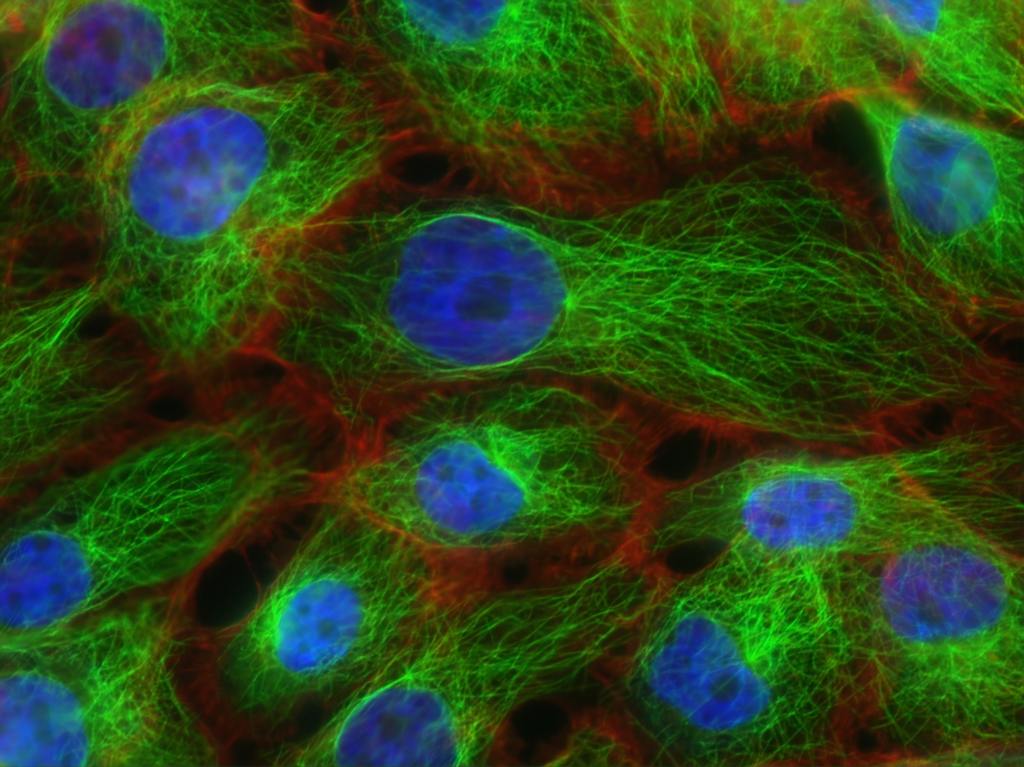
National Cancer Institute Stress Fibers and Microtubules in Human Breast Cancer Cells. Created by Christina Stuelten, Carole Parent, 2011 unsplash

KM is a wife, and mother with two young daughters.

She doesn’t deserve a second round of your vileness.

What a Christmas present you delivered!

You should be ashamed, and I bet you’re not.

Ted Williams was a gifted baseball player. 

He understood the science of hitting a baseball. Mr. Williams was blessed with extraordinary vision. 

If you can see the seams of baseball that has been hurled at you at speeds over 90 miles an hour—you have remarkable vision. Ted Williams did. 

Image courtesy of Thomas Park unsplash

Perhaps, that is one of the reasons Mr. Williams served America as a jet fighter pilot during the Korean War.

Mr. Williams still holds the record as being the last player whose batting average was an astonishing .406 at the end of the 1941 season. As a person who loved baseball as I kid, I hope that record is never broken.

In Leigh Montville’s The Biography of an American Hero: Ted Williams, I don’t believe the author missed any part of Mr. Williams’ life. Like me, Ted Williams was imperfect, and like me, but with a different approach—Mr. Williams questioned God.

Here is a sample:

“God was an everyday character in Williams’s life—an inhibitor, who did bad things. Why couldn’t God be good? Better at least? If God knew everything, then how could He allow all of that suffering in all of those hospital wards? Couldn’t He see all of those little kids at Dana Farber with their shaved, bald heads and their dull eyes? If a baseball player could see and feel, why couldn’t God?”(page 422 Montville)

How many times in your life have you had that internal conversation with yourself and asked of God similar questions?

I know I have annoyingly asked that a lot of God.

Later in his life, Ted Williams suffered a stroke. A part of his recovery was taking physical therapy. Through this rehabilitation, Mr. Williams met Tricia Miranti, a 17 year old girl in a wheelchair. Their therapy sessions were at the same time.

At the age of five, Tricia experienced a cerebral hemorrhage. This medical event almost took her life, but it altered forever how she would live her life.

For whatever reason, this old, unhealthy former baseball player,Ted Williams who could be grumpy, cantankerous, and difficult to understand and to be around at times, befriended Tricia. 

And at the same time, Montville points out that Tricia became “exhibit A in Williams’s discomfort with God.”

And yet, Mr. Williams was so enamored with Tricia that he and a friend set up a foundation for her. A fundraiser was put together. Money was raised to send her to college and to cover other life expenses. Amazingly, Tricia graduated from the University of Central Florida.

Tricia’s mother stated:  “I never saw Ted Williams as a great baseball player, I saw him as a great man. He was my angel.”

But for Ted Williams, the questions still nagged him according to Montville:  “If he was the angel, where were the supposed real angels? How could God do this to Tricia? What had she done to Him?”

And that is my question for God related to my friend, KM. 

What has KM done to God to allow the cancer to return to her life?

Does a wife, mother, daughter, friend, who would not hurt a flea deserve such a burden as a second encounter with cancer?

All of our human hearts know the answer—No!!!!!!!!!

I was blessed in my career to have worked with many outstanding teachers. I know to name one is dangerous.

Without question,  I was an imperfect principal. 

But, at Lakeside Elementary School, if the superintendent walked in unannounced for a visit, some staff members would quickly and quietly go to every classroom and let them know the big enchilada was present.

During one of those walk arounds with the superintendent, we stopped in at Cathy Brennan’s class. Mrs. Brennan was a first grade teacher. As we were walking away from her class, the superintendent said to me, “You know, Mrs. Brennan always finds a way to handle the deck dealt to her.”

His observation was correct. She always did.

As discouraging as life can be at times, I guess we find ways to deal with it—even when what we are asked to deal with is beyond comprehension.

In those situations, when life is beyond our grasp, beyond our understanding, that’s when prayer angels must go to work.

Venting my anger at God is a temporary relief. 

Channeling my energy into prayer for KM is a better option.

Maybe, Psalm 130 verses 1-2 are appropriate for pondering here:

“Out of the depths I cry to you, Lord. Lord, hear my voice. Let your ears be attentive to my cry for mercy.”

Lord, hear our prayers for KM and everyone in the same rotten struggle.

As for you cancer—go to hell!

You are not my friend.   

9:17 a.m. Is nothing sacred anymore?

It was Thursday, November 26, 2020, Thanksgiving Day.

Overnight, rain showers had pelted down more leaves. On my morning run, the sky was still gray.

 But even with the cloud cover blocking the sun, I saw rich colors of leaves on trees that were too stubborn to let them go. Golden yellows, bold scarlets, and shades of orange caught my attention.

I was on my 3-28-11 route. A neighborhood trek named after the date I first charted that run. Mileage wise that course is probably in the 3.5 range.

 But, I’ll tell you what else caught my attention on those rain dampened streets—in terms of pace and quickness I am officially a turtle.

The slow, old legs got me back to the house. I did my usual post run stretching, and then I started to think about breakfast. No big breakfast this morning, I had that Thanksgiving spread on my mind.

At the kitchen table, I was skimming through the newspaper that was like a stuffed turkey full of ads for shoppers on Black Friday. I wonder if shoppers will ignore COVID-19 and hit the stores?

And then around 9:17, I heard an unmistakeable sound—a leaf blower.

I’m thinking to myself who in their right mind would fire up a leaf blower on Thanksgiving morning? What is this world coming to? Is nothing sacred anymore?

I pinpointed the sound. It was coming from one of the neighbors behind us. Because of their fence,  I couldn’t see who was operating the leaf blower, but I sure could hear it.

For whatever reason, I was annoyed. Plus, all the yards in the neighborhood and the fallen leaves were wet from the overnight rain. Why would anyone want to mess with a wet lawn, wet leaves on Thanksgiving morning?

My irrational self thought about going into my tool shed, grabbing the sledge hammer, climbing over the wooden fence, greeting my neighbor with a smile, taking the leaf blower from his possession, placing it on the ground, and then pounding it without mercy.

I’m sure the news media would have fun with headline—Retired educator and church employee pounds neighbor’s leaf blower with a sledgehammer!

I am an imperfect human being. I have the capacity to annoy people— even loved ones with irritating habits that don’t register on my radar.

But, as I rapidly age, some of the details of daily living—like  disregarding reasonable expectations unravel me. Yes, I’m officially a grumpy old geezer.

Let’s start with turn signals on automobiles and trucks.

 I’m beginning to wonder why manufacturers put them on vehicles. My unscientific observation is that lots of drivers don’t use them. I’m beginning to wonder if some drivers even know their car is equipped with turn signals.

Keeping with the car driver theme, I will toss into the mix— yield signs, stop signs, and stoplights.

 At some point, a wise person decided—hey, we need some rules for driving on our roadways. Maybe we need some signs and stoplights to remind and guide us as we drive. Those signs will help to keep us safe.

Again, I am an imperfect driver, but easily on any short distance drive in my community, I note drivers totally ignoring yield signs, stop signs, and stoplights. 

Why is that? 

Don’t drivers realize those signs have the capacity to prevent accidents, injury, and death?

In those moments when I observe drivers totally ignoring those guiding rules of the road, I want to be like Gomer from the Andy Griffith Show and shout out to them: “Citizen’s arrest, citizen’s arrest!”

Sadly, in today’s world if I did that even with good intentions, I would probably run the risk of being shot at, or at the very least arrested for disturbing the peace, or maybe whisked off for a mental evaluation. 

Again, I can see the headline: Retired educator and church employee detained for screaming at traffic violators—“citizen’s arrest, citizen’s arrest!”

Occasionally, our three children and even my wife, the Commander Supreme, give me grief from our collective past. 

Aside from goldfish and maybe a hermit crab or two, our children never had a furry pet in our home. An exception might be granted for the couple of wayward squirrels who once found their way into our attic space or the squirrel who fell down the chimney into our fireplace.

Now, I have nothing against furry pets, except they can be very expensive. This is especially true with veterinarian bills. I’ve heard the horror stories from friends. 

But, I have recently discovered another furry pet related detail that really plucks my nerves.

At our church we have two dumpsters—one for trash and one for recycling. 

We had to put locks on the recycling dumpster. Despite the church’s effort to be good neighbors, sometimes our neighbors dumped items into the dumpster that could not be recycled. 

This would make the company who supplied the dumpster very, very unhappy. Of course, I think you would feel the same way if you found tiny plastic bags of overripe dog poop in your recycling dumpster.

Now, that we have the locks on the recycling dumpster, we have a dog walker who is leaving the poop bag at the base of the dumpster.

I don’t think it would be a good idea for me to have a conversation with this person.

So, what do a leaf blower, yield signs, stop signs, stoplights, and dog poop bags have in common?

Nothing.

Except this.

When we shirk our responsibilities, not only do we potentially impact other people, we increase our own selfishness.

And perhaps in those moments in life when I become the biggest whiner of all time about the imperfections of others, I need to keep this reminder in front of me from Luke 6:42:

 “How can you say to your brother, ‘Brother, let me take the speck out of your eye,’ when you yourself fail to see the plank in your own eye? You hypocrite, first take the plank out of your eye, and then you will see clearly to remove the speck from your brother’s eye.”

Clearly, I need to go to my tool shed.

I need a crow bar.

I have a 2×4 to pry from my eye.

Sometimes, I need a reminder from sacred words to help my perspective.

A parting gift Bill Pike

Thanksgiving 2020: acorns, squirrels, and “if”

The Secretary of Agriculture for the squirrel population of America is elated. 

While the final tally hasn’t been released, the Department of Agriculture believes the fall of 2020 will record the greatest harvest of acorns since 1620.

I can assure you this isn’t a fake news headline. 

Our next door neighbor’s white oak tree was responsible for dropping 17,577,999 acorns on our lawns, driveway, and road surface. For weeks, those acorns pinged off of any hard surface they hit. 

At a press conference held at the corner of Foxcroft and Sweetbriar, Deputy Secretary of Squirrel Agriculture, Sebastian Squirrel, recommended that all humans who walk under an acorn loaded oak tree should wear a hard hat to reduce the risk of brain damage.

When a reporter asked the Deputy Secretary if squirrels should wear hard hats while harvesting and chowing down on acorns his answer was a surprising, “ No.”

A reporter asked a follow-up question, and the Deputy Secretary clarified his “no” with a scientific response: “From eating acorns, squirrel noggins have an extra shell of protection. This shell allows even the largest acorn to ping harmlessly off the skull of the squirrel.”

This prompted another question from a reporter who wondered if squirrels who were constantly hit in the head by wayward acorns might suffer like some professional football players with chronic traumatic encephalopathy (CTE).

The Deputy Secretary affirmed that squirrel skulls are tough. But he did confirm their research found that squirrel skulls can’t withstand the weight of a road paver when a squirrel carelessly darts into the machine’s  path.

To which the reporter replied, “Wow, that’s a no brainer.”

And then a few days later, a more urgent health message was delivered to squirrels across America. 

This came from the Surgeon General of Squirrels who issued  a health warning about the abundance of acorns. 

The Surgeon General set recommended daily acorn consumption levels. Squirrels who over indulge in acorn consumption are more likely to flop when diving from tree limb to tree limb. This could be particularly dangerous to their health if this tree hopping takes place over roadways.

This warning from the Surgeon General was a disappointment to homeowners across America. Come this spring, they can expect to have a bumper crop of young oak trees sprouting up in their yards. 

That’s enough about acorns and squirrels.

Let’s focus on Thanksgiving.

Thanksgiving is my favorite holiday. 

And without question my answer is grounded in food. 

That Thanksgiving spread has never disappointed me.

But, in truth there is another critical ingredient for Thanksgiving to be a real success—and that is family.

This year, thanks to that demon, COVID-19, travel and family gatherings are not recommended for Thanksgiving.

And as long as I live, I will always wonder “if” we could have pulled this Thanksgiving off. 

What might have happened earlier in this battle “if” we had completely committed to follow COVID-19 protocols?

“If” is a big word.

I wonder in the collective consciousness of our hindsight will we regret—would have, could have, and should have.

Hindsight can be an effective teacher. But, it is effective only “if” we are willing to learn.

I hope I am willing to be a continuing learner.

I was in a Zoom call the other day with church people from Methodist churches around the Richmond district. We’ve been meeting regularly to figure out how to help people during this pandemic.

As the meeting started, we were asked how we were feeling about the holiday season with COVID-19?

In truth, my response was grounded in thankfulness.

 No matter where I look, I note people who have been impacted by the cruel nature of COVID-19. At this stage, my family and I have been lucky. 

Is that because we have followed the recommended protocols or have we just been lucky so far?

Maybe the answer is a bit of both.

Yes, I am tired of covidography.

But, I am even more tired of our divided, selfish, inability to follow a few simple protective measures. 

Maybe Americans who have been unwilling to follow these measures should have a conversation with a family member from one of the 250,000 people in America who have died from COVID-19.

And then, compare those losses to another sad figure—58,209 United States military personnel were killed in the Vietnam War.

Ponder that for a minute or two.

Then maybe they should extend that conversation to first responders, hospital personnel, people who are responsible for setting up temporary morgues, people working around the clock to keep us supplied, and those who are developing a reliable and safe vaccine.

I am an imperfect human being. My wife has years of research to certify this fact. 

But, when our individual imperfections prevent us from helping to squeeze the life out of COVID-19 that is not good for any of us.

Perhaps, you have seen the movie Get Low. Robert Duvall, Sissy Spacek, and Bill Murray are in the film. 

The lead character, a hermit, a loner, Felix Bush, played by Robert Duvall decides he wants to have his funeral before he dies. Somehow he convinces the owner of the local funeral home, Bill Murray, to do this.

The screenplay written by Chris Provenzano, Scott Seeke, and C. Gaby Mitchell has some interesting moments.

One of those moments is at the pre-death funeral when Charlie, the African American minister, played by Bill Cobbs is speaking. We learn that years ago Preacher Charlie befriended Mr. Bush.

In his remarks, Preacher Charlie states:  “We like to imagine that good and bad, right and wrong are miles apart. But, the truth is, very often, they’re all tangled up with each other.”

Right now, we Americans are all tangled up with each other.

Our entanglement with good and bad, and right and wrong isn’t a healthy one. 

Somehow, someway, we must figure out how to untangle ourselves.

We can’t continue this way, and our hearts know it.

This Thanksgiving, I am sure squirrels are thankful about the bumper crop of acorns.

But, what about me this Thanksgiving?

Am I thankful?

Yes, I am thankful.

Here are some of my affirmations of heartfelt gratitude.

I’m thankful for people who volunteered to participate in vaccine trials.

And speaking of volunteers, I’m thankful for volunteers at food banks and for the people who donate food items every week.

For my parents and in-laws who taught me the value of traditions like Thanksgiving.

For grandparents in this pandemic who have suddenly become classroom teachers in the homes of their grandchildren while their parents work.

I’m thankful for my family and friends who tolerate me.

I’m appreciative of farmers and truck drivers. 

For all of the people who work behind the scenes of everyday life to keep us going. 

I’m thankful for practical thinkers who are trying to solve our challenges.

I appreciate this new breed of human sanitizers who attack grocery carts, card machines, and all things related to checking out.

I am grateful for the never ending energy of grandchildren.

And if he’s listening out there in the blue yonder—I’m thankful for the patience of God.

For some unexplained reason, he has kept us around.

Never let this Thanksgiving of 2020 escape your memory. 

Be safe, love, Bill Pike

Some of the bumper crop of acorns in our yard by Bill Pike

Survey Crew Ahead: Anyone Seen Noah?

We were on I-64 heading east.

 For miles we kept seeing these orange signs—Survey Crew Ahead. 

And for miles, we saw no surveying crew, and with good reason—it was pouring rain. Coming down in buckets, make that barrels, no make that water towers. 

To put it simply, Thursday, November 12 would have been a good day for Noah. His ark could have floated all the way to Duck on North Carolina’s Outer Banks. 

Courtesy of our children that was our destination. 

They had planned a celebration to honor their mother, my Commander Supreme. My young bride was turning 65, and at the end of this month would be wedding anniversary 45.

Yes, time flies. It flies even when you are sitting still. Time is motion, a restless tick-tock, like the unsettled ocean always moving.

Having learned lessons in logistics from their mother, as we were paddling toward Duck, so were our children and grandchildren. 

They had planned this gathering, this getaway. Covidography be damned. We would make it to Duck come hell or high water, and right now rain water was winning the trek.

We twisted our way through construction zones, with retaining ponds full to the brim. Before and after the tunnel, the deep gray of the day kept us from seeing any of the Navy’s gray hulled ships anchored in solitude across the water.

As we surfed our way into the flatlands of North Carolina’s coastal plain the intensity of the rain picked up. The clouds became darker. Drainage ditches, parking lots, and driveways to homes were covered in water. The ground was saturated. This rich dark coastal loam could hold no more.

Near Jarvisburg, we stopped at the Weeping Radish, North Carolina’s first craft brewer. The building looked dark and deserted. 

But, the daughter of the founder must have felt sorry for a rain soaked traveler. She unlocked the front door. We had a good conversation about the challenges breweries are facing from covidography. 

I made a couple of purchases, thanked her for her hospitality, and took a shower getting back into the car.

We found our way back on to 168 and continued the drive toward the Wright Memorial Bridge. 

My grip on the steering wheel tightened  when we reached the bridge that crosses the Currituck Sound. Even in the dull light of cloud cover, the weather gods conspired to make for poor visibility. We slowed down.

Once we reached land again, we headed to the Aycock Brown Welcome Center. We parked, and waited for good news from our son’s wife, Kathryn. She had been negotiating an earlier entry time with the rental agency at the beach house.

I took another shower getting to the visitors’ center restroom. We sat in the car and watched as wind gusts rippled blasts of rain across the parking lot’s surface.  I reclined my seat and dozed off for a few minutes.

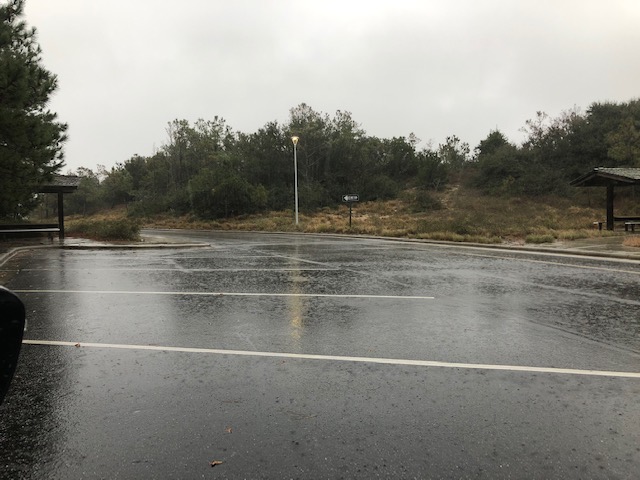
Rain drenched parking lot Aycock Brown Welcome Center by Bill Pike

At some point, a text was received. A new entry code had been issued. We departed the lot, crossed back over 158, and drove toward highway 12 that narrow ribbon of shoreline road. 

Along the way, we hit some large rainwater puddles that flew into air off the passenger side of the car. Soon, our turn on to Tide came up, and we pulled into the driveway of the ocean front house.

We figured out the code entry, unloaded the car, and explored the house. It wasn’t too long before the quietness was gone. 

The cars loaded with road weary grandchildren and their parents arrived. We unloaded what seemed like truck loads of kids junk needed to survive a three night stay.

Thank the good Lord, they all made it. And it didn’t take long for the playful energy of the children to take over.

Pizza had been ordered from Pizzazz Pizza.

Our children had surprised their mother with a video presentation of friends who had secretly sent video selfies to our youngest daughter, Elizabeth. She in turn compiled them into seamless heartfelt birthday wishes that were priceless.

The weather gods gave us a break on Friday. Clouds of gray still hovered around, but the rain had moved out. That meant we could move out too.

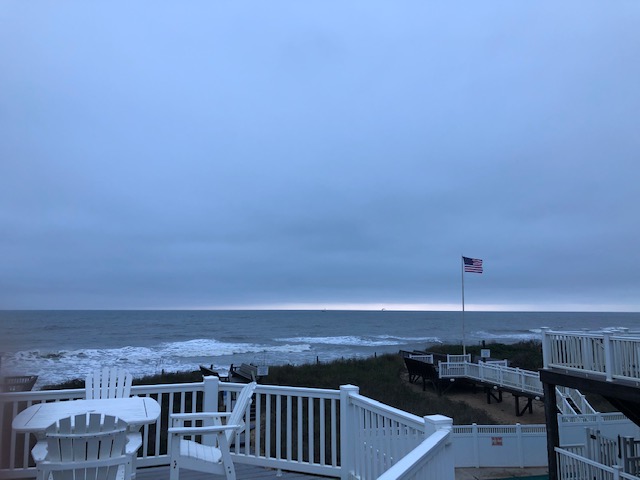
Gray Friday morning with an opening of light on the horizon Bill Pike

I prepped fishing rods, and then headed to Bob’s Bait and Tackle in Duck. 

In the shop, I found what I was looking for and bought some frozen cut bait. In my chatting with a couple of employees, I surprisingly learned that the store, despite COVID-19, had enjoyed their best year of sales since opening in 1982.

Back at the house, treks down to the beach had occurred. The grands submitted their observations about the sand, the waves, shorebirds, and shells.

I made my final preps for hitting the beach to fish. With my waders, wading boots, and all the other junk I gave the appearance of a fisherman. 

A fisherman who hoped to catch more fish than had ever been caught in Duck. But, the fish could see right through that facade. 

During my two day attempt, I saw one fish jump in the roiling surf. No matter what I tried, not even a nibble. Final score— Fish 1 Frustrated Fisherman 0.

Saturday was a charmer. Blue sky, lots of sun, but with a steady stiff breeze by the ocean. 

Sun rising on Saturday morning Bill Pike

That morning at 10, we were to experience the pursuit of perfection—the family picture. 

Our son-in-law, Doug, could probably be a professional photographer. Somehow, he survives the staging, the changing of lineups, and the coaxing of smiles.

After lunch, a group of us walked into Duck to explore a bit. 

Duck was at one time an annual trip for us every Thanksgiving. When my father-in-law passed, for whatever reason those trips stopped.

With our masks, we moseyed in and out of shops, and some purchases were made. I marveled at the new Wee Winks a longstanding convenience store in Duck.

As we started the walk back to the house, we made a detour. 

We stopped in an open green space called the Tap Shack. Someone had figured out how to use this open area behind shops and restaurants as a watering hole. 

The walk back to the house was quicker. As the sun started its slow descent into the Currituck Sound, the temperature dropped a bit.

We made it to the house. And once again, our children had some surprises. Photo prints of a once young couple outlined the fireplace, and a slide show of fun photos from the past were being shown.

And before we knew it, Sunday morning was upon us. We had to be out by the unheard of time— 9:00.

Of course, there was a flurry of activity in and out of the house. Somehow, we were packed and pulling out of the driveway a few minutes after 9.

Andrew and his family headed back to Richmond. 

Lauren’s family, Elizabeth, the Commander Supreme, and a scorned fisherman were going to make a stop at Jockey’s Ridge—mother nature’s sand pile.

Somehow, those mountains of sand survived our intrusion. I marveled at the ripples carved out in the sand’s surface by the wind. I would not want to be on these dunes when the wind is howling.

Sand ripples Jockey’s Ridge Bill Pike

Back in the parking lot, we said our goodbyes. 

As we worked our way out on to 158, the Commander Supreme made a request—let’s get off the highway and take the shore road up to highway 12. So, we did. 

We saw hotels and motels, shops and restaurants, new and old cottages, some pristine, some battered by all kinds of weather. 

In some spots, we noted the encroachment of sand dunes right to the edge of the road. And, we caught glimpses of sun diamonds sparkling on the ocean’s surface.

The ride back to Richmond was dry. This day would not have worked for Noah and his ark. 

But, it was a windy day. A day when untethered gusts of wind shook the car and blew swirls of leaves into the windshield. I imagine that Wilbur and Orville would have been intrigued by the wind.

The same Survey Crew Ahead signs appeared as we barreled west on I-64. Maybe they’ll be surveying on Monday, or maybe someone forget to take the signs down.

But, in truth those signs made me think—deep inside of our souls, we all want to know what lies ahead.

I wonder if Noah thought about that—what lies ahead.

At this very moment, probably more than in any other time in the history of America, we want to know what lies ahead.

Can we sacrifice and push back COVID-19? 

Will the coming vaccines work? Will people take the vaccine? 

Can America rediscover the consistency of unity instead of more spiteful division? 

I don’t know.

But, I am intrigued about what drove Noah to act. His faith must have been unwavering.

Maybe that’s what we need is a dose of faith. 

Faith that we can right our hearts—our souls.

Isaiah 58:11 states:  “The Lord will guide you always.” 

I think my heart, my soul, my faith needs some guidance. 

How about you?

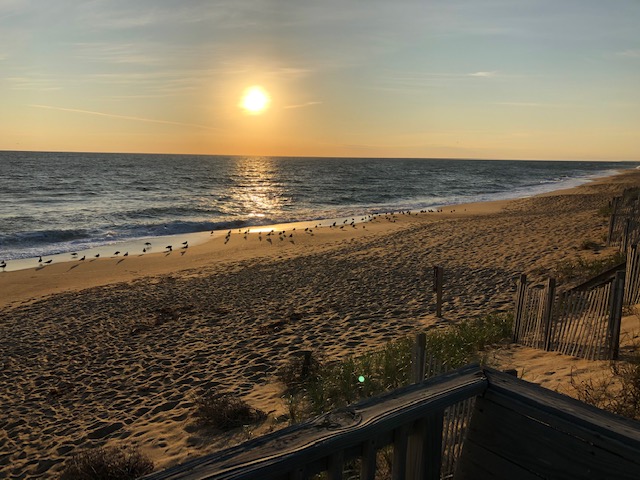
Early morning sun over the Atlantic Ocean with shorebirds Duck, North Carolina Bill Pike

disruption

At the corner of Allen and Broad in the city of Richmond, I see what I think are disrupted lives. When I make the left turn on to Allen, the sidewalk along the old Sears building and across the street along the sidewalk behind the BP gas station are men.  

These men appear to be homeless or at the very least unemployed, or maybe both. Rarely on my trips to Lowes have I seen those sidewalks deserted. If they are abandoned, I still see the presence of the men. Empty bottles, food containers, scraps of clothing, plastic bags, and maybe a lost shopping cart.

When I see these men, I wonder what went wrong? How did they end up in this situation? What are their stories? Have they attempted to pull themselves out of this environment?

But, never in any of my trips to Lowes have I ever stopped to offer one or the whole group any assistance. 

Why is that?

Well, I have lots of excuses. 

For starters—fear, safety, and I’m not streetwise. 

In reality, all it would take is one wrong decision on my part, and I could be in the same set of circumstances as these men. That’s how quick life can change.

Word had trickled back to me about a battered pickup truck that was parking overnight in our church parking lot. I too had noted the truck. I was trying to figure out when the truck departed each day.

Finally, on a foggy October morning, I saw a person emerge from the truck.  Quickly, the person entered the driver’s side and started the engine.

I parked my car near the truck. I unsnapped my seatbelt, opened the door,  and walked toward the pickup.

I got the driver’s attention, and with some nervousness and hesitation the driver’s side window came down. To my surprise, the driver was a woman. 

Initially, I don’t think she wanted to talk with me. But, as calmly as I could I explained who I was and my reason for approaching her.

My explanation was grounded in safety.

I wasn’t trying to be difficult. I needed to let her know that the consistency of her parking here had caught our eyes. In this day and time, we have a responsibility to understand the need for showing up in this lot.

With a dose of courage, this lady explained to me that she was homeless, and basically unemployed. The parking lot had on some nights become her temporary home. She noted without explanation that her sleeping had improved in this corner of the lot.

We talked for a few more minutes. She explained a bit about her dilemma. I listened. I gave her my card with all of my church contact information. I told her it was fine for her to park here until a different arrangement could be made.

I probed a bit about trying to find her some shelter, I referenced a couple of Richmond nonprofits who work with the homeless, and she expressed some interest. 

And, I inquired about her job searching and her skills. I asked if she had access to a computer, and she acknowledged she did. I learned that she has a resume, and she promised to send it to me.

Finally, she told me her name, and thanked me for taking the time to talk with her. Then, she drove off.

Several days passed. 

I wondered if my conversation with the driver had scared her off. No resume appeared in my e-mail, and the truck had not been seen in the parking lot. But over the weekend, an e-mail was received with the promised resume attached. 

This lady had two college degrees and lots of employment experiences in her field of expertise. I wondered what went wrong.

I responded to the e-mail. I noted a couple of employment opportunities that had surfaced from staff members. And I had plans to speak with a friend who serves on the board of a local agency who works with the homeless.

More days passed, and then out of the blue I took a phone call. It was the owner of the tired pickup truck. She wondered if I might be willing to meet with her. She wanted to provide clarity about her resume and her employment experiences.

I responded with a yes. We set up a time to meet at the church.

One thing, I have noted in my brief interactions with Martha ( that’s the name I’ve given her) is how quickly challenges related to being homeless and unemployed can escalate. If one fracture in the foundation of your life occurs, then all of your life can come tumbling down on you.

In truth, on the morning when I first questioned Martha,  she disrupted my life. I had come by Trinity early to check on some items for the day. My plan was to return home and go for a run. 

For some reason that didn’t happen, and like always, I’ll blame God.

Maybe what he was trying to get me to see is that not all of the challenges of the homeless and unemployed gather at Broad and Allen.

No sometimes, needs appear in a church parking lot.

Intersection of Broad and Allen early one morning in Richmond, Virginia by Bill Pike

Veterans Day 2020: “feet wet”

Union Civil War General Willam Tecumseh Sherman is credited with this simple three word assessment:  “War is hell.”

I believe General Sherman was correct. 

Somewhere in America today one of our Veterans will commit suicide.

Somewhere in America today a Veteran is unemployed.

Somewhere in America today a Veteran is homeless.

Somewhere in America today a Veteran is fighting an addiction.

Somewhere in America today a Veteran is fighting to rehabilitate a body debilitated in war.

Somewhere in America today a Veteran is in post-psychological anguish from the trauma of losing a fellow soldier in battle.

Somewhere in America today parents, siblings, spouses, children, and friends search for healing in their hearts because their loved one did not come home.

Somewhere in America today, a quiet, humble Veteran will die alone.

Yes, General Sherman, war and the remnants of war are hell.

During World War II, my father’s family experienced that hell. His oldest brother Boyd was killed while serving his country on the USS Simms a Navy destroyer. That ship was attacked by Japanese fighter planes in the Coral Sea.

I remember looking into the faces of the Pate family at Davis Street Methodist Church after they lost their oldest son, Robbie, in the Vietnam War. I don’t think the sadness ever left their faces, and I know that loss never left their hearts.

And, I recall one Christmas gathering of the Pike family during our terrorists wars in the Middle East. My cousin Stuart’s oldest son, Adam, a Marine described how in clearing a house in Iraq, he had a close call. He came within one click, one pull of a trigger to losing his life.

As required, I registered for the draft during the Vietnam War. I was a college student, my draft number was never called. I have no idea what I would have done if I had been drafted. 

But over the years, I have developed a deep respect for Veterans. And in that respect, just like in me, I know there are imperfections in their service and careers. Yet, still I believe their service and sacrifice is why America is still hanging around.

And as an American, I will tell you that I was disgustedly ashamed when then presidential candidate, Donald Trump, bashed Senator John McCain for being shot down in the Vietnam War. 

Senator McCain was captured by the North Vietnamese and held as a prisoner of war for five and a half years. I don’t understand how anyone could say or embrace such warped comments about a prisoner of war.

My Losing Season by Pat Conroy is one of my favorite books. In the book, Mr. Conroy writes about his senior year of playing college basketball at The Citadel. To develop the book, Mr. Conroy finds his former teammates and interviews each one.

But one of the most moving interviews was with Al Kroboth. Mr. Kroboth served in the Vietnam war as a navigator in the A-6 jet fighter. During a mission, the plane was attacked by the North Vietnamese. Somehow, Mr. Kroboth was able to bailout before the plane crashed.

I do not know how Mr. Kroboth survived his barefooted march through the jungles of Vietnam with broken bones, infections, and hostile treatment, but he did.

In the interview, Mr. Kroboth, his wife, and Mr. Conroy wept many times as they learned about Captain Kroboth’s experiences.

But, when he was released, Captain Kroboth described what it was like as the POWs waited at the airport in Hanoi to prepare for departure. 

As the C-141 taxied to the gate,  what caught his attention was the tail of the plane. It featured the largest American flag he had ever seen. When Captain Kroboth saw that flag he wept.

As the POWs boarded the plane, Captain Kroboth described an eerie quietness as they prepared for take off. The pilot told them to get seated. He was concerned about low cloud cover. But, he was determined to get them up, and out of there.

That quietness remained among the POWs as the plane rose and climbed for altitude.

Minutes ticked. 

When the voice of the pilot returned over the speakers, he stated: “feet wet, feet wet.” That meant the plane was out over the ocean, they had cleared North Vietnam airspace. With those words, the hushed cabin of the plane filled with cheers.

I hope on this Veterans Day, you will find a Veteran and thank that  man or woman with all your heart.

And I pray that I will always remember that I’m still hanging around today because in the hell of war Veterans got their “feet wet” for America.

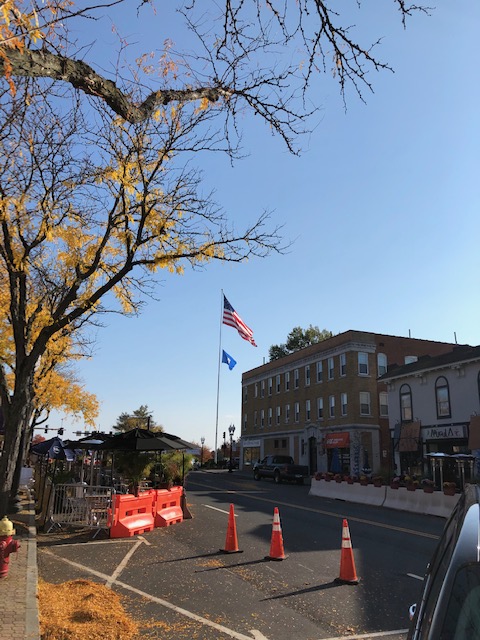
American flag West Hartford, Connecticut October 2020 Bill Pike