“for the Bible tells me so”

I was a lousy, lousy, lousy high school student. 

I’m sure my parents breathed a sigh of relief when I walked off the stage with a diploma in hand. And, I am just as certain, the faculty and staff of Walter Williams High School silently cheered, or internally asked themselves how did he graduate as I exited the stage.

Thankfully, one institution of higher learning in America took a gamble and admitted me— Greensboro College. 

After granting my admission, it is still hard for me to believe that the director of admissions kept his job. 

Even though he is no longer living, my entry into Greensboro  College had something to do with Don Gumm. Don was the associate pastor and youth director at Davis Street United Methodist Church. Don took me for a tour and an interview. 

Maybe the fact that I was Methodist had something to do with my acceptance. Greensboro College is a Methodist supported school. Perhaps, the school has an unwritten rule, we take all Methodists even if their performance in high school was as low as a submarine snoozing in the deepest canyon of the ocean.

I didn’t deserve to go to college. I wasn’t a troublemaker in high school, I was just a goof off. 

Prior to high school, the last time I worked to my potential was in the sixth grade. Only school year in my life when I made the honor roll and had perfect attendance. 

So it should be no surprise  that on March 24, 1972, I received a Student Progress Report in Dr. W. P. Weaver’s Religion 102 class for failing. So much for the Sunday school classes, vacation Bible school sessions, and the Methodist Youth Fellowship meetings, none of that religion was helping me now.

Somehow, I turned things around in Dr. Weaver’s class and finished with a C.

And in truth, that C is probably my grade even today as I continue to work to understand and apply the Bible to my life.

Clearly, I am no theologian, and I really don’t want to be a theologian, but at times I struggle with the Bible.

Who knows, maybe you do too. 

I wonder if that struggle accounts for the 61 translation of the Bible found on the website Bible Gateway?

Does that mean these translations were attempts by theologians and translators to make the Bible a better fit for real life application?

With my brain being the size of spider mite, I do not have the capacity to answer that question. 

But, all these translations are an indication to me— that someone besides me was wrestling to make the Bible relevant—to make sense of it— and all of its “good, bad, and ugly.”

Additionally, I wonder if anyone has ever considered editing out all of the bad in the Bible? Just give us the good. But then, we would miss the stories of hardships, the misery experienced by people. I guess this would limit our learning.

I don’t know about you, but I really struggle with verses from the Bible like these two from James Chapter 1:  “My brothers and sisters, whenever you face trials of any kind, consider it nothing, but joy. Because you know that the testing of your faith produces endurance.”

How can a trial like life threatening cancer be a joy? 

In that same line of thought, how can dying from COVID-19, being homeless, being unemployed, being falsely imprisoned, a life altering auto accident, abuse of any type, starvation— how can these be “nothing, but joy”?

I do not understand how these severe trials that people encounter everyday can be joyful experiences.

A creature of habit,  earIy every morning, I read the daily devotional printed in the Upper Room. I also spend time reading and pondering the scriptures linked to each devotional. 

Recently, I read the recommended scripture from Deuteronomy 10 verses 17-32. Iread a translation from the 1973 New  Oxford Annotated Bible Revised Standard Version. That translation uses the word “terrible” twice in contrasting descriptions of God:

Verse 17—“For the Lord your God is God of gods and Lord of lords, the great, the mighty, and the terrible God,”

Verse 21—“He is your praise; he is your God, who has done for you these great and terrible things which your eyes have seen.”

Just so you know, in current translations of  the New Revised Standard Version, the New International Version, and the Common English Bible the word ‘terrible’ has been edited out.

I wonder what the reasoning was behind this edit? Maybe the editors saw it as a public relations move for God. How can we have a good God and a terrible God?

Remember, I’m no theologian.

And I guess for me that is my struggle, my questioning— if God is so good and if he is there with us in every nanosecond of life—why do these non-joyful things continue to happen to people?

I know. 

God did not promise us a rose garden.  

But, I will wrestle with that verse from James until I croak.

And, to be perfectly honest with you, I struggle with the division that the Bible causes. How we interpret and apply the Bible can often create divides in churches and in denominations. 

I distinctly recall that the Bible directs us to love one another. 

How can we love when some of the scripture interpretations in the Bible divide us?

Again, I will wrestle with this division until my last heart beat—wondering why we can’t overcome our divide with love?

If I even come close to entering the pearly gates, I imagine there will be quite an inquisition as my life is reviewed. 

For certain, there will be lots of black marks by my name. 

At least that’s how Alma Coble, our childcare provider, when I was a kid explained it to me. 

God fearing Alma with no hesitation said when you do something wrong down here on earth, God, Jesus, or your designated guardian angel puts a black mark by your name.

All my black marks will be troubling for sure, but I anticipate hearing a more dangerous question like this. 

Mr. Pike while on earth did you publish a blog called Might Be Baloney

I will answer with a yes.

In those blog posts, did you ever on any occasion question the work of God, Jesus, or the contents of the Bible?

Again, I will answer yes.

And then, there will be an uncomfortable, extended pause of silence. 

In that profusely perspiring pause, eventually, a throat will clear to inquire further, Mr. Pike, why did you question in such a manner?

Silence will reappear. 

Impatience is ticking.

The guardians of the pearly gates are quietly thinking we’ve got him now.

My mind will stumble back to my childhood at Davis Street Methodist Church.

 And I will mumble out this innocent reply: “Yes, Jesus loves me—for the Bible tells me so”.

Failing proof Photo by Bill Pike

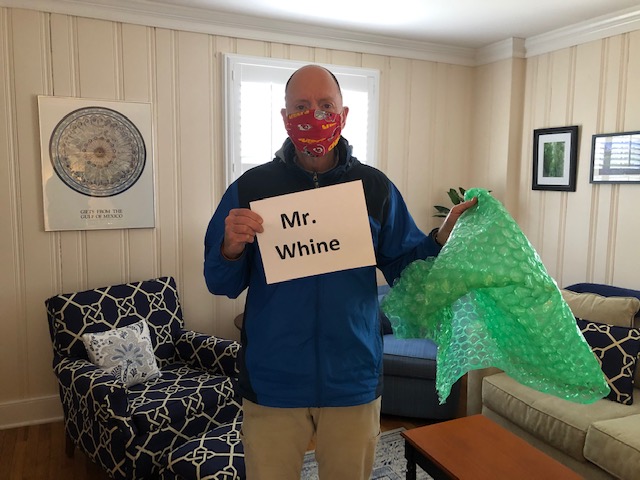
Quick run, Mr. Whine is coming!!

At one time in the teacher’s lounge at Lakeside Elementary School, these words were posted:  “Thou shall not whine.”

Sorry boys and girls, but I’m going to break that commandment now.

On Saturday, January 23 in the Richmond Times-Dispatch, I read the following headline:  ‘Bigfoot’ hunting season sought in Oklahoma. (From wire reports)

Yes, a state lawmaker in Oklahoma wants to create legislation to allow a hunting season that would coincide with a Bigfoot festival held in the forest of the Ouachita Mountains each year. The legislator sees a hunting license for Bigfoot as a boost for tourism.

Perhaps, Representative Justin Humphrey has forgotten or never heard these words from another famous person from Oklahoma, Will Rogers:  “I don’t make jokes. I just watch the government and report the facts.”

In an attempt to insure that my body will be properly prepared for my annual physical in April, I recently purchased a pack of sweet Italian sausages at Kroger. I figure anything I can do to assist my doctor to buy another vacation home is good for the economy.

 Perhaps I missed this change in how foods are categorized, but I was surprised to see a sticky label on the sausage packaging that said “seafood.” 

Photo by Bill Pike

Does this mean these sausages were made in a kitchen environment where seafood was present? 

Or, does this indicate Kroger needs to revamp its food group identification training for employees? Maybe, Kroger should seek the counsel of third graders about food group categories.

And while we are talking about food groups, lets talk about beer, you know liquid bread. 

As a long time follower of the craft beer industry, I am still in shock over the Total Wine insert in the January 17 edition of the Richmond Times-Dispatch

On page 7 of that insert, three well-established craft brewers had photos of their low-calorie beers. 

Unbelievable, craft brewers brewing low-calorie beers. For brewers who worked so hard to establish their independence and to shun the footprints of the beers made by the big box brewers— this is a disappointment. 

And with the hype of the Super Bowl upon us, here is another disappointment. For some reason, National Football League Commissioner, Roger Goodell, continues to ignore my pleas for changing the rules on how a touchdown can be scored.

 Mr. Commissioner, eliminate the rules that allow a player to score a touchdown by breaking the plane of the goal line or diving to touch an orange pylon on the corners of the goal line. To score a touchdown, a player’s entire body must be in the end zone with the football intact—nothing else.

On Friday, January 22, my wife, the Commander Supreme, ventured to our local post office branch. She was mailing a package to her mother who resides in West Hartford, Connecticut. 

The Commander paid for two-day Priority Mail. As of today’s date, Tuesday, January 26, the package is in Las Vegas, Nevada.

Not counting Friday, this is day four. We could have driven the package up the east coast in one day.

From Richmond to Las Vegas is 2,405 miles, and Las Vegas to West Hartford is 2,621 miles, and of course, Richmond to West Hartford is a mere 452 miles. 

I am truly thankful for our postal workers. And, I am sure some postal executive has a reasonable explanation for Richmond to Las Vegas to West Hartford, but I’m not buying any explanation that defies the logic of real fifth grade geography.

And I know you will be disappointed that you missed it, but Monday, January 25 was National Bubble Wrap Appreciation Day. I’ll be sure to mark that on my calendar for next year.

But alas, keep your composure, don’t be too downhearted because the most important national appreciation day will be here on Sunday, December 26, 2021—National Whiners Day.

According to the website National Day Calendar, National Whiners Day was established in 1986 by Reverend Kevin Zaborney. 

The good reverend created this day with the hope of encouraging people to be thankful for what they have instead of being unhappy “whining” about what they do not have.

I know that I’m a whiner.

But in truth, I have no right to whine.

Here are some reasons, I should not whine.

Believe it or not, and despite my still growing list of  imperfections, I know that I am surrounded by love. Some people in our world will never experience love.

I can go to my kitchen sink, turn on the faucet, and pour a glass of clean, fresh water. Not everyone can do that in 2021.

A long time ago, in the first grade at Elon Elementary School, my teacher, Mrs. Hughes, taught me to read. Try as we might, illiteracy has not been solved.

Within easy driving and walking distance to our home, there are six grocery stores. And yet, food deserts are plentiful in our community.

I live in an imperfect country that sometimes struggles with its understanding of freedom. But, I am free to write this gibberish. In some countries that freedom doesn’t exist.

Sure, whining might make me feel better.

But here is the question I need to ask myself—is my whining helping to solve any of the millions of challenges we face?

I know the answer is no.

I need to stop the energy burn on whining. 

That energy must be redirected.

I wonder if I can do that?

Photo by the Commander Supreme

Hey Jimmy, how are your “psychological insults”?

In the spring of 2020, I submitted an article to the American School Board Journal for publication consideration. Surprisingly, the article appears in the February 2021 issue of the magazine, as a part of their Online Only section. 

If you are interested in reading the piece—Hey Jimmy, how are your “psychological insults”? here is the link: https://nsba.org/ASBJ/2021/February/psychological-insults.

Thanks for your time, be safe, Bill

Be safe in your viewfinder

My pal, Joe, knows a lot about the cameras used to cover sporting events for television. His career behind the camera covering athletic events has taken him around the world. 

We grew up in Burlington, North Carolina, and I’m sure in his tar heel brain there is a treasure of stories about all that he has witnessed through the viewfinder on his camera. 

That viewfinder sees people in real time. They are up close. And sometimes, we see the best and worst of their human emotions unfold.

In a sense, our eyes are like viewfinders.

 We peer out into the world everyday. 

We see a lot in our scope of vision.

But, our viewfinders only present the surface. They can’t scan deep into a person’s soul.

That outward appearance might seem perfectly normal, all looks well, not a care, no worries—as the t-shirt says—“life is good.”

But, I know, you know, that life isn’t always good.

Sometimes, I daydream about winning a big lottery jackpot. But of course to win a big jackpot, you have to play the lottery, and I rarely play the lottery. 

And in those daydreams, I list out all of the ways I would use this resource to help people— make the world better, make a difference. All of that daydreaming looks good from behind the viewfinder. 

Gradually, daydreams like that come to an end and reality returns.

During the course of 2020, I can’t tell you how many times I have spoken or written the words—be safe. I continue to use them today. I want people I encounter to be safe no matter who they are, what they are doing, or where they are going.

Every Friday at our church, we have a food drive. In turn, the food collected is delivered to local food pantries.

Recently, one of the pantries we have served for years made a decision to temporarily shutdown. The pandemic caused them to hit the pause button. They needed to rethink how to more safely distribute food to the people in their community.

With this pause, we shifted part of our distribution to a different food pantry. On my first delivery to their site, I met their caretaker,  Curtis.

In my viewfinder, I could tell that life has worn hard on Curtis. But despite life’s wear on him, Curtis has a refreshing energy and spirit about him. 

As we were finishing the load out from this first trip, I thanked Curtis for his help, and I said to him—“be safe.”

Curtis quickly, without any hesitation responded with these words—“God keeps me safe.”

Upon hearing those words, I thought to myself as I looked at him, you know Curtis is absolutely correct.  Somehow, someway, through the wear and tear life has put him through God has kept him safe.

And I wonder why?

What did God see in his viewfinder when he saw Curtis?

How did Curtis see himself in his viewfinder? Did he say to himself, I’m not safe, I need some help?

Perhaps for our viewfinders, the most challenging part of their work is the personal introspection. What do we see as we scan our past, our present, and our future? 

And, maybe the most important viewfinder question is this—is God in our viewfinder? Has he consistently been on our journey through life?

My truthful answer is—no.  During my lifetime, my interactions with God have been inconsistent.

I think God was always available in my viewfinder, but I often failed in seeing him.

This quote from Helen Keller really makes me think:  “The only thing worse than being blind is to have sight, but no vision.”

No question I have sight, but there have been plenty of times in my life when I have failed the vision test, my viewfinder skimmed over what I really needed to see.

How do I correct this fault?

Maybe, I correct this malfunction by learning from Curtis.

He clearly affirmed that God is safely in his viewfinder.

I guess I need to find out if God is really in my viewfinder.

I have no idea how much longer God plans to keep me around.

But in the time I have left, I need to make sure God is in my sight lines, in my viewfinder.

Be safe.

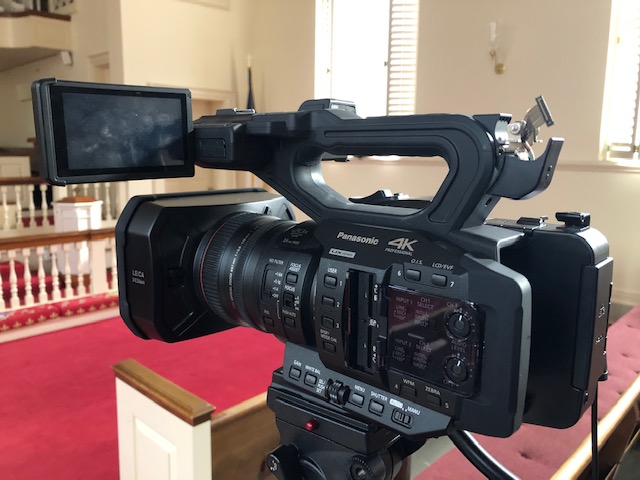
Photo by Bill Pike

The wobble of life

A few days before Christmas in December 2020, the Outreach Sunday school class at Trinity United Methodist Church was searching for more ways to assist families in our county who had a need.

They reached out to the director of Henrico County Social Services. Quickly, he connected the class with caseworkers who knew of a couple of families who needed support.

With no hesitation, the class made arrangements to provide Christmas gifts for a young girl whose mother was not able to make this happen. Provided with clothing sizes and some gift ideas, two class members paired up and went on a shopping trip. Being wise shoppers with their purchases, they were also able to provide a gift card for the mother.

A couple of days before Christmas, the gifts were all wrapped and ready to be picked up by the caseworker. When the caseworker made the pickup, she was extremely appreciative of the support provided by the class.

The second family in need of assistance was going to require a different approach. The class was asked to provide help for a refugee family living in a local apartment who basically had no furniture. Whatever arrangement the family had for receiving furniture fell through.

The caseworker for this family provided us with a list of the basic furniture needs. With this information, the class started rummaging around their homes, and checking with neighbors and friends for furniture that might need a new home.

Trinity Hall at our church became the site for dropping off and storing the items until we could coordinate a delivery date with the family. Immediately before Christmas and into the early days of the new year, furniture began to arrive in Trinity Hall.

Via the caseworker and the class, we were able to coordinate a delivery date.

On the afternoon of Wednesday, January 13, I took a ride over to the apartment complex where the family resides. I found the apartment and knocked on the door.

Promptly, the door opened, I was greeted by a very nice lady who apparently did not speak English. She called out a name, and a young man, in his early teens appeared. He spoke English with an easy command.

I explained who I was and told him we were planning to make a furniture delivery tomorrow afternoon. He confirmed that tomorrow afternoon would work with the family’s schedule. I could detect a bit of excitement on his face. I handed him my card with my contact information, and asked him to call me if there was a change in plans for the family.

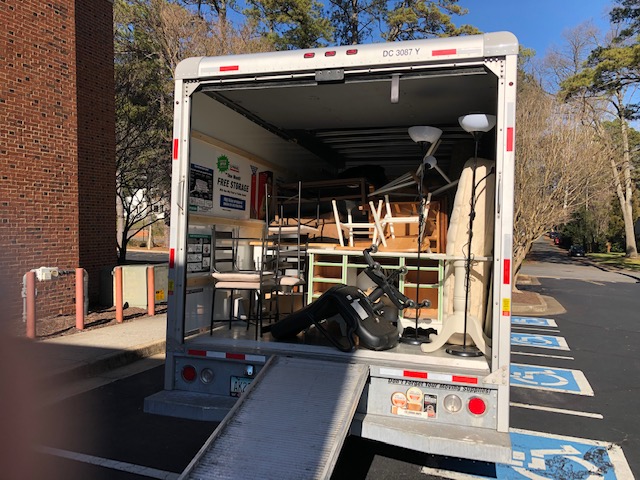
So just before 1 p.m. on Thursday, January 14, members of the Outreach class showed up at Trinity Hall. They had rented a U-Haul truck to load and transport the furniture. Another class member was going to bring his trailer for loading any pieces that would not fit on the U-Haul.

It didn’t take long for the U-Haul to be loaded and packed. A few extra items remained, and once the trailer arrived, those pieces were loaded.

Drivers were given the address, and eventually we were organized and departing.

Luckily, the apartment was ground level. But, we still needed stable footwork to maneuver along the sidewalk and some steps to arrive at the front door.

I have no idea how long we were there. But, upon reflection, I think the scene of unloading the furniture probably resembled the frenzied chaos of comedy found in a classic Marx Brother’s movie.

Essentially, I think we overwhelmed the family with the assortment of furniture that had been collected for them. But, I also believe it was a mild collision of Afghanistan and American cultures.

One minute a piece of furniture was a good fit for the family. But, in the next minute, thinking changed, and a piece of furniture would be removed and carried back out side. This back and forth bartering took place a handful of times.

Donations that we believed to be potentially very useful from our eyes did not have the same match with the family we were trying to help.

Eventually, final selections were agreed upon, and the shuffling of furniture back and forth came to an end.

I know at times, we were pondering in our noggins trying to understand the rationale of the thinking from the refugee family about certain things. But, I wonder how we might have felt if as Americans we were suddenly thrust to live in an unfurnished apartment in Afghanistan.

We culled the remaining items into two loads—one for Goodwill and one for the county dump.

I rode with the team going to the dump.

Even COVID-19 has turned the dump upside down.

 Prior to the pandemic, there was a section at the dump named— Too Good To Throw Away. All kinds of items were dropped off under that shelter. During the course of daily operating hours, clever scavengers would visit and claim those items for resale or repurposing.

This afternoon, we had only one sad option—heaving our load into a large dumpster. To our left and right, people were doing the same as us tossing junk into dumpsters.

 Maybe some day after I’m long gone, the world will finally spin off of its axis. And as observers watch this spectacle from outer space, they will conclude this demise occurred because the amount of waste buried in the earth created an imbalance. The gyroscopes below the crust could no longer handle the stressful, wobble of being out of alignment—kaboom—another big bang theory.

I learned a lot about the wobble of life on this unusually pretty January afternoon.

If our class ever helps out a refugee family again with furniture, I think we will have some options to consider on how we make this happen in a different way.

Despite the fact that we are rapidly aging, we can still move furniture around with the best of them. 

Added to that, we haven’t lost our sense of humor in working with each other in circumstances like this afternoon.

And most importantly, our hearts still want to help, to give, to make a difference, and I sense that desire will be with us until we take our last breath of life.

In the chaos of the afternoon, there was one constant at the family’s apartment, a son, who was called “D”.

 A freshman student at a local high school, D was our interpreter. He was the negotiator, the go between. He had the tough job of telling us “no” when a piece of furniture or some other donated item did not pass the test. 

D played his part well. We and his parents would have been lost without his skills.

Just as we were about to depart, D got my attention. He had a request. 

D wondered if we might have access to a bicycle. I told him we would work something out, but it might take a bit of time. A slight smile creased his hopeful face.

Maybe the following scripture sums up what took place this afternoon: 

3 John 1:5:  “Dear friend, you are faithful in what you are doing for the brothers and sisters, even though they are strangers to you.”

Good words for me to remember as I try to faithfully wobble through life.

Loaded truck at the back of Trinity Hall 1/14/2021 photo by Bill Pike

Psychology, people, love

In the spring of 1975, I was doing my student teaching at Aycock Junior High School in Greensboro, North Carolina.

My supervising teacher was Mr. Wallace Pegram. I have never forgotten what he told me one day:  “There is a lot of psychology in teaching.”

Mr. Pegram was a wise man. 

I have also discovered there is a lot of psychology in life too. I think the year 2020 confirms that statement.

On the afternoon of Friday, January 15, I am 46 years removed from my student teaching, but I’m still working. I haven’t departed the people business as I work as the director of operations at our church. 

Today has been a busy people day.

We had the walk through to develop a punch list for finishing up a construction project.

The church’s old, but useful pickup truck failed its annual inspection. I spent time on the phone with our trusty mechanic figuring out how to get the truck back in shape.

Our Kids Director, along with an architect, and I walked an old section of the church to ponder how we might modernize the space.

I had a Zoom call with our assistant pastor and the leader of our French Swahili congregation. The pandemic has turned this community upside down too.

Since 9 this morning, church members wearing their masks have  been dropping off groceries in Trinity Hall. These groceries will be distributed to two local food pantries we support.

Late that afternoon, after finishing up some e-mails, I was ready to head home.

When I walked into the church’s back parking lot, the predicted rainfall had arrived. I saw the leader of the Greenwood AA group setting up tents for the 5:30 meeting.

Since late March of 2020, Greenwood has been meeting on our church grounds. They are an amazing resilient, resourceful group of people.

Somehow, their leader and the members have not let the whims of mother nature deter them. When weather created an obstacle, they adjusted.

With winter here, they have crafted a two tiered meeting system. 

Members following COVID-19 protocols can opt to meet in the fellowship hall, or with similar protocols, they can choose to meet  in the parking lot under tents with a portable heater.

I asked their leader how the two meeting sites had been working out. His answer was honest.

He told me it took all of his patience and diplomatic skills to reach consensus on some of the essentials of the meeting formats. But, with time, most of the group has adjusted, complied, and attendance has been consistent.

In his own unique way, the Greenwood leader was saying to me—there is a lot of psychology in working with people who are worn down by COVID-19, America’s political unrest, and their own personal challenges with alcohol.

With this environment, it doesn’t take much for a person to be overwhelmed with the pressure generated from these unprecedented circumstances.

Reports I hear in the media indicate that our mental health systems both public and private are maxed out. This means many frazzled people do not have access to the help they need.

The Greenwood leader with an open and trusting heart said, “On several occasions, I have said to myself, I’m not going to wrestle anymore with some of my challenges, I’m going to hand them over to God to help me.”

And speaking of God, this has been an exceptionally tough week for friends of our family. 

One lost her daughter to an aneurysm.  

Another had her healthy mother die unexpectedly.

 But the saddest, friends from church have a grandson who received a preliminary diagnosis of the incurable mitochondrial disease—he just turned one.  

Yes, there is a lot of psychology in life.

Even with our mental health systems and their personnel tapped out, I will still hold out for hope.

My hope is grounded in one word—perseverance.

In all my years of working with people in all kinds of situations, circumstances, and environments, I am constantly amazed how individuals find ways to hang on by their perseverance.

I guess that doggedness comes from deep inside their souls.

Maybe, it is a reserve of energy tucked away in the quiet chamber of a restless heart.

Or perhaps, their perseverance is unknowingly supported by you, me, we, us when we reach out to them in their time of need.

That reaching out comes from love tucked away in our hearts.

In an interview about his new film, News of the World, Tom Hanks said this about the character he portrays: “When you have love in your life, you are a different human being.”

Right now, maybe more than ever,  we need to use the love inside of us to make us different human beings.

1 Corinthians 13 reminds me—“if I don’t have love, I am nothing.”

Yes, there is a lot of psychology in teaching and in life. 

And while we might not always recognize love in the moment, it is there hanging around waiting to be put to use.

Without question, love needs to be put to use now.

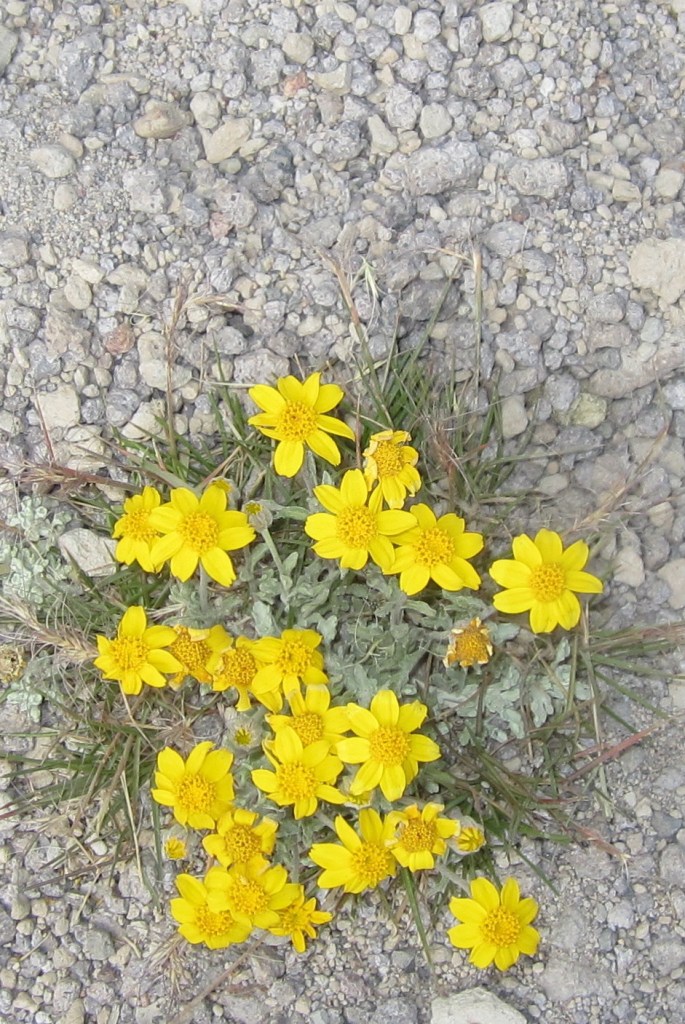
A stubborn Beautiful Woolly Sunflower (I think) clinging to life and sharing its love in the Eastern Sierras of California photo by Bill Pike

On Virginia’s Route 8 an encounter with “experience”

On the evening of Tuesday, January 12, the dispatcher for the sheriff’s department in  Floyd County, Virginia took a call.

The caller expressed concern about a man walking alone on Virginia Route 8. The only description given to the dispatcher was the man was wearing athletic warm-up clothing, and the man was talking out loud to himself.

The dispatcher sent a deputy to investigate.

It took a while for the deputy to locate the walker, but he did find him heading south on Route 8.

In the darkness of this narrow, twisting road as it cuts through the Blue Ridge Mountains, the deputy saw the man in his headlights. 

The man was walking properly facing on coming traffic, and as the caller indicated, the walker was wearing athletic clothing, and the walker appeared to be yapping out loud to himself in a military cadence.

The deputy notified the dispatcher that the walker had been located. He stated he was getting ready to approach the walker.

So the deputy slowed his car,  he turned on his blue lights and emergency flashers. He positioned the spotlight by his driver’s side mirror on the walker, and tooted his horn.

The walker froze, the deputy pulled the car over on a narrow shoulder, and the deputy exited his car.

“Good evening, deputy, how can I help you?” stated the walker.

The deputy explained he was responding to a safety call on the report of a singular walker, talking to himself, out here on Route 8.

The deputy asked, “Sir, if you don’t mind, could I see some identification?”

The walker complied. He reached for his wallet and handed the deputy his driver’s license. 

With his flashlight in hand, the deputy shone the LED light on the license.

The deputy read out loud  “Michael William Kra-zew-ski, Durham, North Carolina.”

“Sir,” the deputy continued, “You are a long way from Durham, North Carolina.  What the heck are you doing out here in the hollers of these hills on this cold winter night babbling to yourself like a chipmunk that found a still?”

The walker replied, “Deputy, I’m just clearing my head.”

The deputy responded, “Clearing your head, in the middle of the night, on Route 8, walking alone, and Google’s best guess tells me you are at least 130 miles from Durham. I’m not so sure I don’t need to take you in for observation and a mental health check.”

“Well, deputy, I appreciate your concern, but that won’t be necessary. You see my team’s next game isn’t until Tuesday night in Pittsburgh. I’ve got plenty of time to get to Durham,” the walker responded as if he didn’t have a care in the world.

The deputy was silent for a few seconds. He took a step back.

He took his flashlight and focused it on the royal blue capital D on the fleece jacket the walker was wearing.

Next, the deputy shone the light on to the walker’s face.

He saw the  jet black hair, the piercing eyes, the large nose, and the tightly aligned mouth and chin.

Then, the deputy exclaimed to the walker: “You’re Coach K, you’re Coach K, the dispatcher isn’t going to believe this! I stopped Coach K walking home to Durham. But now, it’s coming to me, you are walking home because my Virginia Tech Hokies beat your team tonight in Blacksburg. Clearing your head, I get it. I guess coaches must find ways to clear their heads, especially after losing a game you thought your team should win.”

And this was followed by a few seconds more of awkward silence.

That silence was broken by the dispatcher on the radio asking if the deputy had an update. 

The deputy searched his mind for a response. 

Then he stated: “Walker in good shape, stable, he’s just doing some personal research about his chosen profession.”

Coach K looked at the deputy and whispered, “thank you.”

The deputy said to Coach K, “You sure, you want to walk all the way back to Durham? Could I at least give you a ride to the next county line?”

“No, I’ll be fine, besides, I worked this all out with the bus driver. Sometime in the next few miles that bus will be coming up behind me and pick me up,” Coach K said with a smile.

“Well, that makes me feel better. I’d hate for you to run into an ornery pole cat or the ghost of Murray the Moonshiner,” the deputy stated.

“Hey coach, before I depart, if its ok with you, I would like to give you a bit of advice about clearing your head,” said the deputy with a bit of hesitation.

“Yes, sure go ahead, my wife, my daughters, even my grandchildren offer me advice about basketball,” the Hall of Fame Coach replied.

“Ok, now, don’t get mad, don’t come unglued like you do sometimes with a referee, just remember, you gave me permission to offer you some advice,” the deputy confirmed.

So he started, “Personally, I think you need to think long and hard about the word—experience. Take a look at the boxscore from the game tonight against Virginia Tech. Compare the class rank of your starting five compared to their starting five. I think Virginia Tech beat Duke tonight for lots of reasons. But at the end of the game, I believe the Virginia Tech players are older with more basketball wisdom on the court than your very gifted youngsters.”

And with a bit more of confidence in his voice, the deputy continued, “ I also believe you were a much better molder and shaper of your players before you started chasing all of these one and done players. Your last national championship was in 2015. You can’t build experience in your players chasing the one year blue chippers. I suspect you know that. And, I think deep down in your heart, you really know that, but you don’t want to admit it. My take on why you don’t want to admit it is simply this— I think you are blinded by your desire to win.”

Silence returned between the coach and the deputy. 

Internally, the deputy was thinking, I better get out of here before he erupts and pushes me off the side of this mountain.

“Well, Coach K, I reckon your ride will be along soon. I need to get back on patrol. It has been an honor to meet you. Thanks for for listening to my heart, maybe in your head clearing, you’ll listen to your heart,” the deputy said this as he turned to head back to his car.

He took a couple of steps and then he heard these parting words from Coach K, “Deputy, you’re a good man, I like the courage in your heart, be safe, thanks for your leadership out here.”

Experience.

“We try to create a legacy that binds the past to the present.”

Mike Krzyzewski page 185 Chapter 12 from his book Leading With The Heart

Photo by Bill Pike map courtesy of the Virginia Department of Transportation 2006-08

“I ok”

On the afternoon of Tuesday, January 6, I was returning to Richmond from Summerfield, North Carolina. 

Since Sunday, my wife and I had been helping out our oldest daughter and her family as she recovered from out patient knee surgery.

I was east of Danville on U.S. 58, when I picked up the first radio news reports about the turmoil in Washington, D.C.

At first, my ears could not believe what I was hearing. Every mile unfolded more chaos and concern.

There was a rawness to these news feeds and sound bytes. Reporters struggled for accuracy and confirmation in the unraveling.

Emotions ran through my heart and mind. 

I was saddened, disappointed, and quite honestly disgusted.

Even before the arrival of 2020, America has been festering for a long, long, long, long time.

In all honesty, we should not have been surprised by what occurred on January 6. This is another day of infamy when we pushed our freedom to its limits and attacked our democracy.

As an American, I failed. 

Over the last four years, I failed to use my voice to directly speak out against a president who clearly incited the mob who rioted on Wednesday afternoon.

Why did I fail—fear. 

Fear that I would lose friends, fear of what people would think of me, fear of how my family might be hurt, fear of how my speaking out could impact my work, fear, fear, fear, fear.

And in that fear is division, a division in America that is as sharp and dangerous as the dullest knife in your kitchen.

Whether we want to admit it or not, division has always been healthy in America. We continue to struggle with division. It is an open wound, a wound that appears immune from treatment.

If we allow our division to continue, we are dead—dead.

My father was a good, decent, God fearing man. 

He observed early on that I had a bad temper. I was a poor sport in athletic participation, and also as a fan if a favorite team lost a game to a rival.

In those instances, my father never raised a hand to combat my unacceptable behavior. With a gentle, but firm dignity he told me if I wanted to continue to participate in sports or to watch sporting events on television or in person— that I had to change. 

It will not be easy, but America—you, me, we, us must change.

Tom Hanks is my favorite actor

There is a scene in the movie Castaway that is pure terrifying chaos.  

Hanks who is portraying a Federal Express employee is a singular passenger on a Federal Express jumbo cargo jet. Out over the ocean, the plane encounters significant turbulence from a massive storm. 

The plane can’t handle this stress. The pilots lose control. The plane crashes. Somehow, Hanks is the only survivor in the descent, impact, and the fury of the storm in the ocean.

Wednesday afternoon was pure terrifying chaos in Washington, D.C. 

This was real life, not a Hollywood script. And yet, somehow, someway, I want America to be like Tom Hanks in that movie. I want us to survive our division, our chaos, our fears.

I want America to be like our two year old grandson after he takes a tumble. He looks up at me and states: “I ok.”

We have lots of work to do in America for us to be able to say: “I ok.”

As I drove, I thought—I wonder what God thinks about all of this?

Well, I think God has known for a long, long, long, long time that America  was in trouble. 

It doesn’t take a rocket scientist to see that we have for many, many years been pushing ourselves away from God, religion, church, kindness, and love.

Heck, church people, like myself, are even divided in how we view God’s teachings in the Bible. We can’t agree on how we interpret these teachings. And, truthfully these disagreements have contributed to our division.

I wonder why we can’t be drawn to these words from Isaiah, Chapter 1, verses 16-17: “Take your evil deeds out of my sight; stop doing wrong. Learn to do right; seek justice.”

As my old Toyota Highlander pushes north on U.S. 360, I marvel on this sun drenched afternoon at the stark, bare beauty of the forest on both sides of the highway. 

Winter clears the trees of their leaves. Even the undergrowth at the edge of these forest and at the base of the trees is tempered back by exposure to frost on cold mornings.

The trees stand tall, erect, basking in the late afternoon sun. Their trunks and limbs fully exposed.  Nothing is hidden. They appear so peaceful, free from turmoil as the sun begins to slowly sink in the west.

To move America forward, we must be willing to peer deeply into America with an unobstructed view. 

We must see with a clarity that exposes every fault, every division, every festering wound, every hurt, every social injustice,  every fear.  

Our hope and prayer must be to do this without any hesitation.

When I arrived at our home, I unloaded my car, and then I worked to set up my computer for a Zoom call with our college pals.

With out question, the events of the afternoon came up in our conversation. But as we were winding down, the topic of mental health came up. Our mental well being is so important, but as we all know—it is often overlooked.

During 2020 our individual and collective mental health has faced multiple challenges: COVID-19, social injustice, natural disasters, a contentious presidential campaign, and now at the very beginning of 2021 an insurrection fueled by a president unwilling to accept his defeat in the election.

In this thing called life, that is a lot of baggage.

And that baggage doesn’t even take into account all of the other stressors people face.

In a recent interview on the CBS program Sunday Morning, comedian Chris Rock talked about some of his baggage with the show’s co-host, Gayle King. 

When King asked Mr. Rock what was “the hardest truth” to learn about himself during his mental health therapy, he stated: 

“Sometimes I wasn’t kind,” said Rock, “and sometimes I wasn’t listening, and sometimes I was selfish.”

Sadly, I think wasn’t kind, wasn’t listening, and being selfish captures America’s current challenges.

As an American, I want me and my country to be kinder, to be better at listening, and to be less selfish.

I want America to be able to say “I ok” not for me, but for its future.

And even though Wednesday afternoon was ugly, hurtful, and unacceptable, I’ll hang on to hope.

Hope that our hearts will collectively say—enough.

Hope that our hearts learn from all of this. 

Hope that our hearts will work to rid ourselves of our division.

Hope that we want a future where we can all say, “I ok.”

God help us.

Photo by Bill Pike

blink

On Thursday, December 10, the Commander Supreme and I were in North Carolina. We had traveled to Summerfield where our oldest daughter and her family live.

Later that afternoon, we would all pile in one car and drive to Clemmons just outside of Winston-Salem. We were going to the Festival of Lights at Tanglewood Park.

This was to be a dangerous, pre-Christmas excursion. 

Anytime you put five adults in a vehicle with a five year old and a two year old to drive through a park to stare blankly into miles and miles of Christmas light displays—the risk factors are high. No underwriters from Lloyd’s of London would even consider issuing a policy.

We had been warned about the back up traffic on the highway. But luckily, we missed it.

Once we were in the park on the scenic loop, we had been warned about having a car or cars in front of us whose sense of urgency to keep the line moving is like that of an Eastern box turtle chomping on a summer tomato—none.

Also, we were alerted that our bladders needed to be strong as portable johns were few. Making a decision to relieve yourself by bolting from your car into the coal-black woods was high risk too.

 No telling what nocturnal creatures might be out there ready to greet you. 

If you sprinted from your car and happened to startle the skunk family as they were attempting to get their children down to sleep, bladder or no bladder that would not be a pleasant encounter. 

Plus, there is no way you would be allowed back in the car with your family after an aromatic meeting with the skunks. If lucky, your family might strap you to the roof of the car.

Overall, we had a good viewing experience. I can now say I have been there.  I am also happy not be responsible for paying the electrical bill at Tanglewood.

Prior to Christmas, we made two similar visits to the Dominion Energy GardenFest of Lights at the Lewis Ginter Botanical Gardens in Henrico County, Virginia where we live.

 This was a walking tour of miles of lights and clever displays. Particularly impressive were how the lights reflected off water surfaces of a lake and streams in certain locations. 

On Monday, December 21, phase one of the Christmas invasion started. Our youngest daughter came in from Raleigh. 

The second expeditionary force arrived from Summerfield on Tuesday. This was our oldest daughter and her two children. Our son-in-law would drive in after work on Wednesday afternoon.

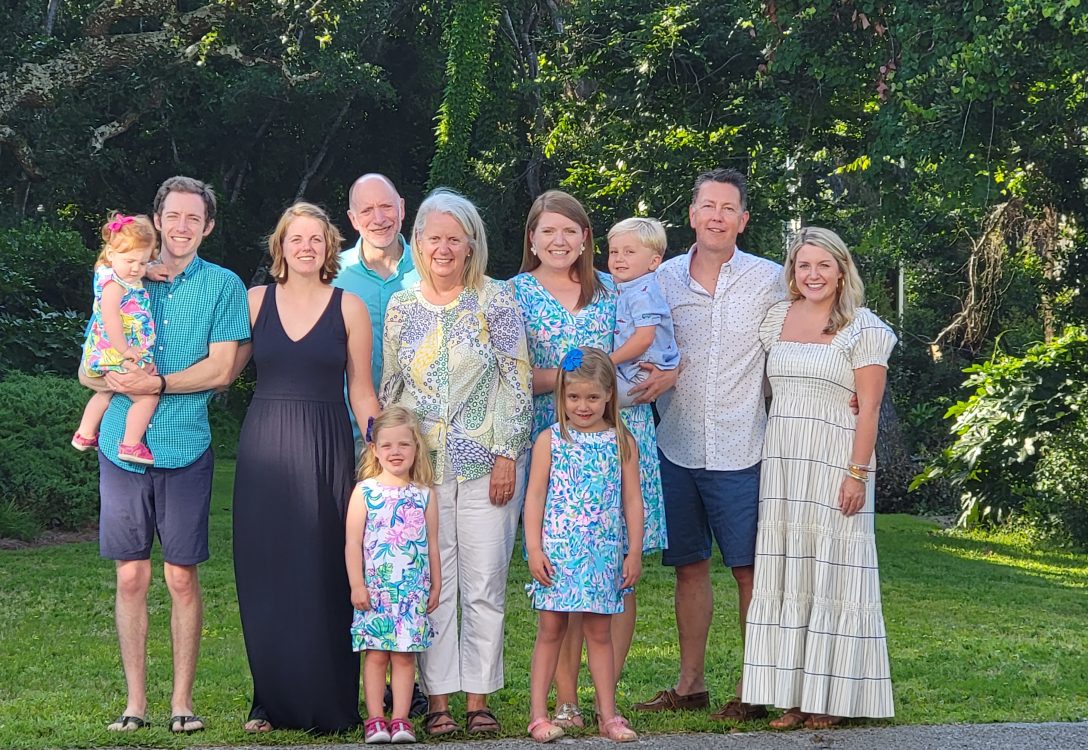
Don’t ask me how, but at 5:30 p.m. on Christmas Eve our family was seated at our dining room table. 

This now included our son, his wife, and their two daughters. There were eleven of us. Thanks to precautions related to COVID-19, my wife’s brother and his family were not present, nor was my 92 year old mother-in-law.

Thanks again to COVID-19, worshipping at our church on Christmas Eve was disrupted. 

So instead, at 8 that evening, we watched the virtual service created by our church staff for broadcast. While the service was very well done, I know we missed being in a packed sanctuary.

Michael H. Dickinson is an American fly bioengineer and neuroscientist at the California Institute of Technology. 

Dr. Dickinson has made discoveries like this:  “We discovered that fruit flies alter course in less than one one-hundredth of a second, 50 times faster than we blink our eyes, which is faster than we ever imagined.” (Brainy Quote) 

No wonder fruit flies are so hard to whack!

But, this is an undeniable fact for me—at some point between the first hours of Christmas Eve and the last hours of Christmas Day— Christmas becomes a blink. 

Despite all the anticipation, all the buildup, all the excitement, all the energy generated, all the preparation— Christmas moves fast. I always knew that Christmas moved fast, but now thanks to Dr. Dickinson, I understand that Christmas moves at the speed of a fruit fly.

And in all those one one-hundredths of a second, all of our human emotions are tangled at Christmas. 

Christmas makes us laugh, cry, ponder, love, hope. 

Christmas creates an undertow of its own tension. 

This tension can be a compilation of its weariness frazzling multiple nerves or one singular nerve plucked. The result can be a meltdown for children and adults.

Christmas has a kind heart. But, I sense that I let the commercial trappings of the season push me away from its original simple path.

In a blink, on Saturday and Sunday we packed cars for their returns to North Carolina. Truthfully, a tractor trailer or a military Chinook helicopter would have been more appropriate.

Anyone along the interstate who stared blankly into the passenger seat of our oldest daughter’s SUV would have seen a Paw Patrol Mighty Lookout Tower with a seatbelt holding it in place. That is a far cry from my days of Lincoln logs and Tinker toys. 

In a blink the world has changed. 

But, I guess the question to ask is has the world really changed since I was a kid?

For sure it has, but in all of those blinks, we still have so many problems facing us that need to be fixed— fixed for all of us. 

For me, our inability to fix our on-going  challenges are just as annoying as a pesky fruit fly. 

As we push into 2021, we must commit to making changes—changes that are grounded in understanding that we can’t continue to live in denial of things that have be broken for a long, long, long, long time. 

I’m sorry, but we can’t blink the restlessness of these challenges away. 

No matter how much we blink, these challenges are not going to vanish. Truth is we know this. But, the stubbornness in our blinks keeps us from making the right commitments to change.

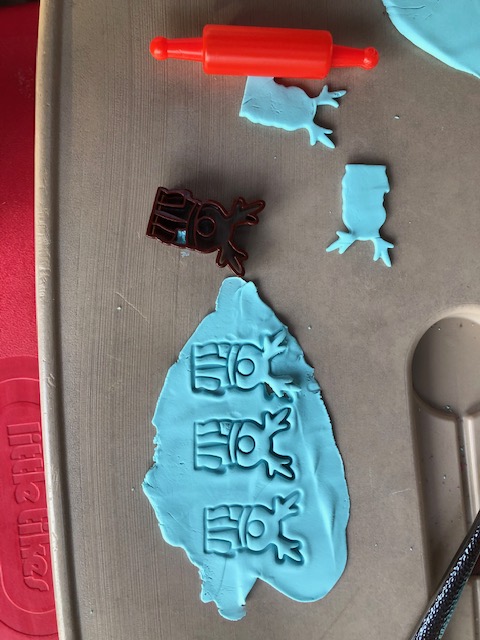
While I yearn for a simpler Christmas, I also wish life was as simple as a container of Play-Doh. 

At the preschool where our grandson attends with his older sister, Hudson’s teacher gave him a container of Play-Doh as a Christmas gift.

The day after the Tanglewood visit, Hudson was finishing lunch on the back porch.  He asked for the container of Play-Doh to be opened. I obliged.

We sat at a small table, and we both worked with the Play-Doh. Eventually, we pounded it down to make a flat surface. That allowed us to take the utensil shaped like a reindeer and make reindeer shapes.

Of course, the beauty of the Play-Doh was if we didn’t like the outcome, we could start over. We could reshape, remold, and flatten the material over again.

I wonder what might happen to our challenges in our world if we treated them like Play-Doh? This isn’t working. Let’s start over. Let’s find a better solution—flatten, reshape, remold.

 Or, what might happen in times of an urgent need if we could be as nimble as a fruit fly? What might this mean for people in dire situations if we quickly adjust our thinking, altering our path for a better outcome?

As miserable as 2020 has been for us, we can’t ignore the lessons it offers to teach.

Without question, our willingness to learn from 2020 is critical to our futures.

In a blink, the Christmas of 2021 will be here.

 Will Christmas in 2021 be different from what we just experienced?

I pray it will be. 

But, I also pray that we can change, adapt, adjust and apply the lessons of 2020 to our immediate future and beyond.

This is one blink we can’t afford to miss.

Photo by Bill Pike

wrong

I know this day is coming.

One day, what is left of my brain is going to say to my body—“You can’t go out for a run anymore.”

And when that happens, I will be sad.

When I run, my neighborhood hits me. I see things that I might miss when passing by in a car. 

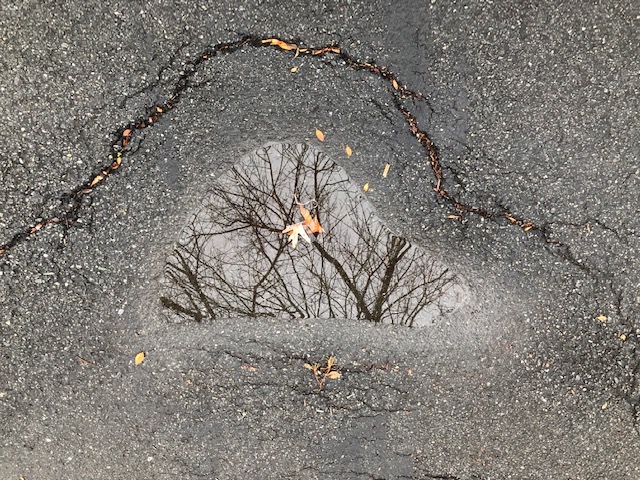
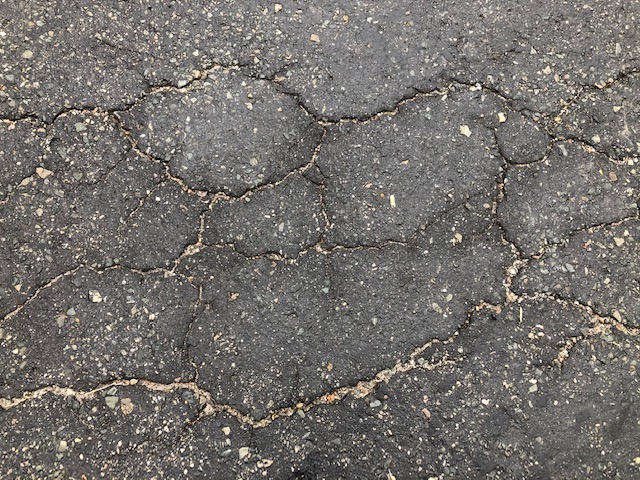
For example, that asphalt road surface appears to be fine as a car rolls over it. 

But when I run, I often see a different road surface. 

That seemingly smooth surface is sometimes fractured. It has cracks and fissures running in multiple directions. 

With more exposure to weather extremes and weight of vehicles, those imperfections will expand. At some point, this will mean a repair or a complete repaving.

Over the last few years, but particularly this year, I have come to view America like that road surface. 

We are fractured in multiple ways. This has created a division, a division that appears at times to be almost unrepairable.

Perhaps during COVID-19, you have heard the name Dr. Anthony Fauci. 

Dr. Fauci is the Director of the National Institute of Allergy and Infectious Diseases. He was appointed as the Director in 1984, and Dr. Fauci has advised six presidents. It seems that during a pandemic, Dr. Fauci’s experience and expertise would have been sought by our country everyday.

But, as Dr. Fauci attempted to do his work and advise to the best of his ability, in August, he announced that he had received death threats. Also,  his daughters had been harassed. 

Dr. Fauci stated:  “Getting death threats for me and my family and harassing my daughters to the point where I have to get security is just, I mean, it’s amazing.”

Dr. Fauci and his family do not deserve this type of treatment. Quite simply, this is wrong.

Maybe in the aftermath of the presidential election, you heard the name Christopher Krebs.  Mr. Krebs was the head of the United States government’s cybersecurity agency.

Mr. Krebs, who is a Republican, also received death threats as he made statements defending the work of the agency he oversaw. This critical work was to insure that the election was free from fraud. 

One attorney who disagreed with Mr. Krebs’ assessment spoke the following words about him through a national news outlet:  “class A moron” who “should be drawn and quartered. Taken out at dawn and shot.”

Mr. Krebs does not deserve this type of treatment. Quite simply— this is wrong.

I’m going to guess that Gus Malzahn, Will Muschamp, and Kevin Sumlin aren’t daily topics of conversation around your house. But, they have something in common.

 Each are former college football coaches, and thanks to buy out clauses after they were dismissed from their coaching jobs, all on paper are millionaires.

From Auburn University, Malzahn will receive 21.5 million, Muschamp from the University of South Carolina, 15.5 million, and Sumlin from the University of Arizona a paltry 7.3 million.

Once again, quite simply receiving millions of dollars when you have been dismissed from your job—this is wrong.

Here’s what I want to know—how did we lose our way? 

How did we get like this? 

Who flipped the switch?

 Who reworked the wiring in our brains, hearts, and souls?

 How can these situations be acceptable?

Here is the scary part.

 A fair number of Americans think there is nothing wrong in these three situations— absolutely nothing wrong. They find these situations to be acceptable. 

How can this be?

I always look forward to Rick Bragg’s monthly column in Southern Living. In the November 2020 issue, Mr. Bragg wrote about nurses during this pandemic. He particularly recognized their call to duty and sacrifice. This was in sharp contrast to Americans who have downplayed the virus and refused to follow the recommended protocols. In the last paragraph of his column, Mr. Bragg wrote:  “I wish we were smarter.”

Amen!

I think we can be smarter, I just hope we understand the urgent need to be smarter.

The entrenchment of this stubborn division isn’t how we are supposed to be. We can’t continue this way.

Deep inside us, I think we know this. But, I sense we are reluctant  to admit it.

America has always been imperfect. What we need to be doing is figuring out how to improve our imperfections for all Americans.

When I think about Dr. Fauci and Mr. Krebs, if in my career I had threatened a superior or questioned their intelligence, I would have been canned. And guess what, there would not have been a buyout clause in my teaching contract like the three college football coaches experienced.

These words from an environmental report issued by the United Nations caught my attention today: “This new era means that we are the first people to live in an age defined by human choice, in which the dominant risk to our survival is ourselves,” writes Achim Steiner, the UNDP administrator.

While this report focuses on the environment, I’m pretty sure those last eight words cast an accurate snapshot of our struggles at this very moment.

Our selfish, non-compliance of simple protocols has helped the COVID-19 virus to spike out of control, we shamefully disrespect our freedom of speech by boldly threatening those who are trying to help us, and we are seemingly unable to comprehend  that the salaries for college football coaches are not rational compared to the real world.

Yes, we are a risk to our own survival.

And yet, I have hope. 

On Tuesday afternoon, December 15, I was out for a run. Just as I made a left turn on to Rock Creek Road, I noted six young women, probably high school age, running. They had turned on to Rock Creek off of Forest Avenue.

It didn’t take long for them to catch up to my old sack of bones. Just as the pack was passing me, I shouted out to them: “Hey, thanks for making me feel a lot older than I am.”

And you know what they did, they laughed.

That laughter was priceless. It meant they understood my demented sense of humor.

Then I said, “Enjoy your run, and be safe.”

Without any hesitation, they wished the same for me.

Why did I share that encounter with you?

Well, here’s why.

If we have any chance of surviving ourselves and moving forward, we have to be able to talk, we must also be willing to listen, and we must understand the fractures of the stories inside each of us.

Yes, someday, my brain will say to my body: “Your running days are done.”

As worried as I am about our country, I don’t believe America is done running.

But those fractures, that division have the potential to stop America’s run. America must commit to talking, listening, and understanding.

And there is one more piece to those urgent needs.  

 Think about this quote from Thornton Wilder:  “There is a land of the living and a land of the dead and the bridge is love, the only survival, the only meaning.”

I wonder if we can find in our hearts the ability to reasonably talk, listen, understand, and love?

I pray we can.

If Mr. Wilder is correct, we have no choice.

Photo by Bill Pike

Author’s note:  Reuters, NPR, Southern Living, and newspapers in Alabama, South Carolina, and Arizona were reviewed for this posting.