The flyer on the the Norwegian Cruise Line Ship, Pride of America, had this headline on the Freestyle Daily: Say Hello To Kona.
Unfortunately, our visit to Kailua-Kona was cancelled. The Pride of America is too large of a ship to dock in Kailua- Kona. So the cruise line planned to use tender boats to transport guests on to the island.
The captain and the crew deemed the weather unacceptable to safely transport guests to Kailua-Kona. This meant, we were ship locked for the day.
Early morning, coming into Kona (Photo Bill Pike)
Kailua-Kona is the second largest settlement on Hawaii(the Big Island), and the largest on the west side.
Our excursion was to have taken us along the Gold Coast and into the Cloud Forest Sanctuary.
I think we would have enjoyed the Cloud Forest Sanctuary. “This was a restoration project that started in 1982. It was the remnant of one of Hawaii island’s oldest and largest ranches that had strayed far from its pristine native forest origins.”
What turned out to be our day at sea was quiet and stress free.
That afternoon, Butch, Dan, and I attended a beer tasting featuring some of the beers brewed by the Kona Brewing Company. “This craft brewery was started in 1984 by a father and son team, Cameron Healy and Spoon Khalsa. Their vision and hard work paid off, as the brewery’s beers have become known around the world.”
Held in the Gold Rush Lounge, we enjoyed sampling six of the Kona Brewery’s beers. The staff did a good job in serving the beers and providing commentary about the differences in each beer. And just so you know, a beer tasting glass is 4 to 6 ounces, not the usual 12 or 16 ounce pour.
Brews from Kona beer tasting on the ship (Photo Bill Pike)
After the beer tasting, we worked our way back to our rooms to get ready for dinner. This evening, we would be dining at Cagney’s where beef is the main attraction.
When dinner was over, we were in motion, moving throughout the ship. Assorted musicians were performing solo sets in different locations. A stand-up comedian was performing in one theatre, and for a few minutes we sat down to watch the Perfect Couple Game Show. With its PG-13 rating, the questions and spousal responses were fairly predictable, so we didn’t stay until the end.
As we parted our ways back to our cabins, we all hoped that Thursday would go as planned. This would allow us to make our scheduled excursion to Waimea Canyon.
Author’s note: this is the original devotion that was submitted to the Upper Room in September 2022. I thought I would include the original so that you could compare it to the final edit that is published in the July/August Upper Room for Monday, July 22, 2024. It is published on Monday, July 22, 2024.
Hold Fast To The Light (Title was changed to: Light In The Darkness)
Read Job 33: 28-33 (Scripture was changed to: John 1:1-14)
“The light shines in the darkness, and the darkness has not overcome it.” John 1:5
Some mornings, I wonder why I sit down at our kitchen table with my Upper Room, Bible, and prayer lists.
No matter where I look, the world is a mess. In lots of different ways, we have become very skilled at destroying our world and ourselves.
Not a week passes, when I learn that a relative, friend, or neighbor is facing a crisis. That crisis comes in assorted shapes and sizes.
Over the years, I have learned there is no immunity in life from a crisis.
Additionally, I have noted that a crisis is very good at disrupting life, and sometimes taking life.
Our messy world and the challenges people face in their daily living make me question my morning routine.
Why should I continue to pray?
Why should I continue to read Bible verses that I have read hundreds of times?
And then on some mornings, a total stranger from a far corner of the world will touch my questioning heart. Their heartfelt words from the Upper Room devotional will give me hope.
That hope in the darkness prior to dawn will push me to revisit these words from John 1:5: “The light shines in the darkness, and the darkness has not overcome it.”
To overcome the darkness of the world and a crisis, you, me, we, us must hold fast to that light.
Prayer: Father of us all, help us always to seek your light in our darkness. Amen
Thought For The Day One ray of light can overcome darkness and give hope.
This is followed by More From The Author in the Upper Room:
More from Bill Pike July 22, 2024 by Bill Pike (Virginia, USA)
I am always honored when the editors at The Upper Room accept one of my devotion submissions. Being an editor is tough work. Today’s devotion was submitted to The Upper Room for consideration near the end of September 2022.
The world continues to change. Yet, I still cling to my daily routines. I’m an early riser. I start the day with the Upper Room devotion. This includes reading the suggested scripture and my morning prayers.
I also keep a highlighter with me. This allows me to capture words and insights from the other writers in the magazine. If a piece really resonates with me, I try to make a comment on the Upper Room website. I thank the author, briefly reflect on why the piece resonated, and then encourage the author to keep writing.
I cherish the ability to write. It is a gift that keeps me grounded in reality. I’m exhilarated when a submission to a newspaper, magazine, or website is accepted and published. Additionally, I’m disappointment when a piece isn’t accepted. In those situations, I try to learn and regroup with a goal to try again.
As a natural born worrier, I think a lot about our world and how people are hurt by the chaos and turmoil that can change a life in a blink. In these challenging times, I think it is important for our voices to be heard.
I believe writing is the perfect tool for capturing what is in our hearts and on our minds. We can’t let darkness overcome us. Writing can be a means for us to bring light and hope into a weary world. Sometimes I find hope in stories that capture human kindness.
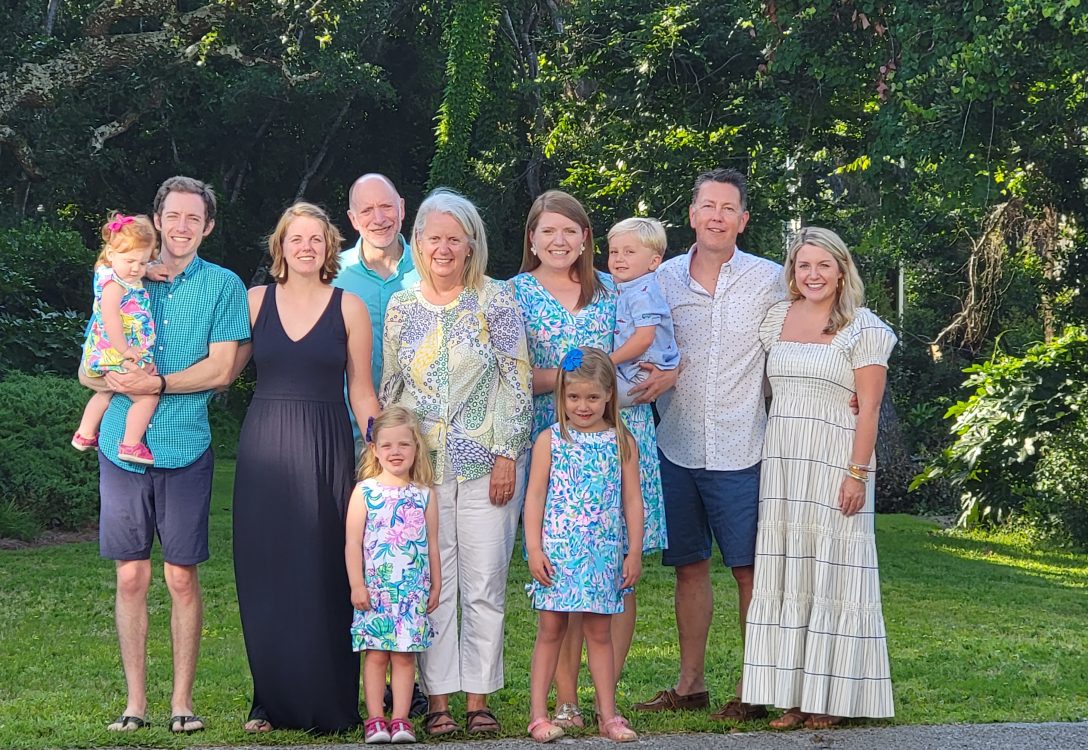
Our son and his family, along with his in-laws were recently traveling in England. An unexpected disruption in train travel forced railroad personnel to move passengers from one train to another one. This merger of passengers made for a very crowded train. Lots of people were standing in the aisles because all the seats were taken.
A woman passenger noted that our son’s mother-in-law and one of his young daughters needed to sit down. This passenger knew that her stop was the next one. Just before her stop, she made arrangements to give up her seat to the weary woman and her granddaughter.
I wonder what nudged this passenger to offer kindness to perfect strangers? Small acts of kindness like this are good for our souls. They give us hope in a world that can overwhelm us with troubling stories.
My gift for writing has helped me to write and self-publish four books for children. Additionally, during the last seven years, I have over 400 posts on my blog site named Might Be Baloney. I simply write about life from a variety of angles with the goal to make us ponder our world, with a touch of humor and an occasional tear.
Despite my many imperfections, I’m thankful that the light of the good Lord has allowed me to tinker with words.
No matter where we travel, my built in early rising alarm clock will not let me sleep in. On Tuesday, January 30, the ship is heading into the port of Hilo on the island of Hawaii.
From our balcony, the horizon is beginning to turn assorted shades of orange. Orange sherbet comes to mind, fresh papaya, or the hues of Piedmont red clay back home. Toss in some clouds hanging in the distant background, and my appreciation for the dawning of a new day deepens.
Dawn breaking into Hilo (Photo Bill Pike)
Today, the schedule is different for us. Our morning is quiet. We are on are own. For the afternoon, we have a date to travel to Volcanoes National Park.
After breakfast, Butch, Dan, Betsy, and I decide to go into Hilo. It took us a few minutes to figure out the transportation options, but we opt to ride with a local nonprofit that is linked to the Hilo Farmers Market.
Our driver is polite and patient with our questions. Soon she is dropping us off at the farmers market, and giving us instructions on how she will come back to pick us up.
The farmers market is a mixture of local fruits and vegetables. One vendor has some nice looking oranges so, I bought a couple.
The market offers more than produce, and Butch finds a local vendor who makes and sells t-shirts. Butch was intrigued by the design and material and bought one.
Dan had scurried off to the local CVS, yes a CVS, to pick up a prescription refill. The marvels of technology allowed this to happen.
We walked and explored, went into some shops, and waited for Dan’s return.
As we shuffled around, I was approached by a very polite homeless person. Perhaps, he sensed I was a tourist.
Waiting for Dan and our ride to return, I noted Hilo was in people motion— pedestrians and vehicles moved around us. Dan and our driver’s timing couldn’t have been better as she picked us up and drove us back to the ship.
Once back at the ship, we decided to explore some more. We walked over to the Big Island Coffee Roasters. Neither Betsy nor I are coffee drinkers, but our traveling companions are. I find coffee roasters to be bold gamblers much like craft beer brewers.
The story of Big Island Coffee Roasters dates back to 2010, and the purchase of a “run-down coffee farm in a rugged region of Hawaii.” That gamble paid off, as Big Island Coffee Roasters has won many awards for their coffees, with devoted purchasers from all 50 states and 13 countries.
Our coffee drinkers enjoyed this stop.
The morning had slipped by quickly. We had a 1 p.m. departure time to board the buses to Volcanoes National Park, home to two active volcanoes—Kīlauea and Mauna.
Our tour guide for the afternoon, Leroy, shares his story on his connection to Hawaii. He has a voice like a late night jazz disc jockey.
Throughout the afternoon, his gentle, smooth voice spews out the required history and personal stories about the park and his life in Hawaii.
Before heading out to the park, we make an unexpected stop at Big Island Candies. If you have a sweet tooth, this is a dangerous place. Lots of people were making multiple purchases of the yummy items.
Once back on the bus, Leroy refocused us on our afternoon goal—Volcanoes National Park.
From the time the bus entered the grounds of the park, we knew we were in a unique environment. One of the best parts about this visit was the ample time we were given to take in its remarkable landscape.
As our bearings came into play, we immediately noted this sign: Why are these buildings closed?
Standing at Uekahuna, we learned in 2018, the summit of the Kilauea volcano had a significant eruption. That eruption damaged the buildings.
As we walked and explored, the views made us stop and pause.
Sometimes within a few yards, or in the distance we would see steam vapor being released from openings in the earth’s surface called steam vents.
Steam rising (Photo Bill Pike)
Also, we walked over to explore the Sulphur Banks. A couple of times our noses would pick up the unpleasant aroma of the sulfur fumes emitting from the earth. In some spaces, the mineral deposits from these chemical interactions were quite colorful.
Sulphur Pit (Photo Bill Pike)
The park’s visitor center has lots of good information, excellent staff, and a nice store.
Also within the grounds of the park is the beautiful Volcano House, a very nice hotel on the rim of the volcano. This historic hotel sits 4,000 feet above sea level, and its unique environment allowed it to be named as a UNESCO World Heritage Site. It is worth your time to take a stroll through the lobby to see some of the views from the backside of the hotel.
With our departure time upon us, we started the walk back to the bus. Leroy was ready for us. He chatted us up all the way pack to the port.
In our visit to Hilo today, we learned quite a bit. Skimming one of the local brochures, I was reminded as to how vulnerable these islands can be. For example, the Shinmachi Tsunami Memorial was erected to remember those who perished in tsunamis that have in the past devastated parts of the island.
The 2018 when the Kilauea volcano erupted lava covered almost 14 square miles of the “lower east rift zone.” If the volcanoes decide to have a bad day, you don’t want to be in the path of their anger.
Yes, the island’s environment can be impacted in many ways, but the complexities of the chaos going on below the earth’s surface might be the biggest concern.
Maybe, the same can be said for my rapidly aging body. I don’t always know what might be churning deep inside of me either.
And yet, despite the island’s unsettled substructure, there is a precarious beauty here carved out over time like nothing I’ve ever seen back home.
No matter how harsh conditions have been or might be here in the future, I will always remember the singular stubbornness of a wildflower in a field of weary, weathered grass.
A pretty flower in a tough environment (Photo Bill Pike)
That wildflower is a story, a lesson in resilience.
And, no matter how they are challenged, that resilience is not unlike the people of Hawaii, who continue to persevere while preserving their land’s unique environments.
On Wednesday, May 8, my wife and I flew from Richmond to Atlanta with our final destination New Orleans.
Before boarding, I stopped in an airport convenience store. I was going to buy a copy of the Richmond Times-Dispatch(RTD). Looking around, there were no newspapers for sale in the store. No New York Times, Washington Post, Wall Street Journal, or RTD. I asked an employee about the absence of newspapers. She told me the store stopped carrying newspapers two years ago.
Landing in Atlanta, I stopped at another convenience store. I searched the store—no newspapers, not even the Atlanta Constitution. When I asked an employee, she told me—newspapers stopped arriving at the store in March.
In New Orleans, we hustled out of the airport to catch our ride. I didn’t stop to check for newspapers. But when we returned on Saturday to fly back home, I made a point of checking. At the store where I stopped, they carried two papers—The Wall Street Journal and the New Orleans Times-Picayune. I bought a copy of the Times-Picayune.
Clearly, the digital formatting of newspapers has arrived.
On Thursday, June 20, I read in the RTD, an article written by editor, Chris Coates. The article announces changes to the publication schedule for the paper. On nine holidays, the paper will only be available in a digital format.
In this piece, Coates’ referenced his grandmother, Louann, who was a prolific clipper of newspaper articles. I too was a clipper of articles that I sent to family and friends, but not anymore.
Tired of haggling over subscription prices with the RTD, we switched to the digital format. Like newspapers across America, I guess we newspaper clippers are dying too.
Northwestern University’s Medill School of Journalism has been a leader in studying the death of newspapers across America. The most recent report by the school released in November 2023 stated: “The loss of local newspapers accelerated in 2023 to an average of 2.5 per week, leaving more than 200 counties as “news deserts” and meaning that more than half of all U.S. counties now have limited access to reliable local news and information.”
At this pivotal time in American life, “news deserts” aren’t acceptable. More than ever, we need journalist digging, fact finding, and reporting as a means for holding all of us accountable to save our fragile democracy.
In his article, editor Coates, bragged on four recent stories unearthed by RTD reporters and cited 43 awards the paper earned in an annual contest presented by the Virginia Press Association. Quality reporting and recognition of the RTD’s work by its peers is significant. Also important to the life of the paper are the recent creation of the Reader Advisory Board and the Mobile Newsroom Initiative.
Despite this success, a source of frustration for me and maybe other readers is the inability of the RTD to report its own story on the challenges encountered in running a newspaper. I don’t believe the RTD has adequately reported with journalistic integrity and transparency the stories behind the changes that impacted staff and the paper’s loyal readers.
The RTD is quick to report to readers when changes occur, but readers are left to read between the lines regarding these changes. What’s left of my dinosaur brain tells me the decision not to print on nine holidays is a saving pennies move.
Additionally, I would make the assumption that decisions made over the last several years that impact staff and readers are all grounded in economics. Lee Enterprises the owner of the RTD wants to turn a profit. To turn a profit, newspaper owners gut staff, go whole hog into a digital format, and at every opportunity continue to butcher to the bone— newsprint.
Back on June 2, an op-ed by Glenwood Burley, a member of the Readership Advisory Board, gave readers a rare behind the scenes look at some of the daily decision making and operations of the RTD. I believe your readers would benefit from more insightful writing like this.
Despite what Lee Enterprises might dictate, I believe the RTD owes its remaining readers a more transparent reporting of its decision making when changes are coming to the paper. I don’t think Lee Enterprises would welcome a Freedom of Information Act request about these decisions from a contingency of grumpy old readers and disgruntled former reporters.
Listen, I mostly love the RTD. I cherish the work of reporters, editors, printers, and the early risers who deliver the paper. I don’t want the RTD to die.
But if you are going to continue to tell the stories of our communities, you must improve telling the RTD’s story too.
One of the first things that people asked me from being on Maui was about the devastating fire that hit the island. Our stop in Kahului was on the north central side of the island. The fire that destroyed Lahaina is on Maui’s western shore.
However, our tour guide, Dom, did point out a few sections on our excursion today where fire had impacted homes and forest areas.
Dom was an excellent young guide. He drove the small bus and narrated in great detail. In one roadside spot, he pointed out a blossoming peach tree that was starting to show its young fruit. I never thought I would see a peach tree in Hawaii, but Dom had an eye for such things.
Our first stop was at the Tao Valley State Monument. This is a lush area for vegetation and a pretty rocky creek. But the main attraction is Kukaemoku, the Iao Needle. Eroded up out of the valley’s floor, it stands in at 1200 feet. Covered in greenery, this rock formation blends in nicely with the other pointed hills surrounding the small park.
Kukaemoku, the Iao Needle (Photo Bill Pike)
There is a paved walk through the park, and that walk way provides multiple sightings of exotic plants, trees, and the creek.
Once back in the bus, Dom continued his narrative as we drove toward Kula Botanical Garden. Again, we learned lots from his research and insights regarding local customs, history, and scenery.
It wasn’t long before Dom was parking the bus at the Kula Botanical Garden.
Located in the upcountry of Maui, the gardens were started in 1968 by Warren and Helen McCord. The concept behind the garden was grounded in Mr. McCord’s “landscape architecture business.” There is a lot packed in the eight acres on the slopes of Haleakala.
Kula entry point (Photo Bill Pike)
This was also our stop for lunch. Dom had everything ready and organized for us. There was ample shaded seating for lunch, and we enjoyed eating outside in such a pretty location. A gift shop and restrooms are a part of the entry area too.
Garden path (Photo Bill Pike)
We enjoyed our stroll through the Garden. The variety of plantings along with rock formations, a koi pond, and other landscaped features made for a good visit. The other factor was Dom. He set up us for success giving us plenty of time to explore at an easy pace.
More vibrant colors (Photo Bill Pike)
Before we knew it, Dom gathered us back up for the ride over to the Lavender Farm.
Established in 2001, the Alii Kula Lavender Farm is a pretty place. Almost fourteen acres, the farm rests easily on the slopes of the Haleakala at an elevation of four thousand feet.
Lavender (Photo Bill Pike)
No matter where I turn, I have nice views.
More lavender with pretty background (Photo Bill Pike0
While lavender isn’t native to Hawaii, the owners tell us that the plant has adapted nicely to the island’s climate. At the farm, “relaxation, rejuvenation, and renewal” are emphasized while taking in the 55,000 lavender plants. That inventory includes 20 varieties of lavender.
We learned that lavender is a true summer bloomer. But the farm does feature nine varieties that grow throughout the year. So, we did pickup that lavender fragrance.
Lavender isn’t the only show at the garden. Olive trees and a variety of other plants are woven into farm’s pretty grounds. Yes, there is a gift shop with lots of selections.
More special blooms (Photo Bill Pike)
While waiting for our group to reassemble, I heard one lady comment about Wisconsin. In July, three of my college friends and I are planning a trip to Oshkosh, Wisconsin. Over a half million people attend the annual air show in Oshkosh.
At a pause in her conversation with a friend, I asked her about where she lived in Wisconsin, and explained the upcoming trip to Oshkosh.
Turns out, I was talking with Mary Sykes, whose husband, Ed Sykes, is a retired United States Air Force fighter pilot from the Vietnam War. Mary was familiar with the air show in Oshkosh, and stated they have friends who own a B-29 bomber from World War ll.
As we kept talking, I learned that Ed had written a book about one of his experiences during the Vietnam War. Mary and I exchanged our contact information, and my goal was to meet Ed before the end of the cruise and purchase a copy of his book.
With everyone accounted for by Dom, we were back in the bus heading toward the ship.
Secretly, I was hoping that Dom would keep driving us around these pretty uplands with their quiet, easy pace. But since the ship was scheduled to sail out at six, I knew that couldn’t happen.
At our first stop for the day, I had taken a picture of a plaque designating the Tao Valley State Monument as a National Natural Landmark. Cast in 1972, these words caught my attention:
“This site possesses exceptional value as an illustration of the nation’s natural heritage and contributes to a better understanding of the environment.”
Clearly, our three stops today have a commitment to better understand our environment. I hope I can become better at understanding and preserving special places like these on our precious Earth.
As I write this at 5:21 a.m. on Friday, June 28, 2024, a person somewhere in your neighborhood, county, city, state, country, and world will die from death by suicide today.
Just a short drive from our home, on the morning of June 24, a woman jumped from the Parham Road bridge into the on coming traffic on I-64.
According to news reports, local police had responded to calls from concerned citizens about a woman on the bridge. Police responded. They attempted a dialogue. She jumped.
Photo by Bill Pike
The world has a way of closing in on us.
Sometimes it is relentless in its pursuit.
It pushes.
It nudges.
It whispers to weary souls.
It wears a person down.
Darkness is everywhere.
That darkness blocks out light.
That darkness crushes hope.
Life becomes unbearable.
I can’t imagine what this woman was going through.
The same goes for the woman’s family, I can’t imagine.
I can’t imagine how the motorists, police officers, and first responders feel from watching a person end her life.
To be truthful, I’ve seen the impact of death by suicide.
My wife’s oldest sister, a beloved elementary school secretary, the daughter of dear neighbors, the son of another neighbor, the son of a co-worker, and the lives of parents and students in thirty one years of work in our public schools.
Despite time, hearts never forget and heal from those losses.
Even at 71, I still marvel at the sight of a commercial jet airliner flying over our neighborhood as the pilot lines the plane up for its final approach into the Richmond airport.
That big jet is a complicated machine.
Human beings are complicated too.
We are wired like that big plane.
Wires run throughout its frame.
Wires run through our human frame too.
The life of that plane and of human beings is dependent upon all that wiring.
That jet goes through a series of required safety inspections. Trained technicians, sometimes with special equipment scan those wires. They know the smallest fray in a wire can cause a life changing safety problem for the passengers and crew aboard the plane.
For a long, long time, we have known how important mental health is to the wiring of human beings. And while we can x-ray, scan, and MRI our internal wiring, often that scrutiny can’t catch the deeper struggles of the human soul.
We know it doesn’t take much for our human wiring to wear, to fray, to overheat, and meltdown. At that point, its too late to intervene because the dark demon inside our human frames has us locked on automatic pilot for the end of life.
I’m no expert on death by suicide.
But, I sense that individuals who commit to this devastating decision struggled during their lives to fit in. They just couldn’t find their place in life.
Early in life, when playing with blocks, we learn how to properly fit the shapes into the corresponding openings. But as a human being, if I’m an odd-shaped quadrilateral, I might struggle to find my opening, my place in life.
Back on the afternoon of Sunday, June 2, my cousin, Roger Pike, via email announced that his younger brother, George, had passed away.
Part of me believes that George struggled to find his fit in life.
In these losses, often siblings and family members are quick to blame themselves for not being able to help their loved one.
While I understand their guilt, the real truth is that you, me, we, us are tangled in that loss too.
What did I do to help George find his fit?
What did I do to help George battle his demons?
How did I interact with him at family gatherings over the years?
Did I convey to George that I cared?
The answer is no. I could have been better.
A celebration of George’s life was held in Pleasant Garden, North Carolina on the afternoon of Saturday, June 29.
It was June miserable in terms of high temperature and humidity. Even if you were in the shade, with a barely discernible breeze gently rustling tree leaves, you were dripping in sweat.
A large crowd of Clapps, Pikes, and friends had gathered to honor George.
Roger and his pretty companion, Kelly, had opened their home for food and fellowship.
Even in the sweltering heat Roger manned a grill cooking hamburgers and hot dogs. Family and guests provided all the required condiments, side dishes, and desserts.
As the food was just about ready, Roger circled us all up.
He spoke directly from his heart. Roger’s brief, sincere words conveyed his love for his brother, George.
Our cousin, Alice, commented about the photo display put together by George’s sister, Debbie. Alice noted that we all battle our demons, and despite George’s battles the family photos of George always captured his smile.
Then Roger called on a friend to offer a prayer, and the words were perfect.
In 1988, The Traveling Wilburys released their first single “Handle With Care.”
The band consisted of Bob Dylan, George Harrison, Jeff Lynne, Roy Orbison, and Tom Petty. The song is about how life batters us.
At the end of the chorus a tough question is asked: “I’m so tired of being lonely, I still have some love to give, won’t you show me that you really care?”
When it comes to mental health, I’m overdue in being sensitive to the needs of those I encounter every day. I need to be better in showing my care.
Maybe I would be wise to remember that each person I encounter has somewhere in their wiring a sign hanging that states “handle me with care.”
Author’s note: Remember, the suicide and crisis lifeline, 988, is available for anyone 24/7.
I was out for a run. I was on Westham Parkway. My road position was left side facing traffic next to the shoulder of the road.
To my left, I noted a bicycle rider pedaling up a hill on a side street. The rider was an adult and not wearing a helmet.
I curiously shouted out to him, “where is your helmet?”
The rider shouted back to me, “whatever.”
And I responded with “have a nice day.”
I know my original question agitated him. He kept spewing unintelligible words.
As I kept running, I thought about how I might respond if the rider rode up behind me.
Clearly, I was out of line with my helmet question.
But despite my long list of imperfections, I do try to adhere to the well-established basic rules of the road.
And in my attempt to follow the rules of the road, I’m perplexed at how many instances I come across where other drivers, walkers, runners, bicycle and motorcycle riders disregard rules designed to protect all of us.
Thursday afternoon May 23, I was on I-95 north. I was on my way home from a Habitat For Humanity Unity Build celebration. Two motorcycle riders traveling at a high rate of speed were weaving in and out of the narrow openings in the lanes between cars. Seemingly, they had no concern about their unsafe maneuvering.
Saturday, morning May 25, I was at our church in the Veterans Memorial Garden. I was weeding. I looked up, a car had just turned on to Forest Avenue from Rock Creek Road. The driver waved a friendly wave, and I waved back. A few seconds later, I looked up Forest Avenue and witnessed a driver speeding past the friendly waver. To accomplish the passing, this impatient driver crossed over the double yellow lines on a blind incline.
Last week, my wife and I were returning from visiting friends in Maryland. We were stopped at an intersection that had a clearly posted sign—no right turn on red. Three consecutive drivers approached the red stoplight, and made the right on red.
On the same morning, I asked my bike helmet question, I drove up behind a neighbor walking his dog. The neighbor was walking with traffic. I saw him as I came around a slight curve and incline. The wrong driver, and the wrong set of circumstances, my neighbor and his loyal dog could have been turned into pancakes on the asphalt.
I am perplexed at our disregard for basic rules of the road. Why do we want to jeopardize our safety?
How many times have you been at a stop light, stop sign, or yield sign, and witnessed a close call because another driver barreled through in total disregard of the basic rule of the road?
Where does this disregard and disrespect for ourselves and others come from?
Where has our sense of responsibility, cooperation, and compliance gone?
Are these qualities following the same decline as dignity, civility, decorum, and respect?
How much of this erosion comes from our elected officials?
What does it say about a country whose justice system finds a former president guilty on 34 felony counts, and a few days later supporters of this person have raised $52 million dollars toward electing him into office again.
What does it say about a country and its inability to solve its longstanding drug and firearm problems to have the son of our current president convicted of three felonies related to drugs, firearms, and neglect for telling the truth.
What does it say about a country where a representative in a congressional hearing can verbally attack Dr. Anthony Fauci with these remarks: “You’re not a doctor. You’re Mr. Fauci.” Followed by “I don’t need your answer. You should be prosecuted for crimes against humanity.”
No matter if it is a basic safety rule of the road, 34 felonies, 3 felonies, or belittling a fellow citizen, we recklessly and without conscience— disregard.
America has never been perfect in attempting to form a more perfect union. Sooner or later our imperfections surface.
At this moment, our flaws are directly in front of us, and it is as if we are wearing blinders, unwilling to acknowledge their presence.
Helen Keller once stated: “The only thing worse than being blind is having sight but no vision.”
How many times in my life have I had sight, but no vision?
Yes, I was out of line asking the bicycle rider my helmet question.
Yet, his “whatever” response aligns with Helen Keller’s wisdom—the bicycle rider had sight, but no vision for the potential danger he put himself in during his ride.
Our vision can’t disregard the challenges our country is facing.
Nor can our lack of vision let our response to these challenges be “whatever.”
A fallen and often disregarded yield sign (Photo Bill Pike)
On the afternoon of Thursday, May 23, I was driving toward Mt. Tabor Baptist Church on Fairmount Avenue in Richmond. At 5:30, a celebration related to the Richmond Metropolitan Habitat For Humanity’s (RMHFH) Unity Build would be taking place.
Guided by Richmond Habitat’s Community Engagement Manager, Burdette Robinson, the Habitat Faith Council team has been planning this event for months. Other than an increase in Richmond’s humidity, we had a pretty afternoon for the gathering.
The celebration was being hosted by the congregation and staff at Mt. Tabor Baptist. The church’s parking lot gave the celebration an accessible meeting spot and prime visibility on Fairmount Avenue.
Our host church, Mt. Tabor Baptist (Photo Bill Pike)
Our team and the church members worked to set up a couple of tents, tables, chairs, and signage in the neighborhood. Food was provided by The Market At 25th.
For entertainment. Richmond’s best crowd pleaser, Jonathan The Juggler, kept us curious with his tricks and made us laugh with his humor. Madelyn Peay, Executive Director for Habitat, provided insightful comments about the organization’s work. Additionally, we met the new homeowner who will be moving into the Unity Build house this summer.
For the Unity Build, 24 houses of worship, nonprofits, and business pledged $42,000 toward this project. Richmond Metropolitan Habitat for Humanity serves the city of Richmond, and Henrico and Chesterfield counties. Director Peay shared how RMHFH is working to address the challenges they face in providing affordable housing.
Finding land and the rising cost of construction materials have pushed RMHFH to become even more strategic in implementing their plans. This means making the most of their limited financial resources.
In looking to the future, RMHFH leaders recognize the importance of equity, inclusiveness, diversity, innovation, and sustainability. These attributes apply to their day to day mission in working with homeowners, volunteers, partners, Habitat’s two retail outlets(ReStores), in-house systems, and Habitat employees.
It was clear from Executive Peay’s comments that she and her team are committed to helping solve the housing crisis in our communities. And to experience that commitment firsthand, we had the privilege of hearing from Erica her story about becoming a homeowner.
Erica’s journey is one of determined perseverance. For ten years, she and her family lived in a wide range of housing environments. Challenges with mold, infestation, and unkept properties made life difficult for her family. Despite these hardships, Erica never stopped pursuing her goal to become a homeowner.
As a part of the celebration’s program, all guests along with Executive Peay and Erica had the opportunity to make the short walk to the new house.
The house’s design fits the neighborhood. With the walk through, it was clear to see how the layout will meet the family’s needs in a practical and sustainable manner.
More importantly, we could all sense Erica’s pride in her pending ownership. She talked about the 350 hours of her personal “sweat equity” that she has invested in volunteering on her own house, other Richmond Habitat homes, and in the ReStores.
On the morning of Saturday, June 1, I saw that “sweat equity” in person. I was one of the five Unity Build volunteers with Erica and Habitat supervisor, Zoey. For six hours, we made steady progress working on the house.
Solving our housing crisis in Richmond, Henrico, and Chesterfield will require constant work and cooperation. I’m no expert on housing, but I have questions for the nonprofit housing experts in the Richmond area:
Do the leaders of these housing nonprofits regularly communicate with each other?
Are there opportunities for these housing experts to collaborate on housing projects?
Do these housing leaders communicate with the mayor and county managers about joining forces?
Since land is in demand, what do we know about empty lots, parcels of land, boarded up homes and buildings in our communities? Are there tax incentives that could be offered to land and property owners that would free these areas for affordable housing?
How do our housing nonprofits find ways to work cooperatively with media outlets to tell their success stories while also conveying the urgency of the affordable housing crisis?
And finally, how do housing nonprofits communicate their needs for volunteers?
I sense our housing leaders and their teams have practical knowledge and successful templates in place to continue to address our affordable housing shortage.
Yet, I wonder if the urgency of this shortage could benefit from more collaboration between our established housing nonprofits and our local municipalities.
That Unity Build celebration on May 23, started with a simple conversation between RMHFH and the leaders at Mt. Tabor Baptist.
Could a simple conversation between housing and municipality leaders help us to find the path to meet the needs of more potential homeowners like Erica?
As a lifelong Methodist, I feel an obligation to let you know that the Virginia Conference of the United Methodist Church will hold its annual gathering at the Hampton Roads Convention Center starting June 20.
We are a fairly tame group. Occasionally, we get riled up. If I were you, I wouldn’t fret too much. Navigating a large religious organization is like attempting to turn a battleship in the Norfolk harbor—slug pace.
Since attendance and interest in churches is down across America, you might have missed an overdue tsunami shift in the United Methodist Church. At the church’s General Conference held in May in Charlotte, North Carolina, delegates finally voted to repeal its ban on LGBTQ clergy and now allows clergy to perform same-sex weddings.
In my opinion, this new policy was long overdue. The fifty years of skirmishes within the denomination over this matter significantly divided Methodists causing some to disaffiliate from the church.
As pleased as I am with this decision, and as good as it feels to those who fought the battle, we Methodist still have lots of work to do to turn our battleship.
An article in Christian Century by longtime Methodist leader, Will Willimon, should be required reading for Methodists. In this article, Willimon acknowledges “some good steps” were taken in Charlotte. However, he also states: “but we are too afraid to name certain truths.”
Willimon doesn’t hold back in naming those truths. His points are grounded in how the church loss members related to its LGBTQ stance, the challenges church leaders face in managing this oversized, wobbly body, grim financial realities, massive church attendance decline, and the graying of the denomination.
Despite our efforts, I sense Willimon’s points at my Methodist church where I am a member and an employee.
This year, I will not be attending the conference in Hampton. But I hope that our Virginia Bishop, Sue Haupert-Johnson, her team, and delegates will move us beyond treading water.
While we tread to keep from sinking, I have the following questions:
How is the consolidation of districts in the Virginia conference working? Has this budget shaving move helped?
How many churches in the conference are hanging by their financial fingernails?
If financial instability leads to more church closings, how might these buildings or land holdings be converted into affordable housing across Virginia?
How can the Bishop and her team help local pastors and their congregations address our aging and lack of diversity?
Can Methodist churches in our communities provide leadership to help us address our division and political polarization? Can these church leaders help us to become better listeners and neighbors?
Prior to my church work, I spent 31 years in Virginia’s public schools. Those experiences make me wonder if congregations might benefit from a thorough “self-study/accreditation” process.
This would be similar to the format utilized by the Southern Association of Colleges and Schools. I sense congregations who are willing to ask tough internal questions about finances, programming, data, outreach, human resources, and facilities will be shocked at what they learn about their church operations.
Personally, I believe Methodist churches in Virginia have an opportunity in front of them. At this critical point in forming the church’s future, I hope conference leaders and congregations keep this quote from Thomas Edison pasted to their foreheads: “Opportunity is missed by most people because it is dressed in overalls and looks like work.”
During their three days in Hampton, it is my hope that Methodist leaders and delegates will not fear the work ahead of us and miss an opportunity.
In his article, Will Willimon reminds Methodists that “hope is not a strategy.” He is correct.
To turn our worn Methodist battleship, we will need to work together, with a sense of urgency.
The denomination can’t withstand another fifty years of treading water.