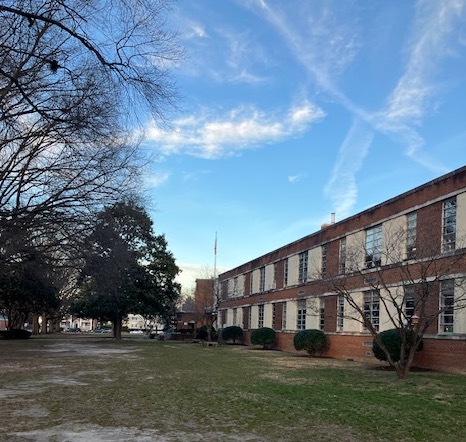
January 2024, the second semester of the school year has started for public schools.
Somewhere in those schools a student, teacher, instructional assistant, bus driver, assistant principal, and even a superintendent has whispered these words—“I don’t want to go to school today.”
Even though I’m retired, in my over thirty years of working in public schools, I said those same words.
Not to be forgotten in that mass of education humanity is the parent of a student in our schools who has said—“I don’t want to send my child back to that school today.”
I often ask myself how have we put our students, their parents, teachers, support staff, administrators, and superintendents in such difficult circumstances?
When I started teaching in 1975, I was scarred to death. Quickly, I figured out how to survive. I’m not sure I could endure the levels of pressure and stress that impact our students, their families, and our school personnel today.
No doubt the world has changed since 1975, but why have school environments in terms of safety become more difficult to manage?
I don’t believe this cry of despair linked to school safety will disappear. If we don’t become more solution driven on school safety, we will destroy our public schools.
Too frequently under difficult circumstances related to safety our schools make headlines.
On Thursday, January 4, the first day back to school at Perry High School near Des Moines, Iowa, we experienced another tragic school shooting.
A predictable pattern emerges following these tragedies. Multiple law enforcement officers responded quickly. Often, the shooter dies from self-inflicted wounds. And public officials politely offer condolences and prayers to the families with new broken hearts.
In the aftermath, an investigation will take place. Despite this diligence and findings, somewhere in America another school shooting will occur. How many more hearts must be broken to stop this madness?
Are we foolish to believe that we can actually legislate or metal detect our way back to maintaining safe environments in our schools?
How might those questions be answered, and our school safety improved if we worked to understand how schools are impacted by the following:
A Pew Research Center survey in June 2023 found about four-in-ten U.S. adults say they live in a household with a gun, including 32% who say they personally own one.
In August 2022, the Annie E. Casey Foundation reported nearly 24 million children live in a single-parent family in America. That is one in every three kids.
Clearly, those are impactful numbers that lead to another question—are school shooters impacted by access to guns and family instability?
Writing in Brookings January 2022, Professor Robin M. Kowalski in research conducted by herself and colleagues found: “handguns were used in over 91% of the K-12 school shootings, and almost half of the shooters stole the gun from a family member.”
Whether there is a link to family instability isn’t clear, but Kowalski’s research states: “School shooters are marginalized, rejected. With one fourteen year old shooter stating in court, “I felt like I wasn’t wanted by anyone, especially my mom.”
Additionally, other serious disruptive behaviors occur in schools without the use of weapons.
No matter weapons or other serious disruptions to the school’s environment, these incidents create their own trauma and anxiety for the students, parents, and educators who survive. Even with the fortitude to return to their classrooms, I imagine “I don’t want to go to school today” beats steadily in their shaken hearts.
So, how do we solve our crisis with school safety?
I’m sorry, but there are no simple answers. How can there be uncomplicated solutions when politicians are willing to spend millions and billions to keep professional sport franchises in Washington, DC or lure them to Virginia? What do these lucrative proposals tell us about our priorities?
For our schools and the communities they serve, I believe “I don’t want to go to school today” is genuine.
Its truth is grounded in the crushing reality of our inability to comprehend the impact of the devastating erosion of our families, and our ineffective band-aids related to generational decades of poverty, inadequate housing, unemployment, access to mental and physical health care, and justice.
I hope that “I don’t want to go to school today” rings in the ears and pierces the hearts of every school superintendent and school board member in Virginia and America.
May they be jolted into working cooperatively and tirelessly to develop and implement practical solutions
that will allow every student, parent, teacher, instructional assistant, bus driver, and assistant principal to be safe from whispering “I don’t want to go to school today.”
Author’s note: If this piece resonated with you, please consider sharing it with a public school educator, or your local legislator.

 might be baloney