I am guilty.
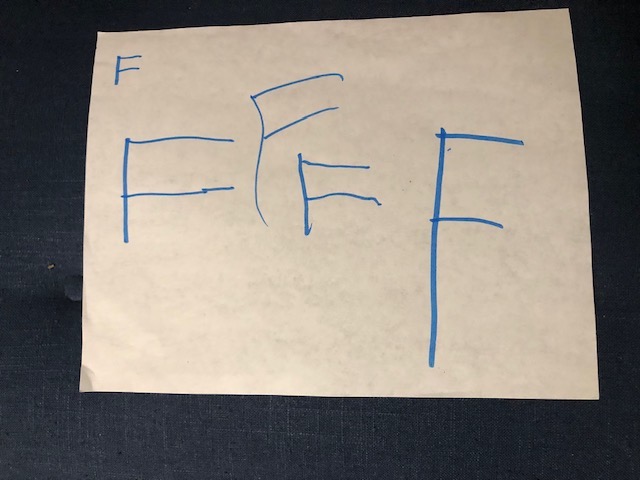
For too many years in my internal and external moments of anger, I have used the “f” word to curse at whatever was aggravating me at the time.
Late on the afternoon of Thursday, July 20, I used the “f” word more than former Duke basketball coach, Mike Krzyzewski, as he gently berated a referee over a foul call.
In packing our car for the vacation drive to Cape Cod, the Commander Supreme and I realized that the beach chairs were not going to fit in the car with all of the other required junk for a week at the beach.
For the next forty minutes, I wrestled with the rooftop carrier and the unfriendly design of the beach chairs. No matter the layering pattern I attempted with the chairs, the perfection I was pursuing for tight corners and interior snugness could not be found.
I “f’d” this and “f’d” that. Sweating profusely in the still hot and humid summer air, I slapped and “f’d” at blood thirsty mosquitoes who roared in laughter at me with each bite of my salty flesh.
Finally, by the grace of the trip packing gods, something worked. The chairs fit. The surrounding zipper for the soft case connected and closed. I secured the tie lines to the roof rails, and my use of the “f” word ceased, so much for being a Christian.
The logistics for this trip had been in planning for a year. Thirty two family members would be gathering in Falmouth, Massachusetts on Cape Cod. The airlines like this family gathering. People were flying into Boston from Great Britain, Hawaii, California, Texas, North Carolina, and Virginia. The local economy in Falmouth likes us too as we are renting three houses.
But back to the “f” word.
As we started our drive north on Friday morning, I started to reflect on my “f” rated tirade with the rooftop carrier. I thought back to Sunday morning, July 16.
We were in North Myrtle Beach, South Carolina. On Saturday morning, we had driven down from Richmond. My college roommate and his wife had rented a condo. They had invited the Commander and I and another college couple to join them for a few days.
Early that Sunday morning, I went for a run. The condo was located where Ocean Drive Beach and Cherry Grove Beach meet. I started my run heading north into Cherry Grove.
When I was growing up, my parents along with a couple of other families from our church in Burlington would make weekend trips to Cherry Grove in the late spring and early fall.
As I plod along the road that parallels the beach, I can’t believe how much Cherry Grove as changed. High rise condos dot the shoreline where soft sand dunes once held their ground.
My guess is homeowners across the street might have used the “f” word in defiance of the developers who built the high rises. These tall and often long buildings completely block out porch views of the ocean.
I made my way up to Forty Fifth Street and hooked a left. I followed this road back to the Sea Mountain Highway into the heart of Cherry Grove. This route gave me views of houses built along canals, and House Creek, where a few fishermen and crabbers were already casting.
Occasionally, cars and bicycle riders passed me. At one point, the quiet solitude of this already warm Sunday morning was broken.
A man and a woman were walking away from a house. I sensed they were starting a long walk. The woman shouted back at someone near the front entrance of the house—“ Aaron, you need to get a move on.” I didn’t hear what Aaron said back, but it must have been something with a sting too it, because the man walking with the woman shouted back “f you” Aaron.
Five days later, Friday, July 21, we made a rest stop at the West Virginia Welcome Center. We were on our way to Cape Cod. As we were re-entering Interstate 81, the Commander looked off to her right and saw the American flag flying upside down, and right beside it another flag was being flown with these words: “F Biden.”
For several minutes, all I could say or think was I can’t believe that someone would do such a thing. I was stunned.
We stopped for the night in Fishkill, New York.
On Saturday morning, we were up early. I went out to check the car, and on my way back to the elevator. I saw two men at the end of the hallway. One knocked on the door of a room. The man who knocked on the door said in a loud voice—“Open the “f” door, bitch, it’s me.”
Wanting to avoid Interstates 84 and 95 in Connecticut and Rhode Island, we opted to take the Taconic State Parkway to the Massachusetts Turnpike. At some point on the Turnpike or 495, we came upon two cars in a fender bender. I noted on the back window of one of the damaged cars the following sticker: “F Cancer.”
While I agree with the sentiment in that bumper sticker. I despise cancer. Yet, I wonder why we must push our free speech with inappropriate language in a public display? I guess “crush, combat, confront, cancel”— Cancer just doesn’t push far enough to capture a person’s attention.
In Adam Makos book Devotion, he writes about two Navy pilots who flew Corsairs, single engine propeller driven fighter planes, at the beginning of the Korean War. Makos focuses on Jesse Brown, an African American from Mississippi, and Tom Hudner from Massachusetts. The author takes us back into their early lives and captures pivotal confrontations that each man experienced growing up.
One afternoon, Jesse and his brothers had been spit upon and offended with racial slurs shouted at them from white students riding a school bus. That same evening, with his father reading the newspaper and listening, Jesse shares with his mother the displeasure he has experienced.
His mother shares this wisdom: “When someone calls you a ‘nigger’ then you feel sorry for him,” she said. “You have to pity him because his mind has such a sorry way of expressing itself.”(Devotion page 33)
Clearly, for too many years, when it comes to the “f” word, I have allowed my mind to develop a “sorry way of expressing itself.”
Over time, I have noticed in conversations that we have learned to substitute “freaking or frigging” for the “f” word. While not as offensive, the same meaning is conveyed.
Speaking for myself, and knowing that I’m not the brightest guy in the world, it seems quite obvious to me that we have lost what little self-respect we have left. From coaches fuming on the sidelines, to agitated travelers on passenger jets, uncivil politicians, and out of control students in school buildings, the use of inappropriate language has no boundaries.
Sadly, we seem as numb to our irresponsible choice of words in public settings as we are to our daily loss of American lives by pulling the trigger of a firearm.
What is even more disconcerting is what might have happened to me or another concerned citizen if I had said something to the “f” word offenders.
How would I have responded to a neighbor who happened to hear the “f” word flying out of my mouth as I wrestled with the beach chairs and rooftop carrier?
In the “Citizen’s Arrest” episode of the Andy Griffith Show, Wally’s Filling Station employee, Gomer Pyle, in an uncharacteristic fit of anger shouted: “You just go up an alley and holler fish” at Mayberry Deputy Barney Fife.
Deputy Fife had just issued Gomer a traffic ticket for making a questionable u-turn.
Regrettably, in America, we have pushed our foul language barrier a long way from “going up an alley and hollering fish.”
American singer and songwriter, Bob Dylan, has written over 500 songs. Earlier this year, I came upon a studio recording by The Steep Canyon Rangers of Dylan’s “Let Me Die In My Footsteps.”
I tracked down the lyrics, and the following verse caught my attention:
There’s always been people that have to cause fear.
They’ve been talking of the war now for many long years.
I have read all their statements and I’ve not said a word.
But, now Lord God, let my poor voice be heard.
Let me die in my footsteps, before I go down under the ground. “Let Me Die In My Footsteps” Written by Bob Dylan
In June, I turned seventy.
I don’t have many years left.
Yet, the words: “now Lord God, let my poor voice be heard” pinched my heart.
Pushing fear aside isn’t easy, but aren’t you, me, we, us overdue for our voices to be heard about how we disrespect ourselves and those around us with our public use of inappropriate words?
Have our minds in the words of Jesse Brown’s mother become that “sorry?”
I think we know the answer.

 might be baloney