Even though other months in our calendar year have thirty one days, August seems to drag.
Maybe its slug pace is tied to the sweltering heat and humidity that always accompany August.
August also signals that students will be returning to their classrooms.
Also in August, nervous politicians start their incessant advertising in pursuit of being elected in November.
Before spending lots of pennies on creating these ads, politicians should understand how frequently the mute button is pushed when an ad appears on our television screen.
But, August captures me for another reason.
On August 31, 1992, our mother passed away.
Ten years later on September 1, 2002, our father said goodbye.
Our father came within an hour of leaving this world on August 31.
Yet, when my sister, our Uncle Ralph, and I met with the director of the funeral home, we learned that since he passed on September 1, he was entitled to receive his social security check.
We chuckled when we learned this news. It was another example of how our father’s generation squeezed pennies.
Lots has happened since Louise and Bill left this world. They now have four great grandchildren. I know they would have cherished getting to know each of them.
When our parents were growing up, they endured multiple hardships. I think those hardships were at the heart of the perseverance that drove how they chose to live their lives.
God, family, sacrifice, and love were at the core of their daily living.
Clearly, I didn’t understand it at the time, but they were working to instill those traits into my sister and me too.
While I’m sure my parents would marvel at the advances in technology, I also think they would be worried at the erosion we currently see related to God, family, sacrifice, and love.
I worry about this mess we are leaving our children and grandchildren.
And despite this mess, I do have hope.
Our mother and father both had green thumbs.
They were proficient with flowers, vegetable gardens, fruit trees, and scuppernongs.
In our Richmond yard, we have three gardenia shrubs. Two of those shrubs came from gardenia shrub cuttings in our yard in Burlington, North Carolina where my sister and I grew up.
Our father loved the the fragrant bloom of a gardenia.
Depending upon the harshness of our Richmond winter, we usually see our gardenias start to bloom in late June or early July.
Back on August 10, I was walking around our yard, and I noted that the gardenia shrubs with North Carolina roots had singular blooms.
I was surprised to see these pretty blooms. I’m not a horticulturist, so I have no explanation for the two stragglers.
But, I thought a bit further, and I said to myself—its August, maybe this is the work of Louise and Bill.
Maybe, it is their way of saying hello.
Maybe, they are letting me know that they are still watching over their knucklehead son.
Maybe, they are saying to me, you just turned seventy. You don’t have much time left, this world is a mess, you better wake up, and get busy.
Makes me wonder, does the world weigh on you, like it weighs on me?
I’m pretty sure I know your answer.
As I write this, a powerful hurricane will land on the Gulf coast of Florida, another senseless mass shooting has occurred in Jacksonville, Florida, our politicians are out of touch with reality, and a weariness hovers over America as we wonder—when are we going to wake up?
Some days, I need an unexpected gardenia bloom to give me hope, and to remind me of these words from Romans 5 verse three: “We even take pride in our problems, because we know that trouble produces endurance, endurance produces character, and character produces hope.”
In truth on June 1, I was relieved when my wife received the sad news from her sister, Abby.
Early that morning, their mother, Elizabeth Crosby Cloud, told the cancer “go to hell, you can’t make me suffer anymore, I’ve booked a flight into the blue yonder—heaven.”
Despite this second struggle with cancer, at 95, Liz Cloud lived a full life.
For forty eight years, she put up with me. As we worked to figure each other out, I’m sure there were many early moments when Liz could have clobbered me. Yet, her gracious heart didn’t let that happen.
Liz and her husband, Ken, were as Forrest Gump said of his friend, Jenny, “they were like peas and carrots, always together.” Liz and Ken made a good pair, a good team. Even when they disagreed, Liz had a way of wearing him down.
They had lots in common, but the brine of ocean water was a tidal pull for them. That pull to the shore, the coastline trickled into the bloodstreams of their children too. Cape Cod, Sanibel, and Duck were gathering spots.
Liz had multiple gifts.
Once her mother, Bertha Avery Crosby, passed, Liz became the chief knitter of Christmas stockings for spouses new to the family and newborn grandchildren.
Liz was quite a cook. The culinary skills of her mother and auntie, Helen Loring Thompson, rubbed off on her. I never had a lousy meal when Liz was in the kitchen. Her meatloaf was perfection, and I enjoyed every crumb of the mincemeat cookies she made for me at Christmas.
In a different life, Liz could have been a professional stager for real estate agents. She had sharp, knowing eyes. Those eyes could rearrange a room in a blink, or make a stunning arrangement of flowers in minutes.
Liz was a leader, an organizer, a volunteer, and a dedicated parishioner at St. James’s Episcopal Church in West Hartford, Connecticut. No matter your age, at St. James, chances are that Liz knew you or you knew Liz.
Her children and grandchildren respected Liz’s intelligence and wisdom. They often sought her advice about the ups and downs of life.
Liz’s stamina and perseverance could be found in her daily working of the crossword puzzle in the Hartford Courant. No question that word work helped to keep her mind insightful.
After the passing of Ken, I sometimes had the assignment of driving her to Richmond for Christmas or driving her back to West Hartford after Christmas. On those long drives, Liz was a good co-pilot.
Liz loved a good party. No matter if the location was a backyard deck or a special family event, her personality and beauty brought those gatherings to life.
Honestly, my old southern bones needed time to adjust to the Cloud family’s annual trips to Cape Cod. Growing up in North Carolina, my family’s treks to the beach were always the North or South Carolina coastlines. But, the Cape did eventually hook my heart.
I remember one dreary week in the tiny, saltbox cottages at Mashnee. Gray clouds full of rain hid the sun. The discouragement of cabin fever had hit us.
Yet, one morning, Liz stood at the glass paned storm door and looked out at this soaked, bleak landscape, and proclaimed— “I think it looks a little brighter over there.”
On the morning of Monday, July 24, 2023, thirty-two family members gathered in Patuisset, a spit of land, connected by a single, narrow road on the Buzzard’s Bay side of Cape Cod. We walked down to the sandy beach in front of the friendly house where the family had stayed for multiple summers.
That was an appropriate place for the family to gather and say cherished, heartfelt words about their mom, grandmother, and mother-in-law.
After those teary words, some of Liz’s ashes were gently scattered on to the surface of the lightly rippled saltwater by her grandson, George.
I will hold that morning forever.
The low tide slowly revealed my favorite fishing sandbar with a boat channel at its tip, and a sleepy Bassetts Island in the backdrop.
In that snapshot, I will take with me the optimistic brightness that Elizabeth Crosby Cloud brought into this cantankerous old world.
May we never forget the flicker of her brightness.
That brightness made us, and the people she encountered better.
Sand spit Patuisset, Cape Cod, Massachusetts with Bassetts Island in the background. (Photo by Bill Pike7/24/23)
August 1976, I made my first visit to Cape Cod with my wife’s family. That was quite a transition for an old southern boy who grew up making family trips to the beaches along the North and South Carolina coastlines. But with each subsequent visit, Cape Cod continued to hook my heart.
After a seven year hiatus, thirty two family members returned to the Cape in late July. We descended upon Falmouth. Disappointment never intruded.
From our first glimpse of the rugged Bourne Bridge to the last spoonful of clam chowder at Pier 37 Boathouse, we made the most of our week.
Scrunched in three houses, our daily treks to the beach required the logistical precision of a military landing. But once there, we appreciated the well maintained beaches and the attentive lifeguards.
We loved our outing to watch a Cape Cod League baseball game as the Falmouth Commodores battled the Hyannis Harbor Hawks. It was clear from the attendance that your citizens appreciate what this league brings to each community.
No matter where we ventured, the merchants and local residents were polite and helpful.
On our last morning, some of us took the short hike to The Knob. We were not disappointed with the spectacular water views.
And in all honesty, I think that is what I admire the most about the character of Cape Cod—the capacity to hold and preserve cherished land.
I pray your hearts never let go of that gritty grip.
Looking out at The Knob near Woods Hole on Cape Cod. Photo by Bill Pike
Author’s note: This post was submitted to the Cape Cod Times as a letter to the editor. I thought the editor/s might take a complimentary letter about the hospitality we experienced while vacationing there. Clearly, I thought wrong. Be safe, Bill
LETTER: Lack of public decency in civil discourse is unsettling
Editor:
West Virginia is a beautiful state. I know this from trips my wife and I have taken along Interstates 64 and 81.
We’ve enjoyed our stops at the New River Gorge National Park and Preserve and the famous Blenko glassware site in Milton. No matter if our stops were for hours or overnight, we always found the people of West Virginia courteous and friendly.
On Friday, July 21, we used I-81 to keep us off the heavily traveled I-95 on our way to Cape Cod for a family reunion.
We stopped at the West Virginia Welcome Center for a quick break. As we reentered I-81, from the passenger’s side of the car, my wife saw an American flag flying upside down, and right beside it another flag. That flag featured the “F” word and, below this inappropriate slang, was the last name of President Joe Biden.
I could not believe my wife’s report. For the next several miles, I was in shock over this offensive public display.
In all honesty, I’m an imperfect human being who is no stranger to using unacceptable language. I believe in freedom of speech.
Yet, I struggle to understand why we choose to disregard the boundaries of decency and respect for this essential American value. Don’t we have other forums to vent our political frustrations without offensive flags flying along an interstate?
A few years ago, former U.S. Defense Secretary Robert Gates told an audience at the Richmond Forum: “The United States faces threats from extremists and unstable regimes around the world, but it’s the nation’s own political incivility that poses the gravest risk.”
I think Gates’ assessment is correct. But what is even more unsettling to me is our inability to see this.
Bill Pike Richmond, Virginia
Note from author: I’m honored to have my Letter To The Editor published in the Charleston Gazette-Mail today, Friday, August 4, 2023. If the words resonate with you please share. Love, Bill
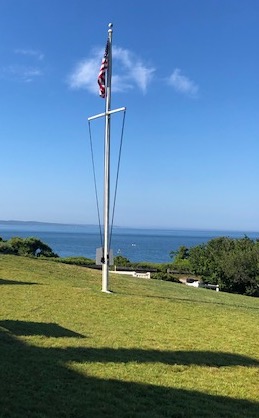
American flag at Nobska Lighthouse Cape Cod (Photo by Bill Pike)
For too many years in my internal and external moments of anger, I have used the “f” word to curse at whatever was aggravating me at the time.
Late on the afternoon of Thursday, July 20, I used the “f” word more than former Duke basketball coach, Mike Krzyzewski, as he gently berated a referee over a foul call.
In packing our car for the vacation drive to Cape Cod, the Commander Supreme and I realized that the beach chairs were not going to fit in the car with all of the other required junk for a week at the beach.
For the next forty minutes, I wrestled with the rooftop carrier and the unfriendly design of the beach chairs. No matter the layering pattern I attempted with the chairs, the perfection I was pursuing for tight corners and interior snugness could not be found.
I “f’d” this and “f’d” that. Sweating profusely in the still hot and humid summer air, I slapped and “f’d” at blood thirsty mosquitoes who roared in laughter at me with each bite of my salty flesh.
Finally, by the grace of the trip packing gods, something worked. The chairs fit. The surrounding zipper for the soft case connected and closed. I secured the tie lines to the roof rails, and my use of the “f” word ceased, so much for being a Christian.
The logistics for this trip had been in planning for a year. Thirty two family members would be gathering in Falmouth, Massachusetts on Cape Cod. The airlines like this family gathering. People were flying into Boston from Great Britain, Hawaii, California, Texas, North Carolina, and Virginia. The local economy in Falmouth likes us too as we are renting three houses.
But back to the “f” word.
As we started our drive north on Friday morning, I started to reflect on my “f” rated tirade with the rooftop carrier. I thought back to Sunday morning, July 16.
We were in North Myrtle Beach, South Carolina. On Saturday morning, we had driven down from Richmond. My college roommate and his wife had rented a condo. They had invited the Commander and I and another college couple to join them for a few days.
Early that Sunday morning, I went for a run. The condo was located where Ocean Drive Beach and Cherry Grove Beach meet. I started my run heading north into Cherry Grove.
When I was growing up, my parents along with a couple of other families from our church in Burlington would make weekend trips to Cherry Grove in the late spring and early fall.
As I plod along the road that parallels the beach, I can’t believe how much Cherry Grove as changed. High rise condos dot the shoreline where soft sand dunes once held their ground.
My guess is homeowners across the street might have used the “f” word in defiance of the developers who built the high rises. These tall and often long buildings completely block out porch views of the ocean.
I made my way up to Forty Fifth Street and hooked a left. I followed this road back to the Sea Mountain Highway into the heart of Cherry Grove. This route gave me views of houses built along canals, and House Creek, where a few fishermen and crabbers were already casting.
Occasionally, cars and bicycle riders passed me. At one point, the quiet solitude of this already warm Sunday morning was broken.
A man and a woman were walking away from a house. I sensed they were starting a long walk. The woman shouted back at someone near the front entrance of the house—“ Aaron, you need to get a move on.” I didn’t hear what Aaron said back, but it must have been something with a sting too it, because the man walking with the woman shouted back “f you” Aaron.
Five days later, Friday, July 21, we made a rest stop at the West Virginia Welcome Center. We were on our way to Cape Cod. As we were re-entering Interstate 81, the Commander looked off to her right and saw the American flag flying upside down, and right beside it another flag was being flown with these words: “F Biden.”
For several minutes, all I could say or think was I can’t believe that someone would do such a thing. I was stunned.
We stopped for the night in Fishkill, New York.
On Saturday morning, we were up early. I went out to check the car, and on my way back to the elevator. I saw two men at the end of the hallway. One knocked on the door of a room. The man who knocked on the door said in a loud voice—“Open the “f” door, bitch, it’s me.”
Wanting to avoid Interstates 84 and 95 in Connecticut and Rhode Island, we opted to take the Taconic State Parkway to the Massachusetts Turnpike. At some point on the Turnpike or 495, we came upon two cars in a fender bender. I noted on the back window of one of the damaged cars the following sticker: “F Cancer.”
While I agree with the sentiment in that bumper sticker. I despise cancer. Yet, I wonder why we must push our free speech with inappropriate language in a public display? I guess “crush, combat, confront, cancel”— Cancer just doesn’t push far enough to capture a person’s attention.
In Adam Makos book Devotion, he writes about two Navy pilots who flew Corsairs, single engine propeller driven fighter planes, at the beginning of the Korean War. Makos focuses on Jesse Brown, an African American from Mississippi, and Tom Hudner from Massachusetts. The author takes us back into their early lives and captures pivotal confrontations that each man experienced growing up.
One afternoon, Jesse and his brothers had been spit upon and offended with racial slurs shouted at them from white students riding a school bus. That same evening, with his father reading the newspaper and listening, Jesse shares with his mother the displeasure he has experienced.
His mother shares this wisdom: “When someone calls you a ‘nigger’ then you feel sorry for him,” she said. “You have to pity him because his mind has such a sorry way of expressing itself.”(Devotion page 33)
Clearly, for too many years, when it comes to the “f” word, I have allowed my mind to develop a “sorry way of expressing itself.”
Over time, I have noticed in conversations that we have learned to substitute “freaking or frigging” for the “f” word. While not as offensive, the same meaning is conveyed.
Speaking for myself, and knowing that I’m not the brightest guy in the world, it seems quite obvious to me that we have lost what little self-respect we have left. From coaches fuming on the sidelines, to agitated travelers on passenger jets, uncivil politicians, and out of control students in school buildings, the use of inappropriate language has no boundaries.
Sadly, we seem as numb to our irresponsible choice of words in public settings as we are to our daily loss of American lives by pulling the trigger of a firearm.
What is even more disconcerting is what might have happened to me or another concerned citizen if I had said something to the “f” word offenders.
How would I have responded to a neighbor who happened to hear the “f” word flying out of my mouth as I wrestled with the beach chairs and rooftop carrier?
In the “Citizen’s Arrest” episode of the Andy Griffith Show, Wally’s Filling Station employee, Gomer Pyle, in an uncharacteristic fit of anger shouted: “You just go up an alley and holler fish” at Mayberry Deputy Barney Fife.
Deputy Fife had just issued Gomer a traffic ticket for making a questionable u-turn.
Regrettably, in America, we have pushed our foul language barrier a long way from “going up an alley and hollering fish.”
American singer and songwriter, Bob Dylan, has written over 500 songs. Earlier this year, I came upon a studio recording by The Steep Canyon Rangers of Dylan’s “Let Me Die In My Footsteps.”
I tracked down the lyrics, and the following verse caught my attention:
There’s always been people that have to cause fear. They’ve been talking of the war now for many long years. I have read all their statements and I’ve not said a word. But, now Lord God, let my poor voice be heard. Let me die in my footsteps, before I go down under the ground. “Let Me Die In My Footsteps” Written by Bob Dylan
In June, I turned seventy.
I don’t have many years left.
Yet, the words: “now Lord God, let my poor voice be heard” pinched my heart.
Pushing fear aside isn’t easy, but aren’t you, me, we, us overdue for our voices to be heard about how we disrespect ourselves and those around us with our public use of inappropriate words?
Have our minds in the words of Jesse Brown’s mother become that “sorry?”
I think we know the answer.
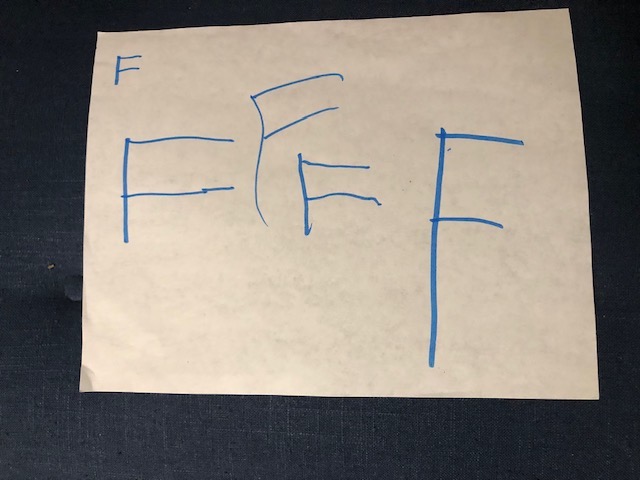
Graphic design by CHJE Productions (Photo by Bill Pike)


 might be baloney